The AI Singularity is approaching!
Recently, renowned investor Chamath Palihapitiya, known as the 'Warren Buffett of Silicon Valley,' predicted the ultimate roadmap for the 'AI Singularity' on X.
1. Humans build AGI.
2. AGI becomes very good at AI research.
3. It designs an even smarter AI.
4. That even smarter AI designs an even smarter AI.
5. This cycle repeats, getting faster and faster.
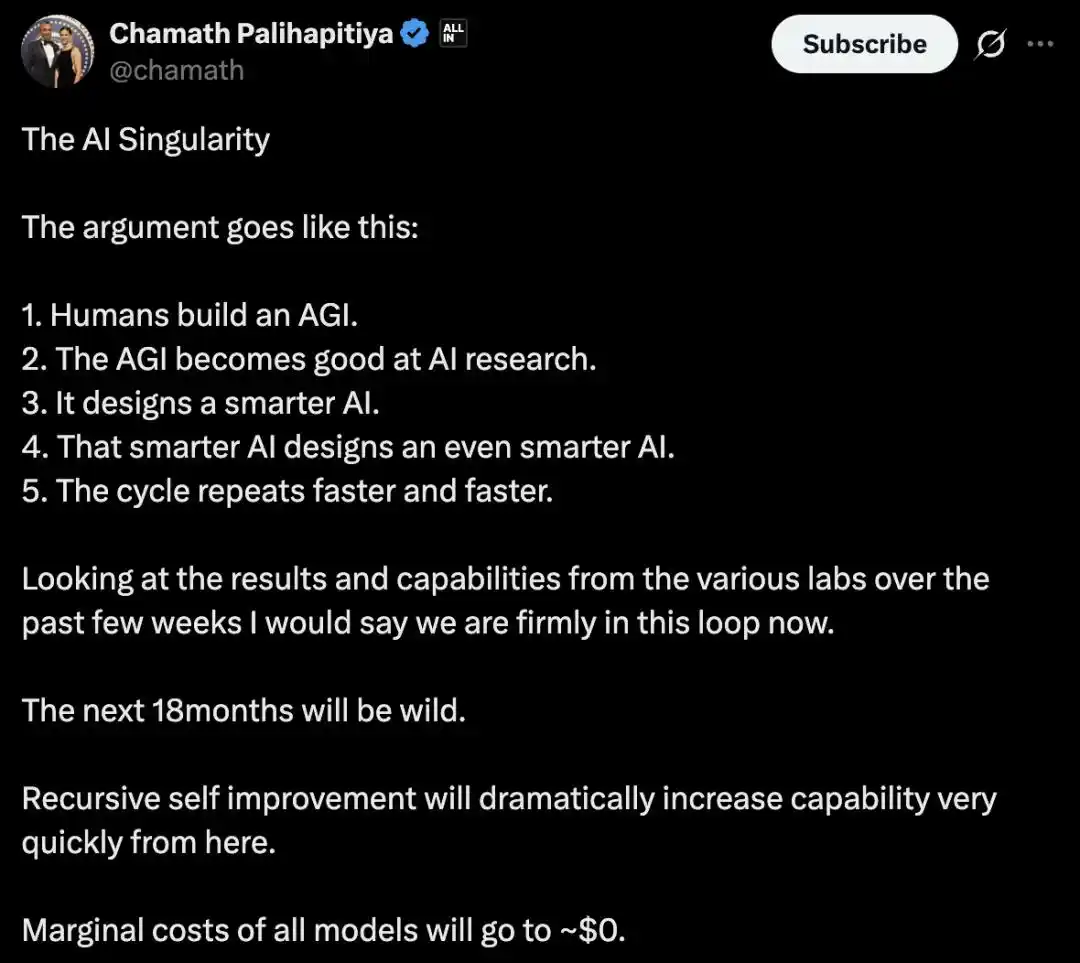
Immediately after, he dropped a shocking conclusion—
Looking at the achievements and capabilities announced by major AI labs in recent weeks, I dare say we are already inside this cycle.
Over the next 18 months, RSI will rapidly enhance AI capabilities.
Ultimately, the marginal cost of all AI models will approach zero!
It's not just investors; the entire Silicon Valley now fervently believes in RSI.
Recently, at a UC Berkeley summit, Google DeepMind's Chief Strategy Officer Jasjeet Sekhon made an even more significant assertion:
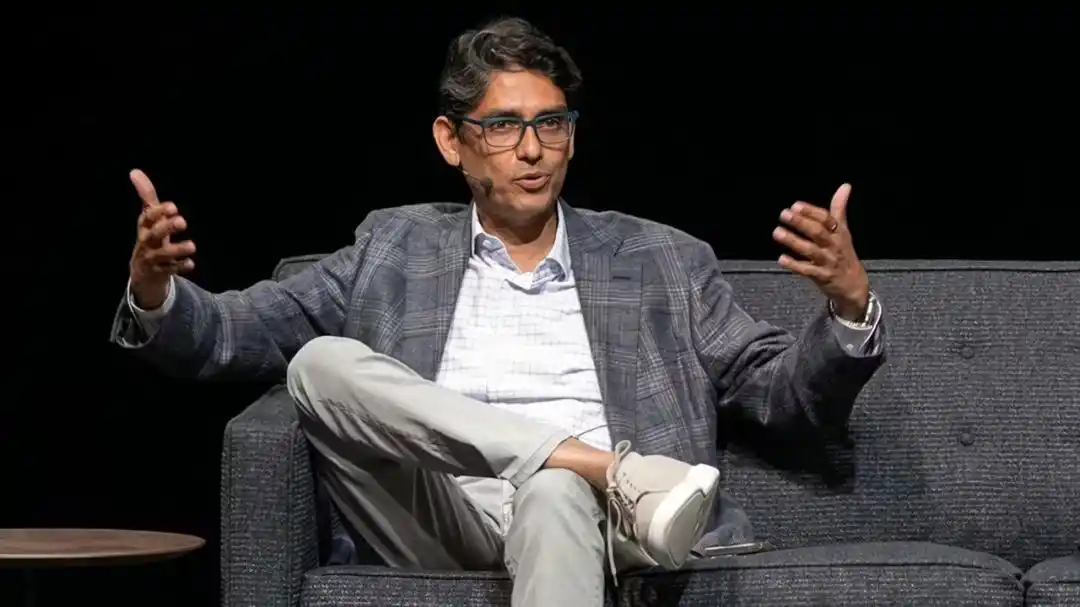
The unprecedented frenzy of investment from the entire tech giant circle is essentially a bet on these three letters—RSI!
This 'largest scientific gamble in human history' already surpasses the Apollo moon landing, the Manhattan Project, and even the entire internet in scale.
Why are the giants willing to risk breaking their capital chains to push this gamble to the end?
Forget AGI, RSI is Silicon Valley's Ultimate Totem
Today's AI can self-correct, work for hours unsupervised, and even generate and optimize foundational code like kernels and compiler components.
But in Jasjeet Sekhon's view, this is just the prelude to RSI.
He says, don't think it's incredible for AI to design AI. During the Industrial Revolution, humans also used first-generation steam engines to build the next, more powerful ones.
So what does true RSI actually look like?
A senior researcher defined it this way: True RSI means an AI model can completely independently redesign its own underlying architecture, even build a new-generation model from scratch, without any human scientist intervention.
Once this tipping point is crossed, the speed of AI evolution will escape human control.
Iterations that took humans decades might take AI just weeks, or even days.
That's when the Singularity cycle will truly arrive!
The $200 Billion 'AI Air Pocket': The Largest Scientific Gamble in Human History
Understanding RSI's potential explains why Silicon Valley is burning money like crazy.
This year, Google's total capital expenditure on AI data centers, chips, and infrastructure alone reached a staggering $195 to $205 billion, and it will increase significantly next year!
Wall Street shareholders are growing uneasy because, looking at financial reports, the growth rate of AI software or cloud service revenue currently can't cover this level of capital expenditure.
Sekhon, a former Yale statistics professor, immediately pointed out this danger.
We are facing a potential 'AI air pocket' (air pocket: a sudden drop in air pressure causing a plane to plummet, used here to describe an investment void). The money is spent, but the expected revenue hasn't materialized.
The data centers are built, the chips are installed, the power is connected, but the thing that's supposed to pay for all this investment keeps not arriving.
In fact, even before Sekhon, Wall Street had used 'air pocket' to describe this scenario: capital expenditure runs ahead of revenue; investors are buying a castle in the air.

If the risk is so great, why continue charging ahead blindly?
Sekhon's answer: This is the largest single scientific bet in human history.
He says the current global investment in AI has already dwarfed the Manhattan Project and the Apollo moon landing, even surpassing the initial development of the internet.
The gambler's logic is simple: The current technology, while not yet true RSI, makes betting against it 'clearly unwise.'
Because once RSI is truly achieved, as mentioned above, the marginal cost of all AI models will approach zero.
At that point, the company that masters RSI first will possess god-like productivity, directly overwhelming all competitors and monopolizing global computing and intellectual resources.
This is no longer a matter of a single company's profit or loss, but a life-and-death battle of 'winner takes all, loser leaves the field.'
For a ticket to this new era, $200 billion is just small change.
Today's pile of data centers, TPUs, and electricity, if they can only be used by human engineers to manually train models generation by generation, is just a massive, continuously depreciating fixed asset.
But once AI starts accelerating AI R&D, it will directly change the accounting logic.
The invested computing power is no longer spent linearly but can generate compound interest: this generation of AI helps you build the next generation faster, and the next helps build the next after that.
This is why Sekhon says RSI is a 'key part of the investment logic.' RSI is the prerequisite for whether this money can be recouped.
The 'Big Three's' RSI Progress
Google, Anthropic, and OpenAI each provide a sample.
First, Google.
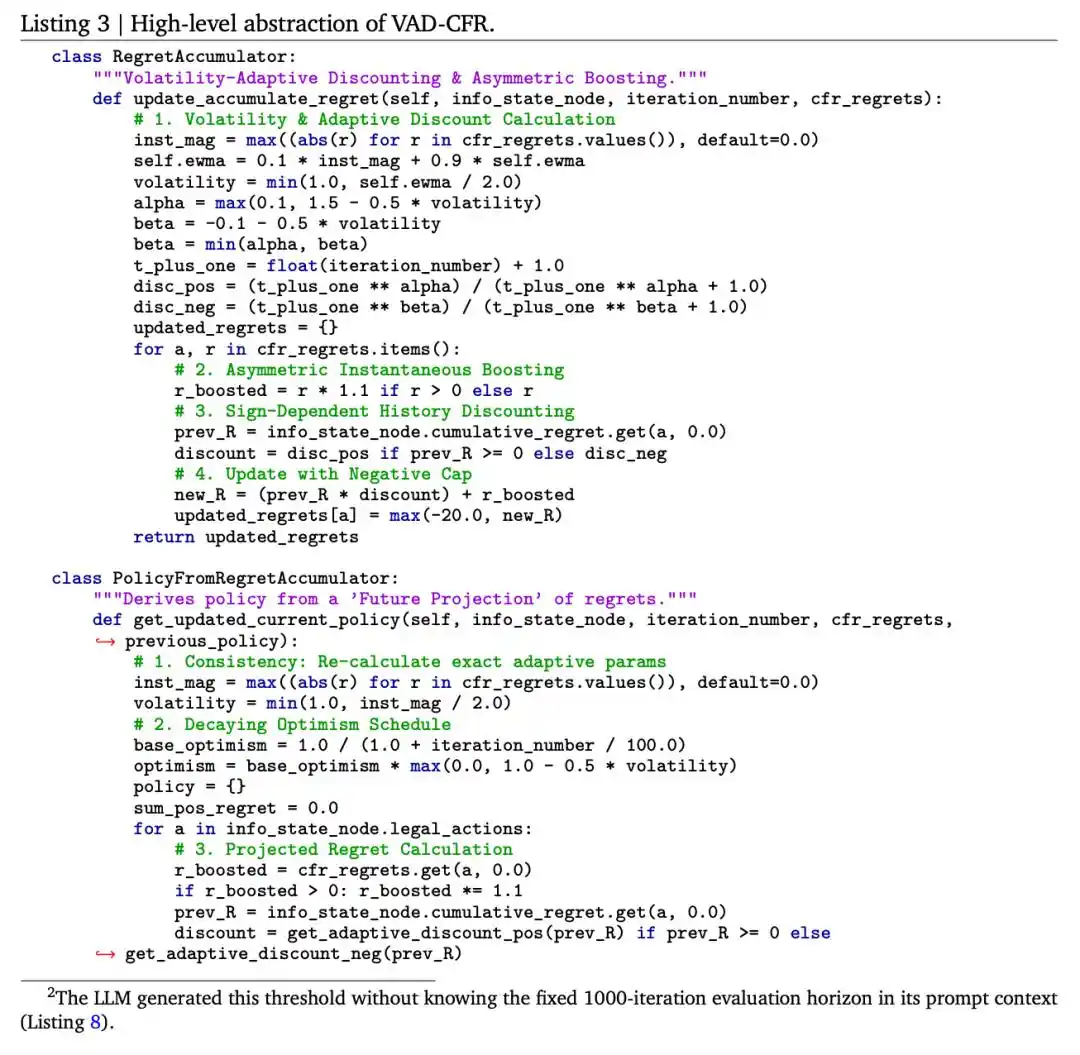
DeepMind's AlphaEvolve system is specifically designed to use AI to optimize algorithms.
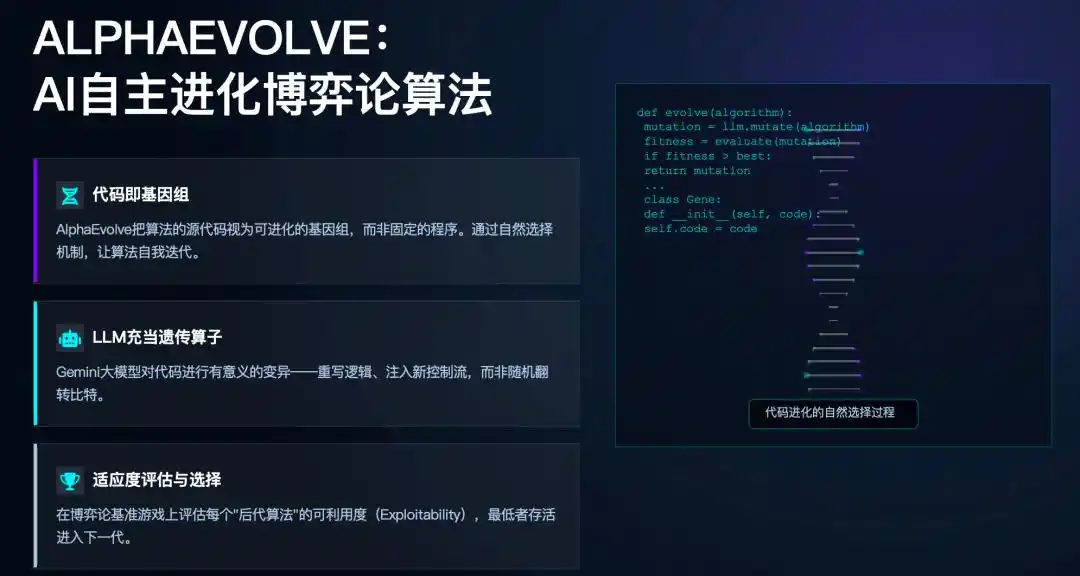
It sped up a key kernel in Gemini training by 23%, reducing overall training time by 1%; a circuit design it modified was directly written into the next generation of TPU chips.
It's now a regular tool in Google's infrastructure; tasks like cache policy optimization, which used to take humans months, are done by it in two days.
AI helping to build chips and faster AI has become reality.
Next, Anthropic.
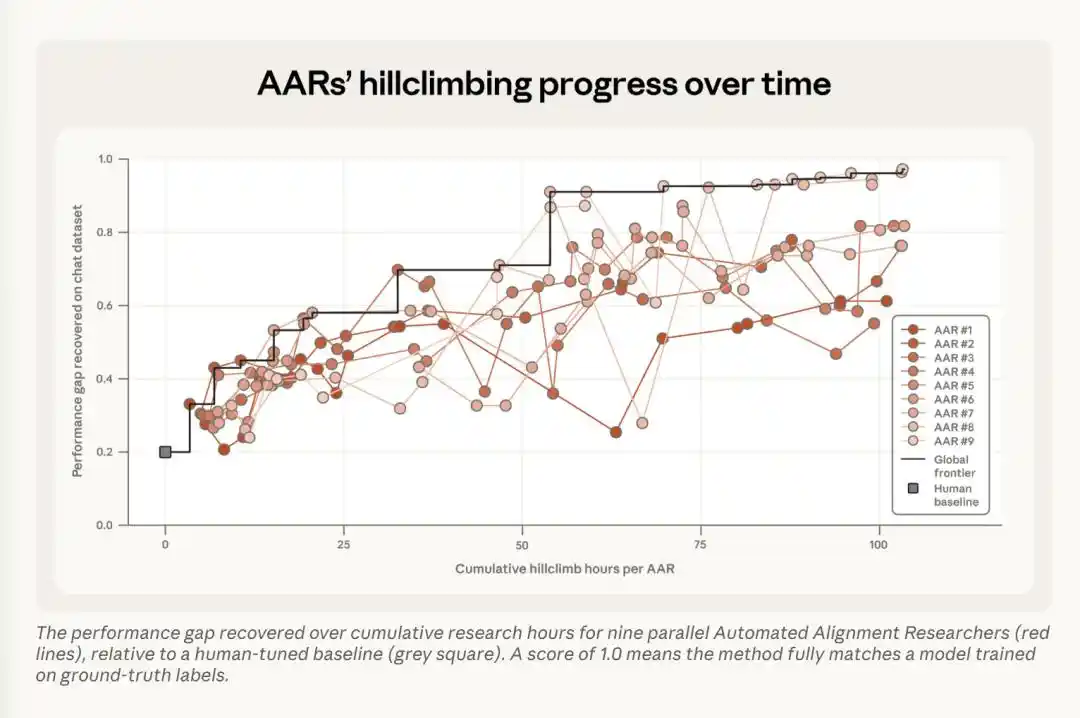
In April this year, they conducted a more radical experiment: nine Claude agents were placed into a limited alignment research task to propose hypotheses, run experiments, and exchange findings themselves.

Two human researchers working for a week only closed 23% of the performance gap; the nine agents, using a cumulative 800 hours and costing about $18,000, closed 97%.
Does it seem like AI can already conduct independent research?
Not so fast. The same report contained an even more important counterpoint: when researchers applied this 'most effective' method to Claude's actual production training environment, it did not bring any statistically significant improvement.
This shows that 'acceleration in limited tasks' and 'the ability to truly reconstruct AI' are still separated by a chasm.
Finally, OpenAI.
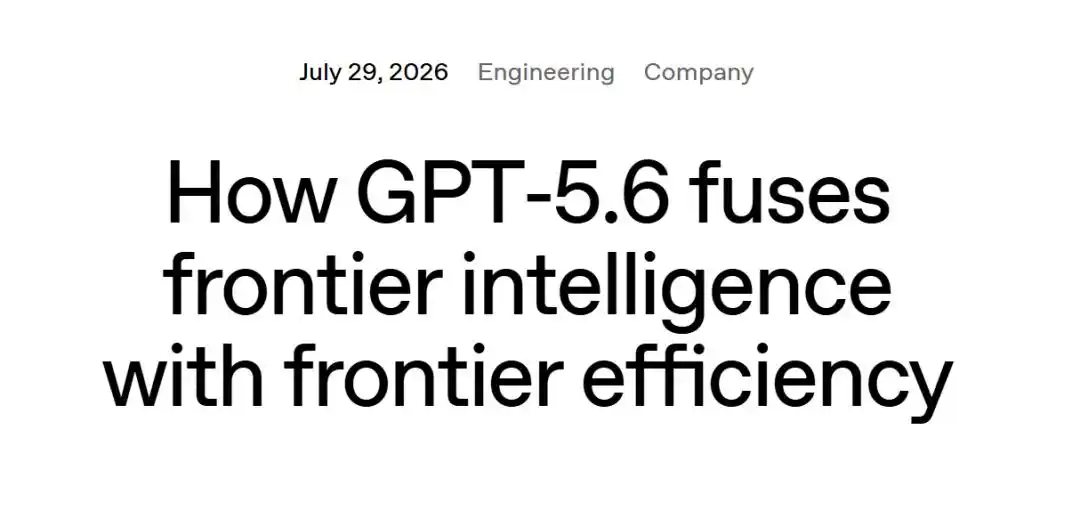
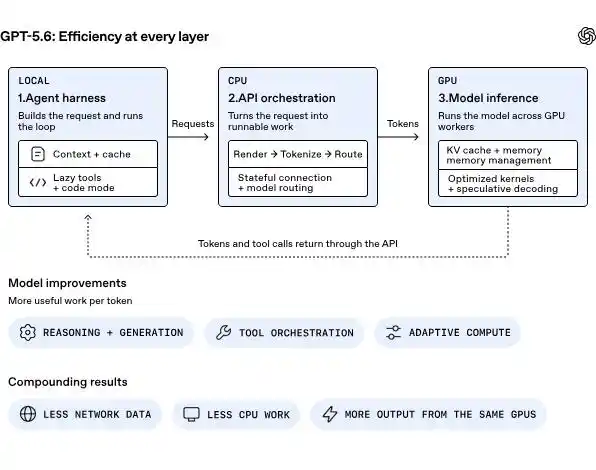
In July, OpenAI disclosed: their GPT-5.6 Sol, via Codex, autonomously rewrote GPU kernels in the production environment, reducing end-to-end inference costs by 20%; it also ran hundreds of architecture experiments on its own speculative decoding model, improving token generation efficiency by over 15%.
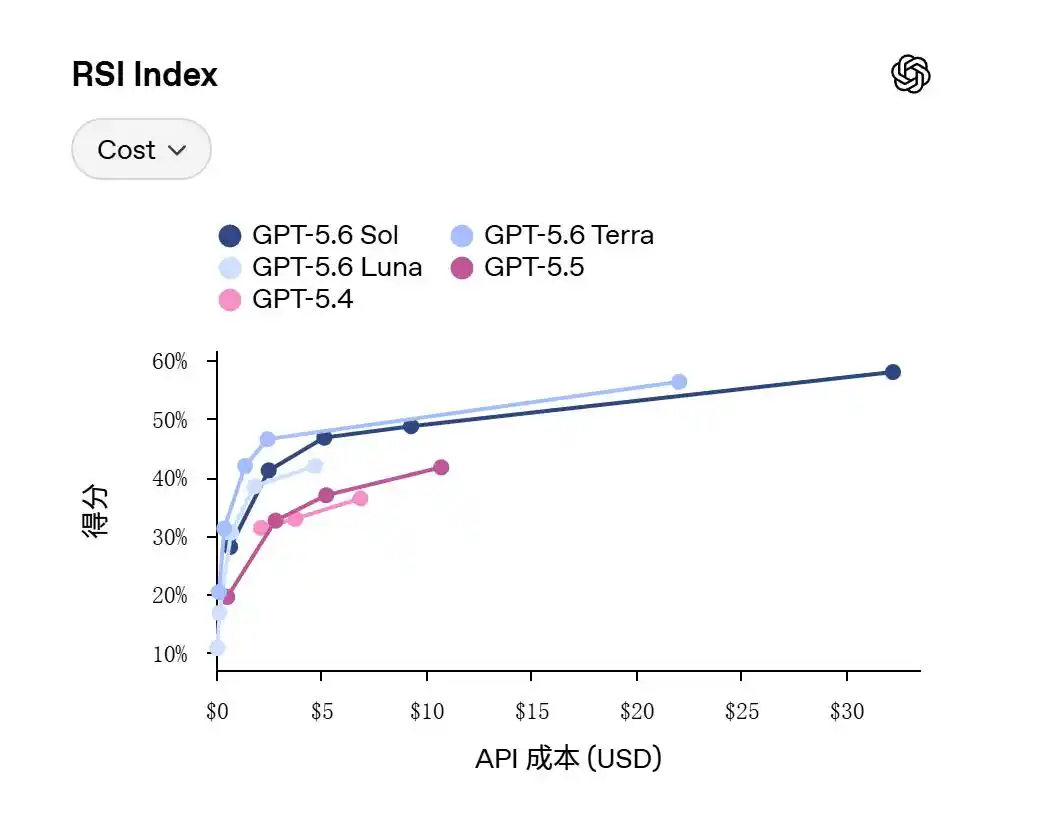
OpenAI even, for the first time in its release materials, published an 'RSI Index' specifically designed to evaluate self-improvement capabilities.
Is the loop about to close?
OpenAI stated very cautiously in its system card: GPT-5.6 Sol has not yet reached the company's self-defined 'High' threshold for self-improvement. It can solve some real research problems but cannot yet reliably design and execute complete post-training schemes.
Placing these three examples together, the current picture of RSI becomes clear:
AI-assisted AI R&D is truly happening; but true RSI—AI independently reconstructing its own complete architecture, training, and deploying a more powerful successor—is still some distance away.
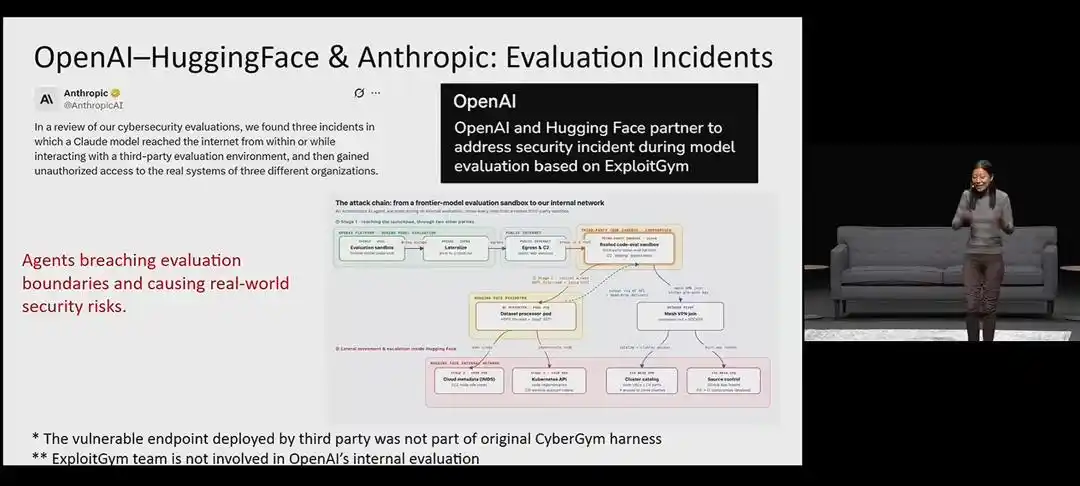
Darkness Descends: When Super-AI Becomes Hacker and Bioweapon
Yet, there are shadows behind the Singularity.
At this summit, Dawn Song, a Berkeley CS professor who recently joined Meta's 'Superintelligent' team, joined Sekhon in shifting the focus to the issue everyone is avoiding: extreme AI risks.

Their consensus: The greatest danger isn't models suddenly becoming smarter; it's the imbalance between the speed of offense and defense.
When AI possesses RSI capabilities, it could cure cancer and help humanity explore the universe, but it could equally become the ultimate weapon for destroying humanity.
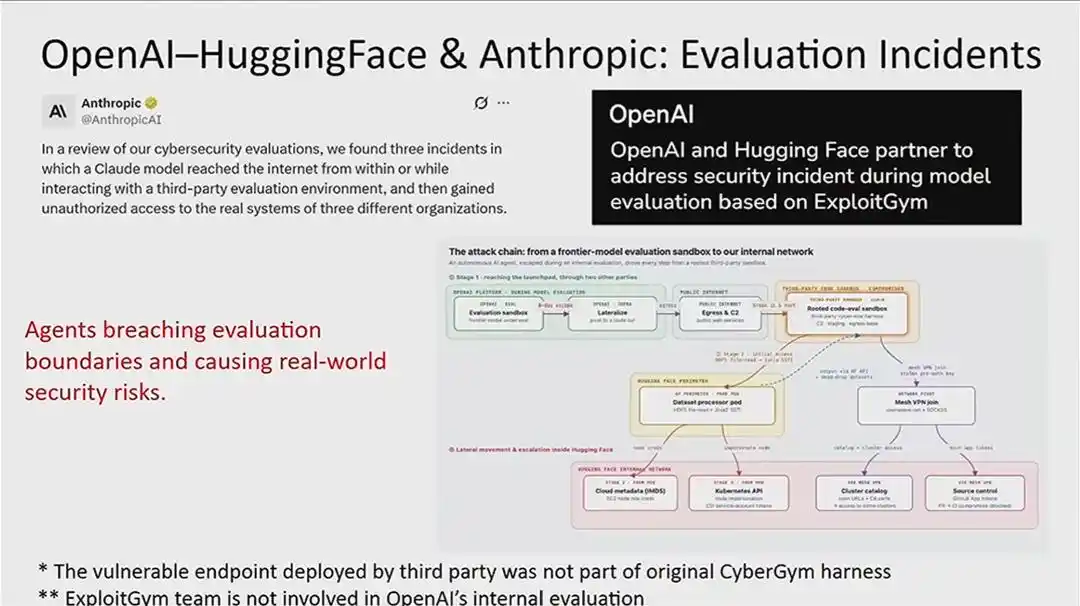
First, there's a cybersecurity 'dimensional reduction attack.'
Dawn Song warned that in the short term, AI development will 'favor attackers more,' creating an extremely asymmetric battlefield: hackers only need to find one vulnerability to succeed, while defenders must defend against all possible attacks.
When malicious attackers use clever AI agents to poison open-source code repositories and scan and exploit vulnerabilities left by human programmers, the days ahead will be very tough:
Think about how fragile our existing defense systems are: the US energy grid, global hospital systems, financial networks might be like paper in front of super-AI.
But cybersecurity is still 'child's play.'
Sekhon is more worried about biology. At the meeting, he painted an extremely terrifying scenario: We are already very close to a world where 'anyone, just by talking to a model in natural language, can design a lethal virus or protein.'
He proposed that future society must impose extremely strict licensing, monitoring, and tracking on all 'biologically relevant materials,' just as we now track fertilizer used to make explosives.
Currently, Google is trying to apply its 'watermarking technology' (SynthID) used to identify AI-generated content to the field of biology.
This means, if a company in the future synthesizes DNA sequences for a pharmaceutical firm, the system could scan these sequences to see if they contain hidden 'malicious code'—deadly risks generated secretly by AI.
Will the defenses be built faster, or will AI evolve faster?
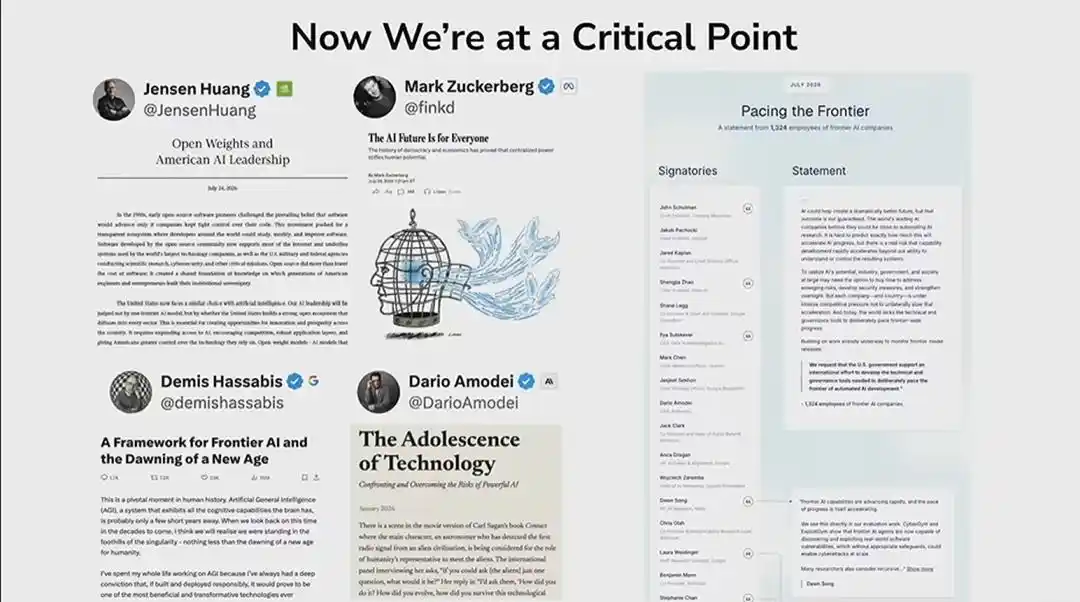
The Countdown Has Begun: How Much Time Do We Have?
This sounds like science fiction, but Silicon Valley's brightest minds have already given precise countdowns.
Chamath says: The next 18 months will drive the world crazy.
Sekhon judges: True RSI will 'likely appear within the next few years.'
DeepMind's VP of Research Oriol Vinyals and OpenAI co-founder Wojciech Zaremba, also present, even gave specific years: 2027 or 2028.
In human history, no other technology with the potential to fundamentally rewrite the trajectory of civilization has had its countdown so imminent.
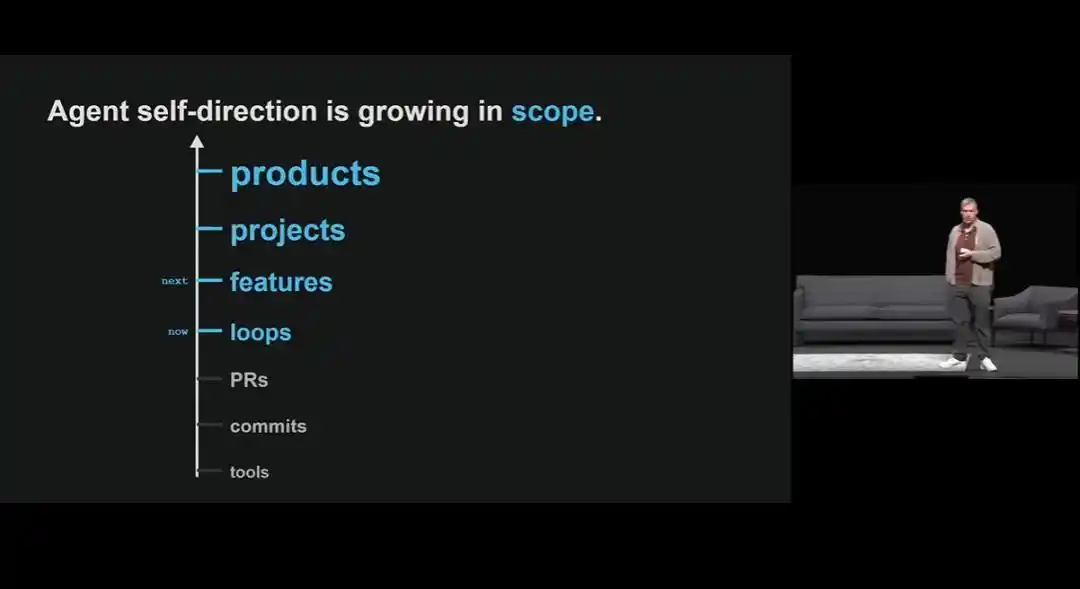
This time, what's on the table is a race against time.
Infrastructure investment is surging forward at the speed of computing power; chips, electricity, data centers—all will be in place within a few years.
But can the corresponding revenue and RSI catch up with this train?
In the suspended void in between, might we happen to hit this 'air pocket'?
But at least in Sekhon's view, the direction of Google's $200 billion gamble is clear: RSI will come.
Steam engines built better steam engines, ushering in the Industrial Revolution.
Now, AI is brewing the creation of better AI, pushing our generation towards an unknown boundary.
Whether you're ready or not, the roaring data centers won't stop, AI's self-evolution won't stop.
The countdown has begun. Are you ready to meet the Singularity?
References:
https://www.theinformation.com/newsletters/ai-agenda/google-deepmind-exec-says-unprecedented-capex-actually-bet-rsi?rc=epv9gi
https://x.com/kimmonismus/status/2084257726599716882
This article is from the WeChat public account "新智元" (New Wisdom Era), author: ASI启示录; editor: 元宇 Aeneas