STRC Breaks Below $95: Why Does It Continue to Depeg? Is There Default Risk?

marsbitPublicado a 2026-06-04Actualizado a 2026-06-04

Resumen

"STRC Falls Below $95: Why the Persistent Depegging and Is There Default Risk?" The article discusses the recent decline in the price of STRC, a perpetual preferred stock issued by Strategy (MSTR) designed to trade around a $100 par value. As of publication, STRC traded at $94.65, raising market concerns. STRC is described as a high-yield cash flow product, offering an 11.50% annual dividend paid monthly. Its "preferred" status grants it priority over common stock for dividends and in liquidation. Key reasons cited for the price depegging include: 1. **Bitcoin's Price Drop:** MSTR's assets are heavily tied to Bitcoin (BTC), which fell over 21% from its recent high, pressuring all Strategy-related products. 2. **Competitive Pressure:** Rival Strive Asset Management's similar product, SATA, offers daily dividends and has maintained its $100 par value with a ~13% yield. In response, Strategy has proposed changing STRC's dividend frequency from monthly to bi-weekly, pending shareholder vote. 3. **Technical Selling:** A break below $100 may have triggered algorithmic selling and stop-losses, exacerbating the decline. Regarding default risk, the analysis suggests it is currently low. Strategy founder Michael Saylor confirmed the June 2026 dividend rate remains at 11.50% with no cuts or suspensions. The company's massive reserve of 843,706 BTC provides a significant backstop for its obligations. Industry opinions are mixed. Some analysts view the BTC holdings as reliable sup...

Author: Tao Zhu, Jinse Finance

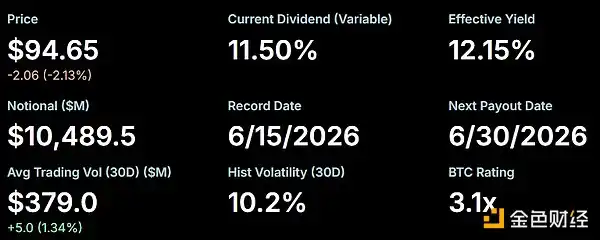
Summary: On May 29, STRC fell to $97.11 before recovering and closing at $98.57. Since then, STRC has mainly trended downward, trading at $94.65 at the time of writing. For a preferred stock designed to trade long-term around its $100 par value, such a decline has indeed drawn market attention.
1. What is STRC?

According to the Strategy website, Stretch (STRC) is the perpetual preferred stock of Strategy company. It currently has an annual dividend yield of 11.50%, paid monthly in cash. STRC's dividend rate adjusts monthly, aiming to encourage its stock price to trade around its $100 par value and reduce price volatility. STRC is listed on NASDAQ and can be traded on most mainstream brokerage platforms.

"Preferred" means having higher priority over common stock in terms of dividends and liquidation. As preferred stock issued by Strategy, STRC ranks below bonds but above common stock. Specifically, the "preference" of preferred stock manifests in two main aspects. First, priority in receiving dividend payments; preferred shareholders receive dividends before common shareholders and are the first to receive profits when earnings are insufficient. Second, priority in receiving compensation in case of company bankruptcy; compared to common shareholders who may lose their entire principal, preferred shareholders might recover part of theirs.

STRC is essentially more like a "high-yield cash flow product" rather than a growth stock seeking capital appreciation. The core purpose for many investors buying STRC is to obtain a yield above 11%, rather than focusing on whether the stock price will rise.

2. Why Has STRC Depegged Recently?

1. BTC Price Decline

Strategy's largest asset is Bitcoin, making it highly correlated with BTC's price. In late May, the overall crypto market experienced a significant pullback: BTC's price has dropped from a monthly high of around $82,000 to around $64,300 at the time of writing, a decline of 21.59%.
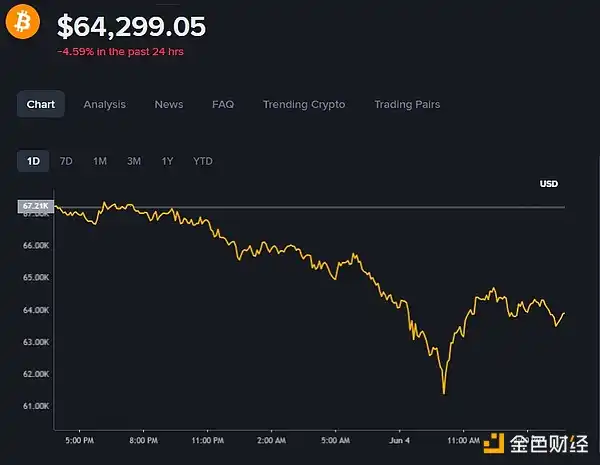
The rapid decline in BTC from its highs has led to a sell-off in risk assets, putting pressure on Strategy's related products.

2. Pressure from Competitors

Another Bitcoin asset management company, Strive Asset Management (ASST), has adopted a different strategy. The company recently announced that its perpetual preferred security, SATA, will distribute dividends daily. Over the past two weeks, SATA's price has remained stable around its $100 par value, maintaining a dividend yield of approximately 13% even during Bitcoin's price decline.

Over the past three months, Strive's stock price has risen about 110%, while MSTR has only risen 12%, and Bitcoin is up only 8%. This divergence suggests investors may prefer Strive's more robust balance sheet and higher-yielding preferred stock structure.

Note: Strive was originally an asset management company, founded in 2022 and headquartered in Dallas, Texas, USA. It initially focused on issuing ETF funds and was known for its "shareholder value maximization" philosophy. Starting in 2025, Strive underwent a significant transformation. It began emulating Strategy's model—becoming a Bitcoin reserve company and issuing preferred stock.

Perhaps inspired by Strive's daily dividend, according to an announcement, Strategy has proposed changing STRC's dividend payment frequency from monthly to bi-monthly. If the proposal is approved and adopted, it is expected to shorten the reinvestment lag, enhance liquidity and market efficiency, and improve price stability.

This proposal requires a joint vote by both MSTR and STRC shareholders and can only pass if both classes vote in favor. According to the proposal timeline, voting began on April 28 and will conclude on the meeting day of June 8. If approved, the first record date under the new schedule will be June 30, with the first payment date on July 15. Shareholders eligible to vote must have held shares by April 17.

3. Technical Selling

Strategy intends for STRC to maintain a price around $100 long-term. When STRC falls below $100, many quantitative funds may perceive the market as questioning the product's pricing mechanism. This could lead to issues such as passive de-risking, technical stop-losses, and arbitrage capital exiting, potentially causing the decline to widen further.

3. Does STRC Carry Default Risk?

There is no apparent default risk at present.

First, investors previously questioned whether Strategy would ultimately sell Bitcoin to repay debt or pay dividends, or continue using funds raised from securities issuance to expand its Bitcoin holdings. Saylor responded on X: "Work is proceeding nicely."
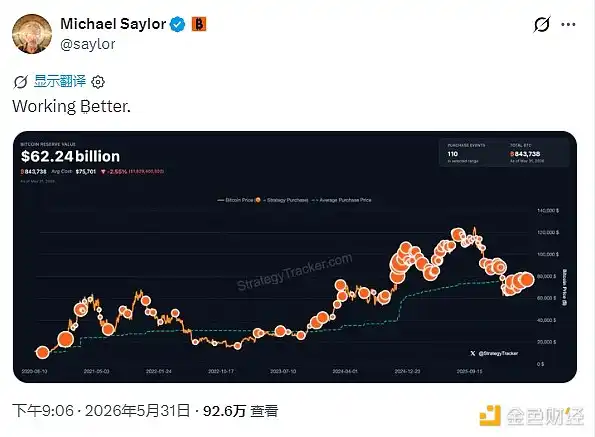
On June 1, Strategy founder Michael Saylor confirmed that the dividend yield for its perpetual preferred stock STRC would remain at 11.50% for June 2026. STRC dividends have not been cut, suspended, or defaulted; everything is proceeding normally.

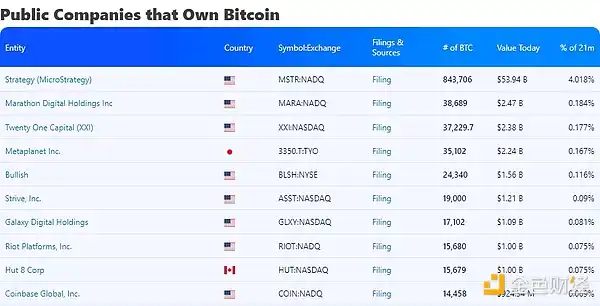
Second, Strategy still possesses a massive Bitcoin reserve. With 843,706 BTC, Strategy firmly holds the top spot among corporate BTC treasuries, owning 4.01% of the total 21 million BTC. As long as BTC does not experience a long-term crash and the company's financing channels remain open, STRC's cash flow pressure remains manageable.
4. How Do Industry Insiders View This?

  • Forbes pointed out: STRC was listed in July 2025, marking the largest IPO in the US that year, raising $2.521 billion. Monthly dividend payments are approximately $80-90 million. By publicly and intentionally selling small amounts of Bitcoin to fulfill these obligations, Strategy signals to rating agencies that the company treats preferred stockholders as priority creditors. This credibility makes STRC more attractive. Increased demand for STRC means more funds raised, leading to more Bitcoin purchases.

  • Benchmark analyst Mark Palmer noted: "Investors should now view Strategy's Bitcoin holdings as a reliable backup for financing preferred stock dividends."

  • Prominent gold advocate and cryptocurrency critic Peter Schiff stated on X: "Most STRC investors are likely to lose a large portion of their money because once Michael Saylor is forced to cancel the dividend, STRC's price will ultimately crash. At that point, a wave of lawsuits is likely to further exacerbate the problems facing Strategy (MSTR). Investors who suffer losses due to misleading promotions are expected to seek compensation through legal channels to recover their investments."

  • The Motley Fool believes: First, focus on STRC's inflation problem. Inflation delivers a double blow: it erodes the real value of your $100 stock and diminishes the value of the dividends you receive. Therefore, the longer you hold this stock, the more severe the inflation problem becomes. Second, Strategy can easily cut or delay dividends without triggering a traditional debt default. Therefore, if the price falls below par, new stock issuance will stop, and you will be left holding an asset yielding less than initially advertised, with the principal potentially unrecoverable in the short term or even forever.

Summary

STRC's recent decline from around $100 to $94.65 is primarily influenced by factors including the Bitcoin price drop, competitor impact, and technical selling. Currently, STRC shows no apparent default risk; the company continues to pay dividends at the 11.5% level and consistently uses it as a core financing tool.


Preguntas relacionadas

QWhat is STRC, and what is its primary investment objective?

ASTRC is the perpetual preferred stock issued by MicroStrategy. Its design goal is to trade long-term around its $100 par value, and it currently offers an annual dividend yield of 11.50%, paid monthly in cash. It functions more like a high-yield cash flow product rather than a growth stock focused on capital appreciation.

QWhat are the main reasons cited for STRC's recent price decline below its $100 par value?

AThe main reasons are: 1) The decline in Bitcoin price, as MicroStrategy's assets are highly tied to BTC. 2) Competitive pressure from Strive Asset Management's product (SATA), which offers daily dividends. 3) Technical selling triggered when the price fell below $100, leading to passive reductions, stop-losses, and arbitrage funds exiting.

QDoes STRC currently face a default risk according to the article?

ANo, the article states there is no apparent default risk currently. MicroStrategy's founder confirmed the 11.50% dividend remains unchanged for June 2026, and the company's massive Bitcoin reserves (843,706 BTC) provide a reliable backup for funding dividend payments.

QWhat proposal has MicroStrategy made regarding STRC's dividend payments, and what is its intended effect?

AMicroStrategy has proposed changing STRC's dividend payment frequency from monthly to twice-monthly (semi-monthly). The intended effects are to shorten the reinvestment lag, enhance liquidity and market efficiency, and improve price stability.

QWhat are two key risks associated with investing in STRC mentioned by industry commentators like The Motley Fool?

ATwo key risks mentioned are: 1) Inflation risk, which erodes both the real value of the $100 stock and the value of the dividends received. 2) The risk that MicroStrategy can easily cut or delay dividends without a traditional debt default, potentially leaving investors with lower-than-advertised returns and difficulty recovering their principal.

Lecturas Relacionadas

Podcast Notes | Conversation with GSR Asset Management Head: To Determine if This Crypto Rally is Real, Just Watch the Lending Rates on Aave

Podcast Summary: Dialogue with GSR's Head of Asset Management: To Determine if This Crypto Rally is Real, Just Check Lending Rates on Aave Andy Baehr, Managing Director of Asset Management at GSR, discusses the current crypto market, characterizing it as stuck in a state of "ambivalence" with short-lived, unsustainable rallies. He outlines a simple framework: the market moves between "ambivalence" and "conviction" (sustained upward momentum). Currently, every rally resembles a single-stage rocket booster that quickly fizzles out. Baehr identifies three key signals to watch: 1) DeFi lending rates, 2) the potential passage of the CLARITY Act, and 3) the market forming a consensus on the "Fed hawkish peak." He emphasizes that the most immediate indicator for the sustainability of the recent CPI-triggered rally is the USDC borrowing rate on Aave, currently around 3.75%—close to U.S. Treasury yields. The absence of a credit spread indicates low leverage demand and a lack of market energy. He explains that a healthy, sustained rally requires layered buying pressure. Last year's rally progressed from an ETH short squeeze to crypto-native trader influx and finally to ETF inflows. Currently, this structure is missing. Other potential structural buyers like Digital Asset Treasury (DAT) companies are absent, and ETF flows have proven transient. Baehr notes that while small-cap crypto tokens outperformed large caps in Q2—a potential sign of capitation in major assets—capital is also flowing to more exciting opportunities like AI stocks and tech IPOs, leaving crypto sidelined. Regarding DeFi, he highlights that platforms like Aave provide a clear, real-time signal of leverage demand through their supply/demand-driven interest rates. A significant, sustained rate increase would signal genuine market conviction. He also observes the quiet emergence of fixed-income-like products and vaults in DeFi. On regulation, the probability of the CLARITY Act passing before the August 7th deadline has dropped linearly from 75% to below 40% on Polymarket. Baehr suggests its passage would be treated as a bullish surprise, a potent driver for price movement. However, political hurdles, including ethical clause debates and disclosures about the First Family's crypto profits, remain significant obstacles. Ultimately, the market awaits clarity on the Fed's terminal rate under Chair Warsh. Until the "Fed Solstice"—the point where the market collectively understands the peak of hawkish policy—sustained conviction will be difficult to achieve.

marsbitHace 7 min(s)

Podcast Notes | Conversation with GSR Asset Management Head: To Determine if This Crypto Rally is Real, Just Watch the Lending Rates on Aave

marsbitHace 7 min(s)

7 Months After the Collapse of Huiwang, Southeast Asia's Escrow Platforms Undergo a Major Reshuffle

Following the collapse of Huione Pay—dubbed the "Alipay of Southeast Asia"—seven months ago, the region's underground financial guarantee platform sector is undergoing a significant reshuffle. This power vacuum has been swiftly filled by emerging platforms such as XinBi, Tiger/Navigator, JinBei (renamed JinBo), Dali/Tiancheng, and FullyLight. These platforms, operating largely via Telegram and offering services like escrow for illicit transactions, have absorbed the vast user base and markets left behind by Huione. While positioning themselves as "trust intermediaries," their primary clientele consists of networks involved in online scams, money laundering, illegal gambling, and even human trafficking. For instance, the Tiger/Navigator platform explicitly provides "escrow" services for kidnapping-for-ransom operations ("强押车交易"). Data underscores the immense scale: Huione alone processed over $103 billion in cryptocurrency payments and facilitated over $31 billion through its escrow market before its downfall, linking it to Cambodia's notorious Prince Group. Since its collapse, competitors have seen explosive growth. For example, the XinBi platform has accumulated over $1.6 billion in total USDT revenue, while platforms like NewPay, OkPay (under Dali), and FullyLight Wallet collectively processed over $4.8 billion in USDT in a single year. This ecosystem thrives in regions like Cambodia and Myanmar, where regulatory gaps allow these platforms to act as critical financial infrastructure for sprawling cybercrime industries, from scam compounds to online casinos. The article concludes that the moniker "Southeast Asian Alipay" is a misnomer, obscuring the platforms' fundamental role in enabling serious criminal enterprises rather than representing legitimate financial innovation.

Odaily星球日报Hace 1 hora(s)

7 Months After the Collapse of Huiwang, Southeast Asia's Escrow Platforms Undergo a Major Reshuffle

Odaily星球日报Hace 1 hora(s)

The Changing Landscape: What Are Crypto VCs Experiencing?

Title: The Shifting Landscape of Crypto Venture Capital The era of dedicated crypto venture capital funds is undergoing a significant transformation. Once essential for navigating the sector's complexity and high risk, these specialized funds are now facing an identity crisis as the market matures. This shift mirrors historical patterns in other specialized investment classes like cleantech and SPACs, where initial information advantages dissipate as technologies become mainstream and integrated into existing industry frameworks. The article argues that crypto is reaching a critical inflection point, transitioning from a "building phase" to an "integration phase." Major players like Stripe, BlackRock, and Visa now engage with crypto not for its novel mechanics but as a foundational financial infrastructure. Their needs—regulatory compliance, banking partnerships, distribution channels—align with traditional fintech, a domain easily understood by large, generalist funds like Sequoia and Founders Fund. This evolution creates a "barbell effect" within the VC landscape. On one end are massive, diversified platforms that can incorporate crypto as one vertical among many. On the other are small, nimble funds focused on niche, experimental projects. The middle ground—medium-sized dedicated crypto funds—is being squeezed out. Their typical fund size makes it impossible to generate sufficient returns solely from early-stage crypto bets, yet they cannot compete with giants for later-stage deals. Consequently, leading crypto-native firms like Paradigm and Framework Ventures are expanding into AI, robotics, and other sectors, driven partly by LP pressure for better returns amid a broader VC DPI crisis. Others, like Dragonfly and a16z, have narrowed their crypto focus predominantly to financial infrastructure like stablecoins, reframing the sector's core narrative. For crypto entrepreneurs, this consolidation presents challenges. While generalist funds offer larger checks and broader resources, crypto projects now compete fiercely with AI for attention and capital within these firms. Furthermore, the long-term, non-commercial foundational work that built the ecosystem—funded by dedicated crypto VCs—is less likely to attract generalist capital focused on direct returns. The conclusion is that "crypto investor" as a standalone category is becoming obsolete, akin to "internet investor." Crypto is becoming a baseline infrastructure layer. The future will see a barbell structure: large-scale growth financing handled by generalist funds, while pioneering, speculative projects are funded by small, specialized vehicles. The dedicated crypto funds of the 2017-2021 boom, which incubated core infrastructure, are giving way to this new, bifurcated reality.

Foresight NewsHace 1 hora(s)

The Changing Landscape: What Are Crypto VCs Experiencing?

Foresight NewsHace 1 hora(s)

Trading

Spot
活动图片




