Predicting the 'Side Hustles' of Market Giants: From Online Betting to Offline Store Openings

比推Publicado a 2026-02-04Actualizado a 2026-02-04

Resumen

The competition between leading prediction market platforms Kalshi and Polymarket has expanded from online to offline. On February 4, Kalshi distributed free groceries (up to $50 per person) at a market in New York City, promoting its event-based trading platform with the slogan “We believe in free markets.” The campaign targeted economic concerns like inflation and aimed to attract users by lowering entry barriers. On the same day, Polymarket announced plans to open a permanent free grocery store in New York, supported by a $1 million donation to address food security. The store, set to open on February 12, aligns with Polymarket’s mission to make prediction markets accessible and socially impactful. This offline move reflects intensifying competition. Kalshi, compliant in the U.S., has partnered with platforms like Coinbase and reported annualized trading volume exceeding $100 billion. Polymarket faces regulatory challenges, including bans in Ukraine and Portugal, and restrictions in Nevada. It also competes with new entrants like Opinion, which raised millions and gained rapid traction. Other players, including Crypto.com, Kraken, Robinhood, and Hyperliquid, are also entering the prediction market space, driven by growing user interest in event-based trading. As global events like elections and sports continue to attract attention, prediction markets are poised for further growth, keeping platforms like Kalshi and Polymarket in a fierce battle for users.

Author: Ma He, Foresight News

Original Title: Behind the 'Side Hustles' of Prediction Market Giants: Opening Offline Grocery Stores Out of Anxiety?


Who would have thought that the competition between the two online prediction market giants, Kalshi and Polymarket, has already extended from purely online to offline.

At 12:00 PM on February 4th, Kalshi gave away free groceries to residents at the West Side Market on 84 Third Avenue in New York City, with a limit of up to $50 per person.

Kalshi CEO Tarek Mansour stated, "We believe in free markets," making it clear that this move aims to promote the concept of prediction markets through tangible benefits to the public.
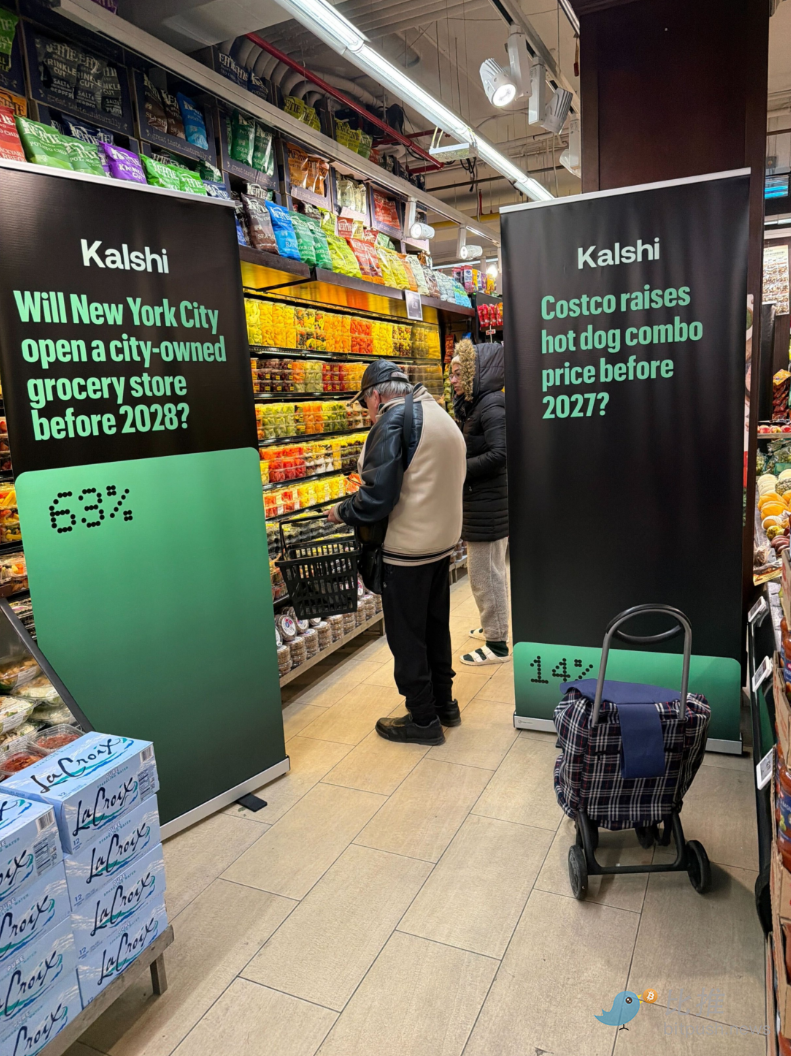
The highlight of the event lies in its clever marketing strategy. First, it directly ties into current economic hot topics—inflation and rising living costs have become pain points for the American public. By offering free groceries, Kalshi not only provides immediate value but also positions itself as an "event contract exchange," allowing users to trade on events such as politics, economics, and sports.

For example, users can predict fluctuations in grocery prices or changes in economic indicators on the platform, thereby transforming the offline experience into online participation. Second, the event’s location in a high-density, high-consumption city like New York maximizes exposure. Official videos show crowds rushing in at the opening moment, likened to "Christmas revisited."

The event had a low barrier to entry: no app download was required to participate; one only needed to shop in-store, and Kalshi would cover the bill. This not only lowered the entry barrier for users but also reinforced the platform’s approachable image.

Unlike Kalshi’s short-term promotion, Polymarket’s offline activity is more long-term and ambitious.

On February 4th, Polymarket announced it would open a "free grocery store" in New York, located at 7 Madison Avenue, scheduled to officially open on February 12th. The store is supported by the Food Bank for New York City, with the project breaking ground in late 2025 and a lease agreement already signed. Additionally, Polymarket donated $1 million to address security concerns.

Polymarket’s announcement coincidentally came on the same day as Kalshi’s event, even with overlapping opening times, which is seen as a direct response.
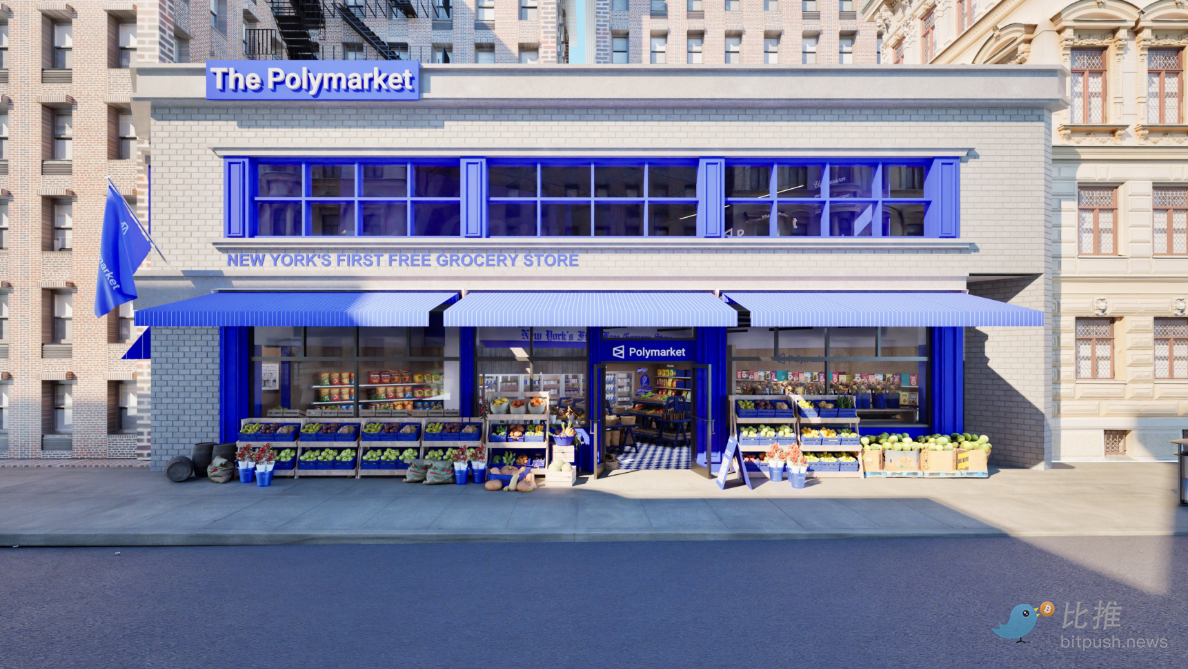
The highlight of Polymarket’s activity lies in its innovation and emphasis on social responsibility. First, this is not a one-time promotion but a permanent store where users can obtain groceries for free, addressing food security issues in New York. Second, this aligns closely with the platform’s core philosophy of revealing truth and allocating resources through prediction markets.

Polymarket founder Shayne Coplan stated that this move is an expansion of the platform from online to offline, aiming to "make prediction markets accessible."
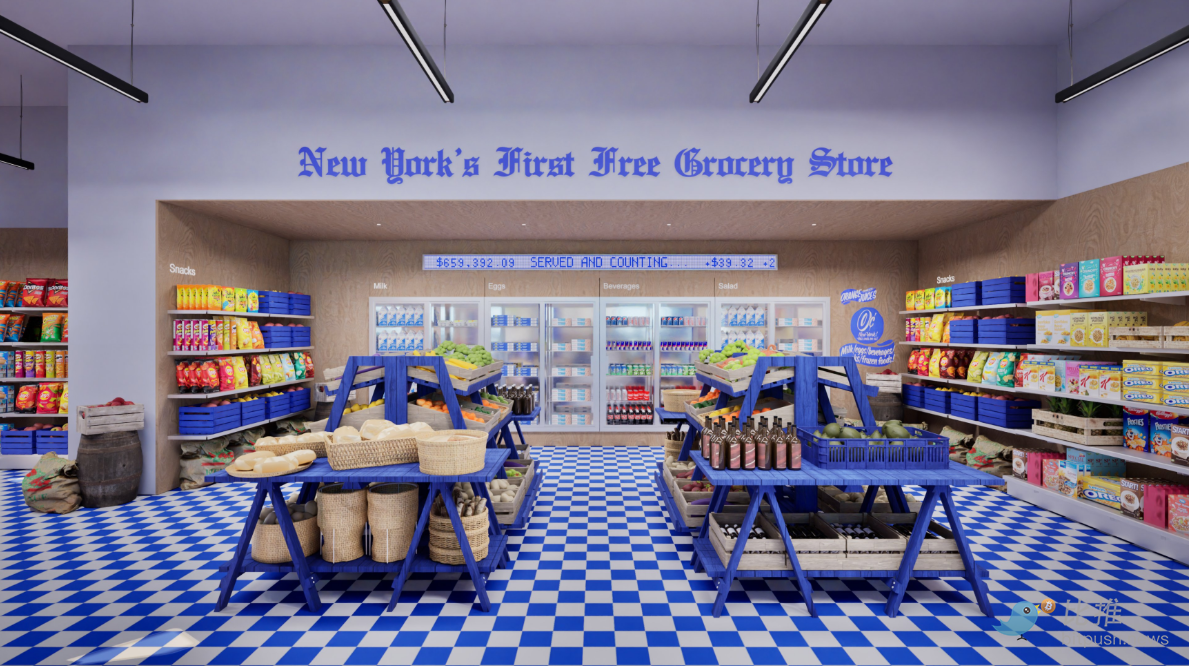
Polymarket incorporates its signature blue logo into the store, with a simple and stylish interior design. Compared to Kalshi’s $50 cap, Polymarket’s free model is more attractive and is expected to reach more low-income groups.

Intensified Rivalry Between the Two Platforms

The offline activities of Kalshi and Polymarket are a microcosm of the fierce competition in the prediction market.

Kalshi uses U.S. compliance as its moat, rapidly expanding its territory. It has not only integrated with various Web3 wallets like Phantom but also partnered with Coinbase to extend its services to all 50 U.S. states. Coinbase users can trade prediction market contracts with as little as $1. In January of this year, Kalshi officially announced that its annualized trading volume exceeded $100 billion.

Polymarket has not only strengthened collaborations with crypto-native players like Jupiter and Phantom but has also expanded its traffic channels by sponsoring events such as the Hollywood Golden Globe Awards.

However, the latest data shows that its market share is still being eroded by Kalshi.
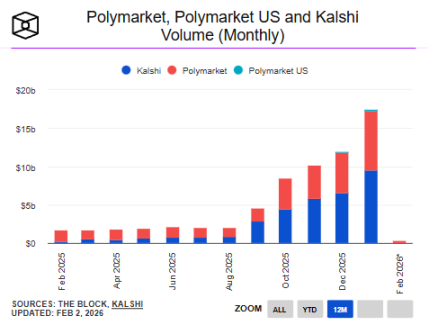
To make matters worse, Polymarket faces troubling regulatory issues.

In January of this year, Ukraine banned Polymarket, as the country’s current legal framework does not recognize prediction markets. Portuguese regulators have also ordered Polymarket to cease operations in the country.

In February, a Nevada court issued a temporary restraining order, prohibiting Polymarket from offering event contract services to Nevada residents before a preliminary hearing on February 11th.

Additionally, many regions in Asia view Polymarket as a gambling platform and have blocked its IP address.

Another competitor backed by Binance is also eyeing the market. Opinion completed a tens of millions of dollars funding round in December 2025. Driven by airdrop expectations, the platform’s trading volume exceeded $5 billion in just one month, with daily fee revenue consistently surpassing $100,000.
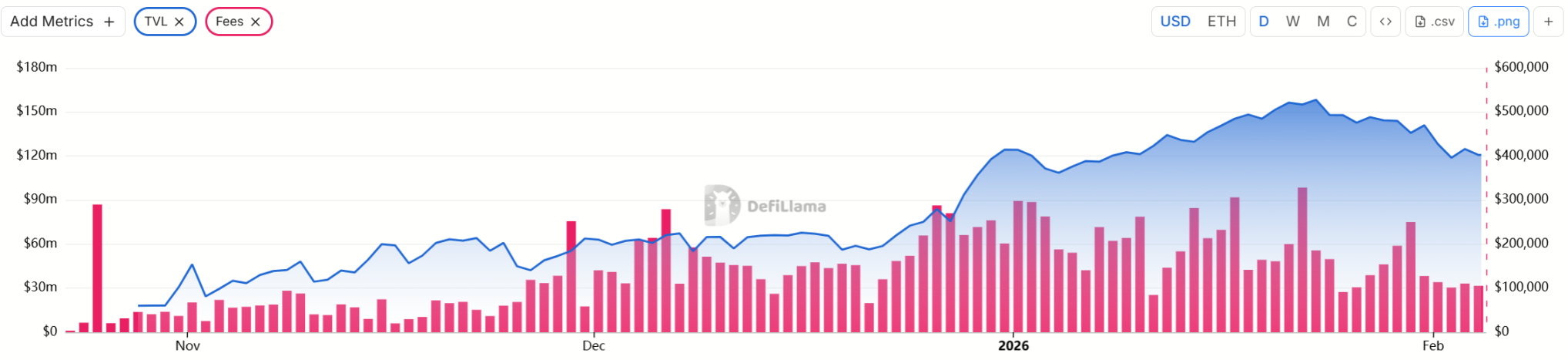
Meanwhile, various exchanges, DEXs, and traditional financial institutions are also entering the prediction market.

Bloomberg reported that Crypto.com announced on Tuesday that it would launch a dedicated prediction market platform, OG, just days before the Super Bowl. Its co-founder and CEO, Kris Marszalek, stated that its event contract business has grown 40 times week-over-week in the past six months, making the launch of an independent product necessary. Another crypto trading platform, Kraken, plans to launch prediction market services in 2026, as revealed by its Global Consumer Business Head, Mark Greenberg, on the Crypto World show.

Robinhood had already launched a prediction market before Trump’s election and plans to introduce more new event contracts. In October 2025, Robinhood CEO Vlad Tenev stated in an interview with Bloomberg that its prediction market segment is one of the fastest-growing sectors and one of its nine business lines with annual revenue exceeding $100 million.

Derivatives DEX leader Hyperliquid is also testing a native prediction market on its testnet. Hyperliquid announced that HyperCore will support Outcome Trading (HIP-4). Outcome Trading involves fully collateralized contracts settled within a fixed range. This is a universal foundational trading element applicable to scenarios such as prediction markets and bounded option-like instruments.

It features non-linear, time-bound contracts, offering a form of derivatives trading without leverage or liquidation, and can be combined with portfolio margin and HyperEVM. Currently, this feature is still under development and is only being tested on the testnet. Once technical development is complete, Hyperliquid will deploy standardized markets denominated in USDH.

The store openings by Kalshi and Polymarket are not just marketing but also battles to capture user attention.

Wars, political events, elections, and sports competitions are gathering global users online, enabling 24/7 non-stop global betting. Rule disputes, wealth stories, and insider trading are all unfolding simultaneously, with only money and brains never sleeping. Perhaps future hot events like the World Cup and U.S. elections will continue to drive prediction market trading volumes and recognition to new heights.

Before the final outcome is determined, no participant dares to let their guard down.


Twitter:https://twitter.com/BitpushNewsCN

Bitpush TG Discussion Group:https://t.me/BitPushCommunity

Bitpush TG Subscription: https://t.me/bitpush

Original link:https://www.bitpush.news/articles/7608693

Preguntas relacionadas

QWhat was the main purpose of Kalshi's free grocery giveaway event in New York?

AKalshi's free grocery event aimed to promote the concept of prediction markets by providing immediate value to the public, linking economic concerns like inflation to their platform where users can trade on events such as politics, economics, and sports.

QHow does Polymarket's approach to a physical store differ from Kalshi's event?

APolymarket's store is a permanent establishment in partnership with Food Bank for New York City, focusing on long-term social responsibility and addressing food insecurity, while Kalshi's was a temporary promotional event with a spending limit per person.

QWhat regulatory challenges is Polymarket currently facing?

APolymarket faces bans in Ukraine and Portugal, a temporary restriction order in Nevada, and is blocked in several Asia-Pacific regions where it is viewed as a gambling platform.

QWhich companies are emerging as new competitors in the prediction market space?

ANew competitors include Opinion, which received funding and rapid growth, Crypto.com's OG platform, Kraken's planned service, Robinhood's expanding prediction market, and Hyperliquid's testing of native prediction market features.

QWhat is the significance of the competition between Kalshi and Polymarket expanding to physical locations?

AThe expansion into physical locations represents a strategic move to capture user attention and market share beyond online platforms, using real-world engagement to drive awareness and participation in prediction markets amid growing competition.

Lecturas Relacionadas

The King of Blind Date Attire in Korea: How SK Hynix Made a Comeback Against Samsung?

In South Korea's dating scene, SK Hynix employees are now highly sought after, a status shift fueled by the company's astronomical profits and employee bonuses, projected to reach up to 6.1 million RMB per person by 2027. This marks a dramatic reversal for the long-time second-place player in memory semiconductors, which has now surpassed its rival Samsung in annual operating profit. The turnaround story began in 2008 when a struggling Hynix, emerging from bankruptcy restructuring, took a risky bet by agreeing to develop High Bandwidth Memory (HBM) with AMD. At the time, HBM had no clear market beyond high-end graphics cards and was a costly, complex technology. Major players like Samsung, pursuing its own HMC technology, declined. For Hynix, with only memory as its core business, it was a gamble born of necessity. The pivotal moment came in 2012 when SK Group Chairman Chey Tae-won acquired Hynix. Defying industry downturns, he invested heavily in R&D and fabrication, sustaining the HBM project through over a decade of commercial uncertainty and internal challenges. A key break occurred around 2016-2017 when Samsung faced production issues supplying HBM2 for Google's TPU, allowing SK Hynix to gain a crucial foothold in the data center market. The AI explosion post-ChatGPT in 2022 was the catalyst, turning HBM into a critical bottleneck for AI accelerators like NVIDIA's GPUs. By 2025, SK Hynix captured 62% of the global HBM market, leaving Samsung at 17%. For the first time, its annual operating profit exceeded Samsung's. Analysts point to the "innovator's dilemma" to explain Samsung's miss: its vast, successful business portfolio made it risk-averse, preventing an all-in bet on the initially niche HBM technology. In contrast, SK Hynix, as a challenger with its back against the wall, had no choice but to commit fully. The story highlights how Korea's chaebol system allows for ultra-long-term bets beyond quarterly pressures. However, SK Hynix's lead isn't guaranteed. Samsung is aggressively catching up on HBM4, and challenges like customer concentration (heavy reliance on NVIDIA) and technical hurdles in advanced packaging remain. The narrative underscores a market truth: the greatest alpha often comes from betting on uncertain, long-term directions others dismiss, much like HBM in 2008.

marsbitHace 23 min(s)

The King of Blind Date Attire in Korea: How SK Hynix Made a Comeback Against Samsung?

marsbitHace 23 min(s)

Understanding Hash in One Article: The "Browser Miner" on Ethereum

Hash is an Ethereum-based ERC-20 token described as a "browser-minable post-quantum token." Its key features include enabling browser-based GPU mining without specialized hardware, a fixed supply cap of 21 million tokens, immutable and permissionless smart contracts with no team allocation or pre-mining, and an emphasis on post-quantum security using Keccak256 hashing. The mining mechanism is a simplified on-chain proof-of-work where miners solve unique challenges tied to their wallet address. Key design elements prevent answer theft, with epochs resetting every 100 blocks (~20 minutes) and a per-block minting limit. Emission follows a Bitcoin-like halving schedule every 100,000 mints, starting at 100 tokens per mint. Projections suggest all tokens could be mined within approximately 294 days if a target rate of one mint per minute is sustained. Hash emphasizes "post-quantum" security by leveraging hash-based primitives like Keccak256, which are considered more resistant to quantum attacks compared to elliptic-curve cryptography. While not a fully post-quantum asset, it aligns with Ethereum's broader post-quantum research narrative. The project completed its Genesis sale at $0.03 and began trading on Uniswap, with its price reaching around $0.19. The initial circulating supply is small, with 5% sold in Genesis and 5% allocated to liquidity. The majority (47.6% of total supply) is allocated to early-stage mining, leading to a front-loaded emission schedule. This structure, combined with low initial liquidity, makes Hash a high-volatility, high-risk project dependent on sustained miner participation and market demand to absorb new supply.

marsbitHace 37 min(s)

Understanding Hash in One Article: The "Browser Miner" on Ethereum

marsbitHace 37 min(s)

OpenAI's Largest Internal Wealth Creation: 600 People Cash Out a Total of $6.6 Billion, 75 Take Home the Maximum $30 Million Each

A Wall Street Journal report reveals OpenAI's unprecedented pre-IPO wealth creation. In a single employee stock sale last October, over 600 current and former employees sold shares, collectively cashing out approximately $6.6 billion. Due to high investor demand, the company tripled the individual sale cap to $30 million, with about 75 employees selling the maximum amount. This event represents the largest such transaction in tech industry history for a private company. OpenAI's valuation was $500 billion for this tender offer. Employees with over two years of tenure were eligible, allowing many post-ChatGPT hires their first liquidity event. The company's stock has reportedly grown over 100-fold in seven years. Following a restructuring, employees collectively hold about 26% of OpenAI. The scale of executive wealth is also staggering. In court testimony related to Elon Musk's lawsuit, President and co-founder Greg Brockman confirmed his OpenAI stake is worth around $30 billion. Analysis indicates about 165 current and former employees hold a combined ~$164.9 billion in equity, averaging nearly $1 billion per person in paper wealth. OpenAI's per-employee stock-based compensation is estimated to be 34 times the average of major tech firms before their IPOs. OpenAI continues its rapid ascent, closing a $122 billion funding round at an $852 billion valuation in March. With monthly revenue hitting $2 billion, over 900 million weekly ChatGPT users, and plans for a potential trillion-dollar IPO in late 2026, this wealth-creation engine shows no signs of stopping.

链捕手Hace 59 min(s)

OpenAI's Largest Internal Wealth Creation: 600 People Cash Out a Total of $6.6 Billion, 75 Take Home the Maximum $30 Million Each

链捕手Hace 59 min(s)

Trading

Spot
Futuros
活动图片