Morning Report | xAI Launches Skills; Duan Yongping Takes First Position in Circle in Q1 2026; Polymarket Partners with Nasdaq to Launch Prediction Market

链捕手Publicado a 2026-05-20Actualizado a 2026-05-20

Resumen

**Title:** Daily Brief: Musk's xAI Launches "Skills"; Duan Yongping's First Circle Investment; Polymarket Partners with Nasdaq **Key Highlights:** * **AI Developments:** Elon Musk's xAI released "Skills," enabling its Grok AI to retain memory across conversations. OpenAI co-founder Andrej Karpathy joined rival Anthropic. * **Crypto & DeFi:** May saw 14 crypto hack incidents, including 3 major DeFi attacks in 5 days (Echo Protocol, THORChain, Verus). The Ethereum Foundation faces another exodus with two core members departing. * **Corporate Moves:** Investor Duan Yongping disclosed a new $19M position in Circle. Analog Devices is in talks to acquire AI chip firm Empower Semiconductor for ~$1.5B. * **Financials & Partnerships:** Canaan reported Q1 2026 revenue of $62.7M and record-high crypto reserves. Prediction market Polymarket partnered with Nasdaq to launch markets for private companies. * **Market Data:** VanEck predicts digital credit markets could reach $2.5T in a decade, with Bitcoin potentially hitting $1M. Top trending meme tokens on ETH, Solana, and Base networks are listed. **Featured Articles:** Three analysis pieces explore: 1) potential regulatory pressures on DEXs like Hyperliquid, 2) challenges to Solana's "internet capital market" narrative, and 3) the future emergence of a dedicated capital market for autonomous AI agents (Agents).

Compiled by: ChainCatcher


Key News:

  • Three Major DeFi Attacks in Five Days, Total Crypto Hacks in May Reach 14
  • Elon Musk's xAI Launches Skills
  • Analog Devices to Acquire AI Chip Company Empower Semiconductor for $1.5 Billion
  • Duan Yongping Takes First Position in Circle in Q1 2026, Holding Value $19.08 Million
  • Polymarket Partners with Nasdaq to Launch Prediction Market for Private Companies
  • Canaan Releases Q1 2026 Financials: Total Revenue $62.7 Million, Cryptocurrency Holdings Hit New High
  • Ethereum Foundation Hit by Another Wave of Departures, Core Members Carl Beek and Julian Ma Announce Exit

What Major Events Happened in the Past 24 Hours?

OpenAI Co-founder Andrej Karpathy Joins Anthropic

ChainCatcher news: OpenAI co-founder and former Tesla AI director Andrej Karpathy officially announced joining Anthropic, stating: "I believe the next few years will be a particularly critical period for frontier development of large language models (LLMs). I am very excited to join the team here and get back to R&D work. I remain passionate about education and plan to continue advancing related work at an appropriate time in the future."

Polymarket Partners with Nasdaq to Launch Prediction Market for Private Companies

Canaan Releases Q1 2026 Financials: Total Revenue $62.7 Million, Cryptocurrency Holdings Hit New High

ChainCatcher news, Canaan Inc. announced its first quarter 2026 financial results. The report shows total revenue of $62.7 million, in line with prior guidance; net loss of $88.7 million. As of March 31, 2026, the company's cryptocurrency holdings reached 1,807.60 Bitcoin and 3,951.53 Ethereum, hitting a new all-time high.

In terms of operations, the total installed hash rate capacity of the company's ten joint mining projects reached approximately 11 EH/s, up 10.7% quarter-over-quarter; 257 Bitcoin were produced in Q1. Strategically, the company acquired a 49% stake in the ABC project in West Texas from Cipher Mining, with project-level operating hash rate reaching approximately 4.4 EH/s; meanwhile, a "hash rate to heat" project was deployed in Northern Europe, with a planned total capacity of approximately 8 megawatts.

Canaan expects total revenue for the second quarter of 2026 to be in the range of $35 million to $45 million.

VanEck: Digital Credit Market Could Reach $2.5 Trillion in the Next Decade, BTC Could Hit $1 Million

Duan Yongping Takes First Position in Circle in Q1 2026, Holding Value $19.08 Million

ChainCatcher news: The SEC 13F filing for the first quarter of 2026 submitted by H&H International Investment, the US-managed investment account of prominent investor Duan Yongping, shows that as of March 31, 2026, the portfolio held 19 securities with a total value of approximately $20.004 billion, with all holdings under sole discretion.

Among them: Apple (AAPL) held 28,945,607 shares, valued at $7.346 billion; Berkshire Hathaway (BRK.B) held 9,147,796 shares, valued at $4.384 billion; Nvidia (NVDA) held 13,843,775 shares, valued at $2.414 billion; Pinduoduo (PDD) held 19,748,294 shares, valued at $2.018 billion; Tesla (TSLA) held 3,408,900 shares, valued at $1.267 billion. Microsoft (MSFT) held 1,016,000 shares, valued at $376 million. Circle was a newly disclosed position for the quarter, holding 200,000 shares valued at $19.082 million, accounting for approximately 0.1% of the portfolio.

Analog Devices to Acquire AI Chip Company Empower Semiconductor for $1.5 Billion

ChainCatcher news: According to informed sources, Analog Devices is in advanced negotiations to acquire AI chip startup Empower Semiconductor for approximately $1.5 billion.

If the deal goes through, it will further expand Analog Devices' footprint in high-performance computing infrastructure. The transaction reflects strong market demand for AI chip power supply and energy efficiency management technologies, as growing AI workloads impose higher requirements on power management and energy efficiency for AI chips.Agents Capital Markets: How Will Autonomous Agents Get Funded?

Elon Musk's xAI Launches Skills

ChainCatcher news, Elon Musk's AI company xAI announced the launch of the "Skills" feature simultaneously on web, iOS, and Android platforms. This feature endows the AI assistant Grok with persistent memory across conversations, marking Grok's evolution from a traditional single-session Q&A chatbot to a configurable, programmable automated workspace.

According to the introduction, with the "Skills" feature, users only need to teach Grok the operating method for a specific task once, and Grok will permanently remember the relevant personal preferences, formatting rules, or specific workflow steps in all subsequent independent conversations. This means users no longer need to tediously repeat entering cumbersome preamble prompts or background settings when starting new conversations.

Coinbase CEO Assists Law Enforcement with Blockchain Forensics Leading to 5 Convictions

Three Major DeFi Attacks in Five Days, Total Crypto Hacks in May Reach 14

ChainCatcher news, Echo Protocol suffered a vulnerability attack on the Monad network, with the attacker minting 1,000 eBTC (worth approximately $76.64 million). According to PeckShield tracking, the attacker deposited 45 eBTC (~$3.45 million) into Curvance, borrowed 11.29 WBTC, bridged to Ethereum and exchanged for ETH, with 384 ETH transferred into Tornado Cash. Curvance has suspended the affected market, stating that smart contracts were not compromised and other markets remain unaffected.

Echo Protocol has suspended all cross-chain transactions. Monad CEO Keone Hon clarified that the vulnerability did not affect the Monad network, and security researchers assessed the actual theft at approximately $816,000.

This incident pushes the total number of crypto hacks in May to 14, with three major DeFi attacks occurring in just the past five days: THORChain lost over $10 million to a vault exploit on May 15, and the Verus Ethereum cross-chain bridge was attacked three days later, losing approximately $11.58 million. The frequency of security incidents highlights the persistent systemic risks facing the DeFi space.

Top Meme Tokens

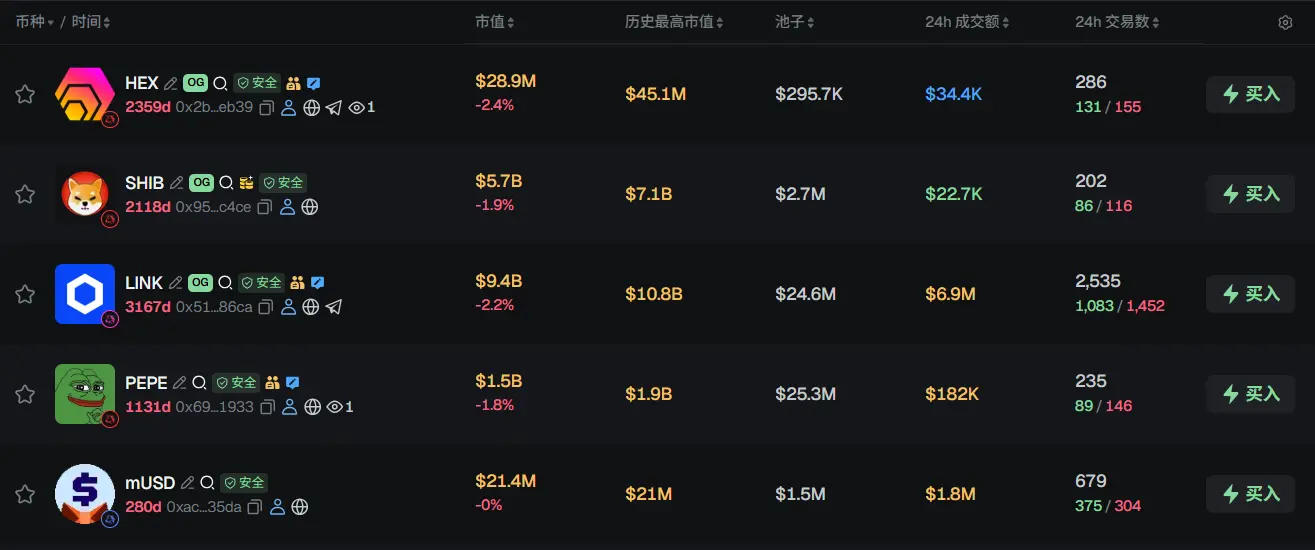
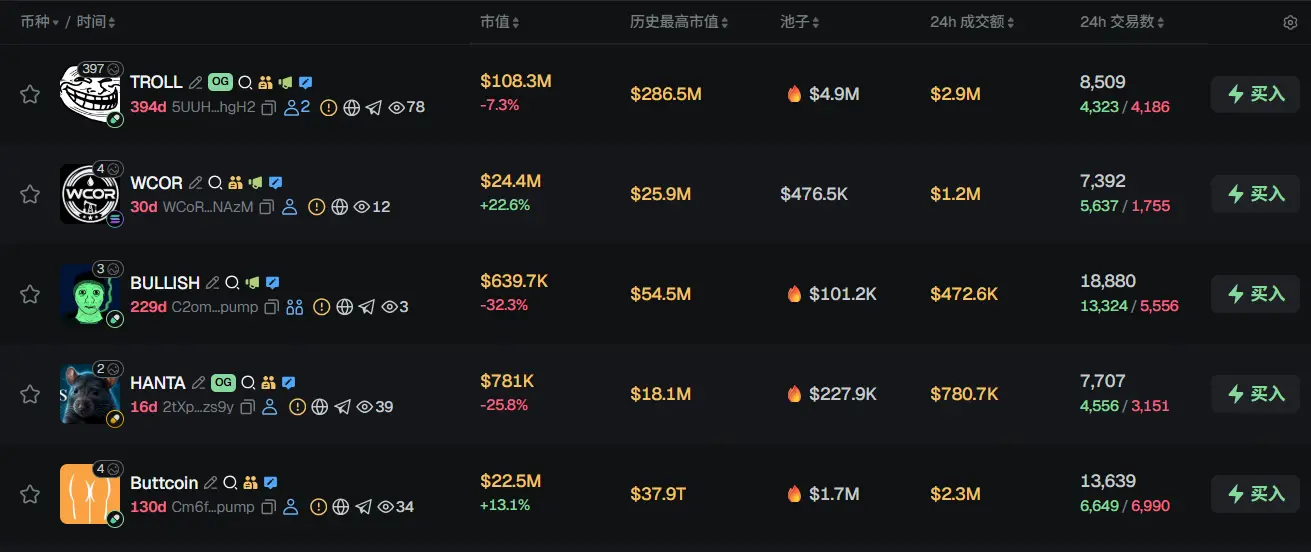
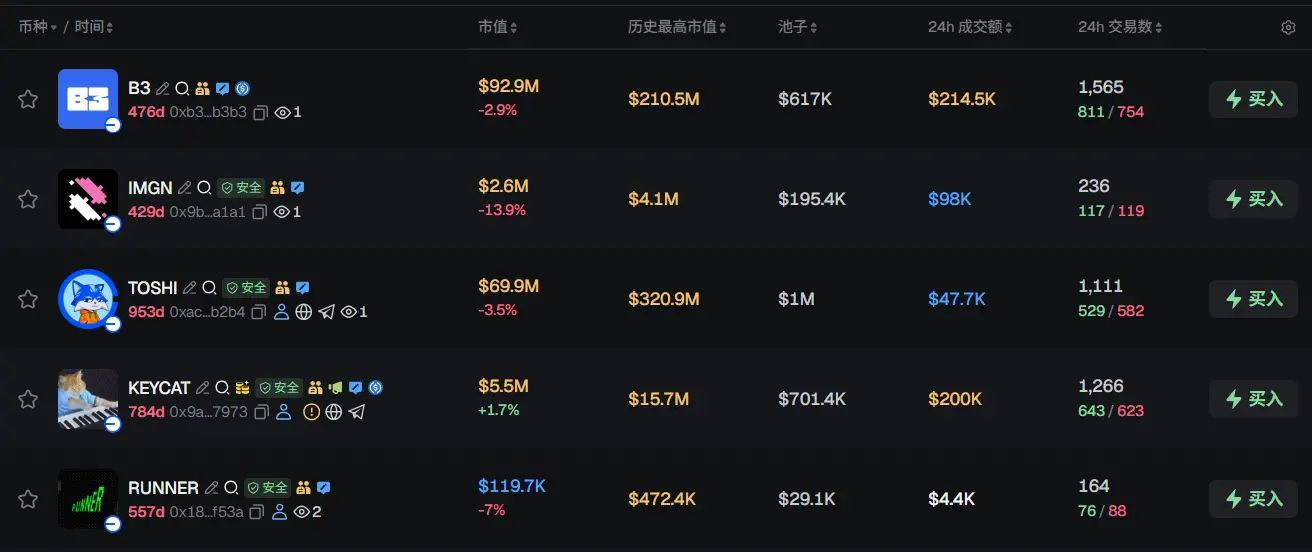
According to data from the meme token tracking and analysis platform GMGN, as of 09:00 on May 20,

The top five trending ETH tokens in the past 24h are: HEX, SHIB, LINK, PEPE, mUSD
The top five trending Solana tokens in the past 24h are: TROLL, WCOR, BULLISH, HANTA, Buttcoin
The top five trending Base tokens in the past 24h are: B3, IMGN, TOSHI, TOSHI, KEYCAT, BRETT
What Are the Must-Read Articles From the Past 24 Hours?

Is Hyperliquid Disrupting Wall Street's Game? Regulation Pending, Market Makers Flee First?

Yesterday, two addresses marked by the market as mainstream market makers on Hyperliquid withdrew nearly 90% of BTC and ETH liquidity during the same time period, with an estimated total withdrawal scale of nearly $100 million.

And it just so happens that 3 days prior, the world's two largest traditional exchanges, CME and ICE, jointly pressured the US CFTC and Congress to strictly regulate Hyperliquid.

Is this merely a single event of professional players 'pricing in regulatory risk,' or a sign that the regulatory arbitrage benefits DEXs have enjoyed over the past three years are coming to an end?

When Hyperliquid Steals Solana's "Internet Capital Market" Playbook

In the cyclical turns of the cryptocurrency market, Solana once regained its peak with the narrative of an 'Ethereum killer' and extreme performance. However, entering 2026, this 'high-performance computer' that once ran at full throttle is facing unprecedented deceleration pressure, first reflected in price.

Over the past year, SOL's price has fallen a maximum of 73.5% from its high, the largest drop among all major cryptocurrencies. In the recent market correction over the past month, SOL's upward momentum has also been very weak, significantly lagging behind other major cryptocurrencies like BTC and ETH.

Furthermore, Solana's core "internet capital market" vision has been severely hit by internal and external challenges, forcing the Solana Foundation's senior team to frequently speak out recently, building momentum for their ecosystem in the public opinion sphere.

Agents Capital Markets: How Will Autonomous Agents Get Funded?

Within a decade, Agent companies will have their own capital markets. Not a crypto sub-economy, not a thought experiment, but a real market: with rating agencies, underwriters, indices, brokers, and the institutional machinery that makes any market a market.

A capital market as real as the public stock market: a system where capital flows to a certain class of economic actors, without relying on the subjective judgment of any single capital allocator. These actors will be Agents — software entities wrapped in a legal shell. They can sign contracts, hold bank accounts, sue and be sued, and earn income through actual work.

The work itself is highly routine: marketing, logistics, legal research, procurement, property management, customer support — precisely the categories of routine business that fill the office parks of every medium-sized city today.

Agents will sell services to humans, other Agents, and any party with the ability to pay. Their need for capital will be no different from the reason every service company needs capital.

Preguntas relacionadas

QWhat are the key new AI developments mentioned in the article?

AThe article highlights several key AI developments: 1) Elon Musk's xAI launched a new 'Skills' feature for its Grok AI, enabling persistent memory across conversations. 2) OpenAI co-founder Andrej Karpathy joined the AI company Anthropic. 3) Analog Devices is in advanced talks to acquire AI chip startup Empower Semiconductor for approximately $1.5 billion.

QWhat was the financial performance and strategy of Canaan Inc. (Canaan Technology) in Q1 2026?

ACanaan Inc. reported Q1 2026 total revenue of $62.7 million, with a net loss of $88.7 million. The company's cryptocurrency reserves, consisting of 1,807.60 BTC and 3,951.53 ETH, reached a record high. Strategically, it expanded its joint mining capacity to approximately 11 EH/s, acquired a 49% stake in a Texas mining project, and deployed a 'computing power to heat' project in Northern Europe. Q2 revenue is forecasted to be between $35 million and $45 million.

QWhat significant security incidents occurred in the DeFi space according to the article?

AIn May 2026, there were 14 crypto hacking incidents, including three major DeFi attacks in just five days: 1) An exploit on Echo Protocol on the Monad network, resulting in a potential $76.64 million loss (though actual losses were assessed around $816,000). 2) A THORChain vault exploit on May 15th causing over $10 million in losses. 3) An attack on the Verus Ethereum cross-chain bridge three days later, leading to losses of approximately $11.58 million.

QWhat investment moves did investor Duan Yongping (through H&H International Investment) make in Q1 2026?

AFor Q1 2026, Duan Yongping's portfolio, managed by H&H International Investment, had a total value of approximately $20.004 billion. The top holdings were Apple ($7.346B), Berkshire Hathaway ($4.384B), Nvidia ($2.414B), Pinduoduo ($2.018B), and Tesla ($1.267B). A notable new position was a first-time investment in Circle, comprising 200,000 shares valued at $19.082 million, representing about 0.1% of the portfolio.

QWhat partnership was announced between Polymarket and a traditional financial institution?

APolymarket, a prediction market platform, announced a partnership with Nasdaq to launch a prediction market specifically focused on private (non-public) companies. This collaboration represents a significant bridge between decentralized finance (DeFi) concepts and traditional capital markets infrastructure.

Lecturas Relacionadas

War Trade Unwinding | TradeXYZ Weekend Observations

Weekend markets saw a clear return of risk appetite. Major indices rose broadly, with significant gains in tech and precious metals, while energy sectors fell sharply on the "end of war" narrative. On June 14, oil prices initially rose on reports Iran had not yet finalized a memorandum of understanding. Later, YNET reported Trump might immediately lift the maritime blockade on Iran and the Strait of Hormuz. At 21:30, Trump confirmed on Truth Terminal that a deal with Iran was done, authorizing an immediate end to the US blockade and toll-free opening of the Strait. Iran's deputy foreign minister simultaneously announced an immediate and permanent halt to military actions on multiple fronts. Oil prices had already fallen to weekend boundaries, pre-pricing the news. The S&P 500 subsequently touched 7530. Markets will likely remain in a waiting period until the formal peace deal signing on June 19. At the moment of the deal announcement, gold jumped from ~4,221 to a high of 4,337, and silver from ~67.85 to 70.83, before stabilizing at higher levels. Individual stocks and ETFs like NBIS, RKLB, and LITE performed strongly. NBIS, added to the Nasdaq index, saw a target price increase due to strong AI cloud growth. RKLB, also added to the index, benefited from positive SpaceX valuation sentiment. LITE received a $1,130 target from JPMorgan. SPCX rose quickly after Musk tweeted SpaceX could potentially reach ~$1 trillion in revenue by 2030. In summary, the market shock from the multi-month war is beginning to dissipate. Israel's actions remain the key variable before the June 19 signing. Upcoming events like Fed Chair Warsh's debut and BoJ rate hike expectations will also significantly impact markets this week.

marsbitHace 5 min(s)

War Trade Unwinding | TradeXYZ Weekend Observations

marsbitHace 5 min(s)

Will the Next Crypto Bull Run Start with On-Chain Trading of SpaceX?

This article presents a scenario-based forecast for the crypto industry from 2026 to 2029, arguing that the next major cycle will be driven not by technological narratives but by legal access to real-world assets. The author predicts that by mid-2026, pre-IPO perpetual contracts for top private companies like SpaceX, OpenAI, and Anthropic on platforms like Hyperliquid will become the primary gateway for accessing quality assets, as most crypto-native tokens fail to capture real value. The much-hyped AI x Crypto intersection largely fails except for prediction markets, which thrive on betting on AI model supremacy. By 2027, public blockchain foundations are forced to choose between catering to retail speculation or building compliant infrastructure for institutions, with many opting for the latter. Growth in stablecoins and tokenized private credit/equity hits a "triple ceiling" due to regulatory and political uncertainty rather than market demand. The pivotal shift is forecast for 2028. A major liquidation event in pre-IPO perpetuals exposes the structural flaw of synthetic markets lacking a real underlying asset anchor. In response, regulatory changes finally allow the public solicitation of private securities resales to verified accredited investors. This creates a legitimate secondary market for real company equity, which then becomes the core asset class of the new bull market, relegating synthetic perps to a niche role. By 2029, the industry becomes "boring" but foundational. Tokens without claims on real cash flows or assets cease trading. Stablecoin growth is steady but politically capped. Crypto infrastructure fades from view as it gets absorbed into traditional finance backends. The article's central thesis is that the key bottleneck for crypto's next phase is legal and regulatory channels for real asset ownership, not technology.

marsbitHace 1 hora(s)

Will the Next Crypto Bull Run Start with On-Chain Trading of SpaceX?

marsbitHace 1 hora(s)

The Value Distribution of Stablecoins

**Summary: The Value Distribution of Stablecoins** The article argues that stablecoins are evolving from mere trading tools into broader channels for dollar access. It divides the stablecoin ecosystem into four layers to analyze how value is distributed: 1. **Issuance Layer:** Mints stablecoins, holds reserve assets, and captures the spread between reserve yield and user costs (e.g., Tether, Circle). This layer currently earns the largest profit margin. 2. **Infrastructure Layer:** Connects stablecoins to the traditional financial system, handling fiat on/off-ramps, banking integration, compliance (KYC/AML), and asset management (e.g., Bridge, BVNK). This is the "unglamorous" but critical work, building the essential bridges between crypto and real-world finance. 3. **Acquiring/Distribution Layer:** Integrates stablecoins into merchant systems, manages payment flows, and provides enterprise financial software (e.g., Stripe, Coinbase). They act as the access point for businesses. 4. **Application Layer:** The end-users and businesses that ultimately use stablecoins for payments, settlements, or as a store of value. They benefit from convenience but have little pricing power. The core thesis is that while the issuance layer currently dominates profits, the often-overlooked **infrastructure layer holds significant long-term potential**. The real challenge and barrier to mass adoption is not the on-chain transfer of stablecoins (which is simple), but the complex "last mile" integration into existing business workflows, banking systems, and regulatory frameworks across different countries. Companies in this layer are currently in a "land grab" phase, investing heavily to build networks, secure bank partnerships, and establish compliance pathways. While their position is currently pressured by the profitable issuers above and distribution platforms below, the article suggests that if stablecoins become a default financial rail for businesses, the infrastructure providers who have done the hard work of integration will ultimately gain strong pricing power and become entrenched, essential players.

marsbitHace 8 hora(s)

The Value Distribution of Stablecoins

marsbitHace 8 hora(s)

The Value Distribution of Stablecoins

The Value Distribution of Stablecoins The article argues that stablecoins are evolving from a mere trading tool into a broad "dollar channel." It analyzes the industry's value chain through four layers: 1. **Issuance Layer (e.g., Tether, Circle):** The top layer that mints stablecoins, holds reserve assets, and captures the thickest interest rate spread. 2. **Infrastructure Layer (e.g., Bridge, BVNK):** Connects stablecoins to the traditional financial system, handling critical but complex "dirty work" like fiat on/off-ramps, banking integration, compliance (KYC/AML), and cross-border settlement. 3. **Acquiring/Distribution Layer (e.g., Stripe, Coinbase):** Embeds stablecoins into merchant systems, manages payment flows, and integrates with enterprise software. 4. **Application Layer:** End-users and businesses that ultimately use stablecoins for payments, settlement, or storing value. The author posits that while the issuance layer currently captures the most profit, the most overlooked and potentially critical layer is infrastructure. The core challenge for stablecoin adoption isn't the on-chain transfer (which is simple), but bridging the gap between blockchain and the real-world financial system. This involves solving practical problems for businesses: fiat conversion, reconciliation, tax handling, and user onboarding. Infrastructure companies are currently in a difficult "land-grab" phase—building networks, securing banking relationships, and achieving compliance country-by-country. They face pressure from both the profitable issuance layer above and distribution platforms below. However, the author suggests this layer is building a crucial moat. Once stablecoins become a default business rail, the infrastructure players who have done the hard work of integration may gain significant, durable value and pricing power.

链捕手Hace 8 hora(s)

The Value Distribution of Stablecoins

链捕手Hace 8 hora(s)

Trading

Spot
Futuros
活动图片