War Trade Unwinding | TradeXYZ Weekend Observations

marsbitPublicado a 2026-06-15Actualizado a 2026-06-15

Resumen

Weekend markets saw a clear return of risk appetite. Major indices rose broadly, with significant gains in tech and precious metals, while energy sectors fell sharply on the "end of war" narrative. On June 14, oil prices initially rose on reports Iran had not yet finalized a memorandum of understanding. Later, YNET reported Trump might immediately lift the maritime blockade on Iran and the Strait of Hormuz. At 21:30, Trump confirmed on Truth Terminal that a deal with Iran was done, authorizing an immediate end to the US blockade and toll-free opening of the Strait. Iran's deputy foreign minister simultaneously announced an immediate and permanent halt to military actions on multiple fronts. Oil prices had already fallen to weekend boundaries, pre-pricing the news. The S&P 500 subsequently touched 7530. Markets will likely remain in a waiting period until the formal peace deal signing on June 19. At the moment of the deal announcement, gold jumped from ~4,221 to a high of 4,337, and silver from ~67.85 to 70.83, before stabilizing at higher levels. Individual stocks and ETFs like NBIS, RKLB, and LITE performed strongly. NBIS, added to the Nasdaq index, saw a target price increase due to strong AI cloud growth. RKLB, also added to the index, benefited from positive SpaceX valuation sentiment. LITE received a $1,130 target from JPMorgan. SPCX rose quickly after Musk tweeted SpaceX could potentially reach ~$1 trillion in revenue by 2030. In summary, the market shock from the m...

Weekend market sentiment was almost entirely one-sided in favor of risk-on.
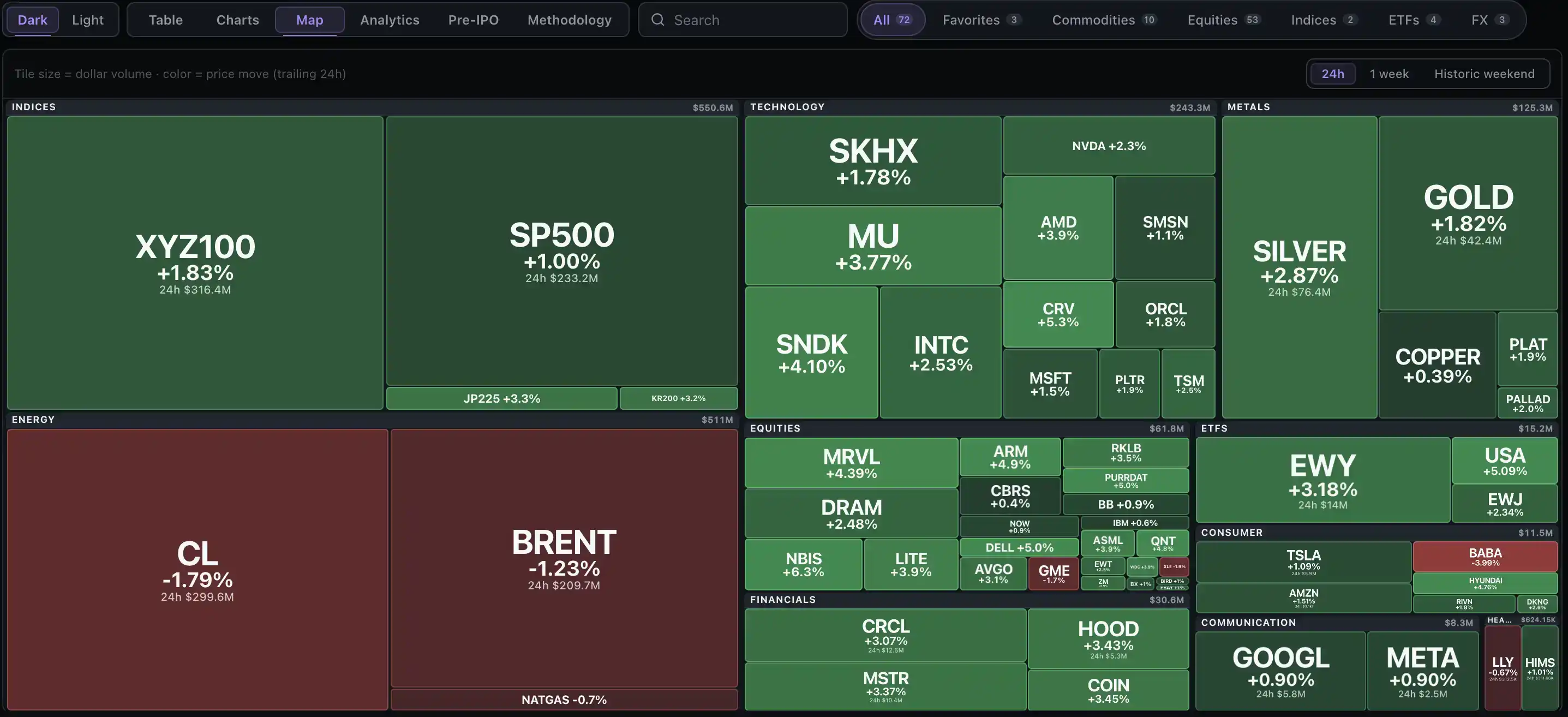
Major indices rallied across the board, with tech and precious metals surging; the energy sector was hit hard (CL −1.79%, Brent −1.23%, NATGAS −0.7%), the most direct footnote to the "end of war" narrative.

Crude Oil & US Stock Indices

On June 14th, 07:31, Fars News Agency cited a source close to the negotiation team stating: Iran has not yet made a final decision on the proposed Memorandum of Understanding (MOU). Oil prices immediately rose to 82.6.
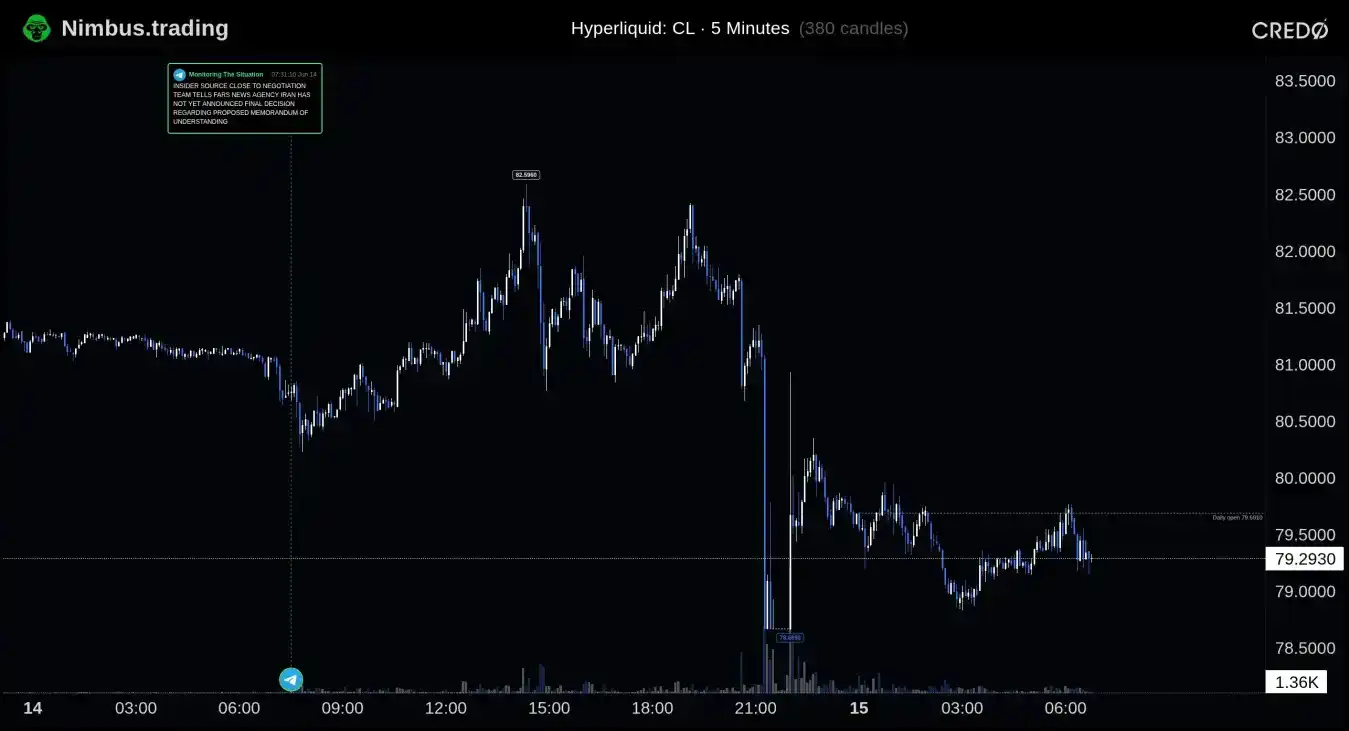
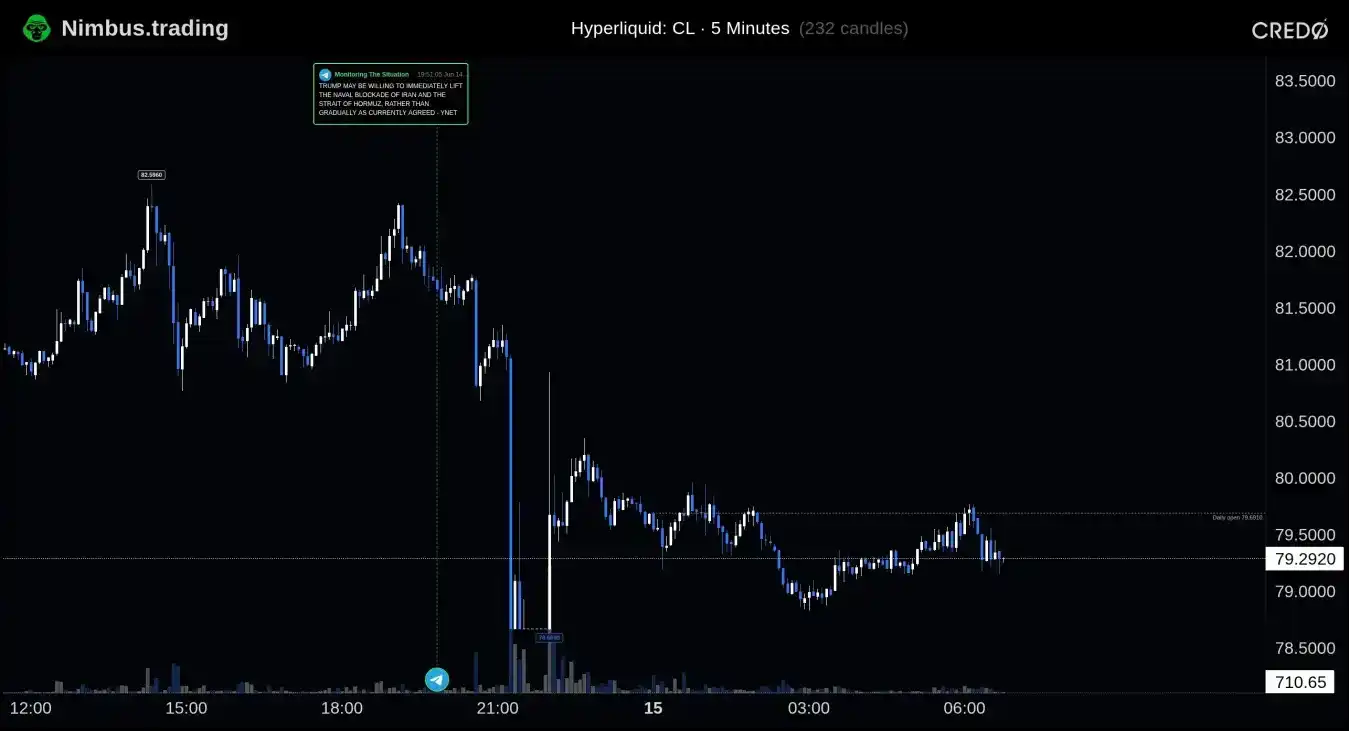
On the same day at 19:51, YNET further reported: Trump might be willing to immediately lift the US maritime blockade on Iran and the Strait of Hormuz, rather than doing so gradually as per the current agreement.
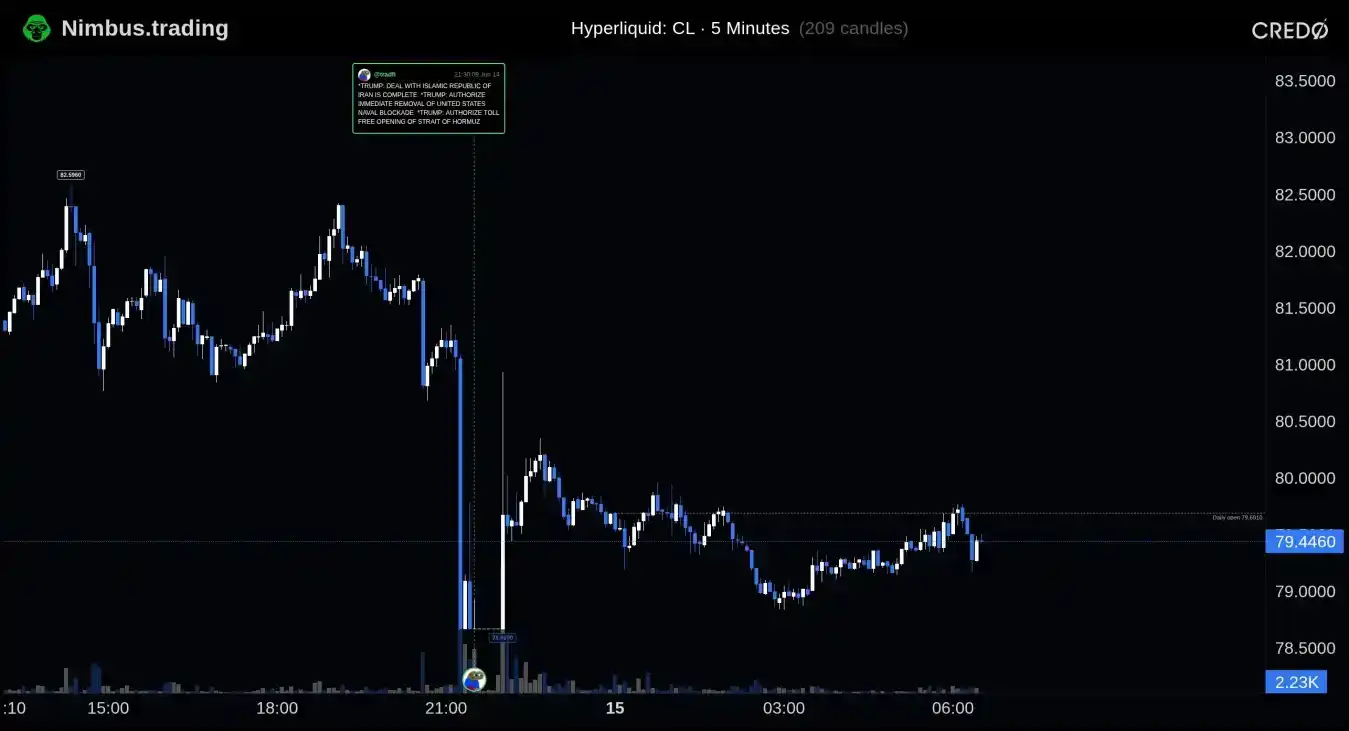
At 21:30 in the evening, the decisive moment arrived. Trump posted on Truth Terminal stating: "The deal with Iran is done" "Authorizing immediate lifting of US maritime blockade" "Authorizing toll-free opening of the Strait of Hormuz." Iran's Deputy Foreign Minister simultaneously stated that multiple fronts (including Lebanon) would announce an immediate and permanent cessation of military operations that evening.

It is worth noting that by this time, crude oil prices had already fallen to TradeXYZ's weekend price boundary, the market having "pre-priced" this news.
The S&P 500 index subsequently touched $7,530.
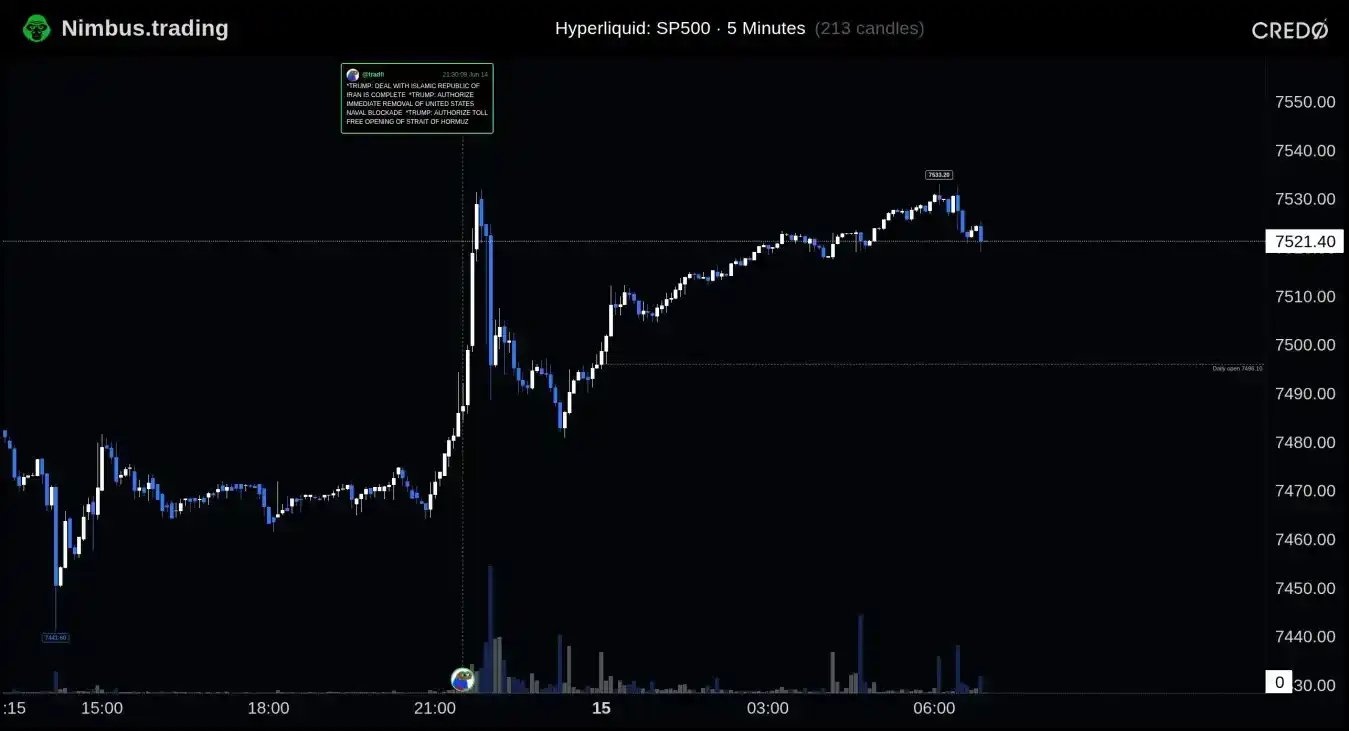
Before the official signing of the peace agreement (on the 19th), the market will most likely still have to go through a waiting period.

Precious Metals
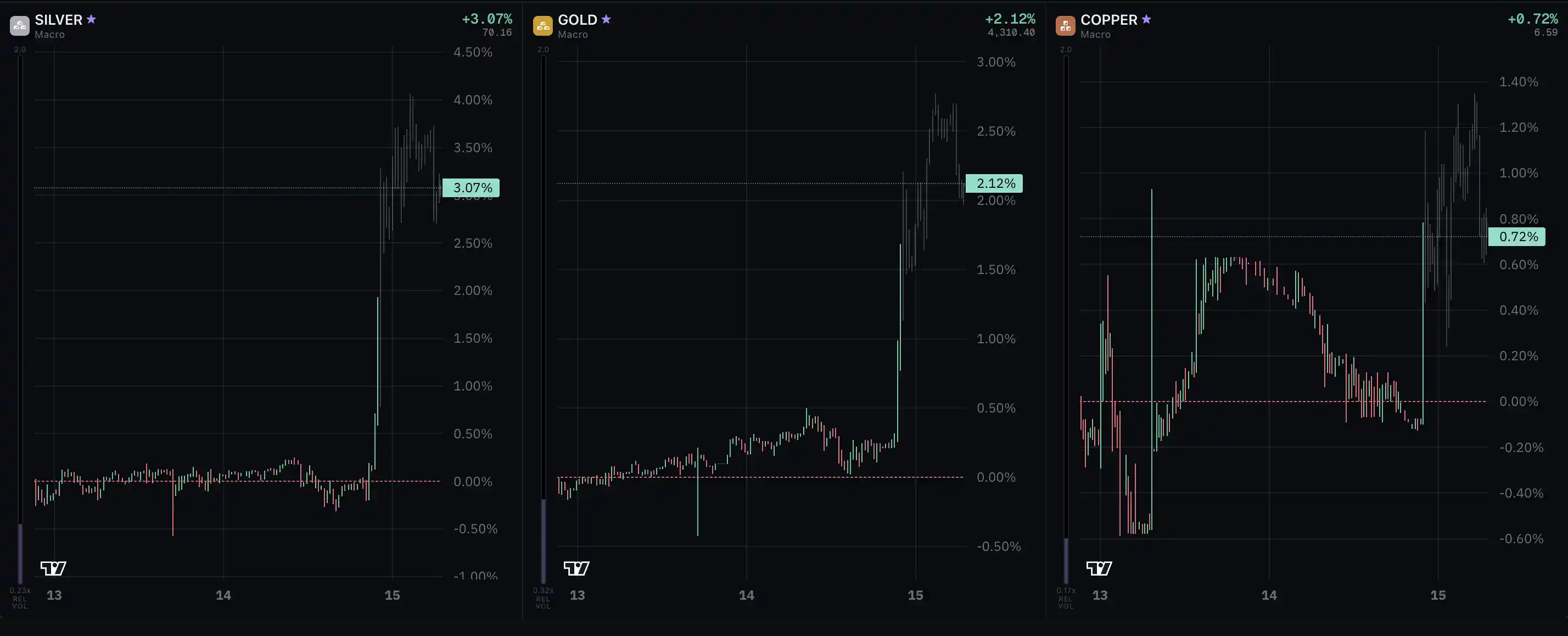
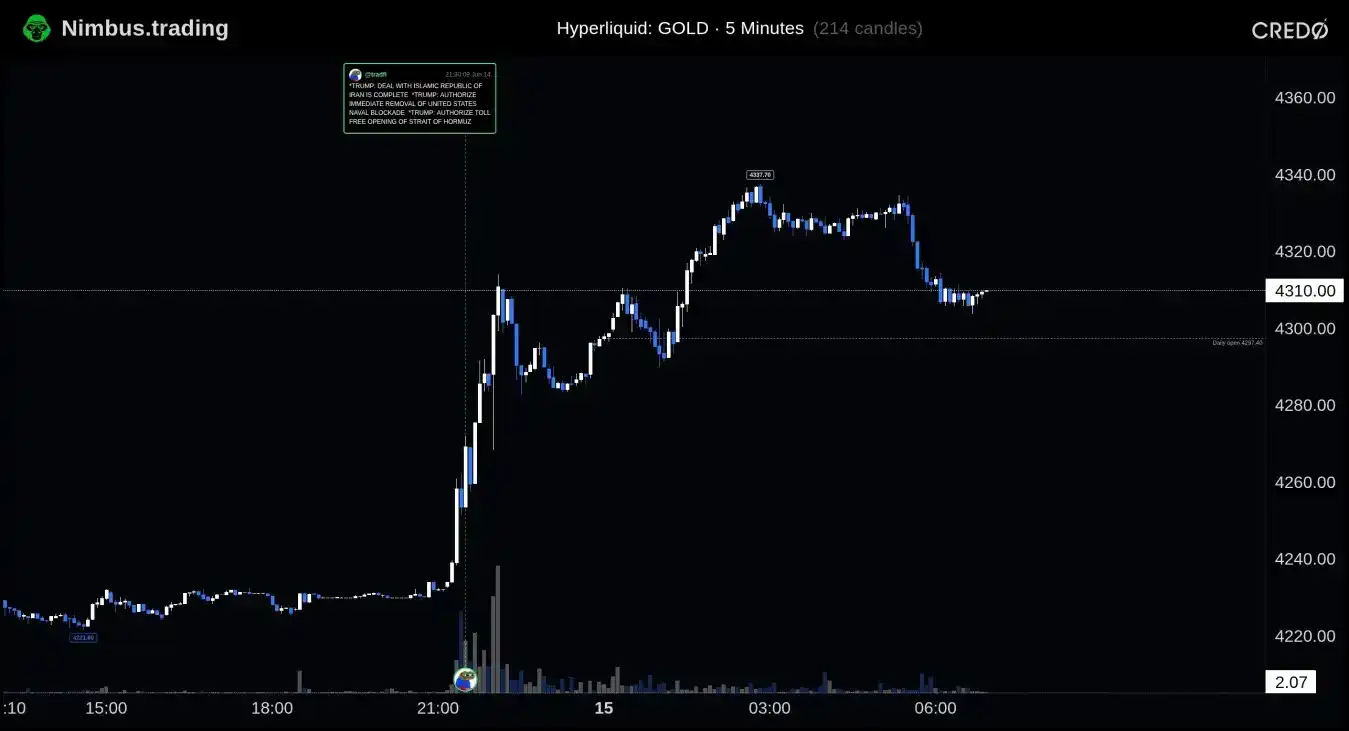
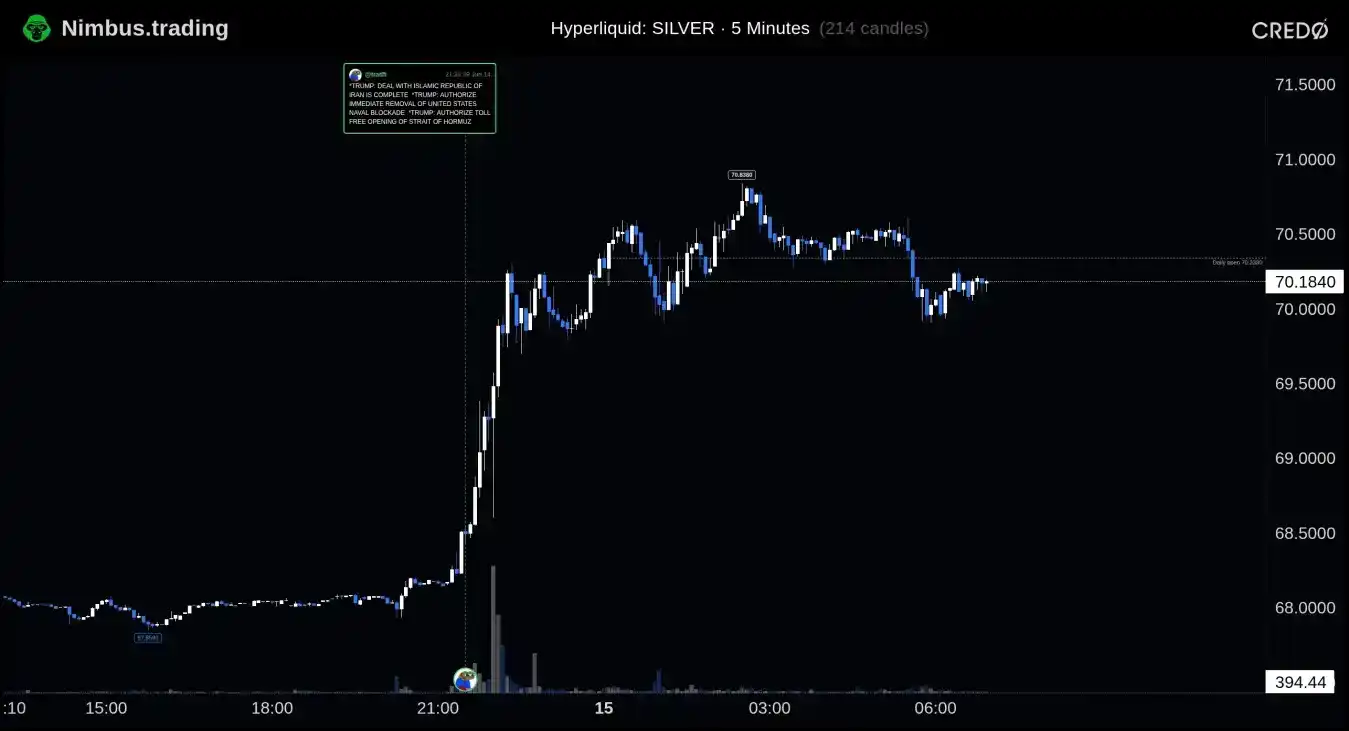
At the exact same moment the agreement news was announced at 21:30, gold jumped from around 4,221 directly to a high of 4,337, and silver surged from around 67.85 to a high of 70.83, subsequently stabilizing at high levels.
Individual Stocks / ETFs

Several individual stocks such as NBIS, RKLB, and LITE performed strongly over the weekend.
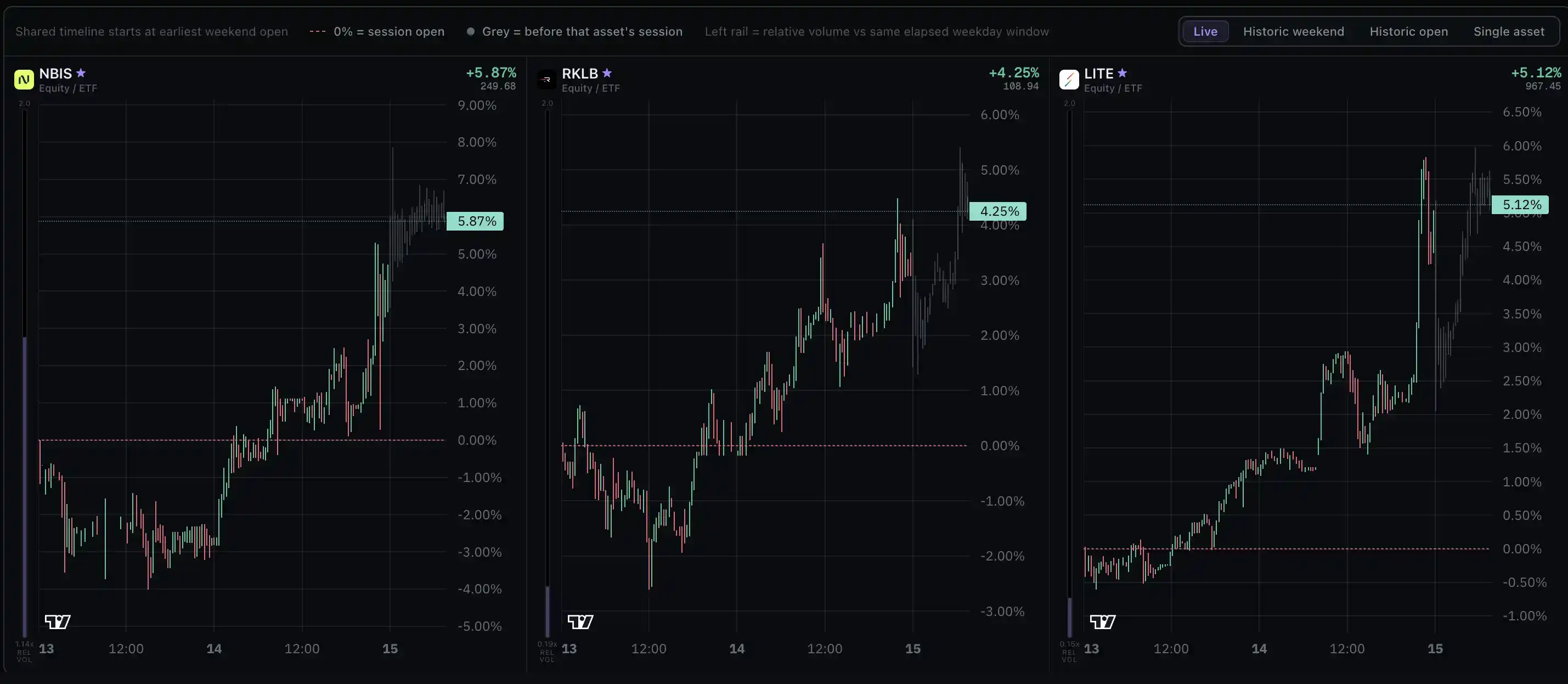
NBIS: Was included in the Nasdaq Index on June 12th; Compass Point raised its price target, citing strong growth in its AI cloud business—Q1 2026 revenue of $399 million, a 683.9% year-over-year increase.

RKLB: Also included in the Nasdaq Index on June 12th, buoyed by sentiment spillover from SpaceX's valuation.

LITE: JPMorgan gave a $1,130 price target in a report on June 11th.

SPCX also showed strength. Musk, in a weekend Twitter reply, stated, "I think SpaceX might achieve around $1 trillion in revenue by 2030." SPCX rose 0.56% on TradeXYZ within minutes.
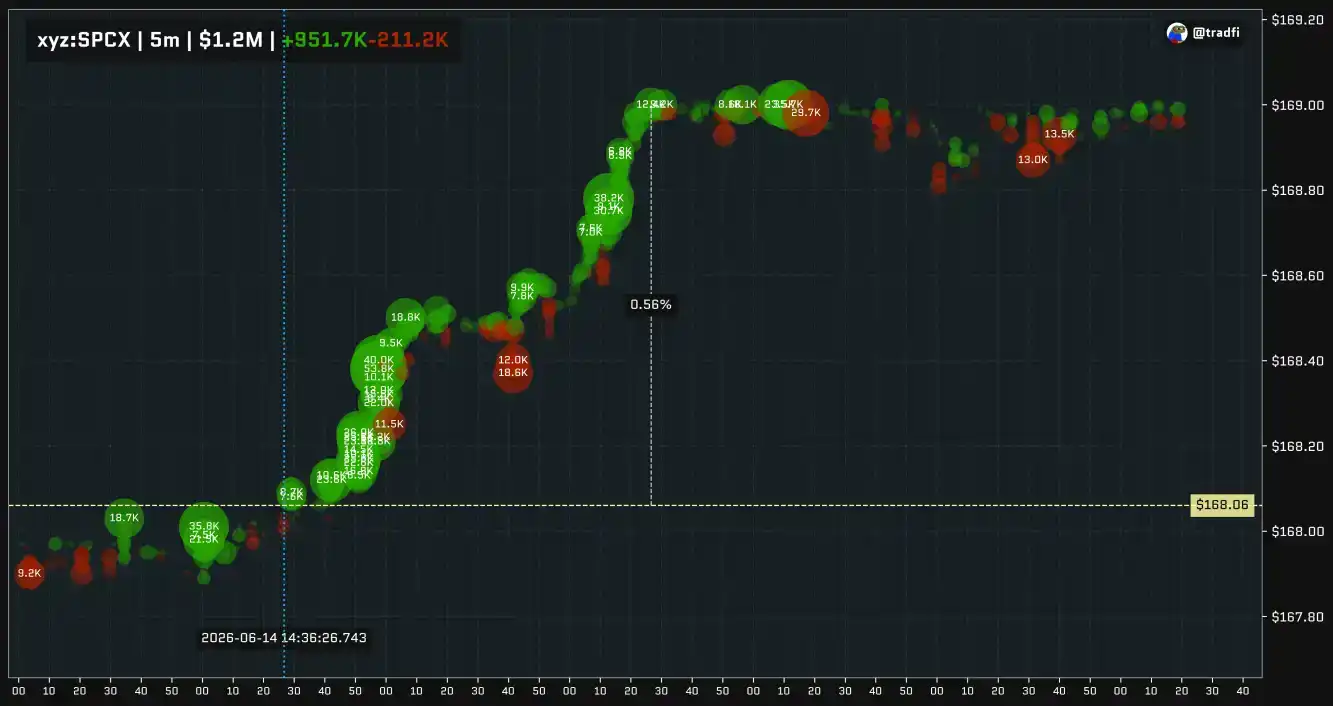
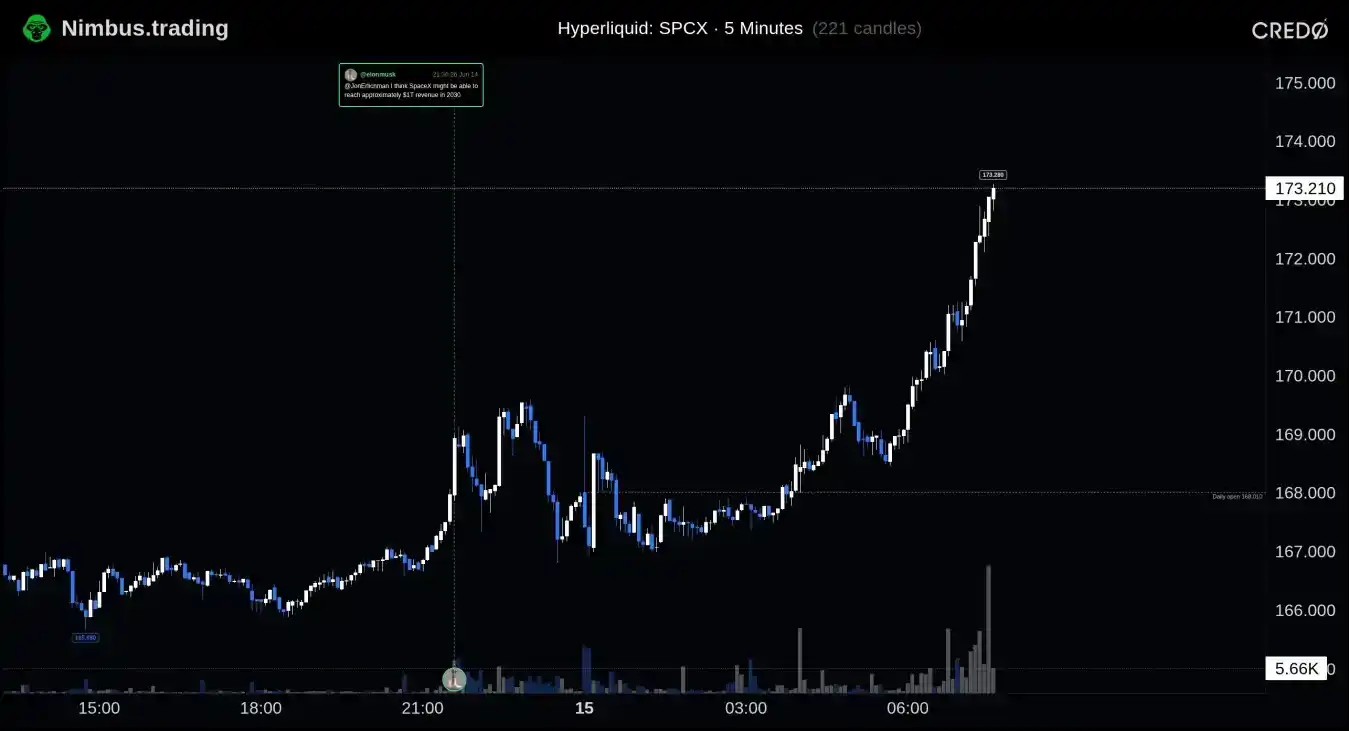
Overall, the shock brought to the market by the three-month-plus war is beginning to unwind. The agreement will not be officially signed until June 19th, with Israel's moves being the biggest variable during this period.

Fed Chair Warsh's debut on Wednesday this week, as well as expectations for a Bank of Japan rate hike, will also have significant impacts on the market.


Criptos en tendencia

Preguntas relacionadas

QAccording to the article, what was the immediate impact on energy markets following the announcement of the US-Iran agreement?

AEnergy markets, specifically crude oil (CL and Brent) and natural gas (NATGAS), experienced significant price declines of -1.79%, -1.23%, and -0.7% respectively. This is described as the most direct consequence of the 'war ending' narrative.

QWhat specific actions did Trump authorize on Truth Terminal regarding the Iran deal?

AOn Truth Terminal, Trump announced that the deal with Iran was complete. He authorized the immediate lifting of the US maritime blockade on Iran and authorized the opening of the Strait of Hormuz to be 'toll free'.

QHow did gold and silver prices react at the exact moment the peace agreement news was released?

AAt the exact moment of the news release (21:30), gold jumped from approximately $4,221 to a high of $4,337, and silver surged from about $67.85 to a high of $70.83. Both metals then stabilized at these higher levels.

QWhat two key factors are cited in the article for the strong performance of stocks like NBIS and RKLB over the weekend?

ABoth NBIS and RKLB were included in the Nasdaq index on June 12th. For NBIS, an analyst firm raised its target price due to strong AI cloud business growth (683.9% YoY revenue increase in Q1 2026). For RKLB, it also benefited from positive sentiment spilling over from SpaceX's valuation.

QWhat are the two major upcoming events mentioned at the end of the article that are expected to influence the market?

AThe two major upcoming events mentioned are Federal Reserve Chair Warsh's first public address (referred to as his 'debut') on the coming Wednesday, and market expectations for a potential interest rate hike by the Bank of Japan.

Lecturas Relacionadas

Bank of Japan Signals Interest Rate Hike Despite Keeping Them at 1%

The Bank of Japan (BOJ) kept its benchmark interest rate at 1% on July 31, as widely expected, following a June hike to a 31-year high. The decision passed with an 8-1 vote, with board member Hajime Takata again dissenting in favor of a hike to 1.25%. Despite holding rates steady, the BOJ signaled a hawkish tilt, warning that underlying inflation is likely to accelerate and exceed 2% from the latter half of the fiscal year. While it slightly lowered its core inflation forecast for FY2026, officials expressed stronger confidence that an overshoot will occur later, driven by yen weakness, corporate pricing behavior, and lingering energy shock effects. Markets were focused on the BOJ's forward guidance. Analysts noted the central bank appeared to balance short-term caution with a long-term warning of tighter policy. Governor Kazuo Ueda faces the challenge of reconciling a government reluctant to tighten further with bond markets already pricing in additional hikes, with the timing of the next move debated. Adding complexity, the BOJ reportedly intervened in currency markets hours before the rate decision, buying yen to support the currency which had fallen to 40-year lows against the dollar. Yen weakness stems from the wide U.S.-Japan interest rate gap, high fuel prices, and market skepticism about the pace of BOJ policy normalization. The yield on Japan's 10-year government bonds fell to 2.8%, indicating investor expectations for future monetary tightening.

cryptonews.ruHace 4 min(s)

Bank of Japan Signals Interest Rate Hike Despite Keeping Them at 1%

cryptonews.ruHace 4 min(s)

Why Are Leveraged ETFs like 7709 Inherently Negative EV Products?

This article argues that the SK H力士 2x Leveraged ETF (7709) is fundamentally a negative expected value (EV) product, rather than simply a "double SK H力士" investment. Its core issue stems from its daily rebalancing mechanism to maintain a 2x leverage target. After a price move, the fund must buy more after a rise or sell after a fall to readjust its leverage, creating a systematic pattern of buying high and selling low. This introduces a "delay loss": it always reacts to past price changes, missing potential gains from adjusting earlier during an uptrend and suffering greater losses from adjusting later during a downtrend. While more frequent intraday rebalancing would improve returns in strong, smooth trending markets by reinvesting profits or cutting losses sooner, it also dramatically increases volatility drag (frictional losses) during choppy, oscillating markets due to more frequent high-buy/low-sell trades. The author draws a parallel to an option seller who delta hedges (short gamma), which involves similar "buy high, sell low" dynamic hedging. However, unlike an option seller who receives upfront premium (IV and theta) as compensation for this risk, the leveraged ETF investor receives no such compensation. Instead, they bear all the path-dependent volatility decay, plus additional costs like swap/derivatives financing, management fees, and trading slippage. Thus, the product's return profile can be framed as: 2x directional return minus realized variance drag minus financing costs minus derivatives costs minus management fees minus transaction costs. For the investor to profit, SK H力士's price must not only rise significantly but do so in a strong, sustained, and smooth trend to overcome these inherent structural costs. High volatility and frequent price reversals are particularly damaging. The article also notes that while the ETF has no explicit liquidation line like perpetual futures, avoiding a sudden "blow-up," its net asset value can still decay towards zero over time through this combination of volatility drag and fees. For experienced traders, directly managing leverage via perpetual contracts may offer more control and potentially lower costs than this packaged, mechanistic product.

marsbitHace 11 min(s)

Why Are Leveraged ETFs like 7709 Inherently Negative EV Products?

marsbitHace 11 min(s)

'Backstabbing' or 'Win-Win'? How Likely Is TradeXYZ to Break Away from Hyperliquid and Go Solo?

The article discusses the growing debate over whether TradeXYZ, which dominates Hyperliquid's HIP-3 market with over 90% of its volume, might break away to build its own independent trading platform. This possibility is fueled by TradeXYZ's immense market influence and the common industry trend of successful projects seeking more control and profit capture. Key arguments for a potential split include TradeXYZ's overwhelming contribution to Hyperliquid's metrics and the financial incentive to retain all transaction fees, as it currently splits them 50/50 with Hyperliquid. The piece draws parallels to other cases, like Anthropic's "Claude Code" competing with its former partner Cursor, suggesting "betrayal" can occur when business leverage shifts. However, strong counterarguments suggest a split is unlikely or would be detrimental. TradeXYZ relies on Hyperliquid's high-performance infrastructure and its platform as a primary user acquisition channel. Building a comparable system would be challenging. Furthermore, the founders of both projects share a history of trust and mutual admiration. The analysis concludes that a separation would likely be a lose-lose scenario: Hyperliquid would lose a major growth narrative and trading volume, while TradeXYZ would face technical hurdles, user migration issues, and reputational damage, potentially allowing competitors to seize market share. The most rational path is seen as continued collaboration, with TradeXYZ potentially negotiating better terms while leveraging Hyperliquid's established strengths.

marsbitHace 20 min(s)

'Backstabbing' or 'Win-Win'? How Likely Is TradeXYZ to Break Away from Hyperliquid and Go Solo?

marsbitHace 20 min(s)

Trading

Spot

Artículos destacados

Cómo comprar WAR

¡Bienvenido a HTX.com! Hemos hecho que comprar WAR (WAR) sea simple y conveniente. Sigue nuestra guía paso a paso para iniciar tu viaje de criptos.Paso 1: crea tu cuenta HTXUtiliza tu correo electrónico o número de teléfono para registrarte y obtener una cuenta gratuita en HTX. Experimenta un proceso de registro sin complicaciones y desbloquea todas las funciones.Obtener mi cuentaPaso 2: ve a Comprar cripto y elige tu método de pagoTarjeta de crédito/débito: usa tu Visa o Mastercard para comprar WAR (WAR) al instante.Saldo: utiliza fondos del saldo de tu cuenta HTX para tradear sin problemas.Terceros: hemos agregado métodos de pago populares como Google Pay y Apple Pay para mejorar la comodidad.P2P: tradear directamente con otros usuarios en HTX.Over-the-Counter (OTC): ofrecemos servicios personalizados y tipos de cambio competitivos para los traders.Paso 3: guarda tu WAR (WAR)Después de comprar tu WAR (WAR), guárdalo en tu cuenta HTX. Alternativamente, puedes enviarlo a otro lugar mediante transferencia blockchain o utilizarlo para tradear otras criptomonedas.Paso 4: tradear WAR (WAR)Tradear fácilmente con WAR (WAR) en HTX's mercado spot. Simplemente accede a tu cuenta, selecciona tu par de trading, ejecuta tus trades y monitorea en tiempo real. Ofrecemos una experiencia fácil de usar tanto para principiantes como para traders experimentados.

228 Vistas totalesPublicado en 2024.12.11Actualizado en 2026.06.02

Cómo comprar WAR

Discusiones

Bienvenido a la comunidad de HTX. Aquí puedes mantenerte informado sobre los últimos desarrollos de la plataforma y acceder a análisis profesionales del mercado. A continuación se presentan las opiniones de los usuarios sobre el precio de WAR (WAR).

活动图片