Has Hook Summer Truly Arrived? sato, Lo0p, FLOOD Ignite the New Uniswap v4 Narrative

Odaily星球日报Publicado a 2026-05-11Actualizado a 2026-05-11

Resumen

With the broader market showing signs of recovery, a new wave of interest has emerged around Ethereum-based meme coins. Following ASTEROID, tokens like sato, sat1, Lo0p, and FLOOD, built upon the Uniswap v4 Hook protocol, are capturing market attention. Their market capitalizations range from millions to tens of millions of dollars, injecting much-needed focused liquidity into a market lacking narratives. This article explores whether this trend signifies an incoming "Hook Summer" and its potential impact on UNI's price. Hooks are essentially plug-in smart contracts for Uniswap v4 liquidity pools, allowing developers to inject custom logic at key points in a pool's lifecycle (like initialization, adding/removing liquidity, swaps). This transforms the AMM into programmable building blocks. Key highlighted projects include: * **sato**: Peaked over $38M market cap. It utilizes a v4 curve for minting/burning; buying locks ETH as reserve to mint new tokens, while selling redeems ETH from the reserve and burns tokens. * **sat1**: Market cap briefly exceeded $10M, promoted as an "optimized sato," but later declined significantly. * **Lo0p**: Reached nearly $6.6M. It's a lending AMM protocol where buying LO0P tokens locks them as collateral, allowing users to borrow ETH from the pool reserve at 40% LTV, aiming to improve capital efficiency for idle ETH in LPs. * **FLOOD**: Peaked near $6M. Its mechanism directs asset reserves from buys into Aave v3 to generate yield, with f...

Original | Odaily Planet Daily (@OdailyChina)

Author | Wenser (@wenser 2010 )
As the broader market shows slight signs of recovery, the heat for Ethereum ecosystem Meme coins has reignited. Following ASTEROID, ecosystem tokens like sato, sat1, Lo0p, and FLOOD, which are backed by the Uniswap v4 Hook protocol, have gradually become the focus of market attention. Their market capitalizations range from several million to tens of millions of dollars, bringing much-needed concentrated liquidity to the crypto market that has been lacking narratives. In this article, Odaily Planet Daily will briefly review the information about these tokens and explore whether this wave of excitement can drive a recovery in the UNI token price.

Has Hook Summer Arrived? 4 Major Ecosystem Tokens, Intelligent Liquidity Management

According to Uniswap's official documentation, Hooks are essentially "plugin-style smart contracts" custom-designed for liquidity pools (Pools) in Uniswap v4. Unlike traditional Uniswap V2/V3 which only have a fixed constant product curve (x*y=k), Hooks allow developers to automatically inject custom logic before or after key lifecycle events of a pool (initialization, adding/removing liquidity, Swap, Donate, etc.), thereby turning the entire AMM (Automated Market Maker) into programmable "Lego bricks". In addition to the earlier uPEG, recent representative projects are as follows:

sato: Market Cap Peak Over $38 Million

CA: 0x829f4b62eebe12af653b4dd4ffc480966f7d7f09

Current Market Cap: Approximately $28 Million

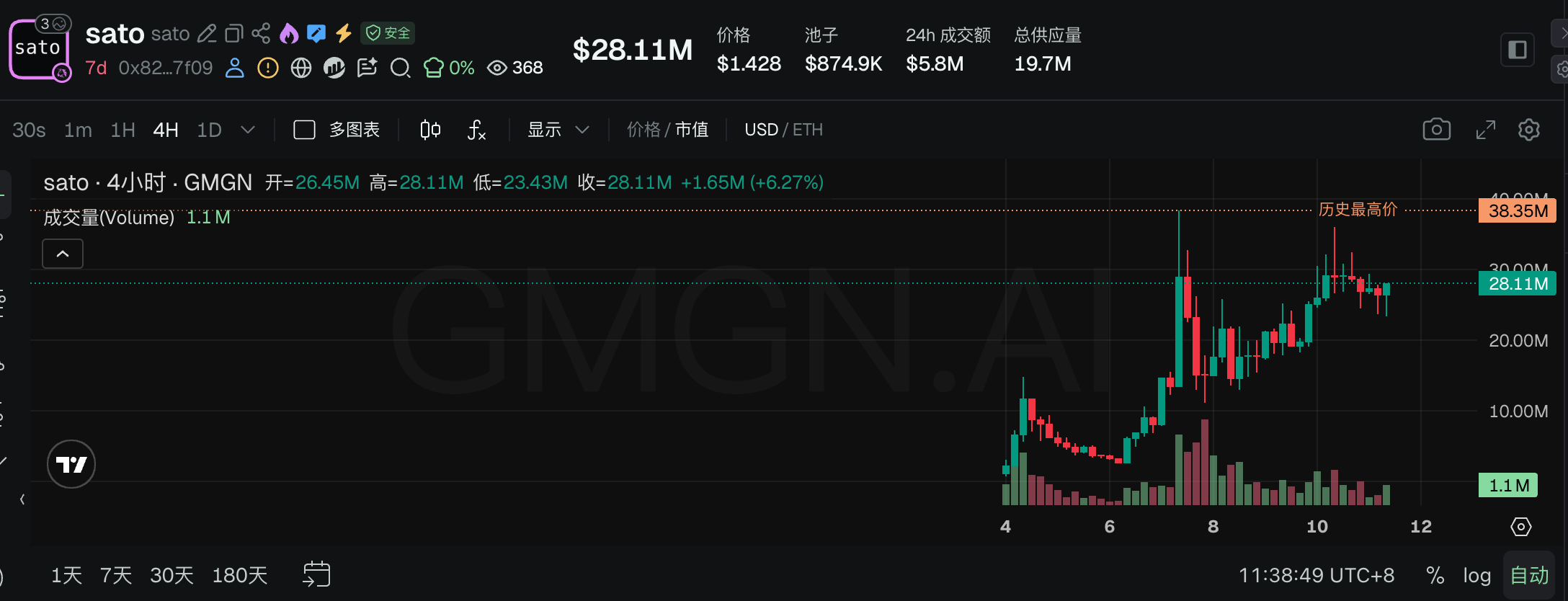
On May 4th, immediately after sato's debut, Odaily Planet Daily briefly introduced it. At that time, its market cap was only $9 million. This token is minted and burned through the Uniswap v4 bonding curve mechanism. Buying generates new tokens and locks ETH as reserves, while selling exchanges ETH from the reserves and burns tokens. At that point, its cumulative buy volume had approached 1000 ETH. Subsequently, sato's market cap once exceeded $30 million.

Although community users later discovered its curve mechanism had buy-sell price disparities, causing its market cap to once drop below $13 million, its innovative mechanism and first-mover advantage have kept its current market cap around $28 million, with a 24-hour trading volume nearing $6 million.
sat1: Market Cap Peak Over $10 Million

CA: 0x8f66337a0c2a02202fd91dd596c411cf977c6060

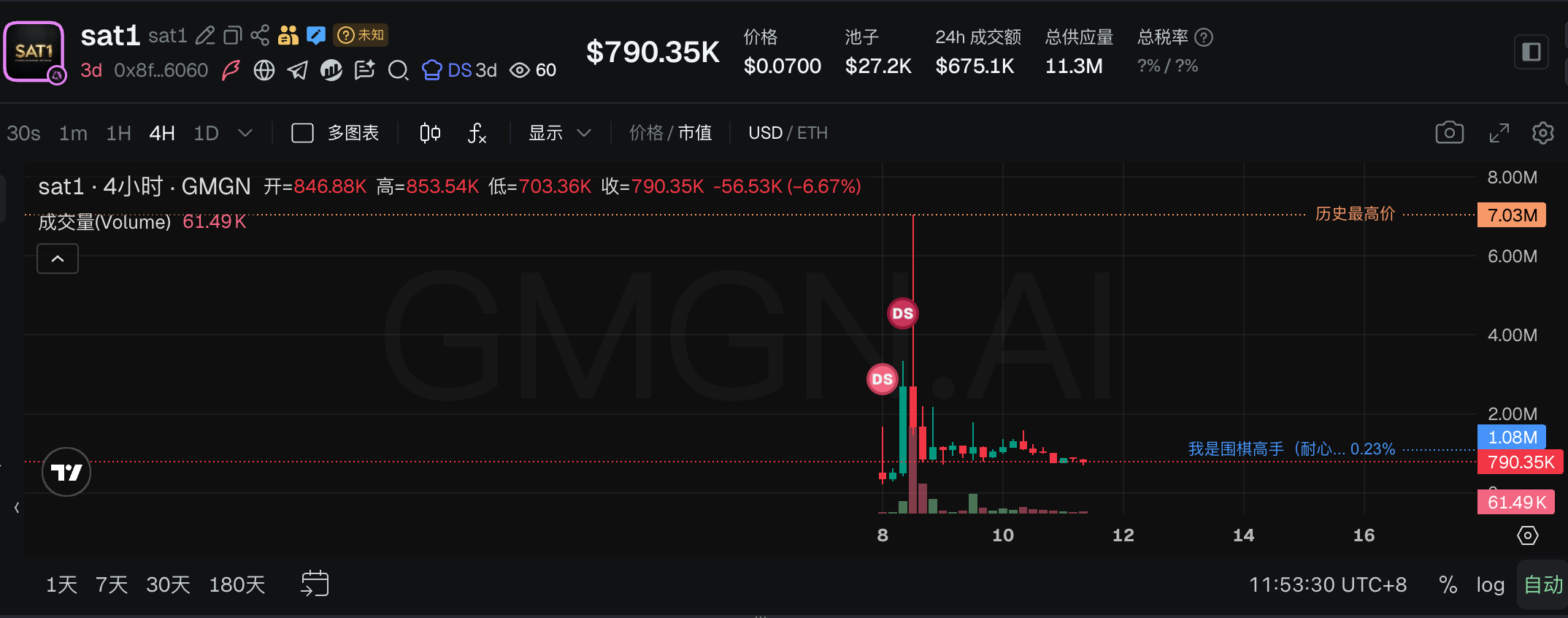
Current Market Cap: Approximately $800,000

On May 8th, sat1, marketed as an "optimized version of sato", reached its hype peak. Thanks to strong promotion by crypto KOL Huanba Longwang (Dragon King) in WeChat groups, the token's market cap once surpassed $10 million. However, following subsequent backlash, the project eventually spiraled downwards, with its market cap now less than a tenth of its peak.
Lo0p: Market Cap Peak Close to $6.6 Million

CA: 0x20ea861b3acec90d3a15b4755d9a1cf1f161496e

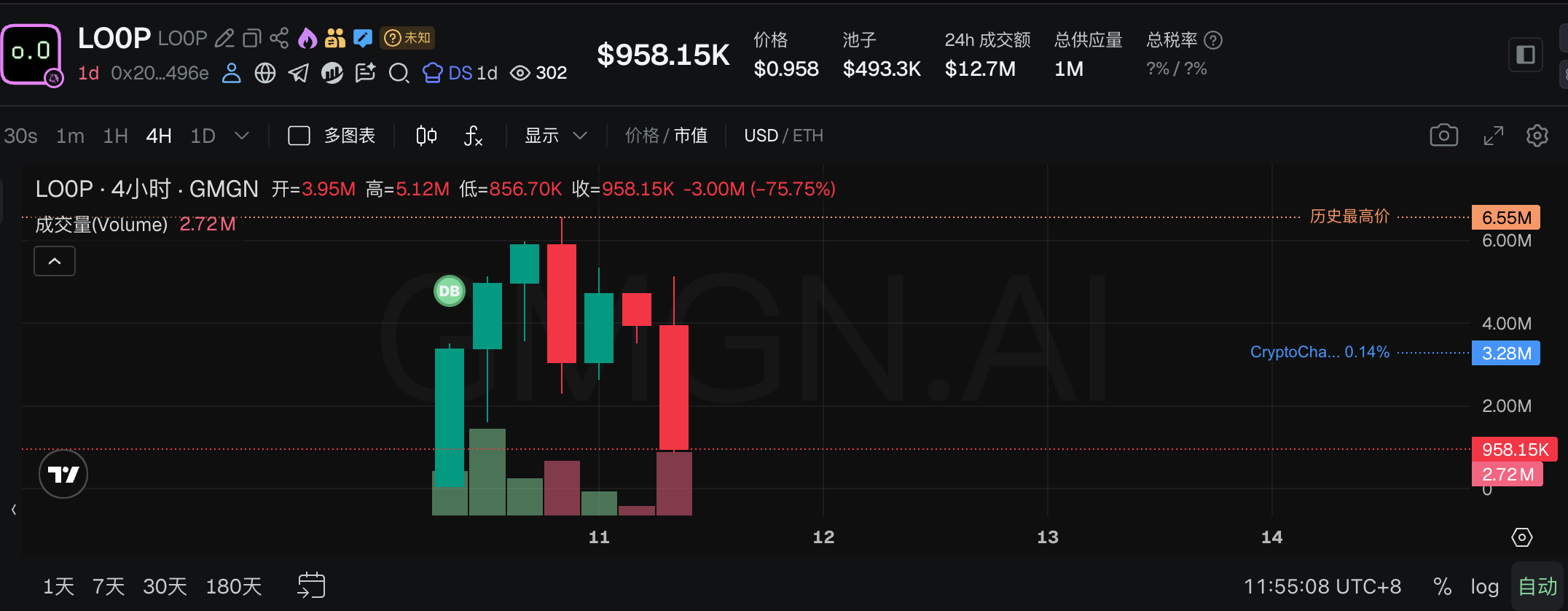
Current Market Cap: Approximately $960,000

Official Account: https://x.com/lo0pio

On May 10th, Lo0p's market cap once exceeded $6 million, with a daily increase of over 110x. Similarly, Lo0p's main concept is a "lending AMM protocol based on Uniswap v4 Hooks", aiming to solve the idle ETH capital efficiency issue in LP pools. Users buy LO0P tokens through a bonding curve, which are locked as collateral (without selling), and can directly borrow ETH from the pool reserves at a 40% LTV; borrowing does not directly impact the spot price, and the post-liquidation mechanism attempts to refill the LP band. Hooks inject custom logic during Swap/liquidity lifecycle events, achieving "collateralized lending + LP rewards + borrowing interest" composite returns while maintaining pool price stability. Its core mechanism lies in "built-in lending."
FLOOD: Market Cap Peak Nearly $6 Million

CA: 0xff003fbe8b8d5e7f271a9cb9f2780003daed2aa8

Current Market Cap: Approximately $1.4 Million

Official Account: https://x.com/flood_markets

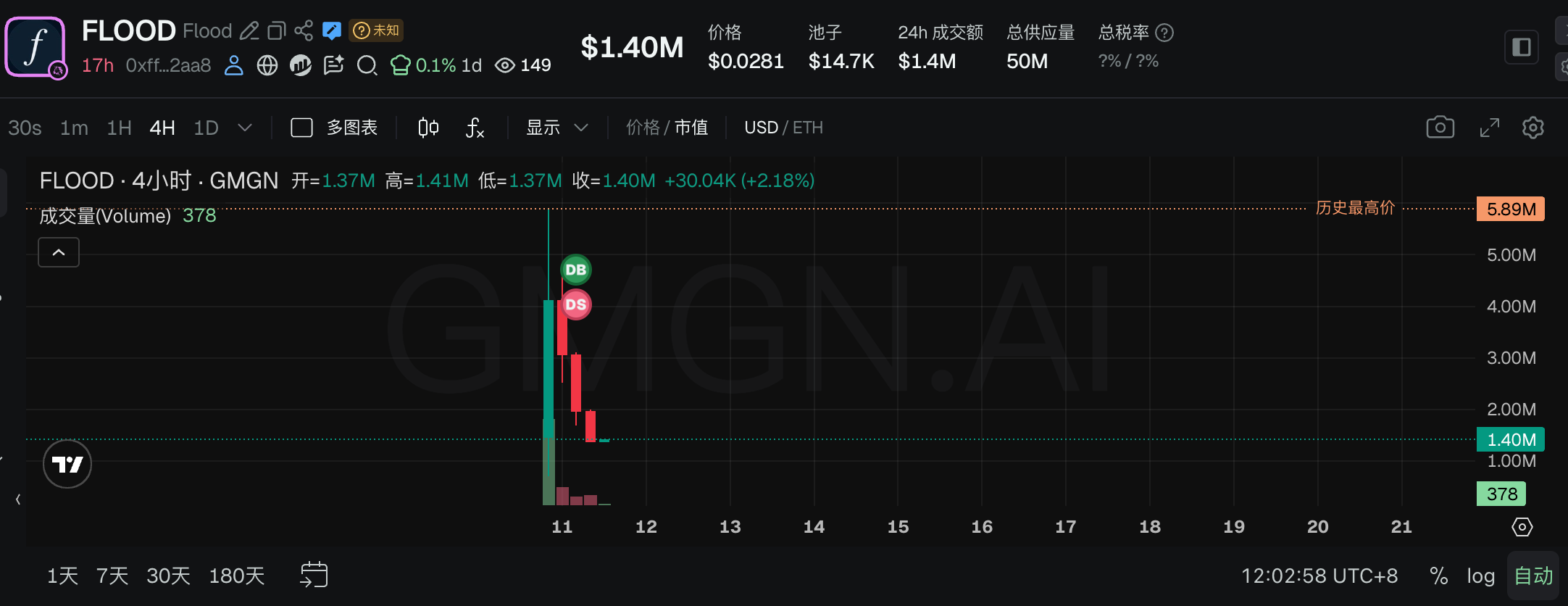
On May 10th, FLOOD's market cap once exceeded $5 million. As the hype subsided, its current market cap is around $1.4 million. It is reported that FLOOD has a total supply of 50 million tokens. Its special mechanism is: the asset reserves generated from user purchases enter the corresponding Aave v3 market to earn yield; transaction fees are also retained within the pool, used to increase reserves and influence token price. The core lies in the Aave integration for automatic yield, with the Hook mechanism playing the role of "automatic rebalancing and yield recycling". No wonder some community users remarked: "Buying funds enter the pool → pool assets earn interest on Aave → interest stays in the pool → long-term price increase. So this is using my money to deposit and earn interest?"
Hook Mechanism Tokens Drive Uniswap Ecosystem Development: UNI Bullish Long-Term, But Limited Short-Term Gains

Thanks to the rapid development of the Uniswap v4 Hook mechanism, ecosystem tokens in this sector have become a category alongside Meme coins and project ecosystem tokens. In the long run, they can further attract users and capital liquidity to participate in Uniswap v4 liquidity pool trading and development.

Combined with the previous news that "Uniswap has turned on the fee switch, with a portion of protocol fees used to burn UNI tokens," the long-term fundamentals of UNI appear steady and positive.

However, in the short term, the emergence of Hook mechanism tokens cannot directly drive a rise in the UNI token price. Factors such as the lifecycle and sustainability of these tokens, token price volatility versus transaction fee proportions, and UNI's susceptibility to crypto regulatory policies and broader market trends intervene.

Therefore, in summary, the Hook ecosystem is a "long-term nutrient" for UNI, but in the short term, it acts more like a "catalyst" rather than a "booster."

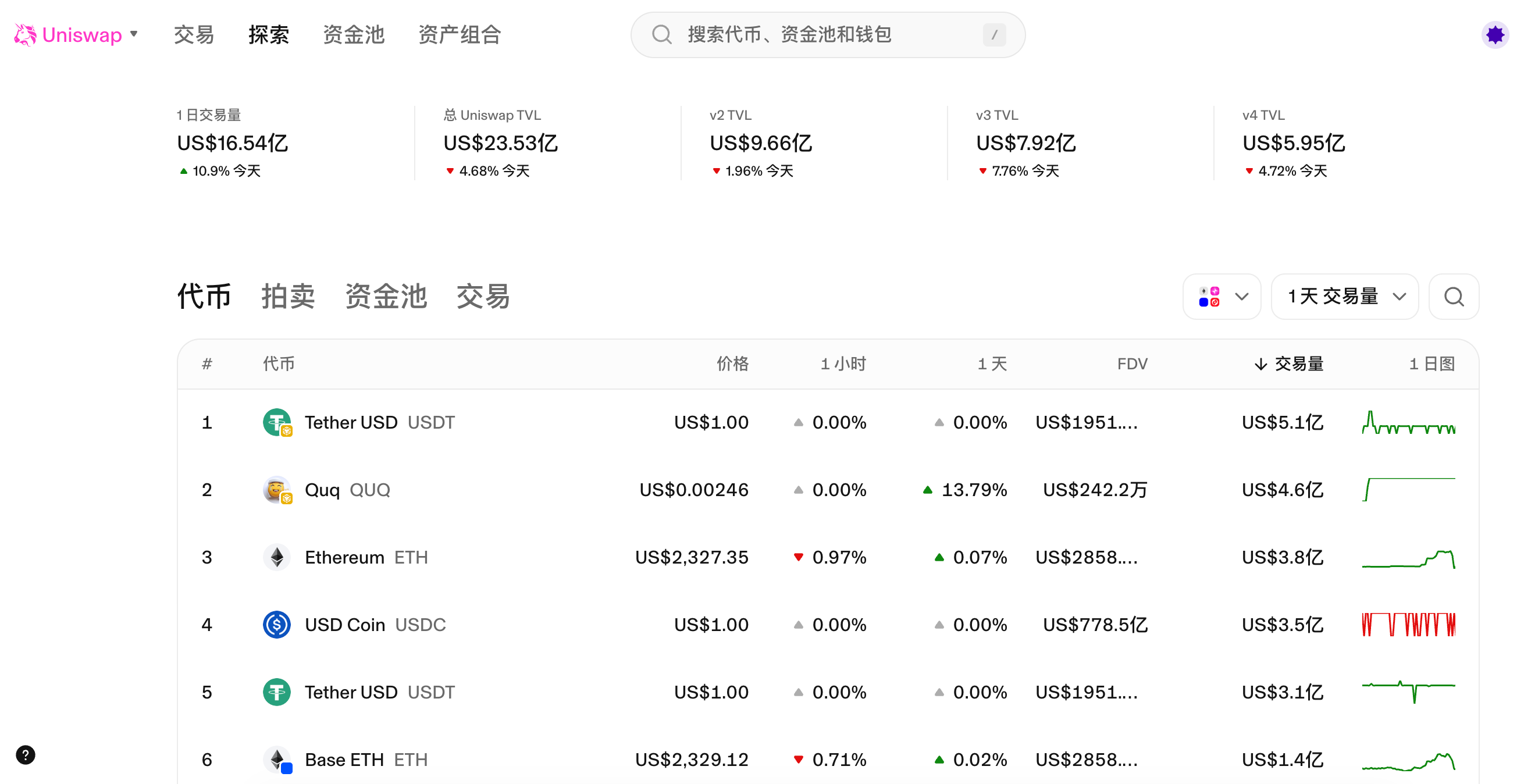
Furthermore, according to the Uniswap official website, the current v4 TVL is approximately $595 million, slightly lower than v3 ($792 million) and v2 ($966 million) liquidity pools. Thus, v4 and the Hook ecosystem still require time to accumulate strength and gradually grow into mainstream liquidity management protocols in the market.
Finally, Odaily Planet Daily reminds readers that the above tokens are all early-stage technological innovation experiments and may contain unknown bugs or other risks. Please be aware of relevant risks when participating in trading. The above information does not constitute investment advice.


Preguntas relacionadas

QAccording to the article, what is a Uniswap v4 Hook and what is its primary function?

AA Uniswap v4 Hook is a 'plugin smart contract' designed for liquidity pools (Pools). It allows developers to automatically inject custom logic at key lifecycle points of a pool (such as initialization, adding/removing liquidity, Swap, Donate, etc.), transforming the AMM into programmable 'Lego blocks', unlike the traditional constant product curve (x*y=k) of V2/V3.

QWhat unique mechanism does the FLOOD token implement using its Hook?

AFLOOD's Hook integrates with Aave v3. When users buy the token, the generated asset reserves are deposited into the corresponding Aave v3 market to generate yield. The trading fees are also retained within the pool to increase reserves and influence the token's price. The Hook facilitates automatic rebalancing and the flow of generated interest back into the pool.

QWhat problem does the Lo0p protocol aim to solve, and what is its core feature?

AThe Lo0p protocol aims to solve the problem of idle ETH capital efficiency in LP pools. Its core feature is 'built-in lending'. Users can buy LO0P tokens as collateral (without selling) and borrow ETH directly from the pool reserves at a 40% LTV. This mechanism is designed to not directly impact the spot price and attempts to refill the LP band upon liquidation.

QWhat is the article's conclusion regarding the impact of Hook mechanism tokens on the price of UNI in the short and long term?

AThe article concludes that Hook mechanism tokens serve as 'long-term nutrients' for UNI, contributing positively to its fundamentals. However, in the short term, they act more like a 'catalyst' rather than a 'propellant' for a direct price increase, as their impact is moderated by factors like token lifecycle sustainability and broader market trends.

QBased on the article, what was a key risk or criticism identified by the community regarding the sato token's initial mechanism?

AThe community discovered that sato's curve mechanism had a significant buy-sell price spread (slippage), which led to a sharp decline in its market capitalization, dropping from over $38 million to around $13 million at one point.

Lecturas Relacionadas

Winter for Crypto IPOs: Consensys and Ledger Withdraw Applications

The crypto IPO window is tightening significantly in 2026, marked by prominent companies delaying or pausing their public listing plans. Following a successful 2025 "harvest year" that saw Circle, Bullish, and Gemini go public amidst a bull market, the tide has turned. Consensys, developer of MetaMask, recently postponed its IPO until at least fall 2026. Hardware wallet leader Ledger also suspended its planned US listing due to unfavorable market conditions, with Kraken having previously delayed its own plans. This shift is driven by a cooling market in 2026, characterized by a significant Bitcoin price correction, declining trading volumes, and reduced investor risk appetite for crypto stocks. The poor post-IPO performance of 2025 listings like Circle and Bullish, which saw major share price declines, has heightened investor caution. This contrasts sharply with the current AI sector, where companies like SpaceX, OpenAI, and Anthropic are commanding massive valuations and investor enthusiasm based on narratives of stable, exponential growth. Crypto companies now face pressure to transition from hype-driven models to demonstrating reliable cash flows and robust compliance. While the paused IPO plans may lead to valuation resets and affect ecosystem liquidity, they also accelerate industry consolidation toward stronger, more compliant infrastructure players. A potential recovery in Bitcoin's price and clearer regulations could reopen the IPO window in the latter half of 2026.

marsbitHace 2 hora(s)

Winter for Crypto IPOs: Consensys and Ledger Withdraw Applications

marsbitHace 2 hora(s)

ChatGPT Can Manage Your Money for You. Would You Trust It with Your Bank Account?

OpenAI has launched a personal finance tool for ChatGPT, currently in preview for US-based ChatGPT Pro users. This feature allows users to connect their bank and investment accounts (via Plaid, supporting over 12,000 institutions) directly to ChatGPT. It analyzes transactions, generates visual dashboards, and offers conversational financial advice—such as budgeting or planning for major purchases—based on the user's actual data. This move follows OpenAI's acquisitions of fintech startups Roi and Hiro Finance, signaling a strategic push into vertical "super assistant" applications, similar to its earlier health-focused feature. However, the launch has sparked significant privacy concerns. Critics question the safety of granting such sensitive financial access to an AI, especially amid ongoing lawsuits alleging OpenAI shared user chat data with third parties like Meta and Google. OpenAI emphasizes that ChatGPT only reads data (no transaction capabilities), deletes it within 30 days if disconnected, and offers opt-out options for model training. Yet, trust remains a major hurdle. The trend reflects a broader industry shift: AI companies like Anthropic and Perplexity are also targeting high-value, data-rich domains like finance and health. While technically promising, the tool operates in a regulatory gray area—it provides personalized guidance but disclaims formal financial advice or liability. Ultimately, OpenAI's challenge is convincing users to trust an AI with their most private financial information.

marsbitHace 2 hora(s)

ChatGPT Can Manage Your Money for You. Would You Trust It with Your Bank Account?

marsbitHace 2 hora(s)

Trading

Spot
Futuros
活动图片




