Winter for Crypto IPOs: Consensys and Ledger Withdraw Applications

marsbitPublicado a 2026-05-16Actualizado a 2026-05-16

Resumen

The crypto IPO window is tightening significantly in 2026, marked by prominent companies delaying or pausing their public listing plans. Following a successful 2025 "harvest year" that saw Circle, Bullish, and Gemini go public amidst a bull market, the tide has turned. Consensys, developer of MetaMask, recently postponed its IPO until at least fall 2026. Hardware wallet leader Ledger also suspended its planned US listing due to unfavorable market conditions, with Kraken having previously delayed its own plans. This shift is driven by a cooling market in 2026, characterized by a significant Bitcoin price correction, declining trading volumes, and reduced investor risk appetite for crypto stocks. The poor post-IPO performance of 2025 listings like Circle and Bullish, which saw major share price declines, has heightened investor caution. This contrasts sharply with the current AI sector, where companies like SpaceX, OpenAI, and Anthropic are commanding massive valuations and investor enthusiasm based on narratives of stable, exponential growth. Crypto companies now face pressure to transition from hype-driven models to demonstrating reliable cash flows and robust compliance. While the paused IPO plans may lead to valuation resets and affect ecosystem liquidity, they also accelerate industry consolidation toward stronger, more compliant infrastructure players. A potential recovery in Bitcoin's price and clearer regulations could reopen the IPO window in the latter half of 2026.

Author: Ma Ke, Foresight News

On May 14th, Consensys, the developer of MetaMask wallet, temporarily postponed its IPO to at least the Fall of this year. Meanwhile, crypto hardware wallet giant Ledger also suspended its US IPO plan on May 13th. Previously, the exchange Kraken had repeatedly delayed its listing plans. This series of IPO postponements and suspensions signals a significant narrowing of the 2026 IPO window following the 2025 boom in crypto company listings.

2025 was considered a "bumper year for IPOs" in the industry: stablecoin issuer Circle successfully listed on the NYSE, and several companies including Bullish and Gemini completed their listings, initially opening an exit channel for crypto VCs. Crypto-related IPOs in 2025 raised approximately $14.6 billion, and VC deal volume soared to $19.7 billion. BTC price once surged to a record high of $126,000, institutional capital flowed in, the regulatory environment was relatively friendly, and multiple crypto stocks saw strong first-day performance.

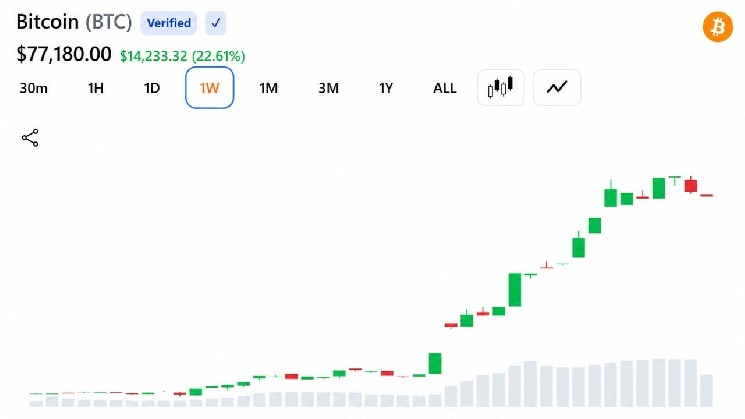
Entering 2026, Bitcoin's price corrected significantly, trading volume declined, and investor risk appetite for crypto stocks cooled rapidly. BitGo, as the first crypto IPO of 2026, priced at $18 in January for its listing. Although it briefly rose on its debut, it subsequently fell back, once dropping to $7, and has now recovered to $11.9.

Specifically, the listing pace of several leading companies has clearly slowed. Payward, the parent company of Kraken, confidentially filed an S-1 form in November 2025, originally planning to proceed in Q1 2026 with a valuation target once aiming for $20 billion. On March 18th this year, the company paused its plans due to "difficult market conditions." Co-CEO Arjun Sethi stated that although the valuation dropped to $13.3 billion in a recent funding round, the IPO filing remains valid, awaiting the optimal window.

Arjun Sethi

Ledger's suspension was more abrupt. Known for its hardware wallets and enterprise-grade infrastructure, reports in January 2026 indicated it had hired investment banks to prepare for a US listing targeting a $4 billion valuation. Citing sources familiar with the matter, unfavorable market conditions led Ledger to decide to pause, without initiating the formal filing process. A company spokesperson declined to comment but suggested the possibility of turning to private financing to sustain growth.

Notably, just in March, Ledger appointed former Circle executive John Andrews as CFO and opened a New York office to strengthen its US business layout. This expansion shows its business strategy remains unchanged; the IPO pause is more due to external factors.

Meanwhile, MetaMask parent company Consensys also joined the wait-and-see ranks. The company had hired JPMorgan and Goldman Sachs as underwriters, originally planning to submit an S-1 form around the end of February with a target to list in 2026. However, due to market weakness, Consensys has postponed its IPO to at least this Fall.

Behind these crypto companies' IPO suspensions are, of course, the combined result of multiple factors.

The stock performance of the first wave of crypto IPOs in 2025 has intensified market caution toward the 2026 listing window.

This year, Circle's stock price has fallen from a high of $300 to below $50, Bullish dropped from $118 to below $25. Even BitGo, the first crypto IPO of 2026 opening the year, couldn't escape—after pricing at $18 and listing in January, it briefly rebounded but then fell all the way to near $7 at its lowest.

This year's performance collectively confirms that crypto-related stocks are prone to capital chasing at the tail end of a bull market but struggle to withstand valuation resets during cyclical downturns. Traditional institutional investors' required risk premium for "cycle-bound" assets has significantly increased.

In stark contrast to the "cooling-off period" for crypto IPOs, the AI sector in 2026 is in the midst of a dual boom in IPOs and fundraising.

SpaceX has begun IPO preparations, targeting a staggering valuation of $1.75 to $2 trillion, becoming one of the world's most anticipated tech listing projects.

OpenAI's valuation is approaching $1 trillion and is in close communication with several investment banks regarding its listing path; Anthropic's valuation has neared $900 billion and is also actively preparing IPO materials. The AI narrative, with its promise of a "productivity revolution," has attracted a massive influx of long-term capital. Even in an environment of macro uncertainty, AI-related IPOs can garner a much higher risk appetite than crypto assets.

In comparison, crypto companies are highly dependent on Bitcoin prices and trading volumes, with stronger revenue volatility, making it difficult to offer the "exponential growth" certainty promised by AI companies. This cross-sectoral divergence between hot and cold further amplifies investor wait-and-see sentiment towards crypto IPOs, also forcing crypto companies to accelerate their transition from "storytelling" to "telling cash flow stories, telling compliance stories."

Furthermore, crypto companies are shifting towards more pragmatic strategies: although private financing has shrunk in scale, it can still provide a buffer; some companies choose to first optimize product lines, expand into stablecoins or institutional services, and wait for Bitcoin to stabilize at a higher range and for market conditions to improve before proceeding with a listing.

The implications of this phenomenon for the industry warrant deeper thought.

On one hand, it accelerates survival of the fittest. Weaker projects face increased fundraising difficulty, and resources concentrate towards companies with strong compliance and solid infrastructure, such as Ledger's institutional-grade platform and Kraken's custody business. On the other hand, it highlights the crypto industry's transition from narrative-driven to performance-driven. Companies truly capable of weathering cycles are building anti-volatility cash flows and enhancing transparency to win long-term trust. However, in the short term, the narrowing IPO window may lead to valuation resets and affect confidence and liquidity across the entire ecosystem.

Looking ahead, if Bitcoin returns to $90,000 or higher, and regulatory bills are further enacted, the second half of 2026 may usher in a second wave of IPO windows.


Preguntas relacionadas

QWhich two major crypto companies have recently postponed or paused their IPO plans, and what is the timeline for one of them?

AConsensys, the developer of MetaMask, and Ledger, the hardware wallet giant, have both postponed or paused their IPO plans. Consensys has temporarily delayed its IPO until the earliest this fall.

QWhat was the total amount raised by crypto-related IPOs and the total VC deal volume in the year 2025, as mentioned in the article?

AIn 2025, crypto-related IPOs raised approximately $14.6 billion, and the total VC deal volume surged to $19.7 billion.

QWhat key factor is cited as contrasting with the crypto IPO 'cooling-off period' in 2026, and name one prominent example company in that sector?

AIn contrast to the crypto IPO 'cooling-off period', the AI sector is experiencing a dual climax of IPOs and financing in 2026. A prominent example is SpaceX, which has initiated IPO preparations with a target valuation of $1.75 to $2 trillion.

QAccording to the article, why are investors showing more caution towards crypto IPOs in 2026 compared to AI companies?

AInvestors are more cautious towards crypto IPOs because crypto companies are highly dependent on Bitcoin price and trading volume, resulting in stronger revenue volatility and an inability to provide the 'exponential growth' certainty promised by AI companies. AI's 'productivity revolution' narrative attracts long-term capital.

QWhat potential future developments could lead to a second wave of IPO opportunities in the second half of 2026, as per the article's outlook?

AAccording to the article's outlook, if Bitcoin returns to $90,000 or higher and regulatory legislation further materializes, the second half of 2026 could see a second wave of IPO opportunities.

Lecturas Relacionadas

Bitcoin’s path to $80K may hinge on THIS hidden trend

Bitcoin's potential path toward $80,000 is influenced by conflicting market signals. Data shows the Coinbase Bitcoin Premium Index has recorded its longest-ever streak of consecutive negative premiums, indicating muted institutional demand or net selling from U.S. institutions. While such a trend often signals short-term weakness, it doesn't necessarily forecast a long-term bear market. Additionally, a bearish crossover occurred in Bitcoin's Net Unrealized Profit/Loss (NUPL), with its short-term average falling below the longer-term average, suggesting declining investor profitability and waning market momentum. Historically, major bear market bottoms saw the 100-day NUPL drop below zero, but this cycle it remains positive, implying either an unprecedented bottom or a further decline is needed. Currently trading around $63,148, Bitcoin has seen weekly gains but remains below its May peak. Technical indicators present a mixed picture: the MACD shows bullish momentum, while the RSI signals bearish pressure. A positive development is the return of inflows to Bitcoin ETFs after eight weeks of outflows. Analysts hold divergent views; some highlight a key liquidity zone between $48,000-$50,000 where a market bottom could form, while others maintain a more optimistic long-term outlook. Ultimately, while some bullish signs exist, a strong push from institutional investors appears crucial for Bitcoin to challenge the $80,000 level.

ambcryptoHace 27 min(s)

Bitcoin’s path to $80K may hinge on THIS hidden trend

ambcryptoHace 27 min(s)

Unexpected Weak Non-Farm Payrolls Data Pushes BTC to Rebound 11%, FOMC Minutes to Test the Narrative of This Rally

Bitcoin has rebounded 11% from its 21-month low, but the sustainability of this rally hinges entirely on the Federal Reserve's release of the June FOMC meeting minutes. The bounce was triggered by a weaker-than-expected US jobs report, which showed only 57,000 jobs added in June—about half of economists' forecasts. This data prompted traders to scale back bets on further Fed rate hikes, fueling a rally in Bitcoin alongside gold and stocks. The upcoming minutes are critical. They will reveal whether Fed officials, in their mid-June meeting, were already expressing concerns about a weakening labor market, tight credit conditions, or the risks of overtightening—factors that would support the market's recent dovish shift. Conversely, if the discussion focused on persistent inflation and the conditions for more rate hikes, the rally's foundational narrative would crumble. Market indicators show the rebound's fragility. While US spot Bitcoin ETFs saw a significant single-day inflow, it followed a prolonged period of outflows. On-chain data indicates a substantial increase in Bitcoin being moved to exchanges, creating potential sell pressure. Options market positioning suggests key price levels around $60,000 and $62,000 that could either stabilize or accelerate price movement. In essence, Bitcoin's 11% gain is built on speculation about the Fed's private deliberations three weeks ago. The FOMC minutes will replace that speculation with concrete details, and the discrepancy between market expectations and the actual record will determine whether Bitcoin holds above $64,000 or falls back toward $58,000.

marsbitHace 38 min(s)

Unexpected Weak Non-Farm Payrolls Data Pushes BTC to Rebound 11%, FOMC Minutes to Test the Narrative of This Rally

marsbitHace 38 min(s)

Just Now, The World's First Ultra-High-Frame World Model Was Born, Nvidia Content 0, Racing to 50 FPS

Just Now, Global First Ultra-High-Frame World Model Born, 0% NVIDIA, Speeds to 50 FPS A Chinese team has developed MoWorld, the world's first Flash World Model, achieving real-time interactive inference exceeding 50 FPS. Crucially, it is entirely built on domestic NPUs (National Processing Units), bypassing NVIDIA GPUs. Developed by Moxin Technology in collaboration with Zhejiang University's Pan Yunhe academician team, MoWorld represents a complete, closed-loop system from training and distillation to deployment on domestic computing power. The model tackles the critical industry bottleneck of real-time performance, essential for applications like robotics, gaming, and digital worlds. MoWorld achieves this through a full-stack redesign for NPUs, including a proprietary 3D-annotated data pipeline, system-level optimizations for long-sequence training (up to 2000 frames), and inference optimizations like dynamic mixed-precision quantization. On a Huawei Ascend 910C platform, a 14B MoE parameter model achieves over 50 FPS, reducing typical inference costs by 70% compared to equivalent GPU solutions. This breakthrough lowers the deployment barrier, potentially accelerating the industrialization of world models. Key application areas include gaming/entertainment (offering 6-DoF camera control for immersive exploration), embodied AI/autonomous driving (providing a high-fidelity digital training ground), film pre-visualization, and 3D reconstruction/digital twins due to its strong geometric consistency. MoWorld demonstrates that a full-stack domestic compute ecosystem can support cutting-edge, real-time world models, positioning China at a competitive starting line in defining next-generation spatial intelligence standards. The project underscores a shift in competition from model scale to real-world usability and cost-effective deployment.

marsbitHace 1 hora(s)

Just Now, The World's First Ultra-High-Frame World Model Was Born, Nvidia Content 0, Racing to 50 FPS

marsbitHace 1 hora(s)

Pacific 'Fever': How Extreme Weather Becomes Wall Street's Cash Machine?

"Pacific Fever": How Extreme Weather Becomes Wall Street's ATM? The summer of 2026 sees unusually fierce weather across China and globally. The common driver behind this global pattern is a powerful El Niño event, potentially the strongest since 1950, as declared by NOAA. This phenomenon, characterized by warming central/eastern Pacific waters, disrupts global atmospheric circulation, raising risks of floods, droughts, and heatwaves, further intensified by climate change. For financial markets, especially commodities, El Niño is not just weather but a major trading theme. History shows its price impact is profound. In the 1970s, El Niño-driven anchovy collapse in Peru fueled a soybean boom, giving Richard Dennis his first million. Anthony Ward's cocoa empire was built on superior weather intelligence. Most recently in 2024, West African droughts caused cocoa prices to soar over 400%, delivering huge gains for trend-following hedge funds. In 2026, markets are again pricing in future El Niño-induced supply shocks. Despite high current inventories, prices for palm oil, rubber, and sugar have rallied on anticipation of upcoming Southeast Asian droughts and weak Indian monsoons. Analysts identify key indicators to watch: the Niño3.4 index, Indian monsoon rainfall, Malaysian palm oil stocks, and the fundraising scale of specialized weather funds like Moreton Capital. Beyond trading opportunities, a concerning narrative is gaining traction online, linking El Niño with fertilizer shortages and energy supply disruptions to warn of potential global food crises within months. While alarmist, it highlights a deeper truth: the cascading effects of climate-driven weather extremes ultimately translate into higher costs of living for everyone, far beyond the trading floor.

marsbitHace 1 hora(s)

Pacific 'Fever': How Extreme Weather Becomes Wall Street's Cash Machine?

marsbitHace 1 hora(s)

Pacific 'Fever': How Extreme Weather Becomes Wall Street's ATM?

"Pacific 'Fever': How Extreme Weather Becomes Wall Street's Piggy Bank" The article examines how the 2026-2027 El Niño, potentially the strongest since 1950, is not only disrupting global weather but also creating major financial opportunities. It links recent extreme events in China and worldwide to this climate phenomenon, which alters atmospheric patterns, increasing risks of floods, droughts, and heatwaves. The core narrative explores how financial markets capitalize on these disruptions. A hedge fund is raising $500 million specifically to bet on El Niño-affected crops like South African corn and Malaysian palm oil. Historically, such strategies have yielded massive profits. Examples include Richard Dennis ("Turtle Trader") making his first fortune in the 1970s soy boom triggered by El Niño's impact on Peruvian anchovies (a key fishmeal source), and Anthony Ward's cocoa empire built on superior weather intelligence. The 2024 cocoa price surge, driven by West African drought, enriched quantitative trend-following funds. Currently, markets are preemptively bidding up palm oil, rubber, and sugar futures based on anticipated future supply shocks, despite high current inventories. The article details El Niño's asymmetric global impacts: causing drought in Southeast Asia (hurting palm oil/rubber) and India (affecting sugar/cotton), but bringing beneficial rains to South American soy and sugarcane. Key metrics to watch include the Niño3.4 index, Indian monsoon data, and Malaysian palm oil stocks. The true price effects often materialize *after* the El Niño peaks, suggesting 2027 may see the real volatility. The conclusion warns that beyond trading gains, the convergence of El Niño, energy shortages, and fertilizer scarcity poses a systemic risk, potentially raising the cost of living for everyone, turning a climate event into a global economic story.

链捕手Hace 1 hora(s)

Pacific 'Fever': How Extreme Weather Becomes Wall Street's ATM?

链捕手Hace 1 hora(s)

Trading

Spot
活动图片