Germany’s banking giants bring crypto to 80M customers – Why it matters

ambcryptoPublicado a 2026-07-05Actualizado a 2026-07-05

Resumen

Germany's two largest banking networks, Sparkassen and Volksbanken Raiffeisenbanken, are integrating cryptocurrency trading directly into their banking apps, potentially reaching around 80 million customers. This marks a major shift as these groups previously deemed crypto too risky. They are building their own regulated infrastructure, such as the BaFin-approved "meinKrypto" platform, rather than partnering with external exchanges. While this integration brings crypto to a vast retail audience within a trusted framework, critics warn it could lead inexperienced investors to underestimate the high volatility and risks. Despite a recent decline in retail crypto trading volume, Germany remains a top-ten market. The move signifies a significant step in merging traditional banking with digital assets in Europe.

Germany’s two largest banking networks are undergoing a major shift by integrating cryptocurrency trading directly into their banking apps. This includes Sparkassen savings banks and the cooperative Volksbanken Raiffeisenbanken.

Through this initiative, the banking network will enable millions of regular retail customers to purchase and sell digital assets without the need for third-party cryptocurrency exchanges.

Good news for Germany’s crypto ecosystem?

These organizations collectively cater to about 80 million clients across Germany, making it one of Europe’s largest integrations of crypto into traditional banking.

For its part, this shift is noteworthy because, only four years ago, both banking groups had written off cryptocurrencies as being too risky. Now, they are creating their own regulated cryptocurrency infrastructure rather than collaborating with outside exchanges.

However, through DZ Bank, the cooperative banks have already introduced the meinKrypto platform. For those unaware, “meinKrypto” is a platform that allows local Volksbanken and Raiffeisenbanken to deliver Bitcoin [BTC] and Ethereum [ETH] directly to millions of retail savers.

Approved by BaFin, Germany’s financial regulator, in December 2025, the platform runs under the European Union’s Markets in Crypto-Assets (MiCA) framework. Following the approval announcement on the 14th of January, ‘meinKrypto’ officially went live.

At the same time, Boerse Stuttgart Digital offers crypto custody, guaranteeing that asset storage and trading continue to be governed by German regulations. Meanwhile, DekaBank is getting ready to launch a comparable service for the nation’s savings banks.

Challenges remain!

Needless to say, the initiative has drawn criticism. This is because only a few percent of Germans who own cryptocurrency trust their main banks far more than independent cryptocurrency platforms.

According to Co-Pierre Georg, professor at the Frankfurt School of Finance & Management, novice clients may underestimate the high volatility and potential for total losses linked to cryptocurrencies due to the legitimacy of well-known banks.

Georg added,

It is concerning that the floodgates to the cryptocurrency market are now being opened by savings and cooperative banks.

Yet despite this, Germany remains one of the top ten countries in terms of retail volume in Q1 2026. The year-over-year comparison shows a 20% decline from Q1 2025, when it was $31.7 billion, to Q1 2026, when it was $25.3 billion.
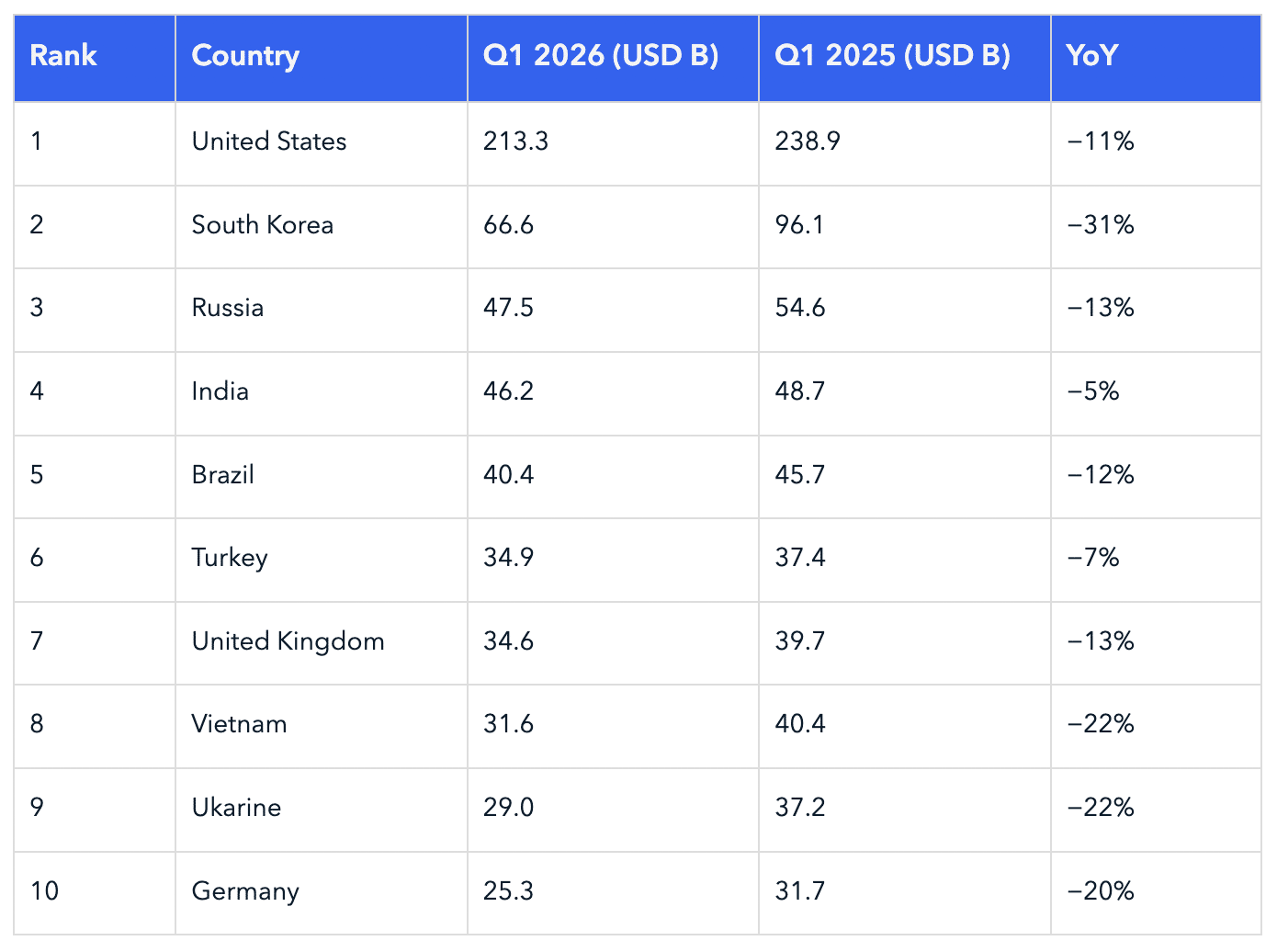
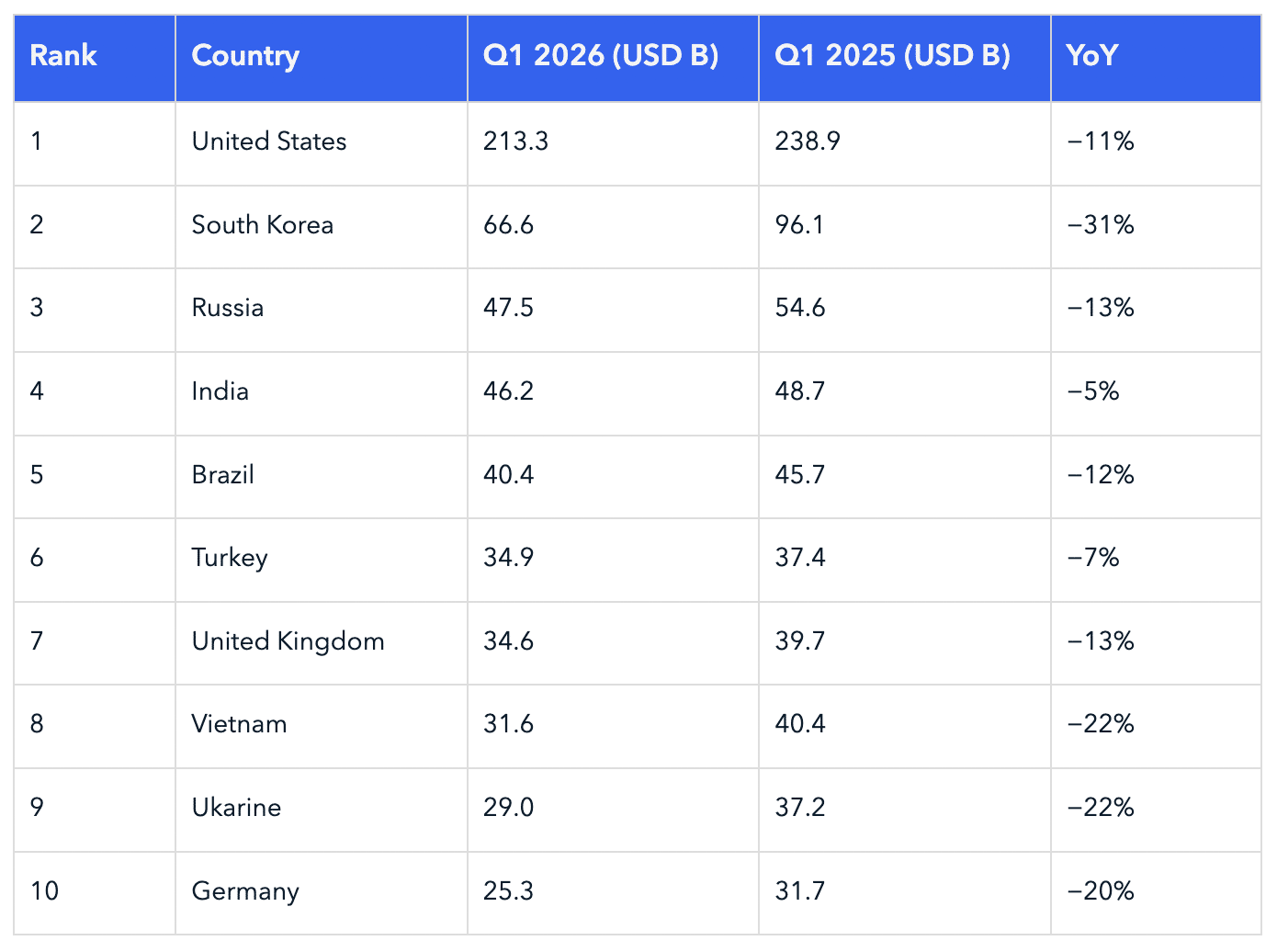
Source: TRM Labs

Final Summary

  • Germany’s two biggest banking networks are integrating cryptocurrency trading directly into their banking apps.
  • Roughly 25% of Germans who currently own cryptocurrency trust their main banks more than independent cryptocurrency platforms.


Preguntas relacionadas

QWhich two major German banking networks are integrating cryptocurrency trading into their apps?

AGermany's two largest banking networks, the Sparkassen savings banks and the cooperative Volksbanken Raiffeisenbanken, are integrating cryptocurrency trading directly into their banking apps.

QWhat is the name of the cryptocurrency platform introduced by the cooperative banks through DZ Bank?

AThe cooperative banks have introduced the 'meinKrypto' platform through DZ Bank, which allows local banks to deliver Bitcoin (BTC) and Ethereum (ETH) directly to retail savers.

QUnder which regulatory framework does the 'meinKrypto' platform operate?

AThe 'meinKrypto' platform operates under the European Union's Markets in Crypto-Assets (MiCA) framework and was approved by Germany's financial regulator, BaFin, in December 2025.

QAccording to Professor Co-Pierre Georg, what is a potential risk for novice clients using bank-integrated crypto services?

AProfessor Co-Pierre Georg suggests that novice clients may underestimate the high volatility and potential for total losses linked to cryptocurrencies due to the perceived legitimacy of well-known banks.

QWhat was the reported year-over-year change in Germany's retail cryptocurrency volume from Q1 2025 to Q1 2026?

AGermany's retail cryptocurrency volume declined by 20% year-over-year, from $31.7 billion in Q1 2025 to $25.3 billion in Q1 2026.

Lecturas Relacionadas

Raising $400 Million in Funding, Shenzhen's Embodied AI Unicorn is Heading for an IPO

LimX Dynamics, a leading Chinese humanoid robotics company based in Shenzhen, has raised nearly $4 billion in total funding following a $2 billion Pre-IPO round. This latest round, backed by prominent global investors including IDG Capital, Lens Technology, GGG Group, and Redstone VC, values the company at approximately 150 billion yuan. Founded in 2022 by Southern University of Science and Technology professor Zhang Wei, the company has developed a full-stack, self-developed "brain system" for humanoid robots. Its three-layer technical architecture (System 0 for locomotion, System 1 for specific skills, and System 2 for cognitive reasoning) powers a diverse product matrix, including the LimX Luna for commercial service and the LimX Oli R&D platform. Often compared to its American counterpart Figure, LimX Dynamics differentiates itself by focusing on "serving people, not processes" and prioritizing commercial service scenarios over factory applications first. The company has secured thousands of pre-orders, with over half coming from overseas markets, and has begun initial deliveries. With a distinctly global investor base and strategy, LimX Dynamics aims to leverage China's manufacturing advantages for worldwide competition. Having completed its shareholding reform in March 2026, the company is now steadily advancing its IPO plans, positioning itself as a key contender in the intensifying race to go public within the humanoid robotics sector.

marsbitHace 35 min(s)

Raising $400 Million in Funding, Shenzhen's Embodied AI Unicorn is Heading for an IPO

marsbitHace 35 min(s)

Grayscale: The Three Evolutionary Stages of Stock Tokenization and a Rundown of Core Beneficiary Public Blockchains

Grayscale research outlines three evolutionary phases for the tokenization of equities, each benefiting different blockchain infrastructures. The first phase is the third-party "wrapper model," where a Special Purpose Vehicle (SPV) holds the underlying stock and tokenized shares represent claims on that entity. This model, accounting for over 70% of the current tokenized stock market cap, allows for DeFi integration and is prevalent on public blockchains like Ethereum, Solana, and BNB Chain. The second phase is the "entitlement model," exemplified by an upcoming pilot from the Depository Trust & Clearing Corporation (DTCC) on the Canton Network. This approach involves placing existing, regulated securities onto a blockchain for transfer within the post-trade infrastructure, without creating a new security. The third and most transformative phase is issuer-led native issuance, where companies directly issue securities on-chain. While offering the greatest long-term potential, this model requires further regulatory clarity and is seen as favoring open-architecture blockchains like Ethereum and Solana, as well as hybrid networks like Avalanche. The report concludes that all three models will likely coexist. The blockchains poised to benefit most from tokenization growth are identified as Ethereum, Solana, BNB Chain, Avalanche, and Canton Network.

链捕手Hace 52 min(s)

Grayscale: The Three Evolutionary Stages of Stock Tokenization and a Rundown of Core Beneficiary Public Blockchains

链捕手Hace 52 min(s)

Trading

Spot
活动图片