Grayscale: The Three Evolution Stages of Stock Tokenization and a Review of Core Beneficiary Public Blockchains

marsbitPublicado a 2026-07-14Actualizado a 2026-07-14

Resumen

Grayscale outlines three key phases in the adoption of tokenized stocks, each benefiting different blockchain infrastructures. Phase 1: The "Wrapper Model." Third-party platforms create tokens representing claims on an SPV that holds the underlying stocks. While not conferring direct ownership, these tokens enable DeFi use and retail access. This currently dominant model (~70% by market cap) primarily operates on Ethereum, Solana, and BNB Chain. Phase 2: The "Entitlement Model." Major financial institutions like DTCC tokenize existing, regulated securities through their post-trade infrastructure to enable on-chain settlement and movement. The upcoming DTCC pilot on Canton Network exemplifies this institutional-led approach. Phase 3: The "Issuer-Led Model." Companies natively issue securities directly on a blockchain, as recently demonstrated by Securitize. This model offers the greatest long-term potential but requires more regulatory clarity. It is expected to favor open-architecture blockchains like Ethereum and Solana, as well as hybrid networks like Avalanche. The report posits that all three models will coexist. The primary blockchain networks poised to benefit from tokenized equity growth are Ethereum, Solana, BNB Chain, Avalanche, and Canton Network.

Author| Zach Pandl, Head of Research at Grayscale

Compiled| WuBlockchain

The tokenization process of global stock markets is advancing. Tokenized stocks promise various benefits for users, including 24/7 trading. The next significant development will be DTCC's [1] launch of a tokenization pilot on the Canton Network [2]. This pilot will allow tokenized stocks and other assets to circulate within the regulated financial system via blockchain infrastructure.

We believe stock market tokenization will progress through three stages, each bringing value to different types of blockchain infrastructure (see Chart 1).

The first stage is the third-party "wrapper" model [3]. In this model, an issuer holds stocks through a special purpose vehicle (SPV) [4], and the tokenized stock represents a claim on that SPV. Currently, over 70% of tokenized stocks by market value use this model. Wrapper-type tokenized stocks do not represent true stock ownership but can be used in DeFi and may appeal to retail investors. These assets currently trade on networks such as Ethereum, Solana, and BNB Chain.

The second stage is the "entitlement" model [5], represented by DTCC's pilot. Instead of creating new versions of securities, DTCC will record existing eligible securities on-chain through its regulated post-trade infrastructure, with the Canton Network serving as the initial blockchain network for this pilot.

The third stage is the issuer-led model, where companies directly issue securities natively on-chain. Last week, Securitize [6] became the first publicly listed company to tokenize its own common stock upon listing on the New York Stock Exchange. We believe this model holds the greatest long-term potential but still requires further regulatory clarity. In our view, the issuer-led model will be more favorable to open-architecture blockchains like Ethereum and Solana, as well as hybrid networks like Avalanche.

These three tokenization models are likely to coexist for many years to come.

Core View: Multiple models exist for tokenized stocks. In our view, the blockchain networks most likely to benefit from tokenization growth include Ethereum, Solana, BNB Chain, Avalanche, and the Canton Network.
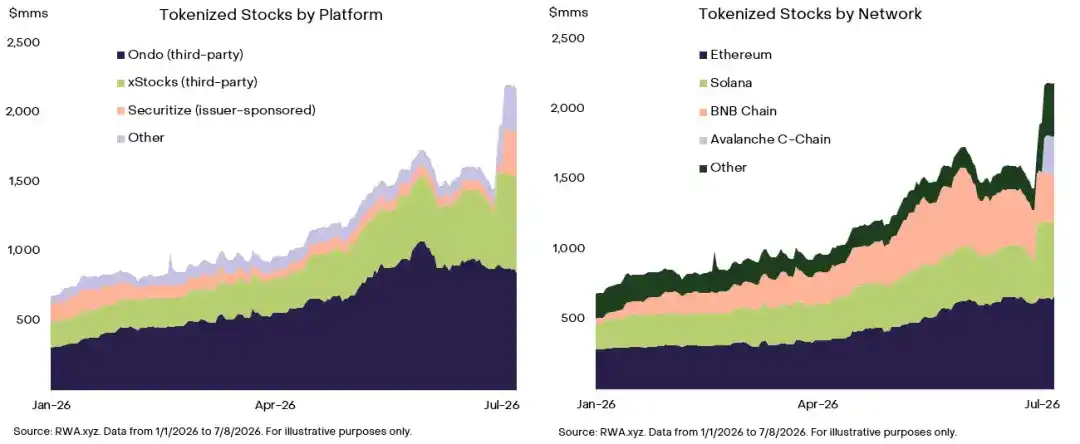
Chart 1: Third-party platforms currently dominate the tokenized stock market, while Ethereum, Solana, and BNB Chain hold the majority of on-chain assets.

Notes:

[1] DTCC: The Depository Trust & Clearing Corporation, a core U.S. post-trade securities infrastructure entity responsible for services such as clearing, settlement, and custody of securities transactions.

[2] Canton Network: A blockchain network for institutional financial assets, emphasizing privacy, compliance, and interoperability of assets among different financial institutions.

[3] Wrapper model: A model where a third-party platform holds underlying stocks through an intermediary structure and issues on-chain tokens representing claims on that structure. Investors hold claims on the structure rather than direct ownership of the stocks themselves.

[4] SPV: Special Purpose Vehicle. In the context of tokenized stocks, it typically refers to an entity established by the issuer to hold the underlying stock assets, with the investors' tokens representing claims on that entity.

[5] Entitlement model: A model that does not re-issue a new security but instead records or maps existing eligible securities onto a blockchain through a regulated post-trade system, enabling them to circulate on blockchain infrastructure.

[6] Securitize: A platform for digital securities and real-world asset tokenization. The article mentions its simultaneous tokenization of its own common stock upon listing on the NYSE.

Criptos en tendencia

Preguntas relacionadas

QWhat are the three evolutionary stages of stock tokenization as described in the article?

AThe three evolutionary stages are: 1) The third-party 'wrapper' model, 2) The 'entitlement' model, and 3) The issuer-led model, where companies natively issue securities on-chain.

QWhich blockchain networks are currently hosting most of the tokenized stock assets in the wrapper model stage?

AEthereum, Solana, and BNB Chain are currently hosting most of the tokenized stock assets in the wrapper model stage.

QWhat is the Canton Network, and what role does it play in the tokenization pilot mentioned?

ACanton Network is a blockchain network for institutional financial assets, emphasizing privacy, compliance, and interoperability between financial institutions. It is designated to be the first blockchain network for DTCC's tokenization pilot, which will allow tokenized stocks and other assets to flow within the regulated financial system via blockchain infrastructure.

QAccording to the article, which blockchain networks are seen as most likely to benefit from the growth of tokenized stocks in the long term?

AThe article suggests that Ethereum, Solana, BNB Chain, Avalanche, and Canton Network are the blockchain networks most likely to benefit from the growth of tokenized stocks.

QWhat is a key advantage of the 'entitlement model' of tokenization, as represented by the DTCC pilot?

AA key advantage of the 'entitlement model' is that instead of creating new versions of securities, it tokenizes existing, eligible securities through regulated post-trade infrastructure (like DTCC), enabling them to be transacted and settled on-chain while maintaining their established regulatory status and legal framework.

Lecturas Relacionadas

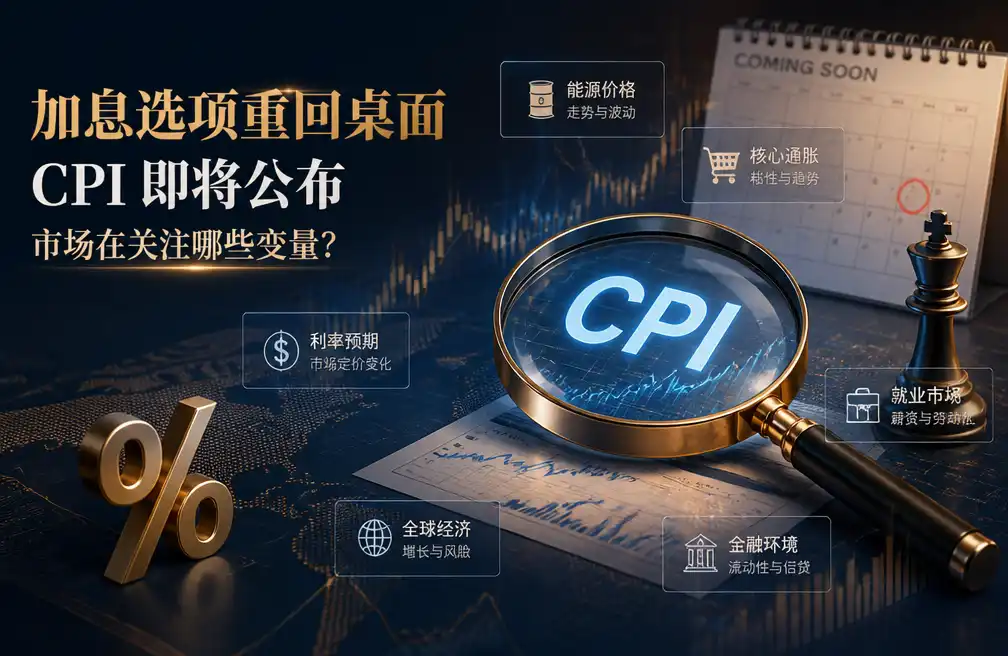
Interest Rate Hike Option Back on the Table, CPI Release Imminent: What Variables Are Markets Focusing On?

The possibility of interest rate hikes is back on the table ahead of the June CPI release. Fed Governor Christopher Waller stated that if upcoming core inflation data remains hot, the FOMC should consider tightening monetary policy soon. His comments, directly linking potential action to the CPI report, caused market expectations for a July rate hike to rise from around 35% to over 40%. This CPI report is critical not for dictating a single meeting's outcome, but for testing the credibility of disinflation. A higher-than-expected core CPI reading would challenge the Fed's ability to remain patient, potentially shifting internal discussions toward more tightening. Conversely, cooler data would allow markets to view Waller's remarks as a warning rather than a policy shift signal. The repricing of rate expectations pressures risk assets like tech stocks and cryptocurrencies (BTC, ETH) by pushing up the discount rate for future cash flows and strengthening the US dollar. The key variable to watch post-CPI is whether the implied probability of a July hike stabilizes above 50%, which would signify a shift from pricing a tail risk to a baseline scenario. The most significant market stress would come from a combination of hot CPI data, a sustained rise in hike probabilities above 50%, and similar hawkish signals from other Fed officials, forcing a broad repricing of the "hiking cycle is over" trade.

marsbitHace 43 min(s)

Interest Rate Hike Option Back on the Table, CPI Release Imminent: What Variables Are Markets Focusing On?

marsbitHace 43 min(s)

Trading

Spot

Artículos destacados

Cómo comprar CORE

¡Bienvenido a HTX.com! Hemos hecho que comprar CORE (CORE) sea simple y conveniente. Sigue nuestra guía paso a paso para iniciar tu viaje de criptos.Paso 1: crea tu cuenta HTXUtiliza tu correo electrónico o número de teléfono para registrarte y obtener una cuenta gratuita en HTX. Experimenta un proceso de registro sin complicaciones y desbloquea todas las funciones.Obtener mi cuentaPaso 2: ve a Comprar cripto y elige tu método de pagoTarjeta de crédito/débito: usa tu Visa o Mastercard para comprar CORE (CORE) al instante.Saldo: utiliza fondos del saldo de tu cuenta HTX para tradear sin problemas.Terceros: hemos agregado métodos de pago populares como Google Pay y Apple Pay para mejorar la comodidad.P2P: tradear directamente con otros usuarios en HTX.Over-the-Counter (OTC): ofrecemos servicios personalizados y tipos de cambio competitivos para los traders.Paso 3: guarda tu CORE (CORE)Después de comprar tu CORE (CORE), guárdalo en tu cuenta HTX. Alternativamente, puedes enviarlo a otro lugar mediante transferencia blockchain o utilizarlo para tradear otras criptomonedas.Paso 4: tradear CORE (CORE)Tradear fácilmente con CORE (CORE) en HTX's mercado spot. Simplemente accede a tu cuenta, selecciona tu par de trading, ejecuta tus trades y monitorea en tiempo real. Ofrecemos una experiencia fácil de usar tanto para principiantes como para traders experimentados.

258 Vistas totalesPublicado en 2024.12.13Actualizado en 2026.06.02

Cómo comprar CORE

Discusiones

Bienvenido a la comunidad de HTX. Aquí puedes mantenerte informado sobre los últimos desarrollos de la plataforma y acceder a análisis profesionales del mercado. A continuación se presentan las opiniones de los usuarios sobre el precio de CORE (CORE).

活动图片