Ex-Ripple Exec Shares What Burning XRP Means, But Does It Influence Price?

bitcoinistPublicado a 2026-03-17Actualizado a 2026-03-17

Resumen

Former Ripple CTO David Schwartz has challenged the common belief within the XRP community that burning tokens directly and immediately impacts the asset's price. This discussion arose after a community member questioned Ripple's recent $750 million share buyback, suggesting the company should instead burn the XRP held in escrow to benefit holders. To support his argument, Schwartz shared a price chart of Stellar (XLM), which burned half of its supply in 2019, showing no immediate price surge from the event. He asserted that while burns can have indirect market effects, they do not directly cause price rallies. The debate then expanded to question whether Ripple's other initiatives, such as its upcoming stablecoin RLUSD and Real-World Asset (RWA) tokenization, would provide any direct benefit to XRP's price if burns do not.

A former Ripple executive has weighed in on an ongoing debate over XRP token burns, shedding light on their actual impact on an asset’s value. In a heated discussion on X, the executive challenged the XRP community’s long-held belief that burning tokens directly influences their immediate price action or automatically triggers a sharp price rally.

Ex Ripple CTO Reveals Real Impact Of Burning XRP

David Schwartz, the former Chief Technology Officer (CTO) of Ripple, has taken to X to share new details about XRP burning and its direct influence on price. Notably, Schwartz’s statements come in response to the recent backlash and criticism stemming from Ripple’s latest $750 million share buyback.

In a post on March 12, a pseudonymous XRP community member known as ‘XRP Launch’ on X tagged several of Ripple’s top executives, including Schwartz, CEO Brad Garlinghouse, President Monica Long, and CLO Stuart Alderoty. The user questioned the company’s recent share buyback, asking why Ripple would prioritize this approach over initiatives that directly benefit XRP holders.

He urged the executives to consider burning the XRP currently held in escrow rather than pursuing share buybacks that primarily benefit Ripple as a company. In a sarcastic remark, he added that perhaps the escrow cannot be burned, as doing so might push XRP’s price beyond $1.39.

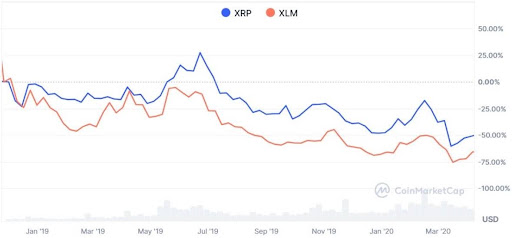
Responding to the remarks, Schwartz shared a price chart illustrating the historical performance of both XRP and Stellar (XLM). The chart highlights volatility in both assets, with notable price spikes in some months and relatively subdued action in others. The former Ripple CTO then challenged the XRP member to identify where, on the chart, XLM had burned half of its total supply.
Source: X

Notably, Stellar conducted a large-scale token burn in November 2019, eliminating half of its supply. Schwartz argued that, despite the significant reduction in supply, the move had no immediate, direct impact on XLM’s price. The chart showed no meaningful price surge throughout November that year or in the following months, with the only noticeable upward movement appearing around February to March of the next year.

Schwartz pushed back against the user’s claim that burning escrowed XRP would trigger a price rally, arguing that token burns have no direct impact on an asset’s performance or valuation. However, he acknowledged that such actions can, in some cases, exert indirect influence on market dynamics.

Concerns About RLUSD And RWA Impact On XRP Arise

As Schwartz debunked misconceptions about XRP burns, the debate quickly shifted to Ripple’s stablecoin, RLUSD, and the XRP Ledger’s (XRPL) Real-World Assets (RWAs) tokenization. A community member known as Spade reasoned that if burning tokens added no value to XRP, then, by extension, initiatives such as RLUSD, RWAs, and XRP’s role as a bridge asset may also provide little to no direct benefit to the cryptocurrency’s price.

He contended that the only immediate effect these activities would have on the ecosystem is burning XRP, which, according to Schwartz’s argument, would not positively influence the price. Spade further asserted that liquidity generated by using RLUSD does not increase XRP’s value. In his view, buying and holding XRP can increase its price. He also criticized the broader narrative that XRP “frees up capital,” arguing that the concept is counterproductive to the asset’s price growth.

Price goes on another uptrend | Source: XRPUSDT on TradingView.com

Preguntas relacionadas

QWhat did the former Ripple executive, David Schwartz, claim about the direct impact of token burns on XRP's price?

ADavid Schwartz argued that token burns have no direct impact on an asset's performance or valuation, using Stellar's (XLM) 2019 burn of half its supply as an example which did not cause an immediate price surge.

QWhy was the XRP community member 'XRP Launch' critical of Ripple's recent $750 million share buyback?

AThe member was critical because they believed Ripple should prioritize initiatives that directly benefit XRP holders, like burning the escrowed XRP, instead of a share buyback which primarily benefits the company itself.

QAccording to the article, what was the community's concern regarding Ripple's stablecoin RLUSD and Real-World Asset (RWA) tokenization?

AThe concern was that if burning tokens doesn't add value, then initiatives like RLUSD, RWAs, and XRP's role as a bridge asset might also provide little to no direct benefit to XRP's price.

QWhat was the main point of the community member 'Spade' in the debate about what increases XRP's value?

ASpade contended that the only immediate way to increase XRP's price is through buying and holding it, and criticized the narrative that XRP 'frees up capital' as counterproductive to price growth.

QWhat evidence did David Schwartz use to support his argument against the effectiveness of token burns?

AHe shared a price chart comparing XRP and XLM and challenged others to identify where XLM burn occurred, pointing out that the massive burn in November 2019 did not result in an immediate price increase for XLM.

Lecturas Relacionadas

Bitwise: Bullish on Bitcoin's Performance in the Second Half of the Year, AI and Regulation Will Spark a New Altcoin Season

Bitwise CIO Matt Hougan and Research Lead Ryan Rasmussen express strong bullish sentiment on Bitcoin's long-term prospects, suggesting that its $1 million price target may be too conservative. They argue Bitcoin serves a dual role: as digital gold and a potential global settlement asset, especially amid declining trust in traditional monetary systems. Despite a weak Q1 2026 where nearly all crypto assets and prices saw double-digit declines, the analysts remain optimistic due to strong forward-looking catalysts, including institutional adoption via Bitcoin ETFs from major firms like Morgan Stanley and Goldman Sachs. Geopolitical instability, such as Iran’s mention of using Bitcoin for international payments, increases the value of Bitcoin’s “out-of-the-money call option” as a non-political, global settlement currency. This enhances its appeal beyond a mere store of value. . Additionally, Hougan highlights that a clearer regulatory token framework under current SEC leadership, combined with AI efficiency gains and high-performance blockchains, could fuel a new “altseason” by late 2026. This may lead to a wave of legitimate, value-capturing token projects, unlike the earlier ICO boom. . Bitwise also announced an Avalanche ETF, citing its unique architecture and rapid growth in real-world asset (RWA) tokenization, which has surged 10x to nearly $30 billion in two years. The firm believes Layer 1 blockchains are still early in their growth cycle, with significant potential ahead.

marsbitHace 12 min(s)

Bitwise: Bullish on Bitcoin's Performance in the Second Half of the Year, AI and Regulation Will Spark a New Altcoin Season

marsbitHace 12 min(s)

Trading

Spot
Futuros

Artículos destacados

Qué es XRP 2.0

XRP 2.0: Una Nueva Frontera en el Panorama de las Criptomonedas Introducción a XRP 2.0 En el siempre cambiante ámbito de las criptomonedas, nuevos proyectos surgen continuamente, compitiendo por atención y adopción. Una de estas iniciativas prometedoras es XRP 2.0, un nuevo proyecto de criptomoneda diseñado para aprovechar la tecnología blockchain avanzada y metodologías de encriptación robustas. Aunque el nombre establece paralelismos con el XRP de Ripple, es crucial señalar que XRP 2.0 opera de manera independiente, enfocándose en mejorar la seguridad de las transacciones, la privacidad y la escalabilidad. A medida que el panorama financiero digital abraza cada vez más soluciones descentralizadas, XRP 2.0 busca contribuir de manera significativa a web3 y a la expansión general de los proyectos de criptomonedas. ¿Qué es XRP 2.0? En esencia, XRP 2.0 es un proyecto de criptomoneda que busca crear un ecosistema de moneda digital seguro y descentralizado. Su tecnología fundamental integra principios avanzados de blockchain con técnicas de encriptación de vanguardia. El objetivo principal de XRP 2.0 es establecerse como una plataforma confiable y eficiente que permita la ejecución rápida de transacciones mientras prioriza la protección de la privacidad de sus usuarios. El proyecto se promociona como una solución a muchas limitaciones enfrentadas por las criptomonedas existentes, proponiendo un sistema que puede manejar un mayor volumen de transacciones con mejor velocidad y privacidad. Esta versatilidad posiciona a XRP 2.0 como un competidor significativo en un mercado plagado de diversas monedas digitales. ¿Quién es el Creador de XRP 2.0? La identidad del creador detrás de XRP 2.0 ha sido señalada como 'Wilbur.' Sin embargo, los detalles completos sobre Wilbur o su entidad asociada siguen siendo elusivos. La anonimidad de muchos creadores de criptomonedas no es un fenómeno poco común en la industria, a menudo diseñado para mantener un grado de privacidad y seguridad. ¿Quiénes son los Inversores de XRP 2.0? Hasta ahora, la información específica relacionada con las fundaciones o organizaciones de inversión que apoyan a XRP 2.0 no está disponible públicamente. En el sector de las criptomonedas, el respaldo de inversores respetables puede influir significativamente en la credibilidad y el éxito de un proyecto, sin embargo, la transparencia sobre los patrocinadores financieros de XRP 2.0 no se ha establecido. ¿Cómo Funciona XRP 2.0? XRP 2.0 se destaca al emplear una combinación de tecnología blockchain y algoritmos de encriptación avanzados que aseguran transacciones seguras y descentralizadas. Su estructura innovadora incluye características únicas diseñadas para fomentar el compromiso del usuario y ampliar las funcionalidades más allá de las transacciones convencionales de criptomonedas. Entre estas características, XRP 2.0 incorpora capacidades impulsadas por IA, como funcionalidades de texto a imagen y de texto a voz. Estas adiciones están diseñadas para mejorar la experiencia interactiva de los usuarios, promoviendo una mayor aplicabilidad en diversos sectores. Al unir avances tecnológicos con un diseño centrado en el usuario, XRP 2.0 busca captar la atención de una amplia gama de individuos y empresas que buscan integrar soluciones de criptomonedas en sus marcos operativos. Cronología de XRP 2.0 Entender XRP 2.0 requiere examinar los hitos que han definido su viaje hasta ahora: 23 de julio de 2023: Se presenta XRP 2.0 como un nuevo proyecto de criptomonedas, con el objetivo de revolucionar las capacidades de transacciones seguras y descentralizadas en el ámbito de blockchain. 8 de septiembre de 2023: Se lanza otro proyecto, XRP20, marcando la aparición de un token ERC-20 en la blockchain de Ethereum que no guarda relación con XRP 2.0. 13 de noviembre de 2023: El Libro Mayor de XRP experimenta una actualización significativa con el lanzamiento de la versión 2.0.0 del software del servidor rippled. Es esencial señalar que este desarrollo está desconectado del proyecto de criptomonedas XRP 2.0. Puntos Clave sobre XRP 2.0 Para destilar la esencia de XRP 2.0, surgen varios factores críticos: Características Únicas: La inclusión de características como texto a imagen y texto a voz impulsadas por IA diversifica aún más las aplicaciones potenciales de XRP 2.0. Tecnología Blockchain: El marco utiliza mecanismos avanzados de blockchain y protocolos de encriptación, asegurando un entorno seguro y descentralizado para las transacciones. Escalabilidad y Privacidad: XRP 2.0 prioriza la protección mejorada de la privacidad en los procesos de transacción y la escalabilidad necesaria para acomodar una base de usuarios creciente. No Afiliación con Ripple: Es importante destacar que, a pesar de su nombre, XRP 2.0 no tiene ninguna lealtad ni colaboración con el XRP de Ripple, diferenciando su marco operativo y objetivos dentro del ecosistema de criptomonedas. Conclusión XRP 2.0 representa una ambiciosa aventura en la esfera de las criptomonedas, buscando ofrecer una combinación de seguridad, privacidad y eficiencia en las transacciones digitales. Al integrar tecnologías sofisticadas y características amigables para el usuario, el proyecto se propone ampliar los horizontes de lo que la criptomoneda puede lograr en la economía digital de hoy. Si bien la anonimidad de su creador y la falta de inversores revelados pueden generar cuestionamientos para algunos, el enfoque de XRP 2.0 en funcionalidades avanzadas y descentralización realza su atractivo en un mercado de criptomonedas cada vez más abarrotado. A medida que el paisaje de las criptomonedas sigue evolucionando, XRP 2.0 podría emerger como un jugador crucial en la expansión de soluciones blockchain seguras y escalables.

174 Vistas totalesPublicado en 2024.04.05Actualizado en 2024.12.03

Qué es XRP 2.0

Cómo comprar XRP

¡Bienvenido a HTX.com! Hemos hecho que comprar XRP (XRP) sea simple y conveniente. Sigue nuestra guía paso a paso para iniciar tu viaje de criptos.Paso 1: crea tu cuenta HTXUtiliza tu correo electrónico o número de teléfono para registrarte y obtener una cuenta gratuita en HTX. Experimenta un proceso de registro sin complicaciones y desbloquea todas las funciones.Obtener mi cuentaPaso 2: ve a Comprar cripto y elige tu método de pagoTarjeta de crédito/débito: usa tu Visa o Mastercard para comprar XRP (XRP) al instante.Saldo: utiliza fondos del saldo de tu cuenta HTX para tradear sin problemas.Terceros: hemos agregado métodos de pago populares como Google Pay y Apple Pay para mejorar la comodidad.P2P: tradear directamente con otros usuarios en HTX.Over-the-Counter (OTC): ofrecemos servicios personalizados y tipos de cambio competitivos para los traders.Paso 3: guarda tu XRP (XRP)Después de comprar tu XRP (XRP), guárdalo en tu cuenta HTX. Alternativamente, puedes enviarlo a otro lugar mediante transferencia blockchain o utilizarlo para tradear otras criptomonedas.Paso 4: tradear XRP (XRP)Tradear fácilmente con XRP (XRP) en HTX's mercado spot. Simplemente accede a tu cuenta, selecciona tu par de trading, ejecuta tus trades y monitorea en tiempo real. Ofrecemos una experiencia fácil de usar tanto para principiantes como para traders experimentados.

1.3k Vistas totalesPublicado en 2024.12.10Actualizado en 2025.03.21

Cómo comprar XRP

Discusiones

Bienvenido a la comunidad de HTX. Aquí puedes mantenerte informado sobre los últimos desarrollos de la plataforma y acceder a análisis profesionales del mercado. A continuación se presentan las opiniones de los usuarios sobre el precio de XRP (XRP).

活动图片