Source: 'Bitcoin Magazine'
Compiled by: Felix, PANews
Release Date: August 20th
In a recent podcast episode of 'Bitcoin Magazine', Bitwise CIO Matt Hougan analyzed Bitcoin's current market cycle, pointing out that the market is in a bottoming phase characterized by 'apathy'. He believes that while price fluctuations in recent years were influenced by retail investors exiting, the continued involvement of wealth management institutions and large wealth platforms will be the core driver of the next upward move.
Matt Hougan further posited viewing Bitcoin as a long-term out-of-the-money call option against global monetary system turmoil, with its status as a digital store of value becoming increasingly solid. Additionally, he discussed the future trend of asset tokenization, predicting that ultimately all traditional financial assets will be traded 24/7 on the blockchain.
PANews has compiled the highlights of the interview.

Host: Many people are pondering a question: Has the 'four-year cycle' become obsolete? Can we still expect history to repeat itself as it did before? Can you share your view on the current cycle?
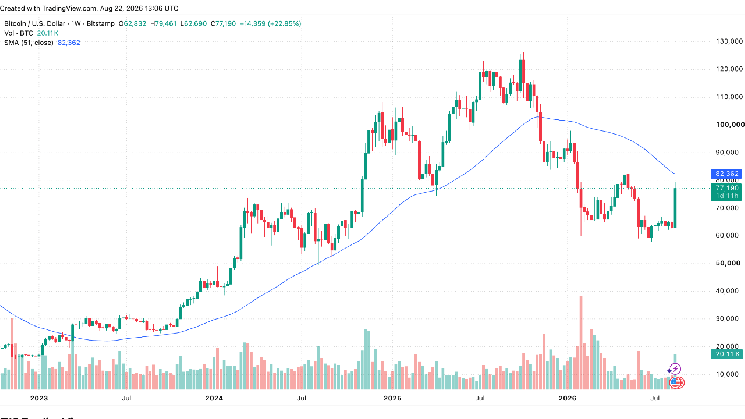
Matt: I believe we are very close to the bottom right now. If this coincides with the four-year cycle, that's also reasonable. The market looks boring, but boredom is often associated with market bottoms. Crypto bear markets often end in apathy and weakness. Within this flat trend, 'compressed volatility' is actually brewing, ready to explode upward at any moment. So, I'm very optimistic about the market direction for the remainder of this year.
As for the four-year cycle, I think it did, to some extent, contribute to the market pullback that started last October 10th. Many people expected a pullback due to the four-year cycle and chose to exit early, which in turn accelerated the pullback. Whether this cycle will repeat unchanged in the future, I'm not sure, but the current market performance indeed exhibits all the characteristics of a bottom or near-bottom.
Host: What specific characteristics does the bottom you mentioned include?
Matt: For Bitcoin, bad news can no longer hurt it; it simply doesn't seem to care about what happens in the rest of the market. There are no more Bitcoin sellers in the market; it has been trading sideways for the past few months, which is usually an excellent signal. This low volatility may soon transform into upward momentum, so I'm waiting for autumn and feel very optimistic about the rest of the year.
Host: At the Bitcoin 2026 conference, you described Bitcoin as 'a long-dated, out-of-the-money call option', betting it could become a global reserve asset. You also mentioned that Bitcoin reacts positively to volatility; expanded global volatility actually makes this call option more valuable. For those unfamiliar with options trading, could you break down this logic?
Matt: In the world of options, the greater the volatility of the underlying asset, the higher the value of the option itself. For example, an option on Nvidia stock is usually more expensive than an option on a utility company because Nvidia's stock price is much more volatile, making it easier for the option to become 'in-the-money'.
The reason I view Bitcoin as a call option is because it's a bet on 'Bitcoin becoming a new type of monetary asset'. If that day truly arrives, we're looking at a valuation in the trillions of dollars. If Bitcoin achieves everything it claims, the impact would be enormous. Although in most people's minds, that possibility might not be one-half or one-third now, but an idea more skewed towards being 'out-of-the-money'.
But the key logic here is: when the volatility of the global monetary structure increases, the mathematical rules for pricing that option above apply similarly. When the world situation becomes more confusing, cracks appear in dollar hegemony, people start pricing in gold, or as Iran discusses accepting Bitcoin payments, the volatility of the global monetary order actually increases. This increase in volatility makes the 'option' for Bitcoin to participate in and change that order more valuable in itself. Therefore, Bitcoin is a natural hedge against global international standard chaos. We have witnessed this logic work multiple times in the past. If the world situation becomes more perplexing by the end of this year, this feature will manifest itself again in Bitcoin.
Host: So, for Bitcoin becoming a global reserve asset, or reaching some kind of 'ultimate adoption state' (whether as a unit of account or a means to diversify global economic risk), do you have a timeline framework? What will the final outcome look like? Some think Bitcoin will become a high-frequency settlement tool, while others think it will become a reserve asset for sovereign states to improve credit ratings, much like gold. What's your take?
Matt: I like to break its development into different stages or steps. The further into the future we look, the higher the uncertainty.
First is a global store of value. Bitcoin as a global store of value, in my view, is almost an established fact already. It is already sharing this role with gold, although it currently only occupies a small fraction of the gold market, but this share has been continuously increasing over the past 17 years. In the next 5 to 10 years, even if Bitcoin doesn't achieve any unimaginably huge success, it is extremely likely to capture one-third or half of the gold market share, merely a natural extension of the trend from the past 17 years. This single logic is enough to support a very high valuation: if Bitcoin captures one-third of the global store of value market in the next 10 years, and this market maintains the growth rate of the past decade, the price per Bitcoin could eventually reach about $1.3 million.
Second, as a check against fiat currency abuse (the clearest path). Once beyond the store of value stage, we enter the option scenario. Will it be used for daily transactions? I think a more likely scenario is its use as a check against paper money (fiat) abuse. Just as we've seen China continuously increasing its gold reserves to hedge against currency system collapse, more and more sovereign states will adopt Bitcoin. I'm not sure if we'll ultimately head towards complete 'hyperbitcoinization', but as a powerful, robust check against the fiat system, this is the flattest path I can see clearly.
Host: As someone deeply involved in the institutional capital space, what changes in institutional investor psychology have you observed? Four or five years ago, if you said Bitcoin could be like gold, people would have found it incredible. Has that attitude softened now?
Matt: People are accepting it. If you look at the world today, the Harvard Endowment, legendary investors like Paul Tudor Jones and Stan Druckenmiller, sovereign wealth funds all have Bitcoin positions, and central banks in multiple countries are studying it. Any objective perspective would acknowledge that it is steadily moving forward. The current debate is only about the degree (capturing 10%, 20%, 30%, or 50% of the global store of value market). Almost no one casually declares that Bitcoin is dead anymore, as they might have in 2021 or 2022.
As for the 'social value' theory you mentioned, that it's only useful if someone agrees on its value, it's actually easy to refute. That's the logic for the value of any asset or service in the world. We can view Bitcoin as a service: a 'service for storing wealth without relying on any government or bank'. If no one needs this service, its value is zero. But I believe it is highly probable that more and more people will want to store wealth in digital form without relying on any government or bank in the future. This means more people will need exposure to Bitcoin.
Host: As we exit the bottom and start an upward channel, where do you anticipate the new market participants will primarily come from?
Matt: This is precisely what we call the 'wealth cycle'. New capital will mainly come from wealth management institutions, specifically financial advisors and family offices. This is the decisive group for investing in Bitcoin in this cycle. They are the financial advisors at institutions like Wells Fargo, Morgan Stanley, Merrill Lynch, and UBS, managing the wealth of the top 10% to 20% of the population in the US and globally. A year ago, they had absolutely no access to Bitcoin whatsoever, and collectively they manage tens of trillions of dollars in assets.
In this cycle, this group is adopting Bitcoin on a large scale. The protagonists of the current cycle are wealth management platforms (the wealth cycle); the next cycle will belong to deeper financial institutions (the institutional cycle); the cycle after that will be sovereign states (the sovereign cycle).
This doesn't mean sovereign states or large institutions aren't buying now—they certainly are—but the core driving force of this bull market will be these wealth platforms managing tens of trillions of dollars. Now Wells Fargo has included Bitcoin in its model portfolio, Morgan Stanley has launched its own Bitcoin ETF—these wealth funds are the main engine pushing the next cycle upward.
Host: Institutions are indeed entering via ETFs now, but why hasn't the price exploded as many expected?
Matt: This is a very crucial question; we need to look at both sides of the ledger simultaneously. Bitcoin was born as a phenomenon dominated by retail investors, and currently, the vast majority of the existing Bitcoin supply is still held by retail.
Over the past two years, institutions have indeed flooded in, with nearly $100 billion flowing into Bitcoin ETFs. However, because retail channels have been continuously experiencing outflows, the barrel has been 'leaking'. Many long-term retail holders chose to sell and cash out ahead of the four-year cycle. So while institutions poured in tens of billions of dollars, most of it was offset by retail selling pressure, preventing a price surge.
But the reason I'm very optimistic about the end of this year and next year is: data shows that the retail 'leaking barrel' has stopped leaking; long-term wallets have resumed accumulating Bitcoin. If retail stops selling while institutional funds continue to flow steadily in via ETFs, this will form a combined force, driving significant price appreciation.
Host: Returning to the current macro environment, AI and risk assets are absorbing a lot of attention, while the specter of inflation from rising energy prices has people very conflicted about the Fed's interest rate policy: high energy prices could bring inflation, but they could also bring contraction because rising costs crush the economy. As a professional, what's your view on the direction of interest rates in this cycle?
Matt: Actually, I think in this cycle, the impact of interest rates themselves on Bitcoin is no longer as significant as it once was. My view is that interest rates will basically trade sideways. We are entering a Fed environment more reminiscent of the Greenspan era in the 1990s, rather than a Bernanke or Powell era where rates would spike and crash like a drunken sailor. Since Bitcoin's inception, rates were long at zero, then soared to 2.5%, crashed back to zero, then soared to 5%, and back to zero again, yo-yoing up and down.
Now, the data is very confusing. On one hand, there's strong deflationary pressure from AI; on the other hand, there's inflationary pressure from energy, tariffs, and other factors. The two are intertwined, creating a mess. Therefore, I expect interest rates to oscillate within a range around 3%, behaving very stickily. Since interest rates no longer wield that violent influence as before, other more critical fiscal factors will drive Bitcoin's price in the future. One is the US federal debt surpassing $40 trillion; two is potential money printing by the Treasury; three are policies like yield curve control.
We should shift our gaze from Fed rates to the fiscal side, and the fiscal deficit is currently completely out of control. The US has added more debt in the past year than it accumulated in the first 211 years of its existence. This is the core driver.
Host: Speaking of fiscal matters, many are watching Japan and the Bank of Japan (BOJ) bond market. And there's an interesting recent detail: when the US intervened in the yen exchange rate, it reportedly bought yen by selling euros, not dollars. What's your take on Japan's debt situation?
Matt: The reason the US took this approach is because they wanted to support Japan politically, but also prevent Japan from being forced to sell US Treasuries to intervene in the exchange rate. The US simply cannot afford a further steepening of the US Treasury yield curve, as long-term rates are already very high.
Japan is in a very difficult predicament, with debt-to-GDP ratios multiples high, and there's almost nothing they can do except endure quietly or inflate away the debt. The US is actually stepping into its own version of this predicament vortex.
If you ask an enlightening question: 'If you had been in Japan for the past 30 years, would you have preferred to have an asset like Bitcoin, or hold yen?' The answer is clearly Bitcoin. Because the yen has been in a painful, one-way depreciation channel for a very long time. This is an extremely vivid lesson for global investors.
Host: Besides macro issues, the Bitcoin market itself is also very focused on Strategy. Strategy recently seems to be liquidating some Bitcoin and increasing cash buffers, and its stock price has experienced major ups and downs. Do you think the market still cares about Strategy's every move?
Matt: I don't think so much. Like interest rates, Strategy's importance to the market's future will gradually diminish. They were able to grow this business big in the past primarily by leveraging two very unique historical advantages. The first stage was the pre-ETF era. At that time, there was a lack of Bitcoin ETFs in the market, and Strategy was able to continuously issue shares at a premium above Net Asset Value (NAV), then use the raised funds to purchase large amounts of Bitcoin. This was their first step in accumulating massive Bitcoin reserves. The second stage was credit line conversion. Because they possessed a huge, unencumbered Bitcoin reserve, they were able to issue credit debt against it, leveraging an additional $10 to $12 billion in assets. But today, the valuation arbitrage opportunity brought by ETFs has disappeared, and their debt-to-equity ratio has also reached its limit. Before a major Bitcoin price increase, they can no longer automatically print money or increase debt without limit.
This means their previous 'free lunch' is over. Going forward, Strategy has to play a more complex 'pro-cyclical' game, requiring more aggressive treasury management: issuing more shares when Bitcoin surges, cashing out and buying the dip when Bitcoin corrects. They are still important players in the market and manage assets exceptionally well, but their era as the 'world's largest single automatic Bitcoin buying machine' is likely over, and they are now in a stable equilibrium.
Host: Do you think there will be a 'Strategy 2.0'? For example, other companies emulating this approach, or was this just a 'one-off evolution' specific to a particular historical period?
Matt: I also directly asked Michael Saylor this question on Strategy's earnings call, and Saylor's response was: 'No, we are completely focused on Strategy itself; we have no more arrows in our quiver.'
I'm not entirely sure if there really is no innovation left, but I agree their main period of advantage has passed. It's unlikely we'll see another dramatic buying spree like they had in the past. Of course, we will indeed see some non-Bitcoin concept companies (like SpaceX or Figma) allocate a small percentage of their cash directly to Bitcoin as part of their diversified asset allocation. Corporate treasuries investing just 1%, 2%, or even 5% in Bitcoin, while not the main engine of a bull market, also represent a non-negligible inflow of funds.
Host: Where are we currently in the tokenization trend, and why is it important?
Matt: First, it must be stated that asset tokenization does not conflict with Bitcoin; there is no competition between the two. Satoshi created the blockchain, and we have discovered other uses for the blockchain; these are purely different application scenarios.
The greatest appeal of tokenized assets is instant settlement. Money is the slowest-moving thing in today's society: international bank wires take 3 to 5 days; stock settlement internationally takes T+1, T+2, even T+3. Once you tokenize an asset, lock it, generate a digital representation, and move it on the blockchain, it can settle instantly, 24/7/365. You can also use it as collateral for loans; it's like Bitcoin, an extremely perfect high-quality collateral.
I believe within the next 3 to 5 years, all assets will begin to be traded in tokenized form. The growth rate in this sector is currently astonishing: RWA grew 900% in the past 18 months; the number of wallets holding tokenized assets grew 56% in the past 30 days. This is exponential growth. It will change the way assets are traded, completely eliminating the barriers between traditional finance and crypto assets, merging them into a huge, seamlessly flowing market.
Host: Are we now engaged in a 'cryptoization of global assets'? How will this change valuations and volatility in traditional financial markets?
Matt: Indeed. The US stock market trades only 33 hours a week, and only a tiny fraction of US and international investors have direct access, a minuscule portion of the global 8 billion population. We are entering a new world: stocks, bonds, perpetual contracts, Bitcoin, gold, and other commodities all trading 24/7/365 in the same app, the same wallet. You no longer need to go to Robinhood for stocks, Coinbase for crypto, CME for commodities; all assets are within reach in decentralized exchanges. This truly realizes a globally unified market, and cross-asset position hedging, collateral lending become exceptionally simple.
While this will attract more global capital into the legally sound US market, we will also inject characteristics and volatility belonging to the 'crypto market' into traditional financial markets.
First is uneven liquidity due to 24/7 trading. Even though trading is open 24/7, people still need to sleep. During some diluted liquidity late-night hours, traditional stocks might also experience abnormally sharp, disorderly volatility, just like crypto. Second is the extreme convenience of leverage. Since tokenized assets are very easily used as collateral for loans, you can max out leverage with one click, undoubtedly amplifying the leverage ratio in traditional stock markets, thereby introducing more volatility.
But the flaws don't obscure the virtues. A larger, deeper, more liquid, and globally seamlessly connected market, with lower execution costs, is ultimately a better, more efficient world for global investors.
Related reading: Dialogue with a Crypto Analyst: The Bitcoin Four-Year Cycle Remains Effective, New Opportunities Hidden in Market Amidst Liquidation Crises