CLARITY Act: Senate Banking Committee Sets Mark-Up Date – Details

bitcoinistPublicado a 2026-01-10Actualizado a 2026-01-10

Resumen

The US Senate Committee on Banking, Housing, and Urban Affairs has scheduled a markup session for the CLARITY Act on January 15, 2026. This bill, passed by the House in July 2025, aims to establish a federal regulatory framework for cryptocurrencies by defining roles for the SEC and CFTC, clarifying asset classifications, and creating compliance pathways. Committee Chairman Tim Scott emphasized the legislation's potential to make the US a global crypto hub, foster innovation, and protect against financial crimes. Reporter Eleanor Terrett predicts the act could be fully approved by March 2026 after further committee merges and congressional votes.

In an exciting development, the US Senate Committee on Banking, Housing, and Urban Affairs has set a markup date for the CLARITY Act, representing a significant advancement in the creation of a federal regulatory framework for cryptocurrency use and operations in the United States.

Time To Move Crypto Legislation Forward – Sen. Banking Committee Chair

The CLARITY Act was introduced in May 2025 and passed by the House of Representatives in July. It is a landmark US crypto market-structure bill designed to define regulatory responsibilities between the SEC and CFTC, clarify asset classifications, and establish compliance pathways for digital asset markets. The bill has since been moved to the US Senate for consideration, commencing with a revision by the relevant Senate Committee.

In an X post on January 10, Fox Reporter Eleanor Terrett stated the US Senate Committee on Banking, Housing, and Urban Affairs, led by Republican Chairman Tim Scott, has set the markup session for the CLARITY Act at 10 am EST on Thursday, 15 January, 2026. For context, the markup represents a key legislative process whereby the lawmakers in relevant committees review, debate, amend, and rewrite a proposed bill before it is presented to the full chamber.

Commenting on this development, Chairman Tim Scott explained the potential importance of the CLARITY Act, emphasizing its role in transforming the US into the crypto capital of the world.

The Republican said:

This legislation is about making America the crypto capital of the world – so the next generation of jobs and innovation is built here, not overseas. When we set clear rules, we give entrepreneurs the confidence to start companies, hire workers, and grow right here in the United States. We also make it harder for criminals and foreign adversaries to use new technology to rip off Americans or undermine our financial system. After months of serious, bipartisan work, it’s time to move this forward and deliver real results for the American people.

Notably, the Banking Committee’s announcement has received many positive reactions from crypto enthusiasts. This is because the CLARITY Act is expected to bring regulatory clarity and also introduce the needed guardrails that would encourage more mainstream digital asset adoption among individuals and institutions alike.

CLARITY Act To Pass Into Law By March

In other developments, Eleanor Terrett predicts the CLARITY Act could be ratified in the next two months on a conservative basis. The Fox reporter explains the bill will likely be advanced next week, following the slated markup to be merged with the portion of the Agricultural Committee before being read to the Senate floor for voting. Upon approval, it is sent back to the House of Representatives and finally to President Donald Trump’s desk for ascent.

Considering these processes and their respective length, Terrett expects the CLARITY Act to gain full approval by March at the earliest.

Total crypto market cap valued at $3.06 trillion on the daily chart | Source: TOTAL chart on Tradingview.com

Preguntas relacionadas

QWhat is the CLARITY Act and what are its main objectives?

AThe CLARITY Act is a landmark US crypto market-structure bill introduced in May 2025. Its main objectives are to define regulatory responsibilities between the SEC and CFTC, clarify asset classifications, and establish compliance pathways for digital asset markets.

QWhen is the markup session for the CLARITY Act scheduled by the Senate Banking Committee?

AThe markup session for the CLARITY Act is scheduled for 10 am EST on Thursday, January 15, 2026, by the US Senate Committee on Banking, Housing, and Urban Affairs.

QAccording to Chairman Tim Scott, why is the CLARITY Act important for the United States?

AChairman Tim Scott stated that the CLARITY Act is about making America the crypto capital of the world, fostering the next generation of jobs and innovation domestically. It aims to provide clear rules to give entrepreneurs confidence to start companies and hire workers in the US, while also making it harder for criminals and foreign adversaries to exploit the technology.

QWhat is the predicted timeline for the CLARITY Act to become law, as reported by Eleanor Terrett?

AFox Reporter Eleanor Terrett predicts that the CLARITY Act could be ratified and gain full approval by March at the earliest, following a markup, merging with the Agricultural Committee's portion, Senate voting, and final approval from the House of Representatives and the President.

QWhat positive impact is the CLARITY Act expected to have on the crypto market?

AThe CLARITY Act is expected to bring regulatory clarity and introduce necessary guardrails that would encourage more mainstream digital asset adoption among both individuals and institutions, which has been positively received by crypto enthusiasts.

Lecturas Relacionadas

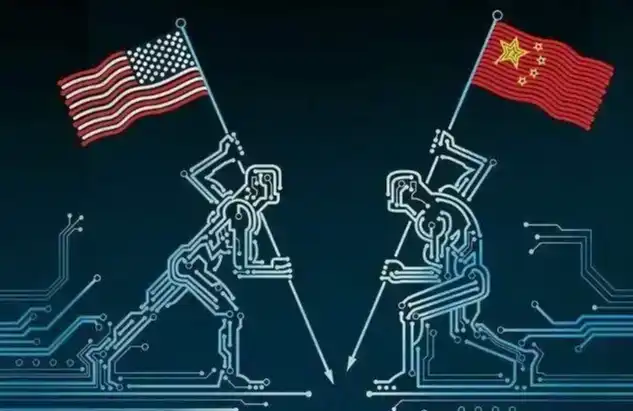
Who Will Define the Rules of the AI Era? Anthropic Discusses the 2028 US-China AI Landscape

This article, based on Anthropic's analysis, outlines the intensifying systemic competition between the U.S./allies and China for AI leadership by 2028. It argues that access to advanced computing power ("compute") is the critical bottleneck, where the U.S. currently holds a significant advantage through chip export controls and allied innovation. However, China's AI labs remain competitive by exploiting policy loopholes—via chip smuggling, overseas data center access, and "model distillation" attacks to copy U.S. model capabilities—keeping them close to the frontier. The piece presents two contrasting scenarios for 2028. In the first, decisive U.S. action to tighten compute controls and curb distillation locks in a 12-24 month AI capability lead, cementing democratic influence over global AI norms, security, and economic infrastructure. In the second, policy inaction allows China to achieve near-parity through continued access to U.S. technology, enabling Beijing to promote its AI stack globally and integrate advanced AI into its military and governance systems, altering the strategic balance. Anthropic contends that maintaining a decisive U.S. lead is essential for shaping safe AI development and governance. The core recommendation is for U.S. policymakers to urgently close compute and model access loopholes while promoting global adoption of the U.S. AI technology stack to secure a lasting strategic advantage.

marsbitHace 1 hora(s)

Who Will Define the Rules of the AI Era? Anthropic Discusses the 2028 US-China AI Landscape

marsbitHace 1 hora(s)

“Why Didn’t You Buy 2x Long SK Hynix?”

The article discusses the immense popularity of the "2x Long SK Hynix ETF" (07709.HK) in Hong Kong, which became the world's largest single-stock leveraged ETF by May 2026. Launched in October 2025, the ETF's net value soared over 1000% in seven months, significantly outperforming the 324% gain of SK Hynix's underlying stock, driven by the AI boom and a critical shift in industry demand from computing power to memory. It highlights the mechanics and risks of daily-rebalanced leveraged ETFs. In a smooth bullish market, they generate amplified returns, but during volatile periods—exemplified by market swings during geopolitical tensions in the Strait of Hormuz in March-April 2026—they suffer severe "volatility decay," where choppy price action can cause losses far exceeding twice the drop of the underlying asset. The piece frames SK Hynix, as NVIDIA's primary HBM supplier, within the classic cycle of the memory chip industry—a commoditized sector prone to boom-and-bust cycles of shortage, price hikes, overcapacity, and crashes. While current AI-driven demand and high margins (Q1 2026毛利率~79%) create a "super cycle," the article questions its sustainability. It warns that extreme profits will inevitably tempt competitors like Samsung and Micron to ramp up HBM production, potentially eroding scarcity. Furthermore, the entire narrative remains tethered to the massive AI capital expenditure of tech giants. In conclusion, the ETF's trajectory symbolizes the accelerated, all-in nature of the current AI revolution, where timeframes are compressed and market moves are extreme. However, it also underscores that while industry trends define ultimate returns, macro-geopolitical risks dictate the volatile and uncertain path to get there.

marsbitHace 1 hora(s)

“Why Didn’t You Buy 2x Long SK Hynix?”

marsbitHace 1 hora(s)

a16z Crypto: A Guide to the CLARITY Act for Crypto Entrepreneurs

The CLARITY Act, a bipartisan crypto market structure bill, has advanced through the Senate Banking Committee, marking a potential historic shift in U.S. digital asset regulation. For years, a lack of clear rules has stifled innovation, pushed development overseas, and exposed consumers to risk. This bill aims to establish a comprehensive framework, providing long-needed regulatory clarity for blockchain networks and digital assets. It builds upon previous legislative efforts like FIT21 and the House version of CLARITY, which gained strong bipartisan support. CLARITY is crucial because it recognizes that blockchain networks are fundamentally different from traditional companies. Networks operate through decentralized, shared rules rather than centralized control. Applying corporate legal frameworks to networks forces them into a centralized model, concentrating power and value. In contrast, decentralized blockchain networks can function as user-owned public infrastructure, distributing value more equitably among participants. The bill seeks to enable the safe launch of networks in the U.S., clarify regulatory jurisdiction between the SEC and CFTC, oversee crypto exchanges, and enhance consumer protections. Its passage would align U.S. law with the nature of decentralized technology, allowing builders to operate transparently and fund projects domestically without structural compromises due to regulatory uncertainty. Similar to the positive impact seen after the stablecoin-focused GENIUS Act, CLARITY could unlock a new wave of innovation, helping the U.S. reclaim leadership in the crypto space while combating fraud and abuse.

链捕手Hace 1 hora(s)

a16z Crypto: A Guide to the CLARITY Act for Crypto Entrepreneurs

链捕手Hace 1 hora(s)

Trading

Spot
Futuros
活动图片