China's Version of 'Tech Burning Man' Debuts in Shanghai, muShanghai Creates a Global Geek 'Pop-up City'

marsbitPublicado a 2026-05-11Actualizado a 2026-05-11

Resumen

From May 10 to June 6, 2026, the inaugural muShanghai "Pop-up City" experiment, dubbed China's version of a "tech Burning Man," launched in Shanghai. Co-organized by the international open-source community The Mu and the Hongqiao Alibaba Center, this 28-day event aimed to build a global "parallel city" for geeks, attracting over 800 participants from more than 50 countries, including former OpenAI engineers and startup founders. The program featured four themed weeks: AI Week, Biotech Week, Robotics Week, and Culture Week, hosting nearly 100 sessions like ClawCon 2026. Activities ranged from discussions on AI safety and consumer apps to robot battles and cyberpunk culture, culminating in large outdoor "Innovator Marketplaces." A core principle was "Build in Public," encouraging open sharing of projects and progress. Hongqiao Alibaba Center served as the co-host and primary venue, positioning itself as a first-stop hub for international talent in China. The event marks a significant step for The Mu community, which has previously organized similar pop-up cities in Argentina and San Francisco, in bringing its model of immersive, collaborative innovation to China. It aims to be a key window for global科创 (scientific and technological innovation) exchange.

From May 10 to June 6, 2026, the "Pop-up City" experiment hosted by muShanghai kicked off in Shanghai. The experiment was initiated by the international open-source community The Mu and co-hosted by Hongqiao Alibaba Center. Whether you are a code-writing geek, a research-driven academic achiever, or an aspiring disruptor looking to make a big impact, you will find your place here. The organizers hope to co-build a "parallel city" belonging to global geeks with participants.

This 28-day experiment will gather developers, researchers, and entrepreneurs from over fifty countries worldwide to jointly explore new possibilities for human-technology collaboration in the AI era.
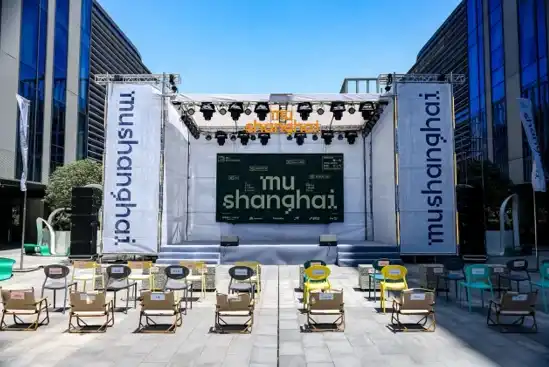
Global Tech Innovation Forces Resonate Together in Shanghai

"When my foreign friend first came to China, he said, 'China is different from what I imagined. You must host a The Mu event here, to let the world see the real China,'" recalled Sun, the initiator of muShanghai.

Since its launch, this experiment has attracted over 2000 applications globally, with more than 800 people passing the muShanghai review. They are evenly distributed across over fifty countries, including the United States, Argentina, Canada, Japan, France, South Africa, the United Kingdom, and China. The lineup of participants is impressive, ranging from former OpenAI engineers and founders of startups that have raised tens of millions in funding, to core contributors of OpenClaw like Vincent Koc and Dave Morin. Top technical talent from around the world will collide and collaborate across disciplines here.

"Domestic talents go global, and international talents come to China—letting the world see China ultimately means letting the world see you," Sun stated. "We've built the stage, now it's your turn to co-create."

Four Thematic Weeks Build an Immersive Innovation Ecosystem
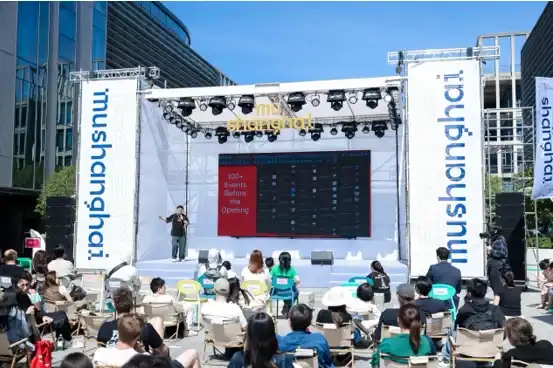
This 28-day "Tech Burning Man" will revolve around four thematic weeks, hosting nearly 100 events cumulatively. As a grand opening, ClawCon 2026 Shanghai will gather core global contributors of OpenClaw to deeply discuss AI development trends and open-source ecosystem building.

  • AI Week (May 11-15): Big Model Day will invite guests from kimi, Zhipu AI, Ant Bailing, StepFun, and others to share hardcore insights; the AI Safety session convenes global safety researchers and cryptographers; the Consumer App session invites teams behind multimodal large models like MiniMax and ZPilot, along with other Chinese AI consumer product teams, to deconstruct product iteration logic on-site.
  • Biotech Week (May 18-22): Topics progress layer by layer, from using technology to combat aging, to equipping labs with AI brains and robotic arms, to rewriting the underlying code of the material world. There's even a month-long longevity experiment led by a Yale PhD, where researchers will use themselves as subjects to explore the boundaries of life sciences.
  • Robotics Week (May 25-29): Robot combat competitions, cyber fashion shows, hardware supply chain pop-ups, and other events will take turns, offering a visually striking tech feast showcasing cutting-edge achievements in robotics.
  • Culture Week (June 1-6): Stepping beyond a purely technological perspective, it explores future social forms, cyberpunk culture, independent game creation, and other topics, allowing technology and humanities to collide and integrate here.

Notably, every Friday during the first three weeks, a large outdoor "Innovator's Market" will be held, and in the final week, there will be exhibitions related to technology and humanities. All participants can bring their own projects for on-site display, testing, and exchange, promoting rapid implementation of ideas and facilitating efficient collaboration. muShanghai will implement a Build in Public content mechanism throughout. We have designed a complete set of methods to encourage everyone to publicly share their projects, processes, problems, progress, and interim results, continuing iteration based on real feedback.

Hongqiao Alibaba Center Empowers "The First Stop for Starting a Business in China"
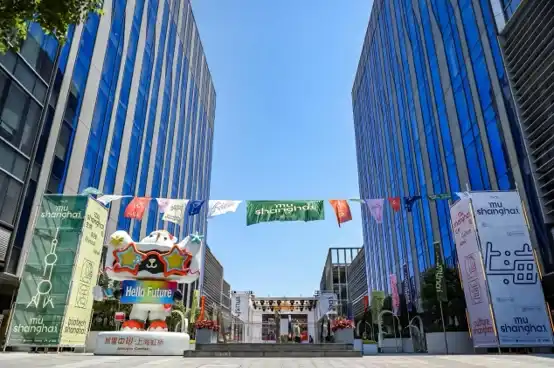
This one-month event is expected to reach over 100,000 people. As the co-organizer, Hongqiao Alibaba Center positions itself as an international innovation community and an ecological development hub. Relying on its five-dimensional one-stop capabilities in space, commerce, culture, ecosystem, and government services, it provides solid support for overseas talents to land and develop.

The "Tech Burning Man" initiator, The Mu, is the first international entrepreneur community to settle in Hongqiao Alibaba Center and is also one of the first international open-source partner communities of the HongCheng OPC community. The park director stated that HongCheng OPC is committed to providing one-stop services for global entrepreneurs coming to China. Collaborating with The Mu this time is a key layout for Hongqiao Alibaba Center in building an international tech innovation ecosystem.

This event is not only a frontier tech gathering but also an important window for China's tech innovation ecosystem to integrate with the world.

The Mu: An Open-Source Community That "Builds Cities from Scratch" Globally

Behind muShanghai is The Mu community, which has been successfully implemented in places like Argentina and San Francisco.

In Argentina, the Crecimiento project gathered 2,500 developers, incubated over 1,200 projects, with total funding exceeding $20 million. In San Francisco, The Mu helped transform the 16-story Frontier Tower into a tech innovation landmark, hosting OpenClaw's first offline developer gathering. It was also the sole startup community at the 2025 Osaka World Expo.

From preparation to project establishment, the muShanghai team overcame multiple challenges over seven months, including compliance filings for foreign events and rebuilding resource networks. On the opening day, attendees included Kong Fuan, Party Secretary and Executive Deputy Director of the Shanghai Hongqiao International Central Business District Administrative Committee; Lou Yongqi, President of Shanghai University of Engineering Science; Ke Xiaolin and Wang Ximei, Deputy District Heads of Minhang District, among others. The muShanghai core creative team and domestic and international co-creation partners introduced the thematic content and exciting activities for the upcoming four weeks.

AI may be changing the world, but it cannot replace the infinite possibilities that arise when we meet and collide.

About The Mu

The Mu is a global community organization that promotes open-source collaboration and innovation. It is committed to providing immersive co-creation spaces for developers, researchers, and entrepreneurs through the "Pop-up City" model, facilitating cross-cultural, interdisciplinary knowledge sharing and technological breakthroughs.

About Hongqiao Alibaba Center

Located in the core area of the Hongqiao International Open Hub, Hongqiao Alibaba Center is an important industrial office carrier for Alibaba Group in Shanghai. It is dedicated to creating a benchmark for space services targeting global tech talent, providing first-stop support for international developers, entrepreneurs, and companies coming to China. It offers not just office space, but an ecosystem-based development solution for international talent.


Preguntas relacionadas

QWhat is muShanghai and what event is it organizing in Shanghai in 2026?

AmuShanghai is organizing a 28-day 'Pop-up City' experiment in Shanghai from May 10 to June 6, 2026. It aims to create a 'parallel city' for global geeks, co-hosted by the international open-source community The Mu and the Hongqiao Alibaba Center.

QWhat are the four theme weeks of the muShanghai 'Pop-up City' event and their main focuses?

AThe four theme weeks are: 1) AI Week (May 11-15): Focusing on large models, AI safety, and consumer applications. 2) Biotech Week (May 18-22): Exploring longevity, AI/robotics in labs, and foundational science. 3) Robotics Week (May 25-29): Featuring robot combat, cyber fashion shows, and hardware supply chain events. 4) Culture Week (June 1-6): Discussing future society, cyberpunk culture, and independent game creation.

QWho is The Mu community and what role does it play in the muShanghai event?

AThe Mu is an international open-source community that drives collaboration and innovation globally. It is the organizer behind the muShanghai 'Pop-up City' event. The community has previously run successful projects in Argentina and San Francisco and aims to provide an immersive co-creation space for developers, researchers, and entrepreneurs.

QWhat is the significance of the Hongqiao Alibaba Center's involvement as a co-host?

AAs a co-host, the Hongqiao Alibaba Center provides a strategic 'first stop in China' for overseas talent and entrepreneurs. It offers comprehensive support in space, business, culture, ecosystem, and government services, positioning itself as an international innovation hub and a key part of building a global tech and innovation ecosystem in Shanghai.

QWhat does 'Build in Public' refer to in the context of the muShanghai event?

A'Build in Public' is a core content mechanism for the muShanghai event. It refers to a designed set of practices that encourages participants to openly share their projects, processes, problems, progress, and interim results throughout the event. The goal is to foster iteration and improvement through real-time feedback and collaboration within the community.

Lecturas Relacionadas

7 Months After the Collapse of Huiwang, Southeast Asia's Escrow Platforms Undergo a Major Reshuffle

Following the collapse of Huione Pay—dubbed the "Alipay of Southeast Asia"—seven months ago, the region's underground financial guarantee platform sector is undergoing a significant reshuffle. This power vacuum has been swiftly filled by emerging platforms such as XinBi, Tiger/Navigator, JinBei (renamed JinBo), Dali/Tiancheng, and FullyLight. These platforms, operating largely via Telegram and offering services like escrow for illicit transactions, have absorbed the vast user base and markets left behind by Huione. While positioning themselves as "trust intermediaries," their primary clientele consists of networks involved in online scams, money laundering, illegal gambling, and even human trafficking. For instance, the Tiger/Navigator platform explicitly provides "escrow" services for kidnapping-for-ransom operations ("强押车交易"). Data underscores the immense scale: Huione alone processed over $103 billion in cryptocurrency payments and facilitated over $31 billion through its escrow market before its downfall, linking it to Cambodia's notorious Prince Group. Since its collapse, competitors have seen explosive growth. For example, the XinBi platform has accumulated over $1.6 billion in total USDT revenue, while platforms like NewPay, OkPay (under Dali), and FullyLight Wallet collectively processed over $4.8 billion in USDT in a single year. This ecosystem thrives in regions like Cambodia and Myanmar, where regulatory gaps allow these platforms to act as critical financial infrastructure for sprawling cybercrime industries, from scam compounds to online casinos. The article concludes that the moniker "Southeast Asian Alipay" is a misnomer, obscuring the platforms' fundamental role in enabling serious criminal enterprises rather than representing legitimate financial innovation.

Odaily星球日报Hace 17 min(s)

7 Months After the Collapse of Huiwang, Southeast Asia's Escrow Platforms Undergo a Major Reshuffle

Odaily星球日报Hace 17 min(s)

The Changing Landscape: What Are Crypto VCs Experiencing?

Title: The Shifting Landscape of Crypto Venture Capital The era of dedicated crypto venture capital funds is undergoing a significant transformation. Once essential for navigating the sector's complexity and high risk, these specialized funds are now facing an identity crisis as the market matures. This shift mirrors historical patterns in other specialized investment classes like cleantech and SPACs, where initial information advantages dissipate as technologies become mainstream and integrated into existing industry frameworks. The article argues that crypto is reaching a critical inflection point, transitioning from a "building phase" to an "integration phase." Major players like Stripe, BlackRock, and Visa now engage with crypto not for its novel mechanics but as a foundational financial infrastructure. Their needs—regulatory compliance, banking partnerships, distribution channels—align with traditional fintech, a domain easily understood by large, generalist funds like Sequoia and Founders Fund. This evolution creates a "barbell effect" within the VC landscape. On one end are massive, diversified platforms that can incorporate crypto as one vertical among many. On the other are small, nimble funds focused on niche, experimental projects. The middle ground—medium-sized dedicated crypto funds—is being squeezed out. Their typical fund size makes it impossible to generate sufficient returns solely from early-stage crypto bets, yet they cannot compete with giants for later-stage deals. Consequently, leading crypto-native firms like Paradigm and Framework Ventures are expanding into AI, robotics, and other sectors, driven partly by LP pressure for better returns amid a broader VC DPI crisis. Others, like Dragonfly and a16z, have narrowed their crypto focus predominantly to financial infrastructure like stablecoins, reframing the sector's core narrative. For crypto entrepreneurs, this consolidation presents challenges. While generalist funds offer larger checks and broader resources, crypto projects now compete fiercely with AI for attention and capital within these firms. Furthermore, the long-term, non-commercial foundational work that built the ecosystem—funded by dedicated crypto VCs—is less likely to attract generalist capital focused on direct returns. The conclusion is that "crypto investor" as a standalone category is becoming obsolete, akin to "internet investor." Crypto is becoming a baseline infrastructure layer. The future will see a barbell structure: large-scale growth financing handled by generalist funds, while pioneering, speculative projects are funded by small, specialized vehicles. The dedicated crypto funds of the 2017-2021 boom, which incubated core infrastructure, are giving way to this new, bifurcated reality.

Foresight NewsHace 35 min(s)

The Changing Landscape: What Are Crypto VCs Experiencing?

Foresight NewsHace 35 min(s)

As Consensus Accelerates, What Are Young Investors Betting On?

Title: As Consensus Forms Faster, What Are Young Investors Betting On? In the rapid evolution of tech investment, a new generation of young investors is navigating a landscape where AI, robotics, commercial aerospace, and quantum computing are advancing simultaneously. Traditional investment logic based on financial models is giving way to a need for deep technical understanding and the ability to act before industry consensus forms. An analysis of trends from the "WAIC FUTURE TECH" list of young investment leaders reveals key shifts in focus. The first major trend is the movement of AI from the digital screen into the physical world. Investment is shifting from large language models and chatbots towards embodied AI, robotics, AI hardware, and edge computing. While demonstrations generate excitement, the real challenge lies in achieving scalable, reliable, and cost-effective delivery in complex real-world environments like factories and logistics. Success depends not just on algorithms but on the integration of sensors, actuators, and control systems. Second, the competitive focus for large models is moving beyond raw capability toward building an "intelligence flywheel." The goal is to create self-reinforcing systems where user interaction generates data, improving the model, which in turn enhances the user experience and attracts more engagement. Companies that successfully embed AI into workflows to create these closed-loop systems can build lasting value that isn't easily erased by the next model upgrade. Third, facing a potential bottleneck in high-quality human-generated data, investors are looking at new underlying technologies. Reinforcement learning and self-play, as demonstrated by AlphaGo Zero, offer paths for AI to generate its own experience. Scientific foundation models, which aim to build general AI capabilities for fields like life sciences and materials discovery, represent a non-consensus direction that could unlock new frontiers of knowledge and data. Finally, in deep-tech areas like quantum computing, commercial aerospace, and space-based infrastructure, patient capital is essential. These fields have long, uncertain development and validation cycles involving complex engineering, supply chains, and regulations. Investment here requires a long-term view, focusing on foundational team capabilities and the eventual emergence of market demand, even if commercial returns are distant. Collectively, these trends illustrate how young investors are adapting to a new era. They are learning to make earlier, technically-informed judgments, balance hype with real-world viability, and provide the patient capital needed to build the deep-tech foundations of the future.

marsbitHace 1 hora(s)

As Consensus Accelerates, What Are Young Investors Betting On?

marsbitHace 1 hora(s)

Trading

Spot
活动图片




