
Arthur Hayes' Latest Article: After Trump 'Colonizes' Venezuela, the Money Printing Press Will Go Wild, Last Year's Biggest Loss Was PUMP

marsbitPublicado a 2026-01-06Actualizado a 2026-01-06

Resumen

Arthur Hayes analyzes the geopolitical and economic implications of the U.S. intervention in Venezuela under a hypothetical Trump administration, framing it as a strategic move to control oil resources and influence domestic politics. The core argument is that elected politicians prioritize reelection above all else. For Trump, winning the 2026 midterms and 2028 presidential election requires stimulating the economy through money printing and deficit spending to boost nominal GDP and financial assets. However, rising inflation, especially in gasoline prices, could anger voters and cost elections. Thus, controlling Venezuela’s oil is crucial to suppress energy inflation. Hayes posits that if GDP grows while oil prices remain stable or fall, Republicans will likely win. If both GDP and oil prices rise sharply, Democrats may gain power due to voter discontent. Oil prices act as a trigger: if they spike, it could force policymakers to tighten monetary policy, increasing volatility (as measured by the MOVE index) and Treasury yields, potentially causing a market sell-off. The baseline scenario expects subdued oil prices and aggressive money printing, which would be bullish for Bitcoin and crypto assets. Hayes advises monitoring oil and bond yields for signs of policy change. His trading strategy involves macro-driven positions in crypto, with a focus on privacy tokens like ZEC for alpha, while reducing exposure to meme coins. He plans to take profits if oil inflation accelerates...

Original: Arthur Hayes

Compilation: Yuliya, PANews

Imagine a video call between U.S. President Trump and Venezuelan President Pepe Maduro, while Maduro was on a flight from Caracas to New York.

Trump: "Pepe Maduro, you are such a bad guy. Your country's oil is mine now, USA!"

Pepe Maduro: "Trump, you madman!"

*Note: Arthur Hayes refers to the Venezuelan president as "Pepe Maduro" in the article instead of his real name Nicolás Maduro. "Pepe" is a common nickname for "José" in Spanish, although Maduro's name is Nicolás.

One can apply various positive or negative labels to this historic, disruptive, authoritarian, militaristic event of the U.S. "kidnapping" or "legally arresting" the leader of a sovereign nation. Countless AI-assisted writers will likely churn out endless articles interpreting these events and predicting the future. They will judge these actions from a moral perspective and advise how other countries should respond. But this article is not about that. The core question is only one: Will the U.S. "colonization" of Venezuela push the price of Bitcoin/cryptocurrency up or down?

The Only Rule of Politics: Re-election

To answer this question, we must understand a simple, brutal political reality: All elected politicians, at all times, focus on only one thing—winning re-election. Grand narratives like God, country, etc., all come after winning votes. Because if you don't have power, you can't bring about change, so in a way, this obsession with re-election is rational.

For Trump, two elections are crucial: the 2026 midterms and the 2028 presidential election. Although he himself does not need to run in 2026 and cannot run for a third presidential term in 2028, the loyalty and obedience of his political supporters depend on their respective re-election prospects. Those who defected from the "Make America Great Again" (MAGA) camp did so precisely because they believed their future election prospects would dim if they continued to follow Trump's orders.
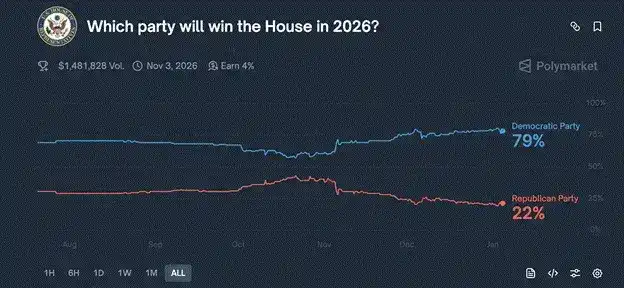
So, how can Trump ensure that the undecided swing voters, those not yet committed to the Democratic (Blue) or Republican (Red) camps, cast the "right" vote in November 2026 and 2028?

Currently, it seems likely that the Blue Democrats will retake the House of Representatives. For Trump to be a winner, he must act immediately. There is not much time left for policy adjustments to change voters' minds.

What Do Voters Care About? The Economy, Especially Oil Prices

So, how to please swing voters? All the flashy culture wars are worthless compared to the voter's wallet. Voters only care about the economy, about whether they feel richer or poorer when they vote.

For Trump, the easiest way to stimulate the economy is to turn on the money printing press and boost nominal GDP. This drives up financial asset prices, pleasing the wealthy class who will "reward" him with campaign donations. However, in the U.S., it's one person, one vote. If money printing leads to serious inflation and the cost of living soars for the general public, they will vote the ruling party out.

Trump and Treasury Secretary Besant have indicated they will let the economy run hot. The question is, how will they suppress inflation? The kind of inflation that kills re-election chances is inflation in food and energy.

For the average American, the most sensitive inflation indicator is gasoline prices. Because the U.S. public transportation system is poor, almost everyone drives, and oil prices directly affect everyone's cost of living.

Therefore, Trump and his deputies "colonized" Venezuela for its oil.

When talking about Venezuelan oil, many will quickly point out that the country has the world's largest proven reserves. But how much oil is in the ground doesn't matter. The question is, can it be extracted profitably? Trump clearly believes that by developing Venezuela's oil resources, oil can be shipped to Gulf Coast refineries, and cheap gasoline will appease the populace by suppressing energy inflation.

Whether this strategy is correct will be answered by the West Texas Intermediate (WTI) and Brent crude oil markets. As nominal GDP and dollar credit supply increase, will oil prices rise or fall? If GDP and oil prices rise together, the Blue Democrats win; if GDP rises while oil prices remain flat or fall, the Red Republicans win.

The best part of this framework is that oil prices will reflect all reactions from other oil-producing and military powers (most importantly Saudi Arabia, Russia, and China) to the U.S. "colonization" of Venezuela. Another advantage is that the market is reflexive. We know Trump adjusts policy based on stock prices, U.S. Treasuries, and oil prices. As long as stock prices keep rising and oil prices stay low, he will continue printing money and pursuing "colonization" policies to obtain oil. As investors, we can react on the same timeframe as Trump, which is the best scenario we can hope for. This reduces the need to predict the outcome of a complex geopolitical system. Traders just need to read the charts and adapt.

Here are some charts and statistical analysis that clearly show why Trump must boost nominal GDP while suppressing oil prices to win the election:
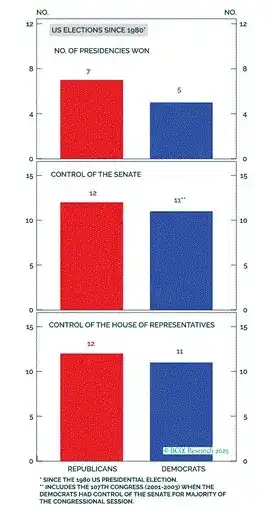
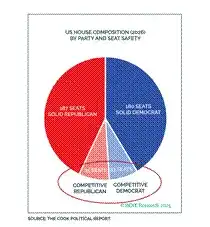
  • Political Landscape: The Red and Blue camps are evenly matched, with only a small portion of Americans deciding which camp controls the government.
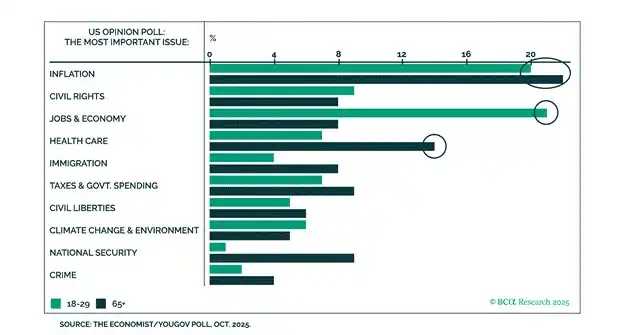
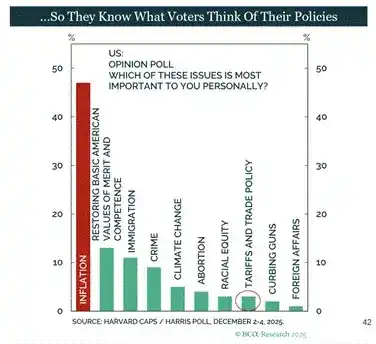
  • Voter Focus: The economy and inflation are the top two concerns for voters; everything else is irrelevant.
  • "The 10% Rule": When the national average gasoline price in the three months before the election rises by 10% or more compared to the January average of the same year, control of one or more branches of government changes hands.
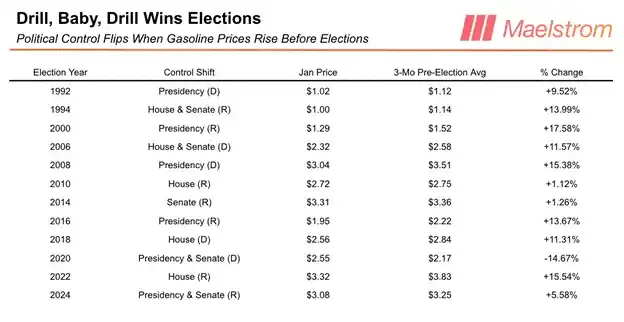
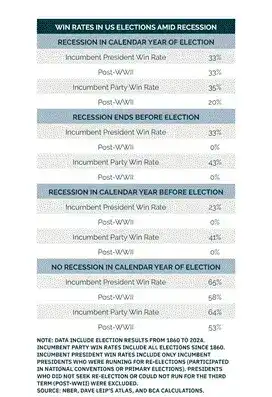
  • Election Prospects: If a recession is avoided, the Red camp has the best chance of winning the 2028 presidential election.

These charts clearly show that Trump must make the economy run hot without causing gasoline prices to rise.

Bitcoin's Trajectory Under Two Scenarios

We face two scenarios: one where nominal GDP/credit and oil prices both rise; and another where nominal GDP/credit rises while oil prices fall. How will Bitcoin react?

To understand this, one must first clarify a core point: Oil prices are crucial not because they affect mining costs, but because they have the power to force politicians to stop printing money.

Bitcoin consumes energy through Proof-of-Work (PoW) mining, making it a pure monetary abstraction. Therefore, the energy price itself is irrelevant to the Bitcoin price, as all miners' costs change synchronously, which does not alter Bitcoin's intrinsic value logic.

The real power of oil prices lies in them being a "trigger" for political and financial disaster.

The Chain Reaction of Runaway Oil Prices

If economic expansion causes oil prices to rise too fast and too high, it will trigger the following series of devastating chain reactions:

Runaway oil prices mean a surge in the cost of living for the people, which will directly ignite voter anger and put those in power at great risk of being ousted. To retain power, they must suppress oil prices at all costs (e.g., by stealing oil from other countries or slowing credit creation). The 10-year U.S. Treasury yield and the MOVE index, which measures volatility in the U.S. bond market, will tell us when oil prices are too high.

Investors face a difficult choice: invest in financial assets or physical assets. When energy costs are low and stable, investing in financial assets like government bonds is reasonable. But when energy costs are high and volatile, investing in energy commodities is wiser. Therefore, when oil prices reach a certain level, investors will demand higher yields from government bonds, especially the 10-year U.S. Treasury.

When the 10-year Treasury yield approaches 5%, market volatility may increase significantly, and the MOVE index could spike. Current U.S. politics make it difficult to curb deficit spending; "free benefits" often win in elections. However, as oil prices rise and yields approach critical levels, the market may come under pressure. Because the current fiat financial system is embedded with massive leverage, when volatility rises, investors must sell assets, or they will be wiped out.

For example, last year's April 2nd "Liberation Day" and the subsequent April 9th Trump "TACO" (Tariff Action) is an example. Trump threatened extremely high tariffs, which would have reduced global trade and financial flow imbalances, creating a strong deflationary effect. The market plummeted, and the MOVE index briefly surged to 172 intraday. The next day, Trump "paused" the tariffs, and the market bottomed and rebounded violently.
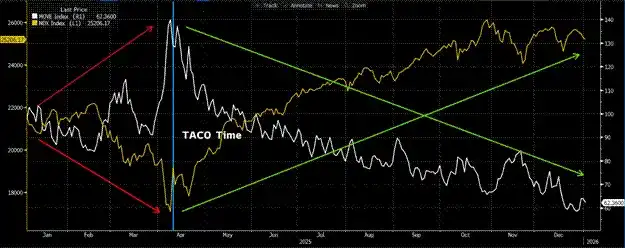
MOVE Index (White) vs. Nasdaq 100 Index (Yellow)

On such issues, trying to use historical data to precisely determine at what level oil prices and the 10-year yield will force Trump to tighten money printing is not meaningful. We will know it when we see it happen. If oil prices and yields rise sharply, then one should reduce bullishness on risk assets.

The current base case scenario is: Oil prices will remain stable or even fall, while Trump and Besant will print money like crazy, as in 2020. The reason is that the market will initially believe that U.S. control of Venezuelan oil will significantly increase daily crude production. Whether engineers can actually achieve millions of barrels per day in Venezuela is not important.

What really matters is: Trump will print money faster than Israeli Prime Minister Benjamin Netanyahu changes his reasons for attacking Iran. If this logic is still not enough to convince someone that it's time to go long on all risk assets, just remember one thing: Trump is the most socialist U.S. president since Roosevelt. He printed trillions of dollars in 2020 and, unlike previous presidents, sent money directly to everyone. You can be sure he will not lose an election by under-printing.

Based on statements from Trump and his core team, we know credit will expand. Red Republican lawmakers will engage in deficit spending, Besant's Treasury will issue debt to finance it, and the Federal Reserve (whether Powell or his successor) will print money to buy these bonds. As Lyn Alden says, "Nothing can stop this train." As the quantity of dollars expands, the prices of Bitcoin and certain cryptocurrencies will soar.
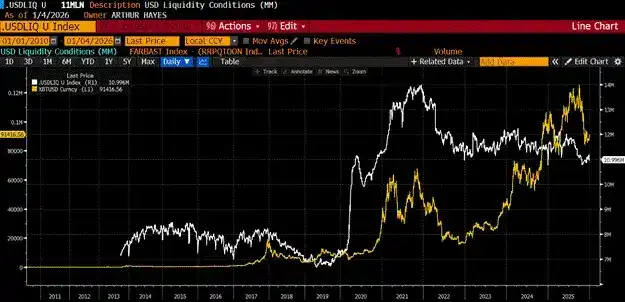
Trading Strategy

Arthur Hayes' biggest loss last year came from trading the token PUMP after its launch. Also, remember to stay away from Meme coins; the only Meme coin trade he made money on last year was TRUMP. On the bright side, most profits came from trading HYPE, BTC, PENDLE, and ETHFI. Although only 33% of trades were profitable, position sizing was managed well, and the average profit of winning trades was 8.5 times the average loss of losing trades.

Arthur Hayes plans to improve this year by: Focusing on what he is good at, which is making large, medium-term position deployments based on clear macro liquidity theses combined with a credible "altcoin" narrative. When trading "shitcoins" or Meme coins for entertainment purposes, he will reduce position size.

Looking ahead, this year's dominant narrative will revolve around "privacy." ZEC will be the bellwether in the privacy field. Maelstrom was already heavily long on this token in Q3 2025. The plan is to find at least one "altcoin" in the privacy space that can lead the trend and bring excess returns to the portfolio in the coming years. To achieve returns that outperform BTC and ETH, he plans to sell some Bitcoin and Ethereum in exchange for more explosive "altcoins" in the privacy and DeFi fields.

Once oil prices rise and cause a slowdown in credit expansion, he will take profits opportunistically, accumulate more Bitcoin, and buy some mETH.


Criptos en tendencia

Preguntas relacionadas

QAccording to Arthur Hayes, what is the primary goal of all elected politicians?

AThe primary goal of all elected politicians is to win re-election.

QWhat is the single most important issue for voters, as stated in the article?

AThe single most important issue for voters is the economy.

QWhy did Trump 'colonize' Venezuela, according to the author's analysis?

ATrump 'colonized' Venezuela for its oil, in order to produce cheap gasoline and suppress energy inflation to appease the American populace.

QWhat is the '10% Rule' mentioned in the article regarding elections?

AThe '10% Rule' states that when the national average gas price in the three months before an election is 10% or more higher than the average price in January of the same year, control of one or more branches of government changes hands.

QWhat is the author's main trading focus and narrative for the year, as stated at the end of the article?

AThe author's main trading focus for the year is on 'privacy', with ZEC being the bellwether for the privacy narrative.

Lecturas Relacionadas

7 Months After the Collapse of Huiwang, Southeast Asia's Escrow Platforms Undergo a Major Reshuffle

Following the collapse of Huione Pay—dubbed the "Alipay of Southeast Asia"—seven months ago, the region's underground financial guarantee platform sector is undergoing a significant reshuffle. This power vacuum has been swiftly filled by emerging platforms such as XinBi, Tiger/Navigator, JinBei (renamed JinBo), Dali/Tiancheng, and FullyLight. These platforms, operating largely via Telegram and offering services like escrow for illicit transactions, have absorbed the vast user base and markets left behind by Huione. While positioning themselves as "trust intermediaries," their primary clientele consists of networks involved in online scams, money laundering, illegal gambling, and even human trafficking. For instance, the Tiger/Navigator platform explicitly provides "escrow" services for kidnapping-for-ransom operations ("强押车交易"). Data underscores the immense scale: Huione alone processed over $103 billion in cryptocurrency payments and facilitated over $31 billion through its escrow market before its downfall, linking it to Cambodia's notorious Prince Group. Since its collapse, competitors have seen explosive growth. For example, the XinBi platform has accumulated over $1.6 billion in total USDT revenue, while platforms like NewPay, OkPay (under Dali), and FullyLight Wallet collectively processed over $4.8 billion in USDT in a single year. This ecosystem thrives in regions like Cambodia and Myanmar, where regulatory gaps allow these platforms to act as critical financial infrastructure for sprawling cybercrime industries, from scam compounds to online casinos. The article concludes that the moniker "Southeast Asian Alipay" is a misnomer, obscuring the platforms' fundamental role in enabling serious criminal enterprises rather than representing legitimate financial innovation.

Odaily星球日报Hace 18 min(s)

7 Months After the Collapse of Huiwang, Southeast Asia's Escrow Platforms Undergo a Major Reshuffle

Odaily星球日报Hace 18 min(s)

The Changing Landscape: What Are Crypto VCs Experiencing?

Title: The Shifting Landscape of Crypto Venture Capital The era of dedicated crypto venture capital funds is undergoing a significant transformation. Once essential for navigating the sector's complexity and high risk, these specialized funds are now facing an identity crisis as the market matures. This shift mirrors historical patterns in other specialized investment classes like cleantech and SPACs, where initial information advantages dissipate as technologies become mainstream and integrated into existing industry frameworks. The article argues that crypto is reaching a critical inflection point, transitioning from a "building phase" to an "integration phase." Major players like Stripe, BlackRock, and Visa now engage with crypto not for its novel mechanics but as a foundational financial infrastructure. Their needs—regulatory compliance, banking partnerships, distribution channels—align with traditional fintech, a domain easily understood by large, generalist funds like Sequoia and Founders Fund. This evolution creates a "barbell effect" within the VC landscape. On one end are massive, diversified platforms that can incorporate crypto as one vertical among many. On the other are small, nimble funds focused on niche, experimental projects. The middle ground—medium-sized dedicated crypto funds—is being squeezed out. Their typical fund size makes it impossible to generate sufficient returns solely from early-stage crypto bets, yet they cannot compete with giants for later-stage deals. Consequently, leading crypto-native firms like Paradigm and Framework Ventures are expanding into AI, robotics, and other sectors, driven partly by LP pressure for better returns amid a broader VC DPI crisis. Others, like Dragonfly and a16z, have narrowed their crypto focus predominantly to financial infrastructure like stablecoins, reframing the sector's core narrative. For crypto entrepreneurs, this consolidation presents challenges. While generalist funds offer larger checks and broader resources, crypto projects now compete fiercely with AI for attention and capital within these firms. Furthermore, the long-term, non-commercial foundational work that built the ecosystem—funded by dedicated crypto VCs—is less likely to attract generalist capital focused on direct returns. The conclusion is that "crypto investor" as a standalone category is becoming obsolete, akin to "internet investor." Crypto is becoming a baseline infrastructure layer. The future will see a barbell structure: large-scale growth financing handled by generalist funds, while pioneering, speculative projects are funded by small, specialized vehicles. The dedicated crypto funds of the 2017-2021 boom, which incubated core infrastructure, are giving way to this new, bifurcated reality.

Foresight NewsHace 35 min(s)

The Changing Landscape: What Are Crypto VCs Experiencing?

Foresight NewsHace 35 min(s)

As Consensus Accelerates, What Are Young Investors Betting On?

Title: As Consensus Forms Faster, What Are Young Investors Betting On? In the rapid evolution of tech investment, a new generation of young investors is navigating a landscape where AI, robotics, commercial aerospace, and quantum computing are advancing simultaneously. Traditional investment logic based on financial models is giving way to a need for deep technical understanding and the ability to act before industry consensus forms. An analysis of trends from the "WAIC FUTURE TECH" list of young investment leaders reveals key shifts in focus. The first major trend is the movement of AI from the digital screen into the physical world. Investment is shifting from large language models and chatbots towards embodied AI, robotics, AI hardware, and edge computing. While demonstrations generate excitement, the real challenge lies in achieving scalable, reliable, and cost-effective delivery in complex real-world environments like factories and logistics. Success depends not just on algorithms but on the integration of sensors, actuators, and control systems. Second, the competitive focus for large models is moving beyond raw capability toward building an "intelligence flywheel." The goal is to create self-reinforcing systems where user interaction generates data, improving the model, which in turn enhances the user experience and attracts more engagement. Companies that successfully embed AI into workflows to create these closed-loop systems can build lasting value that isn't easily erased by the next model upgrade. Third, facing a potential bottleneck in high-quality human-generated data, investors are looking at new underlying technologies. Reinforcement learning and self-play, as demonstrated by AlphaGo Zero, offer paths for AI to generate its own experience. Scientific foundation models, which aim to build general AI capabilities for fields like life sciences and materials discovery, represent a non-consensus direction that could unlock new frontiers of knowledge and data. Finally, in deep-tech areas like quantum computing, commercial aerospace, and space-based infrastructure, patient capital is essential. These fields have long, uncertain development and validation cycles involving complex engineering, supply chains, and regulations. Investment here requires a long-term view, focusing on foundational team capabilities and the eventual emergence of market demand, even if commercial returns are distant. Collectively, these trends illustrate how young investors are adapting to a new era. They are learning to make earlier, technically-informed judgments, balance hype with real-world viability, and provide the patient capital needed to build the deep-tech foundations of the future.

marsbitHace 1 hora(s)

As Consensus Accelerates, What Are Young Investors Betting On?

marsbitHace 1 hora(s)

Trading

Spot

Artículos destacados

Cómo comprar PUMP

¡Bienvenido a HTX.com! Hemos hecho que comprar Pump.fun (PUMP) sea simple y conveniente. Sigue nuestra guía paso a paso para iniciar tu viaje de criptos.Paso 1: crea tu cuenta HTXUtiliza tu correo electrónico o número de teléfono para registrarte y obtener una cuenta gratuita en HTX. Experimenta un proceso de registro sin complicaciones y desbloquea todas las funciones.Obtener mi cuentaPaso 2: ve a Comprar cripto y elige tu método de pagoTarjeta de crédito/débito: usa tu Visa o Mastercard para comprar Pump.fun (PUMP) al instante.Saldo: utiliza fondos del saldo de tu cuenta HTX para tradear sin problemas.Terceros: hemos agregado métodos de pago populares como Google Pay y Apple Pay para mejorar la comodidad.P2P: tradear directamente con otros usuarios en HTX.Over-the-Counter (OTC): ofrecemos servicios personalizados y tipos de cambio competitivos para los traders.Paso 3: guarda tu Pump.fun (PUMP)Después de comprar tu Pump.fun (PUMP), guárdalo en tu cuenta HTX. Alternativamente, puedes enviarlo a otro lugar mediante transferencia blockchain o utilizarlo para tradear otras criptomonedas.Paso 4: tradear Pump.fun (PUMP)Tradear fácilmente con Pump.fun (PUMP) en HTX's mercado spot. Simplemente accede a tu cuenta, selecciona tu par de trading, ejecuta tus trades y monitorea en tiempo real. Ofrecemos una experiencia fácil de usar tanto para principiantes como para traders experimentados.

262 Vistas totalesPublicado en 2024.12.12Actualizado en 2026.07.09

Cómo comprar PUMP

Discusiones

Bienvenido a la comunidad de HTX. Aquí puedes mantenerte informado sobre los últimos desarrollos de la plataforma y acceder a análisis profesionales del mercado. A continuación se presentan las opiniones de los usuarios sobre el precio de PUMP (PUMP).

活动图片












