‘Adapt or die’- SEC approves Nasdaq plan to trade tokenized securities

ambcryptoPublicado a 2026-03-19Actualizado a 2026-03-19

Resumen

The SEC has approved Nasdaq's pilot program to trade tokenized securities, allowing the exchange to test blockchain-based versions of stocks and ETFs on a unified platform. The program will initially include high-volume assets like those in the Russell 1000 Index and major ETFs. Unlike many existing tokenized products, Nasdaq’s tokens will grant holders the same legal rights as traditional shareholders, including the same CUSIP numbers and trading symbols. This move is seen as a major disruptive force in asset management, with experts comparing its potential impact to that of ETFs on mutual funds. The approval accelerates Nasdaq’s partnership with Kraken and aims to enable 24/7 trading and attract offshore investors. The tokenized securities market has already surpassed $1 billion, with significant growth in early 2026.

New York-based Nasdaq Exchange has gotten the green light to proceed with its pilot program for trading tokenized securities.

The SEC approval would allow the traditional exchange to test trading of the blockchain-based version of stocks under its Depository Trust Company (DTC) pilot program.

Both traditional stocks and these tokenized variants will trade on the same unified platform. The program will initially target high-volume ETFs and stocks.

This would include the constituents of the Russell 1000 Index (Apple, Microsoft, Nvidia, Amazon, etc.). Additionally, ETFs such as the S&P 500 and the Nasdaq-100 will fall within the early asset scope.

Community reactions

For ETF analyst Nate Geraci, the SEC approval would set the stage for a massive disruption by the tokenization boom.

For him, the writing is on the wall: the top regulator, the SEC, major exchanges (Nasdaq, NYSE), and the world’s largest asset managers (BlackRock and Fidelity) are all in on tokenization.

He added,

Tokenization will be as disruptive to asset management as ETFs were to mutual funds...Will basically be adapt or die a slow death.

Nasdaq initially sought SEC approval for tokenized stocks in September 2025. But its proposal was wholly different from the current tokenized securities on the market, such as xStocks offered by Kraken and Backed Finance.

Unlike most current offerings, including leveraged derivatives that grant holders no legal rights, Nasdaq pushed for its tokenized securities to have rights similar to those of investors holding traditional shares. And the SEC acknowledged this.

A tokenized share of a DTC Eligible Security must be fungible with, share the same CUSIP number and trading symbol with, and afford its shareholders the same rights and privileges as a share of an equivalent class of the traditional security for it to trade on Nasdaq.

Nasdaq’s tokenization plans

That said, the SEC’s green light will accelerate Nasdaq’s recent partnership with Kraken to distribute tokenized securities by xStocks.

This integration may likely be tied to the DTC pilot and eventually accord xStock holders similar legal rights as traditional shareholders.

The end goal? Ensure 24/7 trading and target large offshore users to gain access to the U.S. equity market.

And the appetite for these products is incredible. So far, the tokenized segment has crossed $1B, and over $300 million of the market cap was added in Q1 2026 alone.
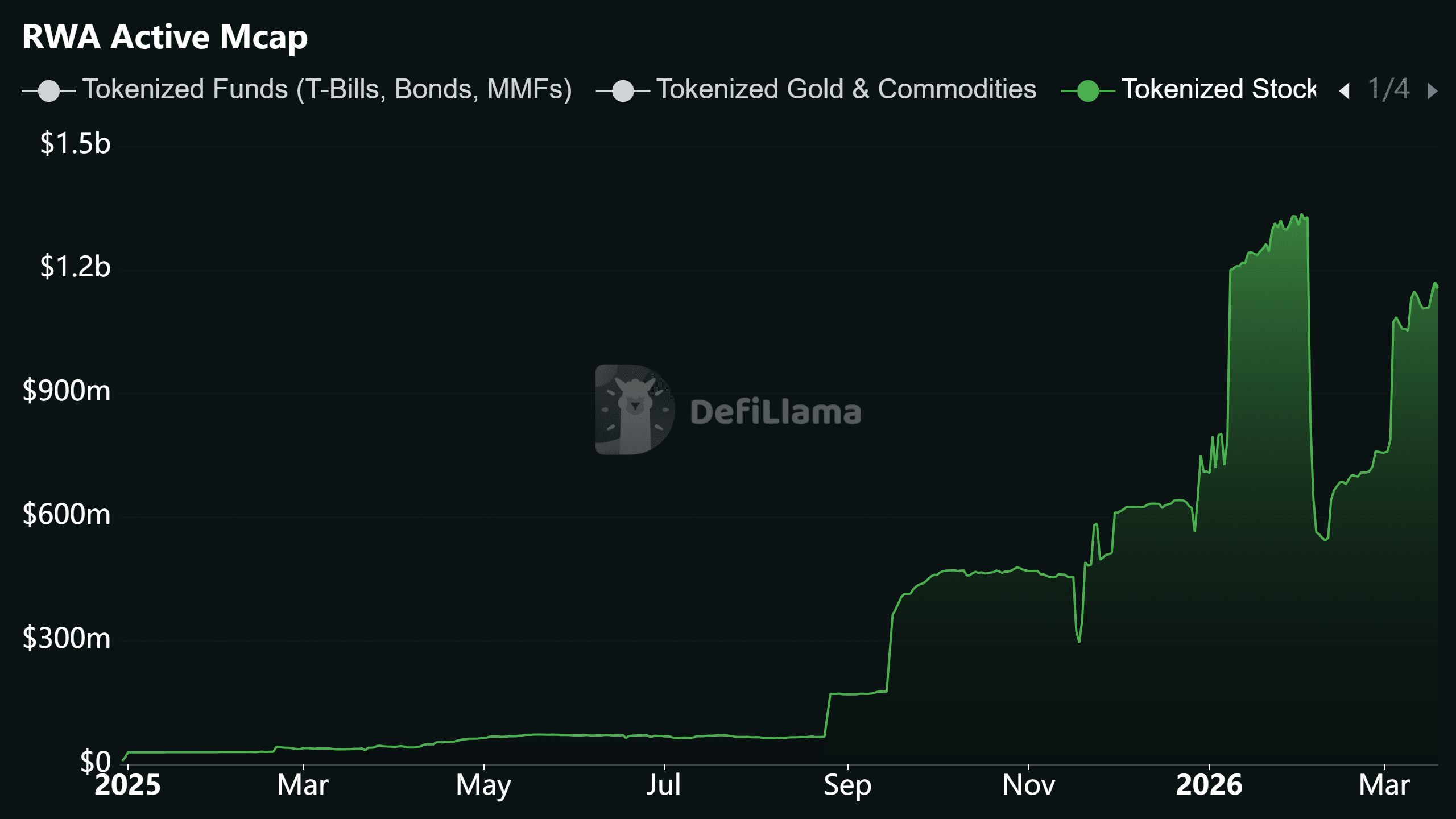
Source: DeFiLlama

Final Summary

  • The approval of Nasdaq’s tokenized securities trading is a major unfolding disruption that would force other traditional players to pivot, per an ETF expert.
  • SEC clarified that Nasdaq’s tokenized stocks and ETFs will offer similar rights as traditional securities.


Preguntas relacionadas

QWhat is the significance of the SEC's approval for Nasdaq's pilot program?

AThe SEC's approval allows Nasdaq to proceed with its pilot program for trading tokenized securities, which are blockchain-based versions of stocks. This program will enable both traditional stocks and their tokenized variants to trade on the same unified platform, initially targeting high-volume ETFs and stocks like those in the Russell 1000 Index and major ETFs such as the S&P 500 and Nasdaq-100.

QAccording to ETF analyst Nate Geraci, how disruptive will tokenization be to asset management?

ANate Geraci believes tokenization will be as disruptive to asset management as ETFs were to mutual funds. He stated that it will force traditional players to 'adapt or die a slow death,' indicating a significant transformation in the industry.

QHow do Nasdaq's tokenized securities differ from current offerings like xStocks from Kraken and Backed Finance?

AUnlike current offerings such as leveraged derivatives that grant holders no legal rights, Nasdaq's tokenized securities are designed to have rights similar to those of investors holding traditional shares. The SEC requires that tokenized shares must be fungible, share the same CUSIP number and trading symbol, and afford shareholders the same rights and privileges as traditional securities.

QWhat is the end goal of Nasdaq's tokenization plans, as mentioned in the article?

AThe end goal of Nasdaq's tokenization plans is to ensure 24/7 trading and target large offshore users to gain access to the U.S. equity market. This initiative aims to expand market accessibility and provide continuous trading opportunities.

QWhat is the current market size of the tokenized segment, and how much growth was seen in Q1 2026?

AThe tokenized segment has crossed $1 billion in market size. In Q1 2026 alone, over $300 million in market capitalization was added, indicating significant growth and appetite for these products.

Lecturas Relacionadas

Podcast Notes | Conversation with GSR Asset Management Head: To Determine if This Crypto Rally is Real, Just Watch the Lending Rates on Aave

Podcast Summary: Dialogue with GSR's Head of Asset Management: To Determine if This Crypto Rally is Real, Just Check Lending Rates on Aave Andy Baehr, Managing Director of Asset Management at GSR, discusses the current crypto market, characterizing it as stuck in a state of "ambivalence" with short-lived, unsustainable rallies. He outlines a simple framework: the market moves between "ambivalence" and "conviction" (sustained upward momentum). Currently, every rally resembles a single-stage rocket booster that quickly fizzles out. Baehr identifies three key signals to watch: 1) DeFi lending rates, 2) the potential passage of the CLARITY Act, and 3) the market forming a consensus on the "Fed hawkish peak." He emphasizes that the most immediate indicator for the sustainability of the recent CPI-triggered rally is the USDC borrowing rate on Aave, currently around 3.75%—close to U.S. Treasury yields. The absence of a credit spread indicates low leverage demand and a lack of market energy. He explains that a healthy, sustained rally requires layered buying pressure. Last year's rally progressed from an ETH short squeeze to crypto-native trader influx and finally to ETF inflows. Currently, this structure is missing. Other potential structural buyers like Digital Asset Treasury (DAT) companies are absent, and ETF flows have proven transient. Baehr notes that while small-cap crypto tokens outperformed large caps in Q2—a potential sign of capitation in major assets—capital is also flowing to more exciting opportunities like AI stocks and tech IPOs, leaving crypto sidelined. Regarding DeFi, he highlights that platforms like Aave provide a clear, real-time signal of leverage demand through their supply/demand-driven interest rates. A significant, sustained rate increase would signal genuine market conviction. He also observes the quiet emergence of fixed-income-like products and vaults in DeFi. On regulation, the probability of the CLARITY Act passing before the August 7th deadline has dropped linearly from 75% to below 40% on Polymarket. Baehr suggests its passage would be treated as a bullish surprise, a potent driver for price movement. However, political hurdles, including ethical clause debates and disclosures about the First Family's crypto profits, remain significant obstacles. Ultimately, the market awaits clarity on the Fed's terminal rate under Chair Warsh. Until the "Fed Solstice"—the point where the market collectively understands the peak of hawkish policy—sustained conviction will be difficult to achieve.

marsbitHace 31 min(s)

Podcast Notes | Conversation with GSR Asset Management Head: To Determine if This Crypto Rally is Real, Just Watch the Lending Rates on Aave

marsbitHace 31 min(s)

7 Months After the Collapse of Huiwang, Southeast Asia's Escrow Platforms Undergo a Major Reshuffle

Following the collapse of Huione Pay—dubbed the "Alipay of Southeast Asia"—seven months ago, the region's underground financial guarantee platform sector is undergoing a significant reshuffle. This power vacuum has been swiftly filled by emerging platforms such as XinBi, Tiger/Navigator, JinBei (renamed JinBo), Dali/Tiancheng, and FullyLight. These platforms, operating largely via Telegram and offering services like escrow for illicit transactions, have absorbed the vast user base and markets left behind by Huione. While positioning themselves as "trust intermediaries," their primary clientele consists of networks involved in online scams, money laundering, illegal gambling, and even human trafficking. For instance, the Tiger/Navigator platform explicitly provides "escrow" services for kidnapping-for-ransom operations ("强押车交易"). Data underscores the immense scale: Huione alone processed over $103 billion in cryptocurrency payments and facilitated over $31 billion through its escrow market before its downfall, linking it to Cambodia's notorious Prince Group. Since its collapse, competitors have seen explosive growth. For example, the XinBi platform has accumulated over $1.6 billion in total USDT revenue, while platforms like NewPay, OkPay (under Dali), and FullyLight Wallet collectively processed over $4.8 billion in USDT in a single year. This ecosystem thrives in regions like Cambodia and Myanmar, where regulatory gaps allow these platforms to act as critical financial infrastructure for sprawling cybercrime industries, from scam compounds to online casinos. The article concludes that the moniker "Southeast Asian Alipay" is a misnomer, obscuring the platforms' fundamental role in enabling serious criminal enterprises rather than representing legitimate financial innovation.

Odaily星球日报Hace 1 hora(s)

7 Months After the Collapse of Huiwang, Southeast Asia's Escrow Platforms Undergo a Major Reshuffle

Odaily星球日报Hace 1 hora(s)

Trading

Spot
活动图片




