Building the Bright Path While Secretly Crossing Chencang: Is Walsh Paving the Way for a September "Rate Cut"?

marsbitPublicado a 2026-06-29Actualizado a 2026-06-29

Resumen

The title "Building the Plank Road Openly While Secretly Crossing at Chencang: Is Walsh Paving the Way for a September 'Rate Cut'?" suggests Federal Reserve Chair Kevin Walsh's hawkish stance may be a deliberate smokescreen. Academy Securities analyst Peter Tchir argues in a report that markets, currently pricing a 75% chance of a September hike, are missing a potential path to a September rate cut that Walsh himself might be quietly preparing. Tchir posits that Walsh's hawkish rhetoric aims to suppress long-term yield risks (with the 10-year Treasury yield falling recently) while creating room for a narrative shift based on upcoming data. The potential political endgame, according to this view, could be rate cuts in September and October, ahead of the midterm elections. This hinges on a political logic where the Trump administration's preference for lower rates remains unchanged. A core part of Tchir's argument involves redefining inflation metrics. He contends the Fed under Walsh may deprioritize the PCE index, criticizing its lagging components like Owners' Equivalent Rent (OER). Instead, he points to alternative, more real-time indicators like the New Tenant Repeat Rent Index (NTRR) and the Truflation daily index, which shows core inflation around 1.45%. He suggests the Fed could shift its data narrative to justify policy easing. Furthermore, Tchir downplays AI-driven inflation fears. He argues that consumer price sensitivity, evidenced by negative market reactions to ...

Original Author: Zhao Ying

Original Source: Wall Street News

Federal Reserve Chairman Kevin Walsh's hawkish posture might be nothing more than an elaborately designed smokescreen.

In a recent report, Academy Securities analyst Peter Tchir suggests that while the market has currently priced in a 75% probability of a September rate hike and expects a cumulative 1.25 hikes by year-end, it is missing the real path leading to a September rate cut—a path perhaps being quietly laid by Walsh himself.

Tchir points out that Walsh has sent a clear enough signal: suppressing tail-end risks in long-term interest rates through hawkish rhetoric (the 10-year Treasury yield has retreated from 4.46% to 4.37% this week), while reserving space for a subsequent narrative shift based on data. In his view, the end point of this series of maneuvers could be a rate cut in September, another in October, landing just in time before the midterm elections.

This judgment remains a personal opinion for now, and Tchir himself acknowledges its uncertainty. Yet his line of argument is tightly knit, covering the redefinition of inflation data, the battle for narrative control over the neutral rate, and the core premise that the White House's policy goals have never changed.

Hawkishness Just an Act? Political Logic Points to Rate Cuts

The starting point of Tchir's argument is a political-economic interpretation of Walsh's motivations.

He believes the policy objectives of the Trump administration have never fundamentally shifted. The President himself has repeatedly stated his deep understanding of real estate and the importance of low interest rates to the property market. Against this backdrop, it's difficult to imagine Trump being satisfied with his own appointed Fed chairman maintaining a persistently hawkish stance—unless this is itself a negotiated strategy.

Tchir paints a hypothetical scenario: Walsh convinces Trump that sending dovish signals now would be disastrous. Letting him appear hawkish can cap long-term yields, maintain the appearance of Fed independence, while simultaneously pushing Wall Street analysts and the media fully towards hike expectations. Then, as data gradually "cooperates," pivot to rate cuts under the "data-dependent" rationale, and conveniently blame the inflation problem on the previous Fed "using wrong data and acting too late."

He adds that Walsh's father-in-law is a major donor to Trump, a background perhaps not entirely irrelevant.

Taking Aim at Inflation Data: PCE Isn't This Fed's Yardstick

The most substantive part of Tchir's argument is his systemic questioning of the current inflation measurement framework.

He explicitly states, PCE is not the preferred inflation gauge for Walsh's Fed. He believes PCE was more of a Bernanke-era preference, and Walsh does not lose sleep over PCE data at night.

His criticism is particularly sharp regarding the measurement of housing inflation. The "Owners' Equivalent Rent" (OER) in CPI didn't peak until mid-2023, reaching about 8%; whereas Zillow's rental data hit a high near 16% as early as early 2022. He points out that the Cleveland Fed has already developed the "New Tenant Repeat Rent" (NTRR) index, whose trend closely aligns with Zillow's, yet this more realistic indicator has received almost no attention.

His conclusion: The Fed could entirely, without introducing external data, shift to using the indicators developed by the Cleveland Fed itself, thereby providing a data-based justification for rate cuts.

Truflation and "Two-Point-Something Is Good Enough"

Beyond PCE, Tchir also cites Truflation's real-time inflation data. According to his introduction, Truflation constructs a daily inflation index based on massive real-time datasets, with its core inflation rate currently around 1.45%, consistently below 1.8% since February this year.
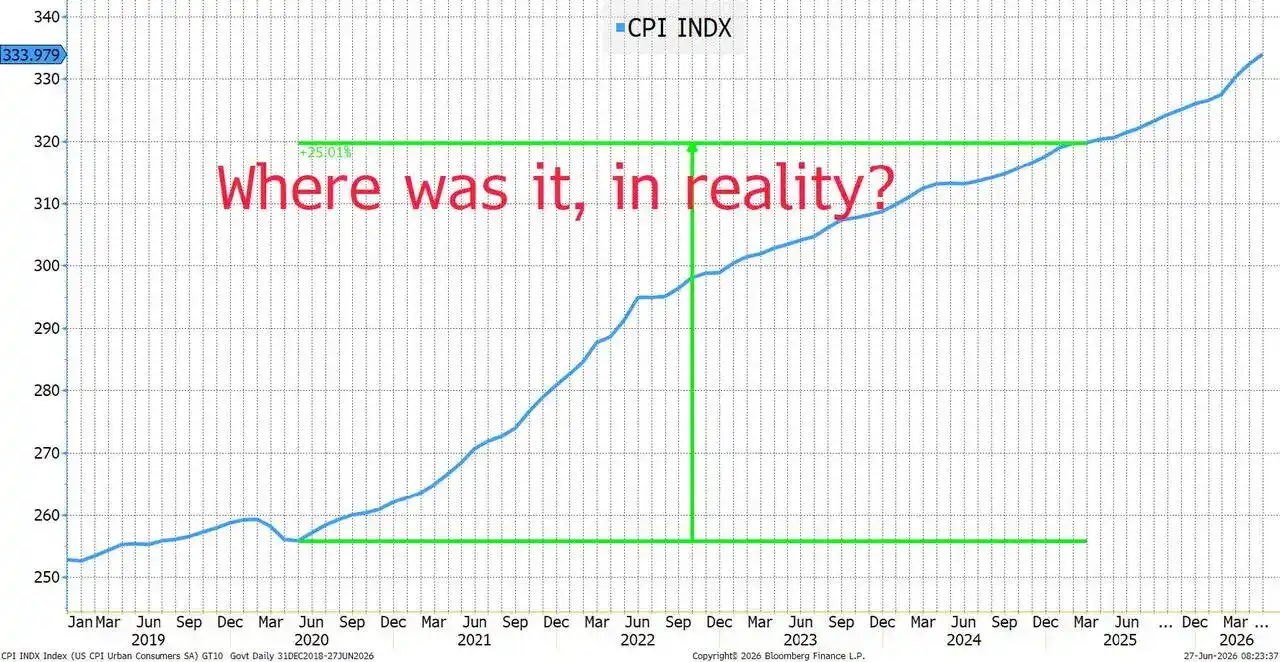
He also notes that Walsh's recent remarks hinted that the "big number" (the integer) of the inflation figure is more important than the precise value. Tchir infers from this that the market may be gradually being "conditioned"—to accept the cognitive framework that "two-point-something" is equivalent to approaching the 2% target. He marks the inflation target line on his chart as 2.9%, not the traditional 2%.

He believes that once the data narrative is switched, the technical barriers to rate cuts will significantly lower.

Tchir also mentions the work of former Fed insider Miran on the neutral rate issue. He believes that while no one in the market is discussing the neutral rate currently, this topic will resurface at an opportune moment.

His logic is: The neutral rate itself is difficult to measure precisely, with a substantial estimation range. If the new Fed leadership can argue that the previous judgment on the neutral rate was too high, then this alone could provide theoretical grounds for 50 to 100 basis points of rate cuts, while assigning blame to the "old Fed's error."

Apple Price Hikes and AI Inflation: Rate Hikes Are Aiming at the Wrong Target

Addressing market concerns about AI-driven inflation, Tchir offers a counter-interpretation.

He points out that Apple (AAPL)'s stock fell after announcing recent price hikes, a market reaction that precisely shows consumer tolerance for price increases is being questioned. If a top consumer brand like Apple struggles to have its price hikes digested by the market, the pricing power of ordinary consumer goods companies would only be weaker—contradicting the narrative of persistent inflation heating up.

He also cites feedback from a chip company: memory prices have not surged due to AI demand, with some products even cheaper than five years ago. He believes that AI and data center construction spending are indeed inflationary, but this is a completely different dimension from the affordability issues faced by ordinary consumers.

More critically, he argues that rate hikes have almost no dampening effect on AI/data center spending—those tech companies trading at 100x multiples are completely insensitive to a 50-basis-point rate move. Those truly hurt by rate hikes are ordinary borrowers with no connection to AI inflation.

Based on the above judgments, he believes the market will begin to reprice rate cut expectations, with the most certain opportunity lying in the short end of the yield curve—going long on short-term Treasuries, betting on lower front-end yields. For the long end, he maintains a neutral to slightly bullish stance, believing Treasury Secretary Bessent wants the 10-year yield back in the "3-handle," and Walsh has already removed tail-end risks for the long end through hawkish rhetoric.

In the equity space, he recommends a significant overweight in the energy sector, especially global nuclear power assets; within the Defense & Security (ProSec) theme, overweight biotech/pharmaceuticals and underweight chips. He is cautious on AI and data center valuations and warns that potential secondary issuance pressure from large tech companies could weigh on their stock prices.

Preguntas relacionadas

QAccording to the article, what is the analyst Peter Tchir's main argument about Federal Reserve Chairman Kevin Walsh's hawkish stance?

APeter Tchir argues that Federal Reserve Chairman Kevin Walsh's hawkish stance might be a carefully designed smokescreen. He suggests that by making hawkish statements, Walsh aims to suppress the tail risk of long-term interest rates, while also reserving space to shift the data narrative later. Tchir believes the ultimate goal of this strategy could be to pave the way for a potential interest rate cut in September and again in October, coinciding with the timing of the midterm elections.

QWhat is Peter Tchir's key criticism regarding the current inflation measurement system used by the Fed?

APeter Tchir criticizes the Fed's reliance on the PCE index, stating that it is not the preferred inflation gauge for the current Fed leadership under Walsh. He argues that data lags, especially in housing inflation, make metrics like PCE outdated. He points to the Cleveland Fed's 'New Tenant Repeat Rent Index' (NTRR), which aligns more closely with real-time rental data from sources like Zillow, as a more accurate indicator that the Fed could switch to in order to justify rate cuts.

QWhat alternative inflation data does Peter Tchir cite to support the case for lower inflation, and what does it indicate?

APeter Tchir cites Truflation, a real-time inflation index built on massive datasets. According to his report, Truflation's core inflation rate is currently around 1.45% and has consistently stayed below 1.8% since February of this year. This data suggests that inflation is significantly lower than what the official, lagging indicators might imply.

QHow does Peter Tchir dismiss concerns about AI-driven inflation?

APeter Tchir dismisses concerns about AI-driven inflation by making two key points. First, he argues that the inflation from AI and data center construction is a different dimension from the affordability issues faced by general consumers. Second, he contends that interest rate hikes are ineffective at curbing AI/data center spending because the tech companies undertaking these investments are insensitive to small rate changes. Instead, he believes higher rates primarily hurt ordinary borrowers who are unrelated to the AI sector.

QWhat investment recommendations does Peter Tchir make based on his analysis in the report?

ABased on his analysis, Peter Tchir recommends investors re-price their expectations for rate cuts. He sees the most certain opportunity in the short end of the yield curve, suggesting going long on short-term Treasury bonds to bet on falling front-end yields. In equities, he advises a significant overweight in the energy sector (especially global nuclear power assets). Within the Defense & Security (ProSec) theme, he recommends an overweight in biotech/pharma and an underweight in semiconductors. He is cautious about the valuations of AI and data center stocks.

Lecturas Relacionadas

Margin Exhausted, "Brother Huang Li Cheng" Begins Selling Monkeys at a Loss

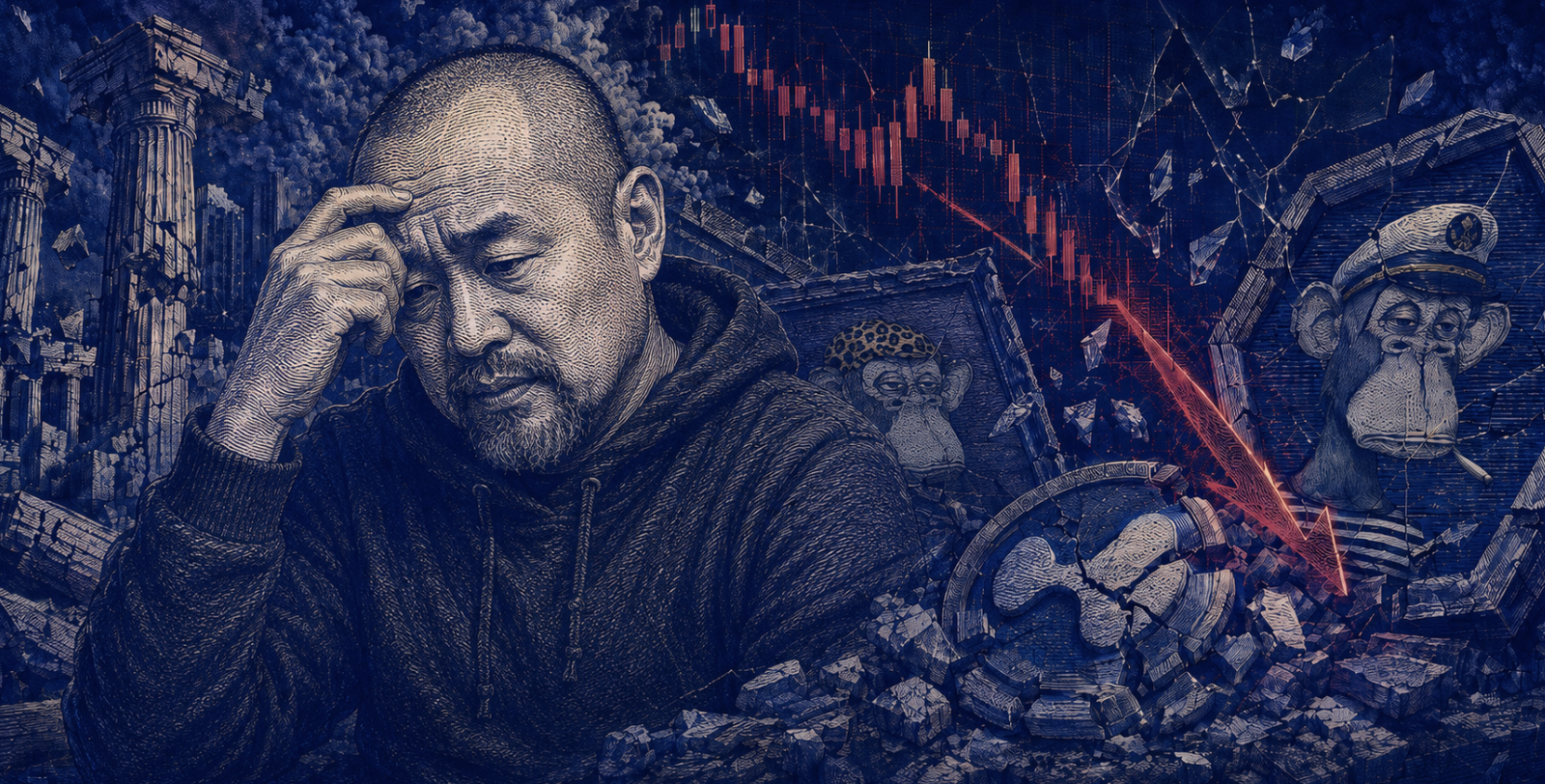
Taiwanese crypto whale "Machi Big Brother" Jeffrey Huang has been forced to sell his prized Bored Ape Yacht Club (BAYC) NFTs at significant losses to cover mounting losses from a highly leveraged ETH long position on Hyperliquid. Over the past month, Huang sold 34 BAYC NFTs for 326 ETH (approx. $514,000), realizing a loss of 399 ETH (approx. $631,000). The proceeds were transferred to Hyperliquid to replenish margin for his perpetual contract trades. One ape, BAYC #6057, bought for 76.84 ETH four years ago, was sold for just 7.65 ETH, a 90% loss in ETH terms. Huang began his high-leverage (25-40x) ETH long strategy in September 2025 when ETH was around $4,700. While his account once showed over $45 million in unrealized profit, the subsequent crash of ETH to the $1,600 range erased all gains. As of June 26, his cumulative losses on Hyperliquid reached $33.85 million, with over 335 liquidations earning him the community nickname "King of Liquidations." With conventional funds depleted, Huang's once-valuable NFT collection, which at its peak included around 200 BAYCs and was worth tens of millions, has become a lifeline. His remaining ~150 BAYCs, valued at roughly $1.6 million at current floor prices, provide only limited runway for his persistent high-stakes trading. Huang rose to prominence in crypto as a key figure in popularizing BAYC NFTs in Asia during the 2021 bull market. His pivot to perpetual contracts has now led to a cycle where his iconic "monkeys" are being sold to fund a failing trading strategy.

Foresight NewsHace 5 min(s)

Margin Exhausted, "Brother Huang Li Cheng" Begins Selling Monkeys at a Loss

Foresight NewsHace 5 min(s)

Quantum Computing Approaches "Q-Day": How Encryption Policy, Investment Logic, and Risk Management Are Reshaping the Landscape

Quantum Computing Nears 'Q-Day': Shaping Encryption Policy, Investment Logic, and Risk Management Quantum technology is increasingly intersecting with cryptocurrency policy and cybersecurity discussions as the potential 'Q-Day'—when quantum computers could break current encryption—approaches. While summer brings fast-paced crypto market dynamics, new U.S. legislation, and AI debates, the emerging dimension is how quantum advancements will reshape the digital asset landscape. The next phase of crypto investment is being shaped by two converging forces: clearer regulatory frameworks and cryptographic evolution driven by quantum computing. Investors stand to benefit from reduced uncertainty, but must also recognize that quantum readiness is becoming a core risk factor. Public blockchains rely on cryptography for security, and sufficiently advanced quantum machines could undermine these foundations. This does not mean imminent network collapse, but investors can no longer dismiss the timeline as irrelevant. Key questions now include whether projects have identified their cryptographic dependencies, formulated migration plans to post-quantum cryptography, and established governance for upgrades. For policymakers, the link is clear. Effective crypto policy must look beyond token classification and disclosure to address the underlying infrastructure. As stablecoins, tokenized assets, and blockchain payments integrate deeper into finance, cryptographic resilience becomes a systemic issue. Failure to prepare could lead to investor losses, operational failures, and legal disputes. Policy should encourage risk disclosure, require major intermediaries to maintain upgrade and response plans, and foster coordination across the ecosystem—rather than impose a single technical fix. The sustainability of cryptocurrencies will increasingly depend on their security infrastructure's ability to adapt to these accelerating technological pressures.

Foresight NewsHace 30 min(s)

Quantum Computing Approaches "Q-Day": How Encryption Policy, Investment Logic, and Risk Management Are Reshaping the Landscape

Foresight NewsHace 30 min(s)

Bitcoin's Five-Wave Adjustment Nears End, Opportunities Emerge in HYPE Support Zone | Invited Analysis

**Bitcoin's Five-Wave Adjustment Nears End, HYPE Support Zone Presents Opportunity | Guest Analysis** This week, Bitcoin (BTC) is in the final stage of a five-wave corrective structure. The formation of 'Endpoint 44' is key: a level above $58,110 suggests a high probability of a technical rebound, leading likely to wide-range consolidation. A break below $58,110 without bullish divergence warrants caution for further downside. Mid-term bearish positions are maintained at 20%, with 30% of capital reserved for short-term scalping opportunities based on predefined support/resistance levels and three scenario-based plans (A/B/C). Simultaneously, HYPE has entered the 55-56 segment of its own five-wave correction from its $76.94 high. If 'Endpoint 56' forms above the prior low (Endpoint 54), creating a double-bottom pattern, a rebound is significantly likely. A light long position (under 30% allocation) can be considered upon stabilization in the support zone. Last week's BTC short-term strategy, guided by proprietary quantitative models, successfully executed two short trades (1x leverage), yielding a total return of approximately 6.21%. The market move validated the prior weekly forecast of a retest towards the $59,100 support. **Core Trading Views Summary:** * **BTC:** Focus on the formation of 'Endpoint 44'. A scenario above $58,110 allows for tentative longs. Key resistances: $60,900-$62,300, ~$65,500, $67,300-$69,500. Key supports: ~$58,100, ~$55,000. * **HYPE:** Monitor the final position of 'Endpoint 56'. Key resistances: ~$65.5, ~$71.5. Key supports: ~$58.5, $52-$54 zone. Strategy favors buying on dips upon stabilization in support areas with confirmed model signals, with strict position control. **Risk Disclaimer:** Financial markets are volatile. All analysis, models, and strategies herein are based on personal technical analysis for journaling purposes only, not investment advice. Trade at your own risk.

Odaily星球日报Hace 45 min(s)

Bitcoin's Five-Wave Adjustment Nears End, Opportunities Emerge in HYPE Support Zone | Invited Analysis

Odaily星球日报Hace 45 min(s)

AI Sweeps the Globe, So Why Is Crypto + AI Facing Gloom?

The article "AI Sweeps the Globe, But Why Is Crypto + AI So Bleak?" analyzes the disconnect between the booming AI industry and the struggling crypto+AI sector. It argues the issue is not flawed logic but severe demand-supply mismatch across four key sub-sectors. Decentralized compute and storage projects offer theoretical benefits like cost savings and data sovereignty but lack a decisive technical edge over entrenched cloud providers (AWS, GCP). Enterprises are unwilling to risk migration for unproven infrastructure that can't guarantee the performance and reliability needed for critical AI workloads. ZKML and privacy solutions address important issues like model verification but solve non-urgent, long-term concerns for most businesses currently focused on core performance and ROI. Demand here is likely to be regulation-driven (e.g., EU AI Act) rather than organic. AI agent infrastructure is developing foundational tech for a future multi-agent economy. However, the current market phase is dominated by internal process automation within single companies, making this technology premature. AI agent payments is highlighted as the only sub-sector where blockchain competes on a level playing field with traditional finance, as neither has adequately solved the challenges of machine-to-machine micropayments and real-time settlement. Overall, crypto+AI projects are building for future needs (data ownership, decentralization, transparency) that don't align with the industry's immediate priorities (performance, cost, stability). The absence of a flagship, large-scale use case further hinders mainstream adoption and capital inflow. The path forward requires either adapting to current market demands or patiently building the foundational infrastructure for the next phase of AI.

marsbitHace 57 min(s)

AI Sweeps the Globe, So Why Is Crypto + AI Facing Gloom?

marsbitHace 57 min(s)

Trading

Spot
活动图片