Bitcoin's Five-Wave Adjustment Nears End, Opportunities Emerge in HYPE Support Zone | Invited Analysis

Odaily星球日报Publicado a 2026-06-29Actualizado a 2026-06-29

Resumen

**Bitcoin's Five-Wave Adjustment Nears End, HYPE Support Zone Presents Opportunity | Guest Analysis** This week, Bitcoin (BTC) is in the final stage of a five-wave corrective structure. The formation of 'Endpoint 44' is key: a level above $58,110 suggests a high probability of a technical rebound, leading likely to wide-range consolidation. A break below $58,110 without bullish divergence warrants caution for further downside. Mid-term bearish positions are maintained at 20%, with 30% of capital reserved for short-term scalping opportunities based on predefined support/resistance levels and three scenario-based plans (A/B/C). Simultaneously, HYPE has entered the 55-56 segment of its own five-wave correction from its $76.94 high. If 'Endpoint 56' forms above the prior low (Endpoint 54), creating a double-bottom pattern, a rebound is significantly likely. A light long position (under 30% allocation) can be considered upon stabilization in the support zone. Last week's BTC short-term strategy, guided by proprietary quantitative models, successfully executed two short trades (1x leverage), yielding a total return of approximately 6.21%. The market move validated the prior weekly forecast of a retest towards the $59,100 support. **Core Trading Views Summary:** * **BTC:** Focus on the formation of 'Endpoint 44'. A scenario above $58,110 allows for tentative longs. Key resistances: $60,900-$62,300, ~$65,500, $67,300-$69,500. Key supports: ~$58,100, ~$55,000. * **HYPE:** Moni...

This week, BTC is currently in the final stage of a five-wave adjustment structure. The formation position of "Endpoint 44" will determine the short-term direction—if above 58,110, the probability of a rebound is high; if below and without bullish divergence, be alert to further breakdown. We have preset three operational plans (A/B/C). Medium-term short positions are maintained at 20%, while short-term positions reserve 30% for price difference opportunities.

Meanwhile, HYPE has initiated a five-wave adjustment from its high of 76.94 and is currently operating in the 55-56 segment. If "Endpoint 56" is higher than the previous low, forming a double bottom, the probability of a rebound is significant; after stabilizing in the support zone, light long positions can be tested, with positions strictly controlled below 30%.

For the complete structural analysis, interpretation of quantitative model signals, and specific operational plans, please refer to the full text of this week's market review.

Summary of This Week's Core Trading Views

  • BTC Hourly Trend Structure Analysis (Detailed in Part 1)
  • BTC Market Forecast and Mid/Short-term Trading Strategies for This Week (Detailed in Part 2)
  • HYPE Hourly Trend Structure Analysis (Detailed in Part 3)
  • HYPE Market Forecast and Short-term Trading Strategies for This Week (Detailed in Part 4)

Market Verification of Last Week's Trading Strategies and Core Views

  • BTC Short-term Trading Performance: Bitcoin completed two short-term short trades last week (1x leverage), successfully achieving a profit of approximately 6.21%. (Detailed in Part 5)
  • BTC Market Trend Forecast Verification: In the previous weekly review, we forecasted (as shown in Figure 1) that if "Endpoint 41" could not hold above the lower channel line, the probability of the market retesting the previous low support at 59,100 USD was high. Currently, the overall market movement validates this view.

1. In-depth Analysis of Bitcoin's Hourly Trend Structure
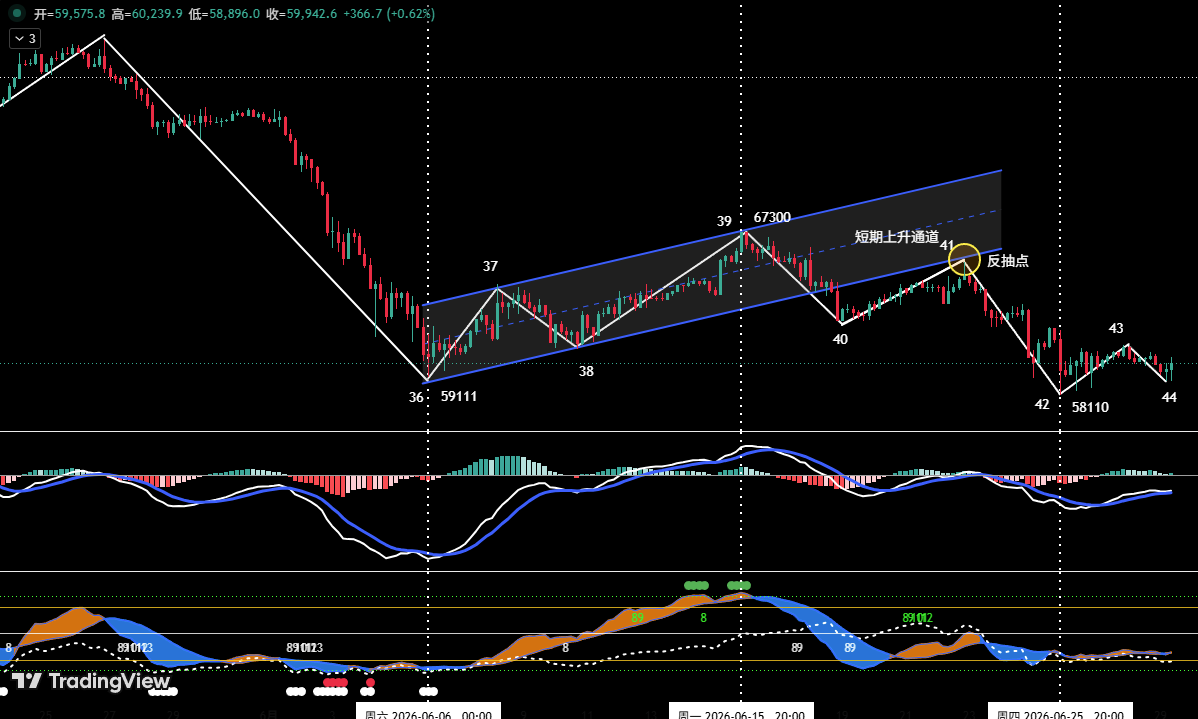
Figure 1 Bitcoin _4-hour K-line Chart

1 As shown in (Figure 1): The previous weekly review clearly pointed out that segment (40-41) was a pullback confirmation after breaking below the lower line of the short-term rising channel (blue channel). If "Endpoint 41" could not regain and stabilize above the lower channel line, the trend would weaken, increasing the probability of a retest of the previous low support at 59,100 USD. The chart shows that last week's adjustment touched a low of 58,110 USD before finding short-term support.

2 From the 4-hour cycle analysis, the oversold rebound that started from the low of 59,100 USD on June 6th was confirmed to have ended at "Endpoint 39" (67,300 USD).
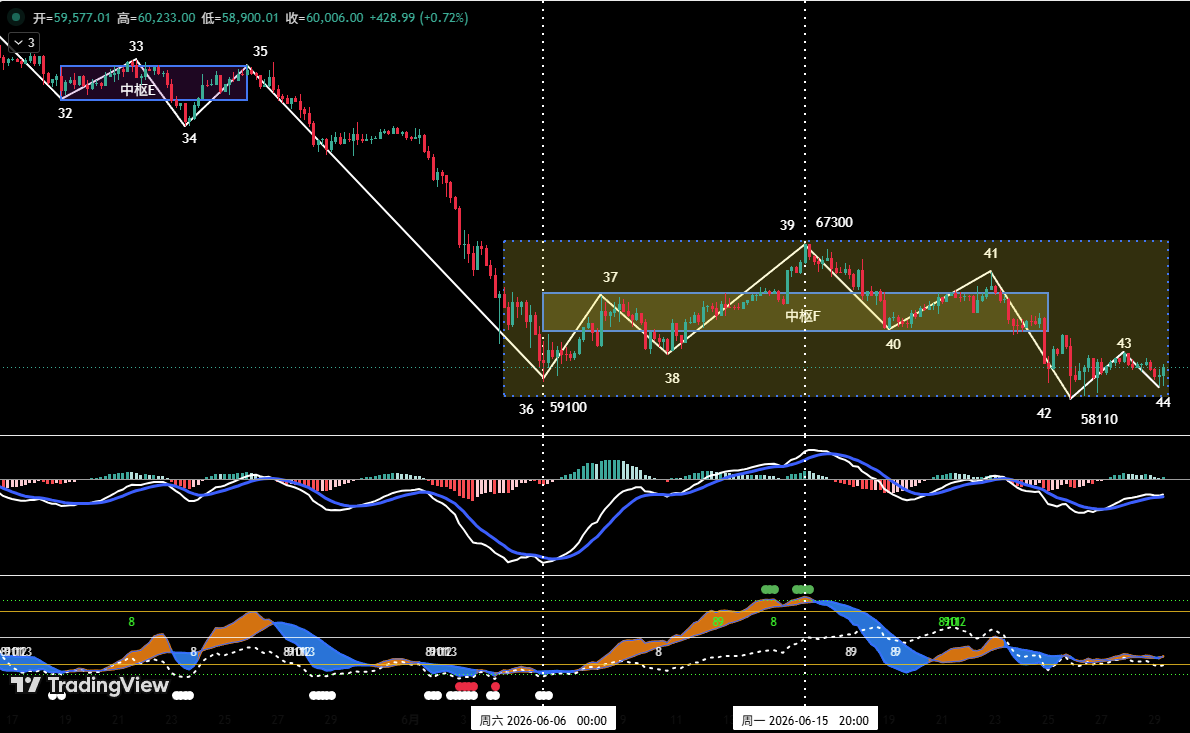
Figure 2 Bitcoin _4-hour Chart

3 As shown in (Figure 2): Starting from "Endpoint 39", the market entered a clear 5-wave adjustment structure (i.e., from Endpoint 39 to Endpoint 44), and is currently operating in the (43-44) adjustment segment.

The final position of "Endpoint 44" will be key for the short-term direction:

  • If "Endpoint 44" is above 58,110 USD: A relatively strong technical rebound is expected, likely followed by wide-range box consolidation.
  • If "Endpoint 44" is below 58,110 USD and a bullish momentum divergence occurs: There is also a rebound opportunity, but its strength needs observation.
  • If "Endpoint 44" is below 58,110 USD and no bullish momentum divergence occurs: After a short-term adjustment, the price may break down further.

4 Summary: Analysis from our self-built quantitative model suggests a higher probability for the first two scenarios.

2. Bitcoin Market Forecast and Trading Strategies for This Week

1. BTC Market Trend Forecast This Week

Core view this week: Focus on the formation of "Endpoint 44". If the first scenario mentioned above occurs, consider light long positions for the short term.

2. Core Resistance Levels

  • First Resistance Zone: 60,900~62,300 USD area (previous important high/low points)
  • Second Resistance Zone: Around 65,500 USD (previous significant resistance area)
  • Third Resistance Zone: 67,300~69,500 USD area (previous important resistance area)

3. Core Support Levels

  • First Support Level: Around 58,100 USD (previous important support level)
  • Second Support Level: Around 55,000 USD (previous important support level)

4. Trading Strategies This Week (excluding sudden news impact)

1 Medium-term Strategy
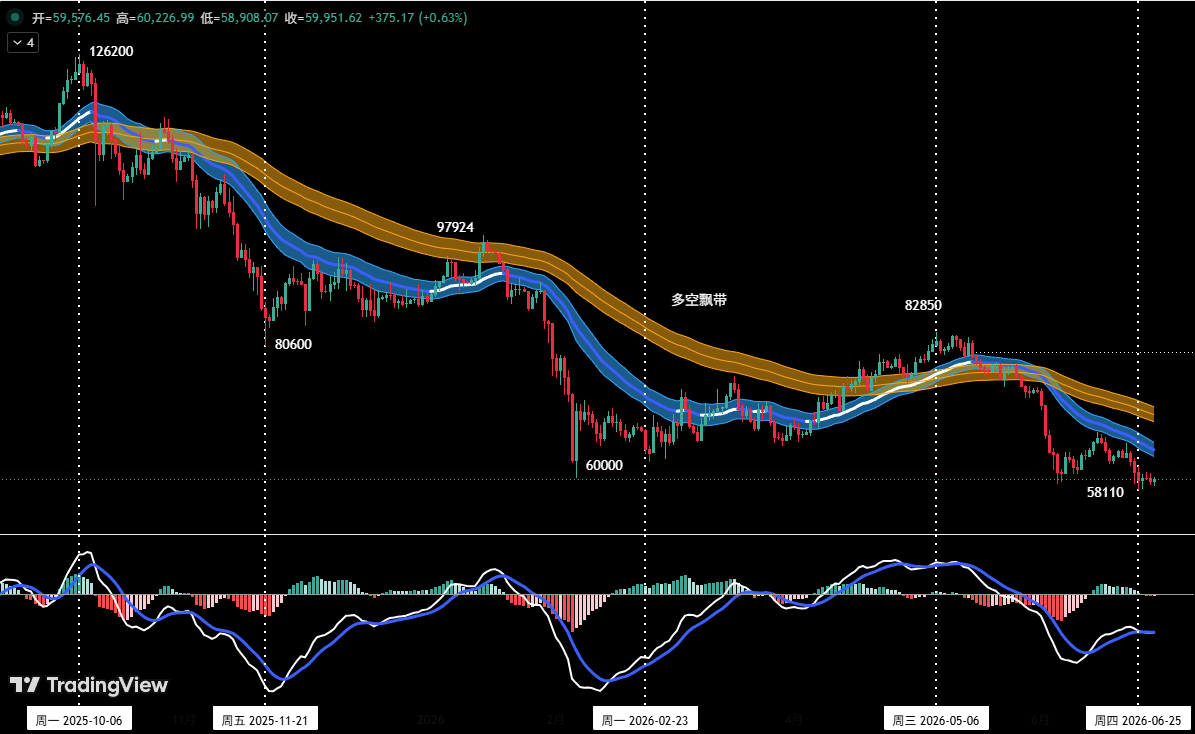
Figure 3 Bitcoin _ Daily K-line Chart (Position Monitoring Model)

Position Monitoring Model: As shown in (Figure 3), the current price has effectively broken below the "Bull-Bear Channel", confirming a shift to a bear-dominated market structure. Medium-term short positions are temporarily maintained at around 20%.

2 Short-term Strategy

Utilize 30% of the position, set stop-loss points, and look for "price difference" opportunities based on support and resistance levels (using 30-minute/60-minute cycles for operations).

3 Three Operational Plans (A/B/C)

For short-term operations, to dynamically respond to complex market evolutions, we have prepared three specific operational plans in advance.

Plan A: Tentative Long Position in Strong Support Zone (Endpoint 44 above 58,110 USD)

  • Entry: If the price scenario occurs as described above and aligns with quantitative model signals, consider establishing a long position of about 15%.
  • Risk Control: Set initial stop-loss level.
  • Exit: When rebounding near important resistance levels and combined with quantitative model signals, gradually close positions to take profits.

Plan B: Light Short Position in Resistance Zone

  • Entry: If the price rebounds to the 60,900~62,300 USD area and shows signs of resistance, combined with quantitative model topping signals, establish an initial short position of about 15%.
  • Risk Control: Set initial stop-loss level.
  • Exit: When adjusting to important support levels and combined with model signals, gradually close positions to take profits.

Plan C: Add Short Position in Strong Resistance Zone

  • Addition: If the price continues to rebound to near the 65,000 USD or even 67,300 USD resistance levels and shows signs of stagnation, combined with quantitative model topping signals, consider adding short positions up to within 30%.
  • Risk Control: Set initial stop-loss level.
  • Exit: When falling to important support levels and combined with model signals, gradually close positions to take profits.

3. HYPE Hourly Trend Structure Analysis
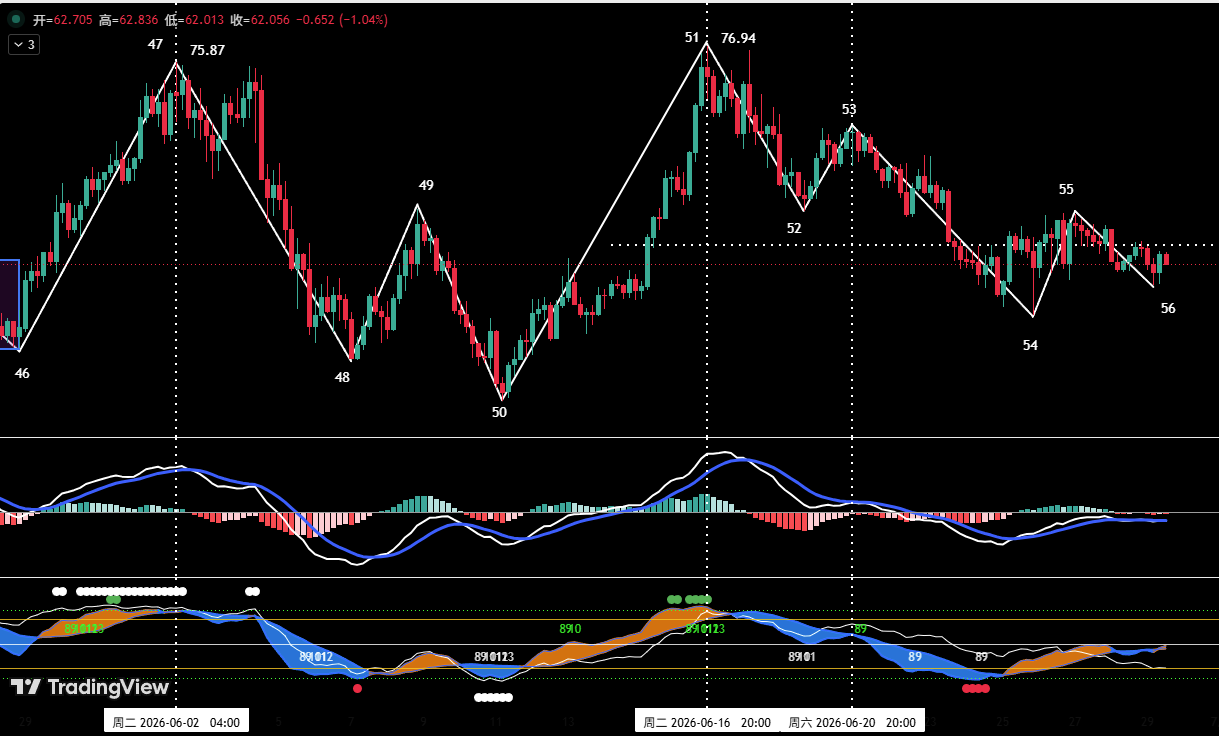
Figure 4 HYPE_4-hour K-line Chart

1 As shown in (Figure 4), HYPE began adjusting from its high of 76.94 USD on June 16th (Endpoint 51). In the 4-hour cycle, it can be subdivided into a five-wave adjustment structure: segments 51-52, 52-53, 53-54, 54-55, and 55-56. The price is currently operating in the 55-56 adjustment segment. The position status of "Endpoint 56" is key to the recent price trend.

2 Scenarios for the End of Short-term Adjustment:

  • If "Endpoint 56" is higher than "Endpoint 54", forming a "double bottom" pattern, this round of adjustment may end, and a rebound starting from "Endpoint 56" is highly probable.
  • If "Endpoint 56" is lower than "Endpoint 54" but forms a bullish momentum divergence, the probability of this round of adjustment ending is also high, with a potential rebound.

3 Scenarios for Continuation of Short-term Adjustment:

  • If "Endpoint 56" is lower than "Endpoint 54" and there is no bullish momentum divergence, this round of adjustment may extend into a seven-wave adjustment structure.

4 Analysis from our self-built quantitative model suggests a significant probability of the first scenario.

4. HYPE Market Forecast and Short-term Trading Strategies for This Week

1. HYPE Market Trend Forecast This Week

Core Resistance Levels:

  • First Resistance Level: Around 65.5 USD
  • Second Resistance Level: Around 71.5 USD

Core Support Levels:

  • First Support Level: Around 58.5 USD
  • Second Support Level: 52~54 USD area

Core HYPE View This Week: Observe the position and technical pattern when "Endpoint 56" finally forms.

2. HYPE Short-term Trading Strategies This Week (Long on Support)

This week's HYPE short-term trading should follow the strategy of "buying on dips, avoiding chasing rallies".

Short-term Strategy: Test long on support zone stabilization. When the HYPE price adjusts to above 58.8 USD or the deeper 52~54 USD support area, showing signs of stabilization and halting declines, and simultaneously combined with bottom signals triggered by two models, consider light long positions. Positions must be controlled below 30% and strict stop-loss discipline must be maintained.

5. Bitcoin Short-term Operation Review

We strictly followed the operational plans and executed two short-term short trades last week based on trading signals issued by our self-built "Price Difference Trading Model" and "Momentum Quantitative Model", achieving a total trading profit of approximately 6.21%.

1. Short-term Trade One

Bitcoin Short-term Trade Details (Leverage ×1):
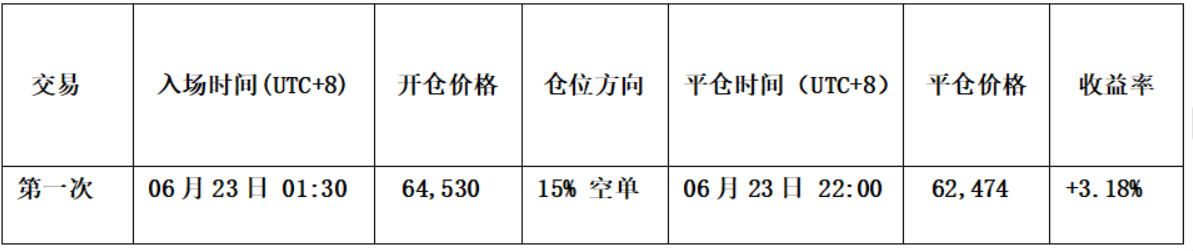
Entry Strategy:

  • When the price rebounded to around 65,500 USD, met resistance and showed signs of pressure, with the K-line forming a "top reversal" bearish signal;
  • The "Price Difference Trading Model" triggered a top warning signal (white dot), and the "Momentum Quantitative Model" formed a bearish momentum divergence signal.

Therefore, we established a 15% short position at 64,530 USD.

Exit Strategy:

  • When the price fell to around 62,000 USD and halted its decline, with the K-line forming a "bottom reversal" signal;
  • The "Price Difference Trading Model" triggered a strong bottom warning signal (red dot + white dot), forming a bottom resonance signal with the "Momentum Quantitative Model".

Therefore, we closed all positions around 62,474 USD.

Summary: This trade successfully achieved a profit of approximately 3.18%.

2. Short-term Trade Two

Bitcoin Short-term Trade Details (Leverage ×1):
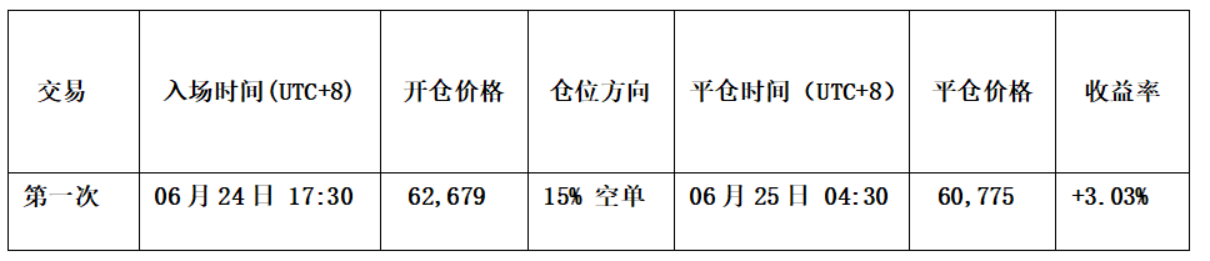
Entry Strategy:

  • When the price moved to around 63,000 USD, the two momentum lines in the "Momentum Quantitative Model" moved near the "zero axis" and showed signs of momentum exhaustion, subsequently forming the first "death cross" pattern below the "zero axis";
  • Simultaneously, the "Price Difference Trading Model" issued a top warning signal.

Therefore, we established a 15% short position at 62,679 USD.

Exit Strategy:

  • When the price fell to around 59,000 USD and halted its decline, with the K-line forming a "bottom reversal" signal;
  • The "Price Difference Trading Model" triggered a strong bottom warning signal (red dot + white dot), forming a bottom resonance signal with the "Momentum Quantitative Model".

Therefore, we closed all positions around 60,775 USD.

Summary: This trade successfully achieved a profit of approximately 3.03%.
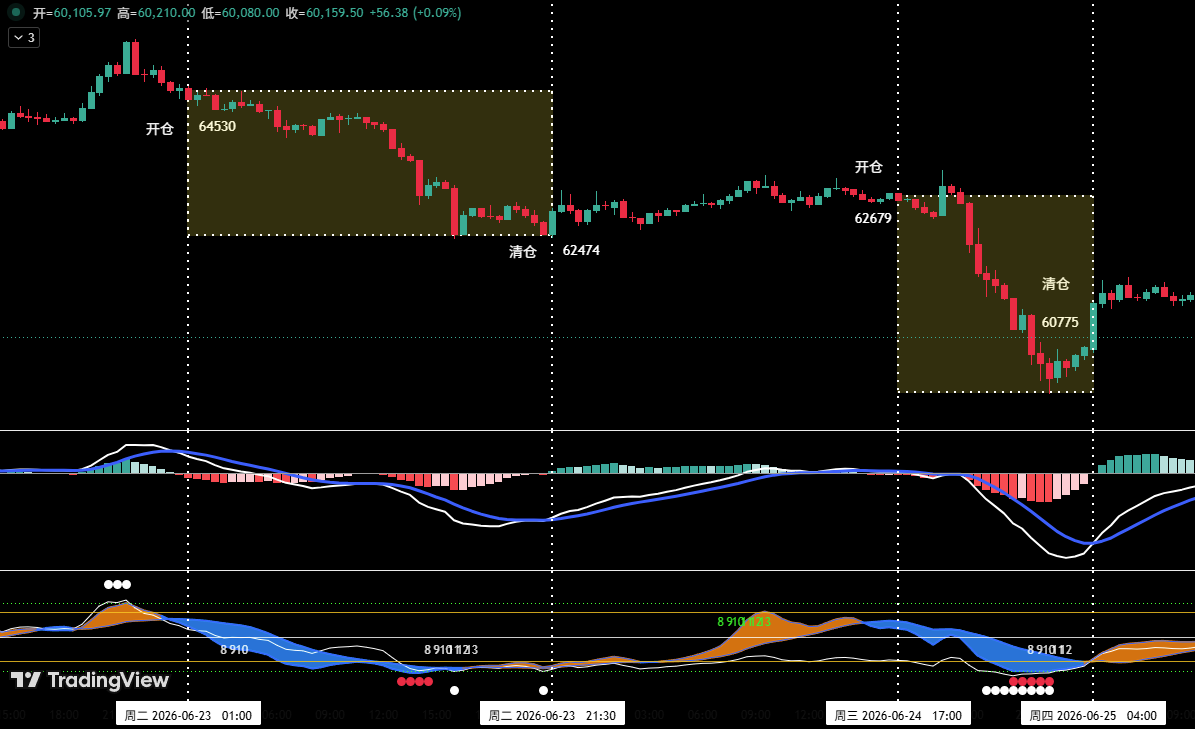
Figure 5 Short-term Trade Illustration

6. Special Notes

  1. When opening a position: Immediately set the initial stop-loss level.
  2. When profit reaches 1%: Move the stop-loss to the entry cost price (break-even point) to ensure principal safety.
  3. When profit reaches 2%: Move the stop-loss to the 1% profit level.
  4. Continuous tracking: For every subsequent 1% increase in profit, synchronously move the stop-loss up by 1% to dynamically protect and lock in profits.

Risk Warning:

Financial markets are constantly changing, and all market analysis and trading strategies require dynamic adjustments. All views, analytical models, and operational strategies mentioned in this article are derived from personal technical analysis and are for personal trading log purposes only. They do not constitute any investment advice or operational basis. The market involves risks, and investment requires caution. Please do not make decisions based solely on this content.


Criptos en tendencia

Preguntas relacionadas

QAccording to the analysis, what is the key factor determining Bitcoin's short-term direction in its current five-wave correction?

AThe key factor determining Bitcoin's short-term direction is the final formation level of 'End Point 44'. If it forms above $58,110, a strong technical rebound is likely. If it forms below $58,110 without bullish divergence, further downside is a risk.

QWhat are the three operational plans (Plan A, B, C) proposed for Bitcoin in the short term?

APlan A: Test long positions in the strong support zone if 'Endpoint 44' is above $58,110. Plan B: Lightly test short positions in the resistance zone of $60,900 - $62,300. Plan C: Add to short positions in the stronger resistance zones near $65,000 or $67,300 if the price rallies there.

QWhat condition must be met for HYPE's current correction to likely end and start a rebound?

AFor HYPE's correction to likely end, either 'Endpoint 56' must form higher than 'Endpoint 54', creating a 'double bottom' pattern, or 'Endpoint 56' forms lower than 'Endpoint 54' but with bullish momentum divergence.

QBased on the review section, what specific signals did the analyst's models trigger to open and close the first Bitcoin short trade?

ATo open the first short trade: The price faced resistance near $65,500, formed a 'top reversal' candlestick pattern. The 'Spread Trading Model' triggered a top warning signal (white dot) and the 'Momentum Quant Model' showed bearish divergence. To close the trade: The price stopped falling near $62,000, formed a 'bottom reversal' candlestick. The 'Spread Trading Model' triggered a strong bottom warning (red + white dots), resonating with a bottom signal from the 'Momentum Quant Model'.

QWhat is the core risk management rule mentioned for protecting profits once a trade is opened?

AOnce a trade is opened, an initial stop-loss is set immediately. When profit reaches 1%, the stop-loss is moved to the entry price (break-even). At a 2% profit, the stop-loss is moved to lock in 1% profit. Subsequently, for every additional 1% gain, the stop-loss is trailed up by 1% to dynamically protect and lock in profits.

Lecturas Relacionadas

Margin Exhausted, "Brother Huang Li Cheng" Begins Selling Monkeys at a Loss

Taiwanese crypto whale "Machi Big Brother" Jeffrey Huang has been forced to sell his prized Bored Ape Yacht Club (BAYC) NFTs at significant losses to cover mounting losses from a highly leveraged ETH long position on Hyperliquid. Over the past month, Huang sold 34 BAYC NFTs for 326 ETH (approx. $514,000), realizing a loss of 399 ETH (approx. $631,000). The proceeds were transferred to Hyperliquid to replenish margin for his perpetual contract trades. One ape, BAYC #6057, bought for 76.84 ETH four years ago, was sold for just 7.65 ETH, a 90% loss in ETH terms. Huang began his high-leverage (25-40x) ETH long strategy in September 2025 when ETH was around $4,700. While his account once showed over $45 million in unrealized profit, the subsequent crash of ETH to the $1,600 range erased all gains. As of June 26, his cumulative losses on Hyperliquid reached $33.85 million, with over 335 liquidations earning him the community nickname "King of Liquidations." With conventional funds depleted, Huang's once-valuable NFT collection, which at its peak included around 200 BAYCs and was worth tens of millions, has become a lifeline. His remaining ~150 BAYCs, valued at roughly $1.6 million at current floor prices, provide only limited runway for his persistent high-stakes trading. Huang rose to prominence in crypto as a key figure in popularizing BAYC NFTs in Asia during the 2021 bull market. His pivot to perpetual contracts has now led to a cycle where his iconic "monkeys" are being sold to fund a failing trading strategy.

Foresight NewsHace 35 min(s)

Margin Exhausted, "Brother Huang Li Cheng" Begins Selling Monkeys at a Loss

Foresight NewsHace 35 min(s)

Quantum Computing Approaches "Q-Day": How Encryption Policy, Investment Logic, and Risk Management Are Reshaping the Landscape

Quantum Computing Nears 'Q-Day': Shaping Encryption Policy, Investment Logic, and Risk Management Quantum technology is increasingly intersecting with cryptocurrency policy and cybersecurity discussions as the potential 'Q-Day'—when quantum computers could break current encryption—approaches. While summer brings fast-paced crypto market dynamics, new U.S. legislation, and AI debates, the emerging dimension is how quantum advancements will reshape the digital asset landscape. The next phase of crypto investment is being shaped by two converging forces: clearer regulatory frameworks and cryptographic evolution driven by quantum computing. Investors stand to benefit from reduced uncertainty, but must also recognize that quantum readiness is becoming a core risk factor. Public blockchains rely on cryptography for security, and sufficiently advanced quantum machines could undermine these foundations. This does not mean imminent network collapse, but investors can no longer dismiss the timeline as irrelevant. Key questions now include whether projects have identified their cryptographic dependencies, formulated migration plans to post-quantum cryptography, and established governance for upgrades. For policymakers, the link is clear. Effective crypto policy must look beyond token classification and disclosure to address the underlying infrastructure. As stablecoins, tokenized assets, and blockchain payments integrate deeper into finance, cryptographic resilience becomes a systemic issue. Failure to prepare could lead to investor losses, operational failures, and legal disputes. Policy should encourage risk disclosure, require major intermediaries to maintain upgrade and response plans, and foster coordination across the ecosystem—rather than impose a single technical fix. The sustainability of cryptocurrencies will increasingly depend on their security infrastructure's ability to adapt to these accelerating technological pressures.

Foresight NewsHace 1 hora(s)

Quantum Computing Approaches "Q-Day": How Encryption Policy, Investment Logic, and Risk Management Are Reshaping the Landscape

Foresight NewsHace 1 hora(s)

AI Sweeps the Globe, So Why Is Crypto + AI Facing Gloom?

The article "AI Sweeps the Globe, But Why Is Crypto + AI So Bleak?" analyzes the disconnect between the booming AI industry and the struggling crypto+AI sector. It argues the issue is not flawed logic but severe demand-supply mismatch across four key sub-sectors. Decentralized compute and storage projects offer theoretical benefits like cost savings and data sovereignty but lack a decisive technical edge over entrenched cloud providers (AWS, GCP). Enterprises are unwilling to risk migration for unproven infrastructure that can't guarantee the performance and reliability needed for critical AI workloads. ZKML and privacy solutions address important issues like model verification but solve non-urgent, long-term concerns for most businesses currently focused on core performance and ROI. Demand here is likely to be regulation-driven (e.g., EU AI Act) rather than organic. AI agent infrastructure is developing foundational tech for a future multi-agent economy. However, the current market phase is dominated by internal process automation within single companies, making this technology premature. AI agent payments is highlighted as the only sub-sector where blockchain competes on a level playing field with traditional finance, as neither has adequately solved the challenges of machine-to-machine micropayments and real-time settlement. Overall, crypto+AI projects are building for future needs (data ownership, decentralization, transparency) that don't align with the industry's immediate priorities (performance, cost, stability). The absence of a flagship, large-scale use case further hinders mainstream adoption and capital inflow. The path forward requires either adapting to current market demands or patiently building the foundational infrastructure for the next phase of AI.

marsbitHace 1 hora(s)

AI Sweeps the Globe, So Why Is Crypto + AI Facing Gloom?

marsbitHace 1 hora(s)

Trading

Spot

Artículos destacados

Qué es $S$

Entendiendo SPERO: Una Visión General Completa Introducción a SPERO A medida que el panorama de la innovación continúa evolucionando, la aparición de tecnologías web3 y proyectos de criptomonedas juega un papel fundamental en la configuración del futuro digital. Un proyecto que ha atraído la atención en este campo dinámico es SPERO, denotado como SPERO,$$s$. Este artículo tiene como objetivo reunir y presentar información detallada sobre SPERO, para ayudar a entusiastas e inversores a comprender sus fundamentos, objetivos e innovaciones dentro de los dominios web3 y cripto. ¿Qué es SPERO,$$s$? SPERO,$$s$ es un proyecto único dentro del espacio cripto que busca aprovechar los principios de descentralización y tecnología blockchain para crear un ecosistema que promueva la participación, la utilidad y la inclusión financiera. El proyecto está diseñado para facilitar interacciones de igual a igual de nuevas maneras, proporcionando a los usuarios soluciones y servicios financieros innovadores. En su esencia, SPERO,$$s$ tiene como objetivo empoderar a los individuos al proporcionar herramientas y plataformas que mejoren la experiencia del usuario en el espacio de las criptomonedas. Esto incluye habilitar métodos de transacción más flexibles, fomentar iniciativas impulsadas por la comunidad y crear caminos para oportunidades financieras a través de aplicaciones descentralizadas (dApps). La visión subyacente de SPERO,$$s$ gira en torno a la inclusividad, buscando cerrar brechas dentro de las finanzas tradicionales mientras aprovecha los beneficios de la tecnología blockchain. ¿Quién es el Creador de SPERO,$$s$? La identidad del creador de SPERO,$$s$ sigue siendo algo oscura, ya que hay recursos públicos limitados que proporcionan información de fondo detallada sobre su(s) fundador(es). Esta falta de transparencia puede derivarse del compromiso del proyecto con la descentralización, una ética que muchos proyectos web3 comparten, priorizando las contribuciones colectivas sobre el reconocimiento individual. Al centrar las discusiones en torno a la comunidad y sus objetivos colectivos, SPERO,$$s$ encarna la esencia del empoderamiento sin señalar a individuos específicos. Como tal, comprender la ética y la misión de SPERO sigue siendo más importante que identificar a un creador singular. ¿Quiénes son los Inversores de SPERO,$$s$? SPERO,$$s$ cuenta con el apoyo de una diversa gama de inversores que van desde capitalistas de riesgo hasta inversores ángeles dedicados a fomentar la innovación en el sector cripto. El enfoque de estos inversores generalmente se alinea con la misión de SPERO, priorizando proyectos que prometen avances tecnológicos sociales, inclusión financiera y gobernanza descentralizada. Estas fundaciones de inversores suelen estar interesadas en proyectos que no solo ofrecen productos innovadores, sino que también contribuyen positivamente a la comunidad blockchain y sus ecosistemas. El respaldo de estos inversores refuerza a SPERO,$$s$ como un contendiente notable en el dominio de proyectos cripto que evoluciona rápidamente. ¿Cómo Funciona SPERO,$$s$? SPERO,$$s$ emplea un marco multifacético que lo distingue de los proyectos de criptomonedas convencionales. Aquí hay algunas de las características clave que subrayan su singularidad e innovación: Gobernanza Descentralizada: SPERO,$$s$ integra modelos de gobernanza descentralizada, empoderando a los usuarios para participar activamente en los procesos de toma de decisiones sobre el futuro del proyecto. Este enfoque fomenta un sentido de propiedad y responsabilidad entre los miembros de la comunidad. Utilidad del Token: SPERO,$$s$ utiliza su propio token de criptomoneda, diseñado para servir diversas funciones dentro del ecosistema. Estos tokens permiten transacciones, recompensas y la facilitación de servicios ofrecidos en la plataforma, mejorando la participación y la utilidad general. Arquitectura en Capas: La arquitectura técnica de SPERO,$$s$ apoya la modularidad y escalabilidad, permitiendo la integración fluida de características y aplicaciones adicionales a medida que el proyecto evoluciona. Esta adaptabilidad es fundamental para mantener la relevancia en el cambiante paisaje cripto. Participación de la Comunidad: El proyecto enfatiza iniciativas impulsadas por la comunidad, empleando mecanismos que incentivan la colaboración y la retroalimentación. Al nutrir una comunidad sólida, SPERO,$$s$ puede abordar mejor las necesidades de los usuarios y adaptarse a las tendencias del mercado. Enfoque en la Inclusión: Al ofrecer tarifas de transacción bajas e interfaces amigables para el usuario, SPERO,$$s$ busca atraer a una base de usuarios diversa, incluyendo a individuos que anteriormente pueden no haber participado en el espacio cripto. Este compromiso con la inclusión se alinea con su misión general de empoderamiento a través de la accesibilidad. Cronología de SPERO,$$s$ Entender la historia de un proyecto proporciona información crucial sobre su trayectoria de desarrollo y hitos. A continuación se presenta una cronología sugerida que mapea eventos significativos en la evolución de SPERO,$$s$: Fase de Conceptualización e Ideación: Las ideas iniciales que forman la base de SPERO,$$s$ fueron concebidas, alineándose estrechamente con los principios de descentralización y enfoque comunitario dentro de la industria blockchain. Lanzamiento del Whitepaper del Proyecto: Tras la fase conceptual, se lanzó un whitepaper completo que detalla la visión, los objetivos y la infraestructura tecnológica de SPERO,$$s$ para generar interés y retroalimentación de la comunidad. Construcción de Comunidad y Primeras Interacciones: Se realizaron esfuerzos de divulgación activa para construir una comunidad de primeros adoptantes y posibles inversores, facilitando discusiones en torno a los objetivos del proyecto y obteniendo apoyo. Evento de Generación de Tokens: SPERO,$$s$ llevó a cabo un evento de generación de tokens (TGE) para distribuir sus tokens nativos a los primeros seguidores y establecer liquidez inicial dentro del ecosistema. Lanzamiento de la dApp Inicial: La primera aplicación descentralizada (dApp) asociada con SPERO,$$s$ se puso en marcha, permitiendo a los usuarios interactuar con las funcionalidades centrales de la plataforma. Desarrollo Continuo y Alianzas: Actualizaciones y mejoras continuas a las ofertas del proyecto, incluyendo alianzas estratégicas con otros actores en el espacio blockchain, han moldeado a SPERO,$$s$ en un jugador competitivo y en evolución en el mercado cripto. Conclusión SPERO,$$s$ se erige como un testimonio del potencial de web3 y las criptomonedas para revolucionar los sistemas financieros y empoderar a los individuos. Con un compromiso con la gobernanza descentralizada, la participación comunitaria y funcionalidades diseñadas de manera innovadora, allana el camino hacia un paisaje financiero más inclusivo. Como con cualquier inversión en el espacio cripto que evoluciona rápidamente, se anima a los posibles inversores y usuarios a investigar a fondo y participar de manera reflexiva con los desarrollos en curso dentro de SPERO,$$s$. El proyecto muestra el espíritu innovador de la industria cripto, invitando a una mayor exploración de sus innumerables posibilidades. Mientras el viaje de SPERO,$$s$ aún se desarrolla, sus principios fundamentales pueden, de hecho, influir en el futuro de cómo interactuamos con la tecnología, las finanzas y entre nosotros en ecosistemas digitales interconectados.

98 Vistas totalesPublicado en 2024.12.17Actualizado en 2024.12.17

Qué es $S$

Qué es AGENT S

Agent S: El Futuro de la Interacción Autónoma en Web3 Introducción En el paisaje en constante evolución de Web3 y las criptomonedas, las innovaciones están redefiniendo constantemente cómo los individuos interactúan con las plataformas digitales. Uno de estos proyectos pioneros, Agent S, promete revolucionar la interacción humano-computadora a través de su marco agente abierto. Al allanar el camino para interacciones autónomas, Agent S busca simplificar tareas complejas, ofreciendo aplicaciones transformadoras en inteligencia artificial (IA). Esta exploración detallada profundizará en las complejidades del proyecto, sus características únicas y las implicaciones para el dominio de las criptomonedas. ¿Qué es Agent S? Agent S se presenta como un marco agente abierto innovador, diseñado específicamente para abordar tres desafíos fundamentales en la automatización de tareas informáticas: Adquisición de Conocimiento Específico del Dominio: El marco aprende inteligentemente de diversas fuentes de conocimiento externas y experiencias internas. Este enfoque dual le permite construir un rico repositorio de conocimiento específico del dominio, mejorando su rendimiento en la ejecución de tareas. Planificación a Largo Plazo de Tareas: Agent S emplea planificación jerárquica aumentada por la experiencia, un enfoque estratégico que facilita la descomposición y ejecución eficiente de tareas complejas. Esta característica mejora significativamente su capacidad para gestionar múltiples subtareas de manera eficiente y efectiva. Manejo de Interfaces Dinámicas y No Uniformes: El proyecto introduce la Interfaz Agente-Computadora (ACI), una solución innovadora que mejora la interacción entre agentes y usuarios. Utilizando Modelos de Lenguaje Multimodal de Gran Escala (MLLMs), Agent S puede navegar y manipular diversas interfaces gráficas de usuario sin problemas. A través de estas características pioneras, Agent S proporciona un marco robusto que aborda las complejidades involucradas en la automatización de la interacción humana con las máquinas, preparando el terreno para una multitud de aplicaciones en IA y más allá. ¿Quién es el Creador de Agent S? Si bien el concepto de Agent S es fundamentalmente innovador, la información específica sobre su creador sigue siendo elusiva. El creador es actualmente desconocido, lo que resalta ya sea la etapa incipiente del proyecto o la elección estratégica de mantener a los miembros fundadores en el anonimato. Independientemente de la anonimidad, el enfoque sigue siendo en las capacidades y el potencial del marco. ¿Quiénes son los Inversores de Agent S? Dado que Agent S es relativamente nuevo en el ecosistema criptográfico, la información detallada sobre sus inversores y patrocinadores financieros no está documentada explícitamente. La falta de información disponible públicamente sobre las bases de inversión u organizaciones que apoyan el proyecto plantea preguntas sobre su estructura de financiamiento y hoja de ruta de desarrollo. Comprender el respaldo es crucial para evaluar la sostenibilidad del proyecto y su posible impacto en el mercado. ¿Cómo Funciona Agent S? En el núcleo de Agent S se encuentra una tecnología de vanguardia que le permite funcionar de manera efectiva en diversos entornos. Su modelo operativo se basa en varias características clave: Interacción Humano-Computadora Similar a la Humana: El marco ofrece planificación avanzada de IA, esforzándose por hacer que las interacciones con las computadoras sean más intuitivas. Al imitar el comportamiento humano en la ejecución de tareas, promete elevar las experiencias de los usuarios. Memoria Narrativa: Empleada para aprovechar experiencias de alto nivel, Agent S utiliza memoria narrativa para hacer un seguimiento de las historias de tareas, mejorando así sus procesos de toma de decisiones. Memoria Episódica: Esta característica proporciona a los usuarios una guía paso a paso, permitiendo que el marco ofrezca apoyo contextual a medida que se desarrollan las tareas. Soporte para OpenACI: Con la capacidad de ejecutarse localmente, Agent S permite a los usuarios mantener el control sobre sus interacciones y flujos de trabajo, alineándose con la ética descentralizada de Web3. Fácil Integración con APIs Externas: Su versatilidad y compatibilidad con varias plataformas de IA aseguran que Agent S pueda encajar sin problemas en ecosistemas tecnológicos existentes, convirtiéndolo en una opción atractiva para desarrolladores y organizaciones. Estas funcionalidades contribuyen colectivamente a la posición única de Agent S dentro del espacio cripto, ya que automatiza tareas complejas y de múltiples pasos con una intervención humana mínima. A medida que el proyecto evoluciona, sus posibles aplicaciones en Web3 podrían redefinir cómo se desarrollan las interacciones digitales. Cronología de Agent S El desarrollo y los hitos de Agent S pueden encapsularse en una cronología que resalta sus eventos significativos: 27 de septiembre de 2024: El concepto de Agent S fue lanzado en un documento de investigación integral titulado “Un Marco Agente Abierto que Usa Computadoras Como un Humano”, mostrando las bases del proyecto. 10 de octubre de 2024: El documento de investigación fue puesto a disposición del público en arXiv, ofreciendo una exploración profunda del marco y su evaluación de rendimiento basada en el benchmark OSWorld. 12 de octubre de 2024: Se lanzó una presentación en video, proporcionando una visión visual de las capacidades y características de Agent S, involucrando aún más a posibles usuarios e inversores. Estos marcadores en la cronología no solo ilustran el progreso de Agent S, sino que también indican su compromiso con la transparencia y la participación comunitaria. Puntos Clave Sobre Agent S A medida que el marco Agent S continúa evolucionando, varios atributos clave destacan, subrayando su naturaleza innovadora y potencial: Marco Innovador: Diseñado para proporcionar un uso intuitivo de las computadoras similar a la interacción humana, Agent S aporta un enfoque novedoso a la automatización de tareas. Interacción Autónoma: La capacidad de interactuar de manera autónoma con las computadoras a través de GUI significa un salto hacia soluciones informáticas más inteligentes y eficientes. Automatización de Tareas Complejas: Con su metodología robusta, puede automatizar tareas complejas y de múltiples pasos, haciendo que los procesos sean más rápidos y menos propensos a errores. Mejora Continua: Los mecanismos de aprendizaje permiten a Agent S mejorar a partir de experiencias pasadas, mejorando continuamente su rendimiento y eficacia. Versatilidad: Su adaptabilidad en diferentes entornos operativos como OSWorld y WindowsAgentArena asegura que pueda servir a una amplia gama de aplicaciones. A medida que Agent S se posiciona en el paisaje de Web3 y criptomonedas, su potencial para mejorar las capacidades de interacción y automatizar procesos significa un avance significativo en las tecnologías de IA. A través de su marco innovador, Agent S ejemplifica el futuro de las interacciones digitales, prometiendo una experiencia más fluida y eficiente para los usuarios en diversas industrias. Conclusión Agent S representa un audaz avance en la unión de la IA y Web3, con la capacidad de redefinir cómo interactuamos con la tecnología. Aunque aún se encuentra en sus primeras etapas, las posibilidades para su aplicación son vastas y atractivas. A través de su marco integral que aborda desafíos críticos, Agent S busca llevar las interacciones autónomas al primer plano de la experiencia digital. A medida que nos adentramos más en los reinos de las criptomonedas y la descentralización, proyectos como Agent S sin duda desempeñarán un papel crucial en la configuración del futuro de la tecnología y la colaboración humano-computadora.

504 Vistas totalesPublicado en 2025.01.14Actualizado en 2025.01.14

Qué es AGENT S

Cómo comprar S

¡Bienvenido a HTX.com! Hemos hecho que comprar Sonic (S) sea simple y conveniente. Sigue nuestra guía paso a paso para iniciar tu viaje de criptos.Paso 1: crea tu cuenta HTXUtiliza tu correo electrónico o número de teléfono para registrarte y obtener una cuenta gratuita en HTX. Experimenta un proceso de registro sin complicaciones y desbloquea todas las funciones.Obtener mi cuentaPaso 2: ve a Comprar cripto y elige tu método de pagoTarjeta de crédito/débito: usa tu Visa o Mastercard para comprar Sonic (S) al instante.Saldo: utiliza fondos del saldo de tu cuenta HTX para tradear sin problemas.Terceros: hemos agregado métodos de pago populares como Google Pay y Apple Pay para mejorar la comodidad.P2P: tradear directamente con otros usuarios en HTX.Over-the-Counter (OTC): ofrecemos servicios personalizados y tipos de cambio competitivos para los traders.Paso 3: guarda tu Sonic (S)Después de comprar tu Sonic (S), guárdalo en tu cuenta HTX. Alternativamente, puedes enviarlo a otro lugar mediante transferencia blockchain o utilizarlo para tradear otras criptomonedas.Paso 4: tradear Sonic (S)Tradear fácilmente con Sonic (S) en HTX's mercado spot. Simplemente accede a tu cuenta, selecciona tu par de trading, ejecuta tus trades y monitorea en tiempo real. Ofrecemos una experiencia fácil de usar tanto para principiantes como para traders experimentados.

1.0k Vistas totalesPublicado en 2025.01.15Actualizado en 2026.06.02

Cómo comprar S

Discusiones

Bienvenido a la comunidad de HTX. Aquí puedes mantenerte informado sobre los últimos desarrollos de la plataforma y acceder a análisis profesionales del mercado. A continuación se presentan las opiniones de los usuarios sobre el precio de S (S).

活动图片