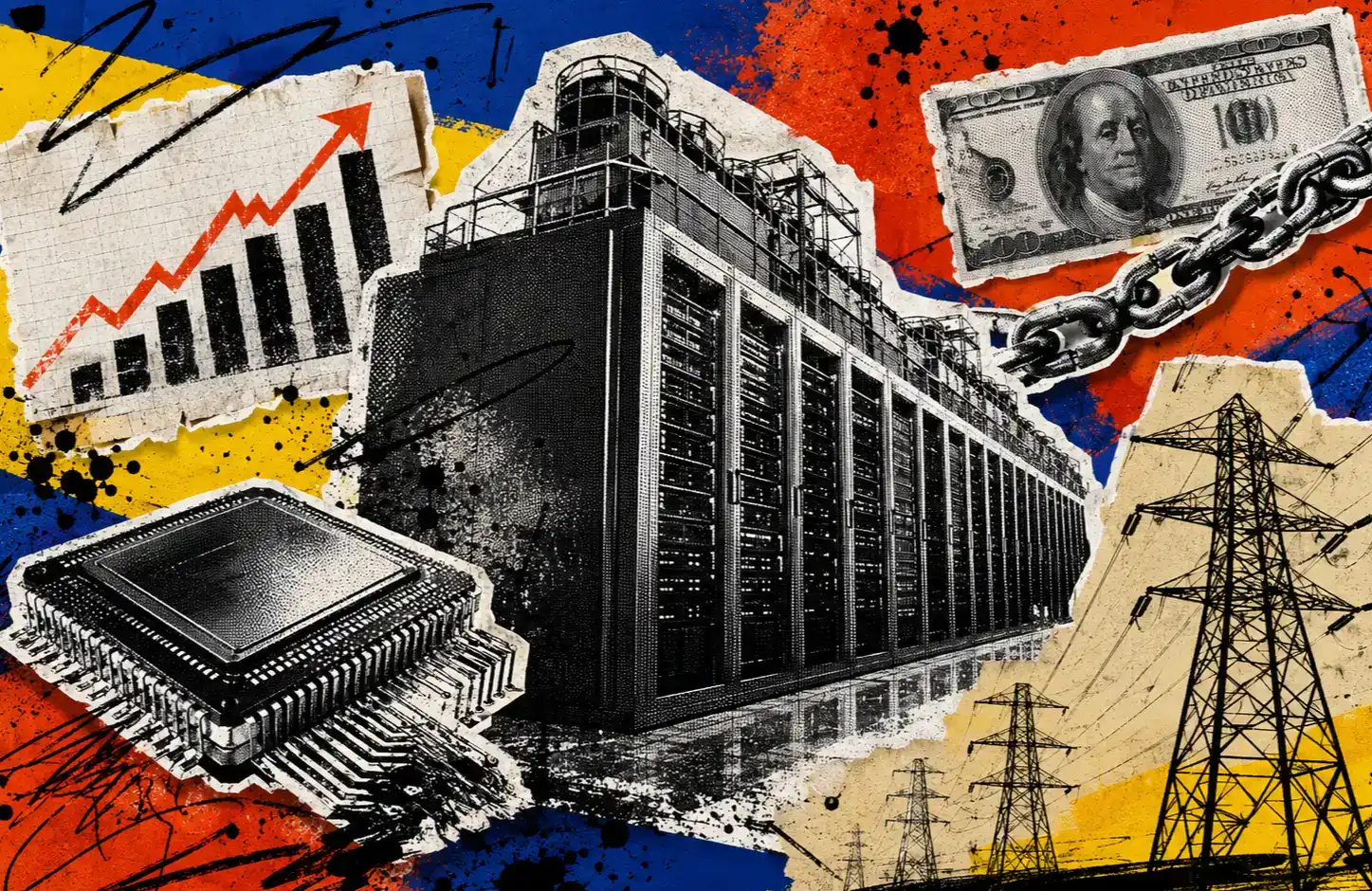
The Trillion-Dollar Valuation Test: Are the Three Super IPOs a Tech Stock Frenzy or a Crypto Market Nightmare?

链捕手Publicado a 2026-06-12Actualizado a 2026-06-12

Resumen

Trillion-Dollar Valuation Test: Are the Three Mega IPOs a Tech Stock Frenzy or a Crypto Market Nightmare? The capital market in 2026 is witnessing a highly anticipated wave of tech IPOs, centered on SpaceX, OpenAI, and Anthropic. Collectively valued at over $3.5 trillion, their potential listing represents one of the largest such waves in recent years. This raises concerns about market liquidity, valuation bubbles, and potential capital outflows from other assets like crypto. SpaceX's valuation narrative has shifted from rocket launches to becoming a global infrastructure play via its Starlink satellite network, which now drives most revenue. Despite ongoing losses, investors focus on its long-term growth potential. OpenAI and Anthropic represent the core productivity engines of generative AI. Their public listings would offer the first direct investment opportunity in large foundation model companies, potentially triggering a repricing within the AI sector. Market fears of a massive "capital drain" from these IPOs are likely overstated. Historical precedents like Alibaba and Saudi Aramco show that mega-listings primarily cause capital reallocation, not destruction, within the vast equities market. Systemic risk is rarely triggered by IPOs alone. For stock markets, short-term volatility and sector repricing are expected, especially for AI concept stocks. Long-term, these listings could reinforce the tech sector's importance. For crypto, direct competition for speculative ...

Original: Wu's Blockchain

TL;DR:

Three tech giants concentrated listing may ignite one of the largest tech IPO waves in recent years: The combined targeted IPO valuation of SpaceX and the latest funding valuations of OpenAI and Anthropic already exceed $3.5 trillion. This not only tests the capital market's pricing ability for innovative technologies but also triggers widespread discussion about its liquidity impact.

SpaceX's valuation logic is shifting from aerospace business to global infrastructure: Market focus has gradually shifted from rocket launches to the global communication network built by Starlink, emphasizing its long-term growth potential and infrastructure attributes.

OpenAI and Anthropic may provide the first large foundational model investment targets for the capital market: Representing the core productivity of generative AI, their listings may prompt a re-pricing of the AI sector and create competition for some AI targets driven by narrative.

The "capital siphoning effect" of super IPOs may be overestimated by the market: Historical experience shows that large IPOs are more about capital reallocation than liquidity disappearance, and they rarely become the direct trigger for systemic risk.

Crypto market faces short-term capital competition but is still primarily driven by its own cycles: Some AI-related tokens may face capital diversion pressure, but the long-term trend of the crypto market still depends more on macro liquidity, regulatory environment, and the Bitcoin cycle.

The real concern is whether high valuations can be justified: If future revenue growth, commercialization progress, or profitability improvement fall below market expectations, the related companies and the tech growth sector may face valuation re-pricing pressure.

The capital market in 2026 is welcoming one of the most closely watched waves of tech IPOs in recent years.

Discussions on Wall Street, Silicon Valley, and in the crypto market are heating up around the listing processes of the three super unicorns: SpaceX, OpenAI, and Anthropic. Based on SpaceX's target IPO valuation and the latest funding valuations of OpenAI and Anthropic, the combined valuation of the three companies exceeds $3.5 trillion. If the listing plans proceed as expected by the market, this could become one of the largest waves of tech company listings in recent years. Specifically, SpaceX's target valuation is around $1.75 trillion, OpenAI's valuation is approximately $852 billion, and Anthropic's valuation is about $965 billion. Notably, Anthropic's current funding valuation is higher than OpenAI's, but this primarily reflects different funding rounds and market pricing expectations, not that its business scale has surpassed OpenAI. Regardless of the final offering price adjustments, this will be one of the largest and most impactful waves of tech company listings in recent years.

Such a massive size naturally raises concerns about liquidity. Some investors believe the listings of the three companies could siphon off significant capital, putting pressure on other growth stocks and even impacting the crypto market. Others worry that the ongoing fervor around AI and space concepts is creating a new asset bubble; if post-listing performance falls short of expectations, it could trigger valuation re-pricing across the entire tech sector and even risk asset markets.

Meanwhile, some view the concern over the "capital siphoning effect" as significantly exaggerated. The total market capitalization of U.S. stocks is already in the tens of trillions, and super IPOs represent more of a capital reallocation than capital disappearance. Historically, whether it was Alibaba or Saudi Aramco, similar discussions arose, but neither ultimately became the trigger for a market crash. So, what's different this time? What do the listings of these three companies truly signify? Do they really have the power to crash the stock and crypto markets?

SpaceX: The Market Is No Longer Buying Rockets, But Global Infrastructure

If one had to choose the most legendary company among the three, SpaceX would undoubtedly be the strongest candidate. From its founding in 2002 to today, Elon Musk has spent over two decades transforming a startup into a core force in the global commercial aerospace industry. For a long time, the outside world's perception of SpaceX was primarily focused on rocket launches and space exploration, but the capital market's valuation logic for it has fundamentally changed.

According to publicly disclosed prospectus documents, the company's 2025 revenue was approximately $18.67 billion. Revenue related to Starlink accounted for about $11.39 billion, representing about 61% of total revenue, making it the company's primary income source. Compared to the rocket launch business, Starlink clearly has greater growth potential. By deploying a low-earth orbit satellite network, Starlink is building a global data communication infrastructure; its business model is closer to an internet platform than a traditional aerospace enterprise. For investors, SpaceX's core value is no longer rockets, but a network platform capable of reaching users globally.

This is also one key reason why some investors are willing to support its approximately $1.75 trillion target IPO valuation. From a valuation logic perspective, to some investors, SpaceX's current valuation logic is closer to an "aerospace Amazon" or "space AWS." The market's focus has gradually shifted from the rocket launch business toward the global communication infrastructure network represented by Starlink. Theoretically, as network deployment matures, the marginal cost for adding new users could decline, while user growth may bring long-term and stable cash flow. Additionally, government contracts, commercial launches, and future commercialization of Starship provide the company with additional growth avenues.

Of course, such a high valuation is not without controversy. According to public information, the company still recorded a net loss of approximately $4.9 billion in 2025. For traditional investors, a company not yet achieving stable profitability receiving a trillion-dollar valuation may seem hard to comprehend. But Wall Street clearly pays more attention to long-term growth capabilities. Both Starlink's expansion and Starship's R&D are typical early-stage, capital-intensive projects. The market is willing to tolerate current profit pressure, provided it believes these investments can translate into larger future market share.

More importantly, SpaceX's listing is not just a corporate financing event; it's also seen as a significant milestone for the commercial aerospace industry. For a long time, the aerospace sector has been considered capital-intensive, with long cycles and limited exit channels. If SpaceX successfully completes its listing, it will significantly enhance the financing capability and valuation level of the entire industry chain, benefiting everyone from satellite manufacturers to ground communication equipment and aerospace material suppliers.

However, precisely because of SpaceX's enormous size, its listing has become a primary source of concern regarding liquidity pressure. According to currently circulating issuance plan estimates, SpaceX could become one of the largest IPOs in history. For large institutional investors, this means they must adjust their holdings in advance to make room for new share subscriptions. Some tech growth stocks, high-valuation AI concept stocks, and even some risk assets could become sources of funds. Therefore, SpaceX has been dubbed a "super capital magnet" in this IPO wave by many analysts.

OpenAI and Anthropic: Two Tickets to the AI Era

If SpaceX represents future infrastructure, then OpenAI and Anthropic represent future productivity.

Over the past three years, generative AI has rapidly evolved from a lab technology into one of the most important investment themes in the global capital market. Starting with the release of ChatGPT, artificial intelligence has nearly reshaped the development logic of the entire tech industry. Whether it's Microsoft, Google, or Amazon, all are engaged in a new round of competition centered on AI. And at the heart of this wave are precisely OpenAI and Anthropic.

OpenAI is widely regarded as one of the primary beneficiaries of this generative AI wave. With ChatGPT, the company transitioned from a research institution to a commercial platform in an extremely short time. API services, enterprise-level solutions, and ecosystem partnerships are driving its rapid revenue growth. Although the company is still in a high-investment phase, investors generally believe OpenAI has the potential to become the next-generation software platform. After completing a new funding round in March 2026, the company's valuation reached approximately $852 billion and it has confidentially filed IPO documents. The market widely speculates that if the IPO proceeds smoothly, its valuation could potentially move closer to the trillion-dollar range, but no official valuation guidance has been disclosed yet.

Compared to OpenAI, Anthropic's development path has been relatively low-key, but its growth rate has similarly attracted market attention. Founded much later than OpenAI, but with the Claude series models and continuous focus on AI safety and reliability, the company quickly gained recognition from enterprise clients. According to the latest funding round disclosure, Anthropic's valuation reached about $965 billion, higher than OpenAI's current funding valuation of around $852 billion. Meanwhile, the company has also confidentially filed IPO documents. For many institutional investors, Anthropic represents a different AI development path — one that places greater emphasis on enterprise scenarios, risk control, and long-term governance structure.

From a capital market perspective, the listings of OpenAI and Anthropic hold significance far beyond the two companies themselves. Over the past few years, the AI concept has nearly dominated the global tech stock valuation system, but investable pure-play AI leaders have been very limited. Nvidia is more of a computing power provider, while Microsoft and Google are comprehensive tech platforms. OpenAI and Anthropic are among the few companies that can directly represent the value of the large model industry.

This means that once the two companies go public, global capital will have the first opportunity to directly invest in large foundational model companies. For many institutions, this attraction might even surpass that of some traditional tech giants. It is precisely for this reason that many investors have begun to worry: when capital concentrates towards AI leaders, will other tech assets and even the crypto market experience significant diversion?

Why Is the Market Worried the Three IPOs Will "Drain" Market Liquidity?

In fact, whenever super IPOs emerge in the market, similar concerns resurface.

The underlying logic isn't complex. An IPO is essentially the delivery of new stock supply from the primary to the secondary market, and the funds used by institutional investors to participate in subscriptions aren't created out of thin air. For large pension funds, mutual funds, sovereign wealth funds, and hedge funds, participating in a new share offering often means needing to free up capital from existing investment portfolios. Therefore, when multiple super-large IPOs appear simultaneously in the market, the phenomenon of capital flowing from other assets towards new shares is almost inevitable.

From this perspective, SpaceX, OpenAI, and Anthropic indeed possess the conditions to create a "siphoning effect." Based on current market expectations, the combined valuation scale of the three companies exceeds $3.5 trillion. Even if the actual circulating share proportion is far lower than this figure, it's still enough to become one of the most significant capital allocation directions in the global capital market. For many institutions that are long-term bullish on AI and tech innovation, participating in these IPOs isn't just an investment opportunity but a strategic allocation.

The market's primary concern isn't the IPO itself, but rather where the capital might flow from. If institutional investors choose to reduce holdings in existing tech stocks to participate in subscriptions, then some growth sectors may face pressure in the short term. If the source of funds extends further to high-risk assets, then some crypto assets could also be affected. Therefore, whenever a large IPO approaches, discussions about "liquidity drain" emerge in the market.

However, the problem is that theoretical capital diversion does not equate to a market crash.

The total market capitalization of U.S.-listed stocks is close to $80 trillion, with daily trading volumes also at considerable levels. Even if all three companies eventually complete their listings, the proportion of shares actually entering market circulation remains limited. Historical experience shows that what truly determines market direction is never new stock supply, but the overall liquidity environment. When the market is in an easing cycle, even super-large IPOs can often be quickly absorbed; when the market is in a tightening cycle, even without IPOs, the market may still correct due to economic slowdown or rising rates.

In other words, a super IPO is more like an amplifier, not a root cause. If the market itself is fragile, then a large IPO might exacerbate volatility; but if market liquidity is abundant and risk appetite is high, IPOs are often just part of capital rotation.

What Does History Tell Us?

Looking back at the capital market over the past twenty years, large IPOs attracting attention is not uncommon, but cases truly leading to systemic risk are extremely rare.

In 2014, when Alibaba listed on the NYSE, its fundraising scale set a global record at the time. The market similarly worried that massive fundraising would impact U.S. stocks. However, facts proved that Alibaba's listing primarily attracted global capital's attention to China's internet sector and did not change the overall trend of the U.S. stock market. In the following years, U.S. stocks continued their bull market pattern.

In 2019, Saudi Aramco completed nearly $30 billion in fundraising, again setting a new global IPO record. Considering the slowing global economic growth and rising geopolitical risks at the time, many analysts believed such massive financing needs could affect market liquidity. But the ultimate result again proved that the market's capacity to absorb super IPOs far exceeded expectations.

Even Arm's listing, which has garnered much attention in recent years, did not have a decisive impact on the overall trend of tech stocks. Short-term volatility indeed existed but was more reflected as capital reallocation within the industry rather than the disappearance of liquidity across the entire market.

The fundamental reason for this phenomenon is that the capital market is not a fixed-capacity pool. The listing of high-quality assets often attracts new capital into the market, not just siphoning capital from old assets. Especially for global institutional investors, when truly scarce targets emerge, it's often accompanied by new allocation demands, not just internal reshuffling.

Therefore, based on historical experience, market volatility brought by SpaceX, OpenAI, and Anthropic would not be surprising, but equating it directly with a market crash lacks sufficient basis.

Impact on the Stock Market: Short-term Volatility Unavoidable, Long-term More Like a Valuation Recalibration

If there's one market most directly affected by the three IPOs, the answer is undoubtedly tech stocks.

Over the past few years, AI has become one of the strongest investment themes in the global capital market. From Nvidia to cloud computing, data centers to software services, many companies have received valuation premiums due to their AI relevance. However, companies truly representing the value creation of large models have not entered the public market. The emergence of OpenAI and Anthropic means investors will have the first opportunity to directly invest in core AI assets.

This change will likely lead to a repricing within the AI sector.

Companies reliant on narrative-driven concepts may face shrinking valuation premiums because investors finally have purer AI targets. Meanwhile, companies that truly benefit from AI infrastructure expansion, such as computing power suppliers, data center operators, and enterprise software platforms, may continue to receive capital support.

The impact brought by SpaceX is different. For satellite communication, commercial aerospace, and related infrastructure enterprises, SpaceX's listing will become a new industry valuation anchor. The market will have its first publicly traded commercial aerospace leader as a reference, potentially prompting a repricing across the entire industry chain.

From a long-term perspective, the listing of the three companies is more likely to reinforce the importance of the tech sector rather than weaken it. Over time, once they meet relevant criteria and are included in major indices, numerous ETFs and index funds will passively allocate to these companies. At that point, the scale of global capital inflows might even surpass the IPO stage itself.

Therefore, for the stock market, what truly deserves attention isn't the performance on IPO day, but whether these companies can fulfill the growth expectations granted by the market in the coming years.

Impact on the Crypto Market: Competition Exists, But Not Necessarily a Negative

Compared to the stock market, the crypto market is more sensitive to changes in capital flow, hence discussions are more intense.

Over the past few years, AI and Crypto have been two of the main focuses for venture capital. Some venture capital funds and growth capital have deployed in both AI and Crypto sectors, with significant overlap in funding sources. When OpenAI and Anthropic formally enter the public market, it's highly likely that a portion of institutional capital will shift towards AI assets.

For some AI-themed tokens, this competition might be particularly noticeable.

Before AI companies went public, many investors chose AI-related tokens to express optimism about the AI industry. But when OpenAI or Anthropic become publicly traded assets, investors will naturally ponder: if they can directly hold the most core companies in the AI industry, is there still a need to bear the higher volatility and risk of some concept tokens?

From this perspective, some narrative-driven AI tokens, VC concept projects, and crypto assets lacking real revenue support might indeed face capital diversion pressure.

However, extrapolating this pressure to a "crypto market crash" similarly lacks basis.

Bitcoin and the entire crypto market have gradually formed relatively independent operating logic. ETF fund flows, regulatory environment, global monetary policy, and Bitcoin's own cycles typically have a more decisive impact than a single IPO event. Historically, U.S. stocks and the crypto market have experienced both synchronized rises and clear divergences; it's difficult to explain their movements with a single event.

More importantly, AI and blockchain are not entirely competitive. As AI application scale continues to expand, decentralized computing networks, on-chain data markets, AI Agent infrastructure, and other directions might instead gain new development opportunities. In the long run, the prosperity of the AI industry might not weaken Crypto, but could create new convergence scenarios.

The Real Thing to Fear Isn't the IPO, But Valuation Expectations

If there is real risk in the three IPOs, it doesn't come from the listing itself, but from market expectations about future growth.

Whether it's SpaceX, OpenAI, or Anthropic, their current valuations are already based on extremely optimistic future assumptions. Investors are willing to grant trillion-dollar valuations because they believe these companies can become the world's most important infrastructure platforms in the future. If revenue growth slows, commercialization progresses slower than expected, or profitability improves at a pace below market expectations, then valuation re-pricing will be inevitable.

This risk will first impact not the entire market, but the AI sector and high-growth tech stocks. The higher the market's expectations for the future, the larger the adjustment tends to be once reality falls short of expectations.

From this perspective, what the market truly needs to focus on is not the IPO itself, but the ability to deliver performance post-IPO.

Conclusion

The listings of SpaceX, OpenAI, and Anthropic are more like a centralized pricing by the global capital market for next-generation tech infrastructure and AI platforms, rather than a precursor to a market crash. In the short term, capital diversion, sector rotation, and valuation re-pricing are almost inevitable; some AI concept stocks and crypto assets may also face competitive pressure. But historical experience shows that super IPOs rarely become the direct trigger for systemic risk and are even less capable of independently determining the long-term direction of stock or crypto markets.

What truly determines market trends are still the macro liquidity environment, corporate profitability, and investor risk appetite. For investors, rather than worrying whether the three IPOs will crash the market, it's better to focus on whether the growth logic behind these trillion-dollar valuations can ultimately be realized. After all, the capital market is never afraid of grand dreams; what truly hurts the market is unfulfilled expectations.

Preguntas relacionadas

QWhat is the combined estimated valuation of SpaceX, OpenAI, and Anthropic as mentioned in the article, and what broader trend does their potential IPO wave represent?

AThe combined estimated valuation of SpaceX, OpenAI, and Anthropic is over $3.5 trillion. Their potential IPOs represent one of the largest waves of tech listings in recent years, acting as a major test for the capital market's ability to price innovative technologies.

QAccording to the article, how has the valuation logic for SpaceX shifted from its early days?

ASpaceX's valuation logic has shifted from being focused on rocket launches and space exploration to being centered on its global communications infrastructure, specifically the Starlink satellite network. Investors now view it more as a 'space-based Amazon' or 'space-based AWS' with long-term growth potential.

QWhy might the IPOs of OpenAI and Anthropic be particularly significant for the AI investment landscape?

AThe IPOs of OpenAI and Anthropic are significant because they would provide the first opportunities for public market investors to directly invest in large-scale foundational AI model companies. This could lead to a repricing within the AI sector and create competition for other AI-related investment vehicles.

QDoes the article suggest that the 'funding siphoning effect' of these mega-IPOs is a major systemic risk? Why or why not?

ANo, the article suggests the 'funding siphoning effect' is often overestimated. Historical examples like Alibaba and Saudi Aramco show that while mega-IPOs cause capital reallocation and short-term volatility, they rarely directly trigger systemic market crashes. Market trends are more dependent on overall macro liquidity, corporate earnings, and risk appetite.

QWhat is identified as the primary long-term risk associated with the high valuations of these three companies?

AThe primary long-term risk is not the IPO process itself, but whether the companies can live up to the high growth expectations embedded in their valuations. If their revenue growth, commercialization progress, or profitability improvements fall short of market expectations, they and related high-growth tech/AI stocks could face significant valuation repricing pressure.

Lecturas Relacionadas

NEAR to Airdrop 330,000 Tokens, Betting on TVL Reaching $70 Million

On June 11th, NEAR Protocol launched the Near@3.33 Milestone Incentive Program, targeting users of its Confidential Intents privacy cross-chain execution feature. The program will distribute 333,333 milestone tokens when the Confidential Intents Total Value Locked (TVL) reaches $70 million. Users must have conducted Confidential transactions on near.com and maintain a Confidential balance above $100 in any asset to qualify, with a single wallet capped at 2% of the current airdrop pool. The milestone tokens will be locked upon receipt and cannot be sold or transferred. They can only be converted 1:1 to NEAR tokens once NEAR's Volume Weighted Average Price (VWAP) maintains $3.33 or higher for three consecutive trading days. As of the report, Confidential Intents TVL exceeds $20.69 million, needing roughly a 3x increase to trigger the airdrop. Confidential Intents, launched in February 2026, is NEAR's privacy execution layer designed to prevent MEV, front-running, and strategy leaks by building confidentiality directly into the execution environment. Its TVL has grown from zero to approximately $15 million in about three months. NEAR token price, which surged from around $1 in April to a peak of $3.08, currently trades near $2. The program aims to boost user activity for Confidential Intents, with future incentive rounds planned as community engagement increases.

Foresight NewsHace 18 min(s)

NEAR to Airdrop 330,000 Tokens, Betting on TVL Reaching $70 Million

Foresight NewsHace 18 min(s)

Crypto Market Makers Are Collectively Seeking Change as Money Becomes Harder to Earn

**Summary: Crypto Market Makers Adapt as Margins Shrink** Leading crypto market maker GSR exemplifies a broader industry shift, moving beyond traditional market-making to become a full-service "Web3 investment bank." Its recent strategic acquisitions—including an SEC-registered broker-dealer, rebranded as GSR Securities—and purchases of token advisory firms aim to create an integrated platform covering token design, fundraising, listing, liquidity provision, and asset management. This includes launching an ETF and investing in tokenization platforms like Libeara, backed by a strategic investment from Standard Chartered's SC Ventures. This transformation is not unique to GSR. Other major players like Keyrock, B2C2, Wintermute, and DWF Labs are also expanding geographically, pursuing regulatory licenses (especially under frameworks like MiCA in the EU), and diversifying into over-the-counter (OTC) trading, asset management, and real-world asset tokenization. The driving force behind this collective pivot is a rapidly changing market. Profits from traditional altcoin market-making are declining due to fewer viable projects, reduced client budgets, increased competition, and smarter, more demanding clients. Simultaneously, regulatory pressures are mounting, making compliance a baseline cost. Extreme market events further expose teams lacking robust risk controls. Consequently, the crypto market-making business model is evolving from one reliant on information asymmetry and volatility to a more institutionalized, regulated, and service-diverse industry. Survival now depends on building systemic capabilities beyond mere liquidity provision.

marsbitHace 23 min(s)

Crypto Market Makers Are Collectively Seeking Change as Money Becomes Harder to Earn

marsbitHace 23 min(s)

Market Adjusts Following Google's $84.7 Billion Fundraising, AI Valuations Now Focus on Payback Speed

After Alphabet's announcement of an $84.75 billion equity financing round, market focus for AI investment is shifting from pure growth narratives to capital efficiency and payback periods. The core argument is that AI is being re-priced from a software-like growth story into a heavy-asset infrastructure cycle, requiring massive capital expenditure (CapEx) on chips, data centers, and power grids. While Alphabet's financing itself is not a distress signal—part of it is for administrative purposes like tax obligations on stock compensation—it highlights the enormous capital demands of AI infrastructure. This demand extends beyond tech giants to pure-play AI model companies (like OpenAI, Anthropic), data center REITs, and utilities. Major tech firms are projected to spend heavily on AI data centers in 2026, signaling a broad-based capital cycle the market must absorb. Consequently, valuation logic is changing. Investors are moving away from questions about who has the strongest AI narrative and are now prioritizing clear visibility into orders, stable cash flows, and the cost of capital. This has led to recent pressure on high-multiple AI software and semiconductor stocks, while "picks-and-shovels" hardware, data center, and power assets with firmer near-term demand may see relative support. The key going forward will be monitoring whether rising CapEx guidance across companies is matched by a timely monetization of AI investments into revenue and cash flow. The market's tolerance for high spending depends on demonstrable returns. While the long-term AI thesis remains intact, the valuation framework has fundamentally shifted to emphasize capital discipline and payback speed.

marsbitHace 30 min(s)

Market Adjusts Following Google's $84.7 Billion Fundraising, AI Valuations Now Focus on Payback Speed

marsbitHace 30 min(s)

Trading

Spot
Futuros

Artículos destacados

Qué es $S$

Entendiendo SPERO: Una Visión General Completa Introducción a SPERO A medida que el panorama de la innovación continúa evolucionando, la aparición de tecnologías web3 y proyectos de criptomonedas juega un papel fundamental en la configuración del futuro digital. Un proyecto que ha atraído la atención en este campo dinámico es SPERO, denotado como SPERO,$$s$. Este artículo tiene como objetivo reunir y presentar información detallada sobre SPERO, para ayudar a entusiastas e inversores a comprender sus fundamentos, objetivos e innovaciones dentro de los dominios web3 y cripto. ¿Qué es SPERO,$$s$? SPERO,$$s$ es un proyecto único dentro del espacio cripto que busca aprovechar los principios de descentralización y tecnología blockchain para crear un ecosistema que promueva la participación, la utilidad y la inclusión financiera. El proyecto está diseñado para facilitar interacciones de igual a igual de nuevas maneras, proporcionando a los usuarios soluciones y servicios financieros innovadores. En su esencia, SPERO,$$s$ tiene como objetivo empoderar a los individuos al proporcionar herramientas y plataformas que mejoren la experiencia del usuario en el espacio de las criptomonedas. Esto incluye habilitar métodos de transacción más flexibles, fomentar iniciativas impulsadas por la comunidad y crear caminos para oportunidades financieras a través de aplicaciones descentralizadas (dApps). La visión subyacente de SPERO,$$s$ gira en torno a la inclusividad, buscando cerrar brechas dentro de las finanzas tradicionales mientras aprovecha los beneficios de la tecnología blockchain. ¿Quién es el Creador de SPERO,$$s$? La identidad del creador de SPERO,$$s$ sigue siendo algo oscura, ya que hay recursos públicos limitados que proporcionan información de fondo detallada sobre su(s) fundador(es). Esta falta de transparencia puede derivarse del compromiso del proyecto con la descentralización, una ética que muchos proyectos web3 comparten, priorizando las contribuciones colectivas sobre el reconocimiento individual. Al centrar las discusiones en torno a la comunidad y sus objetivos colectivos, SPERO,$$s$ encarna la esencia del empoderamiento sin señalar a individuos específicos. Como tal, comprender la ética y la misión de SPERO sigue siendo más importante que identificar a un creador singular. ¿Quiénes son los Inversores de SPERO,$$s$? SPERO,$$s$ cuenta con el apoyo de una diversa gama de inversores que van desde capitalistas de riesgo hasta inversores ángeles dedicados a fomentar la innovación en el sector cripto. El enfoque de estos inversores generalmente se alinea con la misión de SPERO, priorizando proyectos que prometen avances tecnológicos sociales, inclusión financiera y gobernanza descentralizada. Estas fundaciones de inversores suelen estar interesadas en proyectos que no solo ofrecen productos innovadores, sino que también contribuyen positivamente a la comunidad blockchain y sus ecosistemas. El respaldo de estos inversores refuerza a SPERO,$$s$ como un contendiente notable en el dominio de proyectos cripto que evoluciona rápidamente. ¿Cómo Funciona SPERO,$$s$? SPERO,$$s$ emplea un marco multifacético que lo distingue de los proyectos de criptomonedas convencionales. Aquí hay algunas de las características clave que subrayan su singularidad e innovación: Gobernanza Descentralizada: SPERO,$$s$ integra modelos de gobernanza descentralizada, empoderando a los usuarios para participar activamente en los procesos de toma de decisiones sobre el futuro del proyecto. Este enfoque fomenta un sentido de propiedad y responsabilidad entre los miembros de la comunidad. Utilidad del Token: SPERO,$$s$ utiliza su propio token de criptomoneda, diseñado para servir diversas funciones dentro del ecosistema. Estos tokens permiten transacciones, recompensas y la facilitación de servicios ofrecidos en la plataforma, mejorando la participación y la utilidad general. Arquitectura en Capas: La arquitectura técnica de SPERO,$$s$ apoya la modularidad y escalabilidad, permitiendo la integración fluida de características y aplicaciones adicionales a medida que el proyecto evoluciona. Esta adaptabilidad es fundamental para mantener la relevancia en el cambiante paisaje cripto. Participación de la Comunidad: El proyecto enfatiza iniciativas impulsadas por la comunidad, empleando mecanismos que incentivan la colaboración y la retroalimentación. Al nutrir una comunidad sólida, SPERO,$$s$ puede abordar mejor las necesidades de los usuarios y adaptarse a las tendencias del mercado. Enfoque en la Inclusión: Al ofrecer tarifas de transacción bajas e interfaces amigables para el usuario, SPERO,$$s$ busca atraer a una base de usuarios diversa, incluyendo a individuos que anteriormente pueden no haber participado en el espacio cripto. Este compromiso con la inclusión se alinea con su misión general de empoderamiento a través de la accesibilidad. Cronología de SPERO,$$s$ Entender la historia de un proyecto proporciona información crucial sobre su trayectoria de desarrollo y hitos. A continuación se presenta una cronología sugerida que mapea eventos significativos en la evolución de SPERO,$$s$: Fase de Conceptualización e Ideación: Las ideas iniciales que forman la base de SPERO,$$s$ fueron concebidas, alineándose estrechamente con los principios de descentralización y enfoque comunitario dentro de la industria blockchain. Lanzamiento del Whitepaper del Proyecto: Tras la fase conceptual, se lanzó un whitepaper completo que detalla la visión, los objetivos y la infraestructura tecnológica de SPERO,$$s$ para generar interés y retroalimentación de la comunidad. Construcción de Comunidad y Primeras Interacciones: Se realizaron esfuerzos de divulgación activa para construir una comunidad de primeros adoptantes y posibles inversores, facilitando discusiones en torno a los objetivos del proyecto y obteniendo apoyo. Evento de Generación de Tokens: SPERO,$$s$ llevó a cabo un evento de generación de tokens (TGE) para distribuir sus tokens nativos a los primeros seguidores y establecer liquidez inicial dentro del ecosistema. Lanzamiento de la dApp Inicial: La primera aplicación descentralizada (dApp) asociada con SPERO,$$s$ se puso en marcha, permitiendo a los usuarios interactuar con las funcionalidades centrales de la plataforma. Desarrollo Continuo y Alianzas: Actualizaciones y mejoras continuas a las ofertas del proyecto, incluyendo alianzas estratégicas con otros actores en el espacio blockchain, han moldeado a SPERO,$$s$ en un jugador competitivo y en evolución en el mercado cripto. Conclusión SPERO,$$s$ se erige como un testimonio del potencial de web3 y las criptomonedas para revolucionar los sistemas financieros y empoderar a los individuos. Con un compromiso con la gobernanza descentralizada, la participación comunitaria y funcionalidades diseñadas de manera innovadora, allana el camino hacia un paisaje financiero más inclusivo. Como con cualquier inversión en el espacio cripto que evoluciona rápidamente, se anima a los posibles inversores y usuarios a investigar a fondo y participar de manera reflexiva con los desarrollos en curso dentro de SPERO,$$s$. El proyecto muestra el espíritu innovador de la industria cripto, invitando a una mayor exploración de sus innumerables posibilidades. Mientras el viaje de SPERO,$$s$ aún se desarrolla, sus principios fundamentales pueden, de hecho, influir en el futuro de cómo interactuamos con la tecnología, las finanzas y entre nosotros en ecosistemas digitales interconectados.

72 Vistas totalesPublicado en 2024.12.17Actualizado en 2024.12.17

Qué es $S$

Qué es AGENT S

Agent S: El Futuro de la Interacción Autónoma en Web3 Introducción En el paisaje en constante evolución de Web3 y las criptomonedas, las innovaciones están redefiniendo constantemente cómo los individuos interactúan con las plataformas digitales. Uno de estos proyectos pioneros, Agent S, promete revolucionar la interacción humano-computadora a través de su marco agente abierto. Al allanar el camino para interacciones autónomas, Agent S busca simplificar tareas complejas, ofreciendo aplicaciones transformadoras en inteligencia artificial (IA). Esta exploración detallada profundizará en las complejidades del proyecto, sus características únicas y las implicaciones para el dominio de las criptomonedas. ¿Qué es Agent S? Agent S se presenta como un marco agente abierto innovador, diseñado específicamente para abordar tres desafíos fundamentales en la automatización de tareas informáticas: Adquisición de Conocimiento Específico del Dominio: El marco aprende inteligentemente de diversas fuentes de conocimiento externas y experiencias internas. Este enfoque dual le permite construir un rico repositorio de conocimiento específico del dominio, mejorando su rendimiento en la ejecución de tareas. Planificación a Largo Plazo de Tareas: Agent S emplea planificación jerárquica aumentada por la experiencia, un enfoque estratégico que facilita la descomposición y ejecución eficiente de tareas complejas. Esta característica mejora significativamente su capacidad para gestionar múltiples subtareas de manera eficiente y efectiva. Manejo de Interfaces Dinámicas y No Uniformes: El proyecto introduce la Interfaz Agente-Computadora (ACI), una solución innovadora que mejora la interacción entre agentes y usuarios. Utilizando Modelos de Lenguaje Multimodal de Gran Escala (MLLMs), Agent S puede navegar y manipular diversas interfaces gráficas de usuario sin problemas. A través de estas características pioneras, Agent S proporciona un marco robusto que aborda las complejidades involucradas en la automatización de la interacción humana con las máquinas, preparando el terreno para una multitud de aplicaciones en IA y más allá. ¿Quién es el Creador de Agent S? Si bien el concepto de Agent S es fundamentalmente innovador, la información específica sobre su creador sigue siendo elusiva. El creador es actualmente desconocido, lo que resalta ya sea la etapa incipiente del proyecto o la elección estratégica de mantener a los miembros fundadores en el anonimato. Independientemente de la anonimidad, el enfoque sigue siendo en las capacidades y el potencial del marco. ¿Quiénes son los Inversores de Agent S? Dado que Agent S es relativamente nuevo en el ecosistema criptográfico, la información detallada sobre sus inversores y patrocinadores financieros no está documentada explícitamente. La falta de información disponible públicamente sobre las bases de inversión u organizaciones que apoyan el proyecto plantea preguntas sobre su estructura de financiamiento y hoja de ruta de desarrollo. Comprender el respaldo es crucial para evaluar la sostenibilidad del proyecto y su posible impacto en el mercado. ¿Cómo Funciona Agent S? En el núcleo de Agent S se encuentra una tecnología de vanguardia que le permite funcionar de manera efectiva en diversos entornos. Su modelo operativo se basa en varias características clave: Interacción Humano-Computadora Similar a la Humana: El marco ofrece planificación avanzada de IA, esforzándose por hacer que las interacciones con las computadoras sean más intuitivas. Al imitar el comportamiento humano en la ejecución de tareas, promete elevar las experiencias de los usuarios. Memoria Narrativa: Empleada para aprovechar experiencias de alto nivel, Agent S utiliza memoria narrativa para hacer un seguimiento de las historias de tareas, mejorando así sus procesos de toma de decisiones. Memoria Episódica: Esta característica proporciona a los usuarios una guía paso a paso, permitiendo que el marco ofrezca apoyo contextual a medida que se desarrollan las tareas. Soporte para OpenACI: Con la capacidad de ejecutarse localmente, Agent S permite a los usuarios mantener el control sobre sus interacciones y flujos de trabajo, alineándose con la ética descentralizada de Web3. Fácil Integración con APIs Externas: Su versatilidad y compatibilidad con varias plataformas de IA aseguran que Agent S pueda encajar sin problemas en ecosistemas tecnológicos existentes, convirtiéndolo en una opción atractiva para desarrolladores y organizaciones. Estas funcionalidades contribuyen colectivamente a la posición única de Agent S dentro del espacio cripto, ya que automatiza tareas complejas y de múltiples pasos con una intervención humana mínima. A medida que el proyecto evoluciona, sus posibles aplicaciones en Web3 podrían redefinir cómo se desarrollan las interacciones digitales. Cronología de Agent S El desarrollo y los hitos de Agent S pueden encapsularse en una cronología que resalta sus eventos significativos: 27 de septiembre de 2024: El concepto de Agent S fue lanzado en un documento de investigación integral titulado “Un Marco Agente Abierto que Usa Computadoras Como un Humano”, mostrando las bases del proyecto. 10 de octubre de 2024: El documento de investigación fue puesto a disposición del público en arXiv, ofreciendo una exploración profunda del marco y su evaluación de rendimiento basada en el benchmark OSWorld. 12 de octubre de 2024: Se lanzó una presentación en video, proporcionando una visión visual de las capacidades y características de Agent S, involucrando aún más a posibles usuarios e inversores. Estos marcadores en la cronología no solo ilustran el progreso de Agent S, sino que también indican su compromiso con la transparencia y la participación comunitaria. Puntos Clave Sobre Agent S A medida que el marco Agent S continúa evolucionando, varios atributos clave destacan, subrayando su naturaleza innovadora y potencial: Marco Innovador: Diseñado para proporcionar un uso intuitivo de las computadoras similar a la interacción humana, Agent S aporta un enfoque novedoso a la automatización de tareas. Interacción Autónoma: La capacidad de interactuar de manera autónoma con las computadoras a través de GUI significa un salto hacia soluciones informáticas más inteligentes y eficientes. Automatización de Tareas Complejas: Con su metodología robusta, puede automatizar tareas complejas y de múltiples pasos, haciendo que los procesos sean más rápidos y menos propensos a errores. Mejora Continua: Los mecanismos de aprendizaje permiten a Agent S mejorar a partir de experiencias pasadas, mejorando continuamente su rendimiento y eficacia. Versatilidad: Su adaptabilidad en diferentes entornos operativos como OSWorld y WindowsAgentArena asegura que pueda servir a una amplia gama de aplicaciones. A medida que Agent S se posiciona en el paisaje de Web3 y criptomonedas, su potencial para mejorar las capacidades de interacción y automatizar procesos significa un avance significativo en las tecnologías de IA. A través de su marco innovador, Agent S ejemplifica el futuro de las interacciones digitales, prometiendo una experiencia más fluida y eficiente para los usuarios en diversas industrias. Conclusión Agent S representa un audaz avance en la unión de la IA y Web3, con la capacidad de redefinir cómo interactuamos con la tecnología. Aunque aún se encuentra en sus primeras etapas, las posibilidades para su aplicación son vastas y atractivas. A través de su marco integral que aborda desafíos críticos, Agent S busca llevar las interacciones autónomas al primer plano de la experiencia digital. A medida que nos adentramos más en los reinos de las criptomonedas y la descentralización, proyectos como Agent S sin duda desempeñarán un papel crucial en la configuración del futuro de la tecnología y la colaboración humano-computadora.

484 Vistas totalesPublicado en 2025.01.14Actualizado en 2025.01.14

Qué es AGENT S

Cómo comprar S

¡Bienvenido a HTX.com! Hemos hecho que comprar Sonic (S) sea simple y conveniente. Sigue nuestra guía paso a paso para iniciar tu viaje de criptos.Paso 1: crea tu cuenta HTXUtiliza tu correo electrónico o número de teléfono para registrarte y obtener una cuenta gratuita en HTX. Experimenta un proceso de registro sin complicaciones y desbloquea todas las funciones.Obtener mi cuentaPaso 2: ve a Comprar cripto y elige tu método de pagoTarjeta de crédito/débito: usa tu Visa o Mastercard para comprar Sonic (S) al instante.Saldo: utiliza fondos del saldo de tu cuenta HTX para tradear sin problemas.Terceros: hemos agregado métodos de pago populares como Google Pay y Apple Pay para mejorar la comodidad.P2P: tradear directamente con otros usuarios en HTX.Over-the-Counter (OTC): ofrecemos servicios personalizados y tipos de cambio competitivos para los traders.Paso 3: guarda tu Sonic (S)Después de comprar tu Sonic (S), guárdalo en tu cuenta HTX. Alternativamente, puedes enviarlo a otro lugar mediante transferencia blockchain o utilizarlo para tradear otras criptomonedas.Paso 4: tradear Sonic (S)Tradear fácilmente con Sonic (S) en HTX's mercado spot. Simplemente accede a tu cuenta, selecciona tu par de trading, ejecuta tus trades y monitorea en tiempo real. Ofrecemos una experiencia fácil de usar tanto para principiantes como para traders experimentados.

976 Vistas totalesPublicado en 2025.01.15Actualizado en 2026.06.02

Cómo comprar S

Discusiones

Bienvenido a la comunidad de HTX. Aquí puedes mantenerte informado sobre los últimos desarrollos de la plataforma y acceder a análisis profesionales del mercado. A continuación se presentan las opiniones de los usuarios sobre el precio de S (S).

活动图片