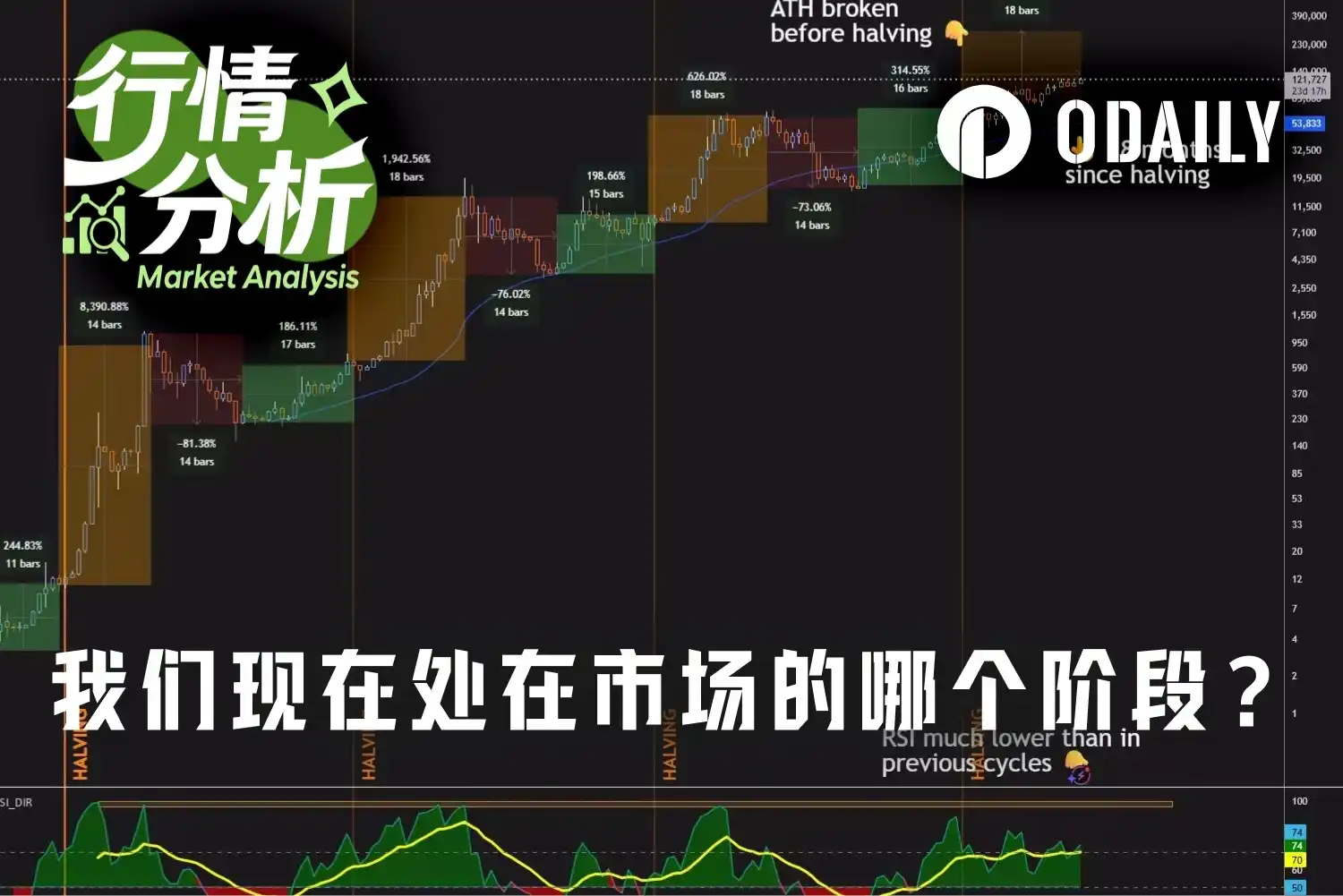
Giải Mã Dữ Liệu Chu Kỳ Bitcoin: Ba Tín Hiệu Đáy Đồng Loạt Sáng, Quý 4 Có Thể Là Cửa Sổ Chuyển Mình Then Chốt?

marsbitPublicado a 2026-06-16Actualizado a 2026-06-16

Resumen

Tác giả phân tích vị trí hiện tại của Bitcoin trong chu kỳ thị trường thông qua dữ liệu và tín hiệu chuỗi. Từ đỉnh lịch sử 126.198 USD vào tháng 10/2025, BTC đã điều chỉnh hơn 52%, nhưng mức sụt giảm này vẫn nhẹ hơn so với các đợt bear market trước (77%-86%). Dựa trên mô hình chu kỳ giảm một nửa phần thưởng, đỉnh năm 2025 xuất hiện đúng 18 tháng sau lần giảm một nửa năm 2024, phù hợp với lịch sử. Theo quy luật, đáy thường hình thành khoảng 12-14 tháng sau đỉnh, dự kiến vào quý 4/2026 - trùng khớp với khung thời gian 17 tháng trước lần giảm một nửa tiếp theo (2028). Ba chỉ số on-chain đồng loạt cho thấy tín hiệu định giá ở vùng thấp: MVRV Z-Score (~0.27), giá thực hiện toàn mạng (~53.600 USD) và đường trung bình 200 tuần (~62.200 USD). Dòng tiền cho thấy sự phân hóa: ETF Mỹ chứng kiến dòng ròng rút lớn, trong khi cá voi (ví >100 BTC) tiếp tục tích lũy mạnh. Yếu tố vĩ mô tiêu cực chính là xung đột Iran đã được gỡ bỏ một nửa sau thỏa thuận ngừng bắn, giúp giảm áp lực lạm phát và kỳ vọng lãi suất, BTC đã phản ứng tăng mạnh. Tác giả kết luận rằng khu vực giá hiện tại, bất chấp sự thiếu vắng niềm tin, đang thể hiện nhiều đặc điểm của vùng tích lũy với tỷ lệ rủi ro/lợi nhuận hấp dẫn hơn, đặc biệt khi xét đến cấu trúc thị trường dài hạn đã thay đổi với sự tham gia của ETF và các tổ chức.

Tác giả|jk

Vào tháng 10 năm ngoái, khi Bitcoin (BTC) phá vỡ ngưỡng 120 nghìn USD, vô số người đã chụp màn hình biểu đồ và đăng lên Facebook, dòng chú thích hiển thị rõ ràng "Nhân chứng lịch sử". Chỉ tám tháng sau, cùng một nhóm người đó lại dán mắt vào mức giá 59.100 USD, dòng chữ trên Facebook đã đổi thành "Liệu nó sẽ còn giảm nữa không?".

Từ đỉnh cao 126.198 USD đến mức thấp 59.100 USD, mức giảm của BTC vượt quá 52%; Đầu tháng 6, chỉ số Sợ hãi và Tham lam của thị trường tiền mã hóa giảm xuống mức 8, mức thấp nhất kể từ năm 2022.

Liệu mua vào lúc này là can đảm mua đáy, hay là chấp nhận gánh chịu thay?

Năm 2018, người ta nói rằng BTC cuối cùng sẽ về 0; Năm 2022, họ nói ngành công nghiệp tiền mã hóa đã hoàn toàn sụp đổ sau khi FTX sụp đổ; Đến năm 2026, luận điệu đã đổi thành "chu kỳ bốn năm đã mất hiệu lực", "các tổ chức lớn vào chỉ để bán tháo", "thời đại lãi suất cao, tài sản rủi ro hoàn toàn không có lối thoát". Mỗi lần như vậy, những câu chuyện này nghe có vẻ không thể nghi ngờ nhất khi giá ở mức thấp nhất.

Tuy nhiên, câu chuyện là thuộc về cảm xúc, còn dữ liệu mới là trung lập. Chỉ khi tách hai thứ này ra, vị trí mà thị trường hiện tại đang đứng mới trở nên rõ ràng. Hãy cùng nhau xem: tại thời điểm này, chúng ta đang đứng ở đoạn nào của chu kỳ Bitcoin?

Mức giảm 52% ở vị trí nào trong lịch sử chu kỳ?

Ngày 6 tháng 10 năm 2025, BTC chạm mức cao nhất mọi thời đại là 126.198 USD. Từ ngày đó đến ngày 5 tháng 6 năm 2026, mức thấp nhất trong ngày khoảng 59.100 USD, mức giảm đỉnh lần này vượt quá 52%.

Mức giảm 52% nghe có vẻ đáng sợ, nhưng so với ba thị trường gấu hoàn chỉnh trong quá khứ của BTC, con số này vẫn nằm ở vị trí trung bình hoặc thấp hơn trong lịch sử. Thị trường gấu năm 2014 đã giảm 86% từ đỉnh xuống đáy, năm 2018 giảm 84%, năm 2022 giảm từ 69.000 USD xuống 15.479 USD, mức giảm khoảng 77%. Mức giảm tối đa tính đến thời điểm hiện tại của chu kỳ này là khoảng 52%, rõ ràng ôn hòa hơn so với ba lần trước.

Điều đó có nghĩa là, trong lịch sử, sau khi giảm sâu hơn, giá đều đã tăng trở lại. Mặc dù bản thân câu nói này có thể hơi võ đoán, nhưng từ góc độ niềm tin thị trường, nỗi sợ hãi của thị trường đối với mức giá hiện tại rất có thể vượt quá rủi ro thực tế mà cơ bản tương ứng.

Đó cũng là lý do tại sao mọi người đều nói, niềm tin của thị trường còn quý giá hơn cả vàng.

Bốn lần giảm một nửa, ba đường cong gần như giống hệt nhau

Để hiểu vị trí hiện tại, không thể bỏ qua khung chu kỳ giảm một nửa (halving).

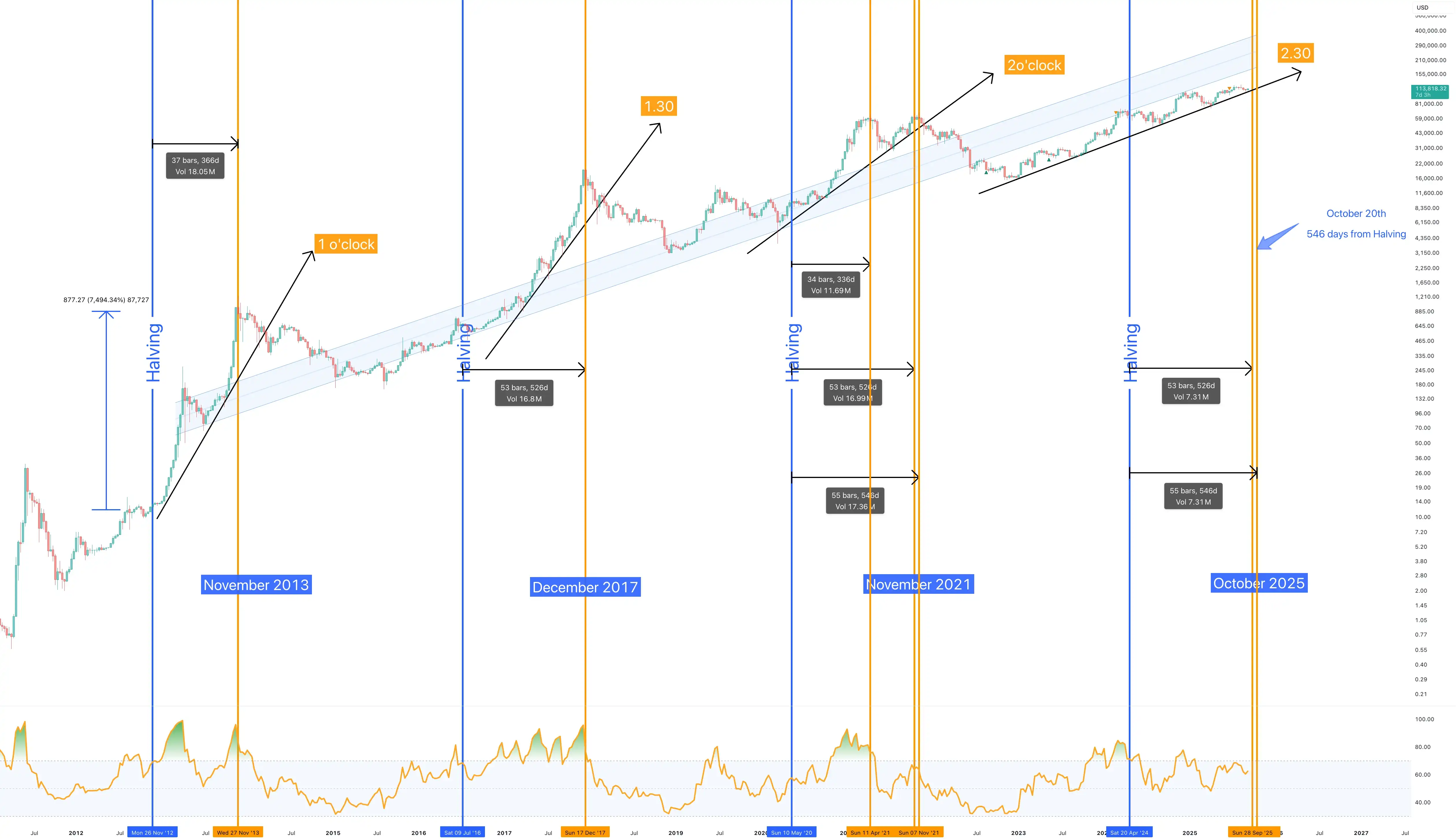
BTC giảm một nửa khoảng bốn năm một lần, phần thưởng đào khối của thợ đào giảm theo, nguồn cung mới co lại. Xoay quanh việc giảm một nửa, ba chu kỳ trước đều đã hình thành nhịp điệu tăng giảm có độ tương đồng cao: Đỉnh xuất hiện sau 12 đến 18 tháng kể từ lần giảm một nửa, đáy chạm sau 12 đến 14 tháng kể từ đỉnh, đáy thường xuất hiện vào khoảng 17 tháng trước lần giảm một nửa tiếp theo.

  • Chu kỳ đầu tiên, giảm một nửa vào tháng 11 năm 2012, lúc đó BTC chỉ có 12 USD. Khoảng 12 tháng sau, vào tháng 11 năm 2013, giá tăng lên 1.150 USD và đạt đỉnh. Sau đó, thị trường gấu kéo dài khoảng 13 tháng, chạm đáy khoảng 160 USD vào tháng 1 năm 2015, và đáy đó cách lần giảm một nửa tiếp theo (tháng 7 năm 2016) khoảng 18 tháng.
  • Chu kỳ thứ hai, giảm một nửa vào tháng 7 năm 2016, giá lúc giảm một nửa khoảng 650 USD. Khoảng 17 tháng sau, vào tháng 12 năm 2017, giá tăng lên 19.800 USD và đạt đỉnh. Sau đó là thị trường gấu kéo dài khoảng 12 tháng, chạm đáy khoảng 3.200 USD vào tháng 12 năm 2018, đáy đó cách lần giảm một nửa tiếp theo (tháng 5 năm 2020) khoảng 17 tháng.
  • Chu kỳ thứ ba, giảm một nửa vào tháng 5 năm 2020, giá lúc giảm một nửa khoảng 8.600 USD. Khoảng 18 tháng sau, vào tháng 11 năm 2021, giá tăng lên 69.000 USD và đạt đỉnh. Sau đó là thị trường gấu kéo dài khoảng 13 tháng, chạm đáy khoảng 15.500 USD khi FTX sụp đổ vào tháng 11 năm 2022, đáy đó cách lần giảm một nửa tiếp theo (tháng 4 năm 2024) khoảng 17 tháng.
  • Bây giờ là chu kỳ thứ tư. Giảm một nửa vào ngày 19 tháng 4 năm 2024, phần thưởng khối giảm từ 6.25 xuống 3.125 BTC, giá lúc giảm một nửa khoảng 63.000 USD. Sau đó khoảng 18 tháng, BTC đạt đỉnh 126.198 USD vào ngày 6 tháng 10 năm 2025, hoàn toàn nằm trong cửa sổ "đỉnh sau 12 đến 18 tháng" của lịch sử.

Tính đến tháng 6 năm 2026, đã khoảng 26 tháng kể từ lần giảm một nửa năm 2024, và khoảng 8 tháng kể từ đỉnh tháng 10 năm 2025. Theo quy luật lịch sử, đáy xuất hiện sau 12 đến 14 tháng kể từ đỉnh, điều đó có nghĩa là cửa sổ đáy có thể rơi vào khoảng tháng 10 năm 2026, lúc đó cách lần giảm một nửa tiếp theo (tháng 4 năm 2028) đúng khoảng 17 tháng, trùng khớp gần như hoàn toàn với ba chu kỳ trước.
Các mốc thời gian giảm một nửa của BTC

Nhìn từ thời điểm hiện tại, nửa cuối năm 2026 giống như một giai đoạn đáng để đánh giá lại tỷ lệ rủi ro-lợi nhuận trong chu kỳ này, hơn là một giai đoình đơn giản hoảng loạn và rời khỏi thị trường.

Việc co lại nguồn cung sau giảm một nửa vẫn đang tiếp diễn, và dòng tiền mua dài hạn từ ETF spot và các tổ chức cũng đã thay đổi cấu trúc thị trường của BTC trước đây vốn chỉ phụ thuộc vào cảm xúc của nhà đầu tư nhỏ lẻ. Nếu chu kỳ lịch sử tiếp tục phát huy tác dụng, khoảng quý 4 năm 2026 rất có thể chính là cửa sổ then chốt để thị trường chuyển từ bi quan sang phục hồi, từ giảm đòn bẩy sang tích lũy trở lại. Đối với những nhà đầu tư tin tưởng vào giá trị dài hạn của BTC, sự điều chỉnh ngắn hạn ngược lại có thể cung cấp cơ hội phân kỳ mua vào hấp dẫn hơn. Khi vùng đáy dần đến gần, niềm tin thị trường có khả năng được củng cố lại, nền tảng cho chu kỳ tăng tiếp theo cũng có thể đang âm thầm hình thành trong giai đoạn này.

Dữ liệu trên chuỗi: Ba tín hiệu vùng thấp đồng thời sáng lên

Ngoài biểu đồ giá, dữ liệu trên chuỗi cung cấp tham chiếu định giá cơ bản hơn.

  1. Chỉ số 1: MVRV Z-Score, chỉ số này đo lường độ lệch giữa giá thị trường hiện tại và chi phí trung bình của tất cả người nắm giữ trên toàn mạng. Trong lịch sử, Z-Score vượt quá 7 có nghĩa là thị trường bị định giá quá cao nghiêm trọng, gần đỉnh; giảm xuống gần 0 hoặc thậm chí chuyển sang âm, thì tương ứng với vùng định giá thấp sâu. Khi BTC đạt đỉnh vào tháng 10 năm 2025, Z-Score ở khoảng từ 5 đến 6. Theo dữ liệu ngày 9 tháng 6 từ MacroMicro, Z-Score hiện tại khoảng 0.27, đã tiến gần đến ranh giới của vùng đáy lịch sử.
  2. Chỉ số 2: Giá đã thực hiện toàn mạng, tức là cơ sở chi phí được tính theo trọng số dựa trên giá của lần di chuyển trên chuỗi cuối cùng của tất cả BTC đang lưu hành. Julio Moreno, Giám đốc nghiên cứu tại CryptoQuant, chỉ ra vào ngày 10 tháng 6 rằng giá trị hiện tại vào khoảng 53.600 USD. Tính theo giá thị trường hiện tại là 62.000 USD, giá thị trường chỉ cao hơn chi phí toàn mạng khoảng 9%, mức chênh lệch này là vùng cực kỳ thấp hiếm thấy trong lịch sử. Trong ba chu kỳ trước, đáy lớn đều hình thành ở gần hoặc thấp hơn một chút so với giá đã thực hiện, từng có lúc phá vỡ xuống dưới vào tháng 11 năm 2022.
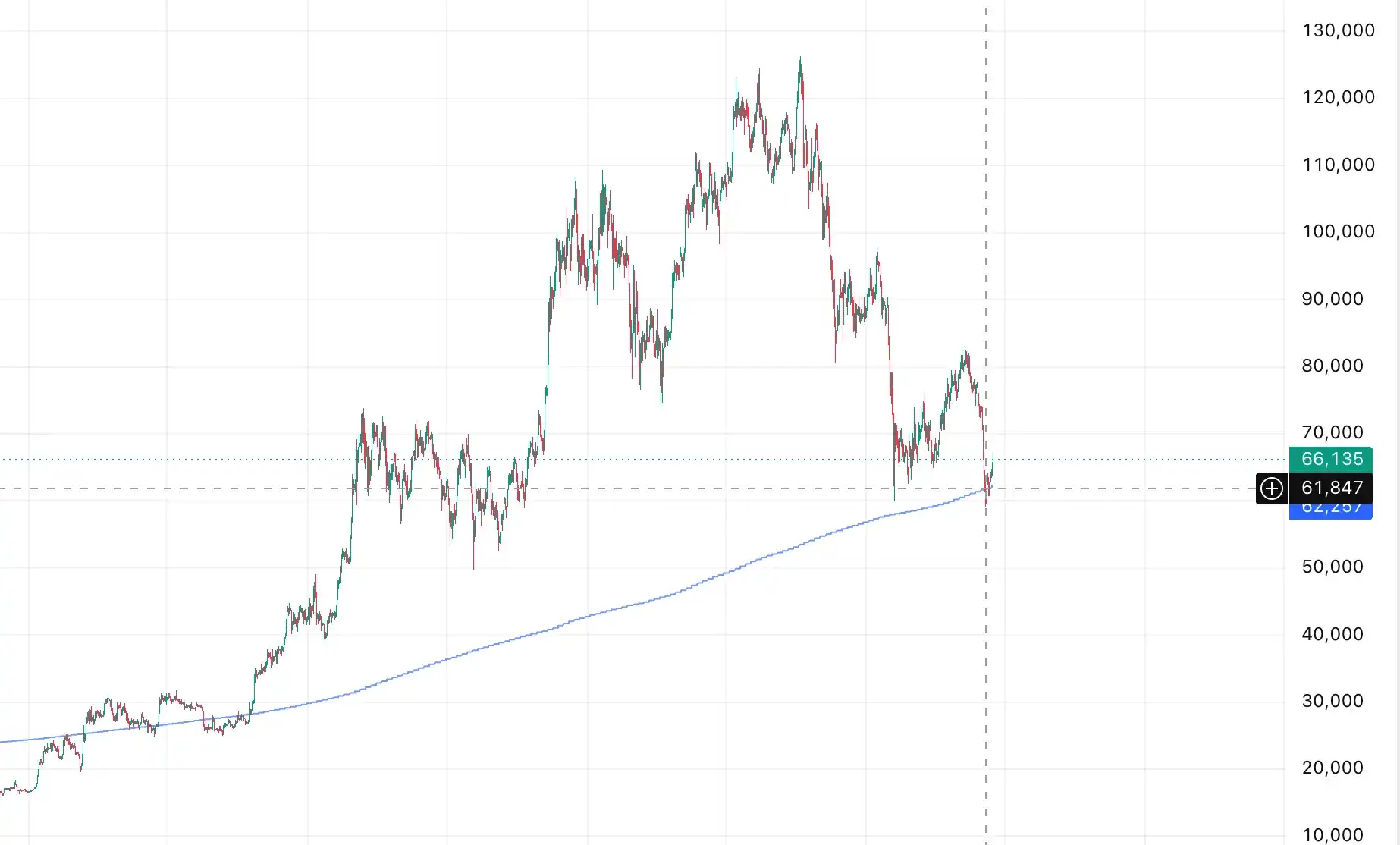
  3. Chỉ số 3: Đường trung bình động 200 tuần. Đường trung bình này đại diện cho giá trung bình trong gần bốn năm qua, hiện tại vào khoảng 62.200 USD. Ngày 4 tháng 6 năm 2026, BTC trong chu kỳ này lần đầu tiên chạm vào đường này. Ba đáy lớn của thị trường gấu vào năm 2015, 2018, 2020, đều xảy ra chính xác ở gần đường này. Năm 2022 là ngoại lệ duy nhất, khi đó giá phá vỡ đường trung bình và duy trì ở dưới đường khoảng 16 tháng, cuối cùng kết thúc bằng sự sụp đổ của FTX.
Giá đường trung bình động 200 tuần. Nguồn: TradingView

Mặt dòng tiền: Nhà đầu tư nhỏ lẻ bán ra, Cá voi lớn mua vào

Ngoài các tín hiệu định giá thấp, cấu trúc dòng chảy vốn cũng xuất hiện một số đặc điểm của đáy.

Về mặt ETF, từ giữa tháng 5 đến đầu tháng 6, các ETF Bitcoin spot của Mỹ đã liên tục dòng tiền ròng ra trong 13 ngày giao dịch, tích lũy khoảng 4,4 tỷ USD, tương đương 59.400 Bitcoin, là đợt dòng tiền ra dài nhất kể từ khi ETF ra mắt. IBIT của BlackRock đã có dòng tiền ra ròng khoảng 980 triệu USD trong một tuần, lập kỷ lục tuần tồi tệ nhất từ trước đến nay. Điều này phản ánh sự rút tiền hoảng loạn ở cấp độ vốn ngắn hạn và nhà đầu tư nhỏ lẻ.

Đồng thời, trên chuỗi xuất hiện hành động ngược chiều. Số lượng địa chỉ cá voi (giữ trên 100 BTC) đạt mức cao nhất năm 2026, vào khoảng 20.229 địa chỉ, lượng mua ròng của cá voi trong năm tháng đầu năm 2026 đã tương đương với tổng lượng của cả năm 2025. MicroStrategy vào cuối tháng 5 đã bán 32 BTC để thanh toán cổ tức ưu đãi, lần đầu tiên bán ra sau bốn năm, gây lo ngại về sự thay đổi chiến lược của công ty, nhưng hai tuần sau, vào ngày 8 tháng 6, công ty đã mua 1.550 BTC với giá trung bình 65.332 USD, nâng tổng số nắm giữ lên 845.256 BTC, Michael Saylor mô tả đây là "thời điểm tốt để tăng vị thế mua".

Về mặt sàn giao dịch, trong vài tháng qua, số dư BTC trên các sàn chính tiếp tục giảm, chip từ trên sàn chảy sang ví lạnh của người nắm giữ dài hạn và các tổ chức. Hiện tại, những người nắm giữ dài hạn (trên 155 ngày) kiểm soát khoảng 78% nguồn cung lưu hành, một trong những tỷ lệ cao nhất trong lịch sử.

Vĩ mô: Yếu tố bất định lớn nhất, vừa được loại bỏ một nửa

Logic vĩ mô cốt lõi đè nén BTC trong vài tháng qua, chủ yếu đến từ hai tuyến: lãi suất cao và chiến tranh Iran.

Đầu năm 2026, Mỹ và Israel tiến hành tấn công quân sự vào Iran, eo biển Hormuz ngay sau đó bị phong tỏa một phần, IEA định tính đây là sự gián đoạn nguồn cung quy mô lớn nhất trong lịch sử thị trường dầu mỏ toàn cầu, giá dầu quốc tế từng tăng vọt lên 105 đến 120 USD/thùng. Lạm phát do đó phục hồi, CPI của Mỹ tháng 5 tăng lên 4.2%, vượt xa mục tiêu chính sách 2%. Lãi suất quỹ liên bang buộc phải duy trì ở mức 3.50% đến 3.75% và không hành động, thị trường từng định giá xác suất "không giảm lãi suất" trong năm 2026 lên khoảng 79%, chỉ số USD tăng mạnh lên vùng 99 đến 100. Sự đè nén kép từ lãi suất cao và tâm lý tránh rủi ro đã khiến thanh khoản toàn cầu tuy mở rộng liên tục nhưng không thể chảy vào thị trường tiền mã hóa.

Nhưng vào đêm ngày 14 tháng 6, Tổng thống Mỹ Trump tuyên bố thỏa thuận Mỹ-Iran đã hoàn tất, Ủy ban An ninh Quốc gia Tối cao Iran ngay sau đó đã ra tuyên bố chính thức xác nhận đạt được biên bản ghi nhớ ngừng chiến vào rạng sáng ngày 15 tháng 6, lễ ký kết chính thức dự kiến vào ngày 19 tháng 6 tại Thụy Sĩ, eo biển Hormuz sẽ được mở cửa trở lại.

Phản ứng của thị trường tức thì và dữ dội. Dầu thô WTI trong ngày giảm hơn 4% xuống khoảng 80.25 USD/thùng, dầu Brent giảm xuống khoảng 83.51 USD. BTC từ mức khoảng 61.500 USD trước khi thỏa thuận được công bố đã nhảy vọt lên trên 65.000 USD, tăng hơn 5% trong một ngày, là mức tăng một ngày lớn nhất trong ba tháng qua, khối lượng giao dịch đồng thời mở rộng. Hợp đồng tương lai của ba chỉ số chính của thị trường chứng khoán Mỹ đồng loạt tăng mạnh hơn 300 điểm, thị trường chứng khoán châu Á cũng tăng theo.

Deutsche Bank sau khi thỏa thuận đạt được cho biết, dự kiến rủi ro tăng lãi suất của Fed sẽ giảm bớt trong ngắn hạn, nhưng do tính dai dẳng của lạm phát, sức bền của thị trường lao động và lãi suất trung lập có thể cao hơn dự kiến, vẫn có khả năng tăng lãi suất vào năm 2027. Tình hình của Fed, cụ thể còn phải xem màn ra mắt của tân thuyền trưởng Warsh.

Lời kết: Là đáy, cũng là lúc niềm tin thiếu thốn nhất

Khi BTC đứng trên mốc 12 vạn USD, tất cả mọi người đều sẵn sàng tin rằng nó sẽ còn cao hơn nữa; nhưng khi nó giảm trở lại vùng 6 vạn USD, các yếu tố như định giá trên chuỗi, vị trí chu kỳ, tỷ lệ nắm giữ dài hạn và biến số vĩ mô đều bắt đầu hướng về vùng đáy, thì thị trường lại thiếu thốn nhất chính là niềm tin.

Nhưng đầu tư chưa bao giờ được hoàn thành khi cảm xúc thoải mái nhất. Mỗi đáy lớn của BTC trong lịch sử đều đi kèm với sự nghi ngờ "lần này khác", cũng đi kèm với sự nghi ngờ toàn diện về ngành, chu kỳ và bản thân tài sản. Sự khác biệt chỉ ở chỗ, có người coi sự nghi ngờ đó là lý do để rời đi, có người coi đó là cơ hội để định giá lại tỷ lệ rủi ro-lợi nhuận.

Bitcoin hiện tại, tất nhiên không có nghĩa là sẽ không giảm nữa, cũng không có nghĩa đây chính là đáy lớn. Nhưng nếu kéo dài thời gian, tách nỗi sợ hãi ngắn hạn và cấu trúc dài hạn ra để xem, vùng hiện tại đã không còn phù hợp để định nghĩa là "mua đuổi", mà gần hơn với một cửa sổ phân kỳ mua vào cần sự kiên nhẫn, kỷ luật và niềm tin.

Niềm tin thị trường là thứ còn quý giá hơn cả vàng. Bởi vì vàng chỉ có thể chống lại lạm phát, còn niềm tin có thể xuyên suốt chu kỳ. Đối với những người vẫn tin vào giá trị dài hạn của Bitcoin, tin vào sự khan hiếm, tin rằng thanh khoản toàn cầu cuối cùng sẽ quay trở lại với tài sản rủi ro, vấn đề quan trọng nhất của nửa cuối năm 2026 có lẽ không phải là "liệu nó có còn giảm nữa không", mà là khi thị trường một lần nữa tin tưởng vào nó, liệu bạn đã ở trong cuộc chơi hay chưa.

Bạn sẽ lựa chọn như thế nào?

Preguntas relacionadas

QSo với các chu kỳ giảm giá trước đó của BTC, mức giảm 52% hiện tại được đánh giá như thế nào?

AMức giảm 52% hiện tại của BTC nhẹ nhàng hơn đáng kể so với các chu kỳ giảm giá lịch sử (2014: -86%, 2018: -84%, 2022: -77%). Điều này cho thấy đợt điều chỉnh lần này tương đối ôn hòa trong bối cảnh lịch sử.

QDựa trên chu kỳ giảm nửa (halving), cửa sổ đáy tiềm năng cho chu kỳ hiện tại rơi vào khoảng thời gian nào?

ATheo mô hình lịch sử (đỉnh xuất hiện 12-18 tháng sau halving, đáy sau đó 12-14 tháng), và với đỉnh vào tháng 10/2025, cửa sổ đáy tiềm năng cho chu kỳ hiện tại có thể rơi vào khoảng tháng 10 năm 2026, tức là quý 4/2026.

QBa tín hiệu chỉ báo trên chuỗi (on-chain) nào cho thấy BTC có thể đang ở vùng giá trị thấp?

ABa tín hiệu chỉ báo trên chuỗi là: 1) Chỉ số MVRV Z-Score (~0.27) đang tiến gần vùng lịch sử được định giá thấp. 2) Giá đã thực hiện toàn mạng (Realized Price) khoảng $53,600, với mức giá hiện tại chỉ cao hơn khoảng 9%. 3) Giá BTC vừa chạm vào đường trung bình động 200 tuần (khoảng $62,200), vốn là vùng hỗ trợ quan trọng trong các đáy lịch sử.

QDòng tiền từ các nhà đầu tư tổ chức (cá voi) và ETF có hành động trái ngược nhau như thế nào trong đợt giảm giá gần đây?

ATrong khi các quỹ ETF Bitcoin tại Mỹ ghi nhận dòng tiền ròng rút ra kỷ lục kéo dài, phản ánh sự hoảng loạn của nhà đầu tư nhỏ lẻ, thì các địa chỉ cá voi (giữ trên 100 BTC) lại tăng mua vào ròng mạnh mẽ. Số lượng địa chỉ cá voi đạt mức cao nhất năm 2026, cho thấy các nhà đầu tư tổ chức dài hạn đang tích lũy ở vùng giá này.

QYếu tố vĩ mô nào vừa được giải tỏa một phần, góp phần tạo đà phục hồi cho thị trường crypto vào giữa tháng 6/2026?

AĐó là thỏa thuận ngừng bắn giữa Mỹ và Iran, dẫn đến việc mở lại eo biển Hormuz. Sự kiện này làm giảm áp lực giá dầu và lạm phát, giảm bớt kỳ vọng về việc Cục Dự trữ Liên bang Mỹ (Fed) sẽ duy trì lãi suất cao lâu hơn, từ đó cải thiện tâm lý đối với các tài sản rủi ro như Bitcoin.

Lecturas Relacionadas

Standard Chartered Bank Places a 40x 'Bet', Calls for UNI to Rise to $100

Standard Chartered Bank’s digital asset research head, Geoff Kendrick, initiated coverage on Uniswap with a highly bullish long-term price target of $100 for its UNI token by 2030—a roughly 40-fold increase from its ~$2.60 trading price at the time of the report. The bank’s thesis hinges on the exponential growth of tokenized real-world assets (RWA), projected to surge from ~$340 billion to $4 trillion by 2028. It expects the share of these assets deployed in DeFi to rise from 3.5% to 30%, driving total DeFi TVL to around $2.7 trillion. As the leading decentralized exchange (DEX), Uniswap is positioned to capture a significant portion of this liquidity influx. A key catalyst is Uniswap’s “fee switch,” activated in late 2024, which directs a portion of protocol fees to UNI token buybacks and burns. This transforms UNI from a pure governance token into a yield-generating, deflationary asset, narrowing its valuation gap with centralized exchanges like Coinbase. The report draws an analogy: Coinbase operates like Netflix (centralized, high-cost), while Uniswap functions like YouTube (open, user-generated, network-effect driven). Despite its dominant market share and recent institutional adoption—such as BlackRock’s BUIDL fund and Fidelity’s stablecoin using Uniswap for liquidity—the path faces challenges. Competition from Solana-based DEXs and aggregators threatens user mindshare, while regulatory delays or setbacks in RWA adoption could slow the projected growth. Furthermore, UNI remains down over 92% from its 2021 peak, reflecting persistent market skepticism. Ultimately, Standard Chartered’s report signals a shift in traditional finance’s perception of DeFi, valuing network effects and cash flow potential. However, realizing the $100 target depends on Uniswap successfully navigating intense competition, regulatory hurdles, and the multi-year timeline for massive tokenized asset adoption.

marsbitHace 7 min(s)

Standard Chartered Bank Places a 40x 'Bet', Calls for UNI to Rise to $100

marsbitHace 7 min(s)

For Those Still Obsessed with Altcoins, Just Go All-in on HOOD

Title: "For Those Still Fixated on Altcoins, Just Bet on HOOD" The article argues that Robinhood (HOOD) stock is a compelling alternative for investors still holding onto hopes for altcoin rallies. It highlights HOOD's recent strong performance, briefly touching $100, and expresses continued optimism. The bullish thesis is multi-faceted: HOOD's operational data for May showed record highs in key metrics like total assets and funded customers, though crypto volume was weaker. Positive catalysts include Robinhood launching its own prediction market (Rothera) to capture more revenue, gaining approval to act as an IPO underwriter for major upcoming listings, and being selected to manage the new "Trump Account" government savings program for millions of future US newborns. Insider and institutional buying, along with raised price targets, provide further confidence. The core argument is that HOOD is successfully decoupling from the crypto market's fortunes. While crypto-related revenue was once a major contributor, its share of total revenue has been declining, hitting 13% in Q1 2026. Although HOOD's price historically moved with Bitcoin, a recent divergence is noted. The author posits that Robinhood's growing equity trading, prediction markets, and IPO-related businesses can drive growth independently of a crypto bull market. Thus, HOOD offers asymmetric exposure: it stands to benefit if the crypto market recovers but is no longer wholly dependent on it. For those disillusioned with altcoins' risks, HOOD presents a potentially safer way to maintain exposure to the fintech and speculative trading space.

marsbitHace 15 min(s)

For Those Still Obsessed with Altcoins, Just Go All-in on HOOD

marsbitHace 15 min(s)

For Those Still Obsessed with Altcoins, Just Buy HOOD

The author expresses bullish sentiment on Robinhood (HOOD) stock, citing multiple positive catalysts. Recent monthly operational data shows record highs in key metrics like total assets, funded customers, and margin balances. On the news front, Robinhood launched its own prediction market (Rothera), received approval to act as an IPO underwriter, and was selected to manage the new "Trump Accounts" for U.S. newborns, ensuring a long-term user base. Insiders and institutions are also buying or raising price targets. The core investment thesis, however, focuses on HOOD's evolving valuation narrative. Historically viewed as a "crypto proxy," its stock price was highly correlated with Bitcoin and its revenue heavily dependent on cryptocurrency trading fees. Recent data indicates this dependence is waning: crypto-related revenue hit a multi-quarter low of 13% of total revenue in Q1 2026, and the stock price has recently decoupled from BTC's trend. The author argues HOOD is transforming into a more diversified platform. Its growth is now driven by equities, options, prediction markets, and IPO-related services. This reduces its cyclical vulnerability to crypto bear markets. Crucially, if the crypto market recovers, HOOD would still benefit from increased trading activity. Therefore, for investors still hoping for gains from altcoins but concerned about their risks and liquidity, the author suggests HOOD offers a compelling alternative with higher safety margins—it can rise with a crypto bull run but isn't reliant on one.

Odaily星球日报Hace 20 min(s)

For Those Still Obsessed with Altcoins, Just Buy HOOD

Odaily星球日报Hace 20 min(s)

Cryptocurrency & Stock Market Indicator丨SpaceX Discloses Holding 18,712 Bitcoins Worth $1.18 Billion; Strategy Spends $100 Million Two Weeks in a Row to Scoop Up BTC at Low Levels (June 16)

"Coin-Stock Barometer: SpaceX discloses holding 18,712 Bitcoin worth $1.18B; Strategy spends another $100M accumulating BTC (June 16) SpaceX has officially disclosed holding 18,712 Bitcoin in its S-1 filing, valued at ~$1.18B, becoming the 8th largest public company Bitcoin holder. Its average cost is ~$35,000 per BTC. In weekly BTC treasury news, Strategy (formerly MicroStrategy) purchased another 1,587 BTC (~$100M) last week, increasing its total to 846,842 BTC. Mara Holdings added 1,000 BTC. However, Metaplanet and others made no purchases. Nakamoto sold ~600 BTC to repay ~$45M in debt. Global public companies (excluding miners) now hold 1,121,341 BTC. In other crypto treasury developments: - Metaplanet acquired Siiibo Securities to build a Bitcoin-focused financial ecosystem in Japan. - Bitmine increased its ETH holdings by 76,881 last week. - SharpLink's cumulative ETH staking rewards surpassed 21,119 ETH. - Forward Industries' acquisition offers for two SOL treasury companies, including Brera Holdings (holding 2.1M SOL), were rejected. - Tron Inc.'s TRX holdings surpassed 700 million. - Avalanche Treasury Co. (AVAT) begins trading on Nasdaq. - AIFC detailed plans to use WLFI tokens for collateral/loans. Market perspectives on U.S. stocks vary. 'White-Haired Stock God' Serenity sees the current cycle as retail-to-institution transfers, where negative reports may signal institutional accumulation. Morgan Stanley suggests a rotation from tech to cyclical stocks could occur. Citrini believes the U.S. stock market hasn't peaked but expects frequent 10-15% pullbacks in the coming months."

marsbitHace 25 min(s)

Cryptocurrency & Stock Market Indicator丨SpaceX Discloses Holding 18,712 Bitcoins Worth $1.18 Billion; Strategy Spends $100 Million Two Weeks in a Row to Scoop Up BTC at Low Levels (June 16)

marsbitHace 25 min(s)

Trading

Spot
Futuros

Artículos destacados

Qué es BITCOIN

Entendiendo HarryPotterObamaSonic10Inu (ERC-20) y Su Posición en el Espacio Cripto En los últimos años, el mercado de criptomonedas ha sido testigo de un aumento en la popularidad de las monedas meme, capturando el interés no solo de los comerciantes, sino también de aquellos que buscan compromiso comunitario y valor de entretenimiento. Entre estos tokens únicos se encuentra HarryPotterObamaSonic10Inu (ERC-20), un proyecto intrigante que mezcla referencias culturales en el tejido de las criptomonedas. Este artículo profundiza en los aspectos clave de HarryPotterObamaSonic10Inu, explorando sus mecanismos, ethos impulsado por la comunidad y su relación con el paisaje cripto más amplio. ¿Qué es HarryPotterObamaSonic10Inu (ERC-20)? Como su nombre sugiere, HarryPotterObamaSonic10Inu es una moneda meme construida sobre la blockchain de Ethereum, clasificada bajo el estándar ERC-20. A diferencia de las criptomonedas tradicionales que pueden enfatizar la utilidad práctica o el potencial de inversión, este token prospera en el valor de entretenimiento y la fuerza de su comunidad. El proyecto tiene como objetivo fomentar un entorno donde los usuarios comprometidos puedan reunirse, compartir ideas y participar en actividades inspiradas por diversos fenómenos culturales. Una característica notable de HarryPotterObamaSonic10Inu es su cero impuestos en las transacciones. Este atractivo elemento tiene como objetivo incentivar el comercio y la participación comunitaria, sin cargos adicionales que puedan disuadir a los comerciantes de pequeña escala. El suministro total de la moneda está establecido en mil millones de tokens, una cifra que marca su intención de mantener una circulación sustancial dentro de la comunidad. Creador de HarryPotterObamaSonic10Inu (ERC-20) Los orígenes de HarryPotterObamaSonic10Inu están algo envueltos en misterio; los detalles sobre el creador siguen siendo desconocidos. El desarrollo de este token carece de un equipo identificable o de un plan explícito, lo cual no es inusual dentro del sector de monedas meme. En cambio, el proyecto ha surgido de manera orgánica, con su progreso muy dependiente del entusiasmo y la participación de su comunidad. Inversores de HarryPotterObamaSonic10Inu (ERC-20) En cuanto a inversiones externas y respaldo, HarryPotterObamaSonic10Inu también sigue siendo ambiguo. El token no lista ninguna fundación de inversión conocida o apoyo organizacional significativo. En cambio, la savia del proyecto es su comunidad de base, que informa su crecimiento y sostenibilidad a través de la acción colectiva y el compromiso en el espacio cripto. ¿Cómo Funciona HarryPotterObamaSonic10Inu (ERC-20)? Como una moneda meme, HarryPotterObamaSonic10Inu opera principalmente fuera de los marcos tradicionales que a menudo rigen el valor de los activos. Hay varios aspectos distintivos que definen cómo funciona el proyecto: Transacciones Sin Impuestos: Sin tarifas impositivas en las transacciones, los usuarios pueden comprar y vender el token libremente sin preocuparse por costos ocultos. Compromiso Comunitario: El proyecto prospera en la interacción comunitaria, aprovechando plataformas de redes sociales para crear entusiasmo y facilitar la participación. Las discusiones, el intercambio de contenido y el compromiso son elementos cruciales que ayudan a expandir su alcance y fomentar la lealtad entre los seguidores. Sin Utilidad Práctica: Cabe señalar que HarryPotterObamaSonic10Inu no ofrece utilidad concreta dentro del ecosistema financiero. Más bien, se clasifica como un token principalmente para actividades de entretenimiento y comunitarias. Referencia Cultural: El token incorpora astutamente elementos de la cultura popular para atraer interés, conectando con entusiastas de los memes y seguidores de las criptomonedas por igual. HarryPotterObamaSonic10Inu ejemplifica cómo las monedas meme operan de manera diferente a los proyectos de criptomonedas más tradicionales, ingresando al mercado como construcciones sociales innovadoras en lugar de activos utilitarios. Cronología de HarryPotterObamaSonic10Inu (ERC-20) La historia de HarryPotterObamaSonic10Inu está marcada por varios hitos notables: Creación: El token surgió de un meme viral, capturando la imaginación de muchos entusiastas de las criptomonedas. Las fechas específicas de creación no están disponibles, subrayando su ascenso orgánico. Listado en Exchanges: HarryPotterObamaSonic10Inu ha llegado a varios exchanges, permitiendo un acceso y comercio más fácil por parte de la comunidad. Iniciativas de Compromiso Comunitario: Actividades continuas destinadas a mejorar la interacción comunitaria, incluyendo concursos, campañas en redes sociales y generación de contenido por parte de fanáticos y defensores. Planes de Expansión Futuros: La hoja de ruta del proyecto incluye el lanzamiento de una colección de NFT, mercancía y un sitio de comercio electrónico relacionado con sus temas culturales, involucrando aún más a la comunidad e intentando añadir más dimensiones a su ecosistema. Puntos Clave Sobre HarryPotterObamaSonic10Inu (ERC-20) Naturaleza Impulsada por la Comunidad: El proyecto prioriza la participación colectiva y la creatividad, asegurando que la involucración de los usuarios esté a la vanguardia de su desarrollo. Clasificación como Moneda Meme: Representa la epítome de las criptomonedas basadas en el entretenimiento, diferenciándose de los vehículos de inversión tradicionales. Sin Afiliación Directa con Bitcoin: A pesar de la similitud en el nombre del ticker, HarryPotterObamaSonic10Inu es distinto y no tiene relación con Bitcoin u otras criptomonedas establecidas. Enfoque en la Colaboración: HarryPotterObamaSonic10Inu está diseñado para crear un espacio para la colaboración y el intercambio de historias entre sus poseedores, proporcionando una vía para la creatividad y el vínculo comunitario. Perspectivas Futuras: La ambición de expandirse más allá de su premisa inicial hacia NFTs y mercancías describe un camino para que el proyecto potencialmente ingrese a avenidas más tradicionales dentro de la cultura digital. A medida que las monedas meme continúan capturando la imaginación de la comunidad de criptomonedas, HarryPotterObamaSonic10Inu (ERC-20) se destaca debido a sus lazos culturales y su enfoque centrado en la comunidad. Si bien puede no encajar en el molde típico de un token impulsado por la utilidad, su esencia radica en la alegría y la camaradería fomentadas entre sus seguidores, destacando la naturaleza en evolución de las criptomonedas en una era cada vez más digital. A medida que el proyecto continúa desarrollándose, será importante observar cómo las dinámicas comunitarias influyen en su trayectoria en el cambiante paisaje de la tecnología blockchain.

1.8k Vistas totalesPublicado en 2024.04.01Actualizado en 2024.12.03

Qué es BITCOIN

Cómo comprar BTC

¡Bienvenido a HTX.com! Hemos hecho que comprar Bitcoin (BTC) sea simple y conveniente. Sigue nuestra guía paso a paso para iniciar tu viaje de criptos.Paso 1: crea tu cuenta HTXUtiliza tu correo electrónico o número de teléfono para registrarte y obtener una cuenta gratuita en HTX. Experimenta un proceso de registro sin complicaciones y desbloquea todas las funciones.Obtener mi cuentaPaso 2: ve a Comprar cripto y elige tu método de pagoTarjeta de crédito/débito: usa tu Visa o Mastercard para comprar Bitcoin (BTC) al instante.Saldo: utiliza fondos del saldo de tu cuenta HTX para tradear sin problemas.Terceros: hemos agregado métodos de pago populares como Google Pay y Apple Pay para mejorar la comodidad.P2P: tradear directamente con otros usuarios en HTX.Over-the-Counter (OTC): ofrecemos servicios personalizados y tipos de cambio competitivos para los traders.Paso 3: guarda tu Bitcoin (BTC)Después de comprar tu Bitcoin (BTC), guárdalo en tu cuenta HTX. Alternativamente, puedes enviarlo a otro lugar mediante transferencia blockchain o utilizarlo para tradear otras criptomonedas.Paso 4: tradear Bitcoin (BTC)Tradear fácilmente con Bitcoin (BTC) en HTX's mercado spot. Simplemente accede a tu cuenta, selecciona tu par de trading, ejecuta tus trades y monitorea en tiempo real. Ofrecemos una experiencia fácil de usar tanto para principiantes como para traders experimentados.

5.2k Vistas totalesPublicado en 2024.12.12Actualizado en 2026.06.02

Cómo comprar BTC

Qué es $BITCOIN

ORO DIGITAL ($BITCOIN): Un Análisis Integral Introducción al ORO DIGITAL ($BITCOIN) ORO DIGITAL ($BITCOIN) es un proyecto basado en blockchain que opera en la red Solana, cuyo objetivo es combinar las características de los metales preciosos tradicionales con la innovación de las tecnologías descentralizadas. Aunque comparte un nombre con Bitcoin, a menudo referido como “oro digital” debido a su percepción como un refugio de valor, ORO DIGITAL es un token separado diseñado para crear un ecosistema único dentro del paisaje Web3. Su meta es posicionarse como un activo digital alternativo viable, aunque los detalles sobre sus aplicaciones y funcionalidades aún están en desarrollo. ¿Qué es ORO DIGITAL ($BITCOIN)? ORO DIGITAL ($BITCOIN) es un token de criptomoneda diseñado explícitamente para su uso en la blockchain de Solana. A diferencia de Bitcoin, que proporciona un papel de almacenamiento de valor ampliamente reconocido, este token parece centrarse en aplicaciones y características más amplias. Aspectos notables incluyen: Infraestructura Blockchain: El token está construido sobre la blockchain de Solana, conocida por su capacidad para manejar transacciones de alta velocidad y bajo costo. Dinámicas de Suministro: ORO DIGITAL tiene un suministro máximo limitado a 100 cuatrillones de tokens (100P $BITCOIN), aunque los detalles sobre su suministro circulante no se han divulgado actualmente. Utilidad: Si bien las funcionalidades precisas no están delineadas explícitamente, hay indicios de que el token podría ser utilizado para diversas aplicaciones, potencialmente involucrando aplicaciones descentralizadas (dApps) o estrategias de tokenización de activos. ¿Quién es el Creador de ORO DIGITAL ($BITCOIN)? En la actualidad, la identidad de los creadores y el equipo de desarrollo detrás de ORO DIGITAL ($BITCOIN) sigue siendo desconocida. Esta situación es típica entre muchos proyectos innovadores dentro del espacio blockchain, particularmente aquellos alineados con las finanzas descentralizadas y fenómenos de monedas meme. Si bien tal anonimato puede fomentar una cultura impulsada por la comunidad, intensifica las preocupaciones sobre la gobernanza y la responsabilidad. ¿Quiénes son los Inversores de ORO DIGITAL ($BITCOIN)? La información disponible indica que ORO DIGITAL ($BITCOIN) no tiene patrocinadores institucionales conocidos ni inversiones destacadas de capital de riesgo. El proyecto parece operar en un modelo de peer-to-peer centrado en el apoyo y la adopción de la comunidad en lugar de rutas de financiamiento tradicionales. Su actividad y liquidez se sitúan principalmente en intercambios descentralizados (DEX), como PumpSwap, en lugar de plataformas de trading centralizadas establecidas, lo que resalta aún más su enfoque de base. Cómo Funciona ORO DIGITAL ($BITCOIN) Los mecanismos operativos de ORO DIGITAL ($BITCOIN) pueden elaborarse en función de su diseño blockchain y atributos de red: Mecanismo de Consenso: Al aprovechar el único proof-of-history (PoH) de Solana combinado con un modelo de proof-of-stake (PoS), el proyecto asegura una validación de transacciones eficiente que contribuye al alto rendimiento de la red. Tokenómica: Si bien los mecanismos deflacionarios específicos no se han detallado extensamente, el vasto suministro máximo de tokens implica que podría atender microtransacciones o casos de uso nicho que aún están por definirse. Interoperabilidad: Existe el potencial de integración con el ecosistema más amplio de Solana, incluyendo varias plataformas de finanzas descentralizadas (DeFi). Sin embargo, los detalles sobre integraciones específicas permanecen no especificados. Cronología de Eventos Clave Aquí hay una cronología que destaca hitos significativos relacionados con ORO DIGITAL ($BITCOIN): 2023: El despliegue inicial del token ocurre en la blockchain de Solana, marcado por su dirección de contrato. 2024: ORO DIGITAL gana visibilidad al estar disponible para trading en intercambios descentralizados como PumpSwap, permitiendo a los usuarios comerciar contra SOL. 2025: El proyecto presencia actividad de trading esporádica y potencial interés en compromisos liderados por la comunidad, aunque no se han documentado asociaciones notables o avances técnicos hasta el momento. Análisis Crítico Fortalezas Escalabilidad: La infraestructura subyacente de Solana soporta altos volúmenes de transacciones, lo que podría mejorar la utilidad de $BITCOIN en varios escenarios de transacción. Accesibilidad: El potencial bajo precio de trading por token podría atraer a inversores minoristas, facilitando una participación más amplia debido a oportunidades de propiedad fraccionada. Riesgos Falta de Transparencia: La ausencia de patrocinadores, desarrolladores o un proceso de auditoría conocidos públicamente puede generar escepticismo sobre la sostenibilidad y confiabilidad del proyecto. Volatilidad del Mercado: La actividad de trading depende en gran medida del comportamiento especulativo, lo que puede resultar en una volatilidad de precios significativa y en incertidumbre para los inversores. Conclusión ORO DIGITAL ($BITCOIN) surge como un proyecto intrigante pero ambiguo dentro del ecosistema de Solana en rápida evolución. Si bien intenta aprovechar la narrativa del “oro digital”, su alejamiento del papel establecido de Bitcoin como refugio de valor subraya la necesidad de una diferenciación más clara de su utilidad y estructura de gobernanza previstas. La aceptación y adopción futura dependerán probablemente de abordar la actual opacidad y de definir sus estrategias operativas y económicas de manera más explícita. Nota: Este informe abarca información sintetizada disponible hasta octubre de 2023, y pueden haber ocurrido desarrollos más allá del período de investigación.

86 Vistas totalesPublicado en 2025.05.13Actualizado en 2025.05.13

Qué es $BITCOIN

Discusiones

Bienvenido a la comunidad de HTX. Aquí puedes mantenerte informado sobre los últimos desarrollos de la plataforma y acceder a análisis profesionales del mercado. A continuación se presentan las opiniones de los usuarios sobre el precio de BTC (BTC).

活动图片