PIPPIN sụt giảm 44%: Cách mức thanh lý 3,03 triệu USD buộc thị trường thiết lập lại

ambcryptoPublicado a 2026-04-05Actualizado a 2026-04-05

Resumen

Thị trường PIPPIN đã trải qua một đợt sụt giảm mạnh 44%, từ mức gần 0,80 USD xuống còn khoảng 0,035 USD, dẫn đến việc thanh lý các vị thế trị giá 3,03 triệu USD, trong đó 2,30 triệu USD là các lệnh mua. Điều này cho thấy áp lực bán mạnh và sự thoát hàng ép buộc từ các nhà đầu cơ. Sau đợt giảm, giá ổn định trong khoảng 0,03–0,037 USD, phản ánh áp lực bán bắt đầu giảm và thị trường đang cần sự tham gia của người mua mới. Chỉ số RSI ở mức 27,9 cho thấy tình trạng quá bán, nhưng xu hướng vẫn còn yếu. Nếu giá giữ được vùng hỗ trợ 0,026–0,037 USD, một đợt phục hồi ngắn hạn có thể xảy ra; ngược lại, việc mất hỗ trợ có thể kích hoạt một đợt bán tháo mới.

Thị trường của Pippin [PIPPIN] đã chuyển từ giai đoạn mở rộng sang kiệt quệ, khi mức giảm mạnh từ gần 0,80 USD xuống còn 0,035 USD báo hiệu một đợt xả thanh khoản rõ rệt. Động thái này vượt quá 44% trên khối lượng giao dịch tăng, cho thấy các lệnh thoát hàng bắt buộc khi động lực đầu cơ suy yếu.

Khi diễn biến này xảy ra, cấu trúc giá suy yếu với các đỉnh thấp hơn trong suốt tháng Ba, phản ánh nhu cầu giảm dần. Trước đó, một đợt tích lũy tương tự đã hình thành quanh mức 0,35–0,40 USD, nơi giá tạm dừng trước khi giảm mạnh. Tình huống đó cho thấy tính thanh khoản bị mắc kẹt thường tích tụ trước một đợt giảm bắt buộc.
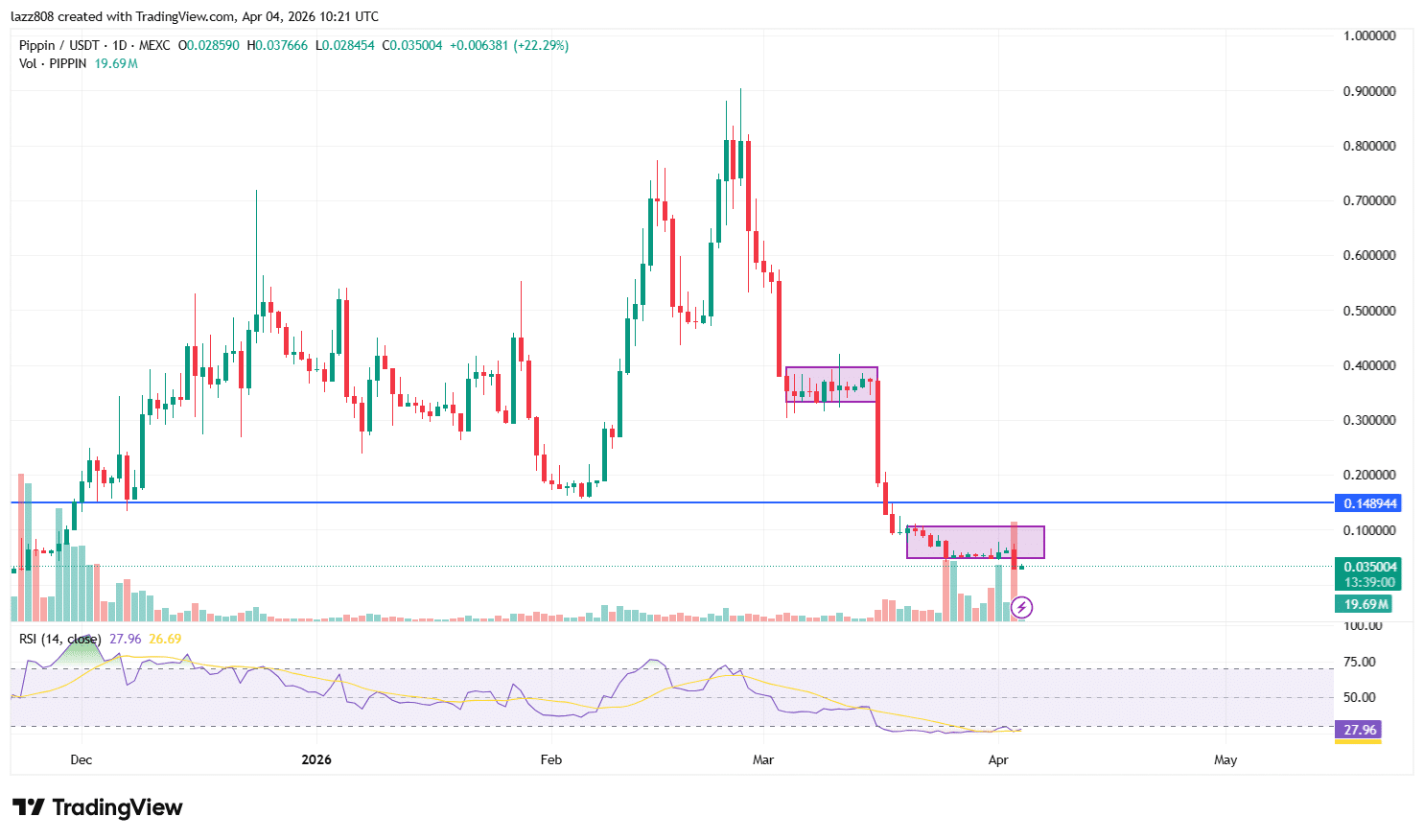
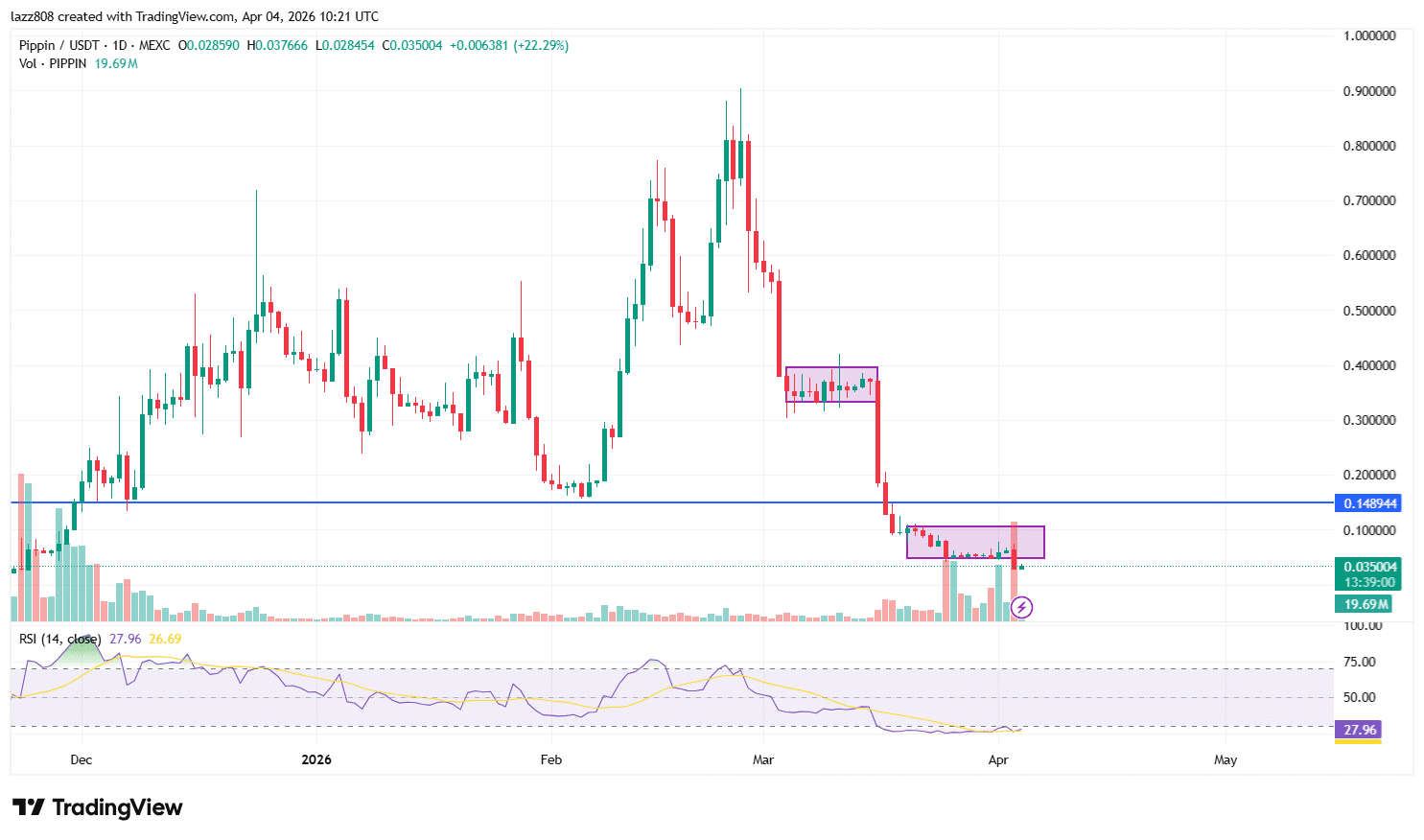
Nguồn: PIPPIN/USDT trên TradingView

Hiện tại, mô hình tương tự xuất hiện lại gần mức 0,035 USD, nơi giá nén lại sau đợt giảm. Điều này xảy ra do người bán làm cạn kiệt hỗ trợ trong khi người mua thận trọng tham gia. Vào thời điểm báo chí đưa tin, RSI đang tiến gần 27,9, báo hiệu điều kiện quá bán, cho thấy áp lực bán bắt đầu giảm.

Điều này tạo ra sự cân bằng mong manh, nơi sự nén lại phản ánh sự do dự. Nếu người mua hấp thụ nguồn cung, một đợt phục hồi nhẹ có thể theo sau; tuy nhiên, không giữ được hỗ trợ có thể kích hoạt một làn sóng thanh lý khác.
Hiệu ứng dây chuyền thanh lý thúc đẩy sự sụp đổ của PIPPIN

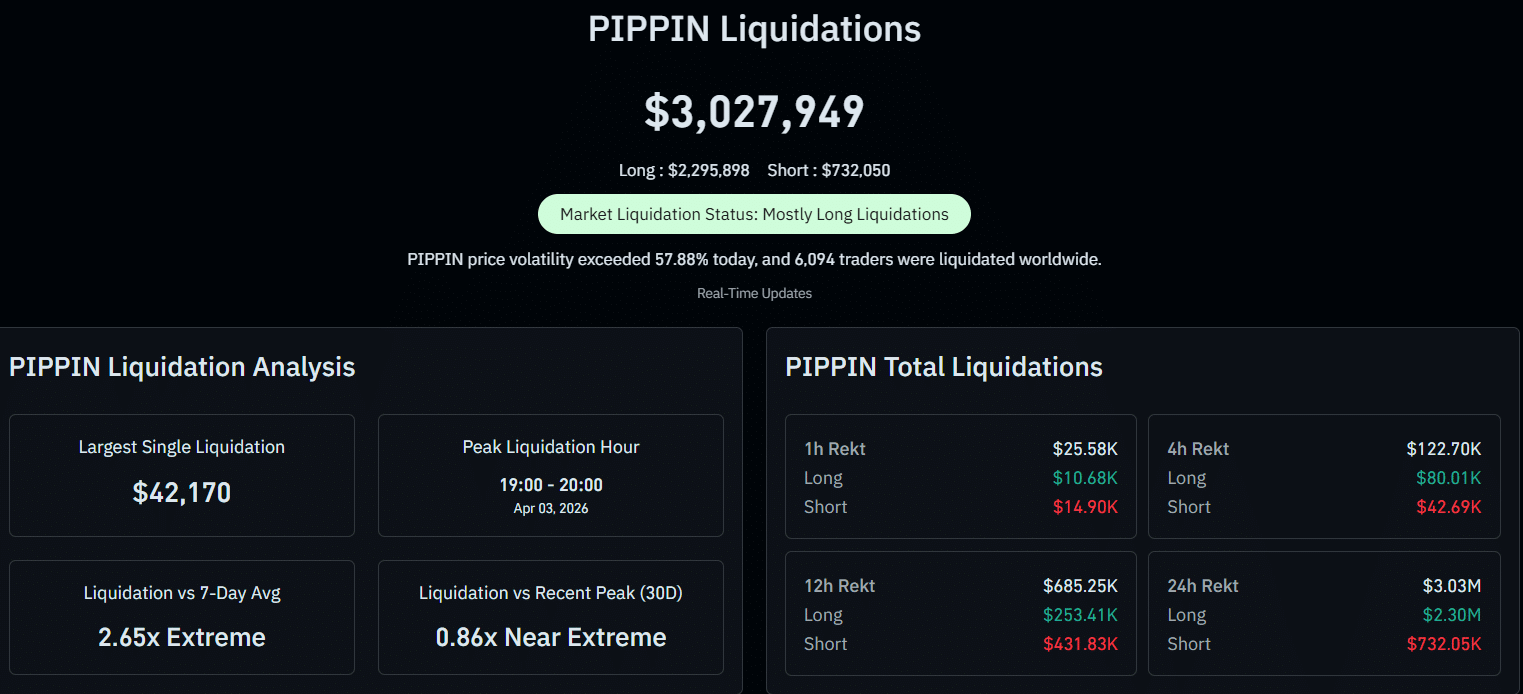
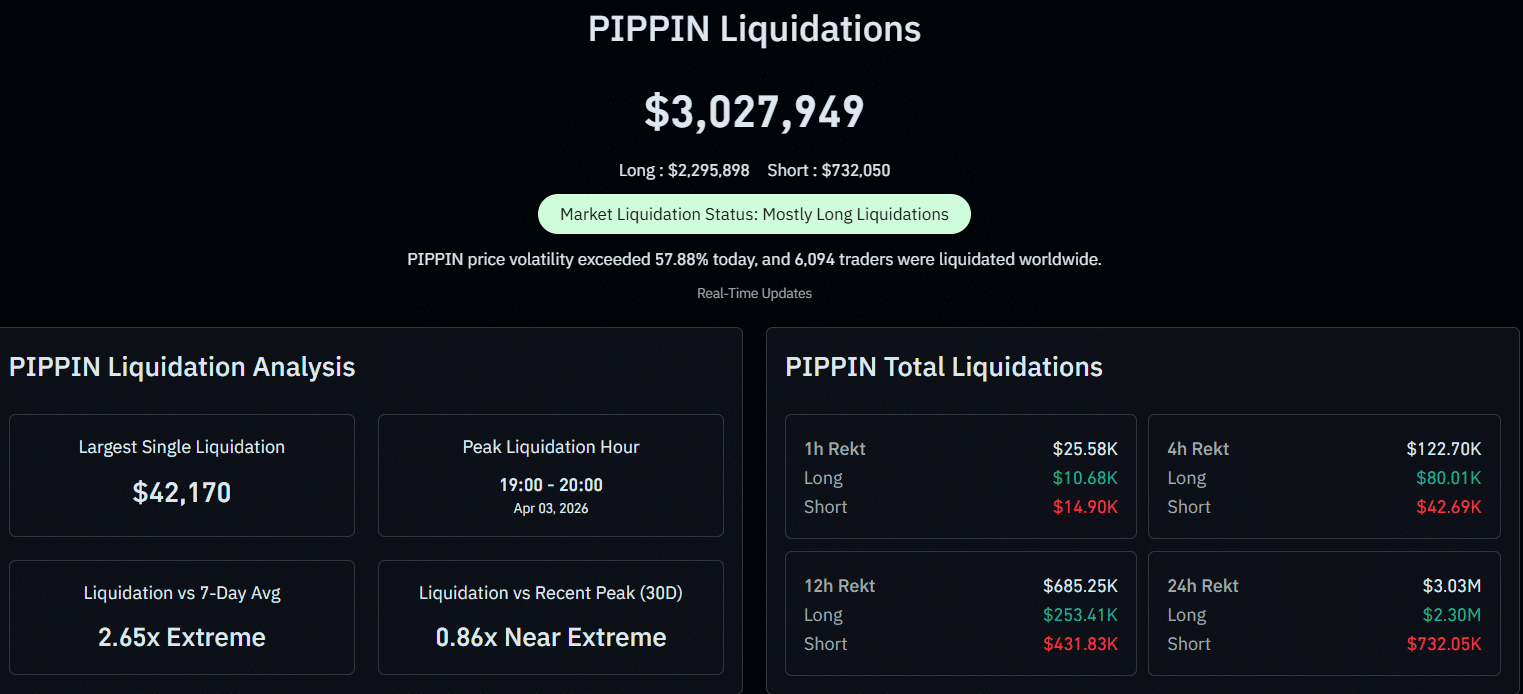
Các lệnh thanh lý đã kiểm soát động thái và đẩy nhanh sự sụp đổ của PIPPIN, biến một cấu trúc yếu thành một đợi giải tỏa nhanh chóng. Khi giá giảm, khoảng 3,03 triệu USD vị thế đã bị thanh lý, với 2,30 triệu USD là các lệnh mua, cho thấy người mua đã phơi sáng quá mức.

Nguồn: CoinGlass

Khi hỗ trợ nhượng bộ, các sàn giao dịch buộc các vị thế mua đóng lại, gây áp lực bán ngay lập tức lên thị trường. Việc bán này làm giảm giá, dẫn đến các lệnh thanh lý bổ sung, tạo ra hiệu ứng dây chuyền.

Tuy nhiên, giá sau đó ổn định trong khoảng 0,03 đến 0,035 USD, nơi hiệu ứng dây chuyền chậm lại. Động thái này thiết lập lại thị trường, vì các lệnh thoát bắt buộc loại bỏ những người nắm giữ yếu, để sự phục hồi cho người mua mới.

PIPPIN kiểm tra hỗ trợ then chốt khi sự phục hồi phụ thuộc vào...

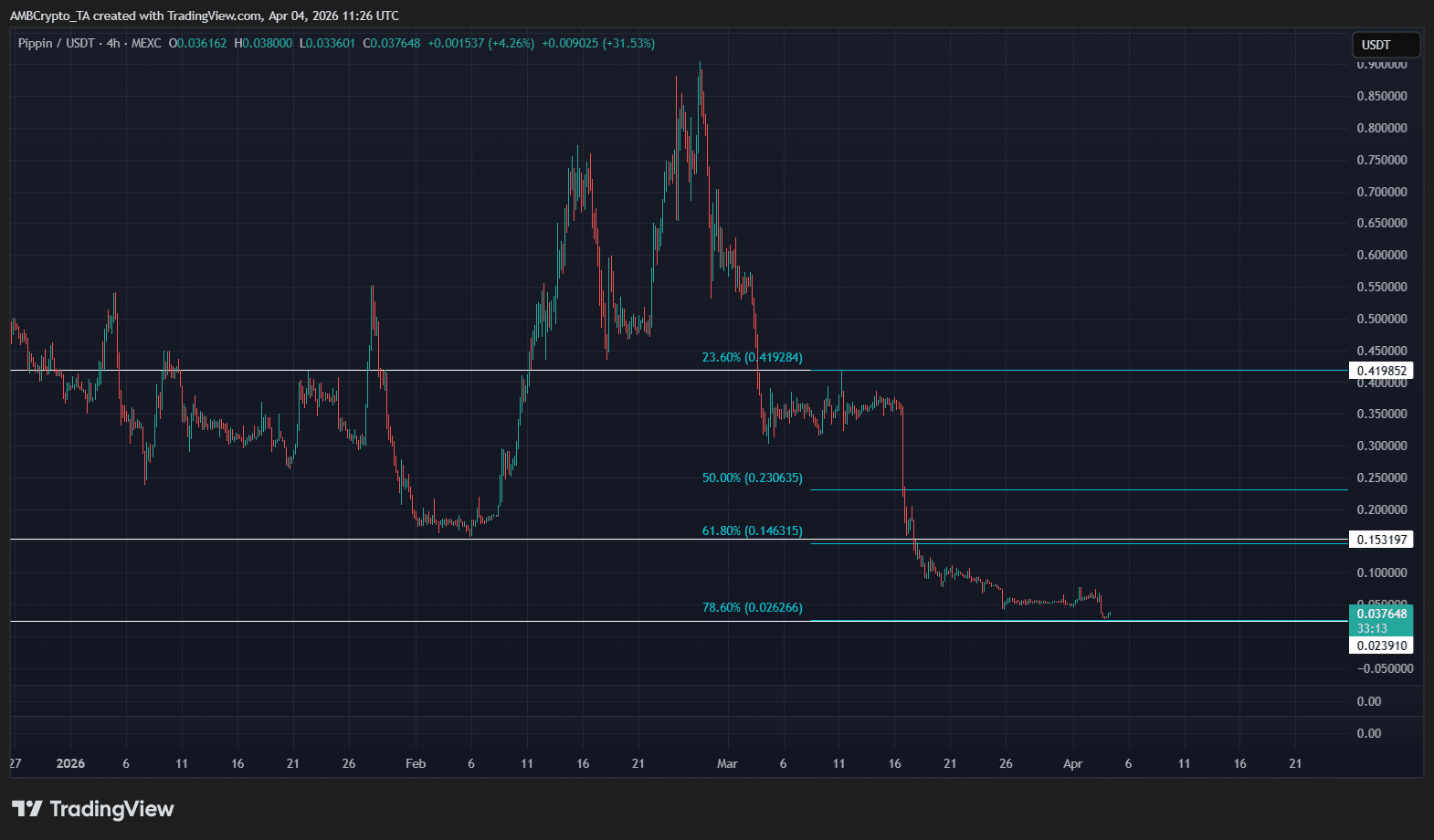
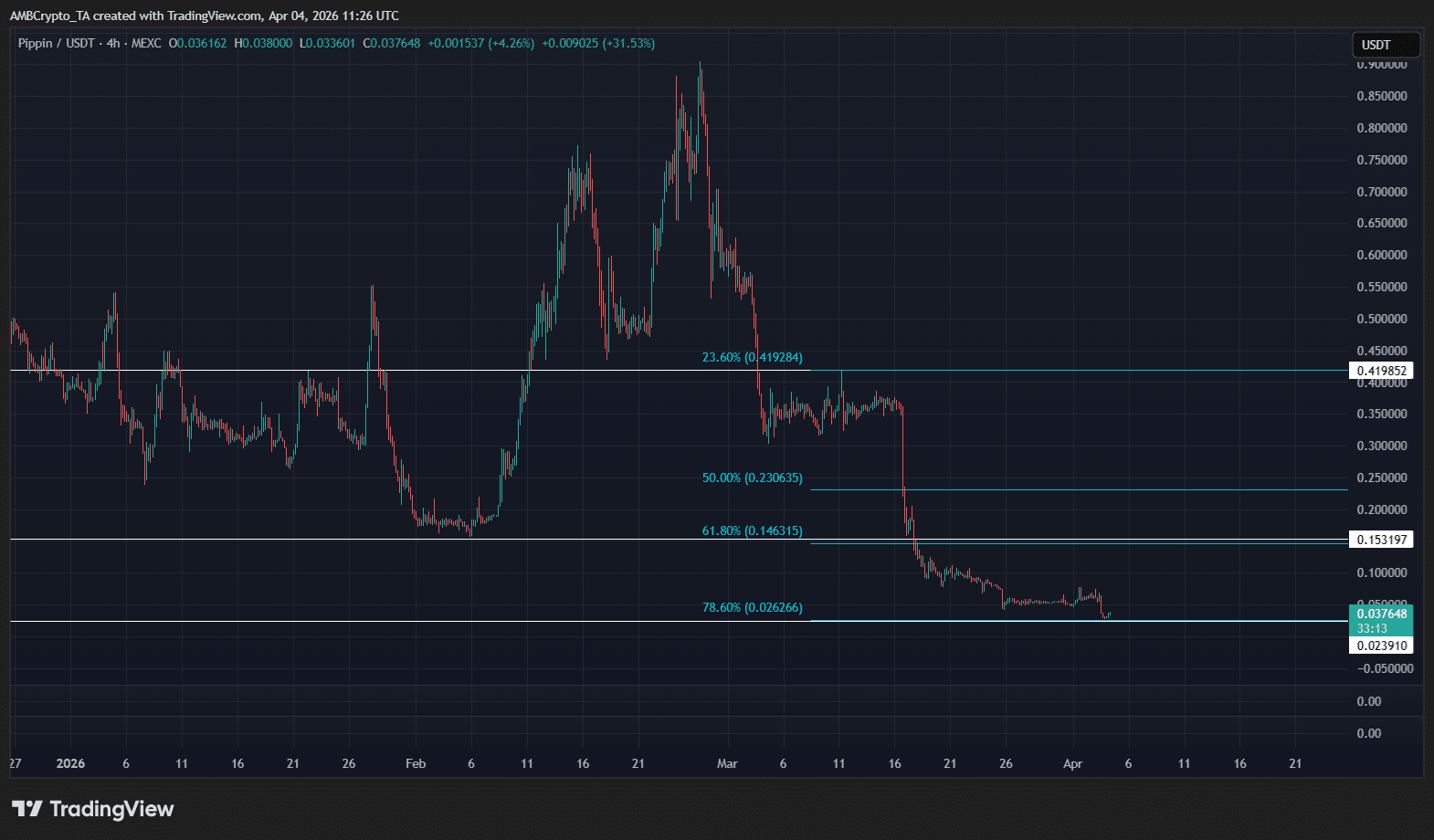
Cấu trúc của PIPPIN hiện phản ánh một thị trường đang cố gắng ổn định sau một đợt sụp đổ mạnh, nơi giá giữ ở mức gần 0,037 USD sau khi mất quyết định mức 0,153 và 0,230 USD. Sự thay đổi này cho thấy động lực đã đảo chiều, khi người mua trước đó thoát hàng và nhu cầu mới đang vật lộn để giành quyền kiểm soát.

Động thái đẩy giá tiến tới mức thoái lui 78,6% gần 0,026 USD, một vùng mà các đợi điều chỉnh sâu thường chậm lại khi việc bán bắt đầu cạn kiệt. Điều này xảy ra vì hầu hết những người nắm giữ yếu đã thoát ra, để lại ít người bán bắt buộc hơn trên thị trường.

Nguồn: PIPPIN/USDT trên TradingView

Tuy nhiên, việc không thể khôi phục mức 0,153 USD cho thấy sự tự tin vẫn thấp, điều này hạn chế đà tăng trưởng bền vững. Người mua do dự, vì xu hướng vẫn chỉ xuống.

Điều này tạo ra sự cân bằng mong manh, nơi giữ vững vùng 0,026–0,037 USD có thể hỗ trợ một đợt phục hồi nhẹ hướng tới 0,15 USD. Động thái đó sẽ báo hiệu sự phục hồi sớm, nhưng không giữ được vùng này có thể kích hoạt một đợt giảm khác, kéo dài giai đoạn thiết lập lại.


Tóm tắt cuối cùng

  • PIPPIN thiết lập lại sau một đợt giảm mạnh và hiệu ứng dây chuyền thanh lý, với giá ổn định gần 0,03–0,037 USD khi áp lực bán giảm dần.
  • PIPPIN hiện phụ thuộc vào nhu cầu, nơi giữ vững hỗ trợ cho phép một đợt bật lại, trong khi thất bại sẽ rủi ro xu hướng giảm tiếp theo.

Criptos en tendencia

Preguntas relacionadas

QPIPPIN (PIPPIN) đã giảm bao nhiêu phần trăm trong đợt bán tháo gần đây?

APIPPIN đã giảm hơn 44% từ mức gần 0,80 USD xuống khoảng 0,035 USD.

QTổng giá trị các vị thế bị thanh lý là bao nhiêu và phần lớn là vị thế nào?

ATổng giá trị các vị thế bị thanh lý là 3,03 triệu USD, trong đó 2,30 triệu USD là các vị thế mua (long).

QMức giá nào hiện được xem là vùng hỗ trợ quan trọng cho PIPPIN?

AVùng hỗ trợ quan trọng hiện tại nằm trong khoảng 0,026 USD đến 0,037 USD.

QChỉ báo RSI cho thấy điều gì về tình trạng của thị trường PIPPIN?

AChỉ báo RSI ở mức 27,9, báo hiệu điều kiện quá bán, cho thấy áp lực bán có thể đang giảm dần.

QKịch bản nào có thể xảy ra nếu PIPPIN không giữ được vùng hỗ trợ?

ANếu không giữ được vùng hỗ trợ 0,026–0,037 USD, giá có thể giảm thêm, kéo dài giai đoạn thiết lập lại thị trường.

Lecturas Relacionadas

Breaking: Google Earth Urgently Pulls Back Nano Banana 2 Image Generation Feature!

Google Earth's newly launched "Create image" feature, powered by the Nano Banana 2 AI image generation model, was abruptly withdrawn shortly after its release due to being "played" by users. The feature allowed users to generate and overlay AI-created visuals directly onto real-world satellite and 3D maps in Google Earth. The tool enabled creative applications like historical recreations (e.g., visualizing ancient Pompeii), generating informational graphics for landmarks, and envisioning architectural projects or futuristic cityscapes on real terrain. It operated under "geospatial grounding," meaning the AI respected the underlying geography, topography, and perspective of the chosen map view. The model also integrated with Gemini to retrieve relevant factual information. However, upon release, users quickly tested its limits. A prominent example involved reimagining Philadelphia's historic Independence Hall as a post-apocalyptic ruin overrun by "happy" zombies, evil clowns, and giant alien mechs. This highlighted both the feature's playful potential and its risks regarding the generation of inappropriate or misleading content on realistic maps, leading to its swift temporary removal. Google stated it would re-release the feature after implementing "enhanced guardrails." Analysts note this move strategically leverages Google's vast proprietary geospatial data, positioning its AI not just for artistic generation but for spatially accurate world visualization—a unique advantage in the competitive AI image generation landscape.

marsbitHace 46 min(s)

Breaking: Google Earth Urgently Pulls Back Nano Banana 2 Image Generation Feature!

marsbitHace 46 min(s)

Altman Admits: Overestimated AI Snatching Jobs! Huang Renxun: The Unemployment Narrative Is Completely Backwards

Sam Altman has revised his earlier predictions about AI rapidly replacing jobs, admitting he overestimated the speed at which AI would eliminate entry-level white-collar roles. Speaking on the "Invest Like the Best" podcast, he stated that people do not truly want an AI CEO, as accountability and human connection remain critical. He found that individuals prefer interacting with people who can be held responsible for decisions. Similarly, NVIDIA's Jensen Huang argued that the narrative of AI destroying jobs is misguided. He distinguishes between tasks and jobs, noting that while AI can automate specific tasks, entire jobs—encompassing communication, judgment, coordination, and accountability—are not eliminated. He cited examples like radiologists and software engineers, where demand for these roles has increased as AI handles repetitive tasks, allowing for business expansion and the creation of more positions. Data from a University of Maryland and LinkUp study supports this, showing that U.S. job postings for new graduates have actually risen, countering the fear of vanishing entry-level roles. However, a significant shift is occurring: the traditional entry-level tasks that help newcomers gain experience are being automated, making initial career access more challenging. The key insight is that as AI takes over standardized tasks, the enduring value of human work shifts toward areas of responsibility, trust-building, and final decision-making—aspects that AI cannot replicate. The real "moat" for professionals lies in these irreplaceable human elements.

marsbitHace 52 min(s)

Altman Admits: Overestimated AI Snatching Jobs! Huang Renxun: The Unemployment Narrative Is Completely Backwards

marsbitHace 52 min(s)

Weekly Editor's Picks (0725-0731)

Weekly Editor's Picks (0725-0731) provides a curated selection of deep analysis, filtering out market noise. Key themes from this week include: **Macro & Policy:** The Federal Reserve's upcoming meeting is marked by high uncertainty, balancing cooling inflation data against persistent price pressures. Meanwhile, the U.S. crypto regulatory Clarity Act faces critical political hurdles, with its 2026 passage probability seen as low. **Investing & Crypto:** Analysis suggests long-term crypto success depends on conviction through volatile cycles, focusing on assets like Bitcoin and core smart contract platforms. A trend noted is the increasing similarity between global equity markets (especially tech) and crypto, driven by narrative and leverage. Several major crypto protocols show strong revenue growth, but this isn't always translating to token price appreciation due to sell pressure and structural factors. **AI & Semiconductors:** Nvidia's rising credit default swap rates signal market concern over AI infrastructure financing risks. The storage sector experienced volatility as markets began pricing in potential 2027 oversupply. Despite a record profitable quarter, SK Hynix's results were deemed "below expectations," reflecting heightened investor demands for future growth visibility. **Markets & DeFi:** TradeXYZ demonstrated remarkable accuracy in pre-market pricing for a major A股 listing. The token ONDO saw gains, linked to its growing role in the on-chain tokenized stock ecosystem. **Ethereum:** Post-Pectra upgrade, a major structural shift is underway as Lido begins migrating millions of ETH to new validator architectures designed for capital efficiency. **Also Highlighted:** Butian's bullish stock market move; OpenAI's Altman promising major advances; Samsung and SK Hynix securing large AI chip deals; Apple reaching a $5T market cap; and ongoing discussions around exchange security following Poolin's bankruptcy case.

marsbitHace 1 hora(s)

Weekly Editor's Picks (0725-0731)

marsbitHace 1 hora(s)

Low Investment Isn't Apple's Immunity Pass

While Meta and Google face investor scrutiny over ballooning AI capital expenditures, Apple's minimal AI investment has paradoxically become a strength. Its market cap recently reclaimed the global top spot, surpassing $5 trillion. The irony is deep: Apple's own AI efforts have lagged, with "Apple Intelligence" delayed and core talent lost, forcing reliance on partners like Google Gemini and Alibaba's Qianwen. Its Q3 FY2026 (Q2 CY) earnings initially seemed stellar. Revenue hit $109.4B (up 16% YoY), with iPhone and Mac sales, growing 22% and 29% respectively, driving most of the growth. However, the stock fell over 8% post-earnings. The primary concern was a weaker Q4 revenue growth forecast of 9-11%, below expectations, due to looming supply chain constraints. Apple is feeling the indirect cost of the AI boom. Soaring memory and chip prices, fueled by massive data center investments from Microsoft, Amazon, and others, are forcing Apple to raise Mac and iPad prices significantly. The upcoming iPhone launch is also expected to see substantial price hikes. Despite avoiding heavy AI infrastructure spending—its capital expenditures are actually down 28%—Apple cannot escape the industry-wide supply and cost pressures. While Apple's operating cash flow remains robust, its substantial R&D spending (up 32% YoY) has yet to yield major AI breakthroughs. As Tim Cook prepares to step down as CEO, Apple faces a challenging transition: balancing its premium hardware success against the strategic and cost pressures of the AI era it has so far cautiously navigated.

marsbitHace 2 hora(s)

Low Investment Isn't Apple's Immunity Pass

marsbitHace 2 hora(s)

Trading

Spot

Artículos destacados

Cómo comprar PIPPIN

¡Bienvenido a HTX.com! Hemos hecho que comprar pippin (PIPPIN) sea simple y conveniente. Sigue nuestra guía paso a paso para iniciar tu viaje de criptos.Paso 1: crea tu cuenta HTXUtiliza tu correo electrónico o número de teléfono para registrarte y obtener una cuenta gratuita en HTX. Experimenta un proceso de registro sin complicaciones y desbloquea todas las funciones.Obtener mi cuentaPaso 2: ve a Comprar cripto y elige tu método de pagoTarjeta de crédito/débito: usa tu Visa o Mastercard para comprar pippin (PIPPIN) al instante.Saldo: utiliza fondos del saldo de tu cuenta HTX para tradear sin problemas.Terceros: hemos agregado métodos de pago populares como Google Pay y Apple Pay para mejorar la comodidad.P2P: tradear directamente con otros usuarios en HTX.Over-the-Counter (OTC): ofrecemos servicios personalizados y tipos de cambio competitivos para los traders.Paso 3: guarda tu pippin (PIPPIN)Después de comprar tu pippin (PIPPIN), guárdalo en tu cuenta HTX. Alternativamente, puedes enviarlo a otro lugar mediante transferencia blockchain o utilizarlo para tradear otras criptomonedas.Paso 4: tradear pippin (PIPPIN)Tradear fácilmente con pippin (PIPPIN) en HTX's mercado spot. Simplemente accede a tu cuenta, selecciona tu par de trading, ejecuta tus trades y monitorea en tiempo real. Ofrecemos una experiencia fácil de usar tanto para principiantes como para traders experimentados.

688 Vistas totalesPublicado en 2025.01.11Actualizado en 2026.06.02

Cómo comprar PIPPIN

Discusiones

Bienvenido a la comunidad de HTX. Aquí puedes mantenerte informado sobre los últimos desarrollos de la plataforma y acceder a análisis profesionales del mercado. A continuación se presentan las opiniones de los usuarios sobre el precio de PIPPIN (PIPPIN).

活动图片