Low Investment Isn't Apple's Immunity Pass

marsbitPublicado a 2026-08-01Actualizado a 2026-08-01

Resumen

While Meta and Google face investor scrutiny over ballooning AI capital expenditures, Apple's minimal AI investment has paradoxically become a strength. Its market cap recently reclaimed the global top spot, surpassing $5 trillion. The irony is deep: Apple's own AI efforts have lagged, with "Apple Intelligence" delayed and core talent lost, forcing reliance on partners like Google Gemini and Alibaba's Qianwen. Its Q3 FY2026 (Q2 CY) earnings initially seemed stellar. Revenue hit $109.4B (up 16% YoY), with iPhone and Mac sales, growing 22% and 29% respectively, driving most of the growth. However, the stock fell over 8% post-earnings. The primary concern was a weaker Q4 revenue growth forecast of 9-11%, below expectations, due to looming supply chain constraints. Apple is feeling the indirect cost of the AI boom. Soaring memory and chip prices, fueled by massive data center investments from Microsoft, Amazon, and others, are forcing Apple to raise Mac and iPad prices significantly. The upcoming iPhone launch is also expected to see substantial price hikes. Despite avoiding heavy AI infrastructure spending—its capital expenditures are actually down 28%—Apple cannot escape the industry-wide supply and cost pressures. While Apple's operating cash flow remains robust, its substantial R&D spending (up 32% YoY) has yet to yield major AI breakthroughs. As Tim Cook prepares to step down as CEO, Apple faces a challenging transition: balancing its premium hardware success against the ...

By Shan Shang, Author: I Xue Xingxing, Editor: I Jiang Jiao

While tech giants like Meta and Google face skepticism due to their ever-ballooning AI capital expenditures, Apple's unproductive AI efforts have ironically become a bright spot.

This week, Apple's market cap surpassed Nvidia's, reclaiming the top global spot, with its intraday market value briefly breaking through $3 trillion. Prior to the earnings release, Apple's stock price had accumulated a gain of over 24% this year, making it the only one among the "Magnificent Seven" to achieve double-digit growth.

This is somewhat ironic. Over the past two years, Apple has suffered repeated failures in the AI field. Apple Intelligence has been repeatedly delayed, core AI talent has been continuously lost, ultimately forcing the company to rely on Google's Gemini and Alibaba's Qianwen for implementation. As domestic automakers would say, this is handing over one's soul.

However, as peers' AI spending wars become increasingly extravagant and blind, investors are beginning to panic about whether these investments will ever see returns. Although Apple is behind in AI, it also hasn't burdened itself with heavy capital expenditures. People used to criticize Apple for its slow AI progress, but now they're praising its virtue of restraint.

——This is probably the so-called 'benefit from peer comparison'; standing still can also be a form of leading.

However, the market's enthusiasm didn't last long. In the early morning of July 31, Beijing time, Apple released its Q3 2026 fiscal year (calendar year Q2) earnings report. Revenues from iPhone, Mac, and other businesses significantly exceeded market expectations, driving quarterly revenue up 16% year-over-year, setting a new historical record for the period.

But after the report's release, Apple's stock price fell over 8% in after-hours trading. Meanwhile, Microsoft, Nvidia, and Amazon's stock prices saw noticeable recoveries. Microsoft surged 15.51% in a single day, and Amazon, which also reported earnings alongside Apple, rose over 10% in after-hours trading.

iPhone Saves Apple Once Again

Looking solely at the quarter's performance, Apple delivered a quite outstanding earnings report, with multiple metrics hitting historical highs for the period. The report shows Apple's quarterly revenue was $109.417 billion, up 16.4% year-over-year; net profit was $29.789 billion, up 27.1% year-over-year.

Cook proudly announced in a press release, "We delivered our strongest June quarter ever, with double-digit revenue growth in iPhone, Mac, Services, and across all geographic segments."

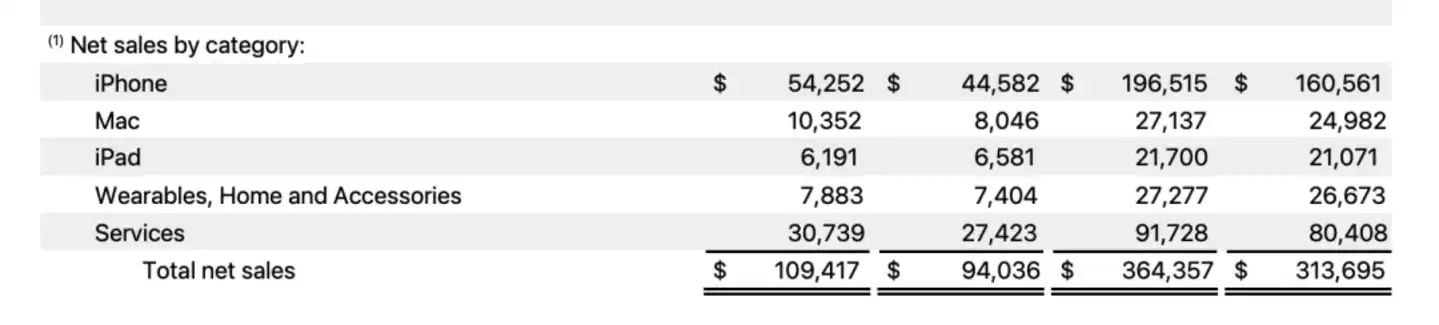
iPhone and Mac once again saved Apple, together contributing to about 78% of Apple's quarterly revenue increment, the biggest drivers of its revenue growth. iPhone revenue for the quarter grew 21.7% year-over-year to $54.252 billion, accounting for about 63% of Apple's revenue increment. iPhone's share of total company revenue also rose from 47.4% in the same period last year to 49.6%.
Apple Earnings Report

Omdia's previously released Q2 2026 global smartphone shipment data shows that while global smartphone shipments declined 6% year-over-year for the quarter, Apple achieved 23% year-over-year growth, ranking second globally, with shipment volume hitting a historical high for the period. In contrast, Samsung's market share only grew 5% for the quarter, while Xiaomi, OPPO, and Vivo all saw significant declines, with Xiaomi down 26% year-over-year.

The facts prove that although the marketing narrative of AI phones has been building wave after wave, at least from the current market perspective, what consumers are more willing to pay for is hardware performance and product design. The unintelligent Siri hasn't affected iPhone's popularity at all.

Although Mac's contribution to absolute revenue increment is not as high as iPhone's, its growth rate far exceeded market expectations. Quarterly Mac revenue grew 28.7% year-over-year to $10.352 billion, $1.84 billion higher than market expectations. This was achieved despite supply constraints for high-end chips and some Mac products being in short supply. Apple management previously stated that demand for the MacBook Neo far exceeded expectations, and products like the Mac mini and Mac Studio have also been selling well driven by AI development demand.

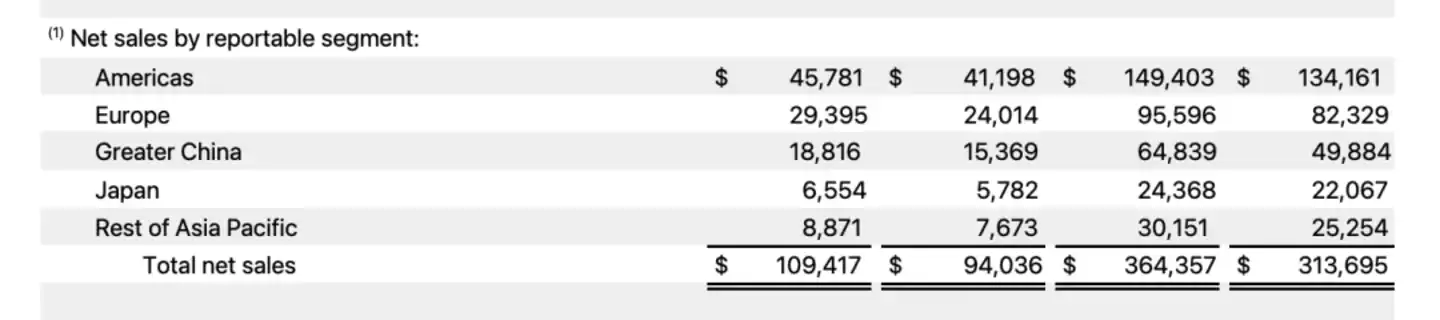
Apple achieved double-digit growth in nearly all global markets. Americas revenue grew 11.1%, Europe and Greater China both grew 22.4%, Japan grew 13.4%, and other Asia-Pacific markets grew 15.6%. However, this quarter's revenue growth rate in the Greater China region was slightly below market expectations and also lower than last quarter's 28% growth rate.
Apple Earnings Report

Apart from iPhone and Mac, Apple's other businesses performed relatively flat. iPad revenue fell 5.9% year-over-year to $6.191 billion, the only product line to decline year-over-year. Cook attributed this to a high base from last year's cheaper iPad. Wearables, Home, and Accessories revenue grew 6.5% year-over-year to $7.883 billion.

Against the favorable backdrop of product revenue growing 18.1% year-over-year, Apple's quarterly Services revenue was $30.739 billion, growing only 12.1% year-over-year, both lower than the company's overall growth rate and below market expectations. In comparison, Apple's Services revenue growth last quarter was 16.3%.

The slowdown in Services growth is partly due to the "Apple Tax" beginning to loosen. In recent years, more and more countries and regions have begun challenging the closed ecosystem of the App Store.

The EU has already required Apple to open up to third-party app stores, and the Epic Games lawsuit against Apple forced it to allow external payment links in the US. In March this year, under domestic regulatory pressure, Apple also lowered the commission rate for China's App Store.

The gross margin for the Services business reached 75.6%, far higher than the Products business's 40.1%. Its slowing growth has somewhat impacted Apple's profit performance. Apple's gross margin last quarter was 49.3%; this quarter, after deducting tariff refunds, the gross margin is approximately 48.1%, an actual sequential decline of about 1.2 percentage points.

However, Apple's Services revenue may see some growth with the landing of the new Siri. Apple's new AI-powered Siri and Apple Intelligence are set to launch next quarter. Cook hinted during the earnings call that due to rising computing costs, some AI features might require payment to use.

Avoided AI Spending Burn, But Not AI Price Hikes

Although Apple delivered a quarter of bright growth, the market generally held a pessimistic view. After the earnings release, Apple's after-hours stock price plunged over 8%.

The direct trigger was Apple's pessimistic guidance for the next quarter. Apple expects next quarter's revenue to grow only 9% to 11% year-over-year, below market expectations. Apple management stated during the earnings call that besides the impact of foreign exchange fluctuations, the negative effects of supply chain constraints will intensify quarter by quarter after Q3, adversely affecting the iPhone, Mac, and iPad business lines.

Cook stated that supply chain constraints are mainly concentrated in the Mac product line, with the root cause being extremely strong market demand that they don't have enough capacity to absorb. "In the coming quarter, we will face tremendous pressure on the supply chain side." Apple's M-series chips are mainly manufactured by TSMC, but TSMC's capacity is also increasingly being ceded to AI chips.

Prior to this, Apple has already had to significantly raise prices due to rising memory and chip costs, covering many product lines including Mac and iPad, with some product prices increasing by over 3,000 yuan at the highest. Cook described during the earnings call that the current rise in memory prices is equivalent to a once-in-a-century flood, showing exponential growth, forcing them to adjust prices.

But the last price increase did not include Apple's most important iPhone product line. The market expects Apple's new iPhone to be released this autumn to see significant price hikes, with the starting price of the foldable iPhone possibly as high as over $2,000. The hot sales of iPhone last quarter might partly be related to consumers' panic buying before the price adjustment—considering new models are about to be released, the past second quarter has typically been a slow sales season for iPhone.

Under the pressure of price hikes, market confidence in iPhone sales next quarter is insufficient. Apple management's guidance for iPhone revenue growth next quarter is only around 15%, below Wall Street's expectation of 17.6%.

Apple is already preparing for the increasingly severe supply chain constraints. This quarter, Apple's inventory rose from last quarter's $6.747 billion to $11.092 billion, a sequential increase of 64.4% and an 87.2% year-over-year increase from $5.925 billion in the same period last fiscal year, nearly doubling year-over-year.

According to Bloomberg, Apple is negotiating memory chip purchases with ChangXin Memory Technologies (CXMT) and Yangtze Memory Technologies Corp (YMTC). But this move faces opposition from the US government and Micron Technology. Cook said during the earnings call that the global DRAM market is currently controlled by three companies—Samsung, Micron, and SK Hynix—and adding suppliers would help improve supply and prices.

Not spending on AI doesn't allow Apple to stay out of this AI frenzy. The record-breaking AI data center construction by tech giants like Microsoft, Google, Amazon, and Meta will also directly impact Apple's memory and chip supply, subsequently hurting its revenue.

Currently, the full-year AI capital expenditures announced just by Microsoft, Google, Amazon, and Meta will exceed $720 billion, far surpassing last year's $455.8 billion. Massive AI investments directly caused Google and Amazon's free cash flow to turn negative this quarter, while Meta's free cash flow also plummeted 91%.

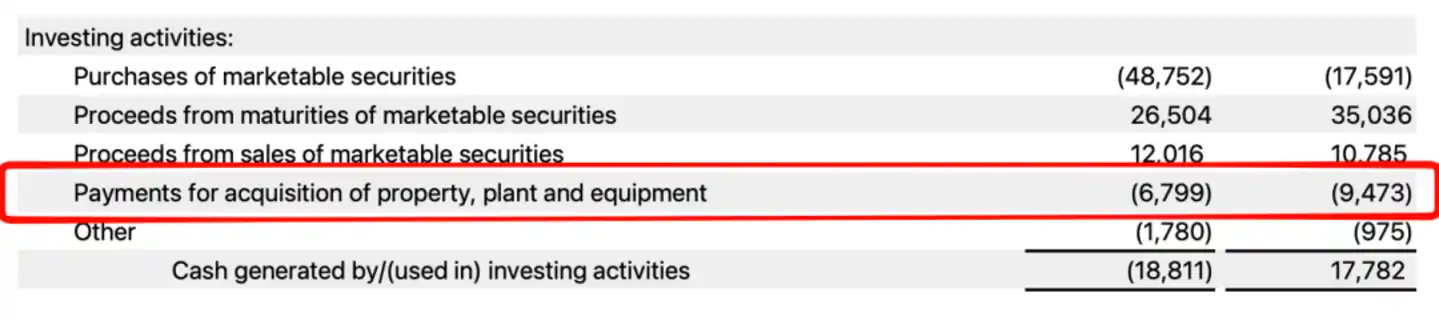
In comparison, Apple's capital expenditures this year have not only not grown but have even declined. In the first three quarters of fiscal 2026, Apple's expenditures on purchasing property, plant, and equipment were only $6.799 billion, down 28.2% year-over-year.
Apple Earnings Report

Restrained capital expenditures helped Apple's quarterly operating cash flow hit a historical high for the period. Operating cash flow for the first nine months of this fiscal year reached $117 billion, up 43.1% year-over-year. Cook is truly a master of capital management, helping the company save money even as he approaches retirement.

This is not to say Apple neglects AI investment. Compared to other manufacturers' greater enthusiasm for investing in AI computing power, Apple's investments seem to flow more into the R&D field.

This quarter, Apple's R&D expenses reached $11.729 billion, up 32.3% year-over-year, a growth rate approximately twice that of revenue. For the first three quarters of fiscal 2026, Apple's R&D expenses were $34.035 billion, up 32.5% year-over-year.

Just, such large-scale R&D investment has ultimately failed to yield many significant AI achievements, which is another level of "Only Apple can do."

This was Cook's last time participating in Apple's earnings call. This September, he will officially step down as Apple CEO. Cook specifically thanked the outside world during the earnings call, "Thank you to all our shareholders, especially the long-term shareholders who have trusted us over the years."

He said he has full confidence that Apple's future is bright.

Criptos en tendencia

Preguntas relacionadas

QAccording to the article, why did Apple's stock price surge despite its lack of significant achievements in AI?

AThe article states that while other tech giants like Meta and Google are facing skepticism due to their massive and escalating AI capital expenditures, Apple's relative lack of such spending became a highlight. Investors began to panic about whether the huge AI investments by others would yield returns. Therefore, Apple's slower pace in AI, which previously drew criticism, was later viewed as a virtue of restraint, leading to a stock price increase. The article sums it up as 'it's all thanks to the contrast with peers, where standing still can also be a form of leading.'

QWhat were the main drivers of Apple's revenue growth in the reported quarter?

AThe main drivers of Apple's revenue growth in the reported quarter were the iPhone and Mac product lines. Specifically, iPhone revenue increased by 21.7% year-over-year, contributing approximately 63% of the company's total revenue increment. Mac revenue also grew significantly by 28.7%. Together, these two product lines accounted for about 78% of Apple's total revenue growth for the quarter.

QWhat factor is cited as the primary reason for the negative market reaction following Apple's strong quarterly earnings report?

AThe primary reason for the negative market reaction (a sharp drop in after-hours trading) was Apple's pessimistic guidance for the next quarter. Apple projected revenue growth of only 9% to 11% for the upcoming quarter, which fell below market expectations. Management cited supply chain constraints, particularly affecting the Mac product line due to high demand and insufficient capacity, as a major factor that would negatively impact several business lines in the quarters ahead.

QHow does Apple's approach to AI capital expenditure differ from companies like Microsoft, Google, and Amazon?

AApple's approach to AI capital expenditure is significantly more restrained. While companies like Microsoft, Google, Amazon, and Meta have announced record-breaking AI capital expenditures (exceeding $720 billion in total for the year), Apple's capital spending on property, plant, and equipment has actually decreased. In the first three quarters of the 2026 fiscal year, Apple's spending in this area was $6.799 billion, a 28.2% year-over-year decline. This financial prudence has helped Apple achieve record operating cash flow. However, the article notes Apple's research and development (R&D) expenses have grown substantially, suggesting its AI investment is more focused on R&D rather than massive infrastructure build-out.

QWhat are the key supply chain challenges Apple is facing, and how is it attempting to address them?

AApple is facing severe supply chain constraints, primarily in memory (DRAM) and chip supply. The article attributes this to the booming demand for AI chips from other tech giants, which pressures the production capacity of suppliers like TSMC. Rising memory and chip costs have forced Apple to significantly increase prices for products like Mac and iPad. To address these challenges, Apple is reportedly negotiating with Chinese memory chip manufacturers ChangXin Memory Technologies and Yangtze Memory Technologies to diversify its supply chain, although this move faces opposition from the U.S. government and Micron Technology.

Lecturas Relacionadas

Breaking: Google Earth Urgently Pulls Back Nano Banana 2 Image Generation Feature!

Google Earth's newly launched "Create image" feature, powered by the Nano Banana 2 AI image generation model, was abruptly withdrawn shortly after its release due to being "played" by users. The feature allowed users to generate and overlay AI-created visuals directly onto real-world satellite and 3D maps in Google Earth. The tool enabled creative applications like historical recreations (e.g., visualizing ancient Pompeii), generating informational graphics for landmarks, and envisioning architectural projects or futuristic cityscapes on real terrain. It operated under "geospatial grounding," meaning the AI respected the underlying geography, topography, and perspective of the chosen map view. The model also integrated with Gemini to retrieve relevant factual information. However, upon release, users quickly tested its limits. A prominent example involved reimagining Philadelphia's historic Independence Hall as a post-apocalyptic ruin overrun by "happy" zombies, evil clowns, and giant alien mechs. This highlighted both the feature's playful potential and its risks regarding the generation of inappropriate or misleading content on realistic maps, leading to its swift temporary removal. Google stated it would re-release the feature after implementing "enhanced guardrails." Analysts note this move strategically leverages Google's vast proprietary geospatial data, positioning its AI not just for artistic generation but for spatially accurate world visualization—a unique advantage in the competitive AI image generation landscape.

marsbitHace 53 min(s)

Breaking: Google Earth Urgently Pulls Back Nano Banana 2 Image Generation Feature!

marsbitHace 53 min(s)

Altman Admits: Overestimated AI Snatching Jobs! Huang Renxun: The Unemployment Narrative Is Completely Backwards

Sam Altman has revised his earlier predictions about AI rapidly replacing jobs, admitting he overestimated the speed at which AI would eliminate entry-level white-collar roles. Speaking on the "Invest Like the Best" podcast, he stated that people do not truly want an AI CEO, as accountability and human connection remain critical. He found that individuals prefer interacting with people who can be held responsible for decisions. Similarly, NVIDIA's Jensen Huang argued that the narrative of AI destroying jobs is misguided. He distinguishes between tasks and jobs, noting that while AI can automate specific tasks, entire jobs—encompassing communication, judgment, coordination, and accountability—are not eliminated. He cited examples like radiologists and software engineers, where demand for these roles has increased as AI handles repetitive tasks, allowing for business expansion and the creation of more positions. Data from a University of Maryland and LinkUp study supports this, showing that U.S. job postings for new graduates have actually risen, countering the fear of vanishing entry-level roles. However, a significant shift is occurring: the traditional entry-level tasks that help newcomers gain experience are being automated, making initial career access more challenging. The key insight is that as AI takes over standardized tasks, the enduring value of human work shifts toward areas of responsibility, trust-building, and final decision-making—aspects that AI cannot replicate. The real "moat" for professionals lies in these irreplaceable human elements.

marsbitHace 58 min(s)

Altman Admits: Overestimated AI Snatching Jobs! Huang Renxun: The Unemployment Narrative Is Completely Backwards

marsbitHace 58 min(s)

Weekly Editor's Picks (0725-0731)

Weekly Editor's Picks (0725-0731) provides a curated selection of deep analysis, filtering out market noise. Key themes from this week include: **Macro & Policy:** The Federal Reserve's upcoming meeting is marked by high uncertainty, balancing cooling inflation data against persistent price pressures. Meanwhile, the U.S. crypto regulatory Clarity Act faces critical political hurdles, with its 2026 passage probability seen as low. **Investing & Crypto:** Analysis suggests long-term crypto success depends on conviction through volatile cycles, focusing on assets like Bitcoin and core smart contract platforms. A trend noted is the increasing similarity between global equity markets (especially tech) and crypto, driven by narrative and leverage. Several major crypto protocols show strong revenue growth, but this isn't always translating to token price appreciation due to sell pressure and structural factors. **AI & Semiconductors:** Nvidia's rising credit default swap rates signal market concern over AI infrastructure financing risks. The storage sector experienced volatility as markets began pricing in potential 2027 oversupply. Despite a record profitable quarter, SK Hynix's results were deemed "below expectations," reflecting heightened investor demands for future growth visibility. **Markets & DeFi:** TradeXYZ demonstrated remarkable accuracy in pre-market pricing for a major A股 listing. The token ONDO saw gains, linked to its growing role in the on-chain tokenized stock ecosystem. **Ethereum:** Post-Pectra upgrade, a major structural shift is underway as Lido begins migrating millions of ETH to new validator architectures designed for capital efficiency. **Also Highlighted:** Butian's bullish stock market move; OpenAI's Altman promising major advances; Samsung and SK Hynix securing large AI chip deals; Apple reaching a $5T market cap; and ongoing discussions around exchange security following Poolin's bankruptcy case.

marsbitHace 1 hora(s)

Weekly Editor's Picks (0725-0731)

marsbitHace 1 hora(s)

PA Graphics Explanation | One Chart to Understand the Major Web3 Events in August 2026

**PANews Crypto Calendar: Key Web3 Events in August 2026** PANews introduces its revamped crypto calendar, featuring comprehensive coverage, flexible filtering, and easy export options. The market in August will be shaped by multiple key events across macroeconomics, regulation, tokenomics, and project developments: * **Macro & Policy:** Key US economic data releases (July Non-Farm Payrolls, CPI), the Federal Reserve meeting minutes, and the Jackson Hole Economic Symposium will be in focus. On the regulatory front, the US Senate plans to release a new draft of the *CLARITY Act*, while the EU's expanded crypto ban against Belarus comes into effect. * **Token Unlocks:** Significant token unlocks are scheduled for assets including ENA, AVAX, CONX, ZRO, and KAITO, which may influence market volatility. * **Project Updates & Shutdowns:** Several services, including Exchange Art, Ctrl Wallet, Zapper, NFTfi, and Summer.fi, are set to cease operations or undergo major adjustments. Users are advised to manage their assets accordingly. * **Corporate Activity:** Q2 earnings reports from companies like SpaceX, Circle, and Nvidia are due. Unitree Robotics will initiate its IPO subscription on the STAR Market, and Moonshot AI plans to begin a Pre-IPO financing round. * **Industry Events:** Major conferences such as Bitcoin Asia 2026 and the 2026 Digital Expo will take place. The overarching market narrative for August will revolve around macroeconomic expectations, regulatory developments, token unlock schedules, and ongoing industry consolidation.

marsbitHace 2 hora(s)

PA Graphics Explanation | One Chart to Understand the Major Web3 Events in August 2026

marsbitHace 2 hora(s)

Trading

Spot

Artículos destacados

Qué es $S$

Entendiendo SPERO: Una Visión General Completa Introducción a SPERO A medida que el panorama de la innovación continúa evolucionando, la aparición de tecnologías web3 y proyectos de criptomonedas juega un papel fundamental en la configuración del futuro digital. Un proyecto que ha atraído la atención en este campo dinámico es SPERO, denotado como SPERO,$$s$. Este artículo tiene como objetivo reunir y presentar información detallada sobre SPERO, para ayudar a entusiastas e inversores a comprender sus fundamentos, objetivos e innovaciones dentro de los dominios web3 y cripto. ¿Qué es SPERO,$$s$? SPERO,$$s$ es un proyecto único dentro del espacio cripto que busca aprovechar los principios de descentralización y tecnología blockchain para crear un ecosistema que promueva la participación, la utilidad y la inclusión financiera. El proyecto está diseñado para facilitar interacciones de igual a igual de nuevas maneras, proporcionando a los usuarios soluciones y servicios financieros innovadores. En su esencia, SPERO,$$s$ tiene como objetivo empoderar a los individuos al proporcionar herramientas y plataformas que mejoren la experiencia del usuario en el espacio de las criptomonedas. Esto incluye habilitar métodos de transacción más flexibles, fomentar iniciativas impulsadas por la comunidad y crear caminos para oportunidades financieras a través de aplicaciones descentralizadas (dApps). La visión subyacente de SPERO,$$s$ gira en torno a la inclusividad, buscando cerrar brechas dentro de las finanzas tradicionales mientras aprovecha los beneficios de la tecnología blockchain. ¿Quién es el Creador de SPERO,$$s$? La identidad del creador de SPERO,$$s$ sigue siendo algo oscura, ya que hay recursos públicos limitados que proporcionan información de fondo detallada sobre su(s) fundador(es). Esta falta de transparencia puede derivarse del compromiso del proyecto con la descentralización, una ética que muchos proyectos web3 comparten, priorizando las contribuciones colectivas sobre el reconocimiento individual. Al centrar las discusiones en torno a la comunidad y sus objetivos colectivos, SPERO,$$s$ encarna la esencia del empoderamiento sin señalar a individuos específicos. Como tal, comprender la ética y la misión de SPERO sigue siendo más importante que identificar a un creador singular. ¿Quiénes son los Inversores de SPERO,$$s$? SPERO,$$s$ cuenta con el apoyo de una diversa gama de inversores que van desde capitalistas de riesgo hasta inversores ángeles dedicados a fomentar la innovación en el sector cripto. El enfoque de estos inversores generalmente se alinea con la misión de SPERO, priorizando proyectos que prometen avances tecnológicos sociales, inclusión financiera y gobernanza descentralizada. Estas fundaciones de inversores suelen estar interesadas en proyectos que no solo ofrecen productos innovadores, sino que también contribuyen positivamente a la comunidad blockchain y sus ecosistemas. El respaldo de estos inversores refuerza a SPERO,$$s$ como un contendiente notable en el dominio de proyectos cripto que evoluciona rápidamente. ¿Cómo Funciona SPERO,$$s$? SPERO,$$s$ emplea un marco multifacético que lo distingue de los proyectos de criptomonedas convencionales. Aquí hay algunas de las características clave que subrayan su singularidad e innovación: Gobernanza Descentralizada: SPERO,$$s$ integra modelos de gobernanza descentralizada, empoderando a los usuarios para participar activamente en los procesos de toma de decisiones sobre el futuro del proyecto. Este enfoque fomenta un sentido de propiedad y responsabilidad entre los miembros de la comunidad. Utilidad del Token: SPERO,$$s$ utiliza su propio token de criptomoneda, diseñado para servir diversas funciones dentro del ecosistema. Estos tokens permiten transacciones, recompensas y la facilitación de servicios ofrecidos en la plataforma, mejorando la participación y la utilidad general. Arquitectura en Capas: La arquitectura técnica de SPERO,$$s$ apoya la modularidad y escalabilidad, permitiendo la integración fluida de características y aplicaciones adicionales a medida que el proyecto evoluciona. Esta adaptabilidad es fundamental para mantener la relevancia en el cambiante paisaje cripto. Participación de la Comunidad: El proyecto enfatiza iniciativas impulsadas por la comunidad, empleando mecanismos que incentivan la colaboración y la retroalimentación. Al nutrir una comunidad sólida, SPERO,$$s$ puede abordar mejor las necesidades de los usuarios y adaptarse a las tendencias del mercado. Enfoque en la Inclusión: Al ofrecer tarifas de transacción bajas e interfaces amigables para el usuario, SPERO,$$s$ busca atraer a una base de usuarios diversa, incluyendo a individuos que anteriormente pueden no haber participado en el espacio cripto. Este compromiso con la inclusión se alinea con su misión general de empoderamiento a través de la accesibilidad. Cronología de SPERO,$$s$ Entender la historia de un proyecto proporciona información crucial sobre su trayectoria de desarrollo y hitos. A continuación se presenta una cronología sugerida que mapea eventos significativos en la evolución de SPERO,$$s$: Fase de Conceptualización e Ideación: Las ideas iniciales que forman la base de SPERO,$$s$ fueron concebidas, alineándose estrechamente con los principios de descentralización y enfoque comunitario dentro de la industria blockchain. Lanzamiento del Whitepaper del Proyecto: Tras la fase conceptual, se lanzó un whitepaper completo que detalla la visión, los objetivos y la infraestructura tecnológica de SPERO,$$s$ para generar interés y retroalimentación de la comunidad. Construcción de Comunidad y Primeras Interacciones: Se realizaron esfuerzos de divulgación activa para construir una comunidad de primeros adoptantes y posibles inversores, facilitando discusiones en torno a los objetivos del proyecto y obteniendo apoyo. Evento de Generación de Tokens: SPERO,$$s$ llevó a cabo un evento de generación de tokens (TGE) para distribuir sus tokens nativos a los primeros seguidores y establecer liquidez inicial dentro del ecosistema. Lanzamiento de la dApp Inicial: La primera aplicación descentralizada (dApp) asociada con SPERO,$$s$ se puso en marcha, permitiendo a los usuarios interactuar con las funcionalidades centrales de la plataforma. Desarrollo Continuo y Alianzas: Actualizaciones y mejoras continuas a las ofertas del proyecto, incluyendo alianzas estratégicas con otros actores en el espacio blockchain, han moldeado a SPERO,$$s$ en un jugador competitivo y en evolución en el mercado cripto. Conclusión SPERO,$$s$ se erige como un testimonio del potencial de web3 y las criptomonedas para revolucionar los sistemas financieros y empoderar a los individuos. Con un compromiso con la gobernanza descentralizada, la participación comunitaria y funcionalidades diseñadas de manera innovadora, allana el camino hacia un paisaje financiero más inclusivo. Como con cualquier inversión en el espacio cripto que evoluciona rápidamente, se anima a los posibles inversores y usuarios a investigar a fondo y participar de manera reflexiva con los desarrollos en curso dentro de SPERO,$$s$. El proyecto muestra el espíritu innovador de la industria cripto, invitando a una mayor exploración de sus innumerables posibilidades. Mientras el viaje de SPERO,$$s$ aún se desarrolla, sus principios fundamentales pueden, de hecho, influir en el futuro de cómo interactuamos con la tecnología, las finanzas y entre nosotros en ecosistemas digitales interconectados.

207 Vistas totalesPublicado en 2024.12.17Actualizado en 2024.12.17

Qué es $S$

Qué es AGENT S

Agent S: El Futuro de la Interacción Autónoma en Web3 Introducción En el paisaje en constante evolución de Web3 y las criptomonedas, las innovaciones están redefiniendo constantemente cómo los individuos interactúan con las plataformas digitales. Uno de estos proyectos pioneros, Agent S, promete revolucionar la interacción humano-computadora a través de su marco agente abierto. Al allanar el camino para interacciones autónomas, Agent S busca simplificar tareas complejas, ofreciendo aplicaciones transformadoras en inteligencia artificial (IA). Esta exploración detallada profundizará en las complejidades del proyecto, sus características únicas y las implicaciones para el dominio de las criptomonedas. ¿Qué es Agent S? Agent S se presenta como un marco agente abierto innovador, diseñado específicamente para abordar tres desafíos fundamentales en la automatización de tareas informáticas: Adquisición de Conocimiento Específico del Dominio: El marco aprende inteligentemente de diversas fuentes de conocimiento externas y experiencias internas. Este enfoque dual le permite construir un rico repositorio de conocimiento específico del dominio, mejorando su rendimiento en la ejecución de tareas. Planificación a Largo Plazo de Tareas: Agent S emplea planificación jerárquica aumentada por la experiencia, un enfoque estratégico que facilita la descomposición y ejecución eficiente de tareas complejas. Esta característica mejora significativamente su capacidad para gestionar múltiples subtareas de manera eficiente y efectiva. Manejo de Interfaces Dinámicas y No Uniformes: El proyecto introduce la Interfaz Agente-Computadora (ACI), una solución innovadora que mejora la interacción entre agentes y usuarios. Utilizando Modelos de Lenguaje Multimodal de Gran Escala (MLLMs), Agent S puede navegar y manipular diversas interfaces gráficas de usuario sin problemas. A través de estas características pioneras, Agent S proporciona un marco robusto que aborda las complejidades involucradas en la automatización de la interacción humana con las máquinas, preparando el terreno para una multitud de aplicaciones en IA y más allá. ¿Quién es el Creador de Agent S? Si bien el concepto de Agent S es fundamentalmente innovador, la información específica sobre su creador sigue siendo elusiva. El creador es actualmente desconocido, lo que resalta ya sea la etapa incipiente del proyecto o la elección estratégica de mantener a los miembros fundadores en el anonimato. Independientemente de la anonimidad, el enfoque sigue siendo en las capacidades y el potencial del marco. ¿Quiénes son los Inversores de Agent S? Dado que Agent S es relativamente nuevo en el ecosistema criptográfico, la información detallada sobre sus inversores y patrocinadores financieros no está documentada explícitamente. La falta de información disponible públicamente sobre las bases de inversión u organizaciones que apoyan el proyecto plantea preguntas sobre su estructura de financiamiento y hoja de ruta de desarrollo. Comprender el respaldo es crucial para evaluar la sostenibilidad del proyecto y su posible impacto en el mercado. ¿Cómo Funciona Agent S? En el núcleo de Agent S se encuentra una tecnología de vanguardia que le permite funcionar de manera efectiva en diversos entornos. Su modelo operativo se basa en varias características clave: Interacción Humano-Computadora Similar a la Humana: El marco ofrece planificación avanzada de IA, esforzándose por hacer que las interacciones con las computadoras sean más intuitivas. Al imitar el comportamiento humano en la ejecución de tareas, promete elevar las experiencias de los usuarios. Memoria Narrativa: Empleada para aprovechar experiencias de alto nivel, Agent S utiliza memoria narrativa para hacer un seguimiento de las historias de tareas, mejorando así sus procesos de toma de decisiones. Memoria Episódica: Esta característica proporciona a los usuarios una guía paso a paso, permitiendo que el marco ofrezca apoyo contextual a medida que se desarrollan las tareas. Soporte para OpenACI: Con la capacidad de ejecutarse localmente, Agent S permite a los usuarios mantener el control sobre sus interacciones y flujos de trabajo, alineándose con la ética descentralizada de Web3. Fácil Integración con APIs Externas: Su versatilidad y compatibilidad con varias plataformas de IA aseguran que Agent S pueda encajar sin problemas en ecosistemas tecnológicos existentes, convirtiéndolo en una opción atractiva para desarrolladores y organizaciones. Estas funcionalidades contribuyen colectivamente a la posición única de Agent S dentro del espacio cripto, ya que automatiza tareas complejas y de múltiples pasos con una intervención humana mínima. A medida que el proyecto evoluciona, sus posibles aplicaciones en Web3 podrían redefinir cómo se desarrollan las interacciones digitales. Cronología de Agent S El desarrollo y los hitos de Agent S pueden encapsularse en una cronología que resalta sus eventos significativos: 27 de septiembre de 2024: El concepto de Agent S fue lanzado en un documento de investigación integral titulado “Un Marco Agente Abierto que Usa Computadoras Como un Humano”, mostrando las bases del proyecto. 10 de octubre de 2024: El documento de investigación fue puesto a disposición del público en arXiv, ofreciendo una exploración profunda del marco y su evaluación de rendimiento basada en el benchmark OSWorld. 12 de octubre de 2024: Se lanzó una presentación en video, proporcionando una visión visual de las capacidades y características de Agent S, involucrando aún más a posibles usuarios e inversores. Estos marcadores en la cronología no solo ilustran el progreso de Agent S, sino que también indican su compromiso con la transparencia y la participación comunitaria. Puntos Clave Sobre Agent S A medida que el marco Agent S continúa evolucionando, varios atributos clave destacan, subrayando su naturaleza innovadora y potencial: Marco Innovador: Diseñado para proporcionar un uso intuitivo de las computadoras similar a la interacción humana, Agent S aporta un enfoque novedoso a la automatización de tareas. Interacción Autónoma: La capacidad de interactuar de manera autónoma con las computadoras a través de GUI significa un salto hacia soluciones informáticas más inteligentes y eficientes. Automatización de Tareas Complejas: Con su metodología robusta, puede automatizar tareas complejas y de múltiples pasos, haciendo que los procesos sean más rápidos y menos propensos a errores. Mejora Continua: Los mecanismos de aprendizaje permiten a Agent S mejorar a partir de experiencias pasadas, mejorando continuamente su rendimiento y eficacia. Versatilidad: Su adaptabilidad en diferentes entornos operativos como OSWorld y WindowsAgentArena asegura que pueda servir a una amplia gama de aplicaciones. A medida que Agent S se posiciona en el paisaje de Web3 y criptomonedas, su potencial para mejorar las capacidades de interacción y automatizar procesos significa un avance significativo en las tecnologías de IA. A través de su marco innovador, Agent S ejemplifica el futuro de las interacciones digitales, prometiendo una experiencia más fluida y eficiente para los usuarios en diversas industrias. Conclusión Agent S representa un audaz avance en la unión de la IA y Web3, con la capacidad de redefinir cómo interactuamos con la tecnología. Aunque aún se encuentra en sus primeras etapas, las posibilidades para su aplicación son vastas y atractivas. A través de su marco integral que aborda desafíos críticos, Agent S busca llevar las interacciones autónomas al primer plano de la experiencia digital. A medida que nos adentramos más en los reinos de las criptomonedas y la descentralización, proyectos como Agent S sin duda desempeñarán un papel crucial en la configuración del futuro de la tecnología y la colaboración humano-computadora.

599 Vistas totalesPublicado en 2025.01.14Actualizado en 2025.01.14

Qué es AGENT S

Cómo comprar S

¡Bienvenido a HTX.com! Hemos hecho que comprar Sonic (S) sea simple y conveniente. Sigue nuestra guía paso a paso para iniciar tu viaje de criptos.Paso 1: crea tu cuenta HTXUtiliza tu correo electrónico o número de teléfono para registrarte y obtener una cuenta gratuita en HTX. Experimenta un proceso de registro sin complicaciones y desbloquea todas las funciones.Obtener mi cuentaPaso 2: ve a Comprar cripto y elige tu método de pagoTarjeta de crédito/débito: usa tu Visa o Mastercard para comprar Sonic (S) al instante.Saldo: utiliza fondos del saldo de tu cuenta HTX para tradear sin problemas.Terceros: hemos agregado métodos de pago populares como Google Pay y Apple Pay para mejorar la comodidad.P2P: tradear directamente con otros usuarios en HTX.Over-the-Counter (OTC): ofrecemos servicios personalizados y tipos de cambio competitivos para los traders.Paso 3: guarda tu Sonic (S)Después de comprar tu Sonic (S), guárdalo en tu cuenta HTX. Alternativamente, puedes enviarlo a otro lugar mediante transferencia blockchain o utilizarlo para tradear otras criptomonedas.Paso 4: tradear Sonic (S)Tradear fácilmente con Sonic (S) en HTX's mercado spot. Simplemente accede a tu cuenta, selecciona tu par de trading, ejecuta tus trades y monitorea en tiempo real. Ofrecemos una experiencia fácil de usar tanto para principiantes como para traders experimentados.

1.2k Vistas totalesPublicado en 2025.01.15Actualizado en 2026.06.02

Cómo comprar S

Discusiones

Bienvenido a la comunidad de HTX. Aquí puedes mantenerte informado sobre los últimos desarrollos de la plataforma y acceder a análisis profesionales del mercado. A continuación se presentan las opiniones de los usuarios sobre el precio de S (S).

活动图片