QCP Capital: криптовалютный рынок проявляет осторожность в ожидании данных по инфляции в США

cryptonews.ruPublicado a 2025-07-07Actualizado a 2025-09-08

QCP Capital выпустила новый отчет, в котором аналитики трейдинговой фирмы делятся своим взглядом на текущую ситуацию на криптовалютном рынке на фоне слабых данных по занятости в США и ожиданий снижения процентных ставок Федеральной резервной системой.

Фондовые рынки растут, криптовалюты стоят на месте

Фьючерсы на акции продолжают расти после вышедших 5 августа данных по занятости вне сельского хозяйства (NFP), которые показали падение найма до 22 000 рабочих мест — значительно ниже рыночных ожиданий в 75 000. Этот показатель подтверждает мрачную картину на рынке труда, которая оказалась в поле зрения в июне, когда прервалась 53-месячная серия непрерывного роста рабочих мест.

Двухлетние казначейские облигации США также находятся на годовых минимумах, поскольку рынок закладывает 72 базисных пункта снижения ставок до конца года. Однако аппетит к риску на фоне перспектив снижения процентных ставок ФРС не распространился на криптовалюты.

Несмотря на отскок акций и даже обновление новых максимумов золота, криптовалюты, похоже, живут своей жизнью, демонстрируя боковое движение на протяжении прошлой недели.

Рынок опционов указывает на настороженность

Криптовалютный рынок расценивать этот боковик как медвежий — индикаторы риска (Risk Reversals) становятся все более востребованными для пут-опционов, особенно на сентябрь. Некоторые могут возразить, что эта консолидация отражает устойчивость криптовалют: биткоин продолжает торговаться выше 110 000 долларов, несмотря на исключение Strategy из индекса S&P 500, а Ethereum продолжает торговаться выше 4 250 долларов, несмотря на пять дней подряд оттока средств из спотовых ETF.
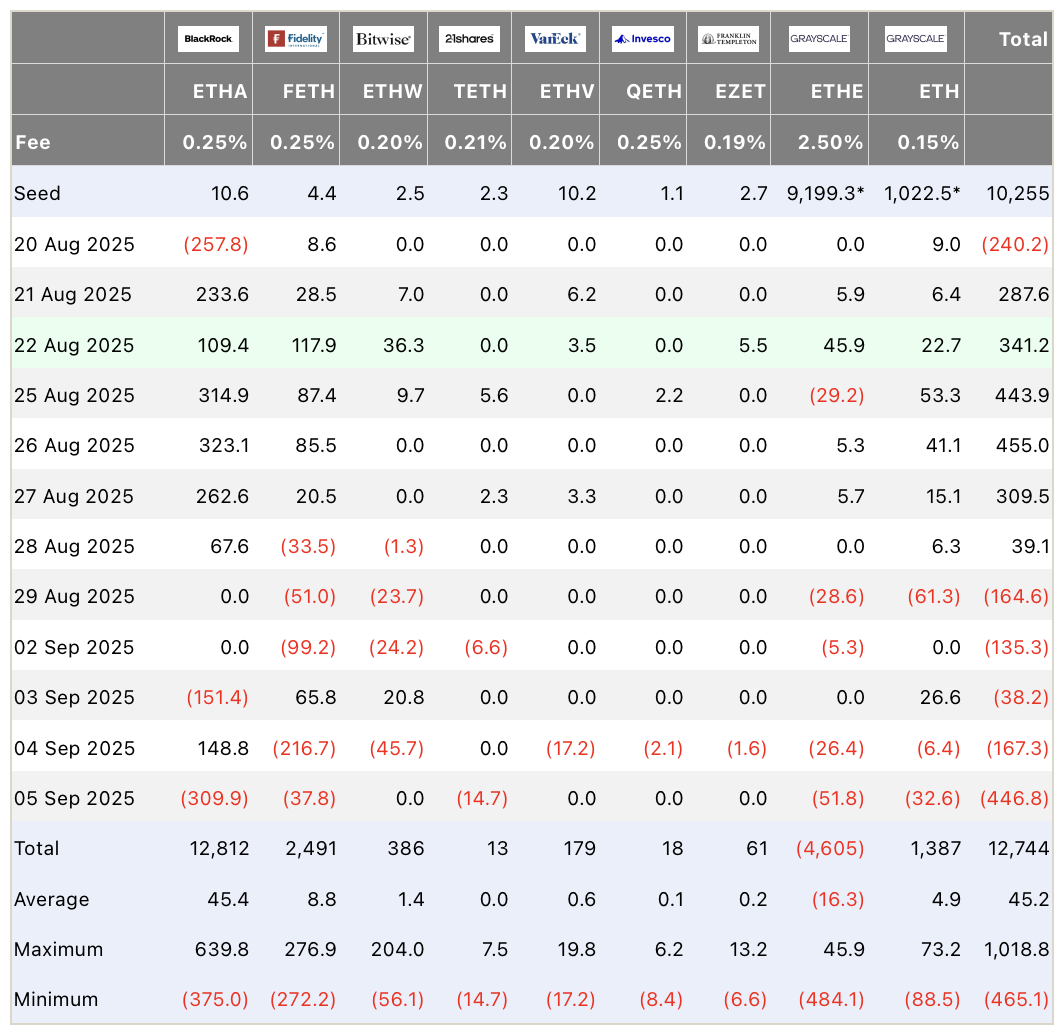
Движение средств в Ethereum-ETF США. Источник: Farside Investors

Аналитики QCP Capital считают более вероятным, что отсутствие направления и убежденности в криптовалютах указывает на осторожность, поскольку рынок готовится к выходу отчета по инфляции в США 11 сентября.

Все внимание на данные по инфляции

Подразумеваемая волатильность краткосрочных опционов относительно повышена и, вероятно, останется такой до публикации данных по индексу потребительских цен (CPI). Более высокий показатель CPI, чем ожидаемые 0,3%, может осложнить путь ФРС к снижению ставок. Хотя это маловероятно, рынок не будет слишком удивлен, особенно с учетом действующих тарифов.

Но даже если мы получим скачок выше из-за тарифов, Трамп вряд ли будет дальше эскалировать торговую напряженность, учитывая текущее состояние экономики. Поэтому, за исключением любых резких реакций на данные этой недели, криптовалюты выглядят хорошо поддержанными при отсутствии серьезных катализаторов на горизонте.

Ключевые события для наблюдения: среда, 10 сентября, — индекс цен производителей США, четверг, 11 сентября, — индекс потребительских цен США и заявки по безработице.

Таким образом, QCP Capital видит текущую ситуацию как затишье перед важными макроэкономическими данными. Криптовалютный рынок демонстрирует осторожность, но сохраняет базовую поддержку при отсутствии негативных катализаторов.

Lecturas Relacionadas

"AI Burning Books" Is Actually a Misunderstanding

"AI Book-Burning" Is Actually a Misunderstanding Recent reports about AI companies purchasing used books, scanning them, and then destroying the physical copies have sparked widespread outrage. Terms like "AI is devouring human knowledge" have become common, fueled by dramatic visuals of books being cut and shredded. However, the actual facts reveal a more nuanced story. While companies like Anthropic have indeed spent millions to buy and "destructively scan" several million books for AI training, this volume is a small fraction of the global second-hand book market. The core act—digitizing content and then discarding the physical object—is the opposite of historical book-burning, which aimed to erase knowledge. A key point of contention is the purchase of rare or out-of-print books. Yet, if these books were legally for sale on the open market, the buyer (whether an AI firm or an individual) has the right to do with them as they wish. The real question is whether society has adequate systems to protect books of genuine cultural heritage *before* they are sold. Expecting profit-driven companies to self-regulate on this is unreliable; the solution lies in establishing public rules, such as protected lists for rare editions or granting libraries priority purchase rights. Much of the intense public reaction stems not from the scale of actual harm, but from the powerful symbolism. The image of books being fed into machines taps into deeper anxieties about AI: fears of job displacement, mistrust of tech giants, and the unsettling feeling that humanity is feeding its own cultural past to the systems that might replace it. The outrage over "AI book-burning" is thus less about the physical books and more a proxy for broader societal tensions surrounding artificial intelligence.

marsbitHace 12 min(s)

"AI Burning Books" Is Actually a Misunderstanding

marsbitHace 12 min(s)

Robinhood CEO named three benefits of tokenized stocks for American investors

Robinhood CEO Vlad Tenev advocates for the U.S. to allow trading of tokenized stocks domestically. He argues this model could modernize the financial system through three key benefits: **faster, near real-time settlements** reducing counterparty risk and broker capital requirements; **24/7 trading** enabling reaction to market events anytime; and **greater asset portability**, allowing tokens to be moved between platforms and held in self-custody wallets, increasing competition among services. Tenev emphasized tokenization is about rebuilding asset ownership infrastructure for freer movement, similar to information online. He highlighted potential integration with DeFi, where tokenized stocks could be used for lending or as collateral. Currently, Robinhood's stock tokens are not direct ownership of the underlying securities but are backed by them and provide access to economic value like dividends; their structure may evolve with future regulations. Tenev identified outdated securities laws and market infrastructure, developed over a century, as the main U.S. obstacle, urging regulators to adapt rules for blockchain while preserving investor protections. He warned it would be strange if the rest of the world could build the future of ownership around U.S. assets while Americans are left behind, suggesting tokenization could later expand to private company shares and other illiquid assets.

cryptonews.ruHace 32 min(s)

Robinhood CEO named three benefits of tokenized stocks for American investors

cryptonews.ruHace 32 min(s)

Trading

Spot
活动图片