US Wants to Ban Issuance and Sale of Stablecoins Without a License

cryptonews.ruPublicado a 2026-08-19Actualizado a 2026-08-19

Resumen

A bill in the U.S. Congress proposes mandatory licensing for cryptocurrency companies. If passed, starting January 18, 2027, all stablecoin issuers would be required to obtain a federal or state license. Crypto platforms could offer customers stablecoins from foreign issuers, but only if those issuers comply with U.S. law and relevant intergovernmental agreements. Even stricter restrictions are proposed for July 18, 2028, with the Treasury Department seeking to prevent U.S. crypto exchanges and services from offering Americans stablecoins issued by entities without an official U.S. Treasury license. Treasury Secretary Scott Bessent stated these measures aim to "secure the dollar's status as the leading global reserve currency." The draft amendments are currently in a 60-day public comment period before moving to Congress. Meanwhile, another crypto market bill, CLARITY, is stalled in the Senate due to protracted negotiations, particularly over an "ethical provision" that would ban high-ranking officials, including the U.S. President, from participating in the crypto business. To prevent a potential veto, supporters have proposed adding an amendment allowing the President a deferral on federal capital gains tax from crypto asset sales.

The draft amendment bill establishes mandatory licensing for crypto companies. If Congress passes it, starting January 18, 2027, all stablecoin issuers will be required to obtain a federal or state license. Crypto platforms will be able to offer clients stablecoins from foreign issuers, but only on the condition that they comply with U.S. legislation and existing intergovernmental agreements between the U.S. and the regulators of their jurisdiction.

Even stricter restrictions are proposed to be established from July 18, 2028: the Treasury Department wants to deprive cryptocurrency exchanges and services of the right to offer Americans stablecoins issued by an entity without an official license from the U.S. Treasury. Treasury Secretary Scott Bessent called the proposed measures a way to "secure the dollar's status as the world's leading reserve currency."

The draft amendments to the $GENIUS are currently at the public hearing stage, which will last 60 days from the date of publication in the federal register. The document must then be submitted to Congress.

Another crypto market bill — CLARITY — is stalled in the American parliament. It was initially planned that the Senate would consider the initiative before the summer recess. However, Senate Republican Leader John Thune did not file a cloture motion before August 7 — a motion necessary to begin a vote by the full Senate. The senator lamented protracted negotiations with the presidential administration, during which they literally went "line by line" through the document.

The delays are related to the so-called "ethical aspect" of the bill — a proposal to prohibit high-ranking government officials, including the U.S. president, from participating in the crypto business. To prevent Donald Trump from refusing to sign CLARITY, two of his supporters proposed adding a provision to the bill allowing the president to obtain a deferral on paying federal capital gains tax on the sale of crypto assets.

end-content

Criptos en tendencia

Preguntas relacionadas

QWhat is the main requirement for stablecoin issuers under the proposed U.S. bill?

AThe bill mandates that stablecoin issuers must obtain a federal or state license starting January 18, 2027.

QWhat stricter restriction does the U.S. Treasury want to impose from July 18, 2028?

AThe U.S. Treasury wants to prohibit cryptocurrency exchanges and services from offering stablecoins issued by companies without an official U.S. Treasury license to Americans.

QWhat is the stated goal of Treasury Secretary Scott Bessent for these proposed regulations?

ATreasury Secretary Scott Bessent stated that the proposed measures aim to 'secure the dollar's status as the world's leading reserve currency'.

QWhat is the current status of the related CLARITY crypto market bill in Congress?

AThe CLARITY bill is currently stalled in the Senate. The cloture motion needed for a full Senate vote was not filed before the summer recess due to protracted negotiations, particularly over ethical provisions.

QWhat specific 'ethical aspect' is causing delays in the CLARITY bill, and what related proposal was made to resolve it?

AThe delay involves a proposal to ban high-ranking officials, including the U.S. President, from participating in the crypto business. To prevent a potential veto, supporters proposed adding a provision allowing the President a deferral on federal capital gains tax from selling crypto assets.

Lecturas Relacionadas

CryptoQuant Noted a Signal of a Bitcoin Reversal

CryptoQuant has highlighted a potential reversal signal for Bitcoin, suggesting the bearish phase might be nearing its end as on-chain metrics show initial signs of spot demand recovery. Their analysis indicates that the 30-day spot demand metric has recovered from -206,000 BTC in late July to approximately -5,000, close to turning positive for the first time since February 2026. Historically, such a reversal has been followed by a median 60-day price gain of 18.1%, with a win rate of 78% (increasing to 87% when valuations are depressed). However, they caution that this is a favorable sign, not a guarantee. Analysts from Bitfinex Alpha note that two of three conditions for a sustainable Bitcoin recovery are already met: improved Federal Reserve rate expectations and relatively accommodative financial conditions, thanks to easing inflation and reduced odds of a near-term rate hike. The missing third catalyst is a capital rotation from traditional markets (like stocks and AI infrastructure) into cryptocurrencies. If this occurs, Bitcoin could reclaim $70,000. Conversely, continued negative flows might see support tested around $57,000. Current headwinds include significant weekly outflows from US spot Bitcoin ETFs (roughly $385 million) and reduced stablecoin supply. Wintermute offers a more cautious outlook, pointing to the same large ETF outflows and ongoing miner selling pressure. They note that Bitcoin has failed to rally despite the improved Fed outlook, which is typically bullish for risk assets. As an example, they cite miner Riot Platforms, which sold a substantial portion of its Bitcoin reserves in Q2 as its mining cost (~$91,000 per BTC) remains far above the current market price, forcing sales for liquidity. This combination of ETF outflows and miner selling is suppressing new demand.

cryptonews.ruHace 3 min(s)

CryptoQuant Noted a Signal of a Bitcoin Reversal

cryptonews.ruHace 3 min(s)

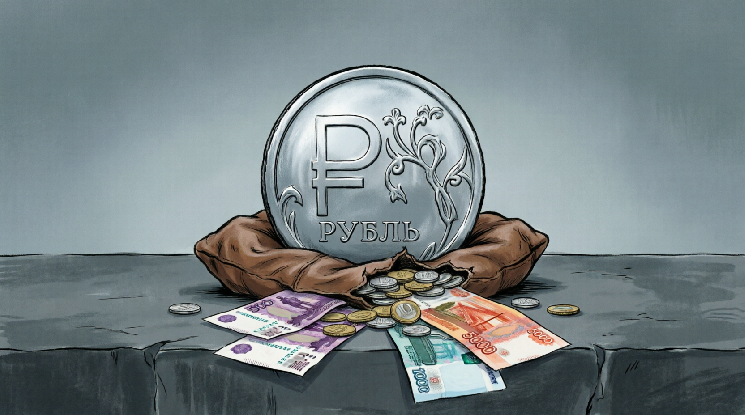
Is a Strong Ruble Good? Not for the Budget: Treasury Already Short 1.5 Trillion

The Russian budget has lost about 1.5 trillion rubles in revenue since the start of 2026 due to the ruble being stronger than the government's planned exchange rate. The budget was based on an average annual rate of 92.2 rubles per US dollar, but the actual average for the first seven and a half months was just 76.9 rubles. This discrepancy creates a significant shortfall, as every ruble of appreciation against the dollar reduces annual budget revenues by 140–160 billion rubles. When accounting for oil and gas revenues, the sensitivity is even higher, with potential annual losses reaching up to 2.5 trillion rubles. So far this year, the budget has already missed out on roughly 1.7 trillion rubles. The ruble's exchange rate has shown considerable volatility in 2026, ranging from a low near 71 rubles per dollar in May to over 85 rubles by mid-August. Despite this recent weakening, the year's average remains well below the budget target, creating a structural deficit in oil and gas revenues. Forecasts suggest the final average rate for 2026 will be around 80–82 rubles, which would result in a budget shortfall of about 1.6 trillion rubles. A strong ruble reduces import costs and inflation but also cuts the ruble earnings of exporters and threatens the funding of social obligations. The gap between the planned and actual rate is attributed not only to oil price dynamics but also to the fiscal rule mechanism, which can influence the currency's direction. The Ministry of Finance recently halted foreign currency sales under this rule, removing dollar supply from the market and contributing to pressure on the exchange rate. The budget policy is now forced to adapt to a stronger ruble than originally planned.

cryptonews.ruHace 4 min(s)

Is a Strong Ruble Good? Not for the Budget: Treasury Already Short 1.5 Trillion

cryptonews.ruHace 4 min(s)

Robinhood CEO: The Tokenization Wave of U.S. Stocks is Coming, America Must Not Be Left Behind

We are at the early stage of a global supercycle for asset tokenization, a transformative force reshaping finance. Robinhood has actively expanded this frontier outside the US, recently launching Robinhood Chain, a public EVM chain designed for Real World Assets (RWA) and focused on stock tokens. It enables global users to access over 190 US stocks backed 1:1 by underlying securities. However, a key gap remains: these tokenized stocks are not yet available within the United States itself. In the US, the debate around stock tokenization centers on its practical value, given existing low-cost access to equities. Critics question the need, but this misses the core innovation: tokenizing premium financial assets to make them portable, programmable, self-custodied, and tradable 24/7 within an open financial ecosystem. This is more than moving stocks onto a blockchain; it's rebuilding the foundational infrastructure of asset ownership. For US investors, this new infrastructure offers three core advantages: 1. **Real-time clearing and settlement**, enhancing market resilience by eliminating the systemic risks and capital burdens inherent in the traditional T+2/T+1 settlement cycle, as starkly revealed during events like the GameStop volatility. 2. **Native 24/7 trading capability**, allowing all investors to manage risk and react to global news outside standard market hours, a tool previously largely accessible only to institutions. 3. **Greater user control and portability of assets**, enabling instant transfers between platforms and into DeFi. This self-custody model fosters competition among service providers and unlocks new use cases like lending and using tokens as collateral. Realizing these benefits in the US requires more than technology; it necessitates modernizing a century-old securities regulatory framework built for legacy infrastructure. Policymakers must act swiftly to adapt rules for this new paradigm while preserving investor protections. Other jurisdictions are advancing, and the US risks being left behind in shaping the future of asset ownership—a future largely built around American assets and innovation. Tokenizing publicly traded stocks is just the beginning, paving the way for broadening access to other asset classes like private equity. US investors deserve to participate in this innovation.

marsbitHace 39 min(s)

Robinhood CEO: The Tokenization Wave of U.S. Stocks is Coming, America Must Not Be Left Behind

marsbitHace 39 min(s)

BIT Trading Moment: BTC Buying Pressure Rises but Bearish Sentiment Remains Strong, 50-Month EMA Difficult to Break, SK Hynix Attempts to Stabilize Memory

BIT Trading Hours: BTC Buying Rebounds but Bearish Sentiment Persists; 50-Month EMA Presents Resistance; SK Hynix Attempts to Stabilize the Memory Sector. Bitcoin briefly reclaimed $65,000, its first time since August 10th, showing a temporary decoupling from traditional risk assets pressured by soaring long-term U.S. Treasury yields. Key support is seen at $62k-$63k, with resistance near the 50-month Exponential Moving Average around $65.4k. While on-chain data indicates recovering spot demand, potentially signaling a local bottom, the options market remains skewed bearish. BIT analysis notes significant downside risk remains if historical bear market patterns repeat, with a potential drop to ~$45.5k. Global equity markets faced intense selling pressure, driven by a bond market storm. The U.S. 30-year yield hit a multi-year high above 5.33%, raising global funding costs. The AI sector was at the epicenter of the sell-off, with the Philadelphia Semiconductor Index plunging ~5% as investors questioned the sustainability of massive AI capital expenditures amid high debt costs. Storage stocks like Micron led declines. SK Hynix's announcement of a major share buyback provided some stability to the memory sector during after-hours trading. However, most tech stocks remained under pressure. In Asia, South Korean and Japanese indices fell sharply, heavily impacted by chip stock declines. Chinese robotics company Unitree Tech had a volatile market debut on Shanghai's STAR Market, soaring over 600% at one point before paring gains, making its founder a billionaire. Despite this individual success, the broader robotics sector in A-shares sold off heavily. Key upcoming events include the U.S. 20-year Treasury auction and the release of the Federal Reserve's July meeting minutes, which will be crucial tests for bond market stability and monetary policy expectations.

marsbitHace 41 min(s)

BIT Trading Moment: BTC Buying Pressure Rises but Bearish Sentiment Remains Strong, 50-Month EMA Difficult to Break, SK Hynix Attempts to Stabilize Memory

marsbitHace 41 min(s)

Trading

Spot

Artículos destacados

Cómo comprar BILL

¡Bienvenido a HTX.com! Hemos hecho que comprar Billions Network (BILL) sea simple y conveniente. Sigue nuestra guía paso a paso para iniciar tu viaje de criptos.Paso 1: crea tu cuenta HTXUtiliza tu correo electrónico o número de teléfono para registrarte y obtener una cuenta gratuita en HTX. Experimenta un proceso de registro sin complicaciones y desbloquea todas las funciones.Obtener mi cuentaPaso 2: ve a Comprar cripto y elige tu método de pagoTarjeta de crédito/débito: usa tu Visa o Mastercard para comprar Billions Network (BILL) al instante.Saldo: utiliza fondos del saldo de tu cuenta HTX para tradear sin problemas.Terceros: hemos agregado métodos de pago populares como Google Pay y Apple Pay para mejorar la comodidad.P2P: tradear directamente con otros usuarios en HTX.Over-the-Counter (OTC): ofrecemos servicios personalizados y tipos de cambio competitivos para los traders.Paso 3: guarda tu Billions Network (BILL)Después de comprar tu Billions Network (BILL), guárdalo en tu cuenta HTX. Alternativamente, puedes enviarlo a otro lugar mediante transferencia blockchain o utilizarlo para tradear otras criptomonedas.Paso 4: tradear Billions Network (BILL)Tradear fácilmente con Billions Network (BILL) en HTX's mercado spot. Simplemente accede a tu cuenta, selecciona tu par de trading, ejecuta tus trades y monitorea en tiempo real. Ofrecemos una experiencia fácil de usar tanto para principiantes como para traders experimentados.

557 Vistas totalesPublicado en 2026.05.07Actualizado en 2026.06.02

Cómo comprar BILL

Discusiones

Bienvenido a la comunidad de HTX. Aquí puedes mantenerte informado sobre los últimos desarrollos de la plataforma y acceder a análisis profesionales del mercado. A continuación se presentan las opiniones de los usuarios sobre el precio de BILL (BILL).

活动图片