PENGU 即将变盘?这几个关键价位必须记住!

ambcryptoPublicado a 2025-05-12Actualizado a 2025-05-12

Resumen

鲸鱼活动和情绪趋势表明,尽管波动性较大,但 PENGU 的价格仍有上涨的潜力。

尽管价格下跌且波动持续,但鲸鱼的囤积表明了对 PENGU 的信心。

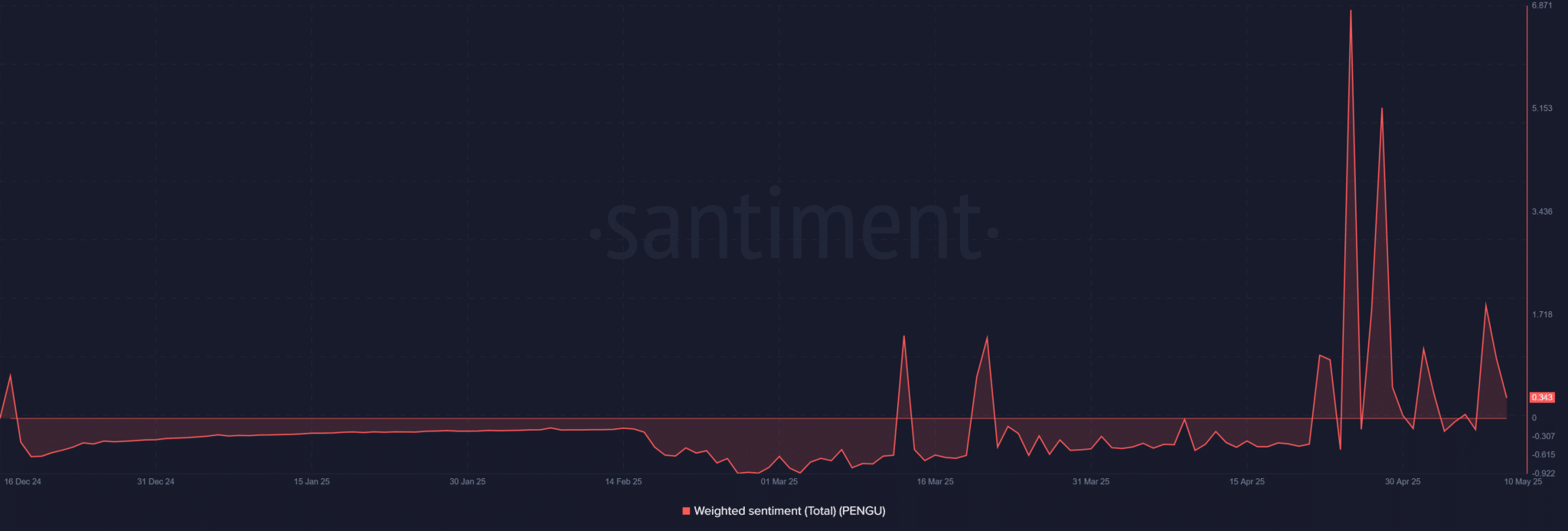
加权情绪跌至 0.3427,反映出谨慎情绪并限制了近期价格突破的潜力。

一位巨鲸最近以 225 万美元的价格购买了 1.4812 亿个Pudgy Penguins [PENGU]代币,使总持有量增至 5.0912 亿个。

截至发稿时,PENGU 交易价为 0.01373 美元,24 小时内下跌 1.90%。

如果鲸鱼的行为影响了市场情绪,我们可能会看到价格上涨。然而,要实现这一点,必须有更广泛的市场条件的配合,尤其是在当前市场波动的情况下。

情绪分析——情绪如何与价格行为保持一致?

PENGU的加权情绪指数波动剧烈。截至撰写本文时,该指数已跌至0.3427,较此前6.87的高点大幅下跌。

这表明市场情绪已从乐观转为谨慎。尽管“鲸鱼”活动活跃,但市场情绪尚未反映出持续的看涨情绪。

因此,PENGU 的价格并未完全反映出市场情绪的积极变化。这种脱节表明,尽管乐观情绪确实存在,但需要更多时间才能体现在价格上涨中。
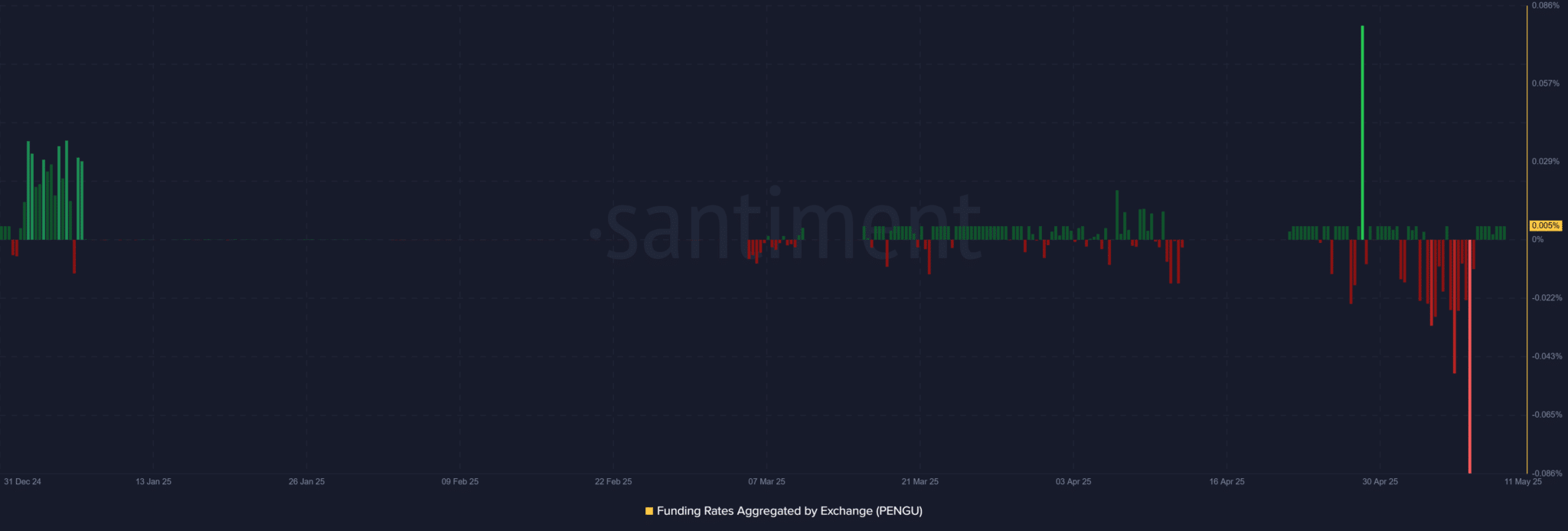
融资利率——多头仓位是否预示着未来上涨?

截至发稿时,融资利率为 0.005%,表明交易员对多头仓位有轻微偏好。

这一温和的汇率表明多头仓位略占优势,暗示可能出现上行走势。

然而,单靠资金费率并不能保证价格上涨。交易者必须考虑其他指标,例如流动性、市场情绪和价格走势。

因此,虽然资金利率提供了一些见解,但如果没有其他因素的进一步确认,则不足以预测大幅上涨。
技术分析——PENGU 是否处于突破区域?

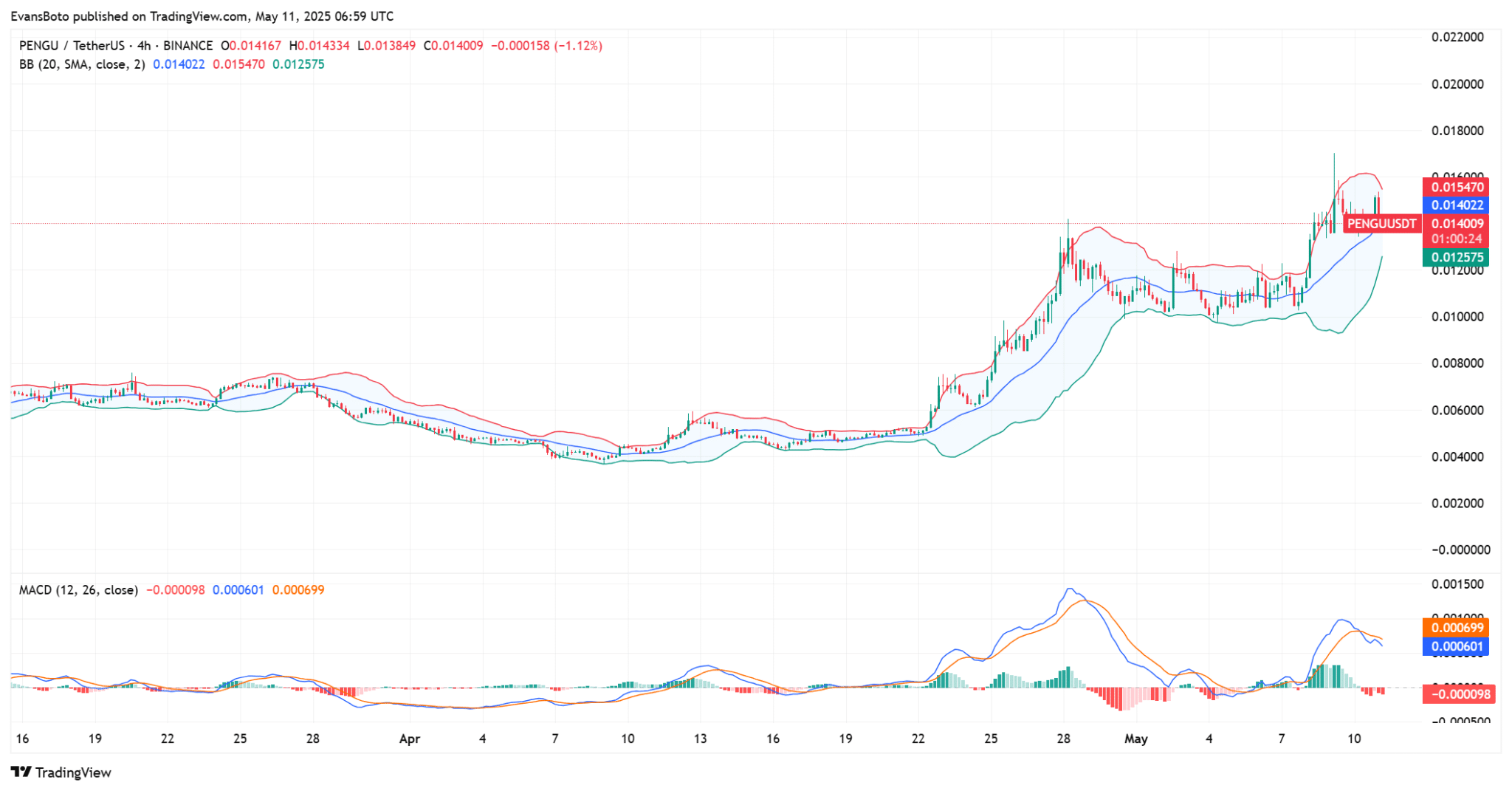
技术面来看,PENGU近期测试了关键阻力位,逼近布林带上轨。MACD指标显示看涨势头,短期均线突破长期均线。

这些指标表明PENGU可能正在进入突破区域。如果价格维持在0.015美元上方的支撑位,则可能进一步上涨。

然而,市场波动可能导致价格回调,因此必须谨慎。突破关键阻力位可能会引发额外的买盘压力,并延续涨势。
PENGU 流动性和价格行为——清算热图揭示了什么?

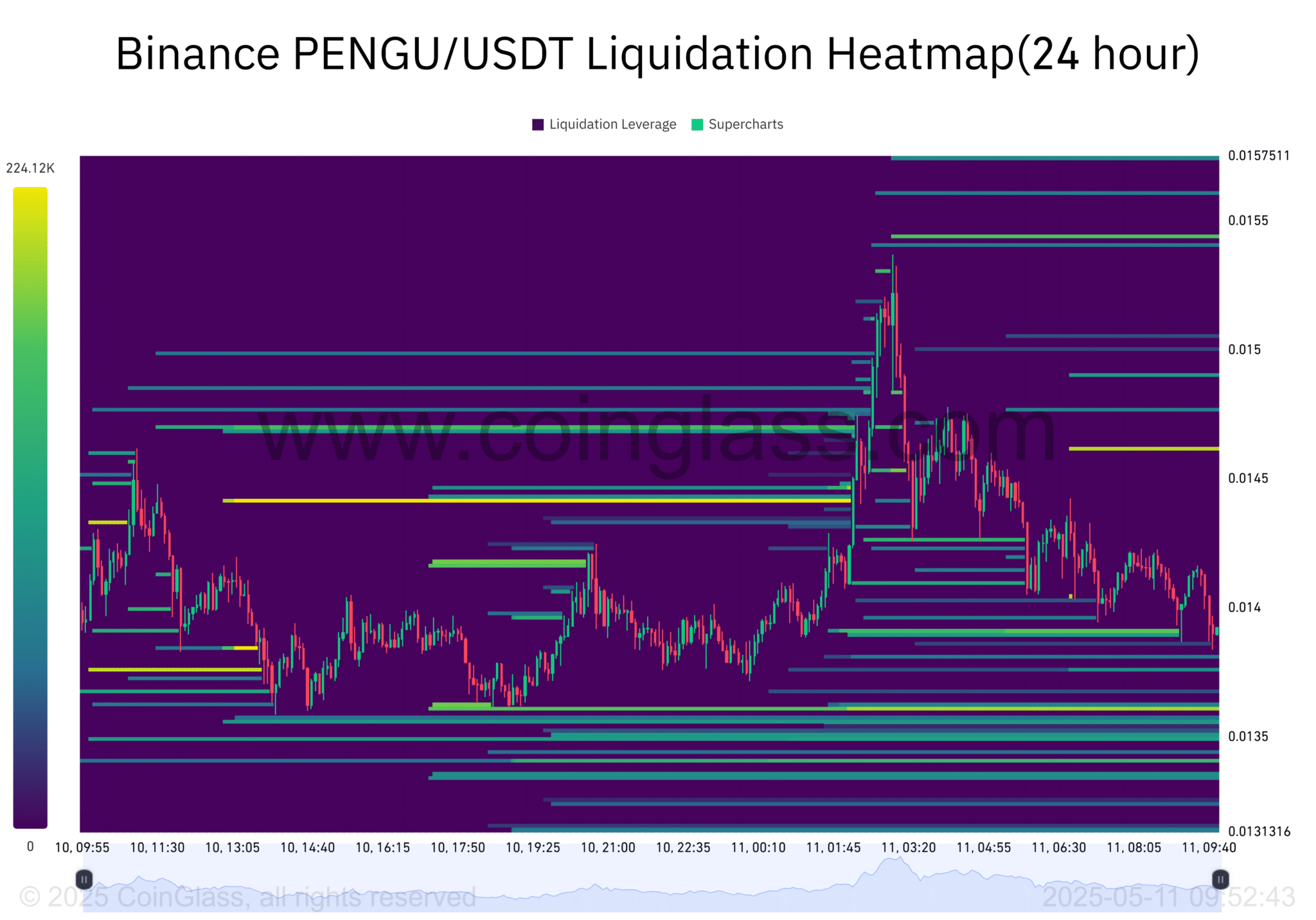
24 小时清算热图显示,0.0145 美元和 0.015 美元处存在显著支撑位。这些水平位出现了清算的聚集,预示着潜在的突破。

如果 PENGU 接近这些水平,则可能引发空头挤压,从而推高价格。

然而,如果价格跌破这些支撑区域,进一步的清算可能会导致下行压力增加。

这些关键水平需要密切监控,因为任何跌破都可能导致市场波动加剧。
多头/空头比率——是否存在空头挤压的可能性?

截至撰写本文时,多空比率数据显示,53.04% 的仓位为空头,凸显看跌押注盛行。这种失衡表明,如果价格上涨,可能会出现轧空。

如果PENGU开始上涨,空头仓位可能会被迅速平仓,导致价格大幅上涨。这种情况可能会推动价格大幅上涨。

因此,监控多空比率是了解潜在价格走势的关键。
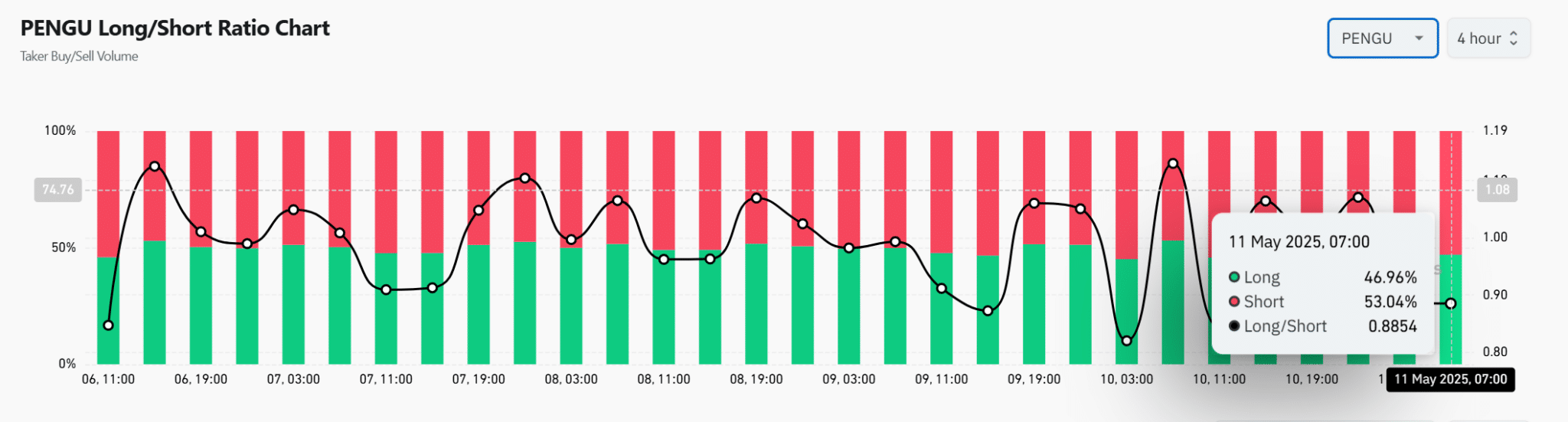
尽管市场情绪低迷,但鲸鱼活动、强劲的技术面和看跌定位表明可能出现挤压。

如果关键阻力位被突破并且空头被清算,PENGU 可能会在未来几天大幅反弹。

Criptos en tendencia

Lecturas Relacionadas

Why Do We Need an AI Content Perspective Today?

The article "Why Do We Need an AI Content Perspective Today?" explores the complex and often contentious integration of AI into the cultural and creative industries, particularly film and television. It begins with the cancellation of Amazon's AI-generated animation "Punky Duck," highlighting the ethical debates surrounding AI content. AI's rapid advancement is transforming video production, enabling cost-effective, full-length AI films (e.g., "RAPHAEL," "Dreams of Violets") while sparking industry resistance over issues like "synthetic actors." The core debate has shifted from whether to use AI to how to use it responsibly. The article analyzes why AI's entry into film is uniquely unsettling. It distinguishes between "cultural fast food" (short-form, fast-paced content like micro-dramas) and "cultural main courses" (traditional, long-form film/TV). AI currently excels at the former, matching its fragmented narratives, shallow emotional needs, and free-to-consumer models. However, venturing into the latter challenges the human-centric essence of storytelling—creativity, emotional depth, and the unique value of human labor and experience. While AI can generate massive volumes of content and lower costs, it risks devaluing human creativity, leading to homogenized output, and creating unfair competition through potential intellectual property infringement. Its efficiency also amplifies content safety risks, making preemptive governance crucial. To counter these risks, the article proposes establishing clear boundaries guided by a human-centered AI content perspective. It outlines four principles: 1) Amplify, rather than displace, human creative space; 2) Respect and protect human creative output; 3) Ensure human creative control and responsibility remain paramount; and 4) Guarantee transparency and traceability in AI creation. The conclusion emphasizes that humans must act as the "helmsmen" of technology, steering AI development to enhance, not replace, the core human values at the heart of cultural expression.

marsbitHace 21 min(s)

Why Do We Need an AI Content Perspective Today?

marsbitHace 21 min(s)

Planck Retracted? The Father of Quantum Tripped by an Algorithm

The recent discovery that two articles (published in 1940 and 1942) by Max Planck, the Nobel laureate and founder of quantum theory, are marked as "retracted" on Springer's digital platform highlights a curious clash between historical publishing practices and modern automated systems. An investigation suggests these retractions are algorithmic errors, not due to fraud or misconduct. The papers, philosophical reflections on science published in *Die Naturwissenschaften*, were likely flagged by the platform's systems. One article, a republished lecture, may have been mistaken for duplicate publication. Another, sharing a title with a prior article by a different author (a common practice for continuing debates at the time), may have triggered a similar automated check. The digital versions have even been replaced with blank pages, contrary to normal practice of preserving retracted texts. This incident underscores how contemporary digital infrastructure, built around concepts like "self-plagiarism" and strict copyright, can misclassify and obscure legitimate historical scholarly communication. It serves as a warning that digital archives are not neutral mirrors of the past but are filtered by platform rules, potentially distorting the scientific record. As AI systems increasingly rely on such databases, such erroneous metadata could propagate, affecting how future tools interpret and access historical knowledge.

marsbitHace 25 min(s)

Planck Retracted? The Father of Quantum Tripped by an Algorithm

marsbitHace 25 min(s)

Refunds! Claude 4.8 Sees Overnight Major 'Dumb-Down', GPT-5.6's Computational Power Reportedly 'Halved'

The AI community is currently alarmed by widespread reports of significant performance degradation in two leading models. This article details a "mass self-testing frenzy" triggered by a mysterious prompt designed to detect a hidden "Juice" value, representing a model's reasoning compute budget. On OpenAI's side, users suspect a covert, limited test of a "GPT-5.6-sol" model is underway. When using a specific XML prompt on the Codex platform, a normal "gpt-5.5 xhigh" model reportedly returns a Juice value of 768. However, some users routed to the suspected GPT-5.6 test receive a drastically reduced value of 128—a six-fold decrease. This has sparked debate on whether it signifies a major efficiency leap or a "watered-down, low-cost version" achieved by slashing reasoning depth to save computational expenses. Simultaneously, Anthropic's Claude models, particularly the flagship Opus 4.8 Max, are facing intense user backlash for a perceived "physical brain cut." Users on platforms like Reddit report a dramatic decline in the model's once-impressive reasoning, with complaints of it becoming "absurdly" weakened, performing worse than older, lighter models like Haiku. Specific criticisms include: losing long-context memory, refusing to think deeply even in high-reasoning modes, providing instant incorrect answers, and engaging in unhelpful, argumentative, or "gaslighting" behavior where it contradicts users unnecessarily. The article speculates these "stealth downgrades" might be a calculated corporate strategy. Companies could initially release models with temporarily boosted compute to create an illusion of a major breakthrough, then silently scale back parameters later to manage unsustainable inference costs. A proposed underlying cause is a tightened funding environment, potentially exacerbated by SpaceX's massive IPO soaking up market liquidity, which could delay AI company IPOs and force cost-cutting measures like model "nerfing." The core issue highlighted is the asymmetry of information: subscribers pay for a service that can be silently and fundamentally altered without notification or explanation. The viral "Juice test" resonates because it represents users' desire for transparency about what they are actually paying for.

marsbitHace 1 hora(s)

Refunds! Claude 4.8 Sees Overnight Major 'Dumb-Down', GPT-5.6's Computational Power Reportedly 'Halved'

marsbitHace 1 hora(s)

Trading

Spot

Artículos destacados

Cómo comprar PENGU

¡Bienvenido a HTX.com! Hemos hecho que comprar Pudgy Penguins (PENGU) sea simple y conveniente. Sigue nuestra guía paso a paso para iniciar tu viaje de criptos.Paso 1: crea tu cuenta HTXUtiliza tu correo electrónico o número de teléfono para registrarte y obtener una cuenta gratuita en HTX. Experimenta un proceso de registro sin complicaciones y desbloquea todas las funciones.Obtener mi cuentaPaso 2: ve a Comprar cripto y elige tu método de pagoTarjeta de crédito/débito: usa tu Visa o Mastercard para comprar Pudgy Penguins (PENGU) al instante.Saldo: utiliza fondos del saldo de tu cuenta HTX para tradear sin problemas.Terceros: hemos agregado métodos de pago populares como Google Pay y Apple Pay para mejorar la comodidad.P2P: tradear directamente con otros usuarios en HTX.Over-the-Counter (OTC): ofrecemos servicios personalizados y tipos de cambio competitivos para los traders.Paso 3: guarda tu Pudgy Penguins (PENGU)Después de comprar tu Pudgy Penguins (PENGU), guárdalo en tu cuenta HTX. Alternativamente, puedes enviarlo a otro lugar mediante transferencia blockchain o utilizarlo para tradear otras criptomonedas.Paso 4: tradear Pudgy Penguins (PENGU)Tradear fácilmente con Pudgy Penguins (PENGU) en HTX's mercado spot. Simplemente accede a tu cuenta, selecciona tu par de trading, ejecuta tus trades y monitorea en tiempo real. Ofrecemos una experiencia fácil de usar tanto para principiantes como para traders experimentados.

292 Vistas totalesPublicado en 2024.12.23Actualizado en 2026.06.02

Cómo comprar PENGU

Discusiones

Bienvenido a la comunidad de HTX. Aquí puedes mantenerte informado sobre los últimos desarrollos de la plataforma y acceder a análisis profesionales del mercado. A continuación se presentan las opiniones de los usuarios sobre el precio de PENGU (PENGU).

活动图片