从TRX上涨到USDD补贴,sTRX+USDD何以成“神矿”?孙哥实操力证年化20%+

深潮Publicado a 2025-04-17Actualizado a 2025-04-17

综合来看,sTRX+USDD以其零锁定、高收益、稳定来源、高安全性、上涨潜力和灵活组合六大优势,确实具备“2025必挖神矿”的潜质。JustLend、sTRX、USDD 的三位一体组合,正在构建一个全新的稳定收益网络。它不是短期爆发、也不靠FOMO,而是一套可跑全周期的稳健系统。

在加密货币领域,投资者总是在寻找兼具高收益与低风险的投资机会。近日,波场TRON创始人、火币HTX全球顾问孙宇晨在社交媒体上力荐一种新型挖矿组合——sTRX+USDD,称其为“2025必挖币圈神矿”,年化收益可达15%-20%甚至更高。那么,sTRX+USDD究竟是什么?为何被誉为“神矿”?本文将客观分析其优势,并提供参与指南,帮助读者理解这一投资机会。

JustLend链上质押:sTRX+USDD,开启“链上印钞机”

JustLend是波场Tron生态中的主力借贷协议,此前上线了支持TRX质押铸造sTRX的功能。先简单介绍一下sTRX和USDD的基本概念:

  • sTRX(Staked TRX):即质押的TRX,是用户通过将TRON网络的原生代币TRX质押后获得的凭证。质押TRX不仅能赚取网络使用费的收益,还能参与铸造其他资产。
  • USDD:一种去中心化的稳定币,与美元1:1挂钩,通过质押sTRX等资产铸造,其收益由系统补贴提供。


在币圈待久了,见过太多来去匆匆的“高收益项目”,也踩过无数“锁仓跑路”的坑。但这次,真的有点不一样。让孙哥手敲近千字“种草”的“sTRX+USDD”挖矿,通过JustLend质押TRX获得sTRX,再用sTRX铸造USDD并存入平台赚取双重收益的策略。那么,“sTRX+USDD”何以封神?以下从多个角度分析其“神矿”特质。

“sTRX+USDD”封神六要素,全都在这里了!

1. 零锁仓!资金完全自由

老实说,这年头真不敢碰还要锁仓的挖矿项目了。sTRX+USDD最打动人的一点就是——不锁本金、不设门槛,随时进出,灵活至上。今天挖,明天走,后天回来都OK,短线党和风险厌恶型用户的福音。真正实现了“赚了就走,想走就走”,这也是为什么一大波社区用户在实操后感慨:终于等到一个不绑架资金的DeFi玩法了。

2. 年化高达15%-20%以上,还能跑大资金

收益是投资者最关心的指标之一。据孙哥透露,sTRX+USDD组合目前的年化收益率在15%-20%以上,且有进一步上涨潜力。且支持大额资金进出,适合散户也适合机构。在其他DeFi项目动辄小水池的限制下,sTRX+USDD堪称“大水池里的高收益”,是高收益与规模兼容性的少见组合。

3. 收益来源扎实,没那种塌方风险

收益的可持续性是衡量挖矿项目的重要标准。相比说塌就塌的“画大饼”型项目,sTRX+USDD的收益模型非常清晰:

  • sTRX部分:源于TRON网络的使用费。每笔转账、DApp调用都在消耗能量,而这些资源则由质押的TRX提供。所以收益稳定、真实,跟TRON链上活跃度正相关,活跃时年化高达30%,低时也有8%-9%。
  • USDD部分:来自系统补贴,年化稳定在8%左右,以USDD直接到账。因USDD与美元挂钩,无需担心价格波动,也无需频繁卖出变现。

所以说它是“躺赚型”的被动收入来源,真没毛病。

4. 极致安全:DeFi玩法集大成者的稳健设计

说实话,币圈这么多年,大家对“安全”两个字早就麻了。但这套玩法堪称币圈挖矿的“集大成者”:sTRX的安全性依托于TRON网络的繁荣生态,就像你买了长江电力的股,每天分电费;只不过这回你“供能量”,平台给你分TRX;USDD的安全性则来自系统性补贴+稳定币机制,不涉及炒币、无人为干预,全流程链上执行。

整套逻辑不依赖第三方平台、不怕项目跑路或价格剧烈波动,可以说是目前极少数让人“睡得着觉”的挖矿方式。

5. 保留TRX上涨空间,一鱼两吃

与传统“质押即锁仓”的机制不同,sTRX是“质押生成衍生资产”——也就是说,你把TRX质押生成了sTRX,但TRX本体还在后台跑收益,价格上涨你也能享受。

TRX作为TRON网络的原生代币,历史表现强劲,长期持有者可通过sTRX同时享受既赚利息又吃行情的双重福利。

6. 高可组合性玩法,适配所有用户画像

sTRX+USDD神矿最后一个“封神因素”是玩法足够灵活,你大可以根据风险偏好自由选择:

  • 你可以只质押sTRX,赚取TRX收益;
  • 也可以只铸造并存入USDD,吃USDD补贴;
  • 更可以像KOL们一样两者结合,实现收益最大化。

而且全程无锁定、闪兑通畅(火币HTX App就能一键换币),调整仓位或增减资金都极为便捷。这套组合几乎适配所有用户画像:新手、老韭菜、主流资产持仓者,人人都能找到适合自己的姿势。

手把手实操:如何参与sTRX+USDD挖矿?

了解了“神矿”的优势后,以下是具体的参与步骤:

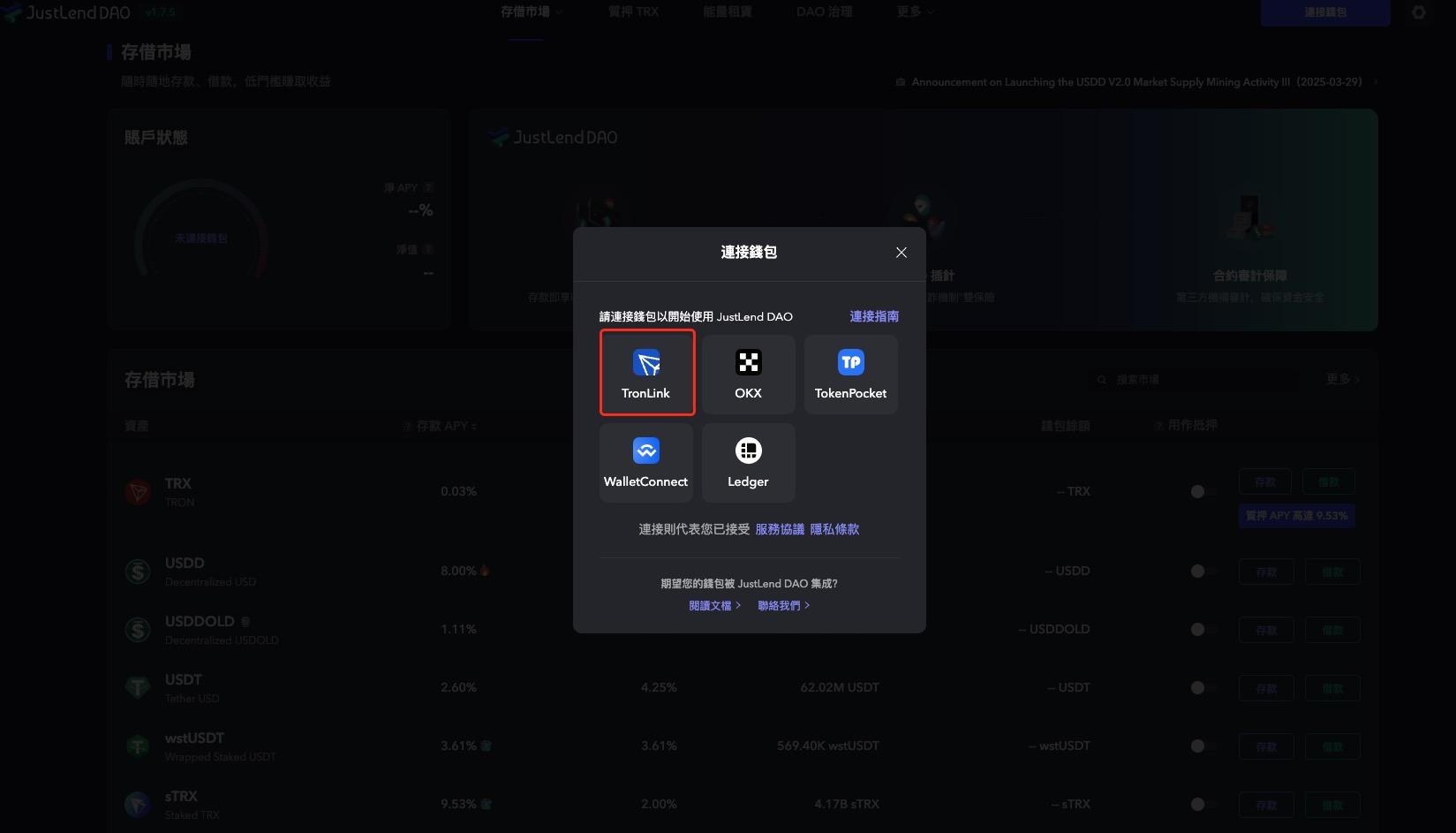
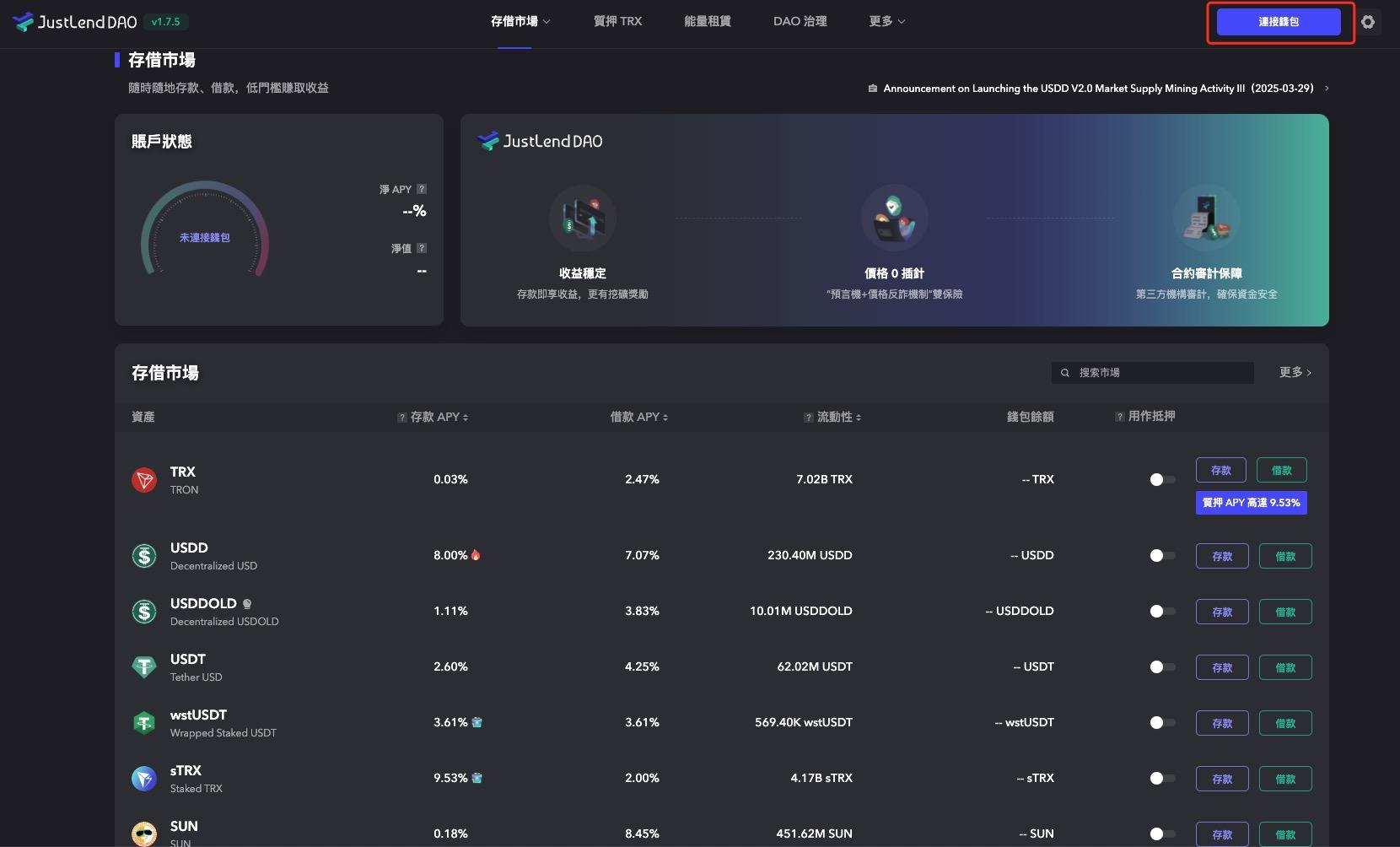
1. 访问JustLend官网(https://justlend.org/ ),并连接钱包,选择Tronlink钱包。
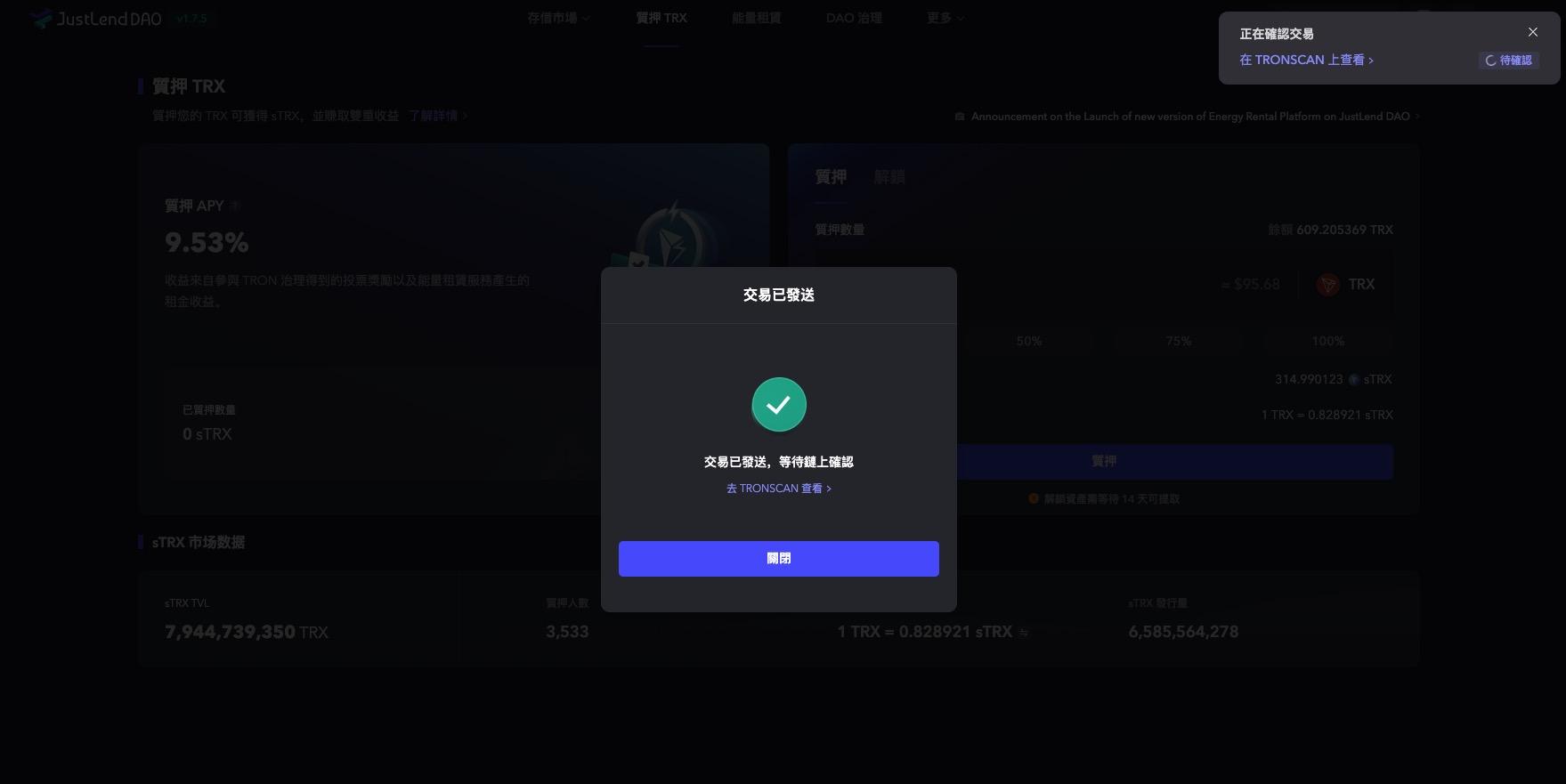
2. 质押TRX获取sTRX:在“Staked TRX”页面质押TRX。听劝!为避免多次质押损耗Gas费,建议一次性质押至少10473 sTRX。
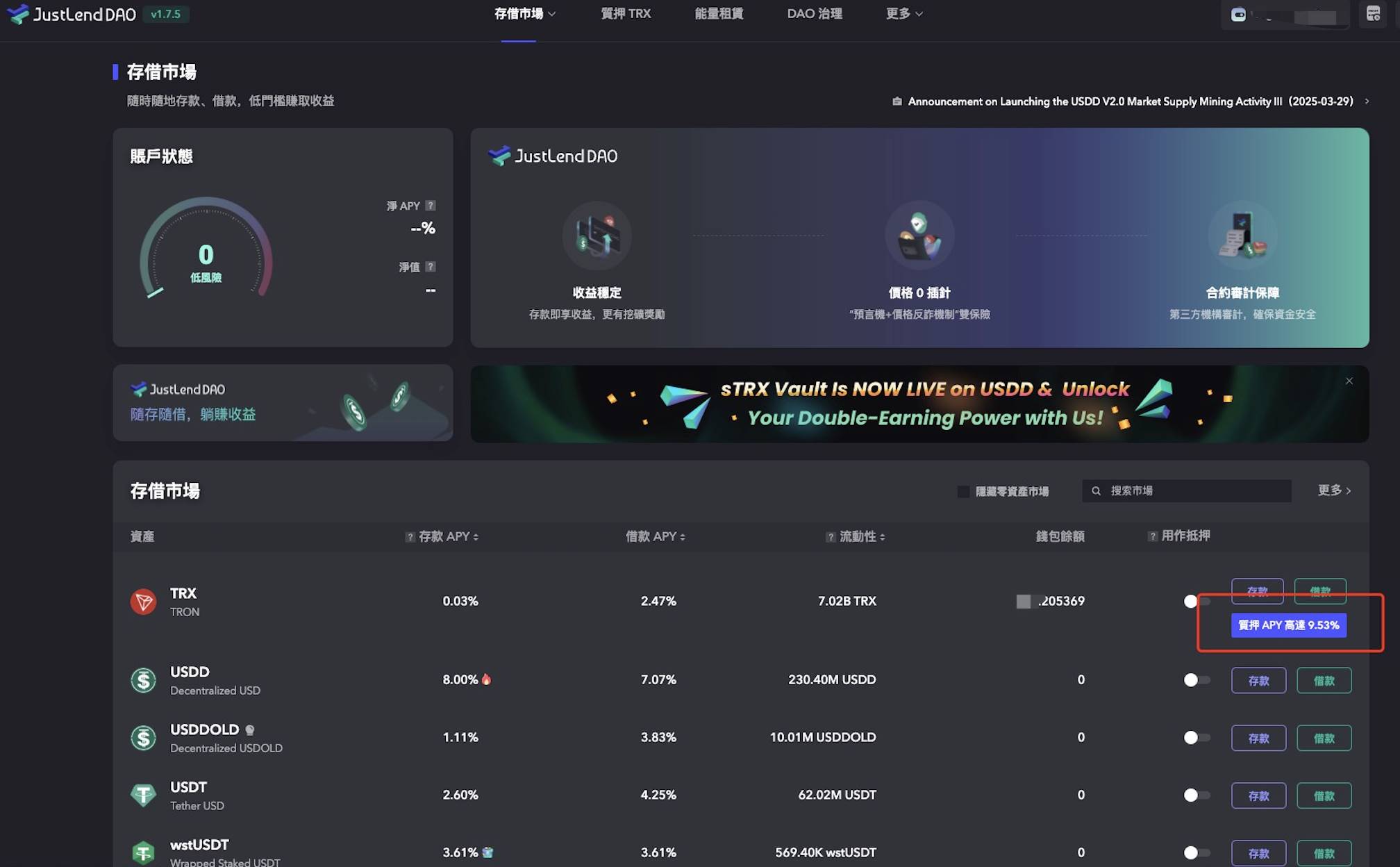
3. 铸造USDD:前往USDD官网(https://usdd.io/ ),选择“sTRX-A”,点击“Mint”功能,用sTRX作为抵押品铸造USDD。需注意,铸造USDD要求150%抵押率,即100U的sTRX可铸造约66.67U的USDD。


(注意:这里我最开始只有几百 sTRX 是不够的!!!建议一次性质押获得至少10473 sTRX)

4.存入USDD赚取收益:返回JustLend官网,在存款界面存入USDD,即可享受约8%的年化收益,加上sTRX的收益,总年化可达15%以上。

总结一下操作路径:TRX → sTRX → USDD → USDD质押,一条链上打通的资金路径。当你需要TRX或USDD,火币HTX 站内的闪兑功能已经准备就绪。

火币HTX 闪兑功能:链上玩家的“能量补给站”

因为开始质押时TRX不够用,我去火币HTX App 用闪兑功能换了一些TRX回来质押,别说还挺丝滑的。目前,火币HTX App 支持参与链上“神矿”的关键工具:

除此之外,火币HTX已上线了多项USDD赚币产品,如“USDD灵活赚”、“USDD锁仓赚”,年化收益在10%至20%不等,灵活参与、收益稳健。

写在最后:如果你正在找一个能“长期做、稳定赚、不容易塌”的DeFi项目,真的可以认真研究一下这套组合

综合来看,sTRX+USDD以其零锁定、高收益、稳定来源、高安全性、上涨潜力和灵活组合六大优势,确实具备“2025必挖神矿”的潜质。JustLend、sTRX、USDD 的三位一体组合,正在构建一个全新的稳定收益网络。它不是短期爆发、也不靠FOMO,而是一套可跑全周期的稳健系统。

对于追求收益的投资者,这是一个不容忽视的机会。然而,鉴于链上质押的完全去中心化特点,参与者需谨慎操作,确保资金安全,选择可靠的存储方式。无论是新手还是老手,sTRX+USDD都值得一试——或许,这正是币圈下一个财富风口。

Criptos en tendencia

Lecturas Relacionadas

Continuous Net Outflows from ETFs, Are Institutions Exiting?

US spot Bitcoin ETFs have experienced approximately $6 billion in net outflows over the past six weeks, marking the longest consecutive weekly withdrawal streak since their launch in 2024. The iShares Bitcoin Trust (IBIT) from BlackRock has been particularly affected, accounting for over 70% of recent outflows. On-chain analysis indicates that long-term Bitcoin holders (holding for over 155 days), who control about 83% of the circulating supply, remain steadfast. The selling pressure is primarily coming from allocators who entered through ETF brokerage accounts. This represents the first major collective capitulation since Bitcoin gained mainstream Wall Street recognition, driven more by risk-off portfolio adjustments than a fundamental rejection of the asset. Factors such as rising inflation, a hawkish shift in Federal Reserve policy, massive capital inflows into AI infrastructure, and attractive IPO opportunities have redirected speculative funds. Bitcoin, treated as a high-beta risk asset, was among the first to be sold. While the pace of outflows has slowed significantly—from $1.72 billion in early June to $226.8 million mid-month—the structural issue remains. IBIT's large size means its outflows alone exert substantial market pressure. With spot market volume thin, new capital inflows absent, and ETF buying muted, the market lacks sufficient buying support to absorb this selling. The coming sessions are critical. If IBIT outflows decelerate and Bitcoin reclaims $60,000, this phase could be seen as a healthy reset. However, if heavy IBIT redemptions resume and the price falls below $58,000, it would signal a more sustained institutional exit, requiring non-ETF buyers to shoulder the entire selling pressure alone. The ETF, while lowering entry barriers, has not removed Bitcoin's inherent volatility.

marsbitHace 2 min(s)

Continuous Net Outflows from ETFs, Are Institutions Exiting?

marsbitHace 2 min(s)

Introduction to the Concept of World Models: A Story from Psychology to the Main Battlefield of AI

**World Models: From Psychology to AI's Core Concept** "World model" is a trending but often confusing term in AI, describing a system that allows machines to internally simulate, predict, and rehearse potential outcomes before taking real-world action—like a mental "sandbox." While definitions vary—Yann LeCun emphasizes physical understanding, OpenAI's Sora is a video-based "world simulator," Google DeepMind's Genie 3 creates interactive 3D environments, and companies like Alibaba and Tesla focus on practical applications—the core goal is consistent: reduce reliance on vast real-world data by creating an internal, predictive model for safer and more efficient AI. The concept has deep roots, tracing back to psychologist Kenneth Craik (1943). In AI, it was revitalized by researchers like David Ha and Jürgen Schmidhuber (2018). Major technical approaches include: 1) generative video models (e.g., Sora) for visual realism; 2) abstract predictive models (e.g., LeCun's JEPA) for efficiency and physical reasoning; and 3) explicit 3D simulators (e.g., NVIDIA Omniverse) for precision. Fei-Fei Li proposes a classification based on the AI action loop: renderers (output observations), simulators (output world states), and planners (output actions). The emerging "World Action Model" (WAM) paradigm aims to unify future prediction and action generation. An industry framework is forming: upstream (data, compute, sensors), midstream (general and vertical platforms), and downstream applications (autonomous driving, robotics, gaming, etc.). Autonomous driving is currently the most mature use case. The current lack of a unified definition reflects the field's early, dynamic stage, similar to past tech revolutions. Different approaches—focusing on pixels, physics, or behavior—represent parallel explorations of how best to compress and understand the world. This diversity, while seemingly chaotic, signals that world models have moved from an academic idea to a critical industrial battleground, ultimately aiming to give machines the ability to understand, imagine, and reason about the world.

marsbitHace 27 min(s)

Introduction to the Concept of World Models: A Story from Psychology to the Main Battlefield of AI

marsbitHace 27 min(s)

Building the Bright Path While Secretly Crossing Chencang: Is Walsh Paving the Way for a September "Rate Cut"?

The title "Building the Plank Road Openly While Secretly Crossing at Chencang: Is Walsh Paving the Way for a September 'Rate Cut'?" suggests Federal Reserve Chair Kevin Walsh's hawkish stance may be a deliberate smokescreen. Academy Securities analyst Peter Tchir argues in a report that markets, currently pricing a 75% chance of a September hike, are missing a potential path to a September rate cut that Walsh himself might be quietly preparing. Tchir posits that Walsh's hawkish rhetoric aims to suppress long-term yield risks (with the 10-year Treasury yield falling recently) while creating room for a narrative shift based on upcoming data. The potential political endgame, according to this view, could be rate cuts in September and October, ahead of the midterm elections. This hinges on a political logic where the Trump administration's preference for lower rates remains unchanged. A core part of Tchir's argument involves redefining inflation metrics. He contends the Fed under Walsh may deprioritize the PCE index, criticizing its lagging components like Owners' Equivalent Rent (OER). Instead, he points to alternative, more real-time indicators like the New Tenant Repeat Rent Index (NTRR) and the Truflation daily index, which shows core inflation around 1.45%. He suggests the Fed could shift its data narrative to justify policy easing. Furthermore, Tchir downplays AI-driven inflation fears. He argues that consumer price sensitivity, evidenced by negative market reactions to price hikes (e.g., Apple), contradicts persistent inflation narratives. He also separates AI/data center spending—which he sees as relatively rate-insensitive—from broader consumer affordability issues, implying rate hikes are misdirected. Based on this analysis, Tchir sees a re-pricing of rate cut expectations as likely, creating opportunities in short-duration Treasuries. He maintains a neutral-to-slightly-bullish view on the long end of the yield curve. For equities, he recommends a significant overweight in energy (especially global nuclear assets) and, within defense/security themes, an overweight in biotech/pharma versus an underweight in semiconductors, expressing caution on AI/data center valuations.

marsbitHace 53 min(s)

Building the Bright Path While Secretly Crossing Chencang: Is Walsh Paving the Way for a September "Rate Cut"?

marsbitHace 53 min(s)

Trading

Spot

Artículos destacados

Cómo comprar STRX

¡Bienvenido a HTX.com! Hemos hecho que comprar Staked TRX (STRX) sea simple y conveniente. Sigue nuestra guía paso a paso para iniciar tu viaje de criptos.Paso 1: crea tu cuenta HTXUtiliza tu correo electrónico o número de teléfono para registrarte y obtener una cuenta gratuita en HTX. Experimenta un proceso de registro sin complicaciones y desbloquea todas las funciones.Obtener mi cuentaPaso 2: ve a Comprar cripto y elige tu método de pagoTarjeta de crédito/débito: usa tu Visa o Mastercard para comprar Staked TRX (STRX) al instante.Saldo: utiliza fondos del saldo de tu cuenta HTX para tradear sin problemas.Terceros: hemos agregado métodos de pago populares como Google Pay y Apple Pay para mejorar la comodidad.P2P: tradear directamente con otros usuarios en HTX.Over-the-Counter (OTC): ofrecemos servicios personalizados y tipos de cambio competitivos para los traders.Paso 3: guarda tu Staked TRX (STRX)Después de comprar tu Staked TRX (STRX), guárdalo en tu cuenta HTX. Alternativamente, puedes enviarlo a otro lugar mediante transferencia blockchain o utilizarlo para tradear otras criptomonedas.Paso 4: tradear Staked TRX (STRX)Tradear fácilmente con Staked TRX (STRX) en HTX's mercado spot. Simplemente accede a tu cuenta, selecciona tu par de trading, ejecuta tus trades y monitorea en tiempo real. Ofrecemos una experiencia fácil de usar tanto para principiantes como para traders experimentados.

158 Vistas totalesPublicado en 2024.12.10Actualizado en 2026.06.02

Cómo comprar STRX

Discusiones

Bienvenido a la comunidad de HTX. Aquí puedes mantenerte informado sobre los últimos desarrollos de la plataforma y acceder a análisis profesionales del mercado. A continuación se presentan las opiniones de los usuarios sobre el precio de STRX (STRX).

活动图片