特朗普的新副总统Vance,支持SocialFi?

Odaily星球日报Publicado a 2024-07-16Actualizado a 2024-07-16

Resumen

可以说,J.D. Vance的当选将使得加密货币行业的发展迎来更强劲的政治推动力。

原文作者:Kaori

当地时间 2024 年 7 月 15 日,前美国总统唐纳德·特朗普已选定俄亥俄州参议员 J.D. Vance 作为 2024 年大选的副总统竞选搭档。Vance 在其政治生涯中多次声援加密货币行业,之前曾公开反对 SEC。

今年早些时候,Vance 带领其他几位共和党参议员给 Gensler 写了一封信,表达了 SEC 对针对加密货币挖矿公司 Debt Box 的执法行动的担忧。5 月 16 日,万斯和 60 名参议员一起投票赞成撤销 SEC 颇具争议的 SAB 121 会计准则,该准则是一套阻止美国银行托管加密资产的政策建议。

相关阅读:《特朗普钦点竞选搭档 J.D. Vance 不简单,硅谷 VC+加密盟友「Buff」加持

可以说,J.D. Vance 的当选将使得加密货币行业的发展迎来更强劲的政治推动力。

J.D. Vance 在 2 月 28 日由 Y Combinator 和 Bloomberg 主办的私人会议 Remedy Fest 上发表的讲话。他称「Gary Gensler 监管区块链和加密货币的方法似乎与应有的方式完全相反。」

特朗普的新副总统Vance,支持SocialFi?

以下是演讲的节选文字版内容:

如果要评选最差人物,我认为,至少在实质性的分歧上,我确信他是一个好人,那就是 Gary Gensler。所以 Gary Gensler 几乎完全与我的观点相反。

对于 Gary,我有两个问题,其中之一是我认为他想把政治过多地注入到美国证券业务中。但在某些方面,更根本的问题,或者至少是与本次会议最相关的问题,是 Gary 对区块链和加密货币的监管方式几乎与正确的方式完全相反。

我有点过于简化,但 SEC 在监管加密货币时似乎问的问题是,这是否是一个有用的代币?如果是有用的代币,他们似乎想要禁止它。如果是无用的代币,他们似乎不在意。

我倾向于认为我们在这里应该反过来,对吧?我担心金融化。我担心,坦率地说,许多加密货币的东西是否从根本上是假的。

但是如果一个代币确实有用,那就是那种你知道的东西,当然要监管它,当然要小心消费者如何与之互动。但你不想只是把这些东西去掉。

我真正担心的是, 2024 年对社交媒体现有巨头的最新挑战者将需要一些区块链技术来使他们的业务运作,也许他们需要一个支持验证的代币。

当我与仍在风险投资行业的朋友交谈时,最让他们兴奋的公司正在做 21 世纪,准确地说是 2024 年,在通讯领域做实际事情的公司,这些公司通常依赖高效用代币来进行诸如验证之类的事情。如果我们不能使验证成为可能,那么我们就会使挑战这一领域现有巨头变得非常困难。

原文链接

Lecturas Relacionadas

Is Bitcoin Price Lagging? Record Global M2 Money Supply Could Be a Springboard for BTC's Rise

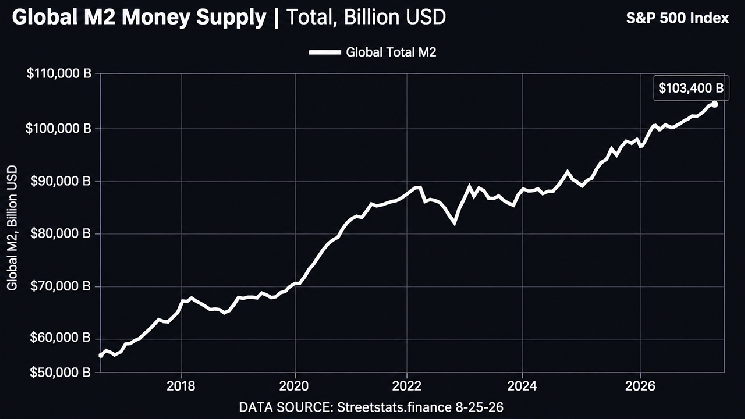
Bitcoin Price Lagging? Record Global Money Supply M2 Could Springboard BTC Growth The global money supply (M2) is expanding rapidly, similar to global debt. The US M2, representing all money circulating in its economy, has reached a record $23.16 trillion. Combined with figures from major economies like the Eurozone, China, and Japan, the global M2 is approximately $103 trillion. Some estimates, however, place it closer to $195 trillion. This surge in liquidity is significant because excess capital often seeks higher returns in assets like precious metals, stocks, and cryptocurrencies. Bitcoin's recent price surge above $81,000 has brought the global M2 metric back into focus. Following a sharp rise in early August after a US Treasury bond buyback announcement, BTC still trades about 37% below its October 2025 all-time high exceeding $126,000. This gap presents a potential "catch-up" trade thesis. Bitcoin's fixed supply of 21 million contrasts with governments' ability to print fiat currency, making scarce assets like BTC attractive if monetary expansion continues. Historically, Bitcoin's bull cycles in 2017-2018 and 2020-2021 coincided with M2 expansion and increased liquidity. Over the past year, the correlation seemed broken as M2 grew while Bitcoin's price fell sharply from its peak. Observers believe fresh dollars may have remained locked in cash-favorable investments. Some, like Ash Crypto, now suggest a long-awaited alignment between Bitcoin and M2 may be starting, especially as a weakening US Dollar Index this month has seen assets like gold and Bitcoin surge. A softer dollar pressures cash havens and prompts holders to act. While record M2 doesn't guarantee higher Bitcoin prices, a sustained influx of liquidity, a weak dollar, and capital flowing into alternative assets could trigger a catch-up rally sooner than expected. However, changes in these conditions could lead to the opposite outcome.

cryptonews.ruHace 22 min(s)

Is Bitcoin Price Lagging? Record Global M2 Money Supply Could Be a Springboard for BTC's Rise

cryptonews.ruHace 22 min(s)

Blockchain Capital Partner: Tokenization Will Reshape the Underlying Structure of Capital Markets

"Blockchain Capital partner Aleks Larsen argues that tokenization will fundamentally restructure capital markets by solving a costly 'packaging' problem in finance. Currently, assets like mortgages, private equity, and stocks exist in fragmented, incompatible systems, creating huge friction and slowing capital flow. Tokenization introduces a standardized, machine-readable interface for assets—akin to shipping containers for finance. Just as containerization standardized global trade, enabling massive efficiency gains and economic growth, tokens standardize financial rights. This allows platforms, lenders, and custodians to interact with assets directly on a shared network without rebuilding infrastructure for each one. Stablecoins demonstrate this potential, processing volumes rivaling Visa with far lower cost and faster settlement. Beyond payments, tokenization is expanding to assets like U.S. Treasuries, commodities, and private credit, now totaling nearly $400 billion on-chain. This shift changes financial service access: instead of depending on relationships with institutions, services become accessible based on the asset's tokenized properties themselves. DeFi protocols like Aave exemplify this, where assets meeting criteria can be used as collateral programmatically. Ultimately, tokenization will reorganize capital markets around open networks of specialized services, lowering barriers to entry and reducing costs. This could unlock global capital for currently underserved assets—small receivables, regional infrastructure, emerging market credit—integrating them into a seamless, programmable financial system. Combined with AI, tokenization promises to make capital allocation more efficient, transparent, and globally accessible, reshaping how economic value is created and distributed."

marsbitHace 26 min(s)

Blockchain Capital Partner: Tokenization Will Reshape the Underlying Structure of Capital Markets

marsbitHace 26 min(s)

Trading

Spot
活动图片