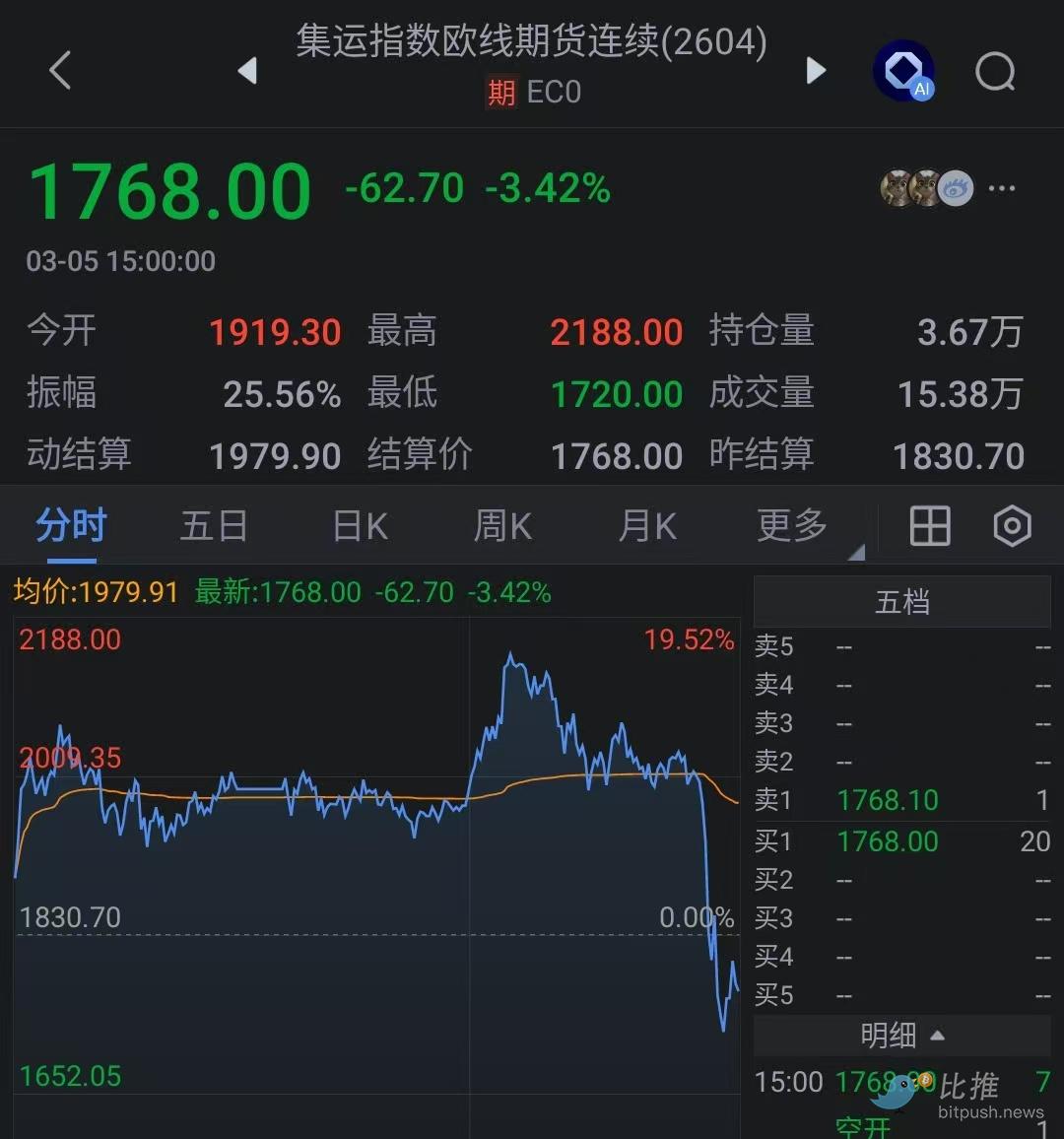
There is no new boss YET

比推Publicado a 2026-03-05Actualizado a 2026-03-05

Resumen

An Iranian deputy military commander from a southern district stated that the Strait of Hormuz has not been blockaded, but only vessels from the U.S. and Israel are prohibited from passing through. This caused a sharp, temporary drop in market prices for oil, gas, and container shipping routes (except European shipping, which remained down). The statement contrasts with Spain's recent refusal to allow the U.S. to use its bases for operations against Iran, where a spokesperson grimly warned of rising energy prices. Around the same time, a U.S. oil tanker sank in the Strait of Hormuz after reportedly “hitting a reef”—a claim viewed by some as corroboration of Iran’s military reports suggesting it was struck by a missile. The information landscape is filled with conflicting narratives, and all claims may be considered both true and false depending on perspective, as psychological and media operations are integral to modern warfare. There is no single authoritative voice in this conflict; even figures like Trump have contributed to the confusion with performative statements. Amid the chaos, all sides are maneuvering for strategic advantage, while humanitarian concerns are overshadowed by geopolitical games. The situation reflects a self-destructive struggle on a global scale.

Just now, uh, a deputy commander of a military district in southern Iran said something: 'We have not blocked the Strait of Hormuz,' only prohibiting ships from the US and Israel from passing. This instantly scared the market into a slide, things like European shipping, oil, gas. Scared the hell out of them, a complete mess, but at this moment, most have deeply V-recovered [except for European shipping].

This is in stark contrast to the Spanish spokesperson who, with a grave expression [at a press conference announcing Spain's refusal to negotiate with the US and allow the use of Spanish bases to attack Iran], repeatedly stated that oil and gas prices are bound to rise.

At the moment of speaking, a US oil tanker 'ran aground' and sank in the Strait of Hormuz. Think about it, 'running aground' in the world's busiest energy transport artery. This actually verifies the Iranian military's combat report. It was sunk by a missile.

Some might say, with so many messages and news, which one is true? Who is fooling whom? Actually, all can be considered true (truth mixed with falsehood, falsehood mixed with truth, remember all is fair in war.), because there is no leading figure or authority now [even if there is, like Trump giving himself a 15 out of 10 (evaluating US-Iran actions at a press conference, scoring himself, full marks 10.), it would be full of drama, and the war of public opinion has always been synchronized with the overall war and runs through it from beginning to end.]. The information released by all parties at any given moment can be considered true, but viewed from the overall situation or different standpoints, it can also be considered false. 'Everyone' is searching for the kind of 'ladder' Littlefinger talked about in the chaos, collecting as many chips as possible.

As for humanity, as for compassion. Amidst the complex and numerous coercions, there is temporarily no place for them to stand. This is the self-inflicted disaster of a group of microorganisms on this planet.

Whatever, bro.

#KingOfWar#King of War
Original article link:https://www.bitpush.news/articles/7617058

Preguntas relacionadas

QWhat was the immediate market reaction to the Iranian commander's statement about not blocking the Strait of Hormuz?

AThe market was instantly frightened, causing a sharp decline in prices for routes like European container shipping, oil, and gas. However, these prices mostly experienced a deep V-shaped recovery shortly after, except for European container shipping.

QHow did the Spanish spokesperson's statement contrast with the Iranian commander's?

AThe Spanish spokesperson, with a grave expression, repeatedly stated that oil and gas prices would inevitably rise during a press conference where Spain refused to negotiate with the U.S. on using its bases to attack Iran. This formed a sharp contrast to the Iranian commander's statement that they were not blocking the strait but only banning U.S. and Israeli ships.

QWhat incident is reported to have occurred in the Strait of Hormuz that seemingly confirmed Iran's military report?

AA U.S. oil tanker was reported to have 'run aground' and sunk in the Strait of Hormuz. The article suggests this was a cover story and that the tanker was actually sunk by a missile, validating Iran's military claims.

QAccording to the article, why is it difficult to determine the truth from the various news and messages circulating?

AThe article states that all information released by various parties can be considered true at the moment it is given, but when viewed from an overall perspective or different standpoints, it can also be considered false. There is no single authoritative source, and information warfare is full of deception and drama, making it hard to discern the absolute truth.

QWhat is the overall tone of the article towards the geopolitical situation described?

AThe tone is cynical and pessimistic, describing the situation as a chaotic melee where parties are fighting for leverage, with humanity and compassion having no place. It concludes with a resigned 'so be it' attitude, referring to the conflict as the自作孽 (self-inflicted disaster) of the planet's microbes.

Lecturas Relacionadas

Los retiros de Bitcoin continúan: 8 años de almacenamiento en una cartera fría Coldcard terminaron en cero

Retirada de bitcoin continúa: 8 años en cartera fría Coldcard terminan en cero La cartera hardware Coldcard ha sido vulnerada, provocando una nueva oleada de retiradas de fondos de dispositivos afectados. Galaxy Research informa que el volumen total robado asciende a 1.367,05 BTC (unos 88,6 millones de dólares) desde 4.585 direcciones, superando ampliamente los 594,5 BTC reportados inicialmente el 30 de julio de 2026. La mayor parte de lo robado permanece inactiva en las direcciones de los atacantes. El problema no reside en el firmware, que ya fue actualizado por Coinkite, sino en las frases semilla (seed phrases) generadas desde marzo de 2021 debido a un error de programación. Estas frases son fácilmente descifrables, y actualizar el firmware no las cambia. Solo transferir los fondos a una nueva dirección con una nueva frase semilla elimina la vulnerabilidad. El fallo se originó al integrar la biblioteca libNgU, lo que hizo que los dispositivos dejaran de usar el generador de números aleatorios por hardware STM32 y pasaran a usar el generador software Yasmarang, inicializado con datos públicamente accesibles como el número de serie del chip. Afecta a frases semilla creadas en dispositivos Mk2/Mk3 (firmware 4.0.1–4.1.9 y hasta 5.0.3), Mk4/Mk5 (hasta v5.6.0) y Q (hasta v1.5.0Q). Se excluyen aquellas creadas con al menos 50 lanzamientos de dados independientes o una passphrase BIP-39 fuerte y única. Los usuarios deben generar una nueva frase semilla en firmware corregido y transferir sus activos. Un caso ilustrativo es el de un inversor de 39 años que perdió 2 BTC (unos 130.000 dólares) en minutos, ahorrados durante ocho años mediante trabajo físico como protección contra la hiperinflación en su país, con el objetivo de una jubilación anticipada a los 50 años. Su estrategia conservadora de "comprar y mantener en frío" se vio truncada, dejándolo devastado y decidido a abandonar las criptomonedas. Este incidente recuerda vulnerabilidades históricas por generadores de números aleatorios débiles, como la de la biblioteca BitcoinJS (2011-2015), que causó grandes pérdidas. Subraya que el almacenamiento offline no garantiza automáticamente seguridad criptográfica, especialmente cuando la entropía se ve comprometida dentro del propio dispositivo "cerrado".

cryptonews.ruHace 3 hora(s)

Los retiros de Bitcoin continúan: 8 años de almacenamiento en una cartera fría Coldcard terminaron en cero

cryptonews.ruHace 3 hora(s)

Trading

Spot
活动图片