Terraform Labs Sues Jump Trading For Alleged Role In 2022 Collapse

bitcoinistPublicado a 2025-12-20Actualizado a 2025-12-20

Resumen

Following the 15-year prison sentencing of its founder Do Kwon, Terraform Labs' bankruptcy administrator has filed a $4 billion lawsuit against Jump Trading. The suit alleges the firm engaged in "illicit market manipulation, self-dealing, and misuse of assets" to enrich itself at investors' expense during Terra's 2022 collapse. The event, triggered when the TerraUSD stablecoin lost its peg, wiped out an estimated $40 billion in value. Jump Trading has dismissed the lawsuit as a desperate attempt to deflect blame. Separately, Kwon, who pleaded guilty to fraud charges in the U.S., may face a second trial and over 30 years in prison if extradited to South Korea, where over 200,000 victims reported losses exceeding $204 million.

The legal troubles surrounding the collapsed Terraform Labs persist despite the recent sentencing of its founder, Do Kwon, to 15 years in prison by US authorities. Following Kwon’s conviction, the company’s bankruptcy administrator has initiated a lawsuit against Jump Trading.

Terraform Labs Files $4 Billion Lawsuit

On social media platform X (formerly Twitter), the Office of the Terraform Labs Plan Administrator announced that it is pursuing a $4 billion lawsuit against Jump Trading.

The lawsuit accuses the firm of engaging in “illicit market manipulation, self-dealing, and misuse of assets,” all of which allegedly enriched the company at the expense of unsuspecting investors.

The administrator emphasized that this legal action aims to recover lost value for creditors and hold Jump accountable for exploiting the Terraform ecosystem.

The demise of Terraform Labs in 2022 began when its stablecoin, TerraUSD, lost its dollar peg, triggering a catastrophic sequence of events that devalued its sister token, Luna.

This collapse wiped out approximately $40 billion in value, affecting investors globally and initiating a ripple effect throughout the cryptocurrency industry. Notably, Terraform Labs’ turmoil also contributed to the eventual failure of Sam Bankman-Fried’s FTX exchange.

In response, a Jump Trading spokesperson stated that the lawsuit is a “desperate attempt by Terraform Labs” to deflect blame and financial liability for Kwon’s actions. The spokesperson asserted their intention to vigorously contest what they described as baseless claims.

Kwon’s Potential Second Trial In South Korea

Last week, it was reported that Do Kwon had pleaded guilty to charges involving conspiracy to defraud and wire fraud. Kwon admitted to misleading investors about the stability of TerraUSD.

During his sentencing, US District Judge Paul A. Engelmayer pointed out that Kwon had repeatedly deceived investors who had placed their trust in him, describing the fraud as one of “epic, generational scale.”

Kwon expressed remorse in court, mentioning that he had spent considerable time reflecting on his actions and contemplating how to make amends. Prosecutors alleged that when TerraUSD fell below its $1 target in May 2021, Kwon misled investors into believing that a computer algorithm would restore its value.

Meanwhile, court documents revealed that he had arranged for a trading firm to secretly purchase millions of dollars’ worth of the coin to artificially inflate its price. Yet, the legal issues for Kwon are far from over.

South Korean officials indicated that he could face a second trial and additional sentences should he be extradited after serving part of his US sentence. There are expectations that the Terraform Labs co-founder may apply for the International Prisoner Transfer Program once he completes half of his 15-year term.

This potential extradition poses a significant threat, as Kwon faces multiple charges related to violations of the Capital Markets Act in South Korea, where there are over 200,000 reported victims and estimated losses exceeding $204 million.

With ten alleged accomplices already on trial in South Korea, authorities believe that prosecuting Kwon domestically would be essential in compensating local victims. A guilty verdict in his home country could lead to a sentence exceeding 30 years, according to a senior prosecutor’s statement.

The daily chart shows LUNC’s consolidation after a major correction. Source: LUNCUSDT on TradingView.com

At the time of writing, Luna Classic (LUNC) is trading at $0.00004010, having recorded losses of 17% over the past week. However, the token has increased in value by 28% over the past month, following Kwon’s sentencing hearing which boosted the price of the cryptocurrency.

Featured image from DALL-E, chart from TradingView.com

Preguntas relacionadas

QWhat is the main allegation in the $4 billion lawsuit filed by Terraform Labs' bankruptcy administrator against Jump Trading?

AThe lawsuit accuses Jump Trading of engaging in 'illicit market manipulation, self-dealing, and misuse of assets,' which allegedly enriched the company at the expense of unsuspecting investors.

QWhat was the catastrophic event that triggered the collapse of Terraform Labs in 2022?

AThe collapse began when its stablecoin, TerraUSD (UST), lost its peg to the US dollar, which devalued its sister token, Luna and wiped out approximately $40 billion in value.

QHow did US District Judge Paul A. Engelmayer describe the fraud committed by Do Kwon?

AJudge Engelmayer described the fraud as one of 'epic, generational scale,' noting that Kwon had repeatedly deceived investors who had placed their trust in him.

QWhat potential legal consequence does Do Kwon face in South Korea after serving part of his US sentence?

ASouth Korean officials indicated that Kwon could face a second trial and additional sentences if extradited. He faces multiple charges related to violations of the Capital Markets Act, with a potential sentence exceeding 30 years.

QWhat was the market performance of Luna Classic (LUNC) at the time of writing, according to the article?

AAt the time of writing, LUNC was trading at $0.00004010. It had recorded losses of 17% over the past week but had increased in value by 28% over the past month.

Lecturas Relacionadas

El Trilema de la Escalabilidad es un Falso Problema

Autor: Billy Gao Traducción: Jiahuan, ChainCatcher El sistema criptográfico más potente de la historia no puede proteger la privacidad de tus fondos. Cada transacción y cada posición se emiten públicamente en la cadena de bloques. La cadena de bloques es esencialmente una computadora compartida, lenta, costosa y sin propietario. Su principal ventaja es que nadie puede evitar que la uses ni engañarte sobre los resultados. La "trilema" tradicional —descentralización, escalabilidad, seguridad— ha sido en gran medida superada, pero no es el principal obstáculo. El problema real son dos defectos de diseño: la legitimidad y la falta de privacidad. La transparencia total en las cadenas públicas no es una característica positiva, es un impuesto que se paga en forma de MEV, front-running y exposición financiera. Los fondos (como las monedas estables) son el caso de uso ideal para la cadena, ya que el registro en el libro mayor es el activo en sí mismo. Sin embargo, el capital institucional y los grandes patrimonios no participan porque no exponen públicamente sus balances. La legitimidad está mejorando con marcos regulatorios, pero la privacidad sigue siendo la gran barrera. La privacidad con cumplimiento normativo demostrable, basada en pruebas criptográficas de conocimiento cero, es la solución. Permite verificar hechos (solvencia, KYC) sin revelar datos subyacentes, combinando privacidad y transparencia necesaria. Esto representa una mejora pura respecto al modelo actual y es el puente para atraer billones en capital hacia la cadena.

链捕手Hace 7 hora(s)

El Trilema de la Escalabilidad es un Falso Problema

链捕手Hace 7 hora(s)

Las stablecoins finalmente encuentran rendimientos reales: Un análisis detallado del reaseguro en cadena Re | Diálogo con el fundador de Re, Karan Saroya

Establemente las monedas finalmente encuentran rendimientos reales: Re, una plataforma de reaseguro en cadena, absorbe monedas estables de DeFi y las utiliza como garantía para respaldar a aseguradoras estadounidenses, devolviendo las primas obtenidas a los depositantes en cadena. Actualmente respalda a 35 aseguradoras, con un negocio suscrito de 5 mil millones de dólares, y planea superar los 10 mil millones en siete meses. **Puntos clave:** 1. **Fuente de rendimiento real:** Ofrece a los tenedores de monedas estables un rendimiento anual del 12%-14% o más, proveniente del mercado de reaseguro (un billón de dólares), no correlacionado con los mercados tradicionales. 2. **Eficiencia operativa:** Los contratos inteligentes reemplazan los costosos procesos tradicionales de captación de capital, permitiendo a un equipo pequeño competir con gigantes del sector. 3. **Apalancamiento regulatorio:** Por cada 1 dólar de garantía, se pueden respaldar 5-7 dólares en primas, multiplicando los rendimientos. 4. **Integración con DeFi:** Los depositantes reciben un token que puede reutilizarse en protocolos como Morpho para aumentar aún más el rendimiento. 5. **Token de gobernanza RE:** Inspirado en Lloyd's of London, permite a los poseedores gobernar la dirección del capital y los parámetros del sistema. Re representa un punto de inflexión, conectando el capital en cadena con la economía real y proporcionando la demanda necesaria para la infraestructura DeFi existente. Su arquitectura combina un frente regulado con un backend descentralizado eficiente.

链捕手Hace 10 hora(s)

Las stablecoins finalmente encuentran rendimientos reales: Un análisis detallado del reaseguro en cadena Re | Diálogo con el fundador de Re, Karan Saroya

链捕手Hace 10 hora(s)

¿1996 o 1999? La primera prueba de Walsh es 'cómo ver la IA'

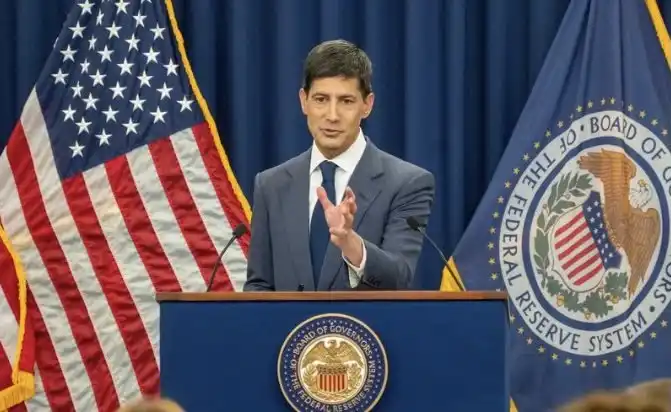
El nuevo presidente de la Reserva Federal, Wash, enfrenta su primera gran prueba: determinar si el auge actual de la IA se asemeja más al escenario económico de 1996 o al de 1999. Esta decisión definirá la política monetaria y su legado. Por un lado, está la visión optimista, que asemeja a 1996, donde un crecimiento impulsado por ganancias de productividad permitiría a la Fed mantenerse paciente mientras la inflación retrocede. Wash ha mostrado simpatía por esta narrativa, advirtiendo contra el error de sofocar prematuramente un boom de productividad. Por otro lado, la visión cautelosa, similar a 1999, sostiene que la demanda ya se está calentando y esperar datos concluyentes de productividad podría forzar subidas de tasas más agresivas después. Chicago Fed's Goolsbee argumenta que, al ser un boom ampliamente anticipado, la IA podría inflar la demanda antes de materializar la oferta, presionando la inflación. Wash opera en un contexto más difícil que el de Greenspan en los 90, con presión arancelaria, alto déficit fiscal y menos ventajas globales. Un dilema adicional es su deseo de eliminar la "guía anticipada" de la Fed, un mecanismo creado precisamente en 1999 para gestionar expectativas. Si la economía se recalienta, podría verse forzado a usarlo o arriesgar volatilidad en los mercados. La respuesta a la pregunta central —¿1996 o 1999?— resolverá este y otros dilemas.

marsbitHace 12 hora(s)

¿1996 o 1999? La primera prueba de Walsh es 'cómo ver la IA'

marsbitHace 12 hora(s)

Trading

Spot
Futuros
活动图片