Strategy Watch #2

insights.glassnodePublicado a 2026-03-24Actualizado a 2026-03-24

Resumen

Strategy Watch #2 provides institutional analysis of digital asset fund performance and allocation trends. The report covers six key areas: institutional capital flows, fund performance, macro strategies, on-chain vault returns, manager sentiment, and allocation updates. In February and early March, Bitcoin and Ethereum saw significant net outflows (-$9.6B and -$3.2B respectively), while stablecoins attracted inflows (+$6.2B), suggesting a defensive shift toward lower-risk assets. BTC ETF flows turned positive in March, though institutional conviction remains cautious. DeFi Total Value Locked (TVL) on Ethereum declined sharply, with peak outflows of -$23.7B in February, indicating reduced participation in on-chain yield strategies. CME basis yields continued to tighten, reflecting lower institutional leverage and softer derivatives demand. The report also highlights performance trends, with only one strategy type generating positive returns in February. Over 300 managers shared their three-month market outlook, and a new $750M fund of funds was announced.

The full report is freely available in PDF format.

Download PDF version

Welcome to Strategy Watch #2

Strategy Watch was built to address a clear demand for high-signal, impartial analysis of fund-level performance and allocation trends in digital assets.

The inaugural edition confirmed this demand, reaching a broad audience of key decision makers, from leading global asset managers, hedge funds, major investment banks, top-tier crypto-native funds and Fund of Funds.

Building on this early momentum, our objective is straightforward — to make Strategy Watch a must-read monthly publication for the digital asset investment community.

This publication is strengthened by direct input from market participants. Funds and allocators that contribute data and insights help shape a more complete and valuable view of the landscape.

If you have insights, data, or allocation updates worth sharing, we welcome your contribution.

Present your latest initiatives and updates to a curated audience of institutional allocators.

Share updates ↗

Inside the Latest Strategy Watch

The report is structured across six core sections, each focused on a distinct dimension of institutional activity in digital assets:

01 Institutional Flow Monitor |

02 Fund and SMA Performance | February was a bloodbath, check this section to see the only strategy type that returned positively last month.

03 Strategy Deep Dive: Macro Strategies | Hear firsthand from a macro portfolio manager on how they are navigating the current geopolitical challenges. 

04 On-chain Vault Performance | Are ETH curators underperforming ETH staking yield?

05 Manager Monitor | Find out how more than 300 managers are expecting the crypto market to perform over the next three months.

06 Allocation Updates | New USD 750m Fund of Funds is launching. Check this section to learn more.

in partnership with

The Premier Digital Assets Allocator Platform. Learn more


Institutional Flow Monitor

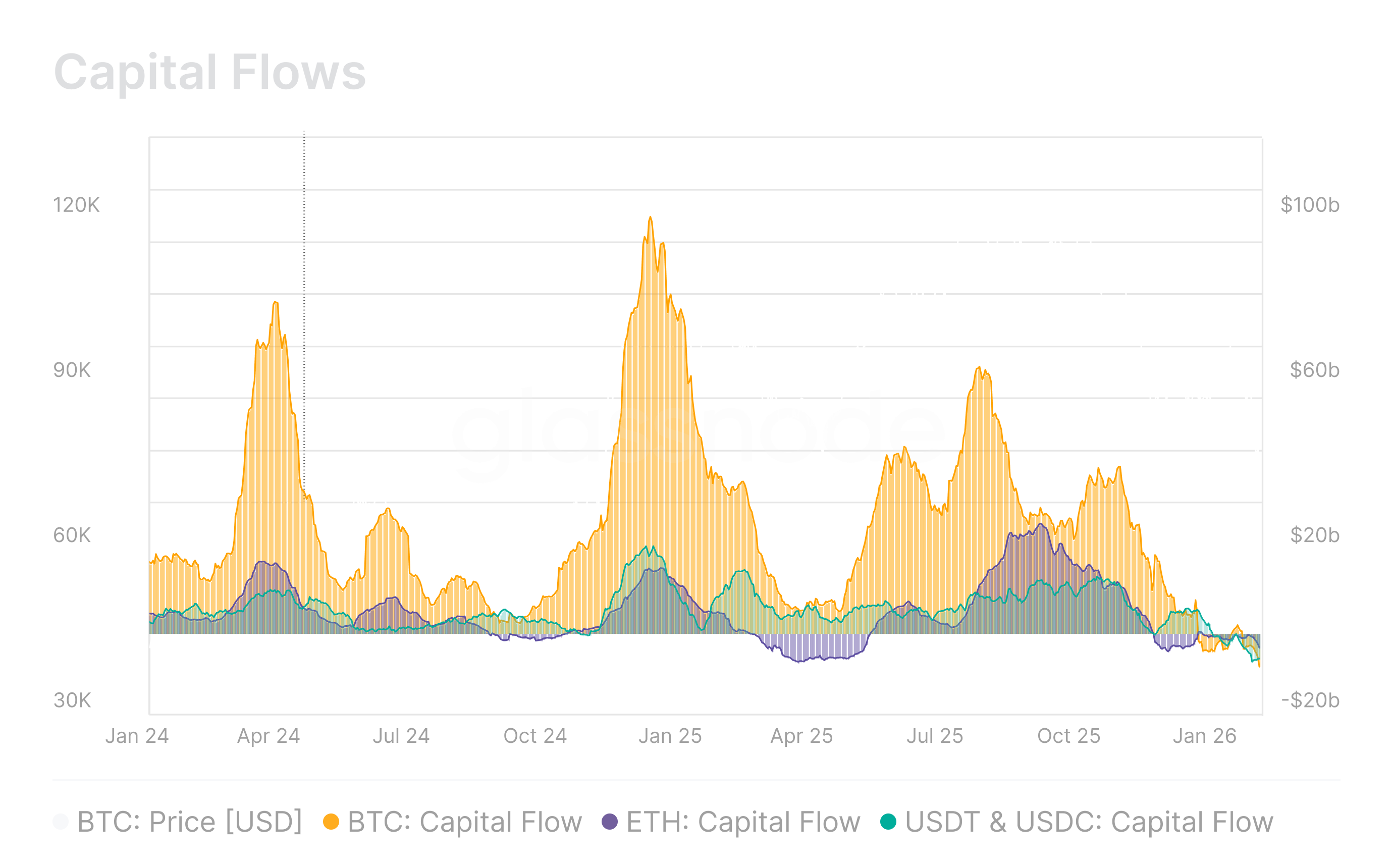
Capital flows into BTC and ETH remained deeply negative through February and into March, with stablecoins turning net positive in early March as investors rotated toward lower-risk positioning.

Bitcoin and Ethereum continued to experience sustained net outflows, with BTC and ETH capital flows registering -$9.6B and -$3.2B. However, stablecoins broke from the broader negative trend, flipping to +$6.2B in net inflows. Rather than signaling a broad return of risk appetite, this rotation likely reflects a defensive repositioning, with capital migrating into dollar-denominated on-chain instruments while conviction in spot crypto assets remains under pressure heading into mid-Q1 2026.
ETF & DAT Net Flows

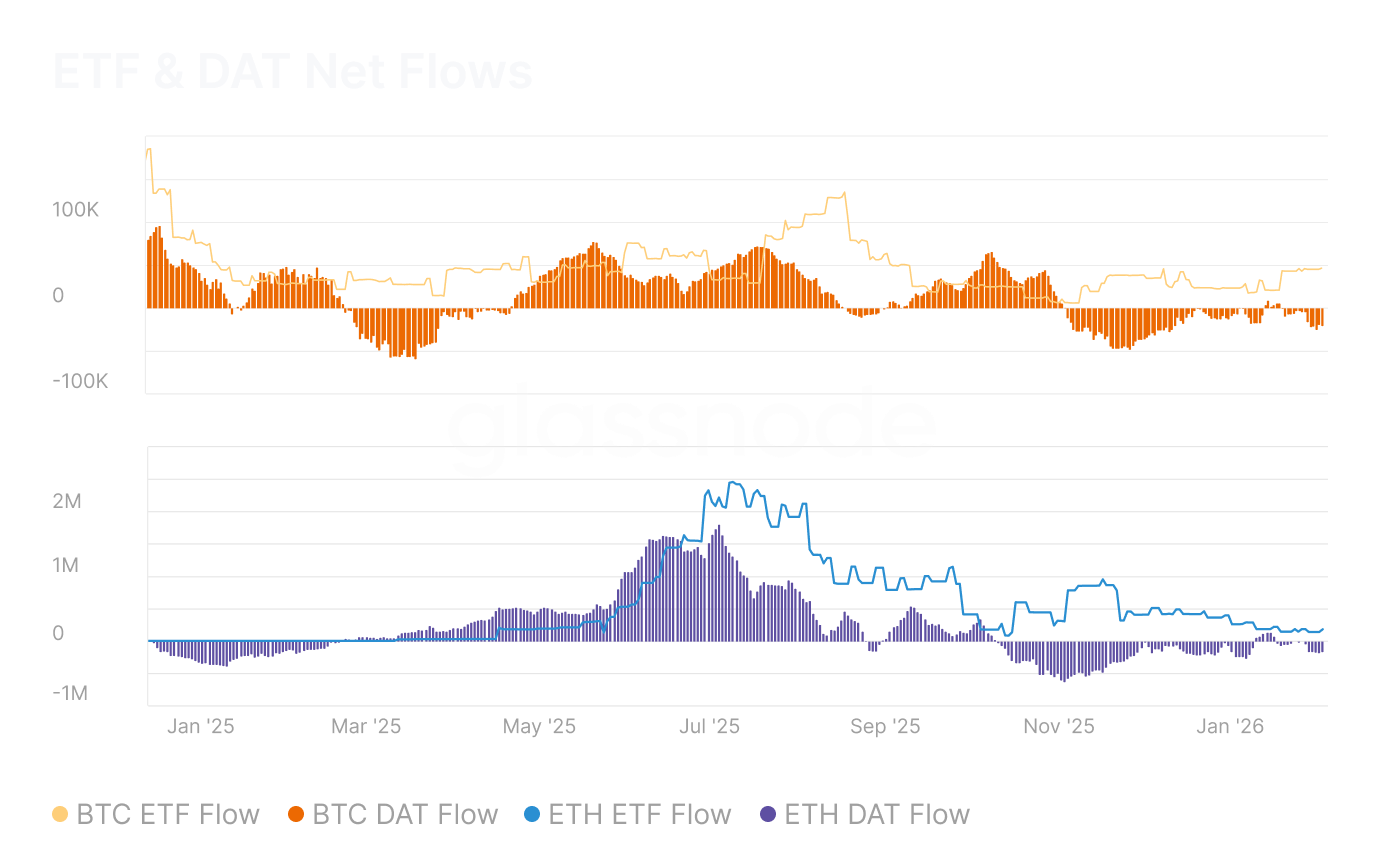
After sustained February outflows, BTC ETF and DAT flows returned to positive, while ETH institutional flows showed early signs of stabilization.

After sustained February outflows, Bitcoin ETF and DAT flows returned to positive territory, recovering to +28k BTC and +46.8k BTC respectively. Ethereum flows were more measured, with ETF flows near neutral at +46.5k ETH and DAT flows stabilizing at +295.8k ETH. While the directional shift is encouraging, the recovery remains early-stage and uneven, and it would be premature to characterize this as a broad resumption of institutional conviction.
DeFi TVL & Stablecoin Cap

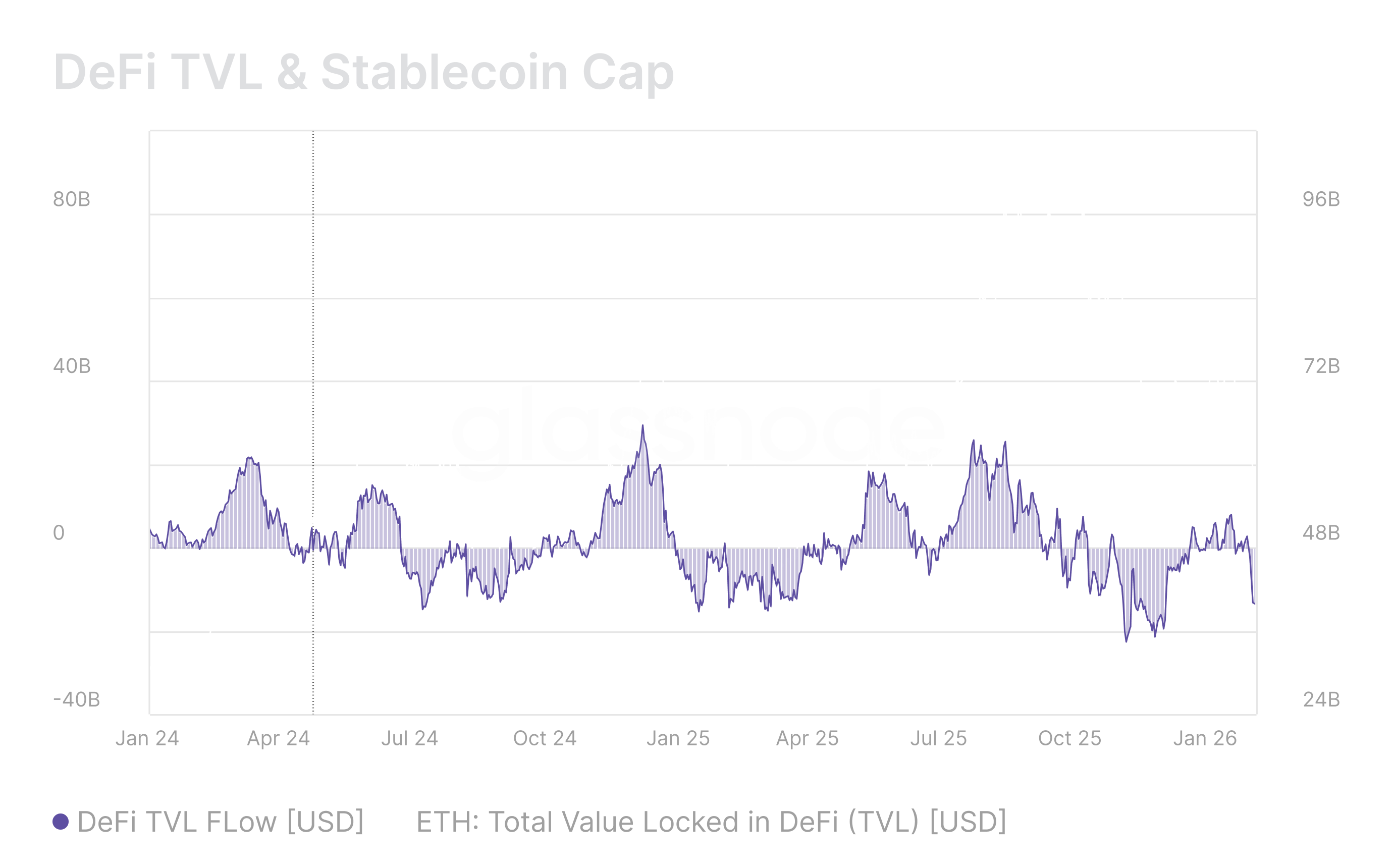
DeFi TVL on Ethereum saw sharp contraction through February before showing early signs of stabilization in March, though the broader declining trend since August 2025 remains intact.

Total Value Locked on Ethereum recorded peak outflows of -$23.7B per month in February, implying sustained withdrawal by larger allocators from on-chain activities such as liquidity provisioning and yield strategies. This slowdown alone is insufficient to signal a reversal, and diminished conviction in DeFi risk-adjusted returns continues to point to shallower liquidity depth across the ecosystem.
CME Basis Yield

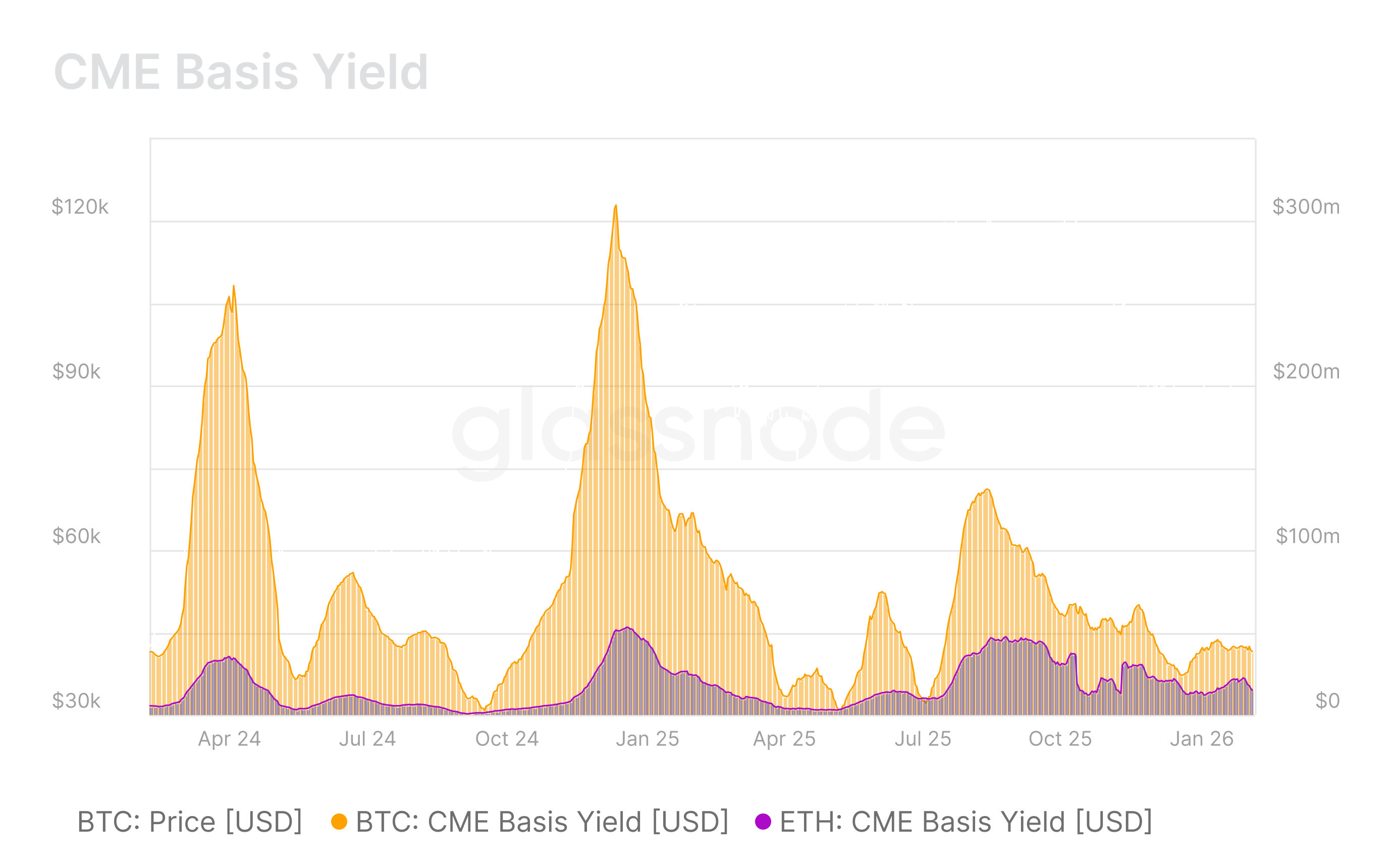
CME Basis Yield compressed even further in February, reinforcing waning incentives for market-neutral strategies compared to January.

The monthly dollar value captured by institutions via cash-and-carry trades declined notably for both Bitcoin and Ethereum, building on the sharp compression seen since August 2025. This tightening basis reflects reduced leverage deployment, softer futures demand, and continued pullback in balance-sheet commitment amid tighter liquidity conditions persisting from January into early March 2026.


Disclaimer: This report does not provide any investment advice. All data is provided for information and educational purposes only. No investment decision shall be based on the information provided here and you are solely responsible for your own investment decisions.
Exchange balances presented are derived from Glassnode’s comprehensive database of address labels, which are amassed through both officially published exchange information and proprietary clustering algorithms. While we strive to ensure the utmost accuracy in representing exchange balances, it is important to note that these figures might not always encapsulate the entirety of an exchange’s reserves, particularly when exchanges refrain from disclosing their official addresses. We urge users to exercise caution and discretion when utilizing these metrics. Glassnode shall not be held responsible for any discrepancies or potential inaccuracies. Please read our Transparency Notice when using exchange data.

Preguntas relacionadas

QWhat is the primary purpose of the Strategy Watch publication?

AStrategy Watch was built to address a clear demand for high-signal, impartial analysis of fund-level performance and allocation trends in digital assets, aiming to be a must-read monthly publication for the digital asset investment community.

QWhich was the only strategy type that returned positively in February according to the report?

AThe report indicates that readers should check the 'Fund and SMA Performance' section to see the only strategy type that returned positively in February, though the specific strategy name is not stated in the provided text.

QWhat was the trend in capital flows for Bitcoin (BTC) and Ethereum (ETH) through February and into March?

ACapital flows into BTC and ETH remained deeply negative, with BTC and ETH capital flows registering -$9.6B and -$3.2B, respectively.

QHow did stablecoin capital flows behave in contrast to BTC and ETH in early March?

AStablecoins broke from the broader negative trend, flipping to +$6.2B in net inflows, which likely reflects a defensive repositioning into lower-risk, dollar-denominated on-chain instruments.

QWhat does the sharp compression in CME Basis Yield indicate about market conditions?

AThe compression in CME Basis Yield reflects reduced leverage deployment, softer futures demand, and a continued pullback in balance-sheet commitment amid tighter liquidity conditions, indicating waning incentives for market-neutral strategies.

Lecturas Relacionadas

Sin equipo de ventas y con ingresos de 20 millones de dólares, ¿cómo conquistó Viktor, el empleado de IA, a 30.000 empresas?

El asistente de IA Viktor, creado por un equipo con experiencia en DeepMind, ha logrado ingresos anuales de 20 millones de dólares sirviendo a 30,000 empresas, sin un equipo de ventas. Funciona como un "compañero de trabajo de IA de Nivel 3" que ejecuta tareas de principio a fin directamente en herramientas como Slack o Microsoft Teams mediante simples menciones (@). Permite a los usuarios realizar solicitudes en lenguaje natural, eliminando la necesidad de conocimientos en ingeniería de prompts. Su modelo de crecimiento impulsado por el producto (PLG) y facturación basada en créditos o consumo de tareas, en lugar de por usuario, facilita la adopción. Ofrece 100 dólares en créditos gratuitos para demostrar su valor rápidamente, como en procesos automatizados de conciliación nocturna o creación de presentaciones PPT. Viktor se integra con más de 3,200 aplicaciones y puede activarse automáticamente según horarios o eventos. También posee memoria organizacional, aprendiendo de correcciones para mejorar su ejecución. Al expandirse a Microsoft Teams, Viktor enfrenta nuevos desafíos de cumplimiento normativo y seguridad en grandes organizaciones. Su enfoque de ejecución autónoma, aunque eficiente, introduce riesgos de "caja negra" y posibles errores operativos. El éxito a gran escala dependerá de encontrar un equilibrio entre la automatización total, la gestión de riesgos y la construcción de confianza mediante un marco sólido de gobernanza, permisos y auditoría.

marsbitHace 1 hora(s)

Sin equipo de ventas y con ingresos de 20 millones de dólares, ¿cómo conquistó Viktor, el empleado de IA, a 30.000 empresas?

marsbitHace 1 hora(s)

Entrevista a los cofundadores de CoreWeave, acción relacionada con Nvidia: La demanda de IA parece 'intensificarse' cada día

CoreWeave, líder en neocloud, analiza la evolución de la demanda de IA con sus ejecutivos Brannin McBee y Nick Robbins. La necesidad de capacidad de computación para IA no se está enfriando, sino que se intensifica cada día, impulsada por las aplicaciones de agentes inteligentes, inferencia y IA empresarial. La entrevista destaca un cambio estructural: el cuello de botella ya no son solo las GPU, sino problemas de infraestructura más complejos como la disponibilidad de centros de datos con energía ("powered shells"), CPU, almacenamiento, cadena de suministro y costos. CoreWeave, que sirve a clientes como OpenAI, Anthropic y grandes tecnológicas, observa un aumento relativo en la necesidad de CPU (como las futuras Vera de Nvidia) y almacenamiento junto a las GPU, lo que ha llevado a rediseñar sus centros de datos. La competencia en infraestructura de IA ya no se centra solo en adquirir chips, sino en la capacidad de ejecución: desplegar rápida y eficientemente sistemas complejos. CoreWeave atribuye su éxito a su historial de ejecución, su rendimiento superior y su plataforma madura para llevar la IA a producción. Actualmente, la principal limitación es la disponibilidad de instalaciones de centros de datos listas, aunque la escasez y el costo de componentes como la memoria HBM son factores gestionados mediante contratos que trasladan los costos a los clientes. Se espera que el despliegue masivo de la próxima generación de servidores, como Vera Rubin, gane fuerza a lo largo de 2027.

marsbitHace 2 hora(s)

Entrevista a los cofundadores de CoreWeave, acción relacionada con Nvidia: La demanda de IA parece 'intensificarse' cada día

marsbitHace 2 hora(s)

Trading

Spot
Futuros
活动图片