Raoul Pal: I've Seen Every Panic, They Are Never the End

marsbitPublicado a 2026-02-06Actualizado a 2026-02-06

Resumen

Raoul Pal reflects on the brutal emotional toll of market crashes, drawing from his 38 years of experience in trading and investing, including his time in crypto since 2013. He recounts buying Bitcoin at $200, watching it drop 75%, then rise 10x, only to fall 87% in the 2014 bear market. Throughout multiple cycles—including the 2017 bull run with severe drawdowns and the COVID crash—he emphasizes that panic and severe sell-offs, while painful, have consistently been followed by recoveries and new highs. Key lessons include: HODLing often outperforms timing the market; adding during downturns compounds returns; and managing emotional and financial risk is essential. He stresses the importance of personal conviction (DYOR—Do Your Own Research), avoiding leverage, and sizing positions to minimize future regret. Pal sees the current environment as similar to mid-2021—a panic within a bull market—and is buying digital art and increasing crypto exposure accordingly. He concludes that volatility is the price paid for long-term compounding returns.

It feels brutal out there, hopeless. It's all over. You missed it. You screwed up again.

Everyone is angry and confused. Even those who saw it coming can't help but feel a bit smug, but many also know how much pain such price action can cause. These moments always feel like the worst of times.

I've been in the markets for 38 years (today's sell-off is my 'birthday gift', plus food poisoning last night!), and I've seen every type of crash and panic.

They all feel the same, terrible.

I entered the crypto market in 2013, buying Bitcoin for the first time at $200. It went up for a while after I bought, then fell 75%... and that was still a bull market, with the price eventually reaching over 10 times my purchase price. I didn't sell because it was a long-term investment, and I understood the risks. Then, in the 2014 bear market, it fell another 87%.

In the bull market leading up to 2017, I experienced three 35%–45% pullbacks... brutal. I eventually sold near $2000 (the 2013 previous high) due to the Bitcoin fork war. I had made 10 times my initial investment. But then it went up another 10 times (!!) by the end of the year, before starting another big, ugly bear market.

I sat out that entire bear market, and it felt good at the time.

During the pandemic crash, I bought back in at $6500 (3.5 times higher than my selling price). It turned out to be an expensive mistake of 'thinking I did the right thing'.

From April to July 2021, Bitcoin fell 50% in a market environment similar to today's. The sentiment on Twitter was awful, truly awful. But that time, the market wasn't as severely oversold as it is today...

By November 2021, the market was back at all-time highs: SOL was up 13x from its low, ETH doubled, and Bitcoin hit a new high, up 150%.

I've lived through all of this, all those terrifying, gut-wrenching moments, all happening within a long-term bull market.

I first bought at $200, and the price is now $65,000. I even missed a 3.5x move in the middle due to poor timing.

The first key lesson (for me): In a long-term upward trending asset, the best strategy is often to do nothing. 'HODL' became a meme for a good reason. It's more powerful than the 'four-year cycle' meme.

Second lesson: Be decisive about adding to your position during declines. Even if you can't perfectly time the bottom, consistently adding to your overall position during weakness compounds returns even more than dollar-cost averaging (DCA) in the long run.

I don't always have enough cash to buy heavily on the dips, but I always buy a little—it's crucial for mental training.

It always feels like: the opportunity is missed, it's not coming back, everything will collapse completely.

But that's not the case.

Ask yourself two questions: Will tomorrow be more digital than today? Will fiat currency be worth less tomorrow than it is today?

If the answer to both is 'yes', then keep going. BTFD, let 'time in the market' beat 'timing the market', because it always does. Adding significantly during large pullbacks dramatically lowers your cost basis, and that makes a huge difference.

Stress, fear, and self-doubt are the inevitable 'tax' on this journey.

Size your position according to your own risk tolerance. Don't worry, when prices fall, everyone feels their position is too large; when they rise, it feels too small. All you need to do is manage these emotions and find your own 'sweet spot'.

Another key point: Don't borrow someone else's conviction.

'DYOR' is a very important meme; without it, you simply won't get through these phases. Earn your conviction yourself. Borrowed conviction is like leverage—it will blow you up eventually.

Remember: When you're busy blaming others, you're really blaming yourself.

Yes, it feels dark right now. But soon, the sun will rise again, and this will just be another scar on the journey (provided you didn't use leverage! Leverage leads to permanent capital loss—you lose your chips at the casino). Never lose your chips.

When will this all end? I don't know, but I think it's more like April to November 2021—a panic within a bull market. I think it will end soon. Even if I'm wrong, I won't change my approach: as long as I have some cash, I'll keep adding.

But for you, it might be different. Try to build a 'regret minimization' portfolio: Could you handle another 50% drop from here? If not, then reduce your position, even if it seems stupid. The right mindset is crucial for survival. My mindset is 'how can I buy more', and yours might be the opposite.

There will always be timing experts who perfectly catch the decline, selling out or shorting. They will always exist. But honestly, you just need to tell yourself: this kind of thing can happen at any time. That way, when it does happen, you won't be as anxious because you expected it! It's just part of the story, not the whole story.

So what am I doing now?

I'm starting to buy some digital art (which also increases my ETH exposure), and I plan to continue increasing my crypto asset allocation over the next week—just like I do every time I get this opportunity.

I bought the pandemic crash, the 2021 pullback, the 2022 decline, the 2023 decline, and I'll do the same in 2024, 2025. I'll do it again this time. Every time, my profit and loss hits new highs before the market does, it's almost like magic. Again: BTFD!

Good luck. It's never easy.

Volatility is the price we pay for long-term compound returns. Embrace it.

Preguntas relacionadas

QAccording to Raoul Pal, what is the most effective strategy for a long-term upward trending asset?

AThe best strategy is often to do nothing, as 'HODL' is a meme for a good reason, and it's more powerful than the 'four-year cycle' meme.

QWhat two questions does Raoul Pal suggest asking oneself during market downturns?

AWill tomorrow be more digital than today? And will fiat currency be worth less tomorrow than today? If the answers are 'yes', then continue forward.

QWhat does Raoul Pal compare borrowed conviction to, and why is it dangerous?

AHe compares borrowed conviction to leverage, stating it will blow you up eventually because it isn't earned and won't sustain you through difficult market phases.

QWhat key action does Raoul Pal recommend during market sell-offs, and what is its psychological benefit?

AHe recommends adding to your position during sell-offs. The psychological benefit is that it trains your mind to act against the feeling that the opportunity is gone and everything will collapse.

QWhat framework does Raoul Pal propose for managing one's portfolio to ensure survival?

AHe suggests building a 'regret minimization' portfolio by asking if you can handle a further 50% drop from current levels. If not, you should reduce your position to maintain the correct mindset for survival.

Lecturas Relacionadas

NEAR planea distribuir 330,000 tokens en un airdrop, apostando a que su TVL supere los 70 millones de dólares

NEAR Protocol ha lanzado oficialmente su programa de incentivos Near@3.33. Este programa está diseñado para usuarios de la función de ejecución de cadena cruzada privada "Confidential Intents". Cuando el TVL total de Confidential Intents alcance los 70 millones de dólares, se activará una instantánea (snapshot) y se distribuirán las primeras 333,333 tokens "hito" a las cuentas elegibles. Para calificar, los usuarios deben haber realizado al menos una transacción "Confidential" en near.com y mantener un saldo superior a $100 en activos dentro de Confidential. El nivel de actividad influirá en la asignación final, con un límite del 2% del fondo por cartera. Actualmente, el TVL de Confidential Intents supera los 20.69 millones de dólares, por lo que necesita crecer un poco más del triple para alcanzar el objetivo. Las tokens "hito" distribuidas estarán bloqueadas y solo podrán convertirse 1:1 a tokens NEAR cuando el precio promedio ponderado por volumen (VWAP) de NEAR se mantenga en o por encima de $3.33 durante tres días consecutivos. Confidential Intents, lanzado a finales de febrero de 2026, es una capa de ejecución privada construida sobre el protocolo NEAR Intents. Su objetivo es proteger a los usuarios de problemas como MEV, front-running o fugas de estrategia al realizar transacciones entre cadenas. NEAR planea lanzar más rondas de incentivos en el futuro, con condiciones de activación que aumentarán junto con la participación de la comunidad.

Foresight NewsHace 1 hora(s)

NEAR planea distribuir 330,000 tokens en un airdrop, apostando a que su TVL supere los 70 millones de dólares

Foresight NewsHace 1 hora(s)

El mercado se ajusta tras la financiación de 84.700 millones de dólares de Google, y las valoraciones de IA empiezan a mirar la velocidad de recuperación de la inversión

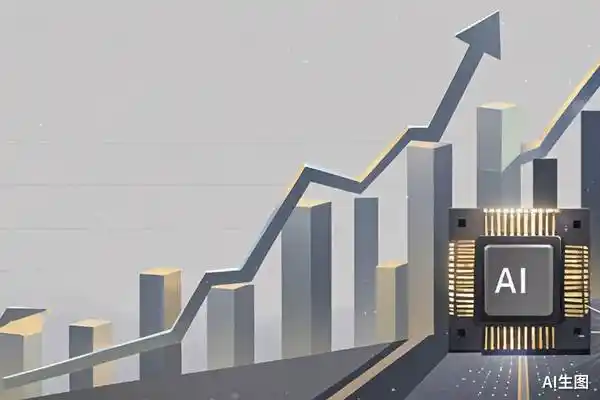
TL;DR: El mercado está reevaluando la inversión en IA, pasando de una narrativa de software de alto crecimiento a un ciclo de infraestructura de activos pesados con altos gastos de capital. El anuncio de Alphabet de una financiación de 84.750 millones de dólares y su mayor guía de gasto de capital para 2026 (180.000-190.000 millones) han centrado la atención en la eficiencia del capital, la velocidad de recuperación de la inversión y las fuentes de financiación. La demanda de capital se extiende más allá de los gigantes tecnológicos a empresas de modelos (OpenAI, Anthropic), operadores de centros de datos y empresas de servicios públicos eléctricos. Se estima que cinco grandes tecnológicas gastarán unos 750.000 millones de dólares en centros de datos de IA en 2026. Esta enorme necesidad de financiación hace que los inversores presten más atención al coste del capital, los flujos de caja libres y la dilución. La lógica de valoración ha cambiado: de premiar el crecimiento y la narrativa futura a priorizar visibilidad de ingresos, contratos a largo plazo y conversión eficiente del capital en flujo de caja. Esto ha provocado una revaluación y divergencia dentro del sector, con mayor presión sobre las acciones de software de IA con valuaciones elevadas y un soporte relativo para activos de infraestructura más tangibles. La clave a futuro será si los mayores gastos de capital se traducen en un crecimiento de ingresos suficiente para cubrir los costes y generar rentabilidad, y si los mercados pueden absorber las continuas necesidades de financiación sin aumentar significativamente el coste del capital.

marsbitHace 1 hora(s)

El mercado se ajusta tras la financiación de 84.700 millones de dólares de Google, y las valoraciones de IA empiezan a mirar la velocidad de recuperación de la inversión

marsbitHace 1 hora(s)

Orbs Lanza Infraestructura Institucional de Trading DeFi

Hoy, Orbs, la infraestructura blockchain de Capa 3 descentralizada para operaciones sofisticadas en cadena, lanzó Orbs Institutional. Esta nueva oferta brinda a mesas de trading, empresas OTC, tesorerías, custodios y plataformas financieras acceso directo a su infraestructura de ejecución en cadena. La tecnología, que desde 2023 ha manejado más de $2,500 millones en volumen de operaciones al contado en más de 10 redes blockchain, ahora está disponible directamente para actores institucionales, habiendo estado previamente accesible a través de plataformas como PancakeSwap y SushiSwap. El núcleo de la oferta es Liquidity Hub, el protocolo de agregación de liquidez de Orbs, que obtiene liquidez de creadores de mercado profesionales y exchanges descentralizados a través de una capa privada de RFQ, diseñada para mejorar la calidad de ejecución y reducir la exposición a MEV y front-running. Las instituciones también tendrán acceso a herramientas de ejecución como dTWAP, dLIMIT y dSLTP. Los activos permanecen bajo control del cliente durante todo el ciclo de ejecución, utilizando infraestructura de custodia existente compatible con EIP-712. Orbs Institutional ofrece dos vías principales de integración: conexión directa mediante APIs para clientes institucionales, e integración white-label o co-branded para custodios, exchanges y otros proveedores. La empresa anticipa una mayor demanda de infraestructura de ejecución transparente, automatizada y con autocustodia, a medida que crece la participación institucional en los mercados de activos digitales, marcando la próxima fase de adopción de DeFi.

TheNewsCryptoHace 1 hora(s)

Orbs Lanza Infraestructura Institucional de Trading DeFi

TheNewsCryptoHace 1 hora(s)

Trading

Spot
Futuros
活动图片