In Just 70 Days, Polymarket Easily Rakes in Tens of Millions in Fees

Odaily星球日报Publicado a 2026-03-16Actualizado a 2026-03-16

Resumen

Polymarket, a prediction market platform, has generated over $11.2 million in fees in just 70 days since introducing transaction fees on January 6. Initially applied only to "15-minute crypto up/down" markets, the fee structure charges more when odds are near 50% (up to 1.56%) and less when they approach 0% or 100%. By March 6, fees were expanded to all crypto-related markets, which now drive most of the revenue. Weekly fee income has shown consistent growth, reaching $1.84 million in a recent week. If current trading volume and structure continue, Polymarket’s annualized revenue is estimated at $58.4 million under a conservative model. A more aggressive projection—assuming fees are applied to all markets—could yield up to $360 million per year. The platform has also distributed $13.41 million in liquidity provider incentives, which March revenue is on track to cover entirely. Polymarket’s revenue potential hinges on two factors: continued growth in trading volume and further expansion of fee-based markets. The platform has effectively proven the profitability of the prediction market model, positioning it as a highly efficient revenue generator in the crypto ecosystem.

Original | Odaily Planet Daily (@OdailyChina)

Author | Azuma (@azuma_eth)

On January 6th of this year, Polymarket officially ended its "zero-fee" model, beginning a trial implementation of transaction fees starting with the "15-minute cryptocurrency up/down" markets. The specific fee rate varies with the market's real-time odds — the closer the odds are to 0% or 100%, the lower the fee; conversely, the closer the odds are to 50%, the higher the fee, up to a maximum of 1.56%.

Later, on January 28th, about three weeks after the fees were introduced, we published an article titled "Data Estimates Show Polymarket Could Easily Exceed $100 Million in Annual Revenue, Assuming...". The article provided a static estimate based on Polymarket's trading volume and activity structure at the time: in the most conservative scenario, if the scope of fee-charging markets remained unchanged, Polymarket was projected to generate approximately $38 million in annual income; in the most aggressive scenario, if Polymarket extended fees to all markets, it was projected to earn $418 million in annual fee revenue.

When we last estimated Polymarket's revenue, we were hampered by an overly short observation period and too few calculable samples. Now, nearly two months later, we have used richer data to re-estimate Polymarket's revenue expectations. The results show that the so-called "conservative" estimate was indeed too conservative, and the "aggressive" expectation isn't too exaggerated.

Changes in Revenue Data

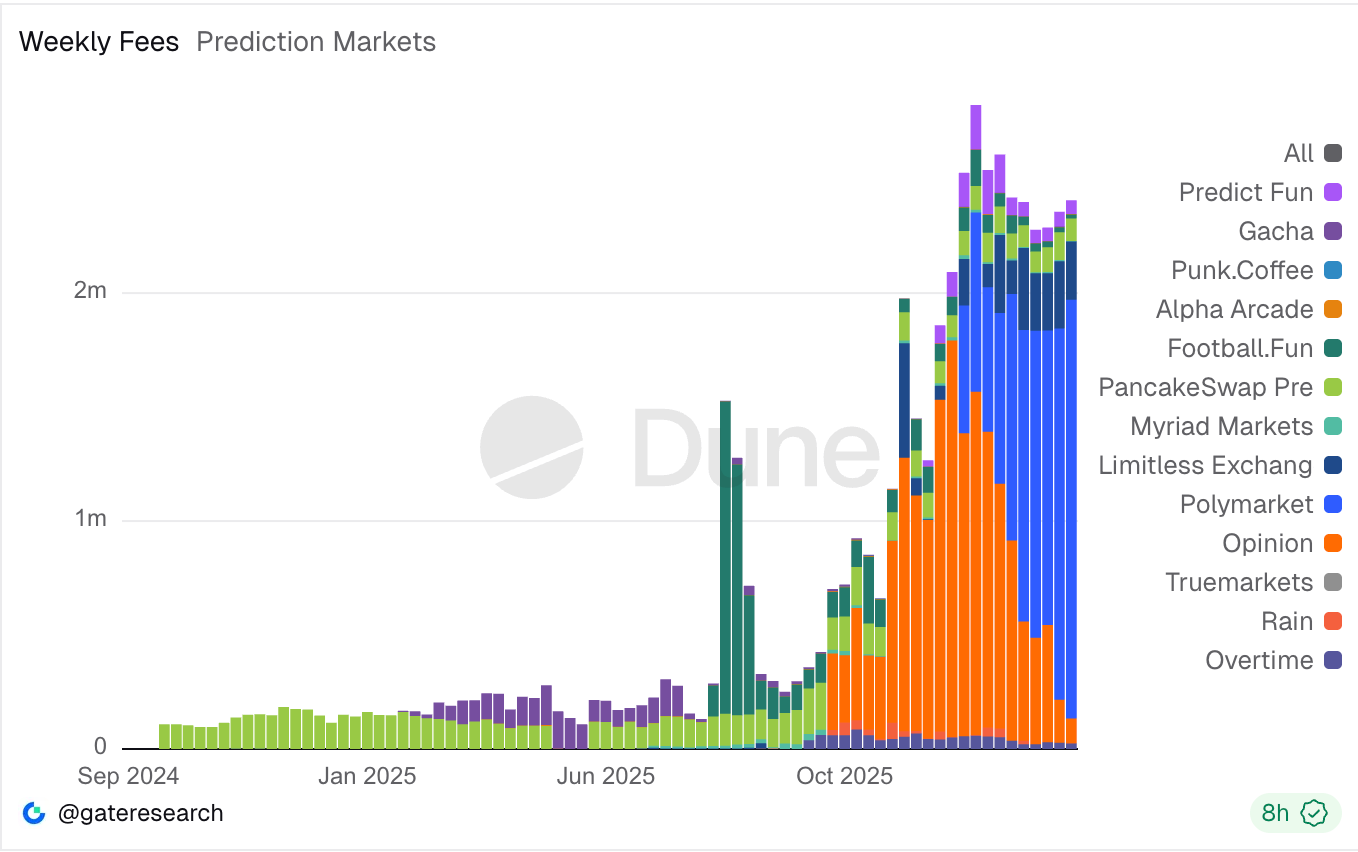
According to data compiled by Gate Research on Dune, since transaction fees were introduced on January 6th, Polymarket has accumulated over $11.2 million in fee revenue.

Using the most conservative method for another static estimate, assuming the trading volume and activity structure of the relevant markets remain unchanged, Polymarket is projected to generate approximately $58.4 million in annual revenue.
However, this estimation method does not accurately reflect Polymarket's revenue-generating capability.

The reason is that Polymarket's revenue data is clearly in a growth trend — over the past 10 weeks, the platform's weekly fee revenue has been $560,000, $786,000, $633,000, $749,000, $1.08 million, $1.28 million, $1.35 million, $1.29 million, $1.63 million, $1.84 million... showing almost weekly significant growth.

Reasons for Revenue Growth

There are two reasons for the growth in Polymarket's fee revenue. First, Polymarket has expanded the scope of fee-charging markets; second, Polymarket's overall trading volume and the trading volume in fee-charging markets have been growing continuously.

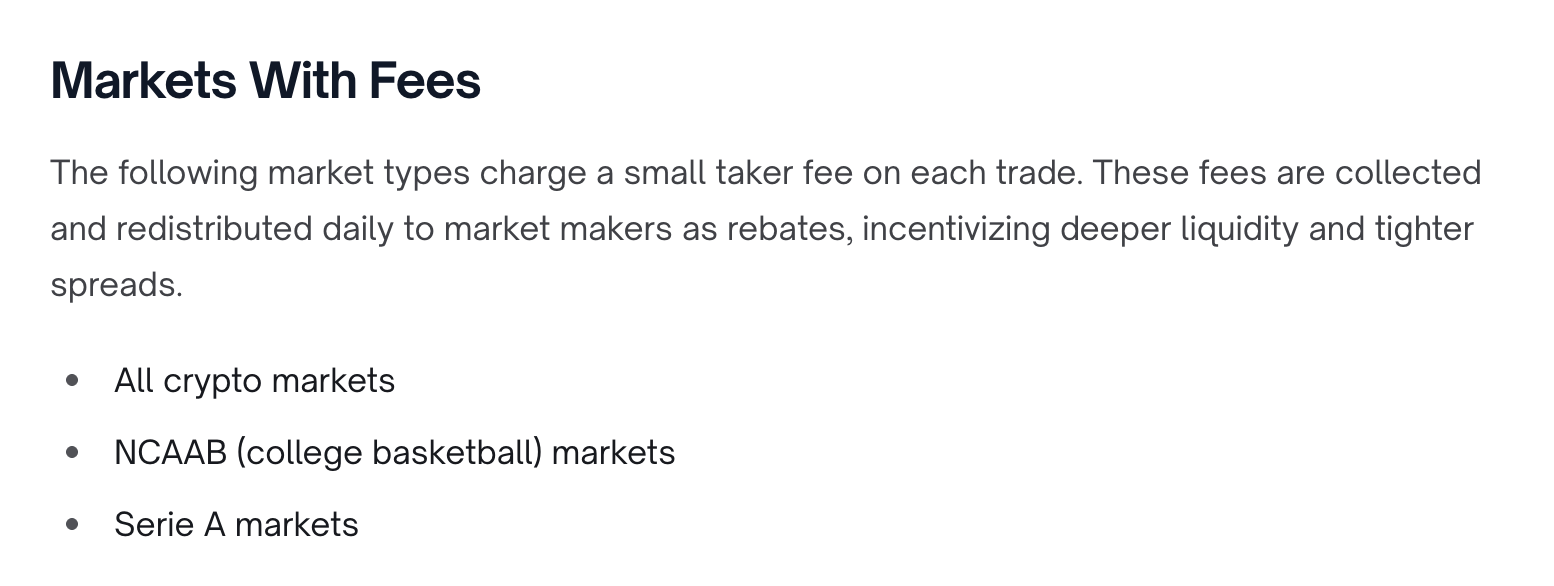
Regarding the scope of fee-charging markets, Polymarket extended the fee mechanism to all cryptocurrency-related markets on March 6th. Additionally, even earlier, it had begun trialing fee collection in sports markets like NCAA and Serie A. However, the former (cryptocurrency-related markets) currently remains the primary source of fee revenue.
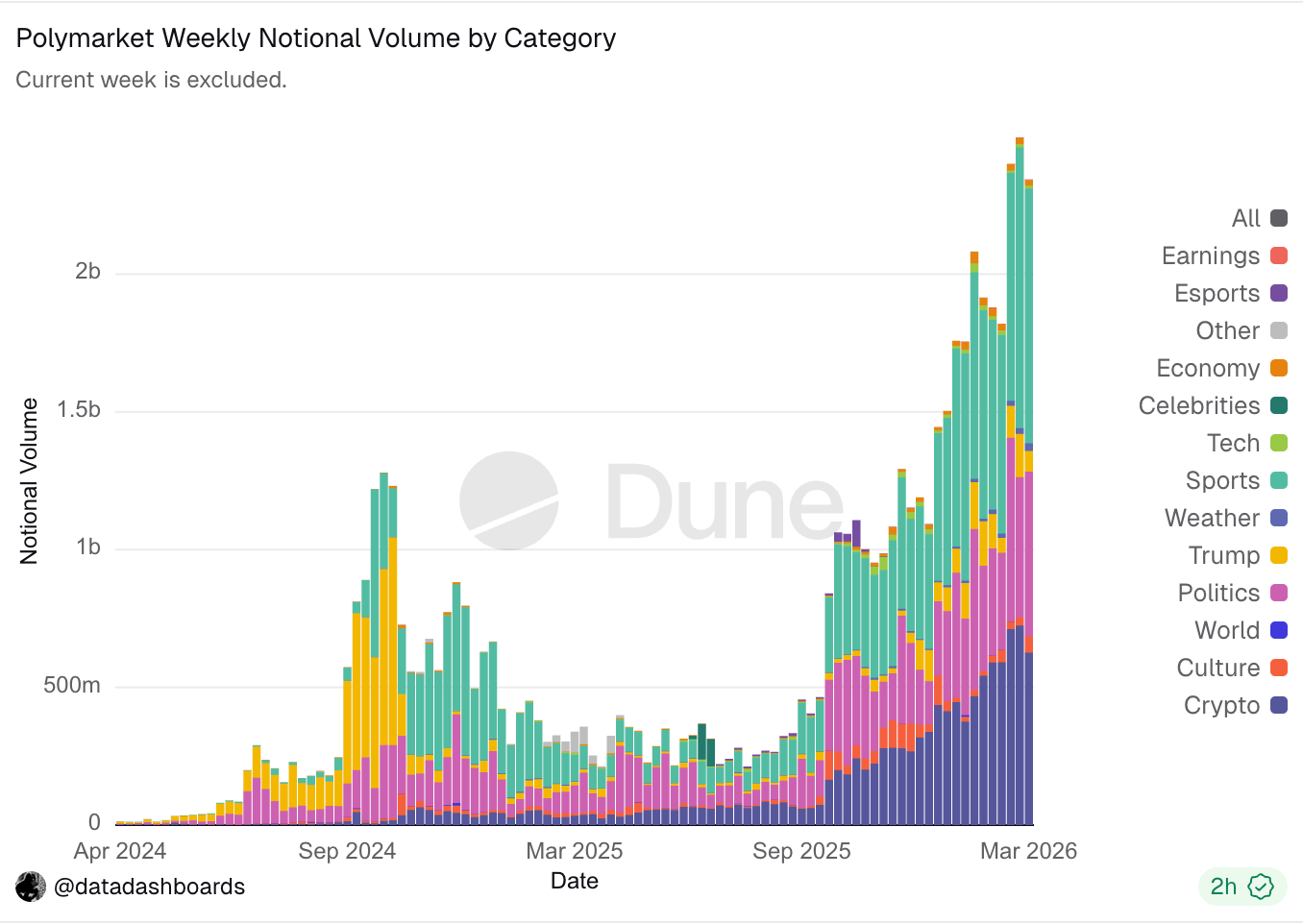
Regarding trading volume, the data dashboard compiled by Data Dashboards on Dune shows that Polymarket's weekly overall trading volume and cryptocurrency market volume (the bottom purple bars) have been growing steadily.
Future Revenue Projections

When we last projected Polymarket's revenue, we had to manually extract the trading volume proportion of "15-minute cryptocurrency up/down" related markets within all cryptocurrency-related markets. But now, since Polymarket extended fees to all cryptocurrency-related markets on March 6th, this estimation is much more straightforward. As for NCAA and Serie A, perhaps because the former hasn't entered the "March Madness" official tournament yet, and the latter has relatively low cultural attention in the US, the trading volume scale of these markets is significantly smaller compared to cryptocurrencies, so they are temporarily ignored here.

Taking data from the only full week after March 6th (March 9th-15th), the trading volume of cryptocurrency-related events accounted for 26.7% of the platform's total trading volume that week. In the same week, Polymarket's fee revenue was approximately $1.84 million. Based on this ratio for a static projection, under the current trading volume level and structure, if Polymarket introduces a similar fee model across all markets, it is projected to bring in $360 million in annual revenue for the platform.

The Money Printer is Already Running

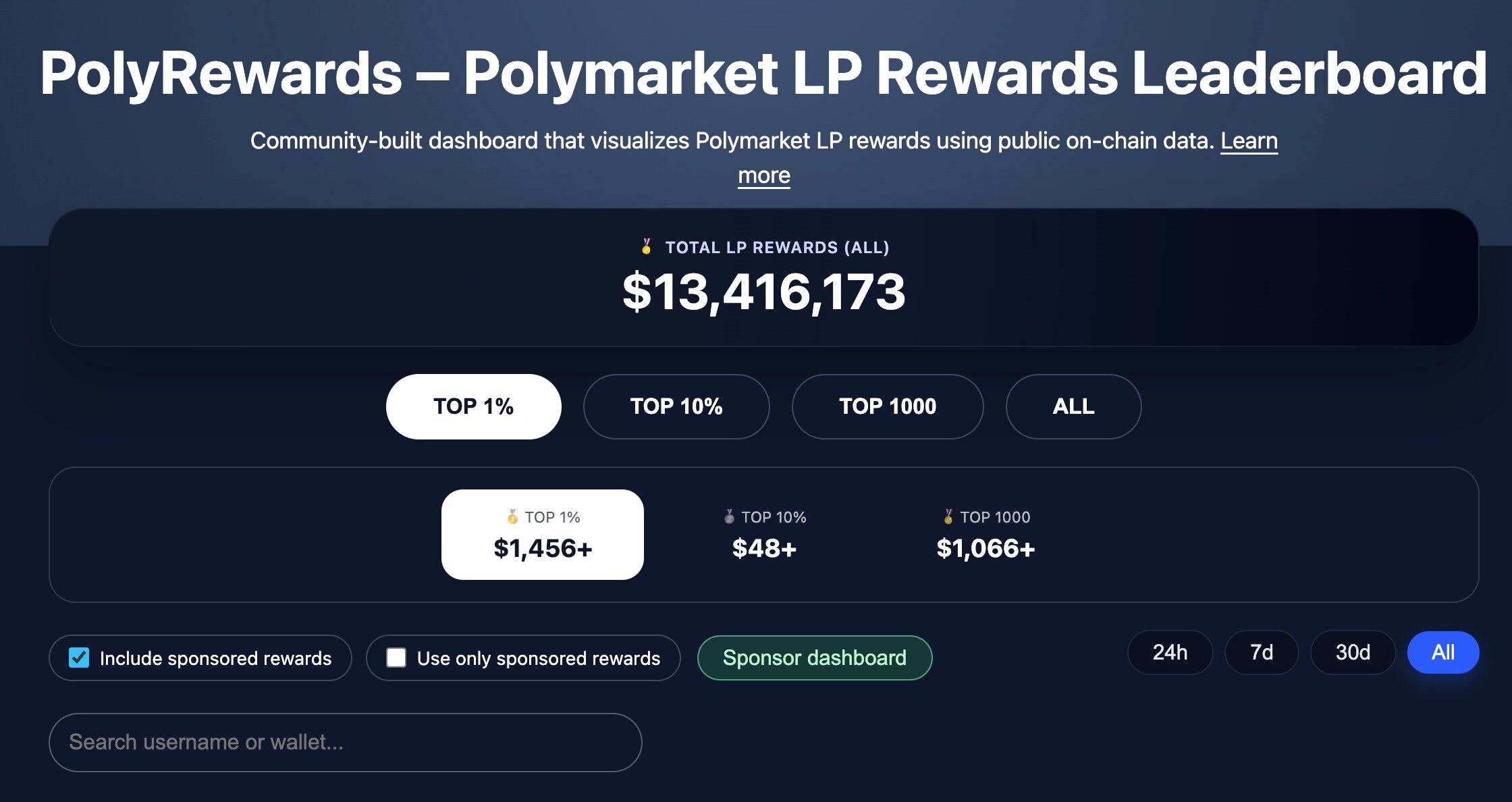
It is worth mentioning that, as a key measure for Polymarket to expand liquidity, the platform has so far distributed a total of $13.41 million in subsidies to liquidity providers (LPs). In contrast, if the data for the remainder of March can continue the performance of the first half, the fee revenue generated by Polymarket within this month alone could cover the total expenditure on liquidity subsidies.
Polymarket has largely proven the revenue-generating capability of this new form of prediction markets. Future revenue growth will mainly depend on two variables — how much more trading volume can grow, and whether fees can be further extended to more markets.

If these two variables continue to trend upwards, prediction markets might become the simplest and most direct "money printer" in the cryptocurrency industry.


Preguntas relacionadas

QWhen did Polymarket start charging transaction fees, and what was the initial market targeted?

APolymarket started charging transaction fees on January 6, beginning with the '15-minute cryptocurrency up/down' markets.

QHow much fee revenue has Polymarket accumulated since it began charging fees?

APolymarket has accumulated over $11.2 million in fee revenue since it started charging transaction fees.

QWhat are the two main reasons for the growth in Polymarket's fee revenue?

AThe two main reasons are the expansion of fee-charging markets to include all crypto-related markets and the continuous growth in overall trading volume, particularly in cryptocurrency markets.

QWhat is the estimated annual revenue for Polymarket if fees are extended to all markets, according to the latest data?

AIf fees are extended to all markets, the estimated annual revenue for Polymarket is approximately $360 million, based on current trading volume and structure.

QHow does Polymarket's fee revenue compare to the subsidies it has provided to liquidity providers (LPs)?

APolymarket has provided a total of $13.41 million in subsidies to LPs. If the revenue trend from the first half of March continues, the fee income for the month alone could cover the total subsidies paid to LPs so far.

Lecturas Relacionadas

Los herederos del imperio de billones de dólares de SK Hynix

En noviembre de 2024, el Grupo SK, con SK Hynix superando un valor de mercado de 1000 billones de wones, enfrenta un proceso sucesorio que rompe los guiones tradicionales del chaebol coreano. Los tres hijos del presidente actual, Choi Tae-won, están forjando caminos distintos. La hija mayor, Choi Yun-jung (1989), considerada la candidata más visible, dirige la división de desarrollo de negocio en SK Bioscience y un nuevo departamento de apoyo al crecimiento en SK Inc. Su formación en biología, consultoría y su doctorado, junto con su matrimonio con un emprendedor de IA, la definen fuera de los roles heredados tradicionales. La segunda hija, Choi Min-jung (1991), tiene un perfil único: se alistó voluntariamente en la Marina de Corea, sirvió en el Golfo de Adén y luego trabajó en política y estrategia para SK Hynix en Washington. Ahora es fundadora de una startup de salud con IA y está casada con un ex oficial del Cuerpo de Marines de EE.UU. Su trayectoria refleja la naturaleza geopolítica de la industria de los semiconductores. El hijo menor, Choi In-geun (1995), el supuesto heredero natural, ha seguido un camino más discreto. Tras estudiar física y trabajar en SK E&S, se unió a McKinsey en 2025, un movimiento típico de formación externa, pero mantiene un perfil público muy bajo. El muy publicitado divorcio de sus padres, Choi Tae-won y Roh Soh-yeong, con una compensación récord, también marca el contexto familiar. Los tres hijos presentaron peticiones judiciales no divulgadas durante el proceso. Mientras SK Hynix se convierte en un activo global crucial en la era de la IA, la sucesión en SK ya no es un simple asunto familiar. Los herederos están siendo evaluados por su capacidad para innovar en biomedicina, navegar la geopolítica y crear nuevo valor, heredando los desafíos de una industria global en lugar de un título predefinido.

marsbitHace 29 min(s)

Los herederos del imperio de billones de dólares de SK Hynix

marsbitHace 29 min(s)

El ETF de Solana atrae $39 millones en una semana, máximo desde febrero, mientras el interés abierto en futuros sube un 30%. Los traders apuntan a $120

Los ETF de Solana registraron una entrada neta récord de 39,23 millones de dólares la semana pasada, el mejor dato semanal desde febrero, con Bitwise BSOL acaparando el 92% de los flujos. Simultáneamente, el interés abierto en futuros se disparó un 29,5% en dos semanas hasta los 6.400 millones, reflejando una amplificación coordinada de la demanda en efectivo y derivados. Técnicamente, se ha formado un patrón de fondo "Adam & Eve", con un objetivo en 120 dólares. En cuanto a los fundamentales, la mayor actualización de consenso de la red, Alpenglow, se desplegó en la red de pruebas comunitaria el 11 de mayo. Su implementación en la mainnet, prevista para el próximo trimestre, promete reducir drásticamente el tiempo de finalización de las transacciones. Además, la estructura de los tenedores ha cambiado durante una consolidación de cuatro meses, donde los "turistas" o holders a corto plazo han abandonado, dejando a los holders con mayor convicción en control, lo que podría facilitar los movimientos alcistas. No obstante, existen riesgos a corto plazo. El impulso comprador ha mostrado signos de enfriamiento en el rango de 95-96 dólares, y una posible incapacidad para mantener este nivel podría llevar a una corrección hacia el soporte de 89-91 dólares. Los altos niveles de apalancamiento también aumentan el riesgo de liquidaciones en cascada durante una reversión.

marsbitHace 1 hora(s)

El ETF de Solana atrae $39 millones en una semana, máximo desde febrero, mientras el interés abierto en futuros sube un 30%. Los traders apuntan a $120

marsbitHace 1 hora(s)

BitMart Research Institute Análisis Semanal de Temas de Actualidad: Revisión Panorámica de los Mercados Macroeconómicos, del Petróleo, de las Acciones Tecnológicas de IA y de Cripto

**BitMart Research Resumen Semanal: Revisión de los Mercados de Macro, Petróleo, Acciones de IA y Cripto** **1. Macroeconomía y Mercados Tradicionales** * **Empleo en EE.UU. e IA:** Los datos de abril muestran un crecimiento del empleo concentrado en el sector sanitario, mientras otros sectores se contraen. Existe una divergencia entre las encuestas de empresas y hogares, generando dudas sobre la solidez del mercado laboral. El impacto de la IA en la pérdida de puestos de trabajo, aunque aún no es sistémico, comienza a observarse en el sector de la información. * **Petróleo y Geopolítica:** Los precios del crudo se mantienen cerca de $100, con inventarios globales reduciéndose. Sin embargo, la alta presión sobre los precios está reduciendo la demanda. China, con sus grandes reservas, ha reducido drásticamente sus importaciones, actuando como estabilizador. Es probable un acuerdo provisional entre EE.UU. e Irán para evitar una escalada y controlar los precios. * **Acciones Tecnológicas de IA:** A corto plazo, factores mixtos: relaciones comerciales y geopolíticas pueden ser favorables, pero un posible ingreso de SpaceX al Nasdaq 100 podría generar presión de venta sobre líderes como Nvidia. A medio plazo (julio), los resultados empresariales deben validar la eficiencia comercial y rentabilidad de la IA. A largo plazo (fin de año), las OPVs de grandes firmas de IA y un exceso de gasto de capital podrían poner a prueba una posible burbuja. **2. Mercado y Ecosistema Cripto** * **Panorama del Mercado:** El mercado cripto sube moderadamente, con BTC superando los $82k, impulsado por una mejora en la aversión al riesgo. Los datos muestran una fuerte compra en el mercado spot, pero con tasas de financiación negativas en derivados, indicando escepticismo persistente. Los ETF de Bitcoin continúan con entradas netas, aunque la compra institucional de ETH fue inferior a lo esperado. * **Tendencias Estructurales:** Circle, la emisora de USDC, muestra la tendencia de las stablecoins hacia la construcción de infraestructura blockchain propia (ARC). Se consolida un modelo dual de "cotizar en bolsa + emitir token/cadena" para capturar liquidez tanto de los mercados tradicionales como cripto. Este camino podría ser seguido por otros proyectos con bases de usuarios sólidas (ej. Telegram), representando una oportunidad estructural clave.

marsbitHace 1 hora(s)

BitMart Research Institute Análisis Semanal de Temas de Actualidad: Revisión Panorámica de los Mercados Macroeconómicos, del Petróleo, de las Acciones Tecnológicas de IA y de Cripto

marsbitHace 1 hora(s)

Trading

Spot
Futuros
活动图片




