Dylan Patel: Founder of SemiAnalysis, Praised by Jensen Huang, is a 'Beekeeper' and 'Forum Enthusiast'

marsbitPublicado a 2026-06-19Actualizado a 2026-06-19

Resumen

Dylan Patel, founder of the independent research firm SemiAnalysis, has an unconventional background. A former beekeeper from rural Georgia, he entered the semiconductor world as a self-taught "forum warrior," discussing chip technology anonymously online from a young age. He launched the SemiAnalysis blog in May 2020, which later transitioned to a paid subscription model. The firm has grown from a one-person operation to a global team of around 60, with a dedicated teardown lab. Its detailed, technically-focused analysis on semiconductor supply chains, AI infrastructure, and products has earned significant industry recognition. Notably, NVIDIA founder Jensen Huang has publicly cited their reports. In a landmark case, a critical 2024 report on AMD's MI300X GPU software stack led to a 90-minute call with AMD CEO Lisa Su, who thanked him for the constructive feedback. SemiAnalysis later acknowledged AMD's improvements. The firm's influence on markets was seen when a report on NVIDIA's Rubin memory configuration was partially shared, affecting memory stock prices. Dylan Patel emphasized the importance of context, contrasting the shared excerpt with the report's actual title. SemiAnalysis, now a multi-faceted consultancy with revenue projected to reach $100 million, is known for its deep technical insights that influence major industry players and investment decisions.

Original|Odaily Planet Daily(@OdailyChina)

Author|Wenser(@wenser2010 )
Speaking of SemiAnalysis, the massive earthquake in the US stock memory and chip industry triggered by the institution's research report content not long ago is still fresh in memory.

As an independent investment research institution with annual revenue expected to surpass $100 million, today's SemiAnalysis integrates multiple roles such as consulting firm, model service platform, and technology laboratory. At the helm of this rapidly developing, highly recognized research institution—praised by Nvidia founder Jensen Huang and AMD CEO Lisa Su—is not a technical expert or an engineer deeply involved in chip manufacturing, but a former beekeeper from Minnesota and a 'forum enthusiast' who anonymously discussed technical issues on various US hobbyist forums.

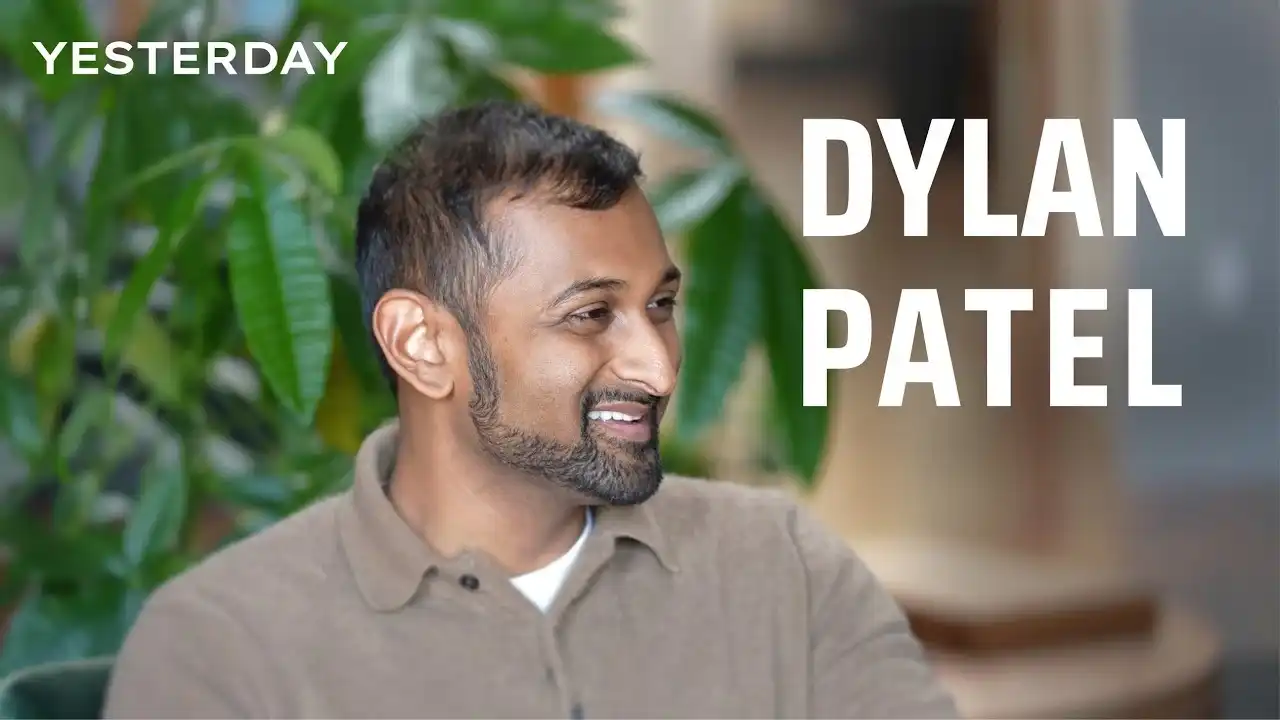
This edition of Character Decode by Odaily Planet Daily shares the story of —SemiAnalysis founder Dylan Patel.

SemiAnalysis Founder: A 'Forum Tech Wizard' Who 'Maxed Out Skill Points' and is Self-Taught

Compared to Citrini, which focuses more on macro trends and long-term themes, SemiAnalysis chooses to dig deeper and more narrowly into the semiconductor industry, and its founder Dylan Patel (hereafter referred to as Dylan) is a proper 'industry legend'.
Early Experience: Georgia Countryside Beekeeper, American Version 'Forum Enthusiast'

According to Dylan's sharing during an interview on Latent Space's culinary-themed program, he grew up in rural Georgia, attending the University of Georgia. After college, he even worked as a beekeeper in Minnesota for about a year and a half.

At that time, he was somewhat in a 'lost state'. Now, summarizing his past in his own words, he said: 'I feel like I've just gone through many stages of life... It seems there wasn't any clear, direct path to follow.' (Odaily Planet Daily Note: This refers to his identity shifts from chip enthusiast, semiconductor forum moderator, anonymous chip blogger, to investment research institution founder, hedge fund founder, and even more roles)

His entry into the industry was also 'full of twists and turns'.

As early as between the ages of 8 and 12, he was highly active on semiconductor forums as a 'forum warrior' (Odaily Planet Daily Note: similar to the domestic tech enthusiast gathering spots like Baidu Tieba, commonly known as 'Tieba old-timers'). He taught himself semiconductor knowledge by reading chip documentation while repairing hardware devices like Xbox and exchanging ideas with community enthusiasts.

Thus, starting as an anonymous chip blogger, he began sharing chip knowledge, discussing chip manufacturing technology, chip industry supply chains, and other hardcore topics on platforms like Reddit, WordPress, and Silicon Twitter.

In May 2020, Dylan officially founded his personal blog channel, SemiAnalysis, with the goal of providing accurate, independent technical analysis of the semiconductor industry. Looking at the timing back then, this was before the 'AI explosion moment driven by GPT', and the semiconductor industry was still a technically niche field, with very few such in-depth contents available in the market.

Initially, SemiAnalysis was just a very niche personal content channel built on WordPress. Upon repeated suggestions from his good friend Doug, Dylan later migrated it to the Substack platform and switched from a free model to a paid subscription model. (Odaily Planet Daily Note: According to Dylan himself, this friend later joined Substack a few years later)

From then on, Dylan began building his 'personal business system' around the paid content channel, including technical content analysis, business consulting, and research report production covering semiconductor supply chains, AI infrastructure products, cloud ecosystems, machine learning models, and even more cutting-edge industries.

SemiAnalysis: From a One-Person Company to a Global Team of Over 60

By 2025, SemiAnalysis had gradually transformed from Dylan's original 'One-Person Company model' (OPC) into a global company with a professional research team of about 60 people. They also established a professional chip and semiconductor product teardown laboratory, STEEL (SemiAnalysis Teardown Engineering & Evaluation Lab), in Oregon, USA.

Last year, the institution's revenue reached a scale of $20 million; this year, according to The Information's report, SemiAnalysis' revenue is expected to break $100 million, with main income coming from hyperscalers, semiconductor giants, startups, and institutional subscriptions/models/consulting. Dylan himself has indicated plans to subsequently establish a VC investment firm. Previously, he had personally invested/invested via SPV structures in about 20 startups, and even helped computing power giant Fluidstack raise $50 million in funding through an SPV structure.

External Influence: High Recognition from Jensen Huang, AMD CEO, and Others

After nearly six years of development, Dylan and SemiAnalysis have become the 'industry textbook' and 'must-read guide' in the current AI track and semiconductor industry.

Previously, Nvidia founder Jensen Huang mentioned SemiAnalysis multiple times during his speeches at the GTC Developer Conference, publicly praising the details of their reports, especially benchmarks like Nvidia's InferenceX, which could be considered a 'public endorsement'.

Earlier, in December 2024, after conducting about five months of in-depth testing and benchmark evaluation of AMD's MI300X GPU, the SemiAnalysis team published a critical report titled 'MI300X vs H100 vs H200 Benchmark Part 1: Training - CUDA Moat Still Alive'. The report pointed out that although the AMD MI300X GPU hardware had decent paper specifications, its ROCm software stack had significant gaps (e.g., many bugs, poor usability, immature ecosystem), resulting in a far inferior actual user experience compared to Nvidia's CUDA software stack architecture, making it ineffective as a powerful product for training workloads.

Within hours of the report's release, AMD CEO Lisa Su personally contacted Dylan and had a phone conversation with him the next day. Notably, this exchange was originally scheduled for 30 minutes but ultimately extended to 90 minutes due to the large amount of information, numerous feedback issues, and technical detail discussions involving engineers. This is a rare, in-depth dialogue between the CEO of a trillion-dollar market cap listed company and an independent third-party investment research institution. Finally, Lisa Su publicly thanked him for his 'constructive feedback' (even if it was critical) (Odaily Planet Daily Note: The original quote was 'Feedback is a gift even when it's critical').
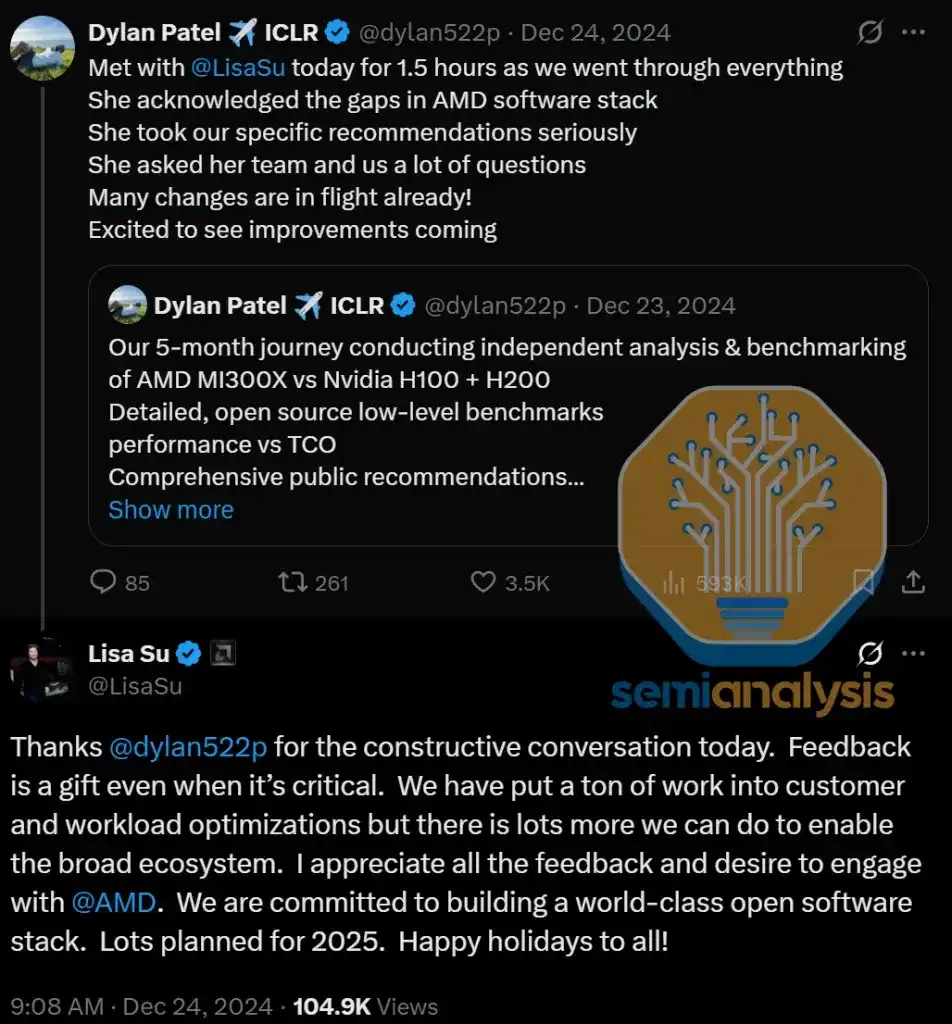
High praise and positive response from AMD CEO Lisa Su

In April 2025, SemiAnalysis againpublished a follow-up reportstating 'Over four months later, AMD is accelerating progress in ROCm, developer relations, CI/CD, etc. AMD MI450X is expected to beat Nvidia,' also acknowledging AMD's subsequent improvements, becoming a landmark case of its 'independent research directly influencing major company decisions.'

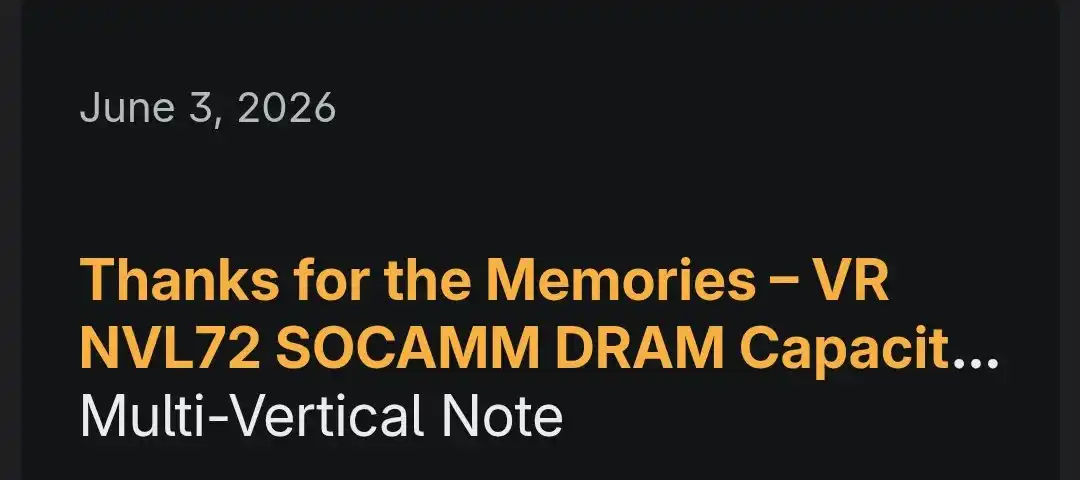
In early June, Citrini analyst Jukan forwarded parts of a SemiAnalysis research report, which indicated that 'Nvidia's next-generation AI server cluster Rubin NVL72 made significant adjustments to its memory configuration. To address tight supply chain constraints and ensure the on-time delivery of Rubin racks, the single-rack capacity was drastically reduced from the originally planned 55TB to 28TB, a reduction of about 50%, using scaled-down 96GB SOCAMM memory modules instead of the previous 192GB high-spec modules.' Possibly influenced by this news, many memory-related stocks including Micron and SK Hynix came under pressure and fell that day.

In response, Dylan stated: 'I love this: When people forward what we say, they often take it out of context. Actually, our original report did not use such a clickbait headline.' The image he subsequently posted showed the original report title was 'Thanks for the Memories...'.
In comparison, SemiAnalysis places greater emphasis on 'technical implementation details,' focusing on real bottlenecks in AI construction (power shortages, supply chain inheritance, inference scaling, Nvidia ecosystem dynamics, etc.). It often embeds realistic constraint analysis within optimistic demand judgments, making it more suitable for guiding specific investments and industrial decisions. For more details on SemiAnalysis, see 'From Community 'Hardware Geek' to AI Circle's 'Muddy Waters': How SemiAnalysis, Nearing $100 Million in Annual Revenue, Stirs the Semiconductor Market?'

Recommended Reading:

Latent Space Episode One: Scene Cooking with SemiAnalysis Founder Dylan Patel

Preguntas relacionadas

QWhat is the unique professional background of SemiAnalysis founder Dylan Patel before becoming a research analyst?

AHe worked as a beekeeper in Minnesota and was an active member on semiconductor hobbyist forums, essentially a 'forum warrior' or 'tech enthusiast' who taught himself about chips from a young age.

QHow did Dylan Patel's personal blog, SemiAnalysis, evolve into a major independent research firm?

AIt started as a small, free WordPress blog. Following a friend's advice, he moved it to Substack, implemented a paid subscription model, and gradually built a business around it, expanding into analysis, consulting, and reports. It has grown from a one-person company to a global team of about 60 people.

QWhat notable response did AMD CEO Lisa Su have after a critical SemiAnalysis report on the MI300X GPU?

ALisa Su personally contacted Dylan Patel and had a 90-minute call to discuss the report's findings. She publicly thanked him for the 'constructive feedback,' stating 'Feedback is a gift even when it's critical.'

QHow did a recent SemiAnalysis report reportedly impact the financial markets in early June 2025?

AA report excerpt, discussing potential memory configuration changes in Nvidia's upcoming Rubin server, was circulated. This was interpreted as signaling supply chain issues and led to a drop in the stock prices of memory-related companies like Micron and SK Hynix.

QWhat are the primary revenue sources for SemiAnalysis as of 2025, and what is its projected revenue?

AIts revenue primarily comes from subscriptions, models, and consulting services for hyperscalers, semiconductor giants, startups, and institutions. It reportedly achieved $20 million in revenue last year and is projected to surpass $100 million in 2025.

Lecturas Relacionadas

Momento de presión para Base

**Resumen: El Momento de Presión para Base** El cofundador de Base, Jesse Pollak, admitió recientemente que la cadena Robinhood Chain tiene razón al lanzar acciones tokenizadas en un entorno EVM, y que Base está rezagada en esta área, aunque trabaja con Coinbase en un producto similar. Este es el segundo "reconocimiento de error" público de Pollak, quien anteriormente admitió que apostar por tokens sociales y para creadores durante más de un año fue un error estratégico. Aunque Base es una de las principales L2, superada solo por BNB Chain en el ámbito de cadenas lanzadas por exchanges, su dependencia de Coinbase también plantea desafíos. La cadena ha sido criticada por su centralización, con dos interrupciones en la producción de bloques que apuntan a problemas con su secuenciador único. L2BEAT incluso consideró rebajar su nivel de descentralización de la Etapa 1 a la Etapa 0. La llegada de Robinhood Chain ha intensificado la competencia. En solo unas semanas, su volumen de intercambio en DEX entró en el top 5, superando temporalmente a Base en número de transacciones diarias. Mientras el CEO de Robinhood, Vlad Tenev, interactúa activamente con nuevos proyectos, una acción reciente del CEO de Coinbase, Brian Armstrong (cambiar su avatar, lo que impulsó y luego colapsó un meme token), generó descontento en la comunidad. Base aún tiene fortalezas, como el mayor TVL entre las L2 (cerca de $120B) y liderazgo en pagos automáticos. Sin embargo, la presión de Robinhood Chain expone debilidades de larga data. Para no quedarse atrás en la crucial área de la tokenización de activos reales (RWA), Base debe abordar con urgencia sus problemas técnicos y de confianza.

Foresight NewsHace 3 min(s)

Momento de presión para Base

Foresight NewsHace 3 min(s)

Entrevista sobre la Era de la IA, la Revolución Industrial y la Civilización Futura — Zhang Dingwen: El Futuro no Pertenece a Quienes Solo Persiguen

En la era de la inteligencia artificial, la revolución industrial y la civilización futura, Zhang Dingwen, un emprendedor tecnológico, comparte sus perspectivas sobre la innovación y el desarrollo empresarial. En lugar de perseguir tendencias pasajeras, enfatiza la importancia de entender la dirección del progreso de la época. Desde sus inicios en el desarrollo de productos de internet hasta su enfoque actual en hardware inteligente, su trayectoria ha estado guiada por una constante reflexión sobre cómo evoluciona la conexión entre las personas y el mundo digital. Zhang Dingwen destaca que el valor real de un emprendedor no reside en su capacidad para aprovechar oportunidades momentáneas, sino en su comprensión profunda del futuro. Para él, las empresas más exitosas no solo compiten con productos, sino que compiten a nivel de civilización, definiendo nuevas reglas y formas de interacción que moldean la sociedad. Además, subraya que la confianza, los valores y una visión a largo plazo son elementos fundamentales para construir organizaciones duraderas. En su visión, el hardware inteligente, como los relojes o las gafas, no son solo dispositivos, sino potenciales entradas a un ecosistema más amplio que integra servicios financieros, sociales y de salud. La clave está en crear plataformas que fomenten la colaboración y generen valor continuo para los usuarios. Al final, las empresas verdaderamente grandes no se miden por su valor de mercado, sino por su capacidad para resolver problemas de la época y contribuir a un futuro más eficiente y equitativo.

marsbitHace 5 min(s)

Entrevista sobre la Era de la IA, la Revolución Industrial y la Civilización Futura — Zhang Dingwen: El Futuro no Pertenece a Quienes Solo Persiguen

marsbitHace 5 min(s)

Indicador de tendencias de criptomonedas y acciones | Strategy aumenta su reserva de efectivo a 3,23 mil millones de dólares y suspende las compras de BTC; gestoras como Vanguard aumentan su participación en acciones de Strategy (21 de julio)

**Resumen de Indicadores Cripto-Acciones (21 de julio)** **Panorama general de los mercados:** Los mercados de valores globales enfrentan volatilidad debido a la compresión de liquidez, los altos niveles de apalancamiento y las tensiones geopolíticas. Se aconseja extrema precaución y evitar el apalancamiento. Las acciones relacionadas con criptomonedas (como Circle, Coinbase) carecen de impulso, excepto Robinhood. **Puntos clave de EE.UU.:** Las preocupaciones sobre una posible burbuja de la IA han llevado a que las apuestas bajistas en acciones estadounidenses alcancen máximos desde 2010. Las expectativas de subidas de tipos de la Fed y la rotación de capitales provocaron caídas, especialmente en tecnológicas y semiconductores. **Actualizaciones corporativas clave:** * **Strategy (MSTR):** Aumentó sus reservas de efectivo a 3.230 millones de dólares y **suspendió temporalmente las compras de Bitcoin**. Varios grandes gestores de activos como Vanguard Group, Swedbank AB y Capital Group aumentaron sus participaciones en acciones de Strategy. * **Bitcoin (Compras corporativas):** Las compras netas semanales de BTC por parte de empresas que no son mineras fueron de solo 1,33 millones de dólares. Strive compró 21 BTC. ORANGE JUICE recaudó 40M$ para comprar BTC. Bitcoin Japan recaudó 60M$ y destinó 4,08M$ a su primera compra de BTC. * **BitMine (ETH):** Aumentó sus tenencias de Ether a 5,78 millones, acercándose a su objetivo del 5% del suministro en circulación. El valor total de sus activos (cripto, efectivo, valores) es de 11.500 millones de dólares. * **Otros:** La empresa HypeStrat (DAT) no realizó ajustes en su tesorería esta semana.

marsbitHace 19 min(s)

Indicador de tendencias de criptomonedas y acciones | Strategy aumenta su reserva de efectivo a 3,23 mil millones de dólares y suspende las compras de BTC; gestoras como Vanguard aumentan su participación en acciones de Strategy (21 de julio)

marsbitHace 19 min(s)

Trading

Spot
活动图片