Dylan Patel: Founder of SemiAnalysis, Praised by Jensen Huang, is a 'Beekeeper' and 'Forum Enthusiast'

marsbitPublicado a 2026-06-19Actualizado a 2026-06-19

Resumen

Dylan Patel, founder of the independent research firm SemiAnalysis, has an unconventional background. A former beekeeper from rural Georgia, he entered the semiconductor world as a self-taught "forum warrior," discussing chip technology anonymously online from a young age. He launched the SemiAnalysis blog in May 2020, which later transitioned to a paid subscription model. The firm has grown from a one-person operation to a global team of around 60, with a dedicated teardown lab. Its detailed, technically-focused analysis on semiconductor supply chains, AI infrastructure, and products has earned significant industry recognition. Notably, NVIDIA founder Jensen Huang has publicly cited their reports. In a landmark case, a critical 2024 report on AMD's MI300X GPU software stack led to a 90-minute call with AMD CEO Lisa Su, who thanked him for the constructive feedback. SemiAnalysis later acknowledged AMD's improvements. The firm's influence on markets was seen when a report on NVIDIA's Rubin memory configuration was partially shared, affecting memory stock prices. Dylan Patel emphasized the importance of context, contrasting the shared excerpt with the report's actual title. SemiAnalysis, now a multi-faceted consultancy with revenue projected to reach $100 million, is known for its deep technical insights that influence major industry players and investment decisions.

Original|Odaily Planet Daily(@OdailyChina)

Author|Wenser(@wenser2010 )
Speaking of SemiAnalysis, the massive earthquake in the US stock memory and chip industry triggered by the institution's research report content not long ago is still fresh in memory.

As an independent investment research institution with annual revenue expected to surpass $100 million, today's SemiAnalysis integrates multiple roles such as consulting firm, model service platform, and technology laboratory. At the helm of this rapidly developing, highly recognized research institution—praised by Nvidia founder Jensen Huang and AMD CEO Lisa Su—is not a technical expert or an engineer deeply involved in chip manufacturing, but a former beekeeper from Minnesota and a 'forum enthusiast' who anonymously discussed technical issues on various US hobbyist forums.

This edition of Character Decode by Odaily Planet Daily shares the story of —SemiAnalysis founder Dylan Patel.

SemiAnalysis Founder: A 'Forum Tech Wizard' Who 'Maxed Out Skill Points' and is Self-Taught

Compared to Citrini, which focuses more on macro trends and long-term themes, SemiAnalysis chooses to dig deeper and more narrowly into the semiconductor industry, and its founder Dylan Patel (hereafter referred to as Dylan) is a proper 'industry legend'.
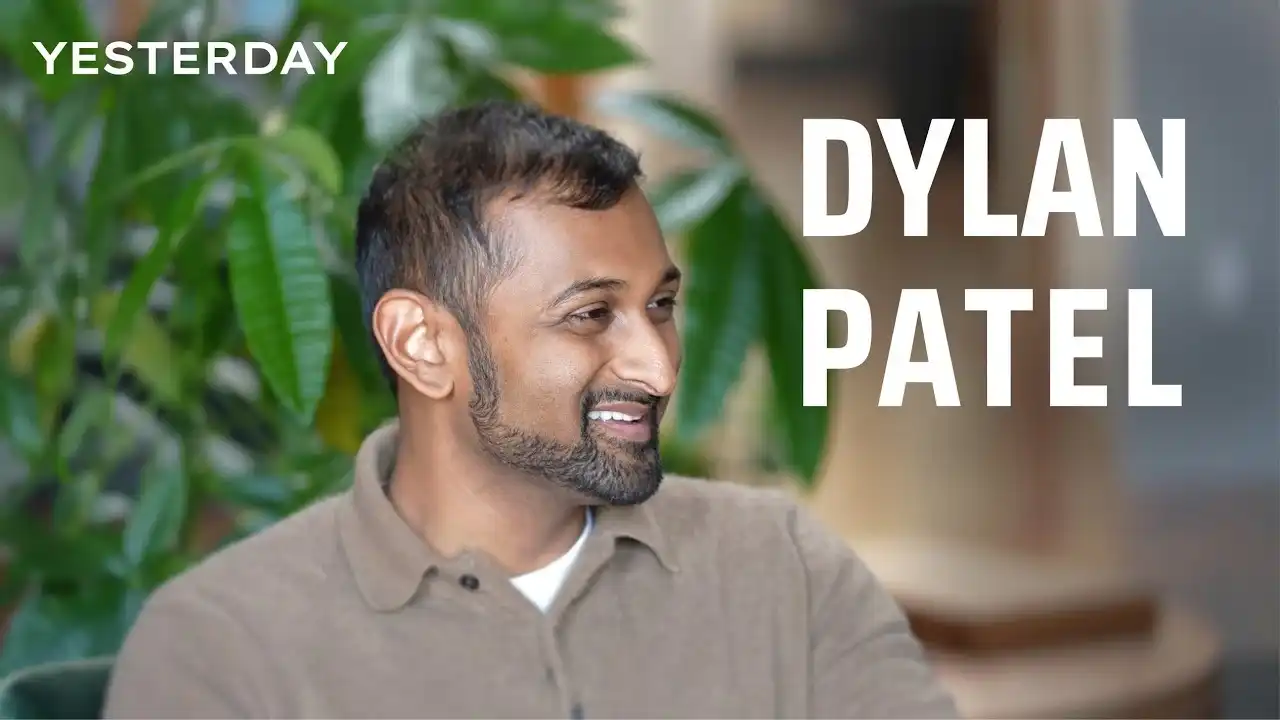
Early Experience: Georgia Countryside Beekeeper, American Version 'Forum Enthusiast'

According to Dylan's sharing during an interview on Latent Space's culinary-themed program, he grew up in rural Georgia, attending the University of Georgia. After college, he even worked as a beekeeper in Minnesota for about a year and a half.

At that time, he was somewhat in a 'lost state'. Now, summarizing his past in his own words, he said: 'I feel like I've just gone through many stages of life... It seems there wasn't any clear, direct path to follow.' (Odaily Planet Daily Note: This refers to his identity shifts from chip enthusiast, semiconductor forum moderator, anonymous chip blogger, to investment research institution founder, hedge fund founder, and even more roles)

His entry into the industry was also 'full of twists and turns'.

As early as between the ages of 8 and 12, he was highly active on semiconductor forums as a 'forum warrior' (Odaily Planet Daily Note: similar to the domestic tech enthusiast gathering spots like Baidu Tieba, commonly known as 'Tieba old-timers'). He taught himself semiconductor knowledge by reading chip documentation while repairing hardware devices like Xbox and exchanging ideas with community enthusiasts.

Thus, starting as an anonymous chip blogger, he began sharing chip knowledge, discussing chip manufacturing technology, chip industry supply chains, and other hardcore topics on platforms like Reddit, WordPress, and Silicon Twitter.

In May 2020, Dylan officially founded his personal blog channel, SemiAnalysis, with the goal of providing accurate, independent technical analysis of the semiconductor industry. Looking at the timing back then, this was before the 'AI explosion moment driven by GPT', and the semiconductor industry was still a technically niche field, with very few such in-depth contents available in the market.

Initially, SemiAnalysis was just a very niche personal content channel built on WordPress. Upon repeated suggestions from his good friend Doug, Dylan later migrated it to the Substack platform and switched from a free model to a paid subscription model. (Odaily Planet Daily Note: According to Dylan himself, this friend later joined Substack a few years later)

From then on, Dylan began building his 'personal business system' around the paid content channel, including technical content analysis, business consulting, and research report production covering semiconductor supply chains, AI infrastructure products, cloud ecosystems, machine learning models, and even more cutting-edge industries.

SemiAnalysis: From a One-Person Company to a Global Team of Over 60

By 2025, SemiAnalysis had gradually transformed from Dylan's original 'One-Person Company model' (OPC) into a global company with a professional research team of about 60 people. They also established a professional chip and semiconductor product teardown laboratory, STEEL (SemiAnalysis Teardown Engineering & Evaluation Lab), in Oregon, USA.

Last year, the institution's revenue reached a scale of $20 million; this year, according to The Information's report, SemiAnalysis' revenue is expected to break $100 million, with main income coming from hyperscalers, semiconductor giants, startups, and institutional subscriptions/models/consulting. Dylan himself has indicated plans to subsequently establish a VC investment firm. Previously, he had personally invested/invested via SPV structures in about 20 startups, and even helped computing power giant Fluidstack raise $50 million in funding through an SPV structure.

External Influence: High Recognition from Jensen Huang, AMD CEO, and Others

After nearly six years of development, Dylan and SemiAnalysis have become the 'industry textbook' and 'must-read guide' in the current AI track and semiconductor industry.

Previously, Nvidia founder Jensen Huang mentioned SemiAnalysis multiple times during his speeches at the GTC Developer Conference, publicly praising the details of their reports, especially benchmarks like Nvidia's InferenceX, which could be considered a 'public endorsement'.

Earlier, in December 2024, after conducting about five months of in-depth testing and benchmark evaluation of AMD's MI300X GPU, the SemiAnalysis team published a critical report titled 'MI300X vs H100 vs H200 Benchmark Part 1: Training - CUDA Moat Still Alive'. The report pointed out that although the AMD MI300X GPU hardware had decent paper specifications, its ROCm software stack had significant gaps (e.g., many bugs, poor usability, immature ecosystem), resulting in a far inferior actual user experience compared to Nvidia's CUDA software stack architecture, making it ineffective as a powerful product for training workloads.

Within hours of the report's release, AMD CEO Lisa Su personally contacted Dylan and had a phone conversation with him the next day. Notably, this exchange was originally scheduled for 30 minutes but ultimately extended to 90 minutes due to the large amount of information, numerous feedback issues, and technical detail discussions involving engineers. This is a rare, in-depth dialogue between the CEO of a trillion-dollar market cap listed company and an independent third-party investment research institution. Finally, Lisa Su publicly thanked him for his 'constructive feedback' (even if it was critical) (Odaily Planet Daily Note: The original quote was 'Feedback is a gift even when it's critical').
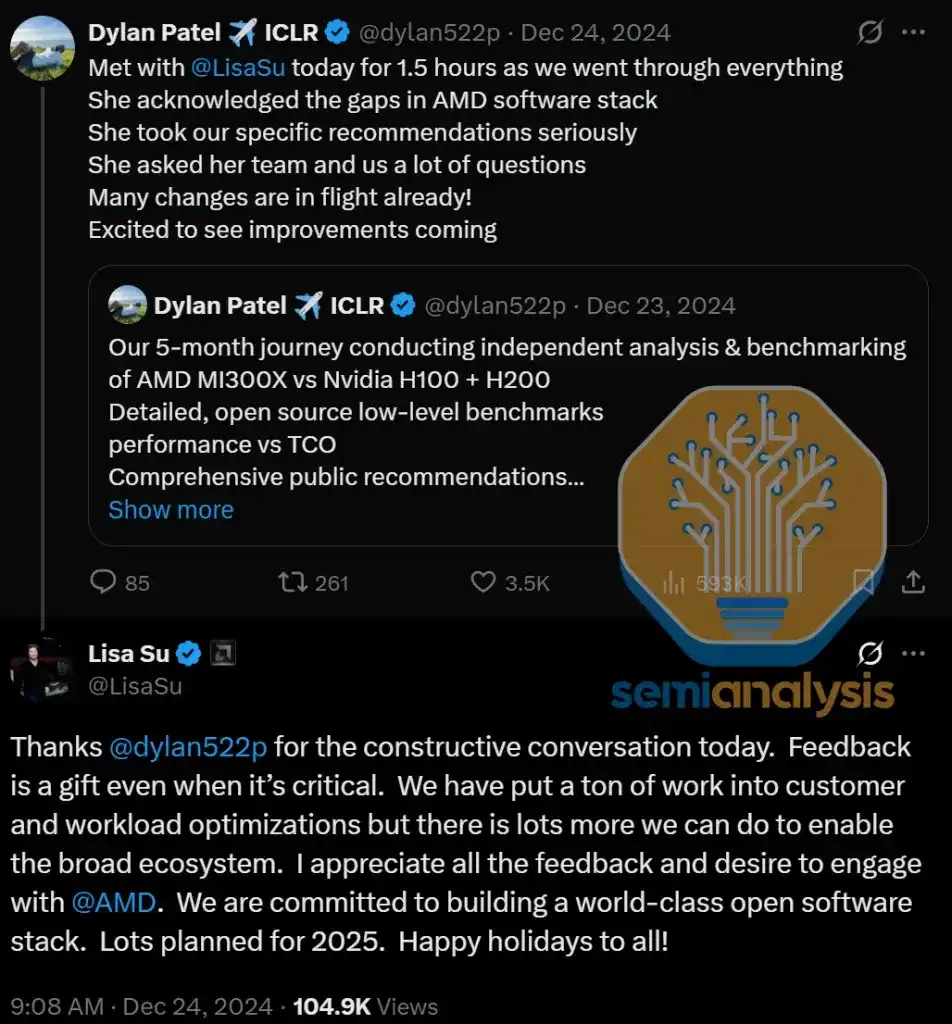
High praise and positive response from AMD CEO Lisa Su

In April 2025, SemiAnalysis againpublished a follow-up reportstating 'Over four months later, AMD is accelerating progress in ROCm, developer relations, CI/CD, etc. AMD MI450X is expected to beat Nvidia,' also acknowledging AMD's subsequent improvements, becoming a landmark case of its 'independent research directly influencing major company decisions.'

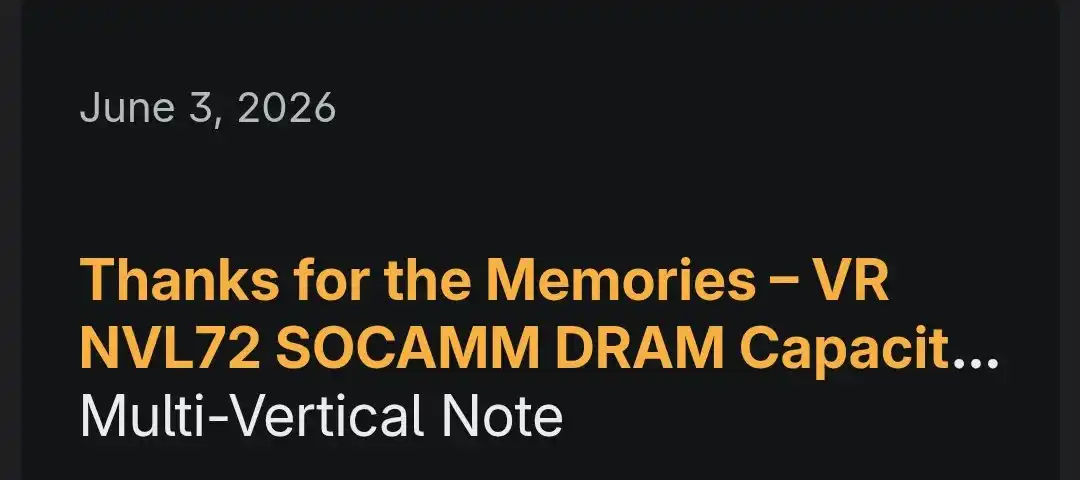
In early June, Citrini analyst Jukan forwarded parts of a SemiAnalysis research report, which indicated that 'Nvidia's next-generation AI server cluster Rubin NVL72 made significant adjustments to its memory configuration. To address tight supply chain constraints and ensure the on-time delivery of Rubin racks, the single-rack capacity was drastically reduced from the originally planned 55TB to 28TB, a reduction of about 50%, using scaled-down 96GB SOCAMM memory modules instead of the previous 192GB high-spec modules.' Possibly influenced by this news, many memory-related stocks including Micron and SK Hynix came under pressure and fell that day.

In response, Dylan stated: 'I love this: When people forward what we say, they often take it out of context. Actually, our original report did not use such a clickbait headline.' The image he subsequently posted showed the original report title was 'Thanks for the Memories...'.
In comparison, SemiAnalysis places greater emphasis on 'technical implementation details,' focusing on real bottlenecks in AI construction (power shortages, supply chain inheritance, inference scaling, Nvidia ecosystem dynamics, etc.). It often embeds realistic constraint analysis within optimistic demand judgments, making it more suitable for guiding specific investments and industrial decisions. For more details on SemiAnalysis, see 'From Community 'Hardware Geek' to AI Circle's 'Muddy Waters': How SemiAnalysis, Nearing $100 Million in Annual Revenue, Stirs the Semiconductor Market?'

Recommended Reading:

Latent Space Episode One: Scene Cooking with SemiAnalysis Founder Dylan Patel

Preguntas relacionadas

QWhat is the unique professional background of SemiAnalysis founder Dylan Patel before becoming a research analyst?

AHe worked as a beekeeper in Minnesota and was an active member on semiconductor hobbyist forums, essentially a 'forum warrior' or 'tech enthusiast' who taught himself about chips from a young age.

QHow did Dylan Patel's personal blog, SemiAnalysis, evolve into a major independent research firm?

AIt started as a small, free WordPress blog. Following a friend's advice, he moved it to Substack, implemented a paid subscription model, and gradually built a business around it, expanding into analysis, consulting, and reports. It has grown from a one-person company to a global team of about 60 people.

QWhat notable response did AMD CEO Lisa Su have after a critical SemiAnalysis report on the MI300X GPU?

ALisa Su personally contacted Dylan Patel and had a 90-minute call to discuss the report's findings. She publicly thanked him for the 'constructive feedback,' stating 'Feedback is a gift even when it's critical.'

QHow did a recent SemiAnalysis report reportedly impact the financial markets in early June 2025?

AA report excerpt, discussing potential memory configuration changes in Nvidia's upcoming Rubin server, was circulated. This was interpreted as signaling supply chain issues and led to a drop in the stock prices of memory-related companies like Micron and SK Hynix.

QWhat are the primary revenue sources for SemiAnalysis as of 2025, and what is its projected revenue?

AIts revenue primarily comes from subscriptions, models, and consulting services for hyperscalers, semiconductor giants, startups, and institutions. It reportedly achieved $20 million in revenue last year and is projected to surpass $100 million in 2025.

Lecturas Relacionadas

9,42 millones de minoristas se apresuran por comprar acciones de Longxin Technology, ¿quién resultó adjudicado?

El resultado de la OPV de Changxin Technology (Long鑫 Tech) se ha dado a conocer. Un total de 9.4288 millones de inversores minoristas y 285 instituciones participaron en la suscripción. Tras activar el mecanismo de reequilibrio, la tasa de asignación para minoristas en línea subió a aproximadamente el 0,4714%, la más alta para una nueva acción en la bolsa STAR, con unos 7,7 millones de números asignados. Se necesitaba un capital de aproximadamente 1,06 millones de RMB para obtener una asignación. Las instituciones recibieron el 28,25% de las acciones. Taikang Asset Management fue la institución que más asignaciones obtuvo. Entre los fondos públicos, los tres primeros fueron E Fund, Southern Fund y ICBC Credit Suisse. El fundador de la destacada empresa china de modelos de IA, Liang Wenfeng, a través de sus firmas de gestión cuantitativa Ningbo幻方 y Zhejiang九章, obtuvo la mayor asignación entre los fondos privados, con un valor total de 1750 millones de RMB. Se estima que podría obtener unas ganancias de 730 millones de RMB si la capitalización de mercado de la empresa alcanza los 3 billones de RMB tras su cotización. Se prevé que Changxin Technology cotice el 27 de julio. Su valoración se sitúa principalmente por encima del billón de RMB, con estimaciones que van desde 1 billón hasta más de 4 billones. Sin embargo, la reciente corrección del mercado tecnológico global podría afectar a su desempeño inicial en bolsa.

marsbitHace 15 min(s)

9,42 millones de minoristas se apresuran por comprar acciones de Longxin Technology, ¿quién resultó adjudicado?

marsbitHace 15 min(s)

Una ‘diosa’ de la caridad con 3 millones de seguidores era todo una IA: la farsa del ‘orfanato falso’ desmonta de la noche a la mañana una beneficencia transnacional

La australiana Lily Jay, una influencer de Instagram con casi 3 millones de seguidores, es investigada por ABC NEWS Verify por una supuesta red de estafa benéfica utilizando contenido generado por IA. A través de su 'Lily Jay Foundation', publicaba videos de proyectos en Uganda, Gaza, Nepal y Sudán, incluyendo la inauguración de un orfanato en Uganda, donde la imagen de ella con niños mostraba anomalías típicas de la IA, como letras mal escritas. Las autoridades de Uganda confirmaron que no existe registro de dicho orfanato. Además, imágenes de un premio humanitario que recibió contenían la marca de agua invisible SynthID de ChatGPT. La investigación revela que la fundación, que operaba desde Kosovo, se define en su sitio web como "no una organización benéfica". Aunque solicitaba donaciones, no figuraba como entidad benéfica registrada en Australia, lo que evita la obligación de transparencia financiera. Tres personas figuran como directores, uno vinculado a una firma de relaciones públicas que promocionó el falso premio. Tras la investigación de ABC, el sitio web eliminó para visitantes australianos los botones de donación y la advertencia sobre su estatus, aunque se mantuvieron activos para el extranjero. Expertos advierten que este caso explota la confianza y el deseo de creer en actos de bondad, marcando un peligroso precedente del uso del 'deepfake' y la IA para defraudar en el sector humanitario.

marsbitHace 54 min(s)

Una ‘diosa’ de la caridad con 3 millones de seguidores era todo una IA: la farsa del ‘orfanato falso’ desmonta de la noche a la mañana una beneficencia transnacional

marsbitHace 54 min(s)

L2 'Recalibrating': Cuando L1 se convierte en su propio Rollup, ¿cuál es el final del camino de Ethereum?

"L2 «recalibración»: cuando L1 se convierte en su propio Rollup, ¿cuál es el final de Ethereum?" La relación entre L1 y L2 en Ethereum está evolucionando. Originalmente, L2 (como los Rollups) se centraban en ofrecer espacio de transacción barato, mientras que L1 priorizaba la descentralización y seguridad. Sin embargo, los avances en Ethereum, como el aumento del límite de Gas y el desarrollo de zkEVM, permiten que L1 también escale significativamente. Esto obliga a repensar el valor de L2, que ya no puede basarse solo en costos bajos, sino que debe ofrecer funciones diferenciadas como privacidad o modelos de gobernanza flexibles. La creciente fragmentación entre múltiples L2 plantea problemas de interoperabilidad y experiencia de usuario. La comunidad está trabajando en soluciones como marcos de intenciones (intents) y una capa de interoperabilidad nativa (EIL) para que Ethereum "vuelva a sentirse como una sola cadena", facilitando las interacciones entre diferentes entornos de ejecución sin que el usuario note la complejidad subyacente. Acortar el tiempo de finalidad de L1 también es crucial para aplicaciones cross-chain. Un concepto provocador sugiere que, con la adopción de sistemas de prueba (zkEVM) en la red principal, Ethereum L1 podría, en un sentido arquitectónico, convertirse en una especie de "Rollup de sí mismo", donde la ejecución y la verificación se separan. Esto, junto con la visión de "Native Rollup", podría difuminar los límites tradicionales entre L1 y L2, transformándolos en un espectro de entornos de ejecución con diferentes funcionalidades pero que comparten seguridad, liquidez y un sistema de estado común. En conclusión, el futuro de Ethereum no es que L1 reemplace a L2 o viceversa. En cambio, el ecosistema podría evolucionar hacia un conjunto unificado de entornos de ejecución especializados que, trabajando en conjunto, ofrezcan escalabilidad, diversidad de funciones y una experiencia de usuario cohesiva. El reto es volver a ensamblar, sin perder los beneficios de la escalabilidad, un Ethereum que funcione como un todo integrado para el usuario final.

marsbitHace 56 min(s)

L2 'Recalibrating': Cuando L1 se convierte en su propio Rollup, ¿cuál es el final del camino de Ethereum?

marsbitHace 56 min(s)

Trading

Spot
活动图片