A 2.85% Minor Deviation, $27 Million in Liquidations: The Full Story of the Aave Price Oracle Incident

marsbitPublicado a 2026-03-17Actualizado a 2026-03-17

Resumen

A brief 2.85% pricing deviation in wstETH collateral on Aave triggered approximately $27 million in liquidations. The incident occurred because Aave's risk oracle module (CAPO) used outdated parameters, temporarily valuing wstETH at around 1.19 ETH instead of its market price of ~1.23 ETH. This made some borrowing positions appear under-collateralized, activating the protocol's automatic liquidation system. While the event highlighted the fragility of DeFi oracle systems and how minor technical misconfigurations can lead to significant financial consequences, no bad debt was incurred by the Aave protocol itself. The core issue was not a failure of the primary price oracle or the wstETH token, but an internal configuration error within Aave's additional risk management layer. The incident underscores the critical importance of reliable oracle infrastructure and precise parameter synchronization in decentralized finance.

Written by: Cointelegraph

Compiled by: AididiaoJP, Foresight News

Key Summary

  • A brief 2.85% pricing deviation in wstETH collateral triggered approximately $27 million in liquidations on Aave. This event demonstrates that even minor technical issues in automated DeFi lending systems can lead to significant financial impacts.
  • This wave of liquidations occurred because the Aave system briefly valued wstETH at approximately 1.19 ETH, while its market value was near 1.23 ETH, causing some borrowing positions to be mistakenly judged as undercollateralized.
  • Price oracles are critical DeFi infrastructure, responsible for transmitting external market data to smart contracts to determine collateral value, assess loan health, and trigger automatic liquidations.
  • The root cause was not a failure of the price data source, but a misconfiguration of Aave's CAPO risk oracle module. Outdated smart contract parameters within this module set a temporary cap on the token's exchange rate.

DeFi protocols rely on automated logic to handle everything from collateral management to risk assessment. While this mechanism builds a truly open, permissionless financial system, it also means that minor technical problems can quickly escalate, causing severe financial turmoil.

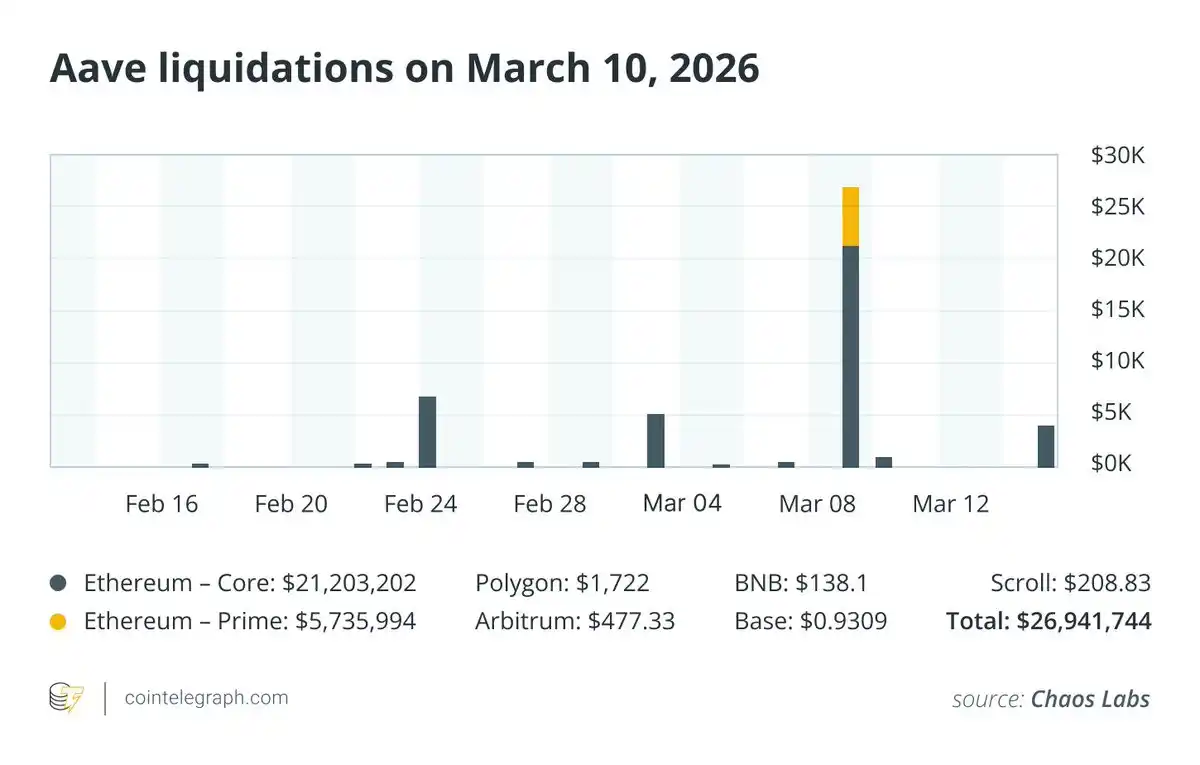
As reported by risk monitoring firm Chaos Labs, the market downturn on March 10, 2026, triggered approximately $27 million in borrower position liquidations on Aave, clearly demonstrating this fragility. Within 24 hours, user positions worth about $27 million were liquidated. Surprisingly, this event was not caused by a large-scale market sell-off but by a brief 2.85% price deviation in wrapped staked ETH (wstETH) collateral.

This event is a powerful reminder that the reliability of price oracles and a robust risk management framework are crucial for maintaining the stability of the DeFi ecosystem.

This article explains how a 2.85% pricing deviation in wstETH collateral triggered approximately $27 million in liquidations on the Aave lending protocol. It focuses on analyzing how oracle configuration, smart contract parameters, and automatic liquidation mechanisms amplified a minor pricing error in the DeFi market.

The Sudden Surge in Liquidations

When a wave of liquidations appeared on the Aave market, Chaos Labs, which closely monitors abnormal activity on lending protocols, quickly identified and reported the situation. Initially, market observers speculated that a price oracle failure might have caused the mispricing of collateral assets on the platform.

Price oracles play a key bridging role, providing external market prices for on-chain applications. In lending protocols like Aave, this price data directly determines whether a borrower's collateral is sufficient to cover their loan. Once the collateral value falls below the required safety threshold, the system automatically liquidates the position.

The core asset in this event was wstETH, a token widely used as collateral in the DeFi lending ecosystem.

Liquidation speeds on lending protocols like Aave are typically much faster than traditional margin calls. Because DeFi markets operate 24/7 through automated smart contracts, once the collateral ratio falls below the specified threshold, positions can be liquidated within seconds.

What is wstETH?

wstETH (wrapped staked Ether) is a token issued by the liquid staking protocol Lido.

When users stake Ether through Lido, they first receive stETH, a token representing their staked ETH principal and accumulated staking rewards. To enhance compatibility with various DeFi applications, stETH can be "wrapped" into wstETH.

Due to the continuous accumulation of staking rewards, the value of 1 wstETH is typically slightly higher than 1 ETH. This characteristic makes it an attractive and widely adopted type of collateral in the DeFi lending market.

The Pricing Deviation Event

During this liquidation wave, a deviation emerged between the actual market value of wstETH and the valuation used by Aave's risk system. Aave's algorithm priced wstETH at approximately 1.19 ETH, while the broader market valuation at the time was around 1.23 ETH.

The valuation difference of about 2.85% made positions collateralized with wstETH appear more undercollateralized than they actually were.

Consequently, some borrowing positions fell below the required safety threshold, triggering Aave's automatic liquidation process.
Why Price Oracles are Crucial in DeFi

Price oracles are the underlying infrastructure of DeFi. Because blockchains themselves cannot access real-world market data, they must rely on oracle services to provide external price information for assets. This price data directly impacts:

  • Valuation of collateral
  • Health of borrowing positions
  • Decision-making basis for triggering liquidations

Once a reported drop in collateral price occurs, the protocol may judge the loan as undercollateralized and automatically liquidate the relevant position.

Because this mechanism is entirely algorithm-driven, even minor pricing deviations can trigger serious chain reactions.

In the DeFi space, minor price deviations can also have huge impacts. Brief fluctuations in oracle prices or market prices, even by just a few percentage points, can trigger cascading liquidations. This risk is particularly pronounced when a large number of borrowers use highly leveraged positions collateralized by volatile cryptocurrencies.

The Real Cause: CAPO Risk Oracle Misconfiguration

In-depth investigation confirmed that Aave's main price oracle was functioning normally.

The problem actually lay in the "Correlated Asset Price Oracle" (CAPO) risk module, an additional protection layer for specific assets.

The primary function of CAPO is to set a rate cap on the value increase of yield-bearing tokens like wstETH, aiming to guard against sudden price spikes or potential oracle attack risks.

However, in this event, inconsistent configuration within the CAPO module led to the problem.

Technical Analysis of the Error

Chaos Labs disclosed that the problem stemmed from outdated parameters stored in the smart contract.

Two key parameters failed to update synchronously:

  • Reference exchange rate
  • Timestamp associated with that rate

Because these two parameters were not refreshed in sync, the CAPO calculated an allowed exchange rate cap that was temporarily lower than the actual market rate at the time.

This caused the protocol to value wstETH approximately 2.85% lower than the market price.

Aave relies on price oracles, which are data sources that provide real-time asset prices to smart contracts. If these data sources briefly reflect anomalous market prices from exchanges, the protocol automatically recalculates collateral values and may trigger liquidations.

The Chain Reaction of Liquidations

Once the collateral ratio fell below the safety threshold, Aave's automatic liquidation engine immediately activated.

Liquidators (typically high-speed trading bots) quickly stepped in, repaying part of the borrower's debt in exchange for the corresponding collateral at a predetermined discount.

In this event, a total of approximately $27 million in borrowing positions were liquidated.

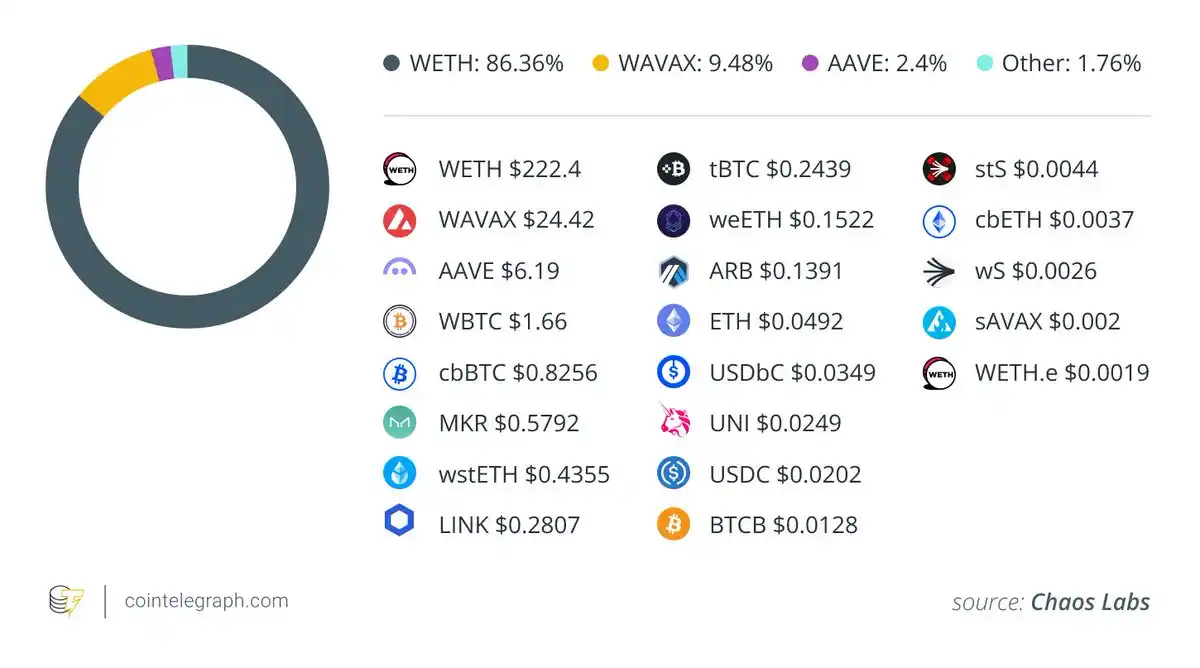
Liquidators exploited this brief price misalignment, collectively profiting about 499 ETH (including liquidation bonuses).
No Bad Debt Incurred by the Protocol

Despite the large scale of liquidations, the Aave protocol itself did not incur any bad debt. Aave founder Stani Kulechov stated, "No impact on the Aave protocol."

Chaos Labs pointed out that once positions breached the safety threshold, the platform's core risk control and liquidation mechanisms all operated as designed. Therefore, the impact of this event was limited to the relevant borrowers and did not threaten the overall solvency and stability of the Aave protocol. It was the brief, artificial depression of the collateral value that caused some borrowing positions to fall below the liquidation line.

The Aave governance layer subsequently proposed compensating affected users by utilizing recovered funds and the Decentralized Autonomous Organization (DAO) treasury. This approach reflects a new trend in DeFi governance: protocols are beginning to view such technical events as systemic infrastructure risks and tend to compensate受损 users rather than having them bear the full loss.

Another Warning on DeFi Oracle Risks

This event highlights that oracle mechanism design is both one of the most critical links in DeFi infrastructure and one of its most vulnerable weak points.

When automated mechanisms manage tens of billions of dollars in collateral value, even minor configuration errors can trigger consequences far exceeding expectations.

Similar events have occurred on other DeFi platforms. For example, one platform once briefly valued Coinbase's wrapped staked ETH (cbETH) at approximately $1 (actual value ~$2200) due to an oracle configuration error, causing widespread chaos.

These cases all indicate that maintaining reliable, accurate price data sources remains an ongoing challenge in decentralized financial systems.

wstETH and Lido Itself Are Not Responsible

Contributors related to the Lido ecosystem clearly stated that these liquidations were not caused by any failure or defect in the wstETH token itself.

The token functioned normally throughout the event, and the underlying Lido staking protocol remained fully available and unaffected.

The core of the problem lay in how the Aave lending protocol, through its own risk management configuration, processed and interpreted the price data, which deviated.

Implications for the Development of DeFi

As decentralized finance continues to develop, protocols are deploying increasingly sophisticated risk management systems to accommodate yield-bearing assets like wstETH.

These assets present unique pricing challenges because their value continuously grows with the accumulation of staking rewards.

Therefore, effective risk models must properly handle the following elements:

  • Dynamically changing exchange rates
  • Continuously accumulating staking rewards
  • Time-dependent parameter updates
  • Precise synchronization of various smart contract parameters

Even minor inconsistencies between these elements can escalate into large-scale liquidation events.


Preguntas relacionadas

QWhat was the primary cause of the $27 million liquidation event on Aave, and what specific asset was involved?

AThe primary cause was a 2.85% pricing discrepancy in the wstETH (wrapped staked ETH) collateral valuation. Aave's risk oracle module, CAPO, temporarily valued wstETH at approximately 1.19 ETH, while its actual market value was around 1.23 ETH. This mispricing caused some borrowing positions to be incorrectly flagged as under-collateralized and subsequently liquidated.

QWhat is the role of a price oracle in a DeFi lending protocol like Aave?

AA price oracle is critical infrastructure that provides external market data to on-chain applications. In lending protocols, these price feeds are used to determine the value of collateral, assess the health of loans, and trigger automatic liquidations if the collateral value falls below a required safety threshold.

QWhat specific technical failure within Aave's system led to the wstETH mispricing, and what module was responsible?

AThe failure was not in the main price oracle but in the CAPO (Correlated Asset Price Oracle) risk module. The issue was caused by outdated smart contract parameters—specifically, a reference exchange rate and its associated timestamp that were not updated in sync. This configuration error caused the CAPO module to calculate a temporary cap on the wstETH exchange rate that was lower than the actual market rate.

QDespite the large-scale liquidations, what was the impact on the Aave protocol's financial health?

AThe Aave protocol itself did not incur any bad debt from this event. The core risk management and liquidation mechanisms functioned as designed once positions were deemed under-collateralized. The financial impact was limited to the affected borrowers, and the overall solvency and stability of the Aave protocol were not threatened.

QWhat does this incident reveal about the broader challenges and future development of DeFi?

AThe incident highlights that oracle reliability and robust risk management frameworks are paramount in DeFi. It demonstrates that even minor technical misconfigurations can be amplified by automated systems, leading to significant financial consequences. For future development, it underscores the need for sophisticated risk models that can accurately handle dynamic exchange rates, staking rewards, time-dependent parameter updates, and precise synchronization of all smart contract parameters, especially for yield-bearing assets like wstETH.

Lecturas Relacionadas

¿Ha fracasado la narrativa del BTC como 'oro digital'?

**Resumen en español europeo:** El autor abordaja la pregunta del titular ("¿Ha fracasado la narrativa del Bitcoin como 'oro digital'?") analizando tres aspectos clave, aclarando que no son consejos de inversión sino un marco de pensamiento. **1. Cómo ver Bitcoin como activo:** Sigue considerándolo una nueva clase de activo, superior al oro a largo plazo por su oferta limitada y programada (21 millones), su extrema facilidad de transferencia y su total auditabilidad en la cadena de bloques. Compara su actual tasa de adopción global (~3-4%) con etapas tempranas de tecnologías disruptivas como Internet o el comercio electrónico, sugiriendo un gran potencial de crecimiento acompañado de una alta volatilidad. **2. Cómo entender la caída actual (de ~$126k en oct. 2025 a ~$61k en feb. 2026):** La atribuye a una venta cíclica consensuada tras el máximo histórico post-halving, un patrón recurrente. Un factor nuevo es el efecto de los ETF aprobados en EE.UU. en 2024: facilitaron la entrada de capital institucional, pero también permitieron que holders antiguos con costes muy bajos realizaran beneficios, iniciando un "gran traspaso" histórico desde early adopters hacia instituciones. Destaca que, si bien la caída (~50%) es fuerte, las correcciones históricas sucesivas han ido reduciendo su magnitud (de -93% en 2011 a -50% ahora), señal de un activo que madura. **3. Perspectiva a largo plazo:** El marco simple es comparar su capitalización de mercado (~$1.4 billones a $70k) con la del oro físico (~$20 billones). Si la narrativa de "oro digital" se materializa parcialmente (ej., alcanzando el 30-50% de la capitalización del oro), el espacio alcista sigue siendo significativo. Sin embargo, advierte que la volatilidad es extrema y el proceso de traspaso puede no haber terminado. El riesgo real no es que Bitcoin llegue a cero (probabilidad que considera baja), sino una mala gestión de la cartera (sobre-exposición, apalancamiento) y la falta de comprensión profunda del activo, que puede llevar a vender en pánico durante correcciones severas. Concluye con una analogía histórica (Amazon cayó un 95% en 2000 para luego subir 42x) para subrayar que la lógica a largo plazo de Bitcoin permanece, pero la clave es sobrevivir a la volatilidad mediante una gestión prudente. La pregunta final invita a la reflexión: la actual divergencia (oro subiendo, Bitcoin cayendo) puede indicar un traspaso en curso en su evolución de activo especulativo a activo de asignación, y la respuesta revela la fe subyacente de cada uno en esta clase de activo.

marsbitHace 8 hora(s)

¿Ha fracasado la narrativa del BTC como 'oro digital'?

marsbitHace 8 hora(s)

¿Ha fracasado la narrativa del BTC como 'oro digital'?

El autor analiza si la narrativa del Bitcoin como "oro digital" ha fracasado, presentando tres puntos clave. **Primero, sobre Bitcoin como activo:** Lo considera una nueva clase de activo superior al oro a largo plazo, destacando su oferta limitada (21 millones), su facilidad de transferencia y su transparencia verificable. Rechaza la idea de que sea solo para usos ilícitos, señalando su creciente regulación y una penetración global del 3-4%, comparable a etapas tempranas de internet o el comercio electrónico, lo que implica gran potencial y volatilidad. **Segundo, sobre la caída actual:** La vincula al ciclo histórico de cuatro años tras el "halving". La aprobación de los ETF en EEUU en 2024 atrajo capital institucional, pero también desencadenó una gran "rotación" de tenencias, donde poseedores tempranos (con costos muy bajos) realizan beneficios vendiendo a nuevos actores institucionales. Aunque la caída actual ronda el 50%, nota que las correcciones históricas (93%, 85%, 84%, 77%) se han moderado, señal de un mercado en maduración. **Tercero, la perspectiva a largo plazo:** Si Bitcoin alcanzara incluso la mitad de la capitalización de mercado del oro (~20 billones de dólares), su valor tendría un gran espacio para crecer desde los ~1,4 billones actuales. Sin embargo, advierte que la volatilidad sigue siendo extrema y el proceso de rotación podría no haber terminado. El mayor riesgo no es que Bitcoin llegue a cero, sino una mala gestión del riesgo personal: usar dinero inadecuado, apalancarse o no comprender el activo, lo que puede forzar una salida anticipada incluso si la tendencia a largo plazo es alcista. Concluye con una analogía: Amazon cayó un 95% en 2000 antes de subir 42x. La lógica a largo plazo de Bitcoin no ha cambiado, pero sobrevivir a la volatilidad es clave. La pregunta final: ¿La reciente divergencia (oro +60%, Bitcoin -50%) significa el fracaso de la narrativa o simplemente una etapa de transición y consolidación? La respuesta depende de la fe en los fundamentos del activo.

链捕手Hace 8 hora(s)

¿Ha fracasado la narrativa del BTC como 'oro digital'?

链捕手Hace 8 hora(s)

Del Código a la Cognición: Una Guía de Diez Mil Palabras sobre la Evolución del Cerebro Robótico

Desde el código clásico hasta los modelos que simulan la realidad: así ha evolucionado la inteligencia de los robots. Durante décadas, dependieron de software programado manualmente (percepción, planificación, control) para tareas específicas pero rígidas. La llegada del *deep learning* y el aprendizaje por refuerzo mejoró la percepción y el control, aunque con escasa capacidad de generalización. La aparición de los grandes modelos de lenguaje (LLM) marcó un punto de inflexión, actuando como "compiladores de lenguaje natural" que traducen órdenes en planes de acción ejecutables por sistemas como ROS. Sin embargo, el avance definitivo llegó con los **Modelos Visión-Lenguaje-Acción (VLA)**, que fusionan la percepción visual, la comprensión del lenguaje y la generación de movimientos en una sola red neuronal, permitiendo una adaptación mucho mayor. Los robots más avanzados actualmente utilizan una **arquitectura de doble cerebro**: un sistema lento (S2) para el razonamiento de alto nivel y uno rápido (S1) para el control motor reactivo, a veces con un tercer nivel reflejo (S0) para el equilibrio. Todo el procesamiento crítico se ejecuta localmente en el robot por motivos de seguridad y latencia. El siguiente gran salto son los **Modelos del Mundo**. Estas redes no predicen la siguiente acción, sino las consecuencias físicas de las acciones posibles, permitiendo al robot "imaginar" y evaluar futuros antes de actuar. Esto mejora drásticamente la recuperación ante errores, la planificación a largo plazo y la generalización. Modelos como NVIDIA Cosmos, DeepMind Genie y Meta V-JEPA exploran diferentes enfoques arquitectónicos para lograrlo. Aunque los precios del hardware caen y los modelos open-source aceleran el desarrollo, desafíos como la eficiencia en el aprendizaje, la generalización entre robots físicos y el razonamiento de sentido común persisten. La inteligencia robótica está en plena evolución, transitando desde un código predecible hacia sistemas capaces de aprender y simular el mundo que los rodea.

marsbitHace 9 hora(s)

Del Código a la Cognición: Una Guía de Diez Mil Palabras sobre la Evolución del Cerebro Robótico

marsbitHace 9 hora(s)

Trading

Spot
Futuros
活动图片