L1 Native Tokens' Final 'Monetary Premium' Is Collapsing!

比推Publicado a 2025-12-08Actualizado a 2025-12-08

Resumen

The monetary premium on Layer 1 (L1) native tokens is rapidly fading as stablecoins increasingly dominate as the preferred medium of exchange (MoE) in on-chain economies. While L1 valuations historically incorporated a monetary premium derived from their use as a store of value (SoV) or MoE, data shows a clear shift. On Ethereum, ETH is no longer the primary MoE; stablecoins like USDC and USDT now lead in on-chain transaction volume and top Uniswap pools. A similar trend is observed on L2s like Arbitrum. On Solana, SOL remains the primary MoE due to platforms like Pumpfun and Raydium using it as a quote currency, but USDC is gaining significant traction, especially with new launchpads like MetaDAO adopting it as the default pairing asset. On BNB Chain, USDT has overtaken BNB in trading volume, which had previously been the dominant MoE. The author argues that the market has chosen stablecoins as the superior on-chain MoE. Attempts by ecosystems to enforce their native token as a quote currency add friction and costs for users with minimal price impact. Improved on-chain UX and liquidity are reducing the historical necessity of using volatile native tokens for transactions. The next wave of users will likely use stablecoins, not native tokens, for everyday exchange, further eroding this monetary premium.

Author: Silvio (@SilvioBusonero)

Original Title: The monetary premium on L1s is fading

Compiled and Edited by: BitpushNews


The valuation of L1 blockchains is a comprehensive reflection of multiple factors: including cultural narrative (Memetics), network fees, security, and the development of upper-layer applications. Among these, the most underestimated is the so-called "Monetary Premium".

The monetary premium stems from the demand of market participants to use assets as a Store of Value (SoV) or a Medium of Exchange (MoE).

  • Store of Value is directly related to the robustness (lindiness) and degree of decentralization of an asset, so it is not an easy market entry strategy.

  • In contrast, acting as a Medium of Exchange may be easier to achieve. Tokens can serve as the primary method for value exchange and measurement within the blockchain economy.

This is similar to the role of tokens in the Web2 economy:

  • Roblox's in-game token Robux, has strong exchange value.

  • When Meme coins started to grow, people bought SOL to enter and exit Meme trades. As SOL was the default currency on Pump platforms, most traders did not convert assets back to dollars but kept some SOL ready to "ape". A similar situation occurred with ETH during the 2021 NFT boom. A large number of users began using the native asset for transactions, effectively creating the utility of a Medium of Exchange (MoE).

Does the Premium Still Exist?

The answer is: No, this premium is rapidly disappearing. Users are increasingly inclined to use stablecoins for transactions.

Ethereum — Stablecoins Have Become the Medium of Exchange

  • Judging from the on-chain transaction volume of mainstream tokens, Ethereum's native token ETH is no longer the primary medium of exchange it once was.

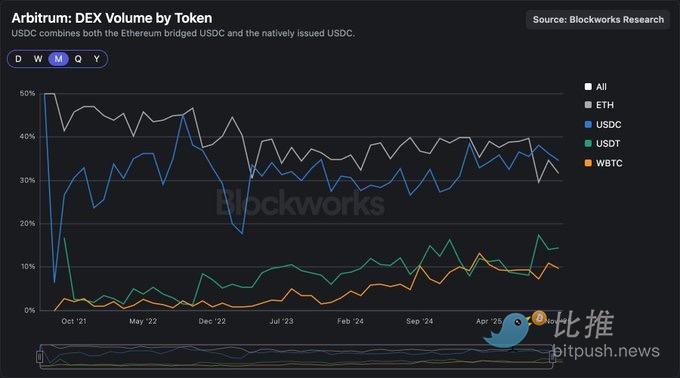
  • ETH's dominance as an MoE is declining, while USDC and USDT are rising in popularity on transaction volume charts and in top Uniswap liquidity pools.

The situation is similar for L2s like Arbitrum.
Solana — SOL Maintains the Lead, but USDC is Catching Up
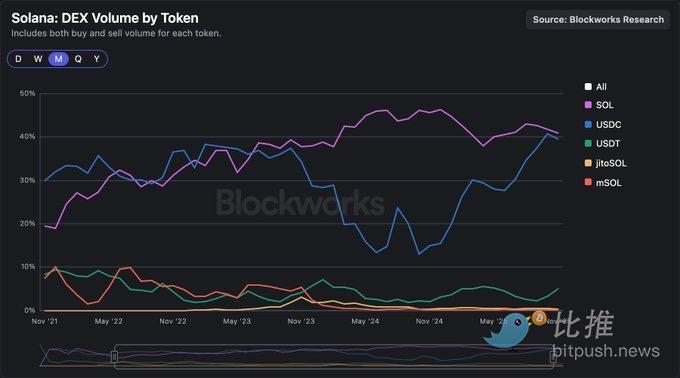
  • SOL remains the primary medium of exchange and the highest volume asset on Solana (but USDC is catching up). This is mainly because platforms like Pumpfun and Raydium tend to use SOL as the quote currency, while other platforms (like Meteora) have a mixed situation.

  • However, new launch platforms like MetaDAO are setting USDC as the default paired trading asset.

BNB and USDT Go Hand in Hand
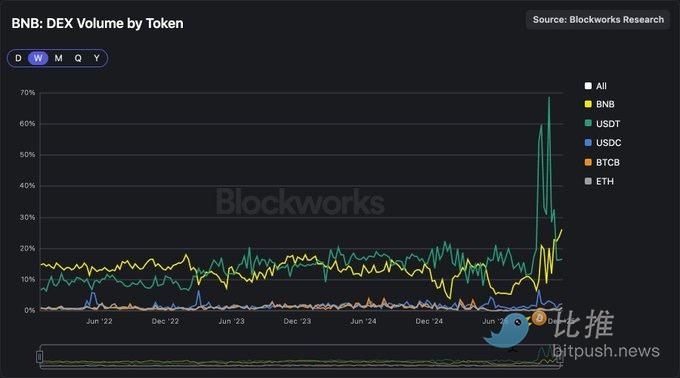
  • From 2021 to 2022, BNB absolutely dominated the role of medium of exchange, but then USDT gained market share and surpassed BNB.

The Market Has Chosen the Medium of Exchange — And It's Stablecoins

There is no such thing as "Onchain Legal Tender" in the on-chain market.

Some projects use a "quote asset" strategy, making their native token the medium of exchange, such as Zora and Virtuals. But in reality, this increases transaction costs for both users and projects, while having minimal impact on the token price itself. Ecosystem tokens can attempt a similar strategy through asset issuance platforms, i.e., requiring quotes in a specific token, but this may not be worth it.

The user experience (UX) and liquidity of the on-chain market are improving: the past monetary premium was also partly due to a lack of alternatives and lower liquidity.

The next batch of billions of users will use the same medium of exchange as in real life (USDC, Euros, etc.).


Twitter:https://twitter.com/BitpushNewsCN

Bitpush TG Discussion Group:https://t.me/BitPushCommunity

Bitpush TG Subscription: https://t.me/bitpush

Original article link:https://www.bitpush.news/articles/7594034

Preguntas relacionadas

QWhat is the 'monetary premium' in the context of L1 blockchains, and what two primary needs does it stem from?

AThe 'monetary premium' refers to the portion of an L1 blockchain's valuation that comes from its use as a form of money. It stems from the market's need to use the asset as a Store of Value (SoV) and as a Medium of Exchange (MoE).

QAccording to the article, which type of asset are users increasingly preferring to use for on-chain transactions instead of native L1 tokens?

AUsers are increasingly preferring to use stablecoins, such as USDC and USDT, for on-chain transactions instead of native L1 tokens like ETH or SOL.

QOn the Solana blockchain, what is a key reason why SOL remains a primary medium of exchange, and what new trend is challenging this?

ASOL remains a primary medium of exchange on Solana largely because platforms like Pumpfun and Raydium use it as the default quote currency. However, this is being challenged by new launch platforms, such as MetaDAO, which are setting USDC as the default trading pair.

QThe article states that the monetary premium is 'fading'. What two reasons are given for the past existence of this premium?

AThe past existence of the monetary premium was partly due to a lack of other options for users and lower liquidity on-chain. The improving user experience (UX) and liquidity in on-chain markets are contributing to its decline.

QWhat does the author suggest about the next billion users entering the crypto space regarding their preferred medium of exchange?

AThe author suggests that the next billion users will use the same mediums of exchange they use in real life, such as USDC or the Euro, rather than the native tokens of L1 blockchains.

Lecturas Relacionadas

Space Resumen|Cuando el debilitamiento del dólar se encuentra con la mejora de la liquidez: Análisis de tendencias del mercado cripto y estrategias de despliegue en el ecosistema de TRON

Resumen: Con un dólar más débil y señales de mejora en la liquidez global, el mercado de criptoactivos muestra signos de recuperación, aunque los expertos advierten que aún es pronto para confirmar un cambio de tendencia definitivo. En un espacio de debate organizado por SunPump, se destacó que un punto de inflexión real requeriría una relajación monetaria sostenida de la Fed, una debilidad duradera del dólar y una entrada continua de capital en cripto. Mientras se espera una confirmación macroeconómica, se recomienda una estrategia de participación cautelosa. El flujo de liquidez likely seguiría un patrón predecible: primero hacia activos principales como Bitcoin y Ethereum, luego hacia narratives de mayor riesgo como RWA, IA y memecoins. La red de TRON se presenta como una opción estratégica para este escenario, al ofrecer un acceso estable a través de stablecoins como USDT, oportunidades de generación de ingresos en protocols DeFi como JustLend DAO y SUN.io, y flexibilidad para rotar hacia activos de su ecosistema según evolucione el mercado. La conclusión clave es que, aunque el momento del cambio de ciclo aún no está claro, los inversores pueden prepararse adoptando enfoques que combinen seguridad y capacidad de respuesta, utilizando plataformas con alta liquidez y utilidad real como TRON para navigar la incertidumbre actual.

深潮Hace 2 min(s)

Space Resumen|Cuando el debilitamiento del dólar se encuentra con la mejora de la liquidez: Análisis de tendencias del mercado cripto y estrategias de despliegue en el ecosistema de TRON

深潮Hace 2 min(s)

¡ETF de Bitcoin registran salidas de 40 mil millones! ETF de altcoins atraen 1.3 mil millones en contra de la tendencia, nuevo capital se enfoca en XRP y Solana

Tras registrar salidas netas de más de 4.000 millones de dólares en los ETF de Bitcoin y Ethereum en noviembre, los primeros ETF de criptomonedas alternativas (altcoins) han mostrado un comportamiento opuesto, atrayendo aproximadamente 1.300 millones de dólares en entradas netas durante el mismo período, concentrados principalmente en productos vinculados a XRP y Solana. Mientras los grandes gestores de activos tradicionales reducían su exposición a los activos de mayor volatilidad como BTC y ETH, una cohorte de capital más especializado y tolerante al riesgo estaba entrando en los nuevos ETF de altcoins. Los ETF de XRP, con activos bajo gestión de 676 millones de dólares, han mantenido un flujo constante de entradas desde su lanzamiento, y el precio del token incluso subió un 7,2% en un mes generalizado a la baja. Los ETF de Solana, con 918 millones en activos y unos 613 millones en entradas netas, atrajeron capital a pesar de que el precio de SOL cayó un 29,2%, en parte debido a que estos productos ofrecen un rendimiento por staking del 6% al 8%, proporcionando un colchón frente a la volatilidad. En marcado contraste, los ETF de Litecoin y Dogecoin apenas registraron entradas, con menos de 8 millones de dólares combinados, lo que subraya una divergencia profunda dentro del universo de las altcoins. Este fenómeno va más allá del sentimiento del mercado y apunta a una reevaluación fundamental. Los inversores institucionales están aplicando un nuevo rigor, evaluando activos en función de su claridad regulatoria, casos de uso reales, flujos de caja potenciales y la solidez de sus ecosistemas. XRP destaca por la resolución de su batalla legal con la SEC, su narrativa centrada en pagos transfronterizos y una guerra de tarifas entre emisores. Solana ofrece alto rendimiento y un ecosistema en desarrollo, además de un atractivo yield. Litecoin y Dogecoin, sin embargo, carecen de una propuesta de valor institucional clara más allá de su cultura popular. La conclusión es que la llegada de los ETF está actuando como un mecanismo de selección forzosa para el mercado de altcoins. No se trata de un simple rescate impulsado por la narrativa, sino de un reequilibrio donde solo los activos con fundamentación sólida, utilidad demostrable y un perfil regulatorio estable están recibiendo una asignación seria de capital a largo plazo. El mercado no está siendo rescatado; está siendo reevaluado.

cointelegraph_中文Hace 14 min(s)

¡ETF de Bitcoin registran salidas de 40 mil millones! ETF de altcoins atraen 1.3 mil millones en contra de la tendencia, nuevo capital se enfoca en XRP y Solana

cointelegraph_中文Hace 14 min(s)

Trading

Spot
Futuros
活动图片