Decoding 2026 altcoin cycle: Is capital rotating away from high-caps?

ambcryptoPublicado a 2026-07-08Actualizado a 2026-07-08

Resumen

Capital rotation shows no clear signs of leading into a broad altcoin cycle, with altcoins experiencing their worst underperformance against Bitcoin on record. While the total altcoin market cap is up 4% in Q3, 40% of altcoins still trade below all-time highs, indicating liquidity is concentrated in a few high-conviction sectors rather than spreading market-wide. Ethereum has shown relative strength against Bitcoin, with its dominance rising over 4% in Q3, which historically can signal an altcoin cycle. However, major high-cap assets like Ethereum and Solana remain significantly down from their peaks, and on-chain data suggests ETH's move may be more technical than fundamental. Analysts warn investors to be selective, as capital inflows are favoring specific narratives—evidenced by Robinhood Chain's TVL surging over 150% to a record $108 million—while TVL in many major high-cap ecosystems stays low. The cycle appears different, with liquidity flowing selectively and potentially leaving high-cap altcoins under continued pressure.

Capital rotation shows no clear signs of leading into a broader altcoin cycle.

However, this cycle looks different. On-chain data shows that altcoins are seeing their worst underperformance against Bitcoin [BTC] on record. This suggests that liquidity is not spreading across the altcoin market but instead rotating into a few high-conviction sectors while most assets continue to lag BTC.

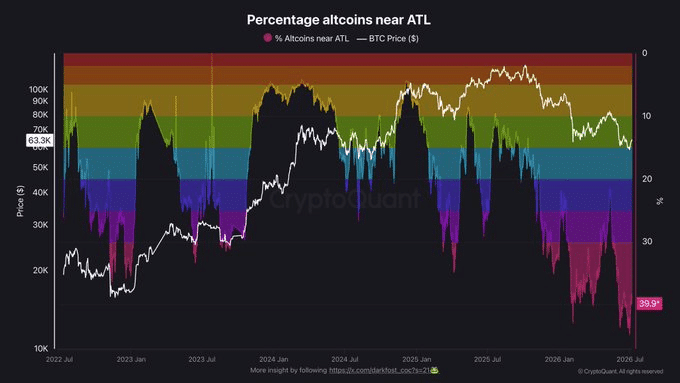
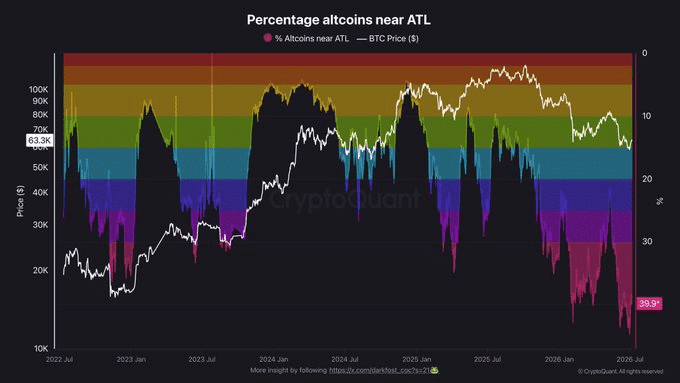
To put this into perspective, the total altcoin market cap currently sits around $870 billion, up 4% so far in Q3. However, a recent CryptoQuant report shows that 40% of altcoins are still trading below their all-time highs, showing that many assets have failed to recover even as some parts of the market continue to rally.
Source: CryptoQuant

Looking at it from a different angle, 60% of altcoins are still holding above their previous highs, suggesting that strength remains in specific sectors and assets rather than across the broader altcoin market.

From a technical perspective, Ethereum [ETH] dominance has started Q3 on a strong note, rising over 4%, while Bitcoin dominance has increased by only 0.7%. As the largest altcoin, ETH’s stronger capital inflows compared to BTC suggest that investors are beginning to rotate into altcoins.

Historically, a rising ETH/BTC ratio during a volatile market is often viewed as an early signal of an altcoin cycle starting to take shape. However, altcoins are still seeing their biggest underperformance against Bitcoin on record, raising the question: Is this cycle different, with liquidity flowing into only a few major assets and ETH struggling to trigger a broader altcoin cycle?

Why sector-based altcoin rallies could leave high-caps behind

Analysts are flagging warning signs across the market.

This follows the recent CryptoQuant report, where analysts urged investors to be more “selective” as altcoins face their strongest underperformance against Bitcoin on record. Going forward, the key question is whether investors regain the risk appetite to move back into altcoins, especially high-cap assets.

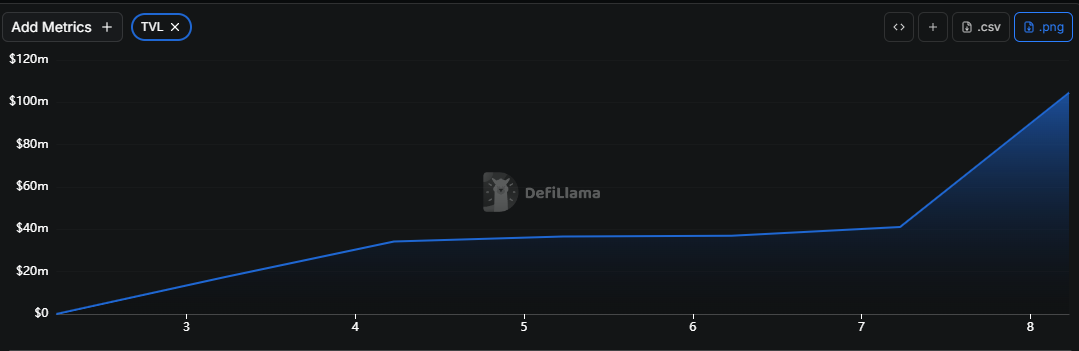
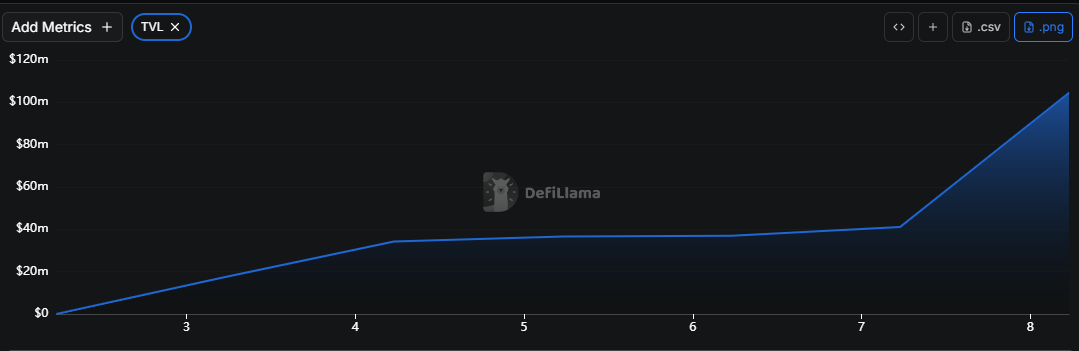
From a technical perspective, major high-cap assets are still trading well below their all-time highs. Ethereum, for example, remains down over 60%, while Solana is down more than 70%, showing that even leading altcoins have yet to fully recover. Meanwhile, TVL on Robinhood Chain has jumped over 150% in the past 24 hours to a record $108 million.
Source: DeFiLlama

By comparison, TVL across many major high-cap ecosystems remains near multi-month lows, showing where liquidity is actually flowing. More importantly, these inflows have come alongside ROBIN’s 30%+ rally so far in Q3, reinforcing the view that investors are rotating into high-conviction narratives.

That naturally puts Ethereum’s recent strength in focus.

While ETH has shown relative strength against Bitcoin, its on-chain fundamentals remain soft, suggesting the move may be more technical than structural. If capital continues flowing into selective altcoin narratives, pressure on major high-cap altcoins could keep building through the rest of H2.


Final Summary

  • Capital is flowing selectively, while many high-cap altcoins continue to lag behind.
  • Ethereum is showing technical strength, but high-caps could still face pressure if liquidity remains selective.


Preguntas relacionadas

QWhat is the main observation regarding capital rotation in the current altcoin market according to the article?

AThe article states that capital rotation shows no clear signs of leading into a broader altcoin cycle. Instead, on-chain data indicates liquidity is not spreading across the altcoin market but rotating into a few high-conviction sectors, with most altcoins underperforming Bitcoin at record levels.

QWhat percentage of altcoins are still trading below their all-time highs, and what does this suggest?

AA recent CryptoQuant report shows that 40% of altcoins are still trading below their all-time highs. This suggests that many assets have failed to recover from previous downturns even as some parts of the market rally.

QWhat is the significance of the recent movement in the Ethereum/Bitcoin (ETH/BTC) ratio mentioned in the article?

AThe article notes that Ethereum dominance has risen more than Bitcoin's in Q3. Historically, a rising ETH/BTC ratio during volatile markets is seen as an early signal of a potential altcoin cycle. However, the current context is different as altcoins are still severely underperforming Bitcoin.

QWhat example does the article provide to show where investor liquidity is actually flowing, as opposed to major high-cap ecosystems?

AThe article highlights Robinhood Chain (ROBIN), where Total Value Locked (TVL) jumped over 150% in 24 hours to a record $108 million, alongside ROBIN's price rally. In contrast, TVL across many major high-cap ecosystems remains near multi-month lows, indicating selective capital flows into specific narratives.

QWhat is the article's final conclusion regarding the pressure on major high-capitalization altcoins like Ethereum?

AThe article concludes that while Ethereum is showing technical strength, its on-chain fundamentals remain soft. If capital continues to flow selectively into specific altcoin narratives rather than broadly, major high-cap altcoins could face increasing pressure for the rest of the second half of the year.

Lecturas Relacionadas

Tras tres trimestres consecutivos de caída, ¿puede el mercado cripto encontrar una ventana de estabilización en el tercer trimestre?

El mercado cripto sufrió su peor trimestre desde 2022, con una caída del 12.6% en la capitalización total (ahora en $2.1 billones). El volumen de operaciones y el valor de las stablecoins también disminuyeron, señalando una salida generalizada de capitales. Bitcoin y Ethereum cayeron un 14.2% y 25.4% respectivamente, rompiendo su correlación con los mercados de riesgo tradicionales. Los ETFs de Bitcoin en EE.UU. registraron importantes salidas netas ($4.67 mil millones en Q2), aunque datos sugieren que el ciclo de ventas podría estar cerca de su fin. La atención del mercado se centra ahora en la reunión de la FED a finales de julio, cuya postura (halcón o paloma) podría definir el rango de trading de Bitcoin para el trimestre. El avance de la ley CLARITY en el Senado estadounidense se ha estancado, reduciendo la probabilidad de aprobación en 2026 y manteniendo una prima de riesgo regulatorio alta. Solo dos sectores mostraron crecimiento: los mercados de predicción (volumen +48.7%) y los coleccionables tokenizados (volumen +143% vs. Q1). El sentimiento general es de cautela. La lógica del mercado ha cambiado, priorizando fundamentos como la política monetaria y la regulación frente a los simples impulsos narrativos. Aunque las bases para una caída extrema parecen limitadas, la recuperación sostenida en Q3 depende críticamente de la FED y de un posible progreso regulatorio.

marsbitAyer 08:41

Tras tres trimestres consecutivos de caída, ¿puede el mercado cripto encontrar una ventana de estabilización en el tercer trimestre?

marsbitAyer 08:41

BIT Trading Moments: BTC aún presionado por la EMA 200 semanal, tras el rechazo podría reiniciar la caída, los valores de almacenamiento y semiconductores que subieron fuertemente anoche comenzaron a caer en la sesión nocturna

**BIT Trading Moments: BTC aún presionado por la EMA 200 semanal; almacenamiento y semiconductores caen en el after-hours** El mercado de cripto continúa su recuperación, con **Bitcoin** manteniéndose cerca de los $66,000. Enfrenta una fuerte resistencia en la zona de los $68,000, nivel que coincide con el costo promedio de los inversores en los últimos cinco meses y un punto de fallo anterior. Los analistas señalan que se encuentra atrapado entre la media móvil simple (MA) de 200 semanas (~$63,333) y la media exponencial (EMA) de 200 semanas (~$68,328). Se necesitaría un cierre semanal por debajo de $55,000 o por encima de $70,000 para confirmar una dirección de mayor alcance. Los ETF de Bitcoin registran entradas netas por sexto día consecutivo. En Wall Street, los **futuros de los principales índices** caen. Después de fuertes ganancias el martes, las acciones de **semiconductores y almacenamiento** retroceden en el after-hours: el ETF de semiconductores cae un 2.22%, Micron un 2.29% y SK Hynix casi un 5%. Sin embargo, **Super Micro Computer (SMCI)** se dispara más de un 20% tras el cierre, impulsada por sólidos pedidos. Otras noticias positivas incluyen un contrato de $266M de la Fuerza Aérea para **Rocket Lab**. A pesar del repunte bursátil, factores como el **crudo Brent por encima de $91** y el **rendimiento del bono estadounidense a 10 años subiendo a ~4.64%** generan preocupaciones inflacionarias y enfrían el optimismo. Las acciones relacionadas con cripto, como Coinbase y Robinhood, tuvieron un buen desempeño apoyadas por avances regulatorios. En Asia, los mercados siguieron la recuperación tecnológica. El **índice KOSPI de Corea del Sur** subió un 0.74%, con acciones de semiconductores mostrando volatilidad. El principal riesgo es el **yen japonés**, que tocó su nivel más bajo desde 1986, lo que genera temores a una intervención del gobierno. **Próximos eventos clave:** Este miércoles 22 de julio, el enfoque está en los eventos de **AMD AI** y los resultados financieros de **Alphabet (Google), Tesla e IBM** después del cierre. El jueves 23, la **decisión de tasas del BCE** y los resultados de **Intel** serán cruciales para el sentimiento del mercado.

marsbitAyer 08:33

BIT Trading Moments: BTC aún presionado por la EMA 200 semanal, tras el rechazo podría reiniciar la caída, los valores de almacenamiento y semiconductores que subieron fuertemente anoche comenzaron a caer en la sesión nocturna

marsbitAyer 08:33

Trading

Spot
活动图片




