‘Hard-backed currency’ – Coinbase CEO pushes crypto for $39T debt

ambcryptoPublicado a 2026-07-02Actualizado a 2026-07-02

Resumen

Coinbase CEO Brian Armstrong proposes using cryptocurrency as "hard-backed currency" to address the U.S. national debt, which stands at $39.4 trillion. He argues the U.S. Constitution needs amendments to cap government spending and mandate such a currency to prevent fiscal decline. While Bitcoin's fixed supply is seen as a digital alternative to gold, analysis suggests even significant Bitcoin reserves would only cover a fraction of the debt by 2049. The article concludes that capping spending may be a more practical step than relying solely on crypto to solve the debt issue.

Coinbase CEO Brian Armstrong has made a bold proposal to rein in inflation and unchecked government spending.

According to him, crypto can be used as ‘hard-backed currency.’ For growth, he floated AI and robotics as the best bet to spur the next growth. He noted,

The US Constitution was the most important political innovation ever, but it’s missing two important things: A cap on the growth of government spending and a requirement for hard-backed currency.

AD

He added,

Without them, every democracy drifts toward more debt and eventual loss of reserve currency status.

As of writing, the total U.S fiscal debt has hit $39.4 trillion. Armstrong cautioned that the fiscal debt increases by $1 trillion after every 100 days, largely driven by the current broken ‘political incentive structure.’

Can Bitcoin, stablecoins solve U.S. debt?

Others were quick to correct him, saying that the Constitution only allows gold and silver coins to be used to pay debts. Well, that’s why he is advocating for an amendment to include other “money” options.

For his part, BitGo CEO Mike Belshe supported his proposal and added,

The Bill of Rights protects you from the government taking your speech, your property, your liberty. It’s time to update it to protect you from the government debasing your money.

Well, this is not the first time crypto has been floated as a solution to U.S fiscal debt.

In particular, Bitcoin’s hard-coded supply limit of 21 million coins has been viewed as a potential replacement for gold or a better digital alternative to the precious metal.

In fact, the two assets have shown close correlation, sparking a ‘debasement trade’ during the West Asia crisis. They acted as macro hedges, and their demand pushed their values higher.

So far, gold and Bitcoin prices have fallen together amid slow but progress toward a solution to the West Asia crisis.

Bitcoin vs. America’s debt problem

But U.S inflation has devalued the dollar by nearly 97% since 1913. Since 2000, the US dollar’s purchasing power has dropped further to a record low. Over the same period, BTC value has surged from below $1 to over $50K.
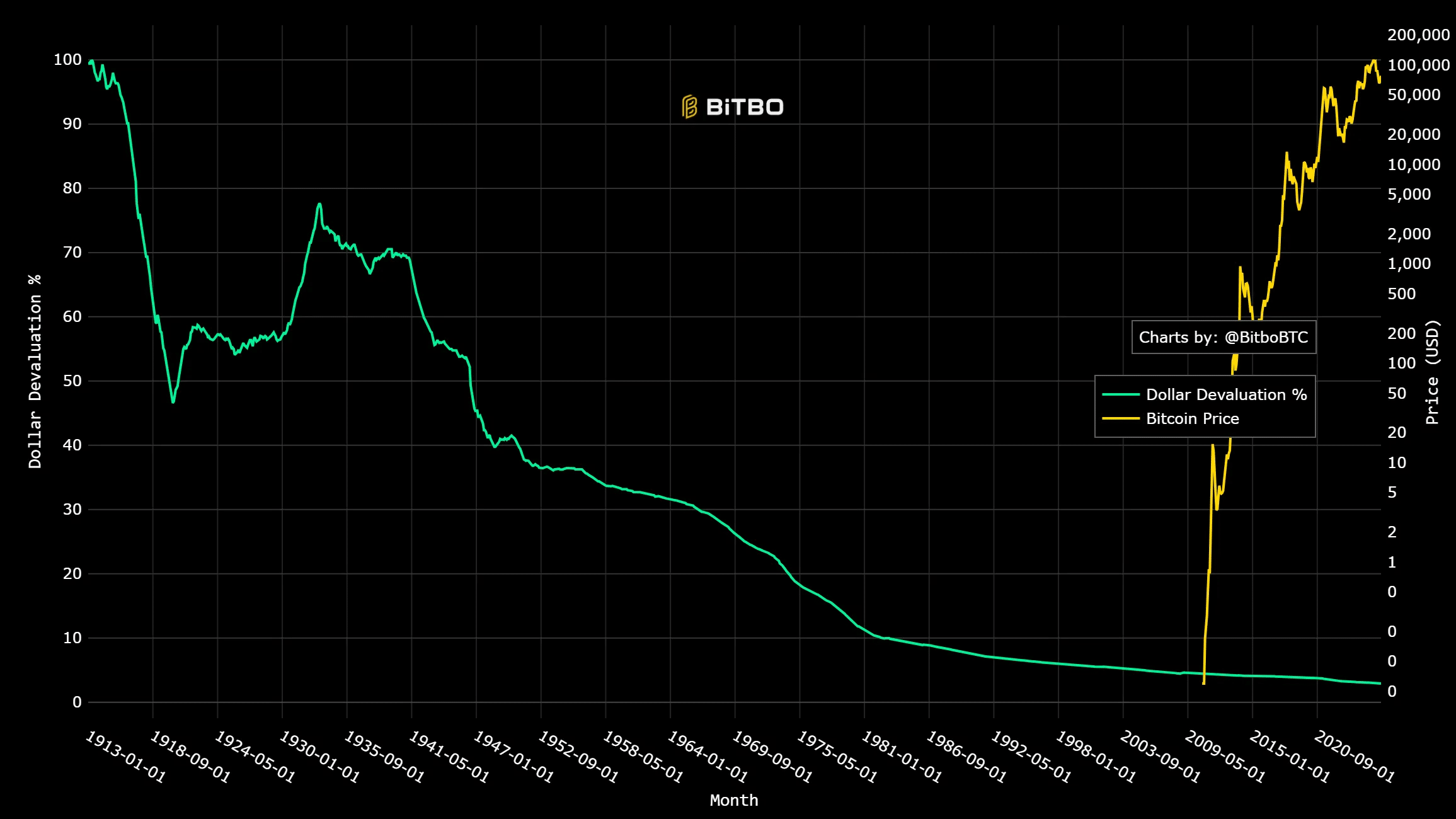
Source: Bitbo

In fact, the Trump Administration is betting on a Bitcoin strategic reserve and stablecoins to manage its debt. Unfortunately, VanEck projected that a BTC reserve can only help pay 18%-36% of the US debt by 2049.

The above projection holds only if the government holds 1 million BTC and the price surges from $250K to $43M per coin before 2050.
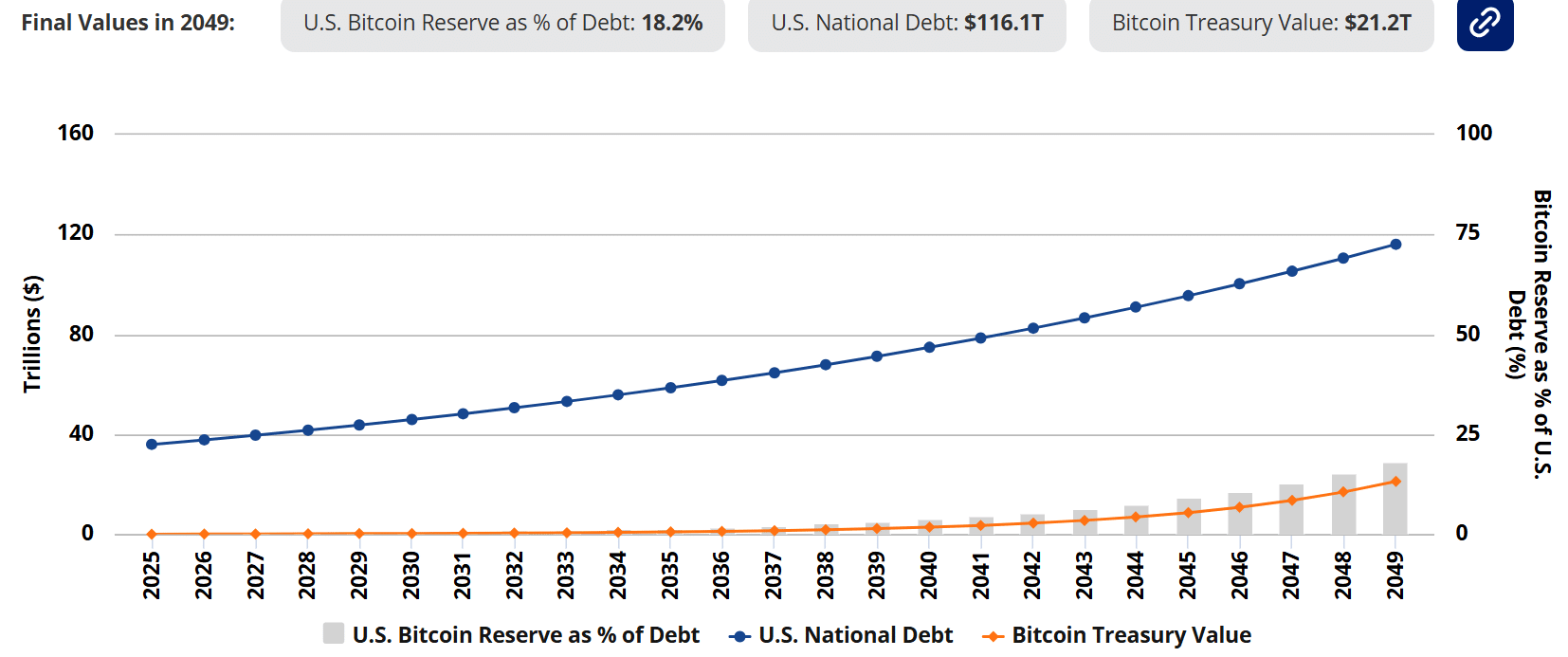
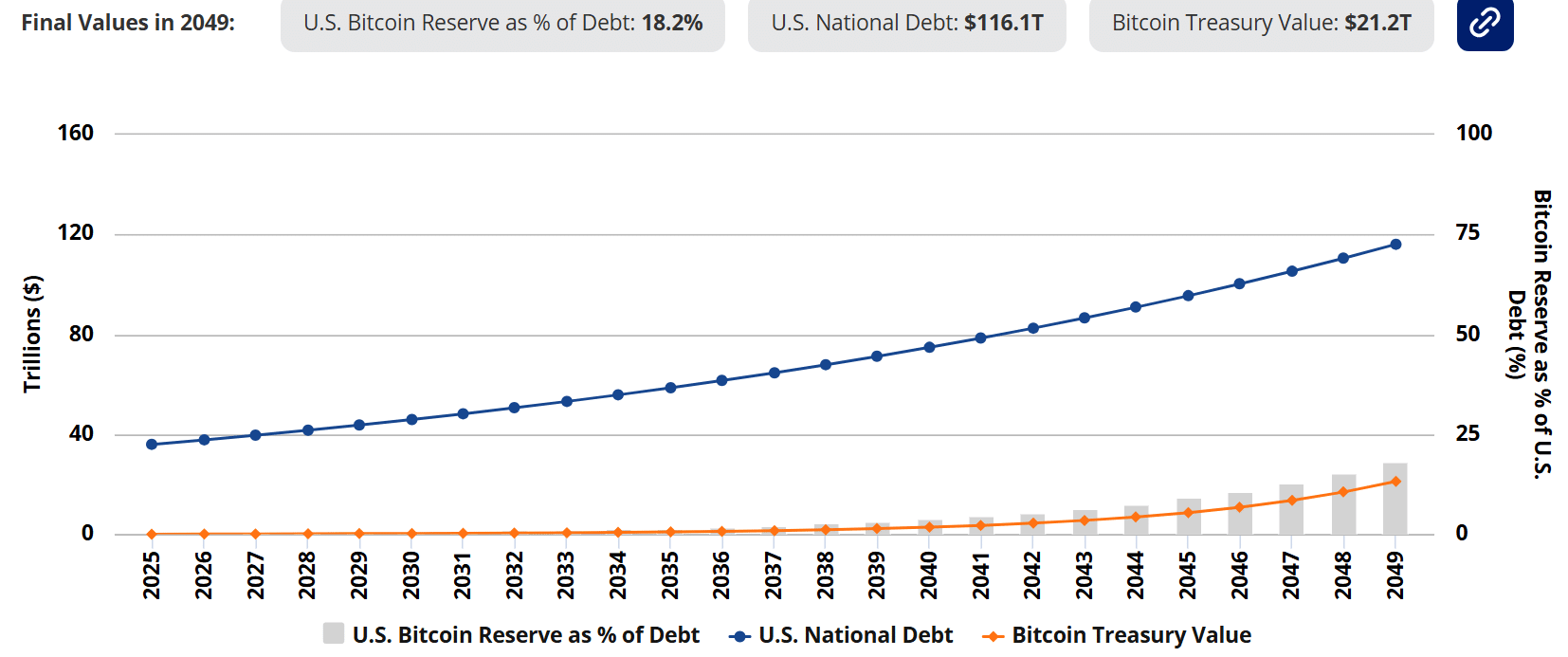
Source: VanEck

Overall, the crypto proposal may not fully solve the U.S debt problem. However, capping government spending could be a practical step toward addressing the fiscal debt issue.


Final Summary

  • Coinbase CEO proposed crypto as ‘hard-backed money’ to address the U.S $39T fiscal debt problem
  • But crypto could only pay a fraction of the U.S debt, assuming BTC price hits $43M per coin by 2049.


Preguntas relacionadas

QWhat is Coinbase CEO Brian Armstrong's proposal to address the U.S. fiscal debt, and what key constitutional changes does he suggest are needed?

ABrian Armstrong proposes using cryptocurrency as 'hard-backed currency' to address inflation and U.S. fiscal debt. He suggests amending the U.S. Constitution to include a cap on government spending growth and a requirement for a hard-backed currency, which he believes are missing but necessary to prevent excessive debt and loss of reserve currency status.

QWhat is the current size of the U.S. fiscal debt according to the article, and at what rate is it reportedly increasing?

AAccording to the article, the total U.S. fiscal debt has hit $39.4 trillion. Armstrong cautions that the debt increases by $1 trillion approximately every 100 days.

QWhy is Bitcoin specifically considered as a potential tool to manage debt, and what is one significant limitation of this idea presented in the article?

ABitcoin is considered due to its hard-coded supply limit of 21 million coins, making it a potential digital alternative to gold and a hedge against currency debasement. A significant limitation, according to a VanEck projection cited, is that even if the U.S. held 1 million BTC, and its price surged to an unrealistic $43 million per coin by 2049, it would only cover 18%-36% of the U.S. debt by that time.

QAccording to the article, what role did Mike Belshe, CEO of BitGo, see for the Bill of Rights in relation to the current monetary system?

AMike Belshe suggested that the Bill of Rights protects citizens from the government infringing on speech, property, and liberty, and it should be updated to also protect people from the government debasing their money.

QWhat practical step does the article suggest might be more effective than relying solely on cryptocurrency reserves to address the U.S. debt problem?

AThe article suggests that capping government spending could be a more practical step toward addressing the fiscal debt issue, as the crypto proposal alone may not fully solve the problem.

Lecturas Relacionadas

Las acciones tokenizadas que compras en Robinhood son solo deuda de Jersey

**Robinhood lanza tokens de acciones como deuda de Jersey: una apuesta arriesgada para los inversores** Robinhood ha presentado su propia cadena de bloques y tokens de acciones, prometiendo acceso global a acciones como NVIDIA o Apple. Sin embargo, estos tokens no son acciones reales. En lugar de otorgar derechos de propiedad (como dividendos o voto), son valores de deuda emitidos por Robinhood Assets (Jersey) Limited, una empresa fantasma en la isla de Jersey. Los inversores no son accionistas de las empresas subyacentes. Compran un instrumento de deuda que promete seguir el precio de la acción. Esto conlleva un riesgo de contraparte significativo: si el emisor en Jersey quiebra, los inversores podrían perder todo, independientemente del desempeño de la empresa referenciada. Esta estructura compleja parece diseñada para eludir regulaciones estrictas, como las de la SEC en EE. UU., que clasifica estos productos como "valores vinculados" sin derechos de accionista. Robinhood los ofrece fuera de EE. UU., Reino Unido y otros mercados principales. En Europa, donde Robinhood ya ofrece tokens respaldados por acciones reales bajo MiFID II, la elección de la estructura de deuda de Jersey parece deliberada para reducir costos regulatorios. El movimiento se presenta como una solución tecnológica tras la crisis de GameStop en 2021, permitiendo liquidaciones instantáneas en cadena. Sin embargo, introduce nuevos riesgos como la dependencia de oráculos para precios, vulnerabilidades de contratos inteligentes y la falta de seguro contra pérdidas. Mientras competidores como Ondo lanzan en EE. UU. tokens de acciones plenamente respaldados y regulados, la estrategia de Robinhood apuesta por capturar el mercado global rápidamente, asumiendo que la regulación se pondrá al día más tarde. Para el inversor, significa asumir más riesgo por un producto que simula ser una acción, pero que en esencia es una promesa de pago de una entidad offshore.

Foresight NewsHace 26 min(s)

Las acciones tokenizadas que compras en Robinhood son solo deuda de Jersey

Foresight NewsHace 26 min(s)

Socio de Blockchain Capital: la IA está reescribiendo la unidad básica del trabajo

En 2024, Sam Altman predijo la aparición de una empresa de mil millones de dólares fundada por una sola persona, gracias al auge de la IA. Esta transformación redefine la unidad básica del trabajo: ya no es el puesto, las horas o la entrega, sino la tarea. Según el artículo, la combinación de **mano de obra programable** (agentes de IA que pueden dividir, delegar y evaluar tareas) y **dinero programable** (stablecoins que permiten pagos instantáneos y sin intermediarios) está desagregando radicalmente el trabajo. Históricamente, cada cambio en el trabajo (artesanos → fábricas → economía gig y de creadores) se produjo al reducir los costes de coordinación. Ahora, los agentes de IA pueden ejecutar flujos completos de producción, pagando con stablecoins en milisegundos, sin necesidad de estructuras corporativas tradicionales. Ejemplos como **Poncho** de Merit Systems, que dota a los agentes de IA de una billetera para realizar microtransacciones, y la adopción de stablecoins por parte de Meta y AWS, muestran la viabilidad de este modelo. Esto permite pagos granulares por uso real, no suscripciones. En el futuro, las empresas no serán contenedores de mano de obra, sino una capa inteligente que orquesta agentes en un mercado global de trabajo programable. El papel humano será rediseñar y empaquetar el trabajo: definir tareas, evaluar calidad y combinar resultados para crear valor compuesto.

marsbitHace 28 min(s)

Socio de Blockchain Capital: la IA está reescribiendo la unidad básica del trabajo

marsbitHace 28 min(s)

Trading

Spot
活动图片