Wall Street’s Ethereum Expansion Gains Speed As Tokenized Treasuries Top $8 Billion

bitcoinistPublicado a 2026-05-08Actualizado a 2026-05-08

Resumen

The market cap of tokenized U.S. Treasuries on Ethereum has reached an all-time high of approximately $8 billion, doubling in value over the past six months. This growth is driven by products from multiple institutions including BlackRock’s BUIDL, Franklin Templeton’s iBENJI, and offerings from WisdomTree, Ondo Finance, Centrifuge, and Superstate. Ethereum dominates this space, holding far more value than competitors like BNB Chain, Solana, Stellar, and the XRP Ledger. These tokenized assets are not just held as investments; they are actively used as yield-bearing collateral within decentralized finance (DeFi) protocols, providing liquidity and functionality beyond traditional bonds. While this marks a significant milestone, the $8 billion total remains a small fraction of the broader $27 trillion U.S. Treasury market. Regulatory frameworks for blockchain-based securities are still under development by financial authorities.

Six issuers are now behind the biggest milestone yet in Ethereum-based government debt.

A Market Built By Many Hands

BlackRock’s BUIDL fund, issued through Securitize, holds the largest share. But the race to $8 billion wasn’t a one-company story.

Franklin Templeton’s iBENJI, WisdomTree’s WTGXX, Ondo Finance’s USDY, Centrifuge’s JTRSY, and Superstate’s USTB all contributed to what Token Terminal now confirms is an all-time high for tokenized US Treasury products on Ethereum.

The total market cap sits at roughly $8 billion — up about 100% in just six months.

That kind of growth, spread across multiple established institutions and crypto-native platforms, points to something broader than a single firm testing the waters.

Major asset managers are building these products because they see demand. And that demand is coming from investors who want US government debt exposure with the operational advantages that blockchain infrastructure provides — faster settlement, around-the-clock access, and programmable functionality not available in traditional bond markets.

Ethereum is where nearly all of this activity is concentrated. Data from rwa.xyz shows the network leads the tokenized Treasury space by a wide margin. BNB Chain is the closest competitor, holding $3.4 billion in tokenized Treasury value. Solana, Stellar, and the XRP Ledger each hold under $1 billion.
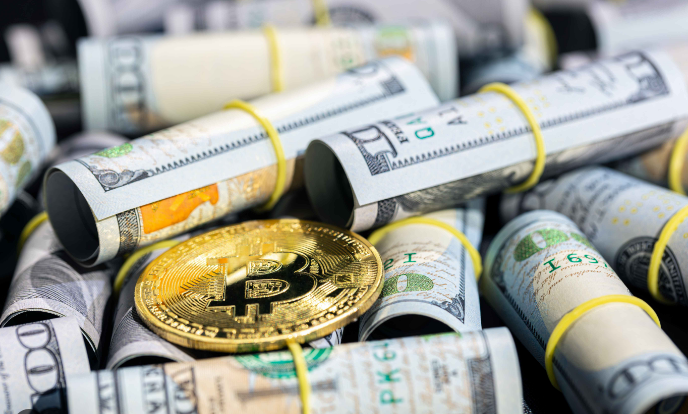
Image: TransFi

Idle Capital Finding A New Home

One reason for the surge is how these products are being used once they’re on-chain. Tokenized Treasuries aren’t just sitting in wallets. They’re being deployed as yield-bearing collateral inside decentralized lending protocols and money markets.

That makes them functional in ways traditional bond holdings are not — and it gives DeFi participants access to a stable, government-backed asset that earns yield while remaining usable within broader financial applications.

BTCUSD trading at $81,042 on the 24-hour chart: TradingView

According to reports, the sector has matured into a multi-billion-dollar liquidity layer on Ethereum, competing directly with stablecoin reserves, money market funds, and short-term ETFs.

As more of this collateral moves on-chain, Ethereum’s total secured value grows, reinforcing its position as the primary settlement network for institutional digital assets.

Still A Fraction Of The Whole

The $8 billion figure, while record-breaking for the sector, represents a small slice of the $27 trillion US Treasury market. Regulatory questions also remain open.

Governments and financial regulators are still working through how blockchain-based securities should be governed — covering custody rules, compliance standards, and investor protections.

Featured image from ExperienceFirst, chart from TradingView

Preguntas relacionadas

QWhat is the total market capitalization of tokenized US Treasuries on Ethereum according to the article, and how much has it grown in the last six months?

AThe total market capitalization of tokenized US Treasuries on Ethereum is roughly $8 billion, which represents a growth of about 100% in the last six months.

QWhich six issuers contributed to the record $8 billion total for tokenized Treasury products on Ethereum?

AThe six issuers are BlackRock's BUIDL fund (via Securitize), Franklin Templeton's iBENJI, WisdomTree's WTGXX, Ondo Finance's USDY, Centrifuge's JTRSY, and Superstate's USTB.

QAccording to the article, why are major asset managers building tokenized Treasury products?

AMajor asset managers are building these products because they see demand from investors who want US government debt exposure with blockchain's operational advantages, such as faster settlement, around-the-clock access, and programmable functionality.

QBesides Ethereum, which blockchain holds the second-largest amount of tokenized Treasury value, and how much is it?

ABesides Ethereum, BNB Chain holds the second-largest amount of tokenized Treasury value, which is $3.4 billion.

QHow are tokenized Treasuries being actively used on-chain beyond just being held in wallets, as mentioned in the article?

ATokenized Treasuries are being deployed as yield-bearing collateral inside decentralized lending protocols and money markets, making them functional in ways traditional bond holdings are not and providing DeFi participants with a stable, yield-earning asset.

Lecturas Relacionadas

Tras tres trimestres consecutivos de caída, ¿puede el mercado cripto encontrar una ventana de estabilización en el tercer trimestre?

El mercado cripto sufrió su peor trimestre desde 2022, con una caída del 12.6% en la capitalización total (ahora en $2.1 billones). El volumen de operaciones y el valor de las stablecoins también disminuyeron, señalando una salida generalizada de capitales. Bitcoin y Ethereum cayeron un 14.2% y 25.4% respectivamente, rompiendo su correlación con los mercados de riesgo tradicionales. Los ETFs de Bitcoin en EE.UU. registraron importantes salidas netas ($4.67 mil millones en Q2), aunque datos sugieren que el ciclo de ventas podría estar cerca de su fin. La atención del mercado se centra ahora en la reunión de la FED a finales de julio, cuya postura (halcón o paloma) podría definir el rango de trading de Bitcoin para el trimestre. El avance de la ley CLARITY en el Senado estadounidense se ha estancado, reduciendo la probabilidad de aprobación en 2026 y manteniendo una prima de riesgo regulatorio alta. Solo dos sectores mostraron crecimiento: los mercados de predicción (volumen +48.7%) y los coleccionables tokenizados (volumen +143% vs. Q1). El sentimiento general es de cautela. La lógica del mercado ha cambiado, priorizando fundamentos como la política monetaria y la regulación frente a los simples impulsos narrativos. Aunque las bases para una caída extrema parecen limitadas, la recuperación sostenida en Q3 depende críticamente de la FED y de un posible progreso regulatorio.

marsbitHace 15 hora(s)

Tras tres trimestres consecutivos de caída, ¿puede el mercado cripto encontrar una ventana de estabilización en el tercer trimestre?

marsbitHace 15 hora(s)

BIT Trading Moments: BTC aún presionado por la EMA 200 semanal, tras el rechazo podría reiniciar la caída, los valores de almacenamiento y semiconductores que subieron fuertemente anoche comenzaron a caer en la sesión nocturna

**BIT Trading Moments: BTC aún presionado por la EMA 200 semanal; almacenamiento y semiconductores caen en el after-hours** El mercado de cripto continúa su recuperación, con **Bitcoin** manteniéndose cerca de los $66,000. Enfrenta una fuerte resistencia en la zona de los $68,000, nivel que coincide con el costo promedio de los inversores en los últimos cinco meses y un punto de fallo anterior. Los analistas señalan que se encuentra atrapado entre la media móvil simple (MA) de 200 semanas (~$63,333) y la media exponencial (EMA) de 200 semanas (~$68,328). Se necesitaría un cierre semanal por debajo de $55,000 o por encima de $70,000 para confirmar una dirección de mayor alcance. Los ETF de Bitcoin registran entradas netas por sexto día consecutivo. En Wall Street, los **futuros de los principales índices** caen. Después de fuertes ganancias el martes, las acciones de **semiconductores y almacenamiento** retroceden en el after-hours: el ETF de semiconductores cae un 2.22%, Micron un 2.29% y SK Hynix casi un 5%. Sin embargo, **Super Micro Computer (SMCI)** se dispara más de un 20% tras el cierre, impulsada por sólidos pedidos. Otras noticias positivas incluyen un contrato de $266M de la Fuerza Aérea para **Rocket Lab**. A pesar del repunte bursátil, factores como el **crudo Brent por encima de $91** y el **rendimiento del bono estadounidense a 10 años subiendo a ~4.64%** generan preocupaciones inflacionarias y enfrían el optimismo. Las acciones relacionadas con cripto, como Coinbase y Robinhood, tuvieron un buen desempeño apoyadas por avances regulatorios. En Asia, los mercados siguieron la recuperación tecnológica. El **índice KOSPI de Corea del Sur** subió un 0.74%, con acciones de semiconductores mostrando volatilidad. El principal riesgo es el **yen japonés**, que tocó su nivel más bajo desde 1986, lo que genera temores a una intervención del gobierno. **Próximos eventos clave:** Este miércoles 22 de julio, el enfoque está en los eventos de **AMD AI** y los resultados financieros de **Alphabet (Google), Tesla e IBM** después del cierre. El jueves 23, la **decisión de tasas del BCE** y los resultados de **Intel** serán cruciales para el sentimiento del mercado.

marsbitHace 15 hora(s)

BIT Trading Moments: BTC aún presionado por la EMA 200 semanal, tras el rechazo podría reiniciar la caída, los valores de almacenamiento y semiconductores que subieron fuertemente anoche comenzaron a caer en la sesión nocturna

marsbitHace 15 hora(s)

Trading

Spot
活动图片





