Crypto Miner Pushback Suggests Ethereum Offshoots Are Coming

BloombergPublicado a 2022-08-08Actualizado a 2022-08-09

Resumen

Ethereum miners face grim prospects after software upgrade Forks have long been a mainstay of the cryptocurrency world

Ethereum miners face grim prospects after software upgrade

Forks have long been a mainstay of the cryptocurrency world

A monkey wrench is about to be thrown into the already complicated transition that the Ethereum blockchain is slated to go through soon.

In as early as September, Ethereum is expected to undergo a major software upgrade dubbed the Merge, in which the network will shift from using the scores of computers commonly referred to as miners to more energy-efficient validators to order transactions. Not everyone is going along with the change. A growing number of factions are making plans for forks that will copy the current software and, with a few tweaks, continue to essentially run the old version of Ethereum using miners.

One effort, called EthereumPOW, is spearheaded by Hongcai “Chandler” Guo, who used to be a large Ethereum miner in China but is now semi-retired and living near San Francisco. Several Chinese companies manufacturing Ethereum mining equipment -- which will be made nearly obsolete by the Merge -- have asked him to start the forking effort, he said.

“Everybody will get free money” when existing Ethereum holders receive new tokens if the blockchain is forked, Guo said in an interview. “Everybody will be happy.”

Forks have been a mainstay of the cryptocurrency world almost since the debut of Bitcoin more than a decade ago, as factions fought over the direction and control of various blockchains. Bitcoin Cash, Bitcoin Gold, and Bitcoin SV have all been spun off to varying degrees of success. There is already Ethereum Classic, which forked from Ethereum in 2016.
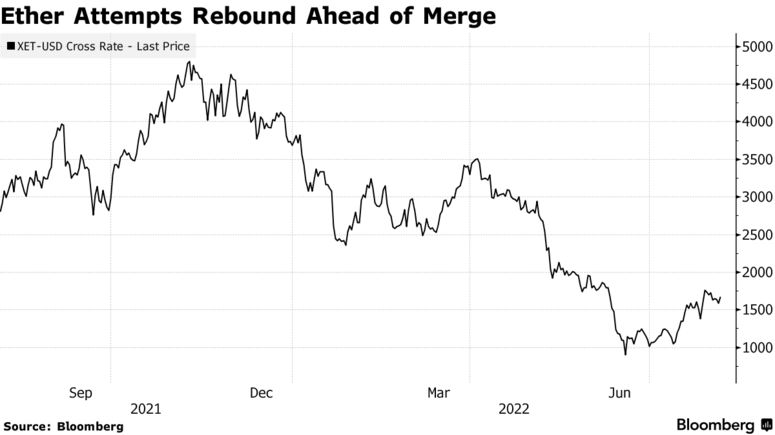
Analysts see plenty of hurdles. Newly forked chains often lack support from app developers, promoters and users, and in many cases don’t even have explorer tools that track their usage or lack thereof.

“Most discussions around a PoW Ethereum fork have been relatively short-sighted in scope,” focused on a new token, said Aidan Mott, intel manager at researcher Messari. “However, meaningful planning and research into supporting the ongoing logistics of a new network have been very light.”

At the Bidl Asia 2022 conference in Seoul, South Korea, this week, Ethereum co-founder Vitalik Buterin dismissed forking efforts as adding little value, saying they provide hardly any differentiation from existing blockchains.

“I don’t expect Ethereum to really be significantly harmed by another fork,” Buterin said in a webinar on Saturday. “In general my impression from pretty much everyone I talk to in Ethereum ecosystem, they have been completely supportive of the proof-of-stake effort and the ecosystem has been quite united around it.”

Still, Guo said he has a team of 60 developers working on a fork, which would require tweaks to the existing software to get rid of the ominous-sounding difficulty bomb, a software feature designed to force the transition to the new validator-based system called proof-of- stake (PoS) from the current proof-of-work (PoW).

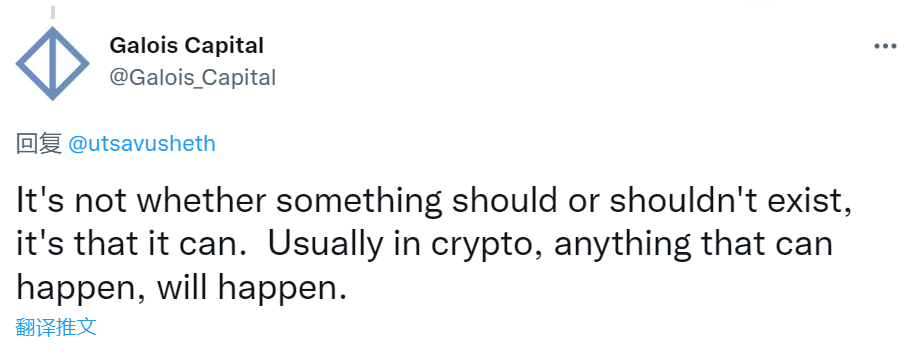
How to proceed appears to be in dispute. Hedge fund Galois Capital has been predicting a fork, though Guo said they haven’t communicated. Crypto entrepreneur Justin Sun’s Poloniex exchange will support all forked proof-of-work Ethereum tokens, Sun said in a message to Bloomberg. Sun has created his own blockchain, Tron, which already uses proof-of-stake.

“Proof-of-work is essential to Ethereum,” since it’s very reliable, Sun said. “For PoS smart platform, we have Tron.”
Miners may simply end up supporting a fork as a way to keep going. After the Merge, they face the choice of migrating to supporting smaller chains like Ethereum Classic, repurposing gear or even selling their machines. Hive Blockchain Technologies Ltd. said Friday it would consider switching to mining Ethereum Classic.

“We generally support anything that pays us well, that we can get behind,” said Chris Kyle, of Flexpool, which helps many small miners to support Ethereum. While he notes he hasn’t seen any strong proposals yet, that doesn’t mean a fork won’t take off, he said.

“One thing I will note is that crypto tends to be pretty illogical,” Kyle said. “Many networks/coins have little actual value, it’s all speculation. So a successful fork would likely need someone/something famous behind it, if they get that -- then it’s possible.”

Many companies are likely to take a wait-and-see approach. Back in 2016, Taylor Monahan, now global product lead at MetaMask crypto wallet, was spearheading work on MyEtherWallet, which initially said it wouldn’t support the Ethereum Classic fork. The firm soon had a change of heart.

“With all the things we had happen back then, I’d never say that today,” Monahan said, adding that MetaMask would have to weigh whether to support another forked token. “If there’s an opportunity for someone somewhere to make a boatload of money, it will probably happen.”

Lecturas Relacionadas

Diálogo con el inversor Zheng Di: Experimento de venta de criptomonedas de MicroStrategy, economía de IA y oportunidades en el mercado estadounidense

**Resumen: Diálogo con el inversor Didier Zheng: El experimento de venta de criptomonedas de MicroStrategy, la economía de la IA y las oportunidades en el mercado bursátil estadounidense** En un reciente podcast, el inversor en tecnologías de vanguardia Didier (Didier) Zheng analizó la caída del bitcoin, los cambios en la estrategia financiera de MicroStrategy, el auge de las acciones estadounidenses impulsado por la IA y el futuro de la industria cripto. **MicroStrategy y la presión de venta:** Zheng argumenta que la reciente caída del bitcoin se debe principalmente a la expectativa del mercado de que MicroStrategy podría vender pequeñas cantidades de forma recurrente para cubrir los dividendos de sus acciones preferentes, manteniendo así su principio de "neutralidad de bitcoin por acción". Esto crea una presión estructural, aunque no necesariamente desencadena una "espiral de la muerte" a menos que se combinen con nuevos shocks macroeconómicos. **La IA y el token como nueva fuerza laboral:** La discusión se centra en cómo la IA está reestructurando la economía. Zheng ve los *tokens* como la nueva "fuerza laboral" digital, reemplazando progresivamente tareas humanas en la ejecución. Esto impulsa la rentabilidad corporativa y beneficia a la cadena de suministro de la IA (semiconductores, centros de datos), lo cual es el motor fundamental del rally en el mercado bursátil estadounidense. La era de la "economía de las máquinas" acaba de comenzar. **CEX y la migración a acciones estadounidenses:** Para Zheng, la integración de acciones tradicionales (como las estadounidenses) por parte de los exchanges de criptomonedas (CEX) es un movimiento natural hacia activos con valor real y liquidez, dado el limitado número de activos cripto nativos con fundamentos sólidos. No cree que esto perjudique al ecosistema a largo plazo, sino que acerca activos del mundo real a la cadena. Además, sugiere que los traders de cripto pueden encontrar en el mercado bursátil estilos de inversión similares (ej. *meme stocks* que reemplazan a las *meme coins*). **Panorama macro y futuro:** Zheng se muestra cauteloso a corto plazo debido a posibles ajustes en el mercado y la incertidumbre política (elecciones en EE.UU.), pero mantiene una visión optimista a largo plazo sobre la IA y su convergencia con blockchain. Subraya la necesidad de mecanismos de redistribución (ej. un "impuesto a la IA") para evitar una desigualdad extrema en la era de la automatización. La industria cripto, en su opinión, está pasando de una fase especulativa a una más institucional e industrial.

marsbitHace 35 min(s)

Diálogo con el inversor Zheng Di: Experimento de venta de criptomonedas de MicroStrategy, economía de IA y oportunidades en el mercado estadounidense

marsbitHace 35 min(s)

$GCOIN de Playnance se lista en KoinBX en medio del rápido crecimiento en India

Playnance, el ecosistema web3 de iGaming basado en blockchain, anunció el 18 de junio que su token nativo, $GCOIN, se ha listado en el intercambio KoinBX. Esta medida busca facilitar el acceso a una de las comunidades de más rápido crecimiento de la plataforma, particularmente en India, donde más de 130 socios del programa "Be the Boss" se han unido, creando comunidades con miles de jugadores activos. A través del modelo "Be the Boss", los participantes pueden crear y gestionar sus propias comunidades de juego, recibiendo incentivos por su actividad. Pini Peter, CEO de Playnance, destacó que India se ha convertido en uno de los mercados más comprometidos. Un ejemplo es el socio Dr. Nicolas, quien ha ganado más de 57.000 dólares en los últimos meses y valora la oportunidad de construir una comunidad propia. El token $GCOIN es el centro de este ecosistema, actuando como token de utilidad para recompensar la participación y alinear incentivos entre jugadores y "Bosses". Su listado en KoinBX forma parte de la estrategia de expansión global de Playnance, que busca aumentar la utilidad y accesibilidad de $GCOIN combinando propiedad comunitaria, participación gamificada e incentivos en blockchain. Fundada en 2020, Playnance procesa alrededor de un millón de transacciones diarias y desarrolla productos en cadena no custodiados con el objetivo de atraer a usuarios convencionales (Web2) hacia entornos blockchain, simplificando la experiencia del usuario sin perder transparencia.

TheNewsCryptoHace 1 hora(s)

$GCOIN de Playnance se lista en KoinBX en medio del rápido crecimiento en India

TheNewsCryptoHace 1 hora(s)

STRC cae a un mínimo histórico, la máquina de movimiento perpetuo de Saylor se atasca

El año pasado, Michael Saylor presentó STRC a Wall Street como un "motor de crédito digital", un ciclo perpetuo donde los inversores obtenían dividendos, MicroStrategy compraba Bitcoin, y todos ganaban. Hoy, ese motor se ha detenido. El 19 de junio, STRC cayó a un mínimo histórico de 85,32 dólares, muy por debajo de su valor nominal de 100 dólares, con un volumen de negociación inusualmente alto. Esta caída pone en duda la lógica central del producto: mantener un precio estable cerca del valor nominal para financiar continuamente la compra de Bitcoin. La máquina de Saylor funciona así: si STRC cotiza por encima de 100$, MicroStrategy emite nuevas acciones (ATM) para recaudar dinero y comprar más Bitcoin. Si Bitcoin sube, la máquina continúa. Pero ahora, tres factores convergen para una "tormenta perfecta": 1) El precio de Bitcoin se ha reducido a más de la mitad desde sus máximos. 2) Los recursos para pagar el dividendo del 11,5% de STRC se han reducido drásticamente tras pagar deuda, obligando a MicroStrategy a vender, por primera vez desde 2022, 32 BTC para cubrir dividendos, rompiendo el tabú de "nunca vender". 3) Un producto rival, SATA de Strive, ofrece mayor rentabilidad y seguridad, atrayendo a los inversores y ampliando la brecha de precio con STRC. Así, se activa un "volante de inercia inverso": Bitcoin cae, STRC se desploma, se detiene la financiación vía ATM, se vende Bitcoin para pagar dividendos, la confianza se erosiona y STRC cae aún más. Aunque Saylor argumenta que el modelo es matemáticamente sostenible con una apreciación anual del Bitcoin del 2,3%, el mercado no solo opera con lógica matemática. La narrativa ha cambiado de "nunca vender" a "vender para pagar", probando la resistencia del modelo de "empresa del Tesoro de Bitcoin" en un mercado bajista. La supervivencia de MicroStrategy no está en juego, pero la prueba de estrés para su fe en el mecanismo de financiación ha comenzado. En el clima actual de temor del mercado y señales alcistas de la Fed, ese 2,3% necesario parece más pesado que nunca.

marsbitHace 1 hora(s)

STRC cae a un mínimo histórico, la máquina de movimiento perpetuo de Saylor se atasca

marsbitHace 1 hora(s)

Trading

Spot
Futuros
活动图片