Democrats urge GOP to ‘move forward quickly’ on crypto bill

ambcryptoPublicado a 2025-09-19Actualizado a 2025-09-20

Key Takeaways

What’s next for the crypto market structure bill?

Senate Democrats and Republicans may cooperate to advance the bill, but only if both sides commit to true bipartisan authorship.

What are the potential hurdles?

Internal GOP divisions and a possible Senate–House reconciliation process could delay progress and push the December 2025 deadline further.


A section of U.S. Senate Democrats, led by Arizona’s Ruben Gallego, have reaffirmed support to “move forward quickly” on the comprehensive crypto market structure bill, but on one condition: “true” bipartisan collaboration. 

In a statement on the 19th of September, the group said

“We hope our Republican colleagues will agree to a bipartisan authorship process, as is the norm for legislation of this scale. Given our shared interest in moving forward quickly on this issue, we hope they will agree to reasonable requests to allow for true collaboration.”

They added that crypto is a $4 trillion market that requires a “considered and bipartisan approach to regulation.”

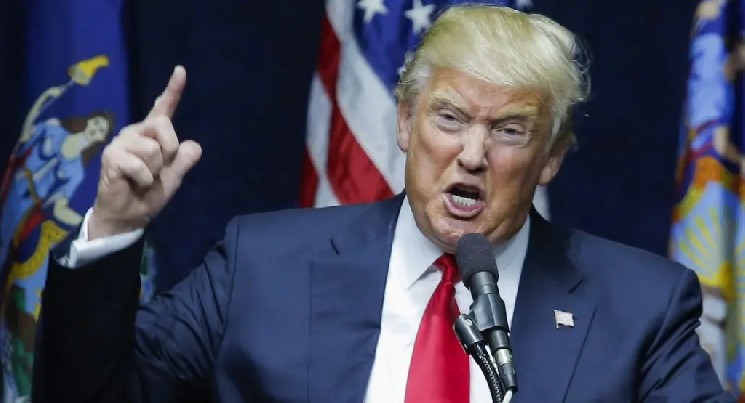
Will Trump get the crypto bill in time?

Justin Slaughter, VP of Regulatory Affairs at Paradigm, supported the Democrats’ stance. He said that a lasting “clarity” would be possible only through bipartisan support. 

Crypto billCrypto bill

Source: X

But there’s a concerted effort by Democrats to have extra control in the bill rather than just giving input into the GOP draft, according to a report by Politico.

Earlier this month, the group led by Gallego proposed seven essential pillars for the crypto bill. These include measures against illicit finance and corruption.

GOP response and October deadline

According to the Politico report, the Grand Old Party (GOP), aka Republicans, were open to waiting for Democrats’ input by late October to mark up the bill and advance it out of the Senate Committee. 

For her part, Katie Warbinton, an aide to Republican Senator Cynthia Lummis, said that they have sought Democrats’ feedback on the bill since July without success. But she added, 

“We remain committed to bipartisan collaboration. We are hopeful the Democrats will work with us to help achieve this shared goal and secure our financial future for generations to come.”

That shift set up a deadline clash. Senate Banking Committee Chair Tim Scott previously said the bill would advance by the 30th of September. 

Surprisingly, even some GOP members of the committee, like Senator John Kennedy, noted that they were not “ready” to push forward with the bill by the end of the month. 

What’s next

It remains to be seen whether the GOP will handle its division and address Democrats’ concerns by October. 

The House cleared its version of the bill in July. Any Senate amendments would send it back to the House before it reached President Donald Trump’s desk.

For the GOP, the bill should be at Trump’s desk by the end of the year. But whether that deadline will be met remains to be seen, with the chance of such an outcome being below 40% at press time. 

Share

Lecturas Relacionadas

Te sorprenderá lo diferentes que son WeChat y Telegram a nivel de arquitectura

La audiencia mensual de WeChat/Weixin alcanzó los 1.428 mil millones, según el informe financiero del segundo trimestre de 2026 de Tencent. Este análisis contrasta su arquitectura con la de Telegram, destacando sus enfoques opuestos. **Almacenamiento de mensajes:** Telegram sincroniza conversaciones ilimitadas en la nube entre dispositivos. WeChat almacena los chats localmente; transferirlos requiere una migración manual vía código QR, y la versión de escritorio depende del móvil. **Comentarios en canales:** En Telegram, los comentarios en canales están integrados bajo cada publicación. En WeChat, los comentarios en artículos de cuentas oficiales pasan por moderación previa y no hay un sistema unificado de debates. **Desarrollo:** Telegram ofrece una Bot API abierta y gratuita. Las mini-aplicaciones de WeChat operan en una plataforma cerrada, requiriendo verificación, certificación paga y licencia comercial, con un mayor umbral de entrada para desarrolladores. **Límites de archivos:** Telegram permite subir hasta 2 GB (4 GB para Premium). WeChat limita la mayoría de archivos a 200 MB, utilizando herramientas auxiliares para volúmenes mayores. **Pagos:** WeChat Pay está profundamente integrado en la vida diaria china, siendo un método de pago omnipresente. Telegram carece de un sistema de pago fiát integrado a gran escala, centrándose más en bots de terceros y criptomonedas. En resumen, WeChat representa un modelo cerrado e integrado en la economía real, mientras que Telegram se basa en protocolos abiertos, almacenamiento flexible y pocas barreras para desarrolladores. Esta elección arquitectónica define sus audiencias y casos de uso.

cryptonews.ruHace 4 hora(s)

Te sorprenderá lo diferentes que son WeChat y Telegram a nivel de arquitectura

cryptonews.ruHace 4 hora(s)

Desbloqueo de tokens de esta semana: Humanidad Protocol desbloquea tokens equivalentes al 7.9% de la oferta circulante

**Resumen de tokens desbloqueados esta semana** Esta semana, varios proyectos de criptomonedas procederán a liberar (unlock) una cantidad significativa de sus tokens, lo que podría influir en el precio debido al aumento de la oferta circulante. **Humanity Protocol (H)** * **Descripción:** Red blockchain anti-sibila que ofrece mecanismos de verificación de identidad humana y otorga a los usuarios propiedad total sobre sus datos e identidad. * **Desbloqueo:** 270 millones de tokens (aproximadamente el 7.9% de la oferta circulante). * **Valor:** Alrededor de 19.88 millones de dólares. **SoSoValue (SOSO)** * **Descripción:** Plataforma de investigación de inversiones impulsada por IA que combina la eficiencia de las finanzas centralizadas (CeFi) con la transparencia de las finanzas descentralizadas (DeFi). * **Desbloqueo:** 23.45 millones de tokens. * **Valor:** Aproximadamente 7.27 millones de dólares. **Collector (COLT)** * **Descripción:** Plataforma que busca transformar el mercado de coleccionables vinculando la propiedad física con un mercado digital basado en Web3, permitiendo la tokenización, comercio y préstamos respaldados por activos coleccionables. * **Desbloqueo:** 28.86 millones de tokens. * **Valor:** Alrededor de 5.57 millones de dólares. Cada proyecto incluye en el artículo original un gráfico detallado con la curva de liberación de tokens a lo largo del tiempo.

marsbitHace 4 hora(s)

Desbloqueo de tokens de esta semana: Humanidad Protocol desbloquea tokens equivalentes al 7.9% de la oferta circulante

marsbitHace 4 hora(s)

Trading

Spot
活动图片