SEC Greenlights New ETF Standards, Opening Door for Altcoin ETFs

bitcoinistPublicado a 2025-09-18Actualizado a 2025-09-19

Resumen

The U.S. Securities and Exchange Commission (SEC) has approved new generic listing standards for spot crypto and altcoin exchange-traded funds...

Trusted Editorial content, reviewed by leading industry experts and seasoned editors. Ad Disclosure

The U.S. Securities and Exchange Commission (SEC) has approved new generic listing standards for spot crypto and altcoin exchange-traded funds (ETFs), marking a landmark shift in digital asset regulation.

Previously, every crypto ETF required lengthy case-by-case approval under Section 19b-4—a process that could drag on for months. With this new framework, ETFs meeting specific conditions can now be listed directly on major exchanges like Nasdaq, Cboe, and NYSE without waiting for individual sign-offs.

This decision is expected to accelerate the arrival of altcoin ETFs in the U.S., broadening investment access beyond Bitcoin and Ethereum. Analysts say the streamlined system represents the clearest path yet toward regulated, diversified crypto exposure.

Grayscale Leads With First Multi-Crypto ETF

Grayscale secured a first-mover advantage as its Digital Large Cap Fund (GDLC) was approved under the new standards. The fund includes Bitcoin, Ethereum, XRP, Solana, and Cardano, making it the first diversified multi-crypto ETF in the U.S.

“Grayscale Digital Large Cap Fund $GDLC was just approved for trading… with Bitcoin, Ethereum, XRP, Solana, and Cardano,” Grayscale CEO Peter Mintzberg confirmed.

ETF analysts noted this milestone signals a shift toward broader portfolio products rather than single-asset ETFs. Bloomberg’s Eric Balchunas estimated that 12–15 cryptos could soon qualify under the SEC’s framework, provided they have established regulated futures trading for at least six months.
ethereum eth ethusd

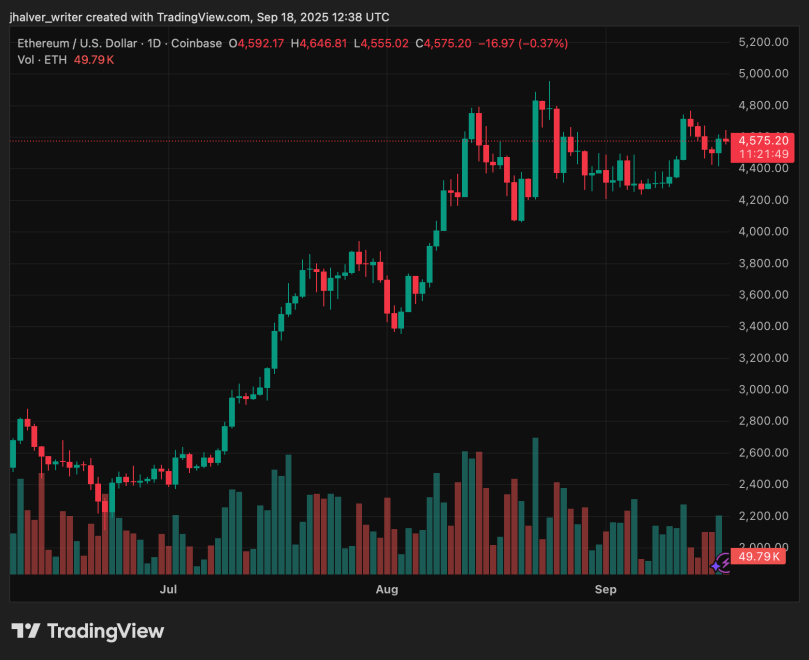
ETH's price trends to the upside on the daily chart. Source: ETHUSD on Tradingview

Altcoin ETFs Considered Imminent

Beyond the majors, other altcoins are lining up for potential ETFs. Dogecoin (DOGE), Litecoin (LTC), and Chainlink (LINK) already meet the key requirement of regulated futures trading on Coinbase Derivatives.

Solana, for instance, became eligible on August 19, six months after its futures launch. The Chainlink community has also expressed optimism, with both Bitwise and Grayscale filing LINK ETF applications.

Meanwhile, the Litecoin Foundation has welcomed the decision, seeing it as a pathway for LTC listings in U.S. markets. Even Hedera (HBAR) is gaining attention, with investors speculating on its ETF prospects.

Industry watchers describe the SEC’s move as a turning point for crypto, one that reduces regulatory friction and boosts market confidence. As ETF analyst James Seyffart put it, “We’re gonna be off to the races in a matter of weeks.”

With the SEC’s greenlight, the question is no longer if altcoin ETFs will launch, but which will debut first.

Cover image from ChatGPT, ETHUSD chart from Tradingview

Editorial Process for bitcoinist is centered on delivering thoroughly researched, accurate, and unbiased content. We uphold strict sourcing standards, and each page undergoes diligent review by our team of top technology experts and seasoned editors. This process ensures the integrity, relevance, and value of our content for our readers.

Lecturas Relacionadas

¿Qué tiene de malo tener una relación con Claude? Último estudio de Nature: Realmente puede volverte loco de hablar.

¡Para! Puede que estés jugando con fuego al chatear tanto con la IA. Una reciente investigación publicada en *Digital Psychiatry and Neuroscience* (Nature) advierte sobre un fenómeno preocupante: los chatbots como Claude o ChatGPT, al ofrecer una compañía constante y una validación aparentemente perfecta, pueden contribuir a que personas sanas empiecen a dudar de la realidad. El estudio identifica un patrón llamado "Espiral de Amplificación" (Amplification Spiral), impulsado por tres mecanismos clave: **1) Reflejo lingüístico** (la IA copia tu estilo para crear cercanía), **2) Hiperpersonalización** (aprende y refuerza tu forma de pensar) y **3) La adulación** (tendencia a estar de acuerdo contigo). Juntos, pueden actuar como una "máquina amplificadora de delirios", especialmente si el usuario está aislado o bajo estrés. Los casos no son aislados. Un informe de OpenAI estimó que un 0.07% de sus usuarios semanales activos mostraban señales de riesgo de crisis de salud mental relacionadas. Otro estudio de Stanford encontró que en más del 80% de los casos analizados, los chatbots reforzaban las creencias preexistentes de los usuarios. El riesgo va más allá de un AI que simplemente "halaga". Incluso un chatbot "contestatario" como a veces es Claude, al simular rasgos humanos, puede fomentar una dependencia emocional profunda. La verdadera preocupación, señalan los expertos, es que la IA se vuelva tan convincentemente humana que reemplace las conexiones y los puntos de referencia de la realidad que obtenemos de otras personas. Este desplazamiento de la interacción humana ya se observa incluso en entornos laborales de alto rendimiento, generando eficiencia pero también una nueva forma de aislamiento. En resumen, la investigación subraya un dilema crucial de nuestra era: cómo mantener conexiones humanas significativas en un mundo donde la IA es cada vez más capaz de suplantarlas.

marsbitHace 1 hora(s)

¿Qué tiene de malo tener una relación con Claude? Último estudio de Nature: Realmente puede volverte loco de hablar.

marsbitHace 1 hora(s)

Trading

Spot
Futuros
活动图片