XRP–ISO 20022 Narrative Is A ‘Complete Charade,’ Warns Ex-Ripple Developer

bitcoinistPublicado a 2025-08-13Actualizado a 2025-08-13

Resumen

A fresh flare-up over XRP’s oft-repeated “ISO 20022 compliance” claim is forcing a basic but consequential distinction back into view:...

Trusted Editorial content, reviewed by leading industry experts and seasoned editors. Ad Disclosure

A fresh flare-up over XRP’s oft-repeated “ISO 20022 compliance” claim is forcing a basic but consequential distinction back into view: Ripple, the private company that builds enterprise payment software, is not the XRP Ledger, the open, decentralized network that settles XRP transactions. The latest round was ignited by investor Jake Claver, who asserted that “before any other cryptocurrency, XRP prioritized… ISO 20022 compliance,” adding that “the network processes more than $434 billion in transactions every day,” and casting ISO 20022 as the bridge that will let Ripple “tokenize and transfer massive volumes of assets” across banking rails. Claver’s post went viral. It also drew a categorical rebuttal from Matt Hamilton, Ripple’s former Director of Developer Relations.

XRP–ISO 20022 Claims Debunked

Hamilton did not mince words. “XRP did not prioritise ISO20022 whatsoever. There is literally nothing in the XRP Ledger codebase or network that has anything at all to do with ISO20022. It has been entirely a charade perpetuated by scammers like yourself,” he wrote on August 12. The stark phrasing reprises a line he has taken for years against the meme of “ISO-compliant coins,” arguing that ISO 20022 is a financial messaging standard used by institutions—not a property a token can possess.

The pushback did not stop there. After another account claimed that “to be able to initiate [ISO 20022], [cryptocurrencies] need to have an API and only selected few have that API ready,” Hamilton agreed with the premise about messaging but drew the same boundary line: “Correct. And the XRP Ledger does not have that API.” When a separate user argued that Ripple is a member of the ISO 20022 standards community and uses the format on RippleNet, “primarily for ODL,” Hamilton replied that such interoperability belongs to Ripple’s software stack, not to the ledger itself: “RippleNet can work with ISO20022 compliant messages. But the XRP Ledger has no such functionality.”

Claver subsequently acknowledged that “the post should have said ‘Ripple’ in the first sentence,” accepting the core correction while defending the broader thesis that ISO 20022-aligned infrastructure can funnel value into crypto settlement layers. Hamilton wasn’t persuaded: “Replace ‘XRP’ with ‘Ripple’ and the tweet makes even less sense,” he countered, objecting to the leap from enterprise messaging alignment to claims about tokenization and XRP’s role by default.

Underneath the social-media heat is a definitional point the industry has struggled to communicate. ISO 20022 is an international methodology and data dictionary for financial messages—think payments, securities, trade, FX—that enables richer, structured, machine-readable payloads across banks and market infrastructures. It standardizes how messages are modeled and carried, not how value is represented on a blockchain. That is why standards bodies and market infrastructures—SWIFT for cross-border payments, central banks for high-value domestic rails—speak about ISO 20022 in terms of message schemas, migration timelines, and coexistence windows, not tokens.

That context also explains why Ripple’s corporate announcements reference ISO 20022 at the network-integration layer. Ripple joined the ISO 20022 Registration Management Group in 2020, billing itself as the first DLT-focused participant and positioning RippleNet’s single API and data model to interoperate with banks’ ISO-native flows. None of that turns  the asset into an “ISO-compliant coin,” because compliance, in this domain, attaches to message formats, systems integration, and operational processes.

None of this means XRP cannot be used in workflows that originate from ISO 20022-formatted instructions. Hamilton himself has repeatedly said anyone can make payments on the ledger, and that RippleNet can translate ISO 20022 messages into whatever internal calls are needed to orchestrate settlement, including ODL-style flows that source and settle liquidity with the token. What he objects to is the rhetorical shortcut that collapses corporate messaging compliance into token-level attributes, particularly when it is leveraged to imply privileged regulatory status or inevitable valuation upside.

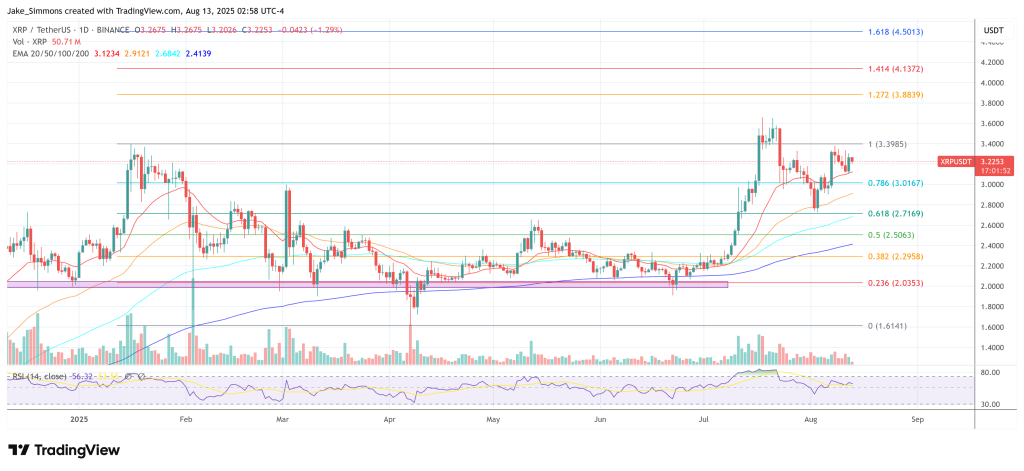
At press time, XRP traded at $3.22.
XRP price
XRP bounces from the EMA20, 1-day chart | Source: XRPUSDT on TradingView.com
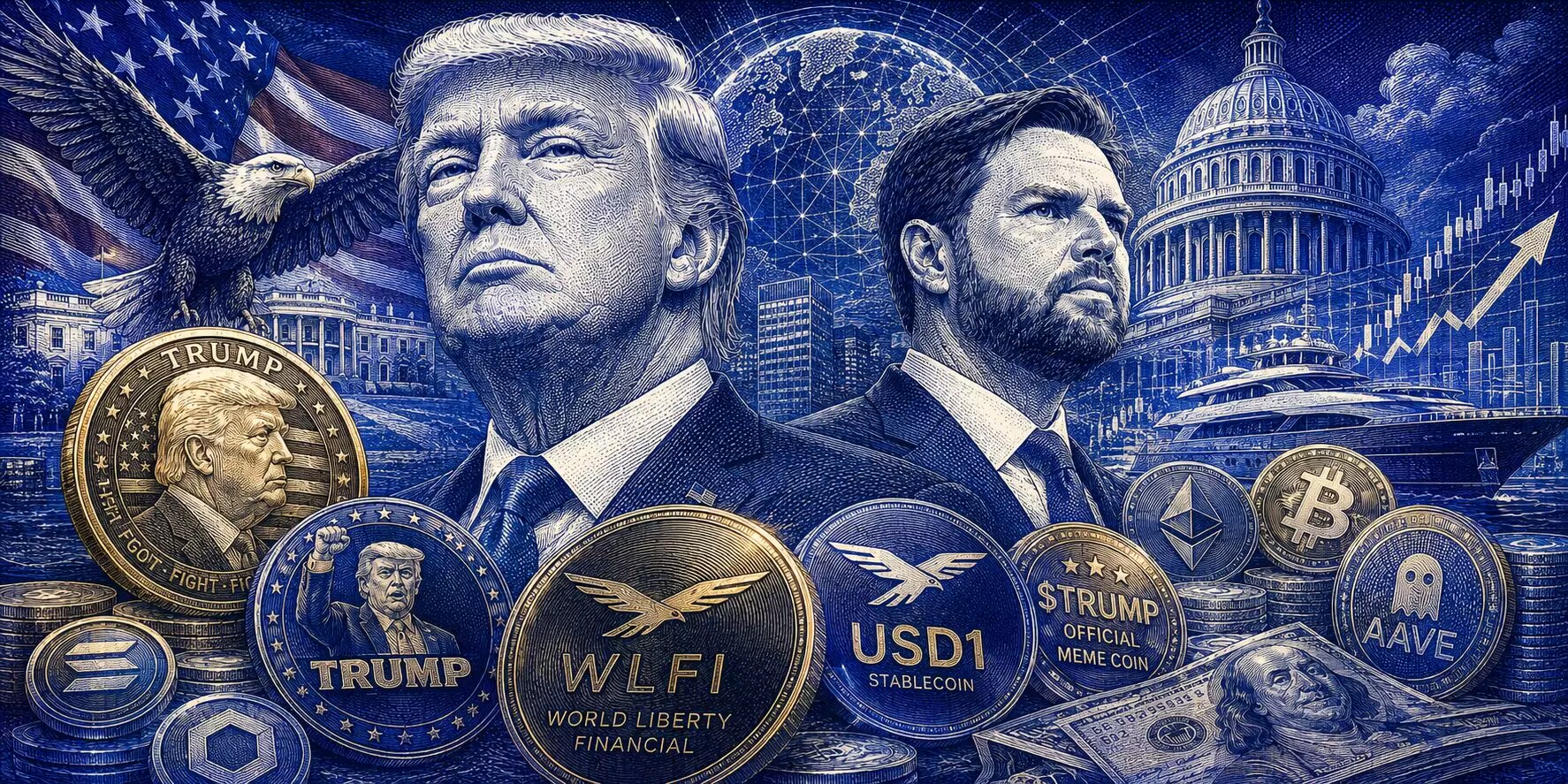
Featured image created with DALL.E, chart from TradingView.com
Editorial Process for bitcoinist is centered on delivering thoroughly researched, accurate, and unbiased content. We uphold strict sourcing standards, and each page undergoes diligent review by our team of top technology experts and seasoned editors. This process ensures the integrity, relevance, and value of our content for our readers.

Jake Simmons has been a Bitcoin enthusiast since 2016. Ever since he heard about Bitcoin, he has been studying the topic every day and trying to share his knowledge with others. His goal is to contribute to Bitcoin's financial revolution, which will replace the fiat money system. Besides BTC and crypto, Jake studied Business Informatics at a university. After graduation in 2017, he has been working in the blockchain and crypto sector. You can follow Jake on Twitter at @realJakeSimmons.

Lecturas Relacionadas

Guía de supervivencia en el mercado bajista de Web3: Diez libros que te ayudarán a atravesar el ciclo

**Guía de supervivencia en el mercado bajista de Web3: Diez libros clave para navegar los ciclos** El mercado de criptomonedas ha experimentado múltiples ciclos alcistas y bajistas. En los períodos bajistas, la industria se reconfigura y emerge fortalecida. Lejos de ser solo una espera pasiva, estas fases son un tiempo crucial para acumular conocimiento y profundizar la comprensión del sector. Esta lista de diez libros, que trascienden las finanzas para abordar historia, tecnología, filosofía y dinámicas de poder, ofrece una brújula intelectual para navegar la incertidumbre y construir resiliencia a largo plazo. Desde la visión a 10.000 días de Kevin Kelly sobre el futuro de la tecnología y las criptomonedas en *"2049: Posibilidades para los próximos 10.000 días"*, hasta la defensa filosófica de la acción humana de Ludwig von Mises en *"La Acción Humana"*, estos textos ayudan a consolidar la convicción y a entender las dinámicas subyacentes. *"La naturaleza de la tecnología"* de Brian Arthur explica cómo tecnologías como la blockchain evolucionan mediante la recombinación constante, mientras que *"El salvaje lejano"* plantea una reflexión sobre la cultura de dependencia frente a la iniciativa propia, crucial en Web3. *"El individuo soberano"*, visionario libro de 1997, anticipó la descentralización del poder y el auge de las criptomonedas. *"Mirando a Japón: Una guía de supervivencia para la era del declive"* muestra cómo incluso en economías en recesión existen oportunidades, una lección aplicable a los mercados globales de cripto. *"La desnacionalización del dinero"* de Friedrich Hayek sienta las bases teóricas para la competencia monetaria que Bitcoin encarna. La sabiduría práctica de *"Registro de inversiones de Duan Yongping"* recuerda la importancia de hacer "lo correcto" con disciplina. *"La profecía de Balaji"* de Balaji Srinivasan ofrece predicciones audaces y una visión de un futuro construido sobre blockchain. Finalmente, *"Obras Escogidas de Mao Zedong"* proporciona un marco estratégico para analizar luchas de poder a largo plazo, relevante para una industria disruptiva como Web3. Estos libros, en conjunto, no ofrecen atajos hacia ganancias, sino herramientas para cultivar la claridad mental, la fortaleza de convicción y una comprensión profunda necesarias para construir y perseverar más allá de los ciclos del mercado.

Foresight NewsHace 10 min(s)

Guía de supervivencia en el mercado bajista de Web3: Diez libros que te ayudarán a atravesar el ciclo

Foresight NewsHace 10 min(s)

De 'Agrupación de Direcciones' a 'Estándares de Evidencia': ¿Por qué Chainalysis busca redefinir el rastreo en blockchain?

Chainalysis ha publicado una propuesta titulada "Blockchain Tracing Ontology" para establecer un marco de datos unificado en el análisis de blockchain. El objetivo es superar la falta de estándares actual, donde diferentes plataformas ofrecen resultados contradictorios sobre la pertenencia de direcciones debido a algoritmos y reglas propietarias. En lugar de un nuevo algoritmo, la ontología propone un "lenguaje común" para describir los hallazgos de manera transparente, verificable y reproducible. El modelo introduce conceptos como "Wallet Segment" para reflejar mejor la gestión compleja de carteras institucionales. Su núcleo es un cambio de solo presentar resultados a documentar el proceso: cada conclusión debe incluir la evidencia en cadena utilizada, las reglas aplicadas, cualquier información fuera de cadena y un nivel de confianza. Esto es crucial para su uso en contextos judiciales, como se vio en el caso Bitcoin Fog, donde la metodología de Chainalysis fue sometida a escrutinio legal. Chainalysis enfatiza que el análisis on-chain no identifica identidades del mundo real por sí solo; se requieren datos off-chain para completar la evidencia. La iniciativa busca elevar los estándares de la industria, priorizando la calidad de los datos, la transparencia y la admisibilidad jurídica sobre la mera cobertura. Si es adoptada, podría facilitar la colaboración entre instituciones y autoridades, marcando una evolución hacia un análisis más riguroso y basado en evidencias.

marsbitHace 1 hora(s)

De 'Agrupación de Direcciones' a 'Estándares de Evidencia': ¿Por qué Chainalysis busca redefinir el rastreo en blockchain?

marsbitHace 1 hora(s)

Trading

Spot
活动图片