UK Crackdowns On Crypto Tax Evasion: Investors To Face Fines Starting 2026

bitcoinistPublicado a 2025-07-08Actualizado a 2025-07-08

Resumen

Ahead of the upcoming regulatory overhaul, UK authorities have introduced a new set of reporting rules to ensure crypto investors...

Trusted Editorial content, reviewed by leading industry experts and seasoned editors. Ad Disclosure

Ahead of the upcoming regulatory overhaul, UK authorities have introduced a new set of reporting rules to ensure crypto investors are not deliberately evading taxes, including fines for those who fail to comply with the new requirements.

Authorities To Address Tax Evasion

On Monday, the UK HM Revenue and Customs (HMRC) office announced that, starting January 2026, crypto holders will be required to provide personal data to their digital asset service providers to validate that they are not evading taxes.

The new rules, known as the Cryptoasset Reporting Framework, require crypto service providers to collect and report investors’ names, addresses, date of birth, tax residence, national insurance number or tax reference, and a summary of their crypto transactions.

Based on the collected information, the HMRC expects to identify those who haven’t been paying taxes on their crypto profits correctly and bring in money to fund vital public services, including frontline nurses, police, and teachers.

Investors who don’t comply with HMRC’s efforts to address non-compliance and tax evasion risk fines of up to £300, or around $409. Meanwhile, crypto service providers that fail to report the required information or submit inaccurate or incomplete reports could also be fined.

The initiative is estimated to raise up to £315 million, or $477 million, in tax revenue by April 2030, which could fund more than 10,000 newly qualified nurses for a year, the HMRC affirmed.

Additionally, they expect to align the UK with the international standard developed by the Organization for Economic Co-operation and Development (OECD), enabling tax authorities to share information across participating countries.

Member of Parliament and Exchequer Secretary to the Treasury James Murray affirmed that authorities are “going further and faster to crack down on tax dodgers as we close the tax gap and deliver on our Plan for Change.”

He considers that, “By ensuring everyone pays their fair share, the new crypto reporting rules will make sure tax dodgers have nowhere to hide, helping raise the revenue needed to fund our nurses, police and other vital public services.

UK’s Crypto Regulatory Overhaul

HMRC’s Director General for Customer Strategy and Tax Design, Jonathan Athow, noted that the upcoming rules aren’t a new taxation regime, as investors are already expected to pay the due tax if they make a profit when selling, swapping, or transferring crypto assets.

“These new reporting requirements will give us the information to help people get their tax affairs right,” he highlighted, urging crypto investors to have the required data to hand to help “avoid penalties in the future.”

The Tax authorities’ new requirements follow the UK’s financial watchdog efforts to establish a more comprehensive regulatory framework for digital assets starting next year.

In May, the Financial Conduct Authority (FCA) released a Discussion Paper on the features of the upcoming crypto regime as part of the financial authority’s crypto roadmap to expand from the current regime to a more comprehensive regulatory framework.

As reported by Bitcoinist, the FCA requested the public’s feedback on regulations related to trading platforms, intermediaries, staking, lending, borrowing, and decentralized finance.

Previously, the HM Treasury also published a draft and an explainer document detailing the intended policy outcomes of proposed provisions to establish a complete regime for digital assets.

The proposed rules are expected to bring exchanges, dealers, and agents into regulatory limits to crack down “on bad actors while supporting legitimate innovation,” and set clear transparency, consumer protection, and operational resilience standards, similar to traditional financial institutions.
Crypto, Bitcoin, BTC, BTCUSDT

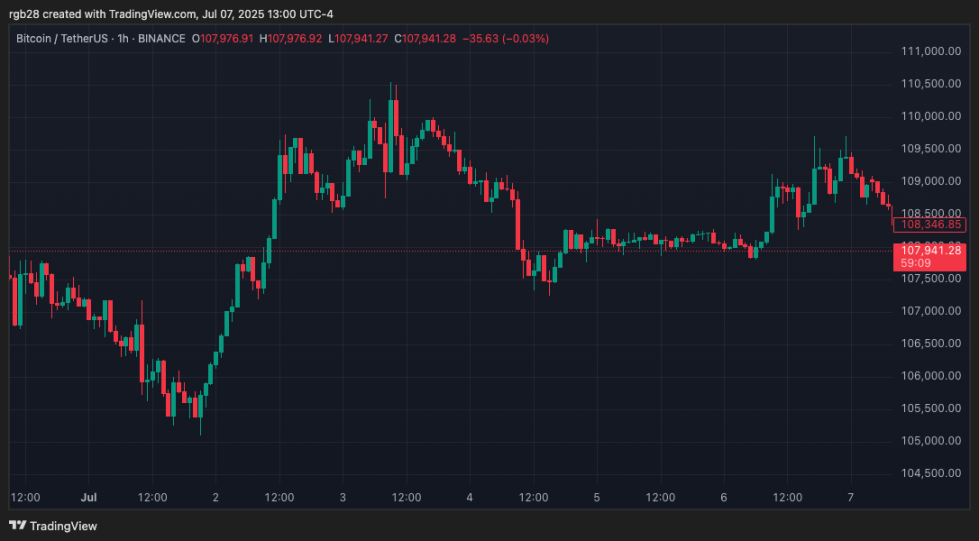
Bitcoin (BTC) trades at $108,941 in the one-week chart. source: BTCUSDT on TradingView
Featured Image from Unsplash.com, Chart from TradingView.com
Editorial Process for bitcoinist is centered on delivering thoroughly researched, accurate, and unbiased content. We uphold strict sourcing standards, and each page undergoes diligent review by our team of top technology experts and seasoned editors. This process ensures the integrity, relevance, and value of our content for our readers.

Rubmar is a crypto enthusiast who likes learning and improving constantly. She enjoys reporting on the latest news and developments in the crypto industry. Rubmar also enjoys scrapbooking, crafting, simulation games, and watching football.

Lecturas Relacionadas

Cuenta atrás para el Día-Q: ¿La computación cuántica acabará con las criptomonedas?

**Resumen: Cuenta atrás para el Q-Day: ¿Pondrá fin la computación cuántica a las criptomonedas?** La computación cuántica supone una amenaza existencial para la criptografía de clave pública (como RSA y ECC) que sustenta Internet y las cadenas de bloques. El algoritmo de Shor podría romper estos sistemas de forma eficiente. El "Q-Day", el momento en que esto sea factible, se estima entre 2030-2045. La criptografía post-cuántica (PQC), con algoritmos basados en retículos (lattice, como ML-KEM/DSA) o hashes (como SLH-DSA), es la solución. Estándares como FIPS 203-205 ya están definidos. La migración es urgente según la "desigualdad de Mosca": el tiempo de vida de los datos más el tiempo de migración debe ser mayor que el tiempo hasta el Q-Day. Para el ecosistema blockchain, el riesgo no es uniforme. Los activos en riesgo son aquellos cuyas claves públicas ya están expuestas en la cadena (por ejemplo, antiguas direcciones BTC no gastadas). La amenaza es una prueba de presión para sus pilares: libro de contabilidad público, transferencias irreversibles y autogestión de claves. **Bitcoin** se enfrenta principalmente a un desafío de gobernanza y consenso social. Migrar requiere un soft fork y lidiar con UTXO heredados de alto valor. Las firmas PQC son mucho más grandes, lo que impacta en el tamaño de los bloques y las tarifas. **Ethereum** aborda el problema con una hoja de ruta "Lean" y agilidad criptográfica. Utiliza la abstracción de cuentas (AA) para migrar firmas de usuario de forma gradual, y explora reemplazos para las firmas BLS de consenso (como leanXMSS con compresión SNARK) y para los compromisos de datos (KZG). La ventana para una migración coordinada de todo el ecosistema (protocolos, carteras, exchanges) es de 5 a 8 años. La computación cuántica no es un "arma del juicio final", sino un catalizador para una reconstrucción criptográfica. El mayor cuello de botella no es técnico, sino la compleja coordinación y gobernanza necesarias para una transición a tiempo.

marsbitHace 6 hora(s)

Cuenta atrás para el Día-Q: ¿La computación cuántica acabará con las criptomonedas?

marsbitHace 6 hora(s)

Cuenta regresiva hacia el Q-Day: ¿Pondrá fin la computación cuántica a las criptomonedas?

**Q-Day Cuenta Atrás: ¿Pondrá la Computación Cuántica Fin a las Criptomonedas?** La computación cuántica representa una amenaza existencial para las criptomonedas, ya que el algoritmo de Shor podría romper los criptosistemas de curva elíptica (ECC/ECDSA) que protegen las claves privadas. El "Q-Day", el momento en que un ordenador cuántico a gran escala logre esto, se estima entre 2035-2045. El riesgo es particularmente grave para activos en cadena cuyas claves públicas están expuestas (como antiguos UTXO de Bitcoin), que podrían ser drenados. La migración a criptografía post-cuántica (PQC), como los algoritmos basados en retículos (ML-KEM/DSA) o hashes (SLH-DSA) estandarizados por NIST, es urgente pero compleja. **Bitcoin** enfrenta un enorme desafío de gobernanza: migrar mediante un *soft fork* a direcciones PQC, lidiar con la expansión de las firmas (de ~70 bytes a varios KB) y decidir el destino de los UTXO heredados inactivos, un dilema entre la inmutabilidad y la supervivencia. **Ethereum** sigue una hoja de ruta "Lean" más ágil, utilizando la abstracción de cuentas para la migración de usuarios y explorando firmas basadas en hash (leanXMSS) comprimidas con zkVMs para los validores, junto con la renovación de sus capas de datos y compromisos. La conclusión es clara: la computación cuántica no es un apocalipsis instantáneo, pero inicia una cuenta atrás crítica. La ventana de acción cómoda es de 5-8 años. El mayor obstáculo no es técnico, sino de coordinación de todo el ecosistema y de consenso social sobre la gobernanza de los activos heredados, poniendo a prueba los principios fundamentales de Web3.

链捕手Hace 6 hora(s)

Cuenta regresiva hacia el Q-Day: ¿Pondrá fin la computación cuántica a las criptomonedas?

链捕手Hace 6 hora(s)

Trading

Spot
活动图片