Ethereum: To buy or not to buy?

AmbcryptoPublicado a 2022-06-11Actualizado a 2022-06-11

Resumen

Ethereum: To buy or not to buy? The third point might save your portfolio

Disclaimer: The findings of the following analysis are the sole opinions of the writer and should not be considered investment advice.

The entire cryptocurrency market is still reeling following the crash triggered by Terra UST‘s depegging fiasco. As explained in one of our earlier articles, even the flagship Bitcoin has been stuck in a narrow range ever since the crash and is showing no signs of any major recovery yet. And, Ethereum seems to be no different.

Dead price action

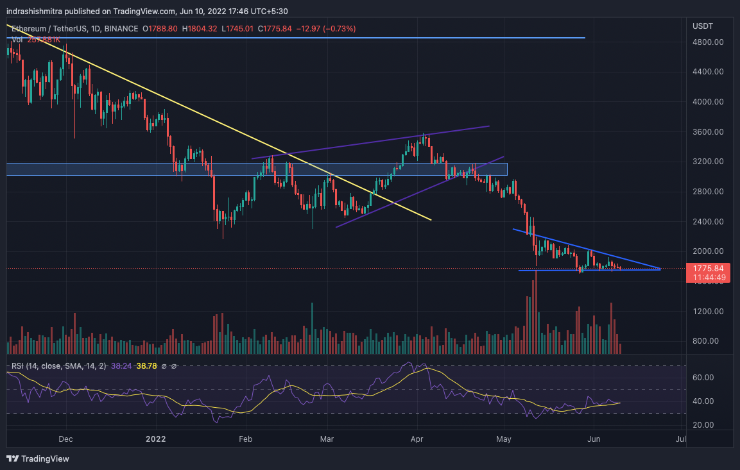
Technically speaking, there’s little to no chance of recovery in the short term for the top altcoin. In fact, a closer look at the last few weeks shows that it is currently in the process of jumping about in a descending triangle and a convincing breakdown below the bottom trendline can have catastrophic consequences.
It must also be noted that despite Ethereum blockchain’s Ropsten testnet’s successful ‘merge’ – moving from the PoW execution layer to the Beacon Chain’s PoS consensus chain on 8 June – it has had no effect whatsoever on the price (or optimism) regarding the coin.

Thus, even though there’s nothing wrong – ironically it seems, people are beginning to fear the market and especially its volatility.

Say whaa…?

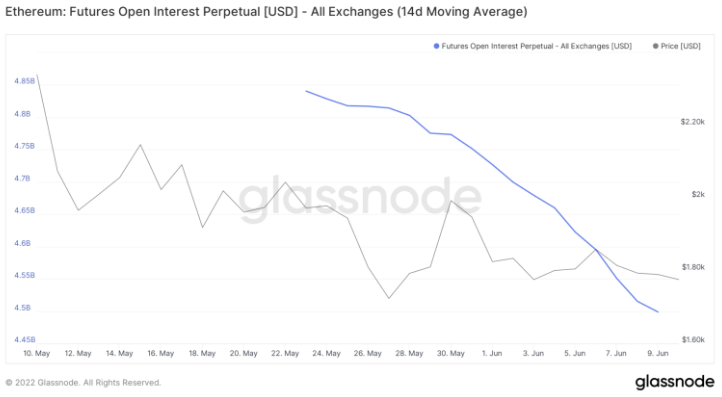
Yes, this could be one possible answer from a variety of reasons that could be behind Ethereum’s lackluster performance on the charts. For example, Ethereum Perpetual Futures open interest has been dipping over the past few days, ever since the beginning of June in fact.

It suggests that derivatives traders are cutting down their exposures to the asset fearing, most probably, on-coming volatility and mitigating some of the risks.
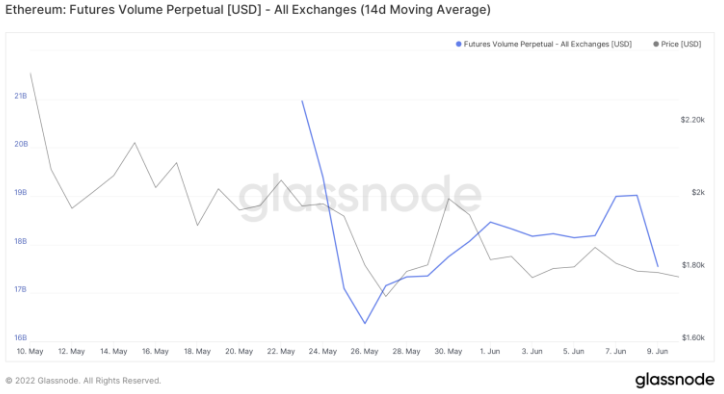
Along with that, Ethereum Perpetual Futures volumes have also been dipping, with a sharp dip between 8 and 9 June – further adding weight to the above view.
Not all’s bad

Despite the poor reaction of prices to the first successful merge on the Ropsten testnet, ETH 2.0 staking has been stable. Total deposits to the ETH 2.0 deposit contract have been holding very steady and are rising continuously – which provides much-needed support for the Merge and its eventual consequences.
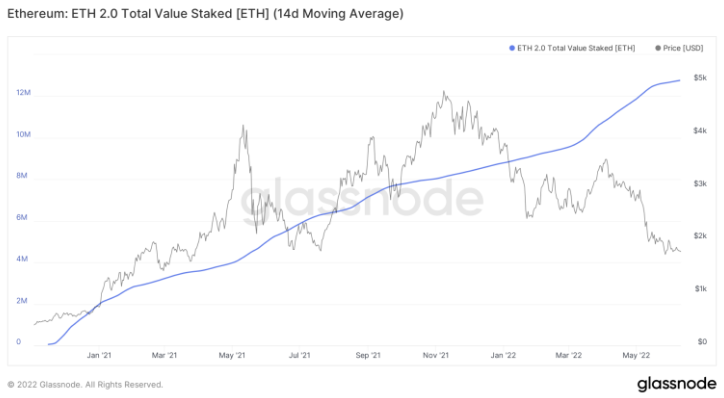
Along with that, despite the massive crash in the past few months, over 53% of the supply is still in profit. Therefore, a further fall triggered by a panic sell seems to be quite low. Unless of course, there is a major profit booking on major whale accounts.

Moreover, according to data from Glassnode, the percentage of circulating supply in profit, that is, the percentage of existing coins whose price at the time they last moved was lower than the current price.
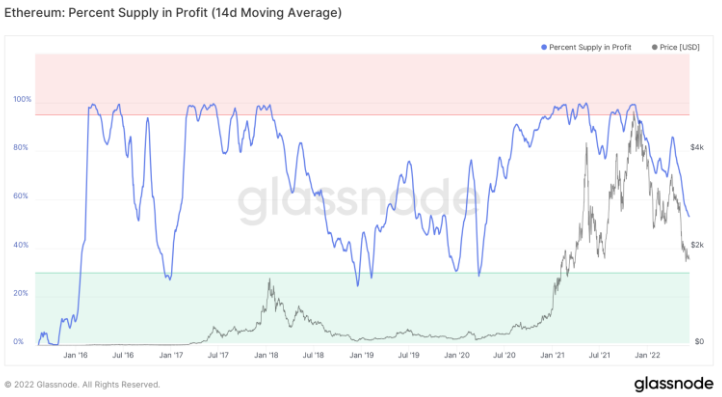
So, noting all the points above, Ethereum can be considered to be in a consolidation phase and buy-on-dips can be a foolproof strategy to abide by, going forward. But nevertheless, the possibility of further crashes cannot be ruled out amidst the impressively poor market sentiments all around.

Lecturas Relacionadas

94.000 millones de yuanes, la mayor financiación de este año para robots humanoides ha aparecido

La empresa de robótica humana Neura, con sede en Múnich, ha completado una ronda de financiación Serie C de 14.000 millones de dólares (unos 94.900 millones de RMB), lo que supone la mayor inversión del año en este sector. Tras la operación, su valoración alcanza los 70.000 millones de dólares. La relevancia de esta ronda radica en la participación de inversores industriales como Schaeffler y Bosch, lo que señala un cambio estratégico: el foco pasa de la demostración tecnológica a la implementación práctica en fábricas. Neura, fundada por el experto en robótica industrial Armin Zeher, ha priorizado desde el inicio la aplicabilidad en entornos de producción real, contando ya con BMW como cliente. Otros inversores como NVIDIA, Amazon y Qualcomm aportan perspectivas complementarias en infraestructura de computación, logística y tecnología. El sector de la robótica humana está experimentando una afluencia masiva de capital, impulsada por dos factores clave: los avances en modelos de IA de gran escala, que mejoran la percepción y la toma de decisiones de los robots, y la creciente presión por la escasez y el encarecimiento de la mano de obra en la manufactura global. Actualmente, las empresas siguen dos caminos principales: los robots humanoides de propósito general (como Figure AI), con un horizonte comercial a más largo plazo, y los enfocados en escenarios industriales verticales y específicos (como Neura), que ofrecen una ruta de comercialización más rápida y definida. El campo de batalla real para estos robots ya no es el laboratorio, sino el suelo de la fábrica. Los escenarios de manufactura industrial, por su entorno estructurado y tareas repetitivas, se consideran los primeros en permitir una adopción a escala. Los entornos de trabajo peligrosos también tienen un gran potencial. Sin embargo, los principales retos para la adopción masiva ya no son puramente técnicos, sino de ingeniería y modelo comercial. Destacan los elevados costes de adaptación a cada línea de producción específica y la necesidad de desarrollar sistemas de mantenimiento y servicio locales robustos para garantizar la operación continua. La entrada de gigantes industriales históricos como inversores y la presencia inicial de robots en fábricas como las de BMW marcan un punto de inflexión: la confianza del sector se consolida y la pregunta central evoluciona de "si es posible" a "cómo hacerlo mejor, más rápido y de forma más estable".

marsbitHace 2 hora(s)

94.000 millones de yuanes, la mayor financiación de este año para robots humanoides ha aparecido

marsbitHace 2 hora(s)

Trading

Spot
Futuros
活动图片