[Key interpretation] BTC long-term investors sold the latest evidence of loss, with a loss of more than 20%

Huobi ResearchPublicado a 2022-04-24Actualizado a 2022-04-28

Resumen

BTC's main force fled, and the sluggish trading pushed the market downward.

The latest evidence of BTC's main loss sale, with a loss of more than 20%

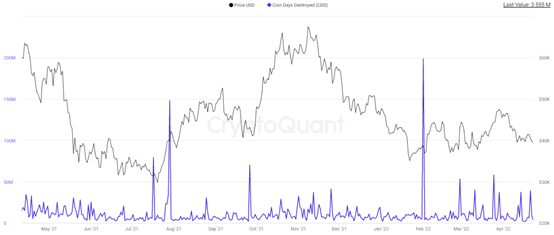
1. Number destroyed in currency per day: the number of BTCs transferred increases

From the data of BTC's currency destruction per day, after the most typical index rebound on February 1, 2022, the index frequently reached a high level, suggesting that the shipping intention of medium and long-term investors is increasing.

Numerically, the number of coins destroyed per day on February 1 was 198 million, while the next frequent and continuous peak number of coins destroyed per day could reach 21 million to 58 million. The peak scale of the value is the highest in one year, and the frequency of peak persistence is also high. It lasted as many as nine times in three months, which means that BTC's long-term investors are not optimistic about BTC's holding opportunities of more than $40000.
2. Long term investor SOPR: frequent profitable transactions

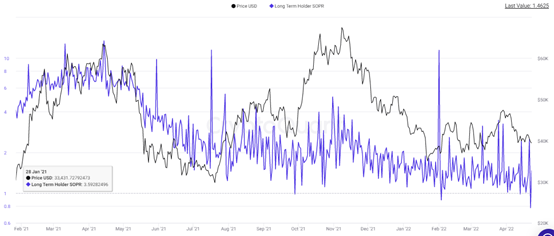
SOPR of long-term investors can prompt the profit trading situation of long-term investors, so as to reveal the change of selling pressure and the market trend of BTC price. Although the SOPR index value has been running around 1.5 since 2022, the peak share of SOPR has frequently reached around 3.5, which means that long-term investors with a profit of up to three times are trading BTC. It can be seen that long-term investors have secretly reduced their positions, which has exacerbated investors' bearish sentiment.

The most dangerous thing is that the trading of long-term investors is not only profit-making trading, but also rare loss trading. In other words, among investors who have held money for at least 155 trading days, the SOPR index of trading on April 22 was 0.776, which appeared for the first time since March 29, 2020. This shows that long-term investors change hands on BTC when they lose 22.4% (1-0.776), and the price will break a lot further.
3. Capital cost of BTC purchase: the financing cost is significantly withdrawn

The low financing cost of BTC has become the norm since 2022. As the BTC price continued to retreat, the BTC financing cost reached -0.009 on April 23, the lowest since January 29. This shows that there is no cost for financing to buy BTC. Buying BTC is easier to clinch a deal than selling, indicating that there is insufficient buying and the recent trend of BTC price is not optimistic.
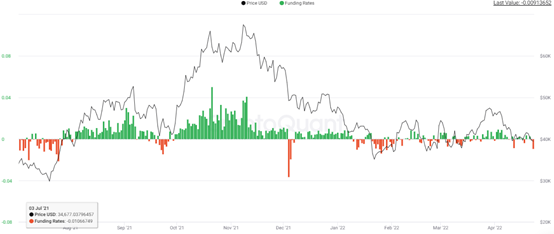
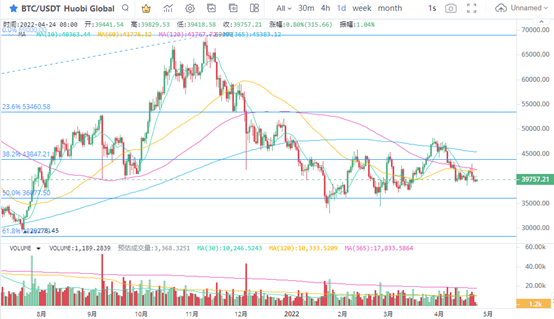
4. BTC daily K line: the trend below the cost price is low

Operating below the cost price of most investors in the past year indicates that the current trend of BTC is relatively low. Judging from the moving average, the average cost price of BTC is not only lower than the 365 day, 120 day and 60 day moving average, but also in the narrow range of US $41700 to US $45600. Since 2021, the price of BTC has been lower than the average price of US $3.65 million, which indicates that the overall price of BTC has been lower than the average price since 2023.
Lecturas Relacionadas

¡120 millones de dólares se esfumaron en una noche! El gigante más estable de las criptomonedas 'naufraga' en Sudamérica

El 25 de julio de 2025, la empresa estatal eléctrica de Uruguay (UTE) cortó la energía a una granja de minería de Bitcoin en Florida, propiedad de Tether, la emisora del mayor stablecoin del mundo. La instalación, con una inversión estimada de 120 millones de dólares, quedó inactiva, lo que resultó en el despido de 30 de sus 38 empleados. El proyecto, anunciado en mayo de 2023, aprovechaba la red eléctrica de Uruguay, compuesta en un 98% por energías renovables. Sin embargo, un conflicto sobre la interpretación del contrato de suministro eléctrico llevó al colapso. Tether entendía que la cantidad acordada era un mínimo, mientras que UTE la consideraba un máximo. El aumento de la demanda de energía de la granja provocó cortes frecuentes y pérdidas. Tras el cambio de gobierno en Uruguay en 2025, UTE adoptó una postura más firme. En mayo, la contraparte local de Tether, Microfin, dejó de pagar la factura de la luz. Aunque UTE preparó un nuevo contrato, Tether no asistió a la firma. Para el corte definitivo en julio, la deuda ascendía a casi 5 millones de dólares. Microfin saldó la deuda en diciembre. El caso subraya los riesgos de la inversión en activos intensivos en energía en el extranjero. Aunque la energía era verde, su costo en Uruguay no era necesariamente competitivo, una desventaja crítica tras la reducción a la mitad de Bitcoin en 2024. Además, los cambios en la administración pública pueden alterar la continuidad de las políticas, un factor crucial para proyectos a largo plazo.

marsbitHace 1 hora(s)

¡120 millones de dólares se esfumaron en una noche! El gigante más estable de las criptomonedas 'naufraga' en Sudamérica

marsbitHace 1 hora(s)

Blockchain Capital 合伙人:Tokenización remodelará la estructura subyacente del mercado de capitales

Aleks Larsen, socio de Blockchain Capital, argumenta que la tokenización revolucionará los mercados de capital al estandarizar la representación de activos, similar a como los contenedores transformaron la logística global. El problema actual es la fragmentación: cada activo (hipotecas, acciones, fondos) tiene registros y sistemas propios, lo que genera ineficiencias y altos costos al transferirlos entre instituciones. La tokenización resuelve esto al crear un contenedor digital estandarizado y legible por máquinas para los derechos financieros. Esto permite que plataformas, prestamistas y custodios interactúen directamente con el activo, sin necesidad de infraestructuras personalizadas. La analogía clave es la contenerización: antes de los años 60, el transporte de mercancías era lento y costoso. La estandarización del contenedor redujo drásticamente costos y tiempos, reorganizó toda la cadena de suministro y expandió masivamente el comercio global. Del mismo modo, los tokens son los "contenedores" de las finanzas. Los stablecoins ya demuestran este potencial, creando una red global eficiente para transferir valor. Este ecosistema ahora atrae otros activos tokenizados (bonos, materias primas, crédito privado), que superan los $400 mil millones. El cambio fundamental es que los servicios financieros comienzan a orbitar alrededor del *activo tokenizado* en sí, no de la relación del titular con una institución específica. Esto descentraliza el acceso y reduce barreras de entrada. A largo plazo, la tokenización puede crear un mercado de capitales verdaderamente global y accesible, donde el capital fluya hacia activos de valor previamente excluidos por su tamaño, ubicación o complejidad, impulsando una asignación de recursos más eficiente.

marsbitHace 1 hora(s)

Blockchain Capital 合伙人:Tokenización remodelará la estructura subyacente del mercado de capitales

marsbitHace 1 hora(s)

Trading

Spot
活动图片