Since its launch in 2018, Splinterlands’ success demonstrates the game’s potential and its huge appeal to gamers. As of April 12, Splinterlands ranked first in daily active users and averaged over 350,000 daily users, about 100,000 users ahead of the second place Alien Worlds.
In Splinterlands, players can participate in the game for only $10, which is a low barrier to entry compared to similar games. Players can earn income by playing games, trading cards, leasing and staking, and can quickly compete with other players to produce scarce and valuable NFTs.
Here’s how Splinterlands became so active in an industry where most projects struggle for regular users.
About Splinterlands
Splinterlands is a turn-based card battling game on the Hive chain.
Players have their own series of cards with different attributes and abilities, and they can combine different decks to play against other players, with each match taking only 2 to 3 minutes. After winning a battle, users are rewarded with cards and $DEC.
Cards can be used in battle, upgraded, sold or rented to other players, and rare cards have greater collector value.
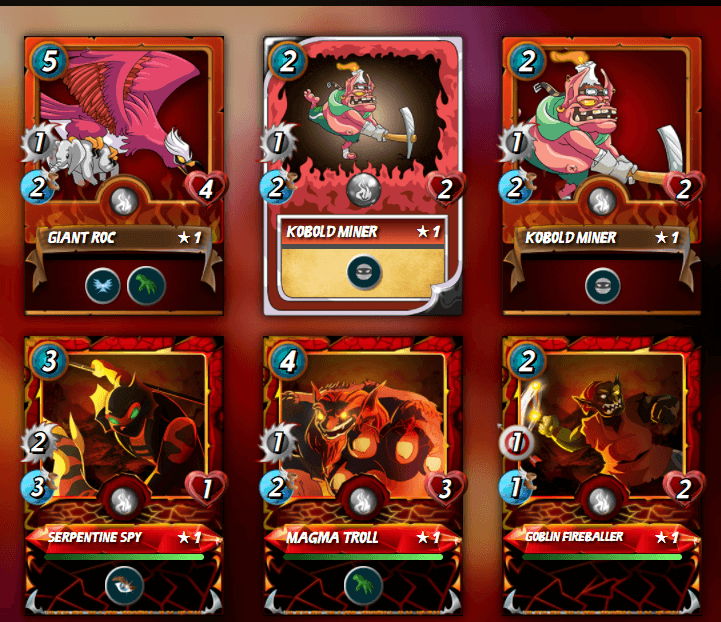
Screenshot Source – Splinterlands Website
According to Footprint Analytics, as of April 12, Splinterlands ranks number one with more than 350,000 daily active users, leaving the second, third titles far behind.
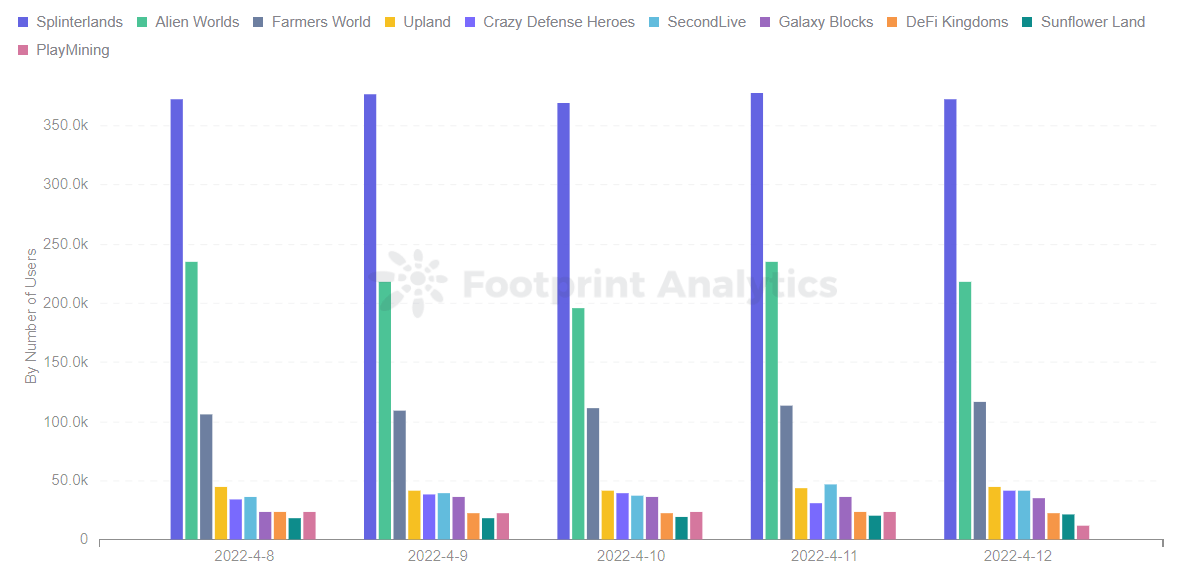
Footprint Analytics – Top 10 Games Ranking by Players(Latest 5 days)
Why is Spinterlands so Playable?
After July 2021, witness the unprecedented growth of Splinterlands as the trading card game becomes popular in the Metaverse. According to Footprint Analytics data, the number of users and transactions has gradually increased and stabilized.
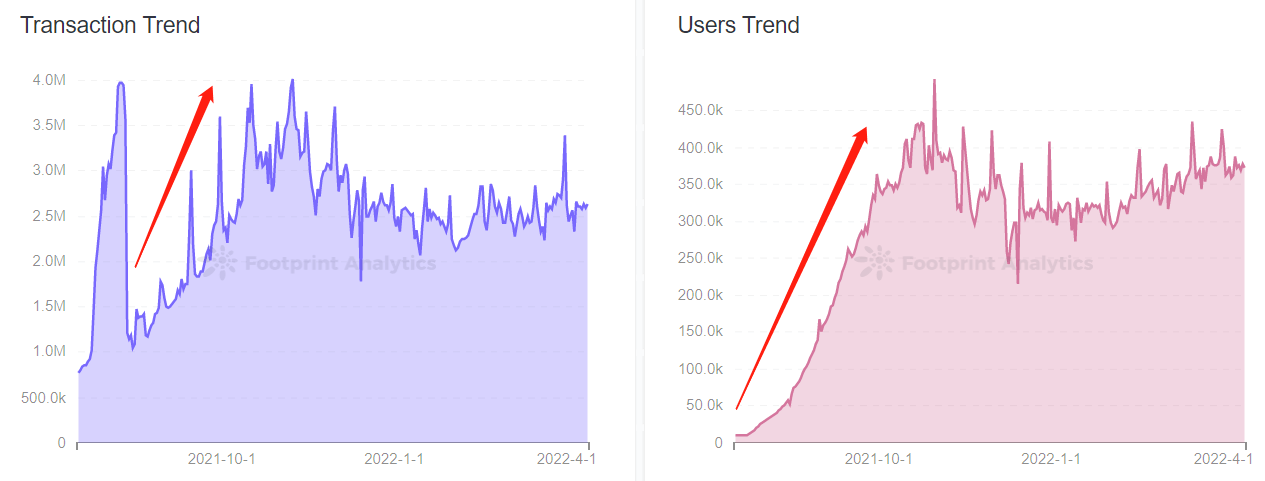
Footprint Analytics – Splinterlands Transaction Trend & Users Trend
Splinterlands single-handedly promoted the development of Hive, mainly due to the following factors:
Simple and varied gameplay
Splinterlands’ gameplay is simple and varied. The game has a low barrier to entry, with players needing only $10 to participate and the ability to earn in the game. Here’s how:
- Complete daily tasks to earn rewards. Winning five games as required will give you a chance to open a treasure chest with random rewards such as $DEC or cards. Currently, bronze (there are 6 league levels in the game, Bronze is the second level in the game league and the highest is the 6th championship level) can only open one treasure chest per day. The higher the level, the more rewards you can open to complete the task.
- Participate in qualifying. Players can get Dark Energy Crystals ($DEC) rewards by participating in ranked matches. But entry requires paying some $DEC as a ticket, and even beginners and seasoned players can improve their skills in qualifying.
- Sell cards. Each card is unique and can be traded on the marketplace. The higher the level of the card, the better the stats obtained; when the maximum value is reached, the card can gain special abilities.
- Card rental. After collecting a large number of cards, players can rent them out to other players to earn revenue, while still maintaining ownership of the cards.
- Pledge $SPS for proceeds.
- There are also land sales and land leases.
Therefore, every player who enters the game has a different goal, it can be earning money, entering a championship, league, collecting cards or just for fun.
Card NFTization
Splinterlands NFTs various cards to increase card liquidity, solving the problem that some card games do not allow players to trade or sell game assets to other players.
Fast battle speed, at only 2 to 3 minutes per game
Splinterlands has more room for innovation, such as the land-based metaverse world, supporting players to create guilds (the threshold for entering guilds is currently high, and you need to reach a certain point ranking to enter), building castles, and creating a more innovative metaverse space.
Splinterlands of Tokenomics
Splinterlands uses a dual coin model, with $SPS as the governance token and $DEC as the game token.
$SPS
$SPS is used as a governance token, whose value represents the value of the game. The role of $SPS is mainly for community governance voting, in-game rewards, and obtaining pledge rewards. The most influential one is the governance vote, where the holder pledges the $SPS token to participate in the vote and decide changes in the project.
According to Footprint Analytics data, the overall price of $SPS has not changed much in the past 3 months, hovering above $0.1.
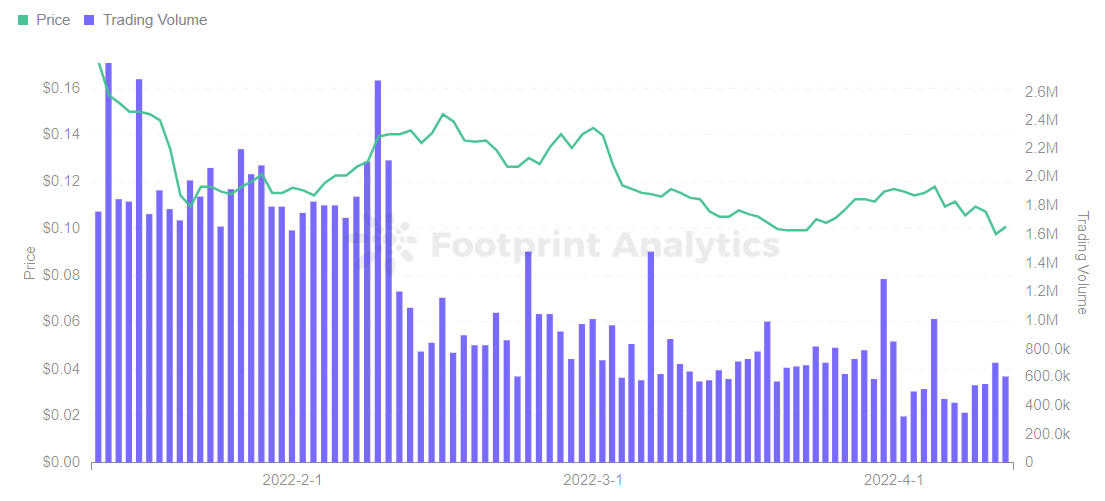
Footprint Analytics – $SPS Token Price & Trading Volume
From the market cap trend of $SPS, price fluctuations help the total market value of all its cards to increase or decrease.
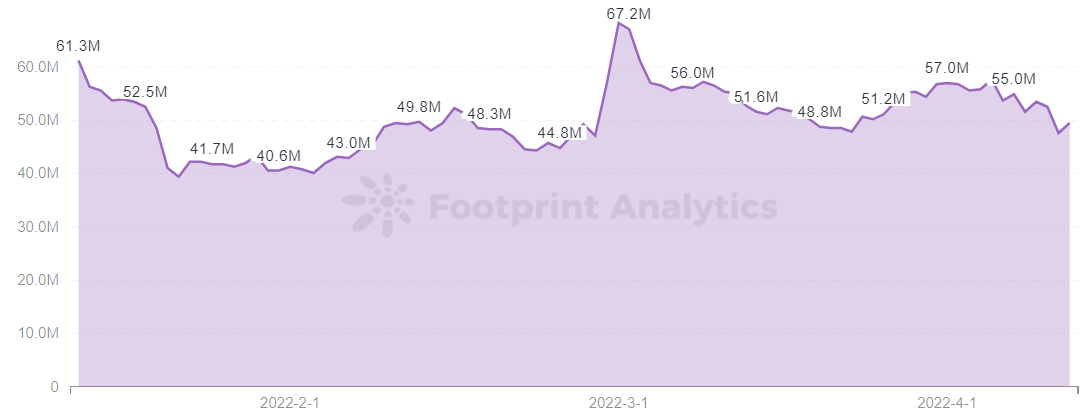

Footprint Analytics – $SPS Market Cap
$DEC
$DEC is mainly used for in-game purchases of various card packs, props, lands, improving personal rankings, etc. It is similar to Axie Infinity’s token $SLP. It can be obtained in the following two ways:
- By winning matches and completing missions.
- By purchasing it outside the game.
With $DEC, more cards can be purchased, thus increasing the player’s win rate in battle and gaining more rare cards and battle rewards.
Summary
Splinterlands has become the game project with the most active users in GameFi, having a low barrier to entry, simple gameplay, fast combat speed, and a unique reward system.