The developers of the Ether.fi protocol have eliminated the restaking function from weETH and moved it to a separate liquidity token — weETHs, built on Symbiotic.
We've officially taken all restaking exposure away from weETH
— ether.fi (@ether_fi) August 6, 2026
weETH is now a pure liquid staking token (LST)
All restaking has moved to weETHs, our liquid restaking token powered by @symbioticfi
One asset for staking. One for restaking. No bundled risk. pic.twitter.com/WHDGP5XkQc
The team has already withdrawn all restaking exposure from weETH. After the changes, the asset has become a token for traditional liquid staking.
Ether.fi believes that this separation will simplify the choice between basic staking and the additional option of restaking, which have different levels of risk and yield.
Previously, weETH holders simultaneously gained staking and restaking exposure. Restaking allowed using the same coin in various services and claiming additional rewards for locking it, but this also increased the risk of penalties and partial loss of the deposit.
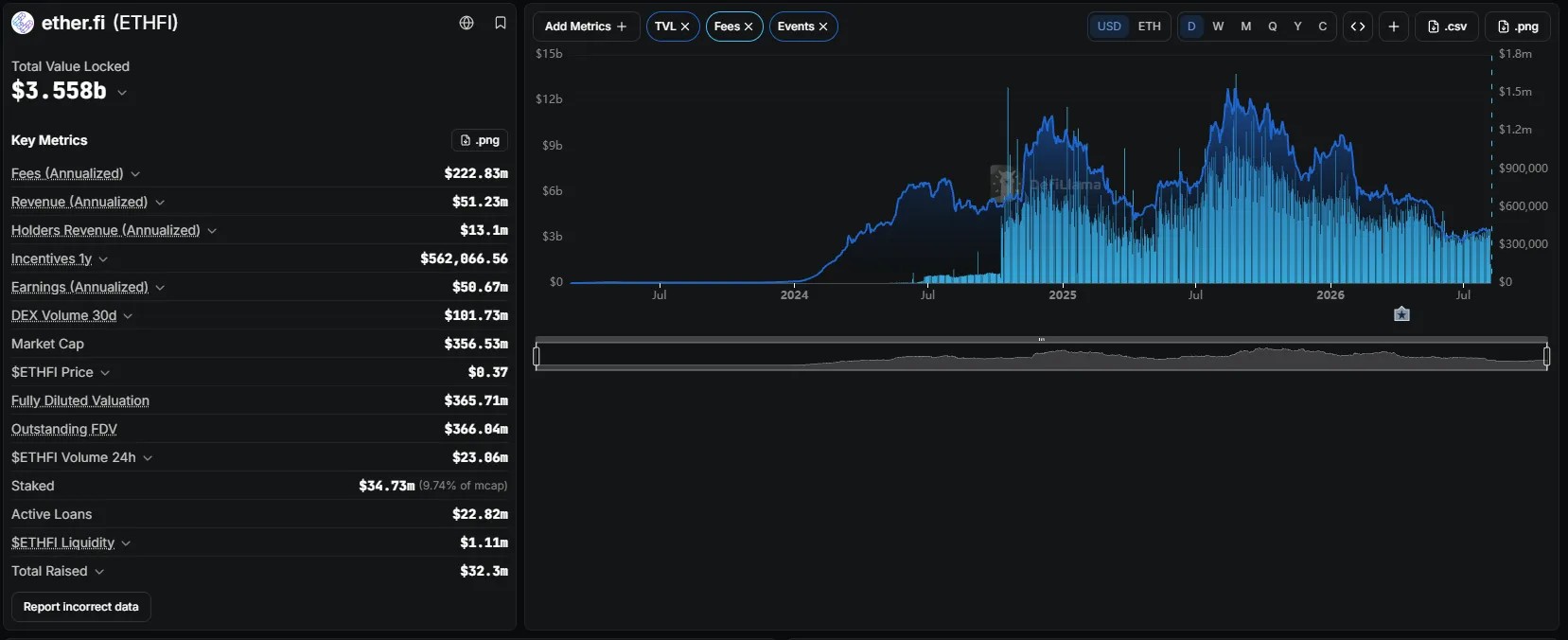
According to DefiLlama, at the time of writing, the total value locked (TVL) in Ether.fi is approximately $3.55 billion.
Ether.fi's decision may be related to a broader discussion about Ethereum staking rewards. In early August, a group of blockchain researchers and developers proposed changing the network's issuance policy by burning a portion of validator consensus rewards.
EIP-8363 suggests that as the share of $ETH in staking grows, the network will burn an increasingly larger portion of validator rewards for attestations, block proposals, and participation in the sync committee.
Ether.fi founder Mike Silagadze criticized the initiative. In his opinion, the proposal would harm small-scale stakers and products built around staking rewards.
Recall that in June, Ethereum Research proposed allowing validators to redirect up to 10% of their staking rewards to fund the ecosystem. The risks mentioned at the time also included the cartelization of validators, conflicts of interest between operators and $ETH holders, as well as excessive issuance.
end-content