Robinhood Layer 2 integration fuels 14% Uniswap price jump

ambcryptoPublished on 2026-07-03Last updated on 2026-07-03

Abstract

Uniswap has deployed its V2, V3, V4, and UniswapX protocols on the Robinhood Chain, a new Layer 2 network built by Robinhood Crypto, where Uniswap will serve as the automated market maker (AMM). The integration, aimed at programmatic and AI-driven ecosystems, sparked a 14.2% surge in the UNI token's price and an 81% increase in daily trading volume over 24 hours, buoyed by a broader 2.3% crypto market rally. Technical analysis reveals a contrasting long-term bearish trend. Despite the short-term bounce, the weekly chart shows UNI broke below the key $4 support level, which has now turned into resistance, with a recent swing low at $2.316 in early June. While the RSI has moved above 50, indicating momentum, the On-Balance Volume (OBV) has not recovered to June highs, suggesting a lack of sustained buying pressure. A Fibonacci retracement analysis places the current rally within a broader bearish structure. The liquidation heatmap shows a high concentration of leveraged short positions up to the $3.52 level, increasing the likelihood of a short-term price move towards $3.5. The analysis suggests traders could use a potential bounce to $3.5 or even $3.77 (the 78.6% retracement level) as a selling opportunity. The overall bearish bias remains intact unless UNI breaks above the $4.17 swing high. In summary, while the Robinhood news triggered a rally, it is viewed as a minor rebound within a dominant long-term downtrend.

Uniswap [UNI] announced that it has deployed v2, v3, v4, and UniswapX on the Robinhood Chain. This is a Layer 2 built by Robinhood Crypto, with Uniswap serving as the automated market maker [AMM].

The launch is geared toward programmatic, automated, and AI-driven ecosystems. This news has helped UNI token prices climb by 14.2% in the past 24 hours, and the daily trading volume has spiked by 81%.

The wider crypto market has made a 2.3% bounce in the past 24 hours, helping bolster short-term UNI sentiment. How much higher can this bounce go?

The pessimistic long-term view
Source: UNI/USDT on TradingView

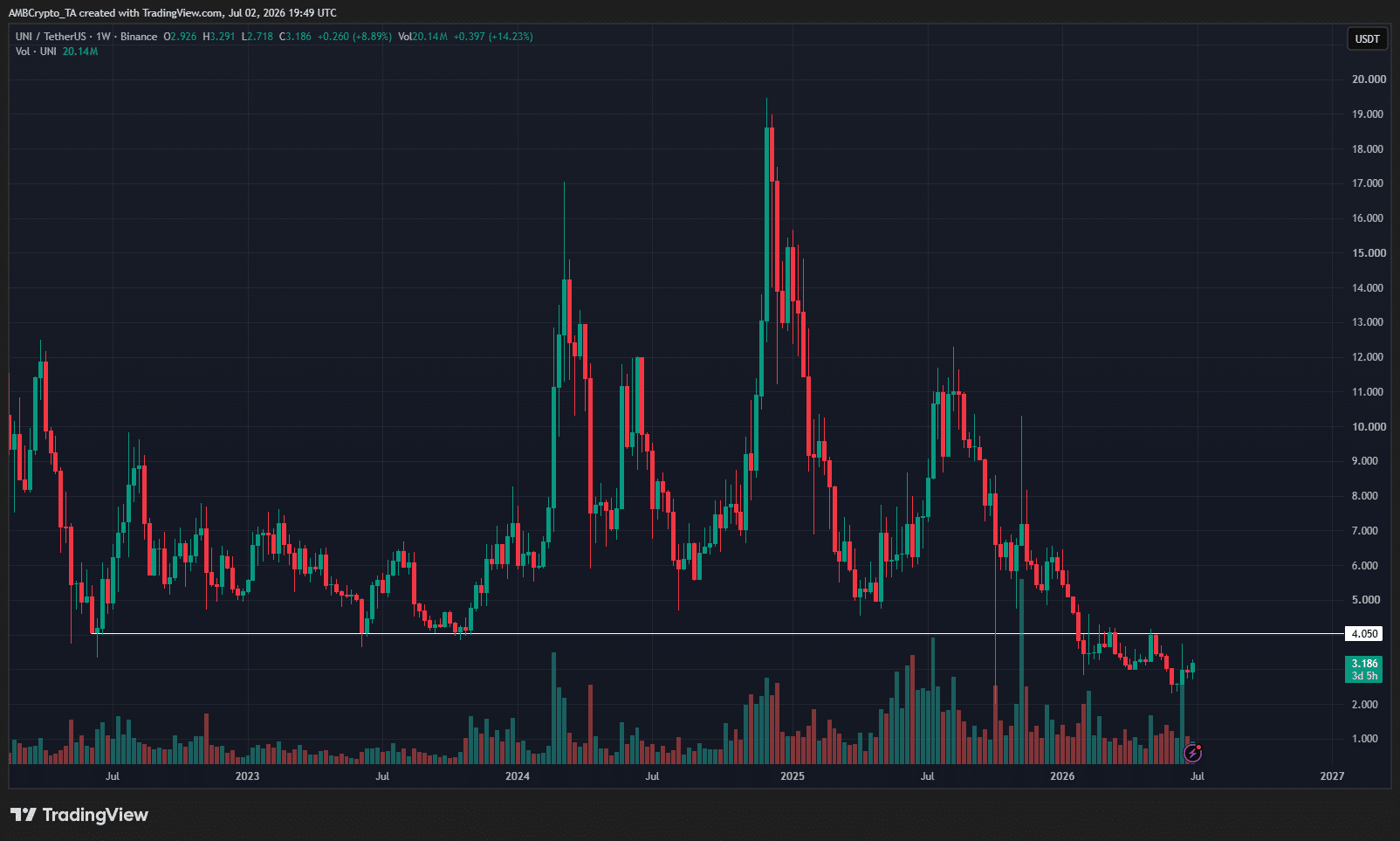
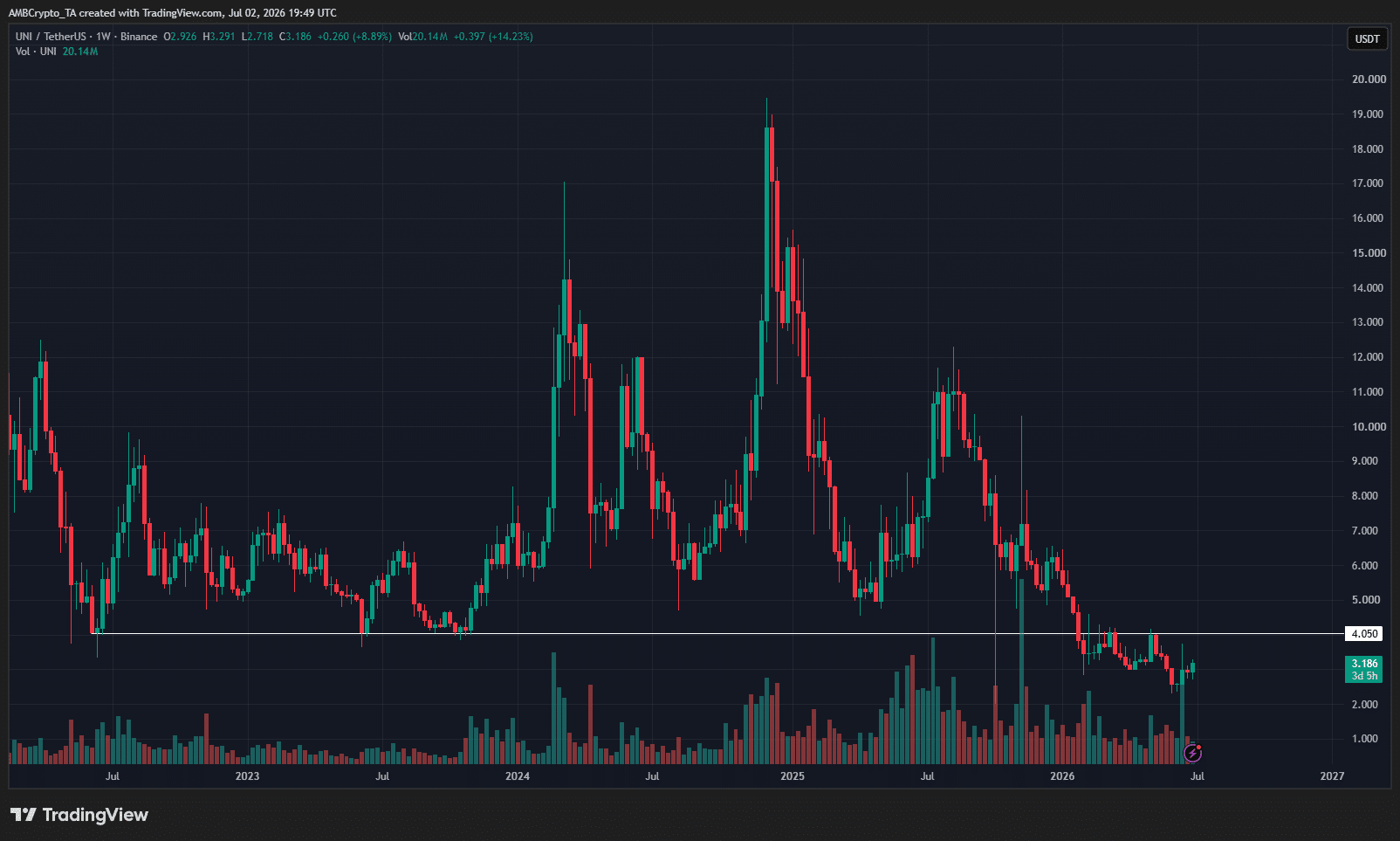
On the 1-week chart, the importance of $4 as a support was made abundantly clear. This level had been defended from June 2022 to January 2026.

Since then, the DEX’s governance token price slipped below this support and retested it twice as resistance. The latest Uniswap price move down to a swing low of $2.316, made in early June, highlighted the bearish long-term bias.
Source: UNI/USDT on TradingView

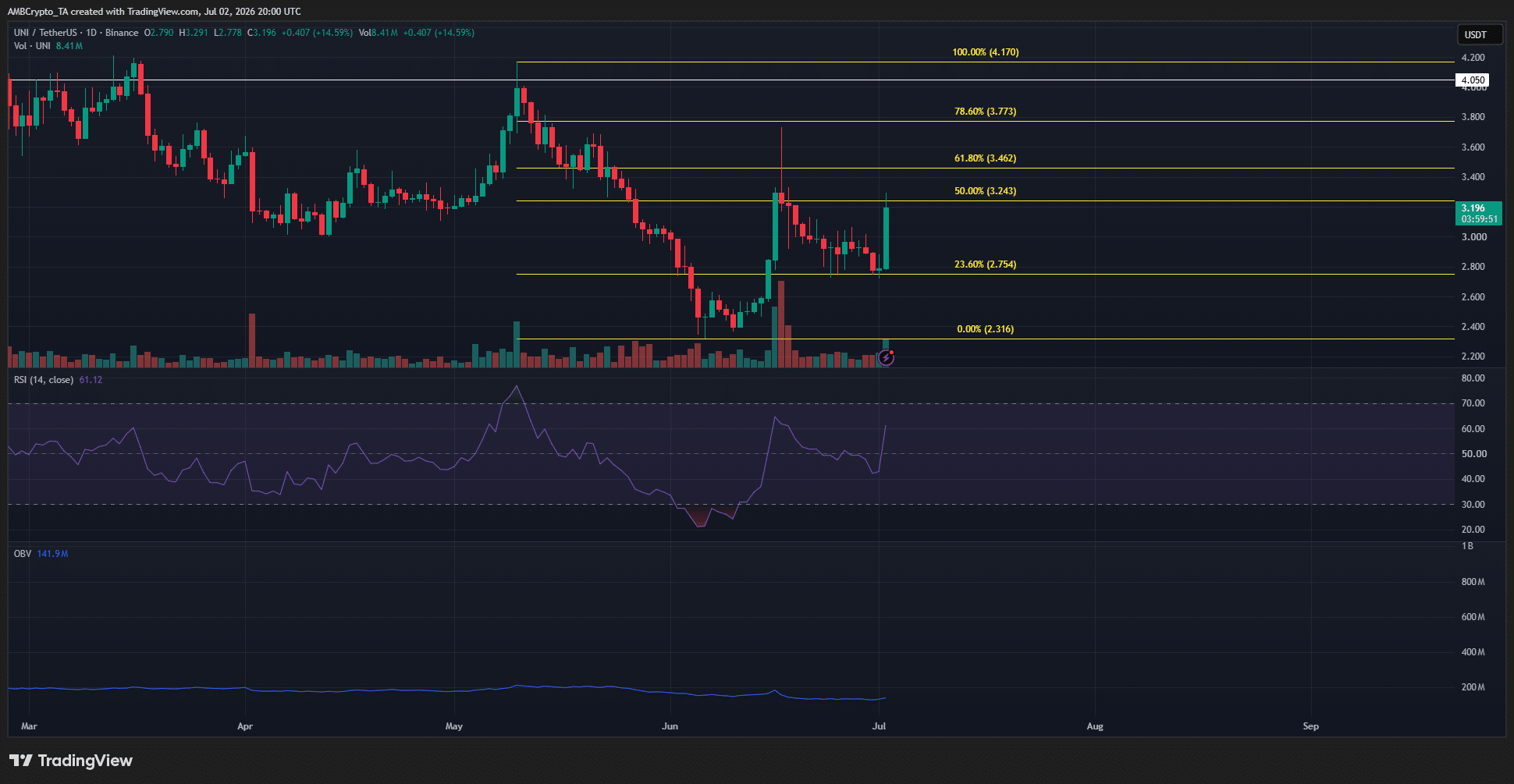
A set of Fibonacci retracement levels was plotted using this move downward. The current bounce was operating within the bearish swing structure. Though the RSI managed to cross over above neutral 50, the OBV was unable to approach the highs made in mid-June.

This indicated short-term upward momentum but a lack of sustained buying pressure amidst a longer-term bear trend.

Traders’ call to action- Sell the bounce
Source: CoinGlass

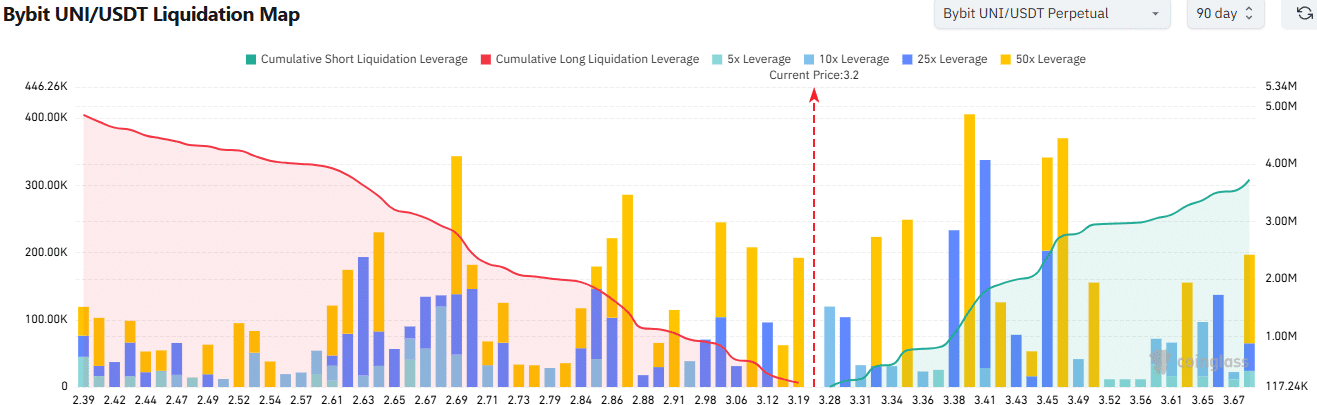
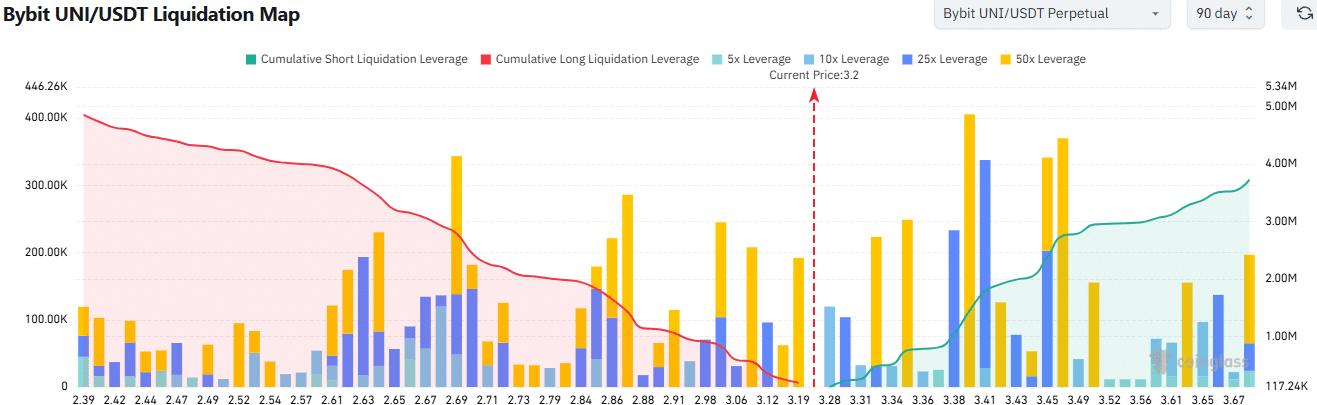
The liquidation map showed a larger cumulative short liquidation leverage piled up overhead, up to $3.52. With a few clusters of high-leverage short positions, the price move toward $3.5 appeared more likely in the short-term based on the chart above.

If Bitcoin [BTC] does not see a swift sell-off in the coming days, there is a chance of a UNI bounce toward $3.5.

Traders can use such a bounce to sell the token, although a move to the 78.6% retracement level at $3.77 can not be ruled out. Overall, swing traders can maintain their bearish bias till the $4.17 swing high is broken.


Final Summary

  • The Robinhood-Uniswap collaboration announcement, alongside a wave of respite across the wider crypto market, has made room for a UNI rally.
  • The long-term Uniswap price trend was severely bearish, and the current bounce was only a minor move within this downtrend.


Trending Cryptos

Related Questions

QWhat specific announcement was made regarding Uniswap and Robinhood, and what was its immediate impact on the UNI token?

AUniswap announced the deployment of its v2, v3, v4 protocols and UniswapX on the Robinhood Chain, a Layer 2 network built by Robinhood Crypto, where Uniswap serves as the automated market maker (AMM). Following this news, the price of the UNI token climbed by 14.2% and its daily trading volume spiked by 81% in the past 24 hours.

QWhat are the key technical analysis points presented to support the pessimistic long-term view on UNI?

AThe technical analysis points include: 1) The critical $4 support level from June 2022 to January 2026 was broken, and it has since acted as resistance. 2) The price made a recent swing low of $2.316, reinforcing a bearish long-term bias. 3) Fibonacci retracement levels suggest the current bounce is within a larger bearish swing. 4) The On-Balance Volume (OBV) indicator has not reached its mid-June highs, indicating a lack of sustained buying pressure despite short-term upward momentum.

QAccording to the liquidation map, what is a likely short-term price target for UNI, and why?

AA likely short-term price target for UNI is $3.5. The liquidation map shows a significant cumulative volume of high-leverage short liquidations clustered around the $3.52 level, making a move towards $3.5 more probable in the short term.

QWhat trading recommendation is given to traders in the article, and what is the condition for maintaining a bearish bias?

AThe article recommends traders to 'sell the bounce' if UNI moves higher, potentially using a bounce towards $3.5 or possibly $3.77 (the 78.6% Fibonacci retracement level) as selling opportunities. It advises that swing traders can maintain their bearish bias until the $4.17 swing high price level is broken.

QWhat two main factors are summarized as contributing to the UNI price rally?

AThe two main factors summarized as contributing to the UNI price rally are: 1) The announcement of the Robinhood and Uniswap collaboration. 2) A wave of positive momentum (a 2.3% bounce) across the wider cryptocurrency market, providing overall market support.

Related Reads

1600 Lines of Code Create an Underwater Manhattan, Fable 5 Leaves Karpathy Stunned

Title: Fable 5 Stuns Karpathy with 3D Worlds Built from 1600 Lines of Code An AI model, Fable 5, has demonstrated a remarkable leap in generating complex, interactive 3D worlds with minimal code. Showcased by Peter Gostev of Arena.ai, the model created 63 diverse 3D environments across themes like immersive cityscapes, explorable famous paintings, natural wonders, and cosmic phenomena. Many were generated in a single attempt. A standout creation is a detailed, submerged Manhattan built with only 1600 lines of Three.js code. Other highlights include traversable versions of Van Gogh's "Starry Night," a bear catching a salmon with realistic physics, and a split Red Sea. The model's ability to cohesively manage vast numbers of elements within a scene represents a significant technical advancement. Andrej Karpathy, who recently joined Anthropic's pre-training team, expressed amazement, particularly at how the model intuitively understood and rendered complex real-world interactions like a fish struggling when caught. He coined the term "fablemaxxing" to describe this qualitative leap. While Fable 5 excels at world-building, Gostev notes current limitations in creating engaging, long-form gameplay. The model also sometimes requires prompting to fully utilize its capabilities. Having topped the Agent Arena benchmark for real-world task completion, Fable 5 signals that the boundaries of AI-generated content are rapidly expanding, with its full potential yet to be discovered.

marsbit4m ago

1600 Lines of Code Create an Underwater Manhattan, Fable 5 Leaves Karpathy Stunned

marsbit4m ago

From ANSEM to CZ, The Celebrity Coin Relay Race Between Solana and BSC

The past week was a whirlwind of on-chain activity, sparked by the meteoric rise of $ANSEM, a Solana-based meme coin that surged 600x and hit a $100 million market cap in a single day. This rally began when crypto influencer Ansem announced his return to buying Solana meme coins and publicly advocated for an airdrop from the platform pump.fun. Ansem’s subsequent "soft claim" of the token—promising to airdrop creator revenue to followers—ignited a frenzy, drawing comparisons to past community-led token distributions. However, his dual role as a co-founder of the trading terminal Bullpen, which later hosted the $ANSEM airdrop, suggests a strategic promotional element. The narrative quickly shifted to "celebrity coins," where tokens named after influencers are sent to their public addresses in hopes of endorsement. While a similar coin, $TJR, briefly gained traction, it faltered after the influencer TJR urged focus back on $ANSEM. Attention then turned to projects Ansem endorsed and coins found in his wallet, like $manlet, but momentum on Solana began to stall. The action then migrated to BSC with the viral resurgence of a 2021 tweet from former Binance CEO CZ, referencing a "final form" bull. This sparked the explosive launch of $CZ, which briefly approached a $90 million market cap despite expectations that CZ wouldn't actively engage like Ansem. Another BSC token, $TCC, gained attention due to CZ's interactions with its promoter. The BSC ecosystem saw faster-paced, albeit volatile, "celebrity coin" plays, with tokens like $dingaling experiencing rapid pumps and dumps without official endorsements. Currently, BSC shows more momentum for new token launches than Solana, with the market awaiting a new narrative to succeed the fleeting "celebrity coin" trend.

marsbit14m ago

From ANSEM to CZ, The Celebrity Coin Relay Race Between Solana and BSC

marsbit14m ago

A Decade of Change: The Demise of Crypto Startups

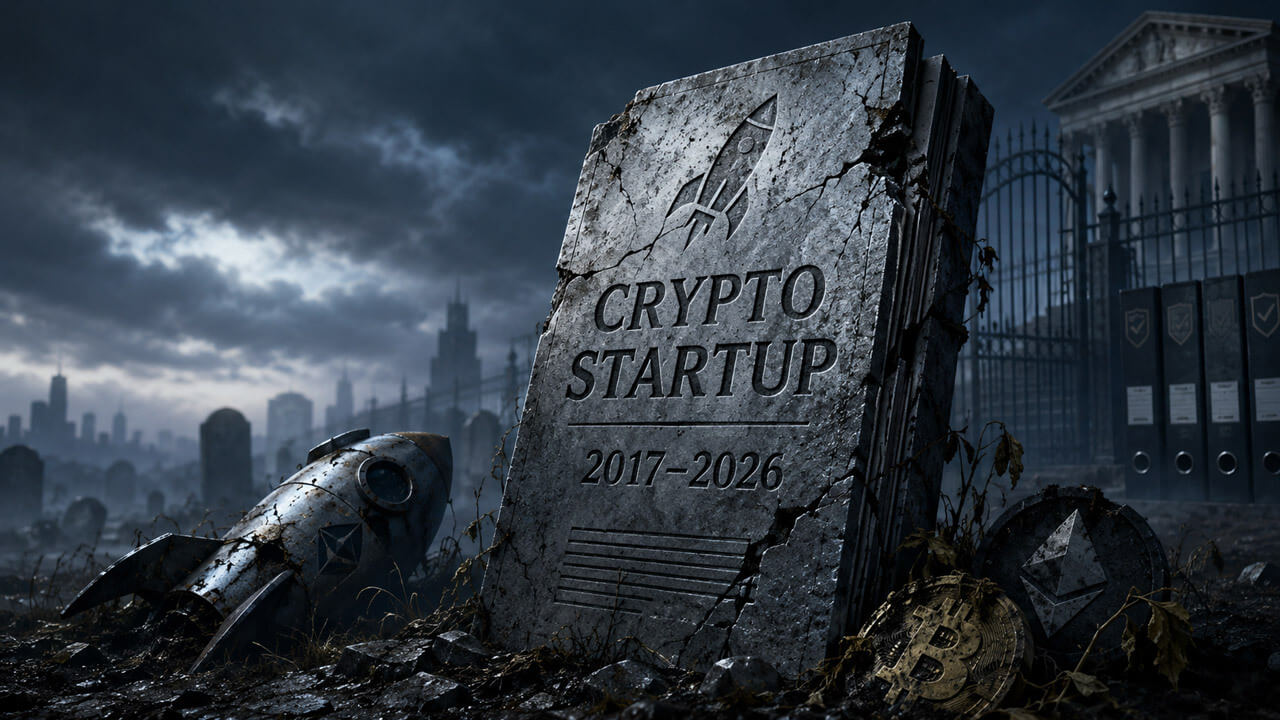
"The Decade-Long Transformation: The Demise of Crypto Startups" The article traces the dramatic evolution of the cryptocurrency industry from its anarchic beginnings to its current highly regulated and institutionalized state. In the early days (circa 2017), launching a crypto startup was remarkably simple: a whitepaper, a GitHub repository, and a Telegram group could attract thousands of retail investors via an Initial Coin Offering (ICO). Founders operated anonymously with near-zero regulatory and financial barriers, enabling rapid, global innovation but also widespread fraud. By 2026, the landscape is fundamentally different. To operate in major markets like the US, EU, and Asia, crypto businesses must now navigate a complex web of regulations akin to traditional finance. Compliance costs are prohibitive: estimates for a US multi-state operation range from $750,000 to $1.2 million in the first three years, with annual costs exceeding $2 million thereafter. Regulations like MiCA in the EU and New York's BitLicense have created high capital and operational hurdles that act as barriers to entry. Simultaneously, venture capital investment has shifted dramatically. Following the collapses of Terra and FTX, funding has concentrated in later-stage, established companies, creating a "barbell market." Early-stage and seed funding has shrunk significantly, while mega-funds like Andreessen Horowitz's $15 billion pool dominate. Most capital now flows to trading platforms, lending infrastructure, and B2B services. This environment favors mergers and acquisitions as the primary path for growth. Companies like Coinbase and Ripple are acquiring firms like Deribit and Hidden Road not for their technology, but for their licenses, banking relationships, and institutional trust—assets far more valuable than code. Distribution channels, compliance, and brand reputation have become the new moats, overshadowing pure technical innovation. The industry's maturation brings benefits: reduced scams, increased institutional participation, and clearer regulatory frameworks. However, it comes at a cost. The low-barrier, experimental ethos that defined crypto's first decade is fading. Entrepreneurs without substantial capital, pre-existing licenses, or institutional connections face immense challenges. Funding for exploratory fields like decentralized social media or novel governance models is drying up. Ultimately, the crypto industry is replicating the consolidation pattern seen in banking and tech after the 2008 financial crisis. While this brings stability and legitimacy, it raises a critical question: in this new, resource-intensive reality, is there still room for the disruptive, from-scratch innovation that gave birth to the sector?

Foresight News1h ago

A Decade of Change: The Demise of Crypto Startups

Foresight News1h ago

Trading

Spot

Hot Articles

Discussions

Welcome to the HTX Community. Here, you can stay informed about the latest platform developments and gain access to professional market insights. Users' opinions on the price of LAYER (LAYER) are presented below.

活动图片