The First Prediction Market Stock Has Emerged!

marsbitXuất bản vào 2026-06-15Cập nhật gần nhất vào 2026-06-15

Tóm tắt

"Prediction Market Unicorn Emerges!" While the World Cup drives record trading volumes in prediction markets, the industry leader Kalshi faces a new threat from a former key ally. In March 2025, Kalshi partnered with online broker Robinhood to offer prediction market services, allowing users to bet on events. This deal was mutually beneficial: Kalshi gained access to Robinhood's massive retail user base, with an estimated 25-35% of its volume coming through this channel, while Robinhood earned significant fees, reporting a 320% year-over-year increase in "other transaction revenue" to $147 million in Q1 2026, largely fueled by prediction markets. However, Robinhood's ambitions have grown. Recognizing that its user base and distribution power are the scarcest resources, it initiated a plan to bring operations in-house. In late 2025, Robinhood partnered with Susquehanna to acquire CFTC-regulated exchange MIAXdx, renaming it Rothera Exchange. By June 2026, Robinhood launched its own prediction market product on Rothera, strategically using the World Cup as a launchpad. Initial data shows Rothera processing tens of millions of contracts within days, directly siphoning volume away from Kalshi. This shift marks a pivotal moment: control is moving from the market infrastructure provider (Kalshi) to the entity controlling user distribution (Robinhood). The story illustrates a recurring internet era dynamic: "He who controls distribution controls everything." As more platforms with...

Author | Azuma (@Azuma_eth)

The flames of the World Cup have ignited, and the total global trading volume of prediction markets continues to hit new highs. However, as the industry leader, Kalshi may not be in the best mood at the moment.

The reason is not a fluctuation in Kalshi's own business data, but because Kalshi now "suddenly" faces another formidable rival after Polymarket, and this opponent was once its most important ally.
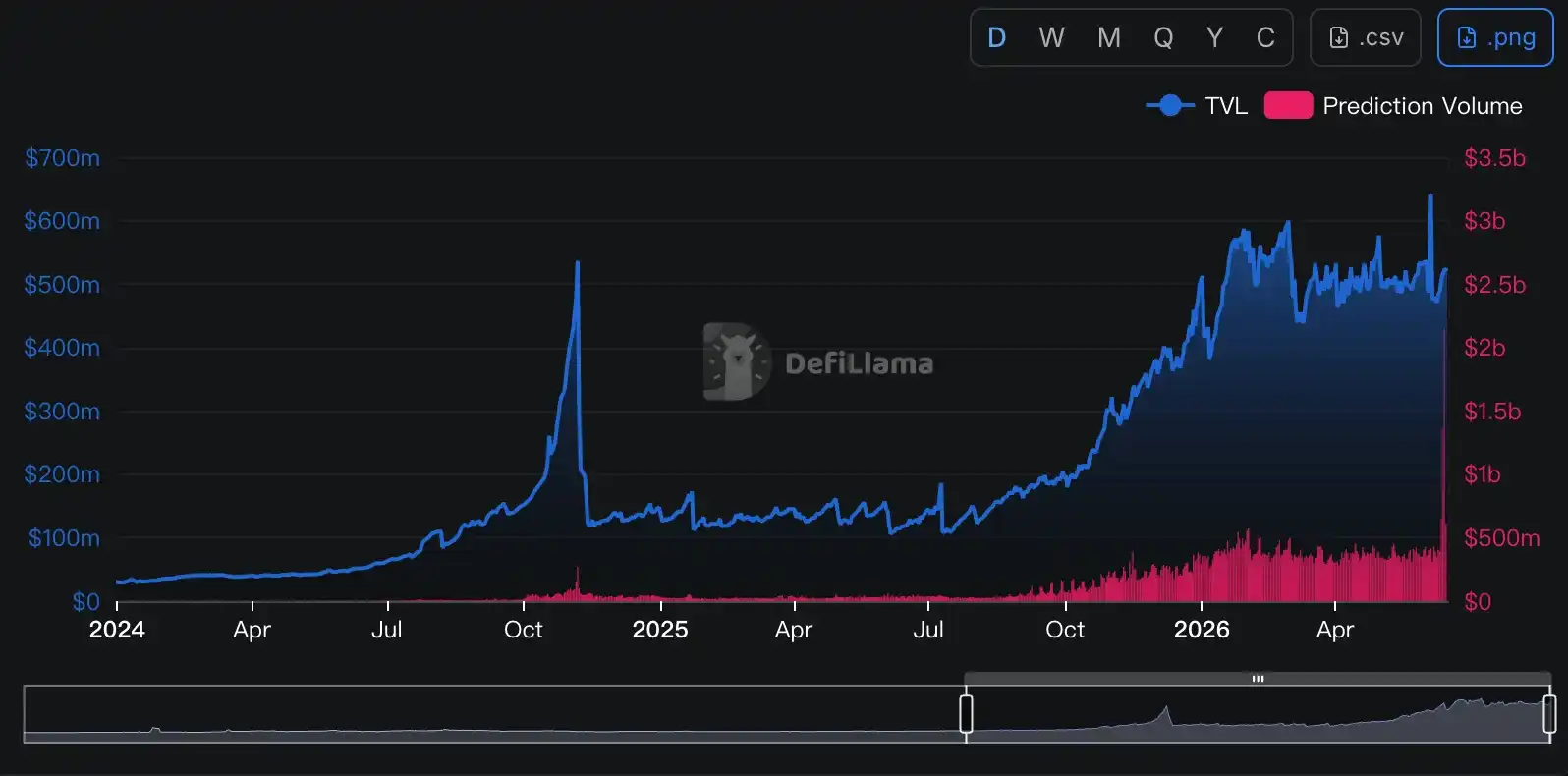
  • Odaily Note: Data sourced from Defillama.

Kalshi's Most Important Traffic Channel — Robinhood

Rewind to March 2025. At that time, Kalshi announced a partnership with the US online brokerage Robinhood. The latter would use Kalshi's services to provide its users with prediction market trading, allowing users to place bets on political, economic, sports, and other events.

From a business model perspective, this was a classic case of "mutual benefit" — Robinhood, responsible for user access and order flow distribution, could directly utilize Kalshi's mature product; Kalshi, responsible for the underlying market, matching, clearing, and regulatory compliance systems, could access Robinhood's massive pool of retail traffic.

The subsequent story proved the "win-win" outcome of this collaboration. Through Robinhood's channel distribution, Kalshi indirectly gained a massive amount of users and transaction volume. Piper Sandler analysts once estimated that "transactions completed through the Robinhood channel accounted for about 25%-35% of Kalshi's total trading volume." These orders ultimately translated into revenue for both parties — Robinhood charges an independent fee for all Kalshi event contracts traded through this channel, $0.01 per contract per side, and then shares the revenue with Kalshi (the specific split was not disclosed).
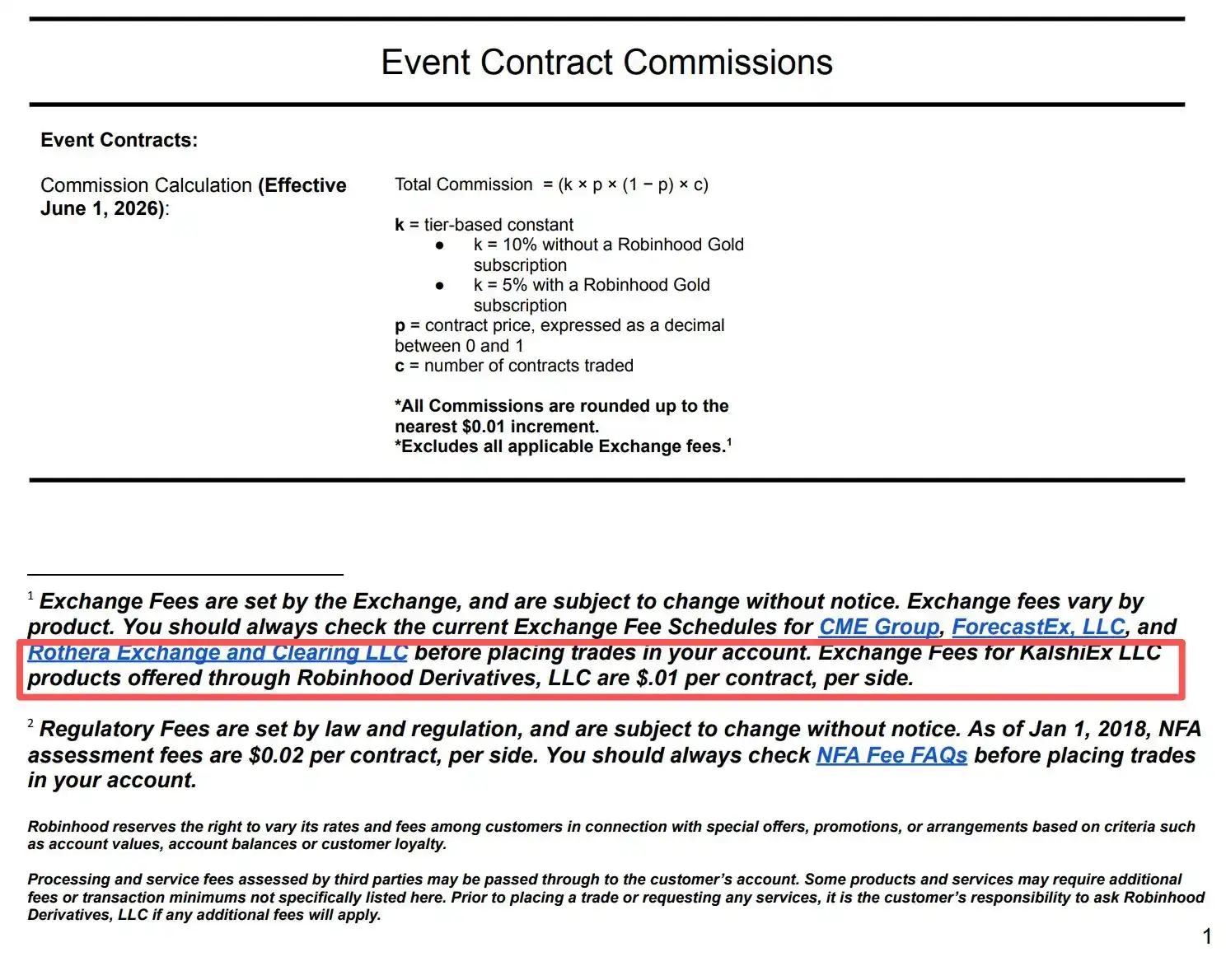
The Q1 financial report released at the end of April this year showed that Robinhood achieved trading of 8.8 billion event contracts in Q1, driving "other transaction revenue" to grow 320% year-over-year, reaching $147 million. Prediction markets have become the most eye-catching new growth engine in Robinhood's product line.

But recently, this relationship has undergone some subtle changes.

Robinhood's Ambition: Reclaiming the Cake Shared with Kalshi

As countless episodes in internet history have proven, when a channel gains sufficient influence, it is no longer content with just being a channel. Robinhood is no exception.

Although the cooperation with Kalshi also brought Robinhood considerable revenue, with prediction markets becoming one of the fastest-growing new businesses on the platform, Robinhood was no longer satisfied with the current revenue-sharing arrangement.

In their partnership model, Kalshi provided the market and infrastructure, while Robinhood provided the users and order flow. However, as the cooperation deepened, Robinhood gradually realized that what was truly scarce might not be the market itself, but the user access point it firmly controlled. After all, for most Robinhood users, they don't care whether their orders are ultimately executed on Kalshi or another platform — users only see a trading entry point within the Robinhood app, not the underlying infrastructure provider.

In other words, Robinhood always controlled one of the most critical resources in prediction markets — distribution power. If the users belong to Robinhood, why should the orders flow to someone else?

In fact, while Robinhood was quickly validating the demand for prediction markets with Kalshi, another Plan B was launched shortly after.

In November 2025, Robinhood announced the establishment of a joint venture with Wall Street quantitative trading giant Susquehanna, planning to acquire the CFTC-regulated derivatives exchange MIAXdx. According to the official statement, the joint venture would operate an independent futures and derivatives exchange and clearing agency in the future, with prediction markets being one of its key focuses. At the time, the outside world mostly viewed this as an infrastructure investment. However, with subsequent information disclosures, people gradually realized that Robinhood's goal was far beyond just finding a new partner for prediction markets.

In January 2026, the deal was officially completed. Robinhood and Susquehanna gained 90% control of MIAXdx, simultaneously acquiring a complete CFTC regulatory framework, including Designated Contract Market (DCM) and Derivatives Clearing Organization (DCO) qualifications. Subsequently, MIAXdx was renamed Rothera Exchange, and its clearing agency was renamed Rothera Clearing.

Thus, Robinhood now possessed the core elements needed to independently operate a prediction market. The only thing lacking was a mature product comparable to Kalshi's, but for Robinhood, with its rich experience in internet product development, this was clearly not a difficult task.

Rothera's Opportunity: The World Cup

In June 2026, after about six months of accelerated development, the Rothera product took shape, and Robinhood finally made the move that was almost destined to happen — gradually shifting orders that originally flowed to Kalshi into its own controlled system.

Robinhood specifically chose an excellent launch battleground for Rothera — the World Cup. For prediction markets, the World Cup is undoubtedly one of the most traffic-generating trading themes. Whether it's match outcomes, qualification results, or the ultimate champion, related markets can attract a large number of new users to trade in a short period. For Rothera's nascent platform, there is no better scenario for a cold start than the World Cup.

According to Robinhood's official disclosure, during this World Cup, which comprises a total of 104 matches, part of the event contracts will be directed to Rothera for matching and clearing, including markets for single World Cup match results, the ultimate World Cup champion, total goals in a single match, etc. Compared to the previous model that completely relied on Kalshi, this marks the first time Robinhood has directed prediction market orders into its own trading system on a large scale.
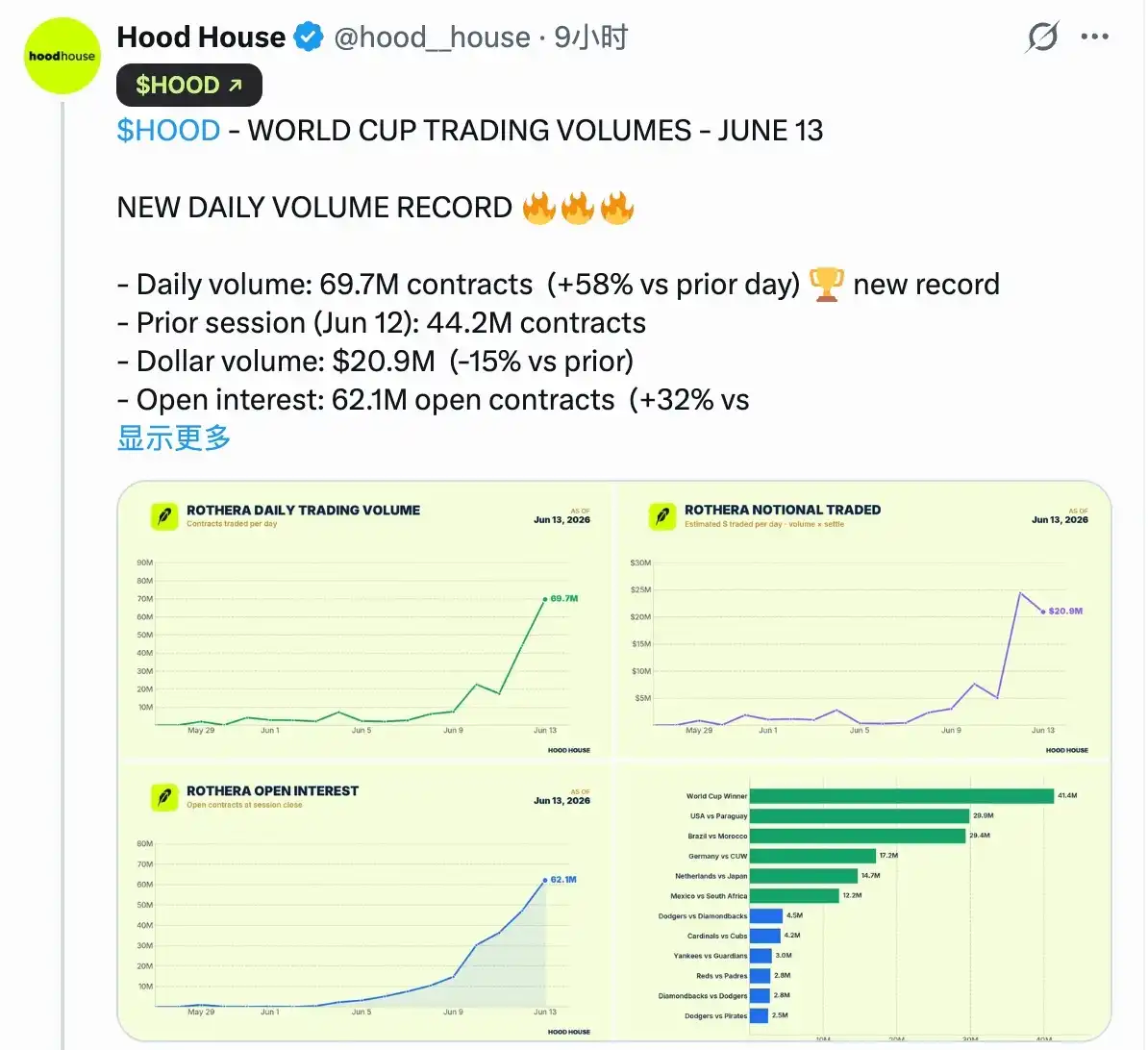
Judging by the results, Rothera clearly seized this opportunity. According to data disclosed by Hood House, a research-focused自媒体 tracking Robinhood's activities, on June 12th, Rothera completed 44.2 million contract trades, corresponding to approximately $24.4 million in dollar trading volume; on June 13th, Rothera completed 69.7 million contract trades, corresponding to approximately $20.9 million in dollar trading volume... Although these figures still lag behind Kalshi's popular markets, which often see hundreds of millions or even billions of dollars in volume, considering that Rothera has literally just launched a few days ago, this performance is sufficiently successful.

For both Robinhood and Kalshi, this means the balance of cooperation between them has begun to tilt. From Robinhood's perspective, the transaction fee revenue that previously had to be shared with Kalshi can now be retained more within its own ecosystem; from Kalshi's perspective, this means that one of its former most important growth engines has begun to show signs of weakening.

And the World Cup is clearly just the beginning of Rothera's encroachment on Kalshi. Looking further into the future, Robinhood will inevitably expand Rothera's coverage to more sports events, as well as economic and political themes. Those orders that originally flowed to Kalshi will then be intercepted one by one by Rothera.

Since Robinhood and Kalshi have never publicly disclosed their revenue-sharing ratio, we cannot know the exact value of this interception. However, considering that Robinhood alone generated $147 million in prediction market-related revenue in Q1, and with the World Cup in Q2 and the midterm elections later expected to bring even larger-scale trading activities, the annual value of this interception could reach billions of dollars.

Who Controls Distribution, Controls Everything

The drama of Robinhood and Kalshi moving from allies to rivals once again illustrates a logic repeatedly verified in the internet market — products are easy to build, traffic is hard to find; whoever controls distribution controls everything.

Over the past few years, the market generally believed that Kalshi's core moat came from regulatory licenses, exchange qualifications, and clearing capabilities. Therefore, whether it was brokerages like Robinhood or various media outlets, communities, and traffic platforms, they were essentially just Kalshi's channels and traffic inlets. However, the emergence of Rothera proves one thing: in today's market where products are highly homogenized, the product itself might not be the most important element. What remains truly scarce is always the users.

Where the users are, the liquidity is; where the liquidity is, the market will be. When Robinhood controls the access point to tens of millions of retail users, it has the full ability to direct these users to any trading venue. For users, they don't care whether their orders are ultimately executed on Kalshi or Rothera. As long as the experience isn't significantly different, it doesn't matter who is behind the matching and clearing.

If the theme of the prediction market industry in the past few years was the market competition between Polymarket and Kalshi, then the theme for the coming years might become a channel war. Robinhood incubating Rothera is, in essence, a reverse integration launched by the channel side towards the market layer. As more and more platforms with traffic inlets begin to recognize the strategic value of prediction markets, similar stories are likely to continue. Whether they are exchanges, brokerages, social platforms, or media platforms, all could become new gateways to prediction markets.

And when inlets begin to control markets, and channels begin to possess pricing power, the ultimate winner in the prediction market industry might no longer be the platform responsible for matching orders, but the one closest to the users, the one that best controls distribution.

It was true in the internet era, and it was true in the mobile internet era. This time, there are no exceptions either.

Câu hỏi Liên quan

QWhy is the article titled 'The First Stock of the Prediction Market Concept Has Appeared!'?

AThe title refers to the financial markets potentially viewing 'Robinhood' (HOOD), a publicly traded brokerage platform, as a stock heavily exposed to and benefiting from the growth of the prediction market industry. The article details how Robinhood, initially a distributor for Kalshi, has now built its own prediction market infrastructure (Rothera), positioning itself as a major player and capturing more value from this high-growth segment.

QWhat was the nature of the initial partnership between Robinhood and Kalshi, and why did it break down?

AThe initial partnership (March 2025) was symbiotic: Kalshi provided the regulated prediction market platform (licenses, matching, clearing), while Robinhood provided its massive retail user base and distribution. It broke down because Robinhood realized the scarcity and strategic value of its user access point. As prediction markets became a key growth driver, Robinhood wanted to capture more of the revenue by bringing the trading infrastructure in-house, leading it to develop its own platform, Rothera.

QHow did Robinhood build its own prediction market platform, Rothera?

ARobinhood built Rothera through a strategic acquisition. In November 2025, it announced a joint venture with Susquehanna to acquire MIAXdx, a CFTC-regulated derivatives exchange. The deal closed in January 2026, giving them a Designated Contract Market (DCM) and Derivatives Clearing Organization (DCO) license. MIAXdx was renamed Rothera Exchange/Rothera Clearing, providing Robinhood with the core regulated infrastructure to independently operate a prediction market.

QWhy did Robinhood choose the 2026 FIFA World Cup to launch Rothera?

ARobinhood chose the 2026 FIFA World Cup as the launchpad for Rothera because it is a premier, high-traffic event for prediction markets. Sports events, especially the World Cup, naturally attract a large volume of speculative trading on outcomes like match winners and champions. This provided Rothera with a perfect 'cold start' scenario to attract a surge of new users and generate immediate trading volume, proving the viability of their new platform.

QWhat is the core argument the article makes about the future of the prediction market industry?

AThe article argues that the future competitive landscape of prediction markets will shift from a 'market war' (between platforms like Polymarket and Kalshi) to a 'channel war.' The core thesis is that 'who controls distribution, controls everything.' The ultimate winners may not be the companies that build the trading engines (like Kalshi), but rather the entities (like Robinhood) that own the user interface, the customer relationships, and the primary access points, as they hold the power to direct traffic and capture value.

Nội dung Liên quan

Sự Ra Mắt Của Warsh: Chủ Tịch Fed Hiểu Crypto Nhất Lịch Sử Sẽ Mang Đến Bất Ngờ Hay Cú Sốc Cho Thị Trường?

Tân Chủ tịch Cục Dự trữ Liên bang Kevin Warsh, người được mệnh danh là chủ tịch FED "hiểu rõ về Crypto nhất trong lịch sử", sắp có buổi họp báo chính sách đầu tiên trong bối cảnh thử thách ba mặt: lạm phát quay trở lại, áp lực giảm lãi suất từ Tổng thống Trump và kỳ vọng thị trường về việc tăng lãi suất. Khác với người tiền nhiệm, Warsh có cái nhìn sâu sắc về tài sản số, từng coi Bitcoin như "cảnh sát tốt cho chính sách" và nhấn mạnh giá trị sản xuất của ngành công nghiệp blockchain. Tuy nhiên, ông cũng nổi tiếng là người theo chủ nghĩa diều hâu về lạm phát. Sự kết hợp giữa "lãi suất chặt chẽ" và "quy định thân thiện" từ ông có thể trở thành yếu tố cốt lõi định giá tài sản mã hóa. Bài viết phân tích tác động từ ba khía cạnh: 1. **Chuyển đổi khuôn mẫu kỳ vọng quy định:** Từ phòng thủ sang tích hợp và đổi mới, có thể thúc đẩy các khung pháp lý rõ ràng hơn, hỗ trợ ổn định do khu vực tư nhân phát hành. 2. **Định giá lại lộ trình lãi suất và phần bù rủi ro:** Một chủ tịch hiểu biết và giao tiếp rõ ràng có thể giảm bớt phí bảo hiểm bất định, có lợi về cấu trúc cho thị trường. 3. **Tái phân bổ dòng vốn toàn cầu:** Kinh nghiệm đầu tư cá nhân của Warsh truyền tải tín hiệu về sự chấp nhận chính thống, có thể thúc đẩy các quỹ thể chế truyền thống phân bổ tài sản số. Hai kịch bản chính được đưa ra: * **Ngạc nhiên thú vị:** Nếu Warsh thể hiện thái độ ôn hòa và công nhận giá trị của tài sản số, thị trường có thể được tiếp thêm sức mạnh. * **Cú sốc:** Nếu ông phát tín hiệu tăng lãi suất mạnh mẽ, tài sản rủi ro, bao gồm crypto, có thể chịu áp lực bán. Mặc dù Warsh đã bán các khoản nắm giữ liên quan đến crypto để tuân thủ quy tắc đạo đức, nhưng sự hiểu biết thực sự của ông về công nghệ blockchain được kỳ vọng sẽ đặt nền tảng cho việc chính thống hóa tài sản số về lâu dài, vượt ra ngoài các phản ứng thị trường ngắn hạn.

marsbit13 phút trước

Sự Ra Mắt Của Warsh: Chủ Tịch Fed Hiểu Crypto Nhất Lịch Sử Sẽ Mang Đến Bất Ngờ Hay Cú Sốc Cho Thị Trường?

marsbit13 phút trước

XRP Ledger Ra Mắt Rebrand XRPLd Cùng Với Bản Nâng Cấp Phiên Bản 3.2.0

Phiên bản 3.2.0 của XRP Ledger đã chính thức ra mắt, đánh dấu một bước nâng cấp quan trọng cho cơ sở hạ tầng blockchain cốt lõi. Lần này, các nhà phát triển đã đổi tên phần mềm vận hành mạng từ "rippled" thành "xrpld" để phù hợp hơn với toàn bộ hệ sinh thái của dự án. Bản cập nhật tập trung chủ yếu vào các cải tiến back-end và hiệu suất thay vì tính năng người dùng mới. Các tối ưu hóa bộ nhớ được giới thiệu có khả năng tiết kiệm tới 40% lượng bộ nhớ máy chủ, đồng thời chuẩn bị kiến trúc phần mềm cho việc mở rộng quy mô trong tương lai. Về mặt bảo mật, bản sửa đổi `fixCleanup3_2_0` mang lại nhiều cải thiện cho các mô-đun như kho lưu ký tài sản đơn, giao thức cho vay, sàn giao dịch phi tập trung và mã thông báo đa năng. Các kiểm tra bất biến mới được thêm vào để đảm bảo tính toàn vẹn của sổ cái khi tài khoản bị xóa. Một khả năng mới cho nhà phát triển là ứng dụng có thể truy xuất thông tin định nghĩa giao thức và máy chủ XRP Ledger mà không cần kết nối trực tiếp, hỗ trợ đáng kể việc phát triển ví, công cụ khám phá chuỗi khối và API. Các thay đổi về khả năng mở rộng và ổn định bao gồm kích thước khối có thể cấu hình, hỗ trợ lưu trữ cơ sở dữ liệu hiệu quả qua nuDB, và việc hỗ trợ máy chủ gRPC cho TLS/mutual TLS trở thành tùy chọn. Cổng kết nối ngang hàng mặc định cũng được đổi từ 51235 sang 2459. Các tính năng kiểm tra bất biến giao dịch tạm thời bị vô hiệu hóa trong phiên bản 3.2.0 do ảnh hưởng đến hiệu suất, nhưng không gây rủi ro bảo mật.

TheNewsCrypto43 phút trước

XRP Ledger Ra Mắt Rebrand XRPLd Cùng Với Bản Nâng Cấp Phiên Bản 3.2.0

TheNewsCrypto43 phút trước

AGI không phải là điểm kết thúc, nghiên cứu mới của DeepMind: Hướng tới ASI, tiến bộ AI thực sự mới chỉ bắt đầu

DeepMind mới đây công bố nghiên cứu cho rằng AGI (Trí tuệ nhân tạo phổ quát) không phải là điểm cuối. AI sẽ tiếp tục phát triển vượt qua khả năng của các nhóm chuyên gia con người hàng đầu, hướng tới ASI (Trí tuệ siêu nhân tạo). Báo cáo phân biệt ba khái niệm: AGI (năng lực nhận thức tương đương mức trung bình của con người), ASI (vượt trội con người trong hầu hết lĩnh vực quan tâm), và UAI (giới hạn lý thuyết tối thượng). Nghiên cứu đề xuất bốn con đường tiềm năng để chuyển từ AGI sang ASI: 1. Mở rộng quy mô tính toán, mô hình và dữ liệu. 2. Tiến hóa thuật toán, có thể thay đổi mô hình mới. 3. Tự cải thiện đệ quy, tạo phản hồi tích cực. 4. Điều phối đa tác tử và trí tuệ tập thể. Đồng thời, báo cáo chỉ ra sáu điểm nghẽn chính: giới hạn dữ liệu chất lượng cao, áp lực tài nguyên và kinh tế, hạn chế của mô hình mạng nơ-ron hiện tại, nghiên cứu ngày càng khó khăn, rào cản trừu tượng, cùng các vấn đề quản lý và phản ứng xã hội. Khi AI vượt con người, các phương pháp đánh giá truyền thống sẽ mất ý nghĩa. Cần xây dựng hệ thống đánh giá mới cho thời kỳ hậu AGI. ASI không phải là hệ thống toàn năng, vẫn chịu ràng buộc bởi các quy luật vật lý, độ phức tạp tính toán, dữ liệu, tài nguyên và tốc độ phản hồi thực tế. Tương lai phát triển của AI vẫn chứa nhiều bất định, đòi hỏi một nỗ lực liên ngành quy mô lớn để theo dõi và ứng phó.

marsbit1 giờ trước

AGI không phải là điểm kết thúc, nghiên cứu mới của DeepMind: Hướng tới ASI, tiến bộ AI thực sự mới chỉ bắt đầu

marsbit1 giờ trước

Kraken Ra Mắt Hợp Đồng Perpetual Trước IPO Cho OpenAI Và Anthropic Với Đòn Bẩy Lên Đến 5x

Kraken đã ra mắt hợp đồng tương lai vĩnh viễn (perps) tiền IPO cho hai công ty trí tuệ nhân tạo hàng đầu là OpenAI và Anthropic. Các hợp đồng này cho phép các nhà giao dịch đủ điều kiện mở vị thế mua (long) hoặc bán (short) đối với các công ty tư nhân được theo dõi sát sao này trước khi họ lên sàn chứng khoán, với đòn bẩy lên tới 5x. Sản phẩm này đánh dấu một bước tiến trong việc mở rộng cơ sở hạ tầng phái sinh tiền mã hóa sang các tài sản ngoài chuỗi, cung cấp cho các nhà giao dịch một cách tiếp cận thay thế để có thể tiếp xúc với các công ty tư nhân vốn thường khó tiếp cận. Tuy nhiên, hợp đồng tiền IPO có những rủi ro đặc thù. Khác với các hợp đồng vĩnh viễn cho tiền mã hóa có giá cả minh bạch, định giá công ty tư nhân phụ thuộc vào nhiều yếu tố như các vòng gọi vốn, giao dịch thứ cấp và kỳ vọng về thời điểm IPO. Điều này khiến việc định giá và quản lý rủi ro trở nên phức tạp hơn. Việc sử dụng đòn bẩy cao có thể khuếch đại lợi nhuận nhưng cũng làm gia tăng đáng kể rủi ro thua lỗ và thanh lý. Do đó, các nhà giao dịch cần hiểu rõ bản chất của sản phẩm mới và các rủi ro độc đáo của thị trường tư nhân trước khi tham gia.

bitcoinist1 giờ trước

Kraken Ra Mắt Hợp Đồng Perpetual Trước IPO Cho OpenAI Và Anthropic Với Đòn Bẩy Lên Đến 5x

bitcoinist1 giờ trước

Các giao dịch M&A trên thị trường tiền mã hóa đang diễn ra sôi động bất thường

Thị trường mua bán và sáp nhập (M&A) trong lĩnh vực tiền mã hóa đang trở nên sôi động bất thường. Theo số liệu từ RootData, trong tháng này, số vụ M&A đã lên tới 10, trong khi số vòng gọi vốn chỉ là 14. Tỷ lệ M&A trong tổng số giao dịch thị trường sơ cấp đã đạt khoảng 42%, mức cao nhất từ trước đến nay. Hiện tượng này phản ánh trước hết là sự suy giảm kéo dài của thị trường gọi vốn. Kể từ tháng 11/2024, số lượng giao dịch M&A hàng tháng duy trì ở mức 10-20 vụ, trong khi giao dịch gọi vốn giảm mạnh từ khoảng 100 xuống còn khoảng 50 vụ. Điều này có nghĩa là M&A không thay thế cho sự sôi động của thị trường vốn, mà trở thành hình thức giao dịch ổn định hơn khi thị trường vốn thu hẹp. Các công ty lớn như Coinbase, Kraken, Ripple, MoonPay... đang tận dụng thời kỳ giá trị định thấp để mua lại các đội ngũ, giấy phép, công nghệ với chi phí thấp hơn, ít cạnh tranh hơn và có thêm quyền thương lượng. Bốn lý do chính thúc đẩy M&A là: định giá đủ rẻ, tiết kiệm chi phí thời gian và thử sai, tiếp cận nguồn lực giấy phép/tuân thủ, và hợp nhất chuỗi giá trị thượng-nhượng nguồn. Các lĩnh vực trọng tâm của M&A hiện nay bao gồm: cơ sở hạ tầng giao dịch (đặc biệt là phái sinh), thanh toán & stablecoin, giấy phép tuân thủ, và phát hành/phân phối tài sản (RWA). Làn sóng M&A này đang viết lại logic thoái vốn cho thị trường sơ cấp, cung cấp một lối thoát khác ngoài việc phụ thuộc vào phát hành token. Nó buộc các dự án phải chú trọng hơn vào giá trị sản phẩm, doanh thu thực và khả năng tích hợp chiến lược thay vì chỉ đóng gói câu chuyện để gọi vốn. Tuy nhiên, xu hướng này cũng cho thấy ngành công nghiệp tiền mã hóa đang trở nên tập trung hơn. Các nền tảng lớn dần nắm giữ tài sản, thanh khoản và giấy phép, khiến việc gia nhập thị trường của các startup mới ngày càng khó khăn, đánh dấu sự kết thúc của thời kỳ khởi nghiệp dễ dàng.

链捕手2 giờ trước

Các giao dịch M&A trên thị trường tiền mã hóa đang diễn ra sôi động bất thường

链捕手2 giờ trước

Giao dịch

Giao ngay
Hợp đồng Tương lai

Bài viết Nổi bật

Làm thế nào để Mua T

Chào mừng bạn đến với HTX.com! Chúng tôi đã làm cho mua Threshold Network Token (T) trở nên đơn giản và thuận tiện. Làm theo hướng dẫn từng bước của chúng tôi để bắt đầu hành trình tiền kỹ thuật số của bạn.Bước 1: Tạo Tài khoản HTX của BạnSử dụng email hoặc số điện thoại của bạn để đăng ký tài khoản miễn phí trên HTX. Trải nghiệm hành trình đăng ký không rắc rối và mở khóa tất cả tính năng. Nhận Tài khoản của tôiBước 2: Truy cập Mua Crypto và Chọn Phương thức Thanh toán của BạnThẻ Tín dụng/Ghi nợ: Sử dụng Visa hoặc Mastercard của bạn để mua Threshold Network Token (T) ngay lập tức.Số dư: Sử dụng tiền từ số dư tài khoản HTX của bạn để giao dịch liền mạch.Bên thứ ba: Chúng tôi đã thêm những phương thức thanh toán phổ biến như Google Pay và Apple Pay để nâng cao sự tiện lợi.P2P: Giao dịch trực tiếp với người dùng khác trên HTX.Thị trường mua bán phi tập trung (OTC): Chúng tôi cung cấp những dịch vụ được thiết kế riêng và tỷ giá hối đoái cạnh tranh cho nhà giao dịch.Bước 3: Lưu trữ Threshold Network Token (T) của BạnSau khi mua Threshold Network Token (T), lưu trữ trong tài khoản HTX của bạn. Ngoài ra, bạn có thể gửi đi nơi khác qua chuyển khoản blockchain hoặc sử dụng để giao dịch những tiền kỹ thuật số khác.Bước 4: Giao dịch Threshold Network Token (T)Giao dịch Threshold Network Token (T) dễ dàng trên thị trường giao ngay của HTX. Chỉ cần truy cập vào tài khoản của bạn, chọn cặp giao dịch, thực hiện giao dịch và theo dõi trong thời gian thực. Chúng tôi cung cấp trải nghiệm thân thiện với người dùng cho cả người mới bắt đầu và người giao dịch dày dạn kinh nghiệm.

Tổng lượt xem 512Xuất bản vào 2024.12.13Cập nhật vào 2026.06.02

Làm thế nào để Mua T

Thảo luận

Chào mừng đến với Cộng đồng HTX. Tại đây, bạn có thể được thông báo về những phát triển nền tảng mới nhất và có quyền truy cập vào thông tin chuyên sâu về thị trường. Ý kiến ​​của người dùng về giá của T (T) được trình bày dưới đây.

活动图片