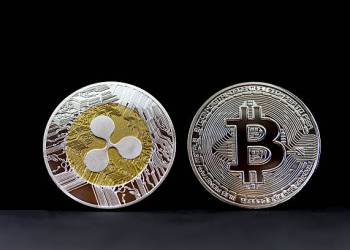
XRP nears $1.40 as SOPR signals capitulation: Is recovery ahead?

ambcryptoPublished on 2026-03-06Last updated on 2026-03-06

Abstract

Ripple (XRP) is approaching $1.40 amid increasing selling pressure, as indicated by the Spent Output Profit Ratio (SOPR) falling to 0.96, signaling that investors are realizing losses. This suggests a phase of capitulation, where weaker holders are exiting at a loss. Despite the negative market conditions, the XRP Ledger (XRPL) maintains strong underlying activity, with 1.8–2.5 million daily payments and stable transaction throughput. Active addresses remain steady between 35,000–40,000, indicating consistent user engagement. The current market structure resembles the 2021–2022 cycle, where capitulation and sustained network usage eventually preceded a significant price recovery. A reclaim of SOPR above 1.0 could signal the beginning of market stabilization and a gradual rebound.

Ripple [XRP] is facing renewed distribution pressure as holders increasingly move coins at losses. This shift is evident in the Spent Output Profit Ratio (SOPR), which recently fell from about 1.16 to 0.96.

Such a decline shows that sellers now accept prices below their original cost basis, reflecting growing stress among market participants.

Earlier in the cycle, SOPR frequently stayed above 1.05–1.15, aligning with XRP’s rally toward the $3 region. During that phase, investors realized profits as bullish momentum attracted fresh liquidity.

However, as volatility returned to the crypto market, selling pressure steadily increased, eroding investor confidence and shifting overall sentiment.

At the same time, XRP’s price drifted toward $1.40 by March, while the 30-day EMA of SOPR slipped below the 1.0 threshold. This transition signals that more transactions now lock in losses rather than gains.

Such behavior often reflects capitulation among weaker holders, while stronger participants wait for clearer market direction, leaving sentiment divided across the XRP ecosystem.

XRPL activity holds strong

XRP has faced persistent selling pressure during the first quarter of 2026, pushing the token toward $1.40 amid weakening retail sentiment. Even so, the XRP Ledger (XRPL) continues showing strong structural activity beneath the price decline.

Throughout this period, the network has maintained between 1.8 million and 2.5 million daily successful payments, reflecting sustained usage across the ecosystem.

At the same time, XRPL throughput remains stable near 18–25 transactions per second, indicating consistent settlement capacity even during market stress.

Meanwhile, Active Addresses remain stable between 35,000 and 40,000. These figures suggest consistent user participation rather than collapsing engagement.

Additionally, the network now exceeds 7.68 million activated accounts, reinforcing long-term ecosystem expansion.

This steady activity implies that utility-driven flows, cross-border transfers, and DEX operations continue, even while market sentiment weakens and retail participants capitulate.

XRP structure resembles prior recovery conditions

At press time, XRP traded near $1.40 during the February–March correction as Realized Losses reached -$1.93 billion, marking the largest weekly drawdown since 2022.

A similar pattern emerged during the 2021–2022 cycle, when XRP dropped from $1.96 to $0.30 amid persistent capitulation. During that time, SOPR consistently fell below 1.0, signaling sustained selling at a loss

However, recovery signals gradually emerged as network participation strengthened, indicating that more users were engaging with the network despite the low price levels.

Daily Active Addresses later surged about 490% from the 2022 lows, while price remained subdued. This divergence preceded a 114% rally over the following eight months.

Currently, 35,000–40,000 active addresses remain engaged. If SOPR reclaims 1.0, conditions may begin shifting toward stabilization and gradual recovery.


Final Summary

  • Ripple capitulation signals intensifying loss realization as SOPR drops below 1.0, while persistent XRPL activity suggests underlying network demand remains intact.

  • XRP’s market structure now mirrors past recovery phases, where capitulation and steady network participation historically preceded gradual price rebounds.


Related Questions

QWhat does the recent drop in XRP's Spent Output Profit Ratio (SOPR) indicate about market behavior?

AThe recent drop in SOPR from about 1.16 to 0.96 indicates that sellers are now accepting prices below their original cost basis, reflecting growing stress and capitulation among market participants.

QDespite the price decline, what key metric shows that the XRP Ledger (XRPL) has maintained strong underlying activity?

AThe network has maintained between 1.8 million and 2.5 million daily successful payments, and its throughput remains stable near 18–25 transactions per second, indicating sustained usage and consistent settlement capacity.

QHow does the current market structure for XRP resemble the pattern seen in the 2021-2022 cycle?

ASimilar to the 2021-2022 cycle, the current period features persistent capitulation with SOPR falling below 1.0 and significant realized losses. In the past, this was followed by a surge in network participation which preceded a major price rally.

QWhat is the significance of the 'Active Addresses' metric remaining stable between 35,000 and 40,000?

AThe stable number of Active Addresses suggests consistent user participation and engagement with the XRP network rather than collapsing engagement, which is a positive fundamental sign amidst weak market sentiment.

QAccording to the article, what needs to happen for market conditions to begin shifting toward stabilization and recovery?

AFor conditions to begin shifting toward stabilization and gradual recovery, the SOPR needs to reclaim the 1.0 threshold.

Related Reads

Google and Amazon Simultaneously Invest Heavily in a Competitor: The Most Absurd Business Logic of the AI Era Is Becoming Reality

In a span of four days, Amazon announced an additional $25 billion investment, and Google pledged up to $40 billion—both direct competitors pouring over $65 billion into the same AI startup, Anthropic. Rather than a typical venture capital move, this signals the latest escalation in the cloud wars. The core of the deal is not equity but compute pre-orders: Anthropic must spend the majority of these funds on AWS and Google Cloud services and chips, effectively locking in massive future compute consumption. This reflects a shift in cloud market dynamics—enterprises now choose cloud providers based on which hosts the best AI models, not just price or stability. With OpenAI deeply tied to Microsoft, Anthropic’s Claude has become the only viable strategic asset for Google and Amazon to remain competitive. Anthropic’s annualized revenue has surged to $30 billion, and it is expanding into verticals like biotech, positioning itself as a cross-industry AI infrastructure layer. However, this funding comes with constraints: Anthropic’s independence is challenged as it balances two rival investors, its safety-first narrative faces pressure from regulatory scrutiny, and its path to IPO introduces new financial pressures. Globally, this accelerates a "tri-polar" closed-loop structure in AI infrastructure, with Microsoft-OpenAI, Google-Anthropic, and Amazon-Anthropic forming exclusive model-cloud alliances. In contrast, China’s landscape differs—investments like Alibaba and Tencent backing open-source model firm DeepSeek reflect a more decoupled approach, though closed-source models from major cloud providers still dominate. The $65 billion bet is ultimately about securing a seat at the table in an AI-defined future—where missing the model layer means losing the cloud war.

marsbit4h ago

Google and Amazon Simultaneously Invest Heavily in a Competitor: The Most Absurd Business Logic of the AI Era Is Becoming Reality

marsbit4h ago

Computing Power Constrained, Why Did DeepSeek-V4 Open Source?

DeepSeek-V4 has been released as a preview open-source model, featuring 1 million tokens of context length as a baseline capability—previously a premium feature locked behind enterprise paywalls by major overseas AI firms. The official announcement, however, openly acknowledges computational constraints, particularly limited service throughput for the high-end DeepSeek-V4-Pro version due to restricted high-end computing power. Rather than competing on pure scale, DeepSeek adopts a pragmatic approach that balances algorithmic innovation with hardware realities in China’s AI ecosystem. The V4-Pro model uses a highly sparse architecture with 1.6T total parameters but only activates 49B during inference. It performs strongly in agentic coding, knowledge-intensive tasks, and STEM reasoning, competing closely with top-tier closed models like Gemini Pro 3.1 and Claude Opus 4.6 in certain scenarios. A key strategic product is the Flash edition, with 284B total parameters but only 13B activated—making it cost-effective and accessible for mid- and low-tier hardware, including domestic AI chips from Huawei (Ascend), Cambricon, and Hygon. This design supports broader adoption across developers and SMEs while stimulating China's domestic semiconductor ecosystem. Despite facing talent outflow and intense competition in user traffic—with rivals like Doubao and Qianwen leading in monthly active users—DeepSeek has maintained technical momentum. The release also comes amid reports of a new funding round targeting a valuation exceeding $10 billion, potentially setting a new record in China’s LLM sector. Ultimately, DeepSeek-V4 represents a shift toward open yet realistic infrastructure development in the constrained compute landscape of Chinese AI, emphasizing engineering efficiency and domestic hardware compatibility over pure model scale.

marsbit5h ago

Computing Power Constrained, Why Did DeepSeek-V4 Open Source?

marsbit5h ago

Trading

Spot
Futures

Hot Articles

What is XRP 2.0

XRP 2.0: A New Frontier in the Cryptocurrency Landscape Introduction to XRP 2.0 In the ever-evolving realm of cryptocurrency, new projects continuously emerge, vying for attention and adoption. One such promising initiative is XRP 2.0, a novel cryptocurrency project designed to leverage advanced blockchain technology and robust encryption methodologies. While the name draws parallels with Ripple’s XRP, it’s crucial to note that XRP 2.0 operates independently, focusing on enhancing transaction security, privacy, and scalability. As the digital financial landscape increasingly embraces decentralized solutions, XRP 2.0 aims to contribute meaningfully to web3 and the overall expansion of crypto projects. What is XRP 2.0? At its core, XRP 2.0 is a cryptocurrency project that aims to create a secure and decentralized digital currency ecosystem. Its foundational technology integrates sophisticated blockchain principles with cutting-edge encryption techniques. The overarching goal of XRP 2.0 is to establish itself as a reliable and efficient platform enabling swift transaction execution while prioritizing enhanced privacy protections for its users. The project is promoted as a solution to many limitations faced by existing cryptocurrencies, proposing a system that can handle a higher volume of transactions with improved speed and privacy. This versatility positions XRP 2.0 as a significant contender in a marketplace riddled with various digital currencies. Who is the Creator of XRP 2.0? The identity of the creator behind XRP 2.0 has been flagged as ‘Wilbur.’ However, comprehensive details regarding Wilbur or their associated entity remain elusive. The anonymity of many cryptocurrency creators is not an uncommon phenomenon in the industry, often designed to maintain a degree of privacy and security. Who are the Investors of XRP 2.0? As of now, specific information related to the investment foundations or organizations supporting XRP 2.0 is not publicly available. In the cryptocurrency sector, the backing by reputed investors can significantly influence a project's credibility and success, yet the transparency regarding the financial supporters of XRP 2.0 has not been established. How Does XRP 2.0 Work? XRP 2.0 stands out by employing a combination of blockchain technology and advanced encryption algorithms that ensures secure and decentralized transactions. Its innovative structure includes unique features designed to foster user engagement and broaden functionalities beyond conventional cryptocurrency transactions. Among these features, XRP 2.0 incorporates AI-powered capabilities, such as text-to-image and text-to-speech functionalities. These additions are designed to enhance the interactive experience for users, promoting broader applicability across various sectors. By bridging technological advancements with user-centered design, XRP 2.0 aims to capture the attention of a diverse range of individuals and enterprises looking to integrate cryptocurrency solutions into their operational frameworks. Timeline of XRP 2.0 Understanding XRP 2.0 requires examining the milestones that have defined its journey thus far: July 23, 2023: XRP 2.0 is introduced as a novel cryptocurrency project, aiming to revolutionize secure and decentralized transaction capabilities in the blockchain domain. September 8, 2023: The launching of another project, XRP20, occurs, marking the emergence of an ERC-20 token on the Ethereum blockchain that remains unrelated to XRP 2.0. November 13, 2023: The XRP Ledger undergoes a significant update with the release of rippled server software version 2.0.0. It is essential to note that this development is disconnected from the XRP 2.0 cryptocurrency project. Key Points About XRP 2.0 To distill the essence of XRP 2.0, several critical factors emerge: Unique Features: The inclusion of features like AI-powered text-to-image and text-to-speech further diversifies the potential applications of XRP 2.0. Blockchain Technology: The framework utilizes advanced blockchain mechanisms and encryption protocols, ensuring a secure and decentralized environment for transactions. Scalability and Privacy: XRP 2.0 prioritizes enhanced privacy protections in transaction processes and the scalability necessary to accommodate a growing user base. No Affiliation with Ripple: Importantly, despite its name, XRP 2.0 does not have any allegiance or collaboration with Ripple’s XRP, distinguishing its operational framework and objectives within the cryptocurrency ecosystem. Conclusion XRP 2.0 represents an ambitious venture into the cryptocurrency sphere, aiming to offer a combination of security, privacy, and efficiency in digital transactions. By integrating sophisticated technologies and user-friendly features, the project sets out to broaden the horizons of what cryptocurrency can achieve in today's digital economy. While the anonymity of its creator and lack of disclosed investors might raise questions for some, XRP 2.0's focus on advanced functionalities and decentralisation enhances its appeal amidst an increasingly crowded crypto market. As the cryptocurrency landscape continues to evolve, XRP 2.0 may yet emerge as a pivotal player in the expansion of secure and scalable blockchain solutions.

941 Total ViewsPublished 2024.04.01Updated 2024.12.03

What is XRP 2.0

Discussions

Welcome to the HTX Community. Here, you can stay informed about the latest platform developments and gain access to professional market insights. Users' opinions on the price of XRP (XRP) are presented below.

活动图片